Sunday, December 14, 2025
Home Blog Page 44

Youths are the authors of their own misery

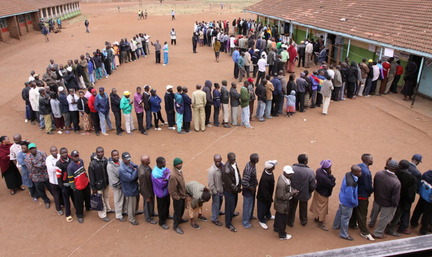
Kenyans wait in line to vote in 2013. (Photo/www.cleveland.com)

President Uhuru Kenyatta’s decision to appoint washed up veteran politicians, relatives of several prominent politicians and some individuals who have been in newspapers for as long as Kenya has had newspapers (here’s looking at you Richard Leakey!) to parastatal positions announced late on Monday has angered many Kenyans, especially the youth. Many of them feel that Kenyatta has betrayed them by rewarding the old guard even though it was largely through their votes that he squeaked through to State House.

The consensus seems to be that by bringing back politicians Kenyans rejected at the last elections, Kenyatta is earning the loyalty of a powerful and influential constituency of power brokers even as he burns up his political capital with the youth.

But do the youth have a right to complain about who Kenyatta’s latest appointments? I agree with those Kenyans that take the view that it’s a little too late in the day to have buyer’s remorse. By voting for Uhuru Kenyatta, the son of Kenya’s founding president, Kenya’s youth cemented the notion that power in Kenya should always be kept in the hands of the powerful.

//

About the appointments: Our leaders are a reflection of ourselves, SO, STOP COMPLAINING!In 2013 you had eight options but chose to recycle the prominent families, we are not better than them.

Posted by Tsarm Wachira on Tuesday, 28 April 2015
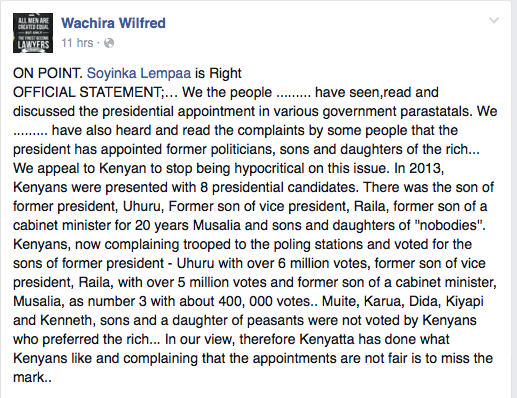
Screen Shot 2015-04-29 at 00.43.05

The youth may complain about Uhuru giving jobs to the powerful, well-born and wealthy but they did the exact same thing to Martha Karua, James Ole Kiyiapi and Mohammed Abduba Dida in the last elections. Kenyans did not just give Uhuru the mandate, they made sure that the second (Raila Odinga) and third (Musalia Mudavadi) candidates in the polls were also similarly blessed by the genetic and economic lottery. Uhuru has not betrayed the youth, he has merely shown them the ugly reality of their political choices.

Perhaps in the next elections the youth can look beyond the familiar names from political dynasties and pick a candidate that reflects the Kenya they want to live in. The Kenya where upward mobility is not determined by your family, tribe or bank balance but by your skills and competence.

Six Women to represent Kenya at this year’s re:publica 15

Re:publica 15
#rp15

One of the largest and most exciting gathering about digital culture in the world, re:publica 15 is only a few days away. The annual event that brings together bloggers, hackers, online activists and social media experts among others from all over the world is happening again this year from the 4th to the 7th of May in Berlin Germany. Kenya will be represented by Six women mostly drawn from the  Bloggers Association of Kenya (BAKE) and the iHub. There will be only 1 Kenyan gentleman, Ahmed Maawy from SwahiliBox.

The event which was founded in 2007 as a blogger meeting has since grown to one of the largest global gatherings for not just bloggers but to include anyone interested in what is happening in the digital space for candid discussions the on-goings in every part of the world.

This year’s edition is going with the theme ‘Finding Europe‘: Among the 450 speakers from more than 45 countries for re:publica 2015 are Six women from Kenya  who will participate in three days of celebration and debate with some of the most important trailblazers and forward thinkers of the Internet, packed with 300 hours of programme from a wide range of topics from politics, economy, science, society and culture.

The team is :-

1. Brenda Wambui – Co-Founder, BrainStorm & BAKE Member
Panel: #AfricaBlogging – Politics blogging in Sub-Saharan Africa
Panel: The revolution will be written in HTML

2.Njeri Wangari – Project Lead, Kenya Monitor (A BAKE Project)
Panel: #AfricaBlogging – Politics blogging in Sub-Saharan Africa

3. Nanjira Sambuli – Research Manager, iHub Research
Panel: Big problems, big data, little privacy? Ethics of data use in development contexts

4. Sheilah Birgen – Community Lead, Mlab East Africa
Panel: Big problems, big data, little privacy? Ethics of data use in development contexts
Panel: 10 Things Europe can learn from Kenya

5. Mugethi Gitau – Community Manager, iHub
Panel: 10 Things Europe can learn from Kenya

6.Martha Chumo– Founder, Nairobi Dev School
Panel: 10 Things Europe can learn from Kenya

7. Ahmed Maawy – Executive Director, SwahiliBox
Panel: Global Innovators – Hacking culture, innovation spaces and start-up scenes in Singapore, Zimbabwe, Kenya and Brazil

The conference will have a broad focus on issues related to the digital society – from net politics and technological innovations, music, culture and media, to health and education. This is meant to  foster innovation and create synergies between net politics, online marketing, network technology, digital society, and (pop) culture.

Some of the notable names in the industry who will be speaking at the conference are:- Ethan Zuckerman (MIT), Jacob Appelbaum (Tor Project) and Reed Hastings (Netflix) among others. Find the full list of speakers here.

The official hashtag for the event is #rp15 for live updates from the event.


Matiliku residents in Makueni decry rampant sand harvesting

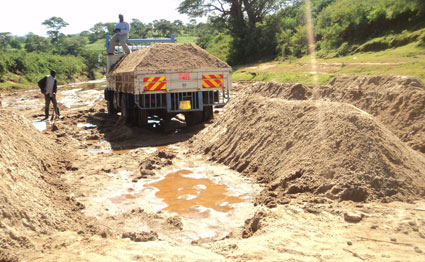
Sand Harvesting in Makueni County photo:nation.co.ke
Sand Harvesting in Makueni County
photo:nation.co.ke


Residents of Matiliku, Makueni County have raised concern over the rampant sand harvesting in Kikuo river.

Led by Kikuo Water Resources and Users Association (WRUA) Antony Mutua, the residents decried the ongoing blatant illegal sand harvesting activities along the river and called on the county government to crack down on the sand harvesters.

The residents noted that the river is their main source of water for both domestic and animal use and accused the county government of laxity in the fight against the illegal activity.

The residents, speaking at Kwamutumia Primary School during a tree planning exercise funded by INADES, a local non-governmental organisation, said despite a Sand Harvesting Act recently enacted to regulate sand harvesting, nothing had been done to implement the new law and threatened to take matters in their hands if the county government does not move with speed to protect the resource.

“If this sand harvesting does not stop we are going to burn all lorries that we find ferrying sand from Kikuo river,” said Mutua WRUA chair.

He called urged the county government to collaborate with relevant stakeholders in the region to avert further destruction of the river.

“Let the government consult with stakeholders like the WRUA because we are the ones protecting the rivers and we cannot continue preserving our environment for some people to come and destroy it,” said Mutua.

“We do not even know what the sand act entails, the county government should also conduct a community mobilization forum and educate us on the act and how it shall be implemented,” he added.

Another resident who sought anonymity for fear of reprisal said harvesting cartels were collaborating with local administrators to harvest sand.

He accused area chiefs and ward administrators of protecting sand harvesters who have continued to swindle the residents of their resources.

“These cartels pay bribes to the administrators to allow them to ferry the sand forcing residents to walk for long distances in search of water,” he said.

However, County Environment Assistant Director Joseph Munyao denied illegal sand harvesting in the region. Munyao told Kenya Monitor that he had not received any reports on sand harvesting or violation of the act .

“As far as my office is concerned, there are no violations of sand harvesting,” he said.

He however admitted to lack of clear structures on the implementation of the sand law adding relevant authorities had not stated whether the law was already in place.

“The question is whether we should comply with the ban that had existed before the law or that law is in place,”said Munyao

He however said that his department will soon streamline the activities of sand harvesting saying that a sand authority and sub county committees will soon be put in place to regulate the sand harvesting.

Illegal sand harvesting has been a menace in Makueni County with many rivers drying up due to lack of clear legal structures. The activity has often led to conflicts some even leading to death.

Upon ascending into power in March 2013, the Governor Kivutha Kibwana immediately banned sand harvesting. However, the activity continued unabated forcing the county assembly to legislate a law to regulate the harvesting,

Although the sand law was passed and approved by the Governor early this year, implementation is yet to take place with many sand harvesters taking advantage of the lapse to scoop sand.

Makueni residents urged to establish citizen assemblies

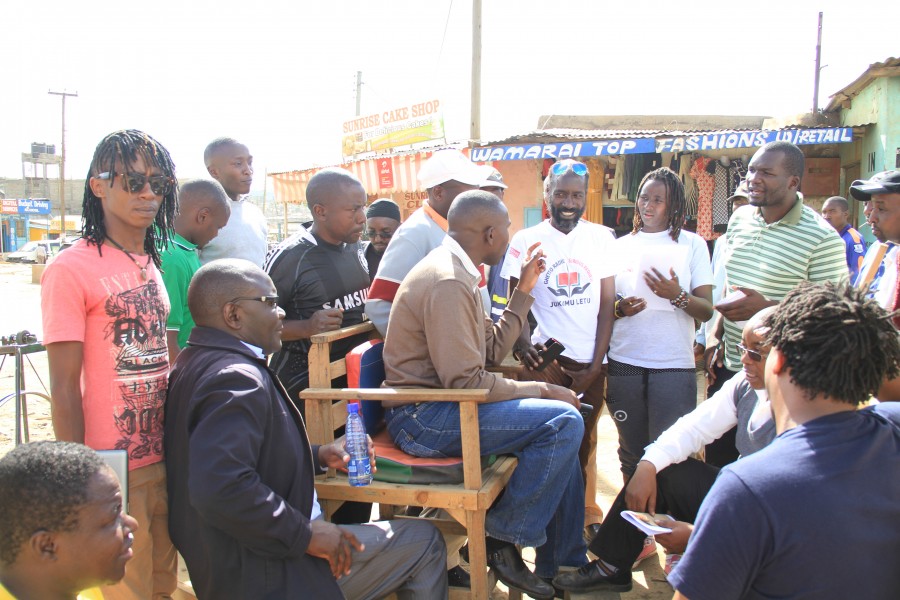
A section of mebers of a citizen assembly chat with Kenya Monitor and Jukumu Letu officails during its lauch in Nakuru. Makunir residents have been urged to form similar assemblies
A section of members of a citizen assembly in Molo chat with Kenya Monitor and Jukumu Letu officials during its launch in Nakuru.
Makueni residents have been urged to form similar assemblies.

James Muraguri, the Executive Director of Global Empowerment Initiative (GEI), a non-governmental grass root-based organization spearheading sustainable initiatives for communities in Kenya has urged residents of Makueni County to form citizen assemblies for deliberating issues of governance.

Muraguri said one of the basic tenets of devolution is public participation and underscored the need for the residents to use the citizen assemblies to ventilate some of the key issues affecting the county like the budget making process.

The executive director said, the Constitution gives sovereign power to the citizens and encouraged the residents to seize the opportunity and demand for people-centered governance.

“As the residents of Makueni you should own the process of devolution, sit together and look for local solutions that can address the problems facing the county,” he said.

He called on residents to pay keen interest on the allocation of resources and identify key areas in the county that need to be prioritized.

“Residents should be able to know what formula is used to allocate funds across the county and monitor closely so that some areas are not favored at the expense of others,” said Muraguri.

The executive director made these remarks early this week in Wote during a participatory budget-making forum held at Broomtree hotel.

Speaking in the same event,FAHAMU Program Officer Eliza Meriabe emphasized Muraguri’s sentiments and appealed to the residents not to abscond their duty of public participation.

Eliza lauded the residents for petitioning the President to dissolve the county owing to incessant wrangling between Governor Kivutha Kibwana and MCAs, saying that the move was an indication that the residents were familiar with matters of devolution.

“Makueni has set the precedence and I urge the residents to remain united so that they can amplify their voices for proper governance,” she said.

Phyllis Nduva a participant, extolled the forum and called on the county government to put in place structures to empower both women and the youth.

Phyllis said the youth form a very integral part in the society and urged them to be proactive on matters of governance.

“We need a vibrant generation of young people who can help steer this county into greater heights,” she said.

A citizens’ assembly commonly known as ‘Bunge la Mwananchi’ in Kenya is a body formed by local citizens to deliberate on issues of national importance especially those related with governance. Now that the county governments are taking shape such assemblies can come in handy is assisting residents to highlight and deliberate issues affecting them and in turn demand for visionary leadership.

Kenya Today dupes Kenyans with fake Chinese condoms story

Its never been more important for journalists to do their job well. (Photo/detsnakkerviom)

A local news website Kenya Today last week published a story claiming that police officers in Shanghai had busted an operation manufacturing fake high-end condoms for the Kenyan market. The story claimed that the officers had seized 3 million counterfeit condoms packaged to be sent to Kenya among them condoms of the popular Durex brand. Good story but the only problem is that it’s completely false!


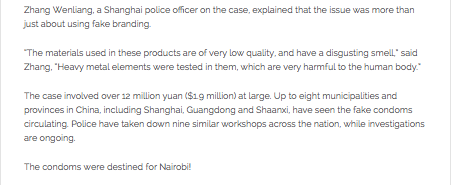
Clickbait! The story as published by Kenya Today

Kenya Today lifted the story from a piece by ShanghaiDaily.com that had nothing to do with Kenya. In fact the ShanghaiDaily article is pretty clear about where the condoms were headed.

“Police said most of the fake condoms were eventually supplied at small inns,” it said.

But Kenya Today felt the need to take some creative license with the facts.

A screenshot showing Kenya Today’s determination to misrepresent the facts of the story

Sex and scandal are a portent combination. Add to that the extra layer of intrigue from the fact that the Chinese are supposed to be our new BFF’s (Thika Super Highway anyone?) and you have a story with legs to run for days.

But its on Kenya Today readers that the story appears to have had the most negative effect.

“Now you see what this people are” said one reader,

“Kenya’s need to rethink how they do business with the Chinese,” another one chimed in reply.

Just in case you think the story only got traction in Kenya then still your heart. The creative labors of the scribes at Kenya Today have also received attention from the continental press with news outlets in South Africa, Nigeria and Malawi reporting the story.

So there you have it. A false story manufactured from the ether has managed to get attention it does not deserve. I hope whoever is in charge at Kenya Today will knock some heads together and issues an apology. We live in turbulent and confusing times so its never been more important for journalists – as the purveyors of information – to do their job right. This is not a responsibility to be taken lightly or abused. Kenyans are watching. Do the right thing Kenya Today.

Imara Daima residents fear being poisoned in their sleep

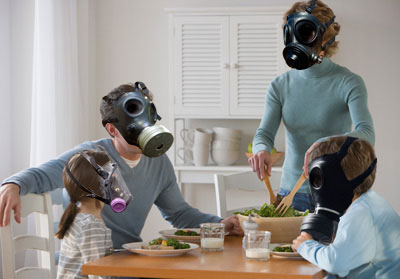
Imara Daima residents have had to make adjustments in their lives because of pungent smell coming from a nearby factory
Imara Daima residents have had to make adjustments in their lives because of pungent smell coming from a nearby factory. (Photo/http://home.howstuffworks.com)

Residents of Nairobi’s Imara Daima area are living in fear of being poisoned in their sleep by a nearby factory that emits pungent smelling gas at night. The residents are also up in arms over what they feel is incompetence and a lack of responsiveness from National Environment Management Authority (NEMA) over the agency’s failure to take action on their complaints about the persistent pungent smell that has turned their homes into virtual gas chambers.

The gas emitted by the nearby factory has reportedly caused the children in the neighbourhood to have watery eyes, frequent headaches and irritated ears and throats. Its gotten to the point that some of the parents are making their children wear pollution masks while at home. The resident’s complaints have gotten a lot of attention from the media but NEMA hasn’t budged.

Early this month the residents sent an official petition to NEMA about the smell. The petition was filed on behalf of 20,000 residents of the estates of Imara Daima, Amara Park, Imara Gardens, Villa Franca and others.

Despite the petition, residents feel NEMA is still giving their concerns short thrift and they have now started an online petition to get the agency to work.

In the online petition, the residents identify the offending factory as Powerex Lubricants.

“We, the residents/inhabitants of the aforementioned areas, call on NEMA (National Environmental Management Authority) to stop Powerex Lubricants from emitting poisonous gases, as it is a serious health concern for the residents/inhabitants.”

The residents want NEMA to act and close the factory before its too late.

“It is against our human rights for the said company to be making profits at the expense of our health. We fear that the effects of the gas could not only affect us immediately, but also have future ramifications to those directly affected and our unborn children.”

Good health is a Constitutional guarantee in the Bill of Rights hence each Kenyan deserves of it.

These developments come in a bad press week for NEMA. Earlier this week KTN aired two documentaries that fingered NEMA officials as being complicit in a despicable arrangement that saw foreign investors set up a lead smelter near a slum in the Changamwe area of Mombasa. The operation of the smelter caused many negative effects on the residents including skin infections and stillbirths.


Nakuru man claims he taught Chief Kariuki how to tweet

IMG_9937
Njoha Gathua. He claims he taught Chief Francis Kariuki how to tweet. The ‘tweeting chief’ has however denied.

A man in Nakuru has come out to say he is the one who taught Chief Francis Kariuki of Lanet Umoja how to tweet.
Njoha Gathua an information and communication technologist says his intention was to see that the Chief uses the skill to improve security in his area.

“The tweeting idea was mine. I used to tweet my social issues but I thought it would do well for the administrators.”

He says he picked on Chief Kariuki as he was he was Chief then.

“I also trained his assistants and the people who were working in his office and they became his initial followers.”

Using the twitter handle @Chiefkariuki, Chief Kariuki has become a celebrity local administrator out of his tweeting prowess. His followers who include the who is who in the society are clocking 50, 000 and he has been awarded both locally and internationally.

However Gathua says he has no issue with the fame that seems to have gone to his ‘student’ without him getting anything out of it.

“I have no quarrel with Chief Kariuki. When I taught him it wasn’t designed to be a business opportunity for me,” he says.

“I am not an administrator. I don’t have a community to lead. If he has succeeded I have also succeeded.”

Gathua says he met Chief Kariuki in early 2008 and that following the success with his tweets he has since taught other local administrators how to tweet.

“Apart from training other chiefs in Nakuru, I have also trained in Limuru and Gatundu South sub counties.”

Given a chance Gathua would love to see the same skills picked by police officers. He says they too are key in the ensuring security among citizens.

“When a Chief reports that a cow has been lost, he only reports that to the community, but it would have worked well if the police were involved.”

Chief Kariuki Snip
A tweet by Chief Francis Kariuki. He has close to 50,000 followers on twitter.

Contacted Chief Kariuki dismissed having received the tweeting lessons from Gathua saying they only had a chat.

“He never taught me. We only met and shared on what was happening. Will you term that as teaching me?”

Although the two may never agree on who did what to the other, the tweeting success of Chief Kariuki is a case study on the opportunities that social media can present if used well.

Mombasa County clean up set for the weekend

tree planting mama ngina

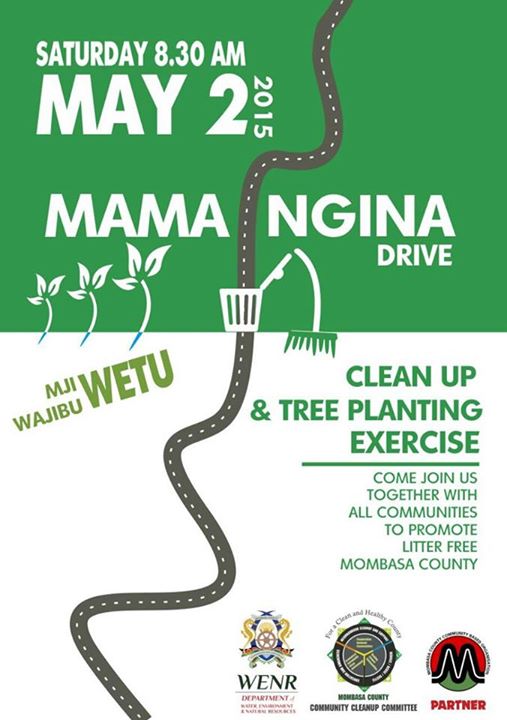
Mombasa County will be holding its monthly cleanup day on Saturday 2nd May from 8.30 AM at Mama Ngina drive.

The exercise will be led by the County Executive Secretary for Water and Environment Hon. Fatma Awale together with a team from the County government.

The cleanup will be followed later by a tree planting session at Mombasa’s most popular recreational area Mama Ngina drive. This exercise follows other activities that are taking place in Mombasa to beautify the city and improve its outlook.

“My government is committed and dedicated to bringing Mombasa where it was before, the conducive green environment that each resident of Mombasa County is yearning for. I want to appeal to residents to pride in maintaining the general cleanliness and beautification of the County,” said Governor Joho

The beautification efforts have resulted in a cleaner and better looking Central Business District (CBD). According to the county government, the plan is to first beautify the CBD and then move to other parts of town. However, not everyone is impressed with the work so far.

“How long will it take for them to get to Mwembe Tayari, Spaki or Sabasaba? I think that beautification is an elitist affair. Until they start beautifying places where poor wananchi are, I don’t buy it,” Fauz, a student quipped.

In addition to the beautification  the county government has been building cabro pavements in Likoni, Island and Changamwe to ease pedestrian movement. Recently, the Governor commissioned Jamvi la Wageni to Kiwerera Cabro Road (2.4 KM) and Shelly Beach Road (5KM) in Likoni as part of these efforts.

Visitors to Mama Ngina drive will enjoy the shade of the trees planted in a few years. However they have a more pressing matter that needs addressing. There is only one public toilet in the area and it has been privatized.

More than a year ago the Governor promised to sort the matter and it is still pending. A visit to the existing toilet is only for the brave as the stench can be overwhelming and you still have to pay for a toilet that has no running water.

Yusuf, a vendor at Mama Ngina says people are using the ocean or hidden caves and hidden areas behind rocks as toilets.

“Hio miti tutaona kivuli baada ya miaka, kwa sasa hivi. Tunahitaji vyoo vya wananchi”, (we do not need trees for beautification now since they will take long to grow. What we need now are toilets for the people to use), he states.

Kenyans need to support Brand Kenya to revive economy

Kenya flag

If Kenya was running in a race against other developing countries, it would be some distance behind the others. Trying to catch up but with a bad limp and too many problems. Right now, our beloved country is suffering as a brand. In Africa we are ranked 3rd on the global terrorism index with Nigeria and Somalia being the only ones doing worse. The land of “Hakuna matata!”, Island of peace in East and Central Africa has lost its luster to the world. Our stock market is falling.

Brand Kenya Board was set up and mandated to ensure that an integrated national brand is created, harnessed and sustained in the long term. As a nation we need to strengthen our brand in the global market.

One of the direct results of the weakening of our National Brand can now be experienced in the weakening shilling. The result of weak Forex inflows due to the falling tourism and foreign direct investments. A weaker shilling will mean a hike in prices of essential commodities which will hit the poor the hardest.

Take a minute and ponder, as we speak people from other countries are advised against all non essential travel to some parts of the country. Some of those people heeding the advisories are investors.

As we debate the list of shame, no one has been jailed for corruption. Kenya is considered one of the most corrupt countries in the world. To add onto our shame, a London court sentenced two officials of UK based company to 3 years in prison for bribing Kenya officials. The officials that were bribed are still in office at this moment. Chris Okemo, Simon Gichuru, Akasha’s among others are still in Kenya despite there being extradition warrants for them.

We are showing the world how little we care for the law here, in the process we make it look like a place where the rule of the jungle is the order. We forget that the world is a marketplace and we are in contest against other nations.

The worst battering however, comes from destruction of Kenya’s most important asset; wildlife. Elephants, lions, monkeys and other animals are under threat from poachers. Rhinos could all be poached in the next decade. At the current killing rate, our elephants could be finished in 20 years and we have about 1000 cheetahs left in the wild. When tourists come, they have nothing to see and word spreads fast. In no time, the whole world knows there are no animals to view in Kenya.

A challenge has been presented into the hands of the Brand Kenya Board. The citizens have a bigger role to play by ensuring the institutions that play the role of oversight are protected. The world needs to see that the rule of law is the norm in Kenya for all.

It is a job that is cut out for every individual. Jukumu Letu begins with an individual’s input. The nation we dream of is guaranteed in our Katiba. Equality, poverty alleviation and human rights are essential for our developing nation. We have one of the most progressive Constitutions in the world, all it needs is our protection and support.

Terror attack at Nairobi’s Wakulima market foiled

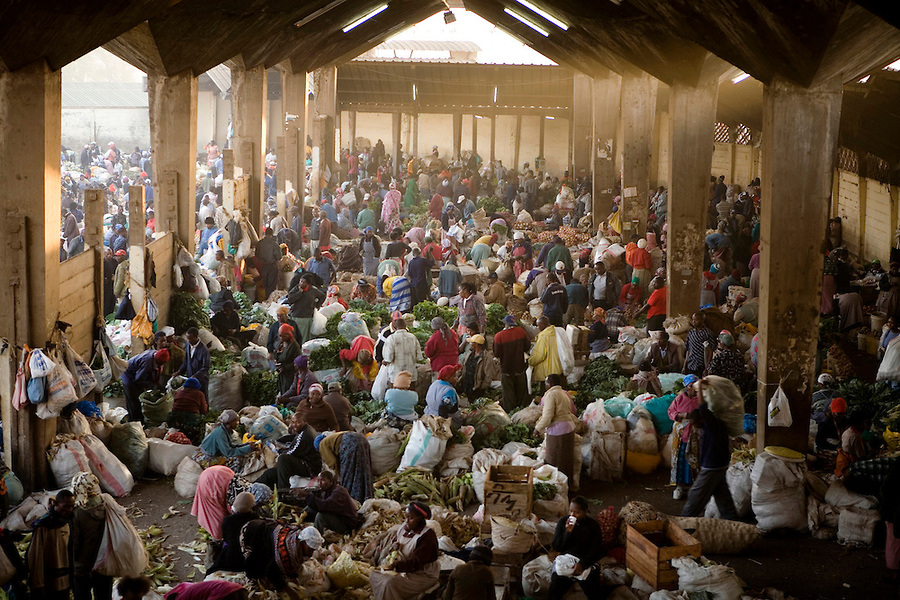
Nairobi's  Wakulima market is the biggest market in East Africa, attracting thousands of traders from the region every day.
Nairobi’s Wakulima market is the biggest market in East Africa, attracting thousands of traders from the region every day.

Reports indicate that officers drawn from an elite unit of the Kenya Defence Forces (KDF) earlier this week arrested two members of the Somali terror group Al Shabaab who were reportedly en route to carry out a suicide bomb attack on Nairobi’s Wakulima market. The KDF officers also reportedly recovered a suicide vest from the two attackers who were part of a five-man team trying to sneak across the border. The other three attackers managed to elude capture and return to Somalia.

The arrest comes barely a month after four Al Shabaab attackers murdered 148 students at Garissa University College. The report also comes amid increased chatter about Al Shabaab’s intention to execute an audacious attack on a high profile target in Kenya. A leaked intelligence report authored by Nairobi Central Police OCPD Paul Wanjama identified the targets on Al Shabaab’s list as including Kenya’s Parliament and houses of prayer. A Senate staffer was on Sunday arrested to assist officers in investigations regarding his involvement in the plot to bomb parliament.

Those in the know say Al Shabaab is intent on carrying out an attack using suicide vests.

The muted response and the arrest of the two Al Shabaab attackers has received from the local press underlines an important fact about Kenya’s war on terror. The success of our security forces in foiling attacks are often private and un-celebrated but their failures get wall-to-wall coverage. It’s just one of the many things why our men and women in uniform deserve our eternal gratitude.

Updates to follow.

Richard Leakey has his work cut out for him as KWS Chairman

The celebrated consevationist Dr Richard Leakey has been appointed as the new head of the Kenya Wildlife Services (KWS) (Photo/http://www.texannews.net)
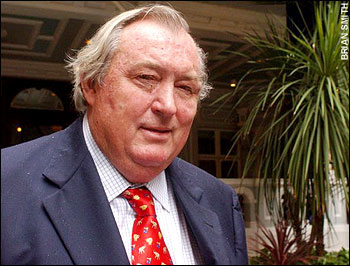
Renowned conservationist Dr Richard Leakey has been appointed as the new head of the Kenya Wildlife Services (KWS) (Photo/http://www.texannews.net)

Dr Richard Leakey, the new Kenya Wildlife Services chairman, has his work cut out for him. Of the 302 parastatal appointments made by President Uhuru Kenyatta on Monday, Leakey occupies the office that perhaps has the brightest spotlight on it given the clear and present danger that poaching currently poses to Kenya’s wildlife population. The reality of this challenge was brought home this week with news that 3,000 Kgs of ivory shipped from Kenya were seized in Thailand.

Kalembe’s appointment trends on Twitter!

Kalembe Ndile'He was appointed by Presient Uhuru Kenyatta to sit in the Water services Rugulatory borad Photo:Swahilihub.com
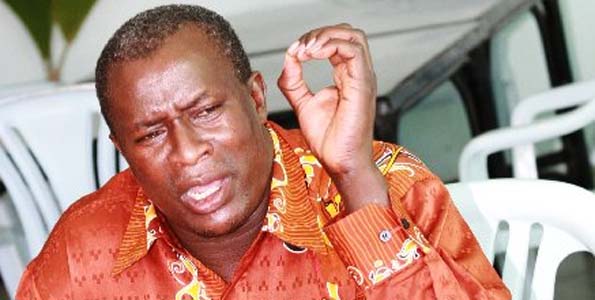
Former Kibwezi MP Kalembe Ndile.He has been appointed by President Uhuru Kenyatta to sit in the Water Services Regulatory Board
Photo:Swahilihub.com

On Monday April 27, President Uhuru Kenyatta appointed new executives to manage parastatals in the country. Several of those appointed to head the state corporations are former cabinet ministers and politicians who lost out in the 2013 general elections.

Among the 302 appointees is Kalembe Ndile who was picked to sit in the Water Services Regulatory Board for a period of three years.

The firebrand politician from Makueni county is the The Independent Party leader and former MP for Kibwezi. He lost twice in a tight race to the incumbent MP Dr. Patrick Musimba, first in the 2013 general elections and later in a by election after he successfully petitioned the elections in a Machakos High Court.

The former legislator who served as assistant minister for Wildlife in the National Alliance Rainbow Coalition (NARC) government is well known for his off the cuff remarks and his appointment to the water regulatory board, his credentials not withstanding has caused a flurry of reactions from Kenyans on social media.

Under the hash tag #KalembeNdile, the TIP leader trended in Twitter for the better part of Monday when the appointments were announced.

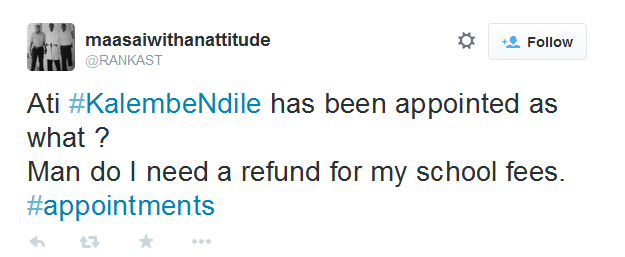
Kenyans bashed the president’s appointments with many questioning the need for education if likes of Kalembe could get plum posts in the government without having the necessary qualifications.

kal1

kal2

kal3

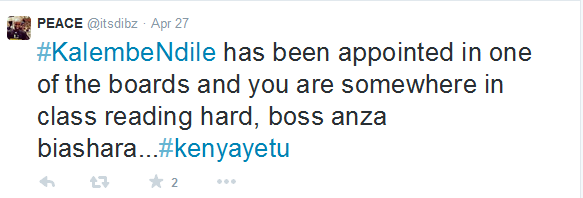
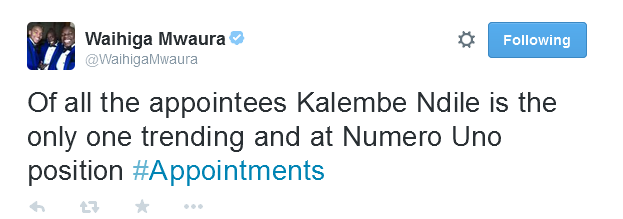
The fact that Kalembe was the only appointee trending did not escape the attention of some Kenyans on Twitter.

Kal4Some of the comments were also comical, just like the former Kibwezi MP.

Kal5

kal6

While Kenyans on social media criticized the appointment of Kalembe, Makueni residents led by the Governor Kivutha Kibwana took to Facebook to congratulate him.

kal7

kal8

kal9

The appointments by president have  continued to draw varying views among Kenyans,with some arguing that the Jubilee government has reneged on its promise to empower the youth by elevating old and tired politicians to senior positions.

However the Deputy President William Ruto has defended the government’s move saying the appointees have immense experience and skills that are valuable in the public service.


Rains pile misery on Kongowea market traders

Kong owes market
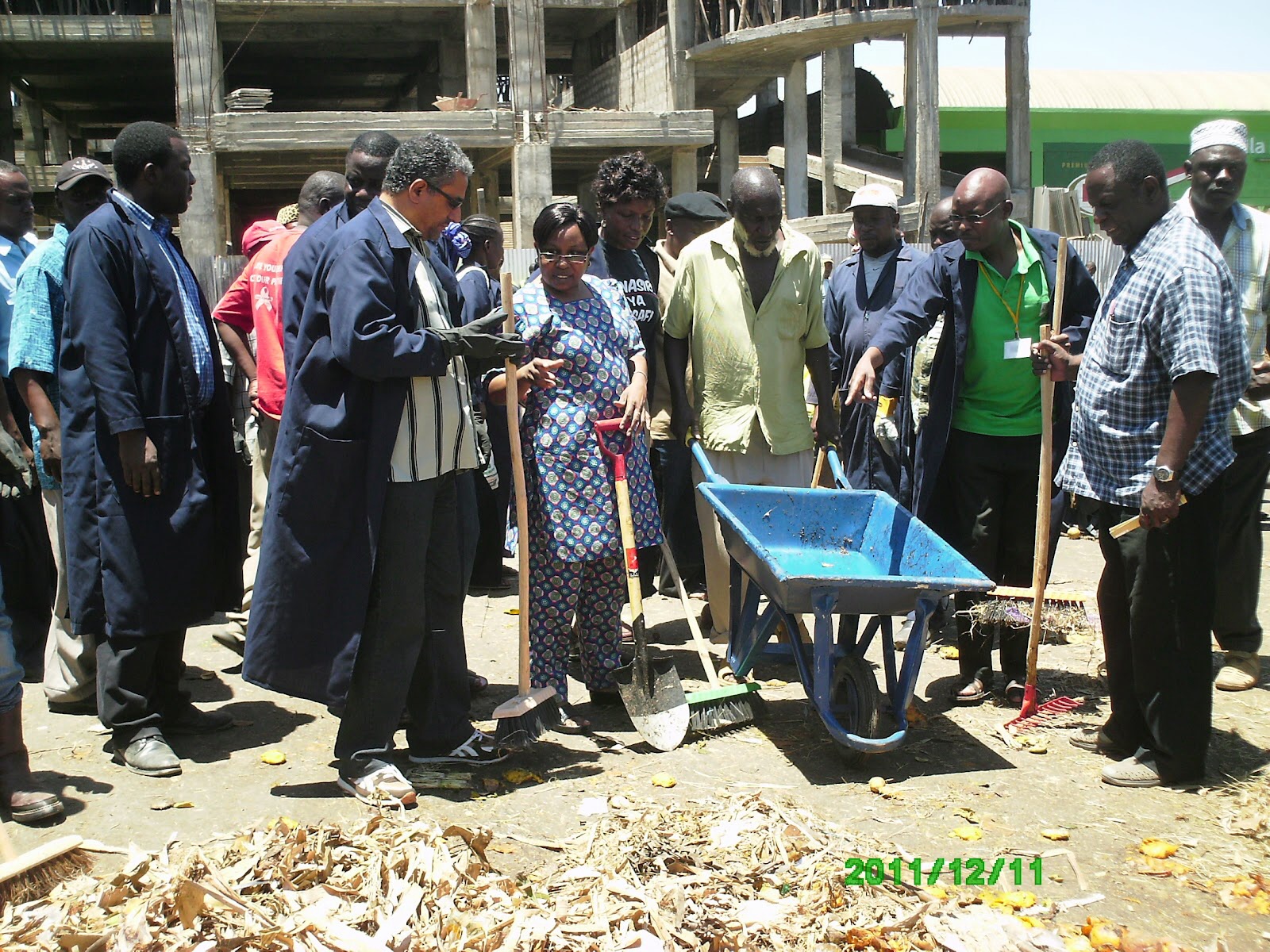
During a previous cleanup at Kongowea market

Kongowea is the largest marketplace in the county of Mombasa where thousands of people from all walks of life make their living from it each passing day. However, the huge market is currently muddy stinky mess that is no way fit to be a marketplace.

Initially the market was established for the small population back then but it grew rapidly to a point where every trader has set up a stall or built a shop on top of the drainage systems. Improper solid waste disposal has also contributed to blocked drainage.

When it rains, surely it does pour, absolute misery to the traders and customers that frequent the market on a daily basis. The roads are impassable with mud and large potholes. The rains fill up the drainage systems and the sewage come to the surface. This an imminent danger to Mombasa residents as the market is the primary distribution center for most of the food consumed.

Tony, a trader at the market blames The Public Health Department which seem unconcerned about the sorry state of the market and the lack of improvement over time. A few of the stalls next to his are above a sewer drain, people have gotten used to the strong stench coming from below.

Luvuno argues that the county government has taken the market for and traders for granted.

“Haja yao ni wachukue Pesa kwa wenye biashara na Lori za kuleta mizigo,” (their concern is only to take money from traders and lorries that bring our goods here for sale.)

Although Kongowea is a strategic economic asset for the county of Mombasa, little is being ploughed back in. The traders who are operating in the muck and are an unhappy lot. One stall owner said

“If you enter the market from further up the road, you find the same potholes from 3 years ago. Every year they grow bigger and they are right in front of the Chiefs office.”

As a result, the rains mean a huge decrease in sales especially for traders of non essential items like clothes and shoes.

“Customers do not want to walk in the mud and filth to come buy clothes, it doesn’t make sense for them”, says James who sells stuffed toys. “They would rather pay more and buy in the estates.”

The problems of Kongowea are further compounded by groups that operate like cartels inside the market. The issue was brought to the area MP Hezron Awiti but has not been resolved.

The lack of security is also giving the traders sleepless nights. Kongowea has been a target of a terror attack before.

As the traders struggle through the poor hygiene conditions, they are only too aware that the county collects 5 million in rates per day translating to over 1.5 billion per year. Even a fraction of that reinvested into the market would change their working conditions.

How the County Governments are entrenching corruption; Part 2

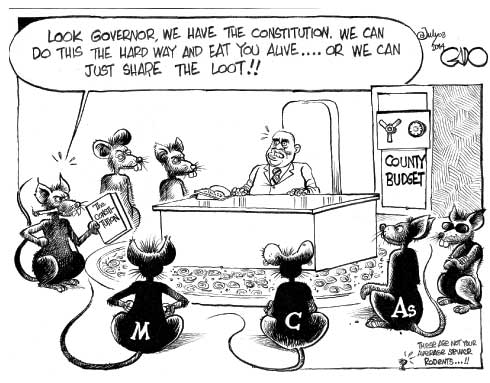
Cartoon depicting how MCA's and Governors are  "eating" (www.gadocartoons.com)
Cartoon depicting how MCA’s and Governors are “eating” (www.gadocartoons.com)

We continue our examination into how counties are wantonly blowing money and spending incredible amounts on things that do not benefit the citizens they are elected to serve. The corruption has not decreased, rather the County leadership has expanded the eating table and spread the loot around. As a result, we have counties where all is in harmony. Where no dissenting voice or challenges to county expenditure or budget is heard because they are all in it together.

Procurement

This is still one of the biggest channels of corruption in Kenya. Is there public procurement in Kenya that does not result in loss of funds? Jog your memory a bit to Anglo Leasing, the National Hospital Insurance Fund, Independent Electoral and Boundaries (IEBC) chicken scandal. Now these are happening on a smaller scale all over the country.

The truth of the procurement scams will take a while to come to light. However, I have seen payments confirming how county governments “eating” taxpayers money.

How can a county justify the  purchase of 10 boxes of biro pens for KES 200, 000 and 2 thirty two inch televisions for  300,000? From the sh500, 000 paid in this instance sh440, ooo was “eaten”. A whooping 88 percent lost. What about contracts running into billions of shillings?

Kickbacks

“To do business with counties and not give kickbacks is impossible. These days everyone in the process wants a kickback and you are luck if you have 50 percent of the contract value left,  tells one seasoned “tenderpreneur”.

To beat the kickbacks, vendors inflate costs so that the contract value includes the kickbacks. As a result, more money ends up in individuals pockets than in actual purpose.

To facilitate kickbacks, the county decision makers are also engaging in a lot of nepotism since they cannot trust complete strangers to deliver kickbacks.

By passing IFMIS and GPAY

The Integrated Financial Management Information Systems (IFMIS) was installed for a unified financial management system across all governments.

Payments should be processed through IFMIS which is integrated with the Central Bank‘s G-Pay system which remits the money directly to the supplier account.

County governments and Assemblies are bypassing these systems and paying the vendors directly. Therefore, there’s no track of who is getting paid, most likely, these are briefcase companies owned or linked to the county leaders and staff.

Some of the counties that have been flagged for not using or intermittently using IFMIS  include Bomet, Kisumu, Marsabit, and Embu. They blame it on almost always on connectivity issues or lack of trained staff. All these billions later and county governments cannot solve an internet connection problem or get staff properly trained.

High Recurrent Expenditures

Channeling money from counties has taken another direction with “legitimate” expenses being piled on the county governments for eating. In some counties, recurrent expenditure exceeds actual funds released for recurrent activities. Not all recurrent expenditure is corruption, salaries have to be paid, utility bills cleared on time and cars fueled. However, if your county spends 80 percent of the revenue on recurrent expenses, look closely because it means that development is no longer important to them. If they seem more interested in tying down as much of the money to recurrent expenses, that is a massive red flag and you should be concerned about that.

Travel

Kenya may have the most widely traveled MCA’s in Africa. Dubious but unfortunately true. They have been everywhere in the world to  learn and benchmark. If only they took lessons in prudent management of resources. MCA’s have turned travel into the biggest cash cow under devolution after their sitting allowance.

Within the counties, MCA’s are abusing the imprest system and per diems to claim for monies even when they fail to take a trip.  In Nairobi, Vihiga, Taveta, Nakuru there are alleged false claims, exaggerated amounts and the surrender forged receipts for reimbursement.

We need to be watchful, lest devolution creates a few millionaires in every county at the expense of millions of poor people.

Illegal ivory shipment came from Mombasa

0
Thai Govenment Official inspects ivory shipped from Mombasa Photograph: Pornchai Kittiwongsakul/AFP/Getty Images
Thai Government Official inspects ivory shipped from Mombasa Photograph: Pornchai Kittiwongsakul/AFP/Getty Images

Authorities in Thailand have seized a container from Mombasa with 3,000 kilograms of elephant ivory inside a container marked as tea leaves. There were 511 pieces in the container with a street value of over sh500 million in the container destined for Laos which Thai authorities believe is now a hub of illegal ivory trade. From Laos, the Ivory is sold to other parts of Asia including the biggest ivory market in the world China.

The haul is the second seized inside a week after a container from the Democratic Republic of Congo (DRC) en route to Laos was intercepted with over 4 tonnes of Ivory believed to be from poaching in Central Africa.

The 511 pieces found point to at least 260 elephants butchered with some massive tusks of over 2 meters in length as clear evidence that we lost great Tuskers like we did Satao. 260 elephants represents about 3 percent of our total elephant population right now. To put this in context, we had 167,000 elephants in 1979 and 20,000 elephants in 1990. Currently the elephant population stands at around 10,000. We are well on our way to decimating our elephant population in a decade going by the current poaching rate.

The haul points at Mombasa’s growing role in smuggling of ivory out of the country. Mombasa port is already being used by drug dealers and contraband importers and is now the leading transiting port for ivory. A shameful indictment to how low corruption has sunk our nation. Exporting Ivory is a high risk venture, and as such the people doing it are corrupting their way through the whole system. From the poachers, the transporters, police, Kenya Wildlife Services and port staff from different government agencies. Corruption of entire systems is the only way 3 tonnes of Ivory can be exported.

Mombasa is also where another Ivory (315 pieces) haul was found in Tudor estate before it could be packed. The ivory belonged to Mohammed Feisal notoriously known as the Ivory Kingpin who went on the run before being arrested in Tanzania following an interpol arrest warrant.

His case has not been without controversy. On March , the court in Mombasa granted him a sh10 million bond in what was seen as an unusual ruling considering Feisal had been on the run across borders for many months.

When granting him bond, Mombasa principal magistrate Justus Kituku said

“the court hopes the accused has learnt his lesson and that he has known the world is a global village. You can run away but you cannot hide. The accused must inform this court of his intentions to travel outside the jurisdiction of this court.”

His bond drew uproar from all quarters and the prosecution appealed his bond which was eventually cancelled by Judge  Martin Muya and Feisal is now remanded as the case continues.