
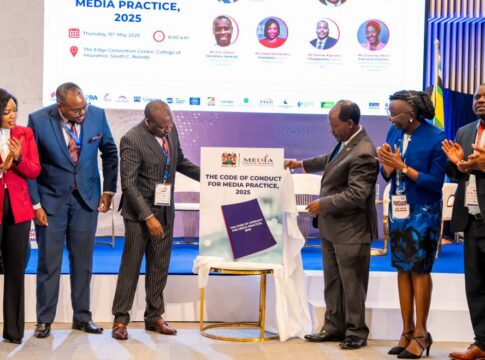
The Media Council of Kenya (MCK) has ushered in a new era of media regulation with the enforcement of the Code of Conduct for Media Practice, 2025, a transformative framework that aims to enhance media professionalism, accountability, and public trust.
The new Code marks a significant milestone in the country’s efforts to align media standards with modern challenges, including ethical use of technology, child protection, and digital responsibility.
The code was officially gazetted on May 14, 2025, in the Kenya Gazette Supplement No. 70 (Legislative Supplement No. 40), and was brought into force by the Cabinet Secretary for Information, Communications and the Digital Economy, Hon. William Kabogo. It replaces the previous Second Schedule to the Media Council Act, 2013, following a High Court ruling that declared the Broadcasting Code unconstitutional. The court’s decision compelled the MCK to develop a lawful, inclusive alternative that upholds constitutional rights and responds to Kenya’s evolving media environment.
At the heart of the 2025 Code is a deepened commitment to safeguarding children and vulnerable groups. Recognizing the growing influence of media content on all segments of society, the Code establishes age-appropriate standards designed to shield minors from harmful content while ensuring that vulnerable populations are treated with dignity and respect. It also responds to the disruptive role of technology by setting firm, ethical guidelines on the use of artificial intelligence (AI) in journalism and the handling of user-generated content, promoting transparency and editorial responsibility in a rapidly digitizing media landscape.
Additionally, the new Code emphasizes the importance of principled editorial conduct. It advocates for truthfulness, fairness, accuracy, and impartiality in news reporting, while discouraging sensationalism and misinformation. It also enhances the framework for dispute resolution, introducing clearer procedures to ensure swift and just handling of complaints lodged against media houses and journalists.
This revision reflects a broader national effort to restore and maintain the public’s trust in the media, while fostering an environment of mutual accountability between the press, the public, and the government. According to the MCK, the Code’s ratification by the National Assembly and its confirmation by the Clerk of the House signal a renewed social contract that places integrity at the core of journalism.
Importantly, the Code is the product of wide-ranging consultations with media stakeholders, including journalists, legal professionals, academia, and civil society. This collaborative process lends the Code both legitimacy and relevance, ensuring that it reflects the needs and aspirations of the media fraternity and the public it serves.
The Media Council has applauded the media community for its unwavering commitment to this new standard, describing the Code as a pact to uphold the highest journalistic values. It invites constructive criticism from all quarters, asserting that the true strength of the media lies in its willingness to be held accountable and to evolve with integrity.
“This is the dawn of a new era for ethical, fearless, and impactful journalism in Kenya,” the council noted while reaffirming its dedication to creating a media landscape that upholds press freedom, protects public interest, and fosters responsible journalism.
As the country moves forward under the new Code, it remains to be seen how effectively its provisions will be implemented and internalized. What is clear, however, is that Kenya is taking a decisive step toward building a media sector that is both free and fair, where truth is non-negotiable, and responsibility is shared.

