Sunday, December 14, 2025
Home Blog

State Reaffirms Support for Minority Communities’ Rights

0

The government has reiterated its commitment to protecting and promoting the rights of minority and marginalized communities, with renewed efforts to recognize groups that have historically been excluded from Kenya’s official list of communities.

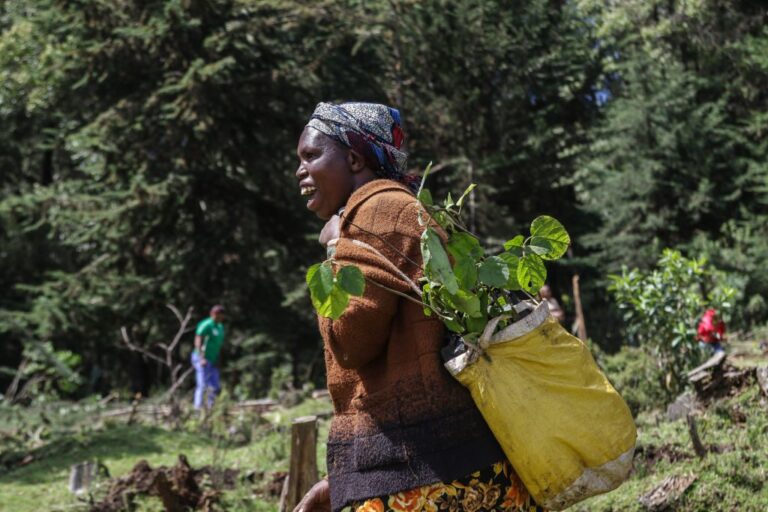
Speaking in Nkareta, Narok North, during the 6th Annual Ogiek Cultural Event, Lowoi Josphat Lodeya, Head of the Minority and Marginalized Affairs Unit in the Office of the President, affirmed that the Ogiek and similar communities deserve full recognition and legal protection.“This office is dedicated to ensuring that every community in Kenya has a voice and enjoys the freedom to exercise their rights,” said Lodeya. “The Ogiek are not just a clan they are a community with a rich culture and a vital role in forest conservation. As a government, we are determined to foster inclusivity, diversity, and equal recognition for all.”

Lodeya further added that his office is collaborating with various ministries, commissions, and state departments to craft policies and legislation that safeguard the rights of minority groups emphasizing that Kenya is home to more than the commonly cited 42 ethnic communities.

Namwezi Zitah, Director of Research at the Minority and marginalized Affairs unit, emphasized that inclusivity remains a cornerstone of President William Ruto’s administration under the Bottom-Up Economic Transformation Agenda.” we want to promote equity in terms of resources and fairness in opportunities especially for communities that have been left behind since independence.

The Ogiek are one of Kenya’s oldest forest-dwelling communities, known for their deep connection to the Mau Forest Complex. Traditionally hunters, gatherers, and skilled beekeepers, their identity and culture are inseparable from the forest ecosystem. Honey harvesting is not just a source of income but a cultural ritual that involves songs, special tools, and communal sharing.

Young children are taught early how to identify medicinal plants and the different flowering seasons for bees. Storytelling sessions held around evening fires are a key way in which elders pass on knowledge, myths, and moral lessons.

Their traditional music, often featuring horns (okore) and rhythmic drumming, reflects their close link to nature and seasons.

The cultural festival featured performances, traditional ceremonies, and exhibitions, aimed at showcasing the Ogiek’s heritage while raising awareness about their ongoing struggle for recognition, land rights, and environmental protection.

Daniel Kobay, who serves as Executive Director of the Ogiek Peoples’ Development Programme (OPDP), stressed the importance of cultural preservation for future generations. He highlighted the community’s strong connection to the Mau Forest Complex, describing it as their ancestral home and primary source of livelihood.


Indigenous Communities Must be Taught About New Technologies

0

Indigenous communities carry centuries of knowledge stories, traditions, and environmental wisdom that are vital for humanity’s future. Yet without access to new technologies, they risk being excluded from the conversations and opportunities that shape the modern world. Digital inclusion is no longer a privilege; it is a necessity for survival, self-determination, and global engagement.

Technology equips Indigenous people with powerful tools to protect their environment and preserve their culture. With mobile devices, drones, and mapping tools, they can monitor illegal logging, track wildlife, and document the effects of climate change. The same technology allows them to record oral histories, traditional songs, and cultural practices, ensuring they are passed on to future generations.

Bringing technology to Indigenous communities is more than just delivering devices.

By Alexander Kisioi
Environmental Activist and Freelance Journalist

How Google Provides a Safe Online Space for Children

2

Technology has eased the lives of people in different ways. If you want to buy something from the supermarket and feel tired, you can consider ordering through the supermarket app, and it will be delivered to your doorstep. Hungry? Just order online, and it will be at your doorstep, thanks to the Google Play Store.

The question remains, how is technology friendly to our children now that it’s here with us? Recently, in Kenya, a 16-year-old girl downloaded the dating app Tinder for a hook-up. In the app features, the app should only allow users 18 years old and above. However, the app cannot verify if a new user has entered the right age or not. In some apps, AI has been used to verify the faces of users to determine if they are children or not, which may be inaccurate.

Tinder, in particular, has no AI face verification. And because our children can be mischievous sometimes, the young girl lied about her age on the app and hooked up with a 28-year-old South African man who was arrested and charged with defilement. The man in his defense stated that he had asked the girl her age, and she said she was 18 years old.

This, therefore, explains the risks children are exposed to. However, we must note that technology companies have come up with various ways to ensure children are safe online. Google, for instance, has a software called Google Family Link. With the family link, you decide what’s best for your family. It’s an easy-to-use tool that you can download from the Google App Store or Apple Store to allow you understand how your child is spending time on their devices and more. 

Google Family Link guides children to appropriate content, approves or blocks apps your child wants to download, and helps to choose the right YouTube experience for your child. To that end, you are now aware that if the parents of the 16-year-old girl knew of Google Family Link and used it, their child wouldn’t have downloaded the Tinder App, and the girl wouldn’t have been defiled. 

Google Family Links secures the privacy of children. It makes meaningful choices for your child’s data. You can view and manage permissions for websites and extensions accessed through Chrome whilst apps downloaded on your child’s device

With Google Family Link, you can also secure your child’s accounts. As a parent, you can change or reset their passwords if they forget them, edit their account, or delete their accounts, especially if their safety is at risk.

In conclusion, it’s important for parents to ensure that online safety is a priority. Google is an important tool that children use for learning and research. “Just Google it!” they say. However, we should ensure children are safe at all times.

By Grace Olwande, 

Child Protection Advisor/Trainer


MCK Enforces New 2025 Media Code to Strengthen Accountability and Professionalism

0

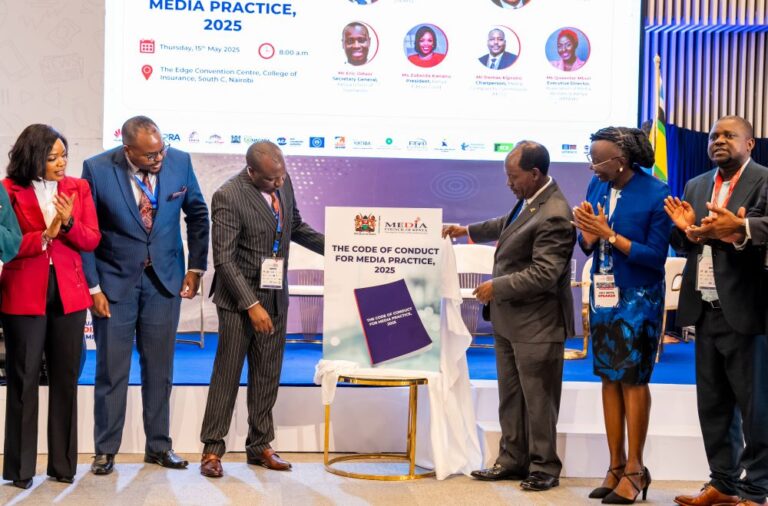
The Media Council of Kenya (MCK) has ushered in a new era of media regulation with the enforcement of the Code of Conduct for Media Practice, 2025, a transformative framework that aims to enhance media professionalism, accountability, and public trust.

The new Code marks a significant milestone in the country’s efforts to align media standards with modern challenges, including ethical use of technology, child protection, and digital responsibility.

The code was officially gazetted on May 14, 2025, in the Kenya Gazette Supplement No. 70 (Legislative Supplement No. 40), and was brought into force by the Cabinet Secretary for Information, Communications and the Digital Economy, Hon. William Kabogo. It replaces the previous Second Schedule to the Media Council Act, 2013, following a High Court ruling that declared the Broadcasting Code unconstitutional. The court’s decision compelled the MCK to develop a lawful, inclusive alternative that upholds constitutional rights and responds to Kenya’s evolving media environment.

At the heart of the 2025 Code is a deepened commitment to safeguarding children and vulnerable groups. Recognizing the growing influence of media content on all segments of society, the Code establishes age-appropriate standards designed to shield minors from harmful content while ensuring that vulnerable populations are treated with dignity and respect. It also responds to the disruptive role of technology by setting firm, ethical guidelines on the use of artificial intelligence (AI) in journalism and the handling of user-generated content, promoting transparency and editorial responsibility in a rapidly digitizing media landscape.

Additionally, the new Code emphasizes the importance of principled editorial conduct. It advocates for truthfulness, fairness, accuracy, and impartiality in news reporting, while discouraging sensationalism and misinformation. It also enhances the framework for dispute resolution, introducing clearer procedures to ensure swift and just handling of complaints lodged against media houses and journalists.

This revision reflects a broader national effort to restore and maintain the public’s trust in the media, while fostering an environment of mutual accountability between the press, the public, and the government. According to the MCK, the Code’s ratification by the National Assembly and its confirmation by the Clerk of the House signal a renewed social contract that places integrity at the core of journalism.

Importantly, the Code is the product of wide-ranging consultations with media stakeholders, including journalists, legal professionals, academia, and civil society. This collaborative process lends the Code both legitimacy and relevance, ensuring that it reflects the needs and aspirations of the media fraternity and the public it serves.

The Media Council has applauded the media community for its unwavering commitment to this new standard, describing the Code as a pact to uphold the highest journalistic values. It invites constructive criticism from all quarters, asserting that the true strength of the media lies in its willingness to be held accountable and to evolve with integrity.

“This is the dawn of a new era for ethical, fearless, and impactful journalism in Kenya,” the council noted while reaffirming its dedication to creating a media landscape that upholds press freedom, protects public interest, and fosters responsible journalism.

As the country moves forward under the new Code, it remains to be seen how effectively its provisions will be implemented and internalized. What is clear, however, is that Kenya is taking a decisive step toward building a media sector that is both free and fair, where truth is non-negotiable, and responsibility is shared.

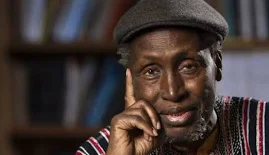
East Africa’s Iconic Novelist and Literary Giant Ngũgĩ wa Thiong’o Dies at 87

The literary world is mourning the loss of Ngũgĩ wa Thiong’o, the celebrated Kenyan novelist, playwright, essayist, and academician, has died at the age of 87. Known across the globe for his uncompromising voice on post-colonial identity, language, and resistance, Ngũgĩ’s legacy as a revolutionary writer and intellectual will endure for generations.

News of his passing was confirmed by his family on Wednesday 28th May 2025.Fellow writers, scholars, cultural institutions, and readers who have been deeply influenced by his work continue to mourn his demise.

Ngugi wa Thiongo was Born in 1937 in Kamiriithu, Limuru and he rose to prominence in the 1960s with works like Weep Not, Child and The River Between novels that explored the tension between tradition and modernity in colonial and post-independence Kenya. His literature offered sharp insights into the impact of imperialism, capitalism, and betrayal, while also celebrating the strength of African communities.

Ngũgĩ was never content to simply write for admiration. In the 1970s, he made a bold shift: abandoning English in favor of Gikuyu, his native language, arguing that language was a key site of decolonization. His Gikuyu-language play, Ngaahika Ndeenda (I Will Marry When I Want), co-written with Ngugi wa Mirii, sparked political uproar and led to his detention without trial by the Kenyan government in 1977. It was during his imprisonment that he famously wrote Devil on the Cross on toilet paper, a feat that cemented his status as a fearless artist of resistance.

Throughout his life, Ngũgĩ was an outspoken advocate for cultural liberation, education, and freedom of expression. He spent many years in exile, teaching at top universities in the U.S. and U.K., including Yale and the University of California, Irvine. His critical essays, especially Decolonising the Mind, remain foundational texts in postcolonial studies.

Ngũgĩ’s work has been translated into dozens of languages, and he received numerous awards and honorary doctorates in recognition of his contributions to literature and human rights. Despite being repeatedly nominated, he never received the Nobel Prize in Literature  a point of contention for many scholars who regarded him as one of the most deserving.

Beyond his accolades, Ngũgĩ inspired generations of African writers to embrace their heritage, write in their own languages, and challenge systems of oppression. His commitment to language, identity, and justice reshaped the literary map not only of East Africa, but of the world.

As Kenya and the international community celebrate his life and mourn his passing, Ngũgĩ wa Thiong’o leaves behind not just a body of powerful work, but a challenge: to continue telling African stories on African terms.

Haji Warns Social Media users Against Misuse of the Platforms

National Intelligence Service (NIS) Director General, Noordin Haji, has once again issued a stern warning about the misuse of social media platforms, highlighting their potential to pose a significant threat to both national and regional security. 

During a recent address at the Mashariki Cooperation Conference in Naivasha according to kenyans blog, Haji emphasized the growing concern over the malicious use of social media to spread misinformation, incite violence, and undermine national stability. He pointed to the rapid dissemination of false information and hate speech as major drivers of social unrest and a threat to democratic processes.”The misuse of social media platforms has become a serious concern for national security,” Haji stated.

“The speed and reach of these platforms enable the rapid spread of misinformation, which can have devastating consequences for our nation and the region.” 

Haji further stressed the need for responsible online behavior, urging citizens to be vigilant in verifying information and critically evaluating online content. He called for increased digital literacy among the population to enable them to discern fact from fiction and avoid falling prey to malicious online actors.

Haji also noted that he is actively monitoring online activity and working to counter the spread of misinformation and disinformation. He emphasized the importance of collaboration between government agencies, technology companies, and civil society organizations in addressing this growing threat.  

Haji’s warning serves as a timely reminder of the need for a responsible and informed approach to social media usage. As online platforms continue to shape public discourse and influence political processes, it is crucial for individuals and institutions to be aware of the potential dangers and take proactive steps to mitigate the risks.

Kenyan Media Fraternity Mourns the Loss of CGTN Journalist Nick Mudimba

0

The Kenyan media fraternity is mourning the loss of renowned journalist Nick Mudimba, who passed away on Sunday evening, March 24th, 2025, at his home in Syokimau, Machakos County.

Mudimba, a familiar face on CGTN, was more than just a news presenter; he was a respected voice, a storyteller, and a dedicated professional whose career spanned some of Kenya’s most prominent media outlets. His journey through Kenyan journalism was marked by excellence and a steadfast commitment to delivering accurate and impactful news. At CGTN, where he worked until his demise, he brought international stories to Kenyan audiences and vice versa, solidifying his reputation as a journalist of global caliber. But his impact wasn’t confined to international broadcasts.

Before his time at CGTN, he was a vital part of the news teams at KTN and Switch TV, contributing significantly to the national news narrative.  

The reaction to Mudimba’s passing has been a testament to his character and professionalism. Social media platforms have become a digital memorial, filled with heartfelt tributes from fellow journalists, industry veterans, and viewers who felt a connection to him through their screens. He was consistently described as a man of integrity, a supportive colleague, and a journalist who embodied the values of ethical reporting.

“Nick’s dedication to journalism was unparalleled,” shared a former colleague from KTN. “He wasn’t just reporting the news; he was invested in understanding the stories behind the headlines. He had a unique ability to connect with people, both on and off camera.”

Another tribute highlighted his mentorship qualities, noting, “He always had time for younger journalists, offering advice and guidance. He truly cared about the future of Kenyan journalism.”

The loss of Nick Mudimba leaves a significant void in the Kenyan media landscape. His work, characterized by its depth, clarity, and unwavering commitment to truth, served as an example for aspiring journalists. His legacy will undoubtedly live on, inspiring future generations to uphold the highest standards of journalistic integrity. As Kenya’s media community grapples with this profound loss, his contributions to the nation’s information ecosystem will be remembered and valued.

Northern Kenya journalists challenged to aid in fight against violent extremism

0

Journalists and Media practitioners in Northern Kenya have concluded a two-day training for Media representatives on their role in countering violent extremism (CVE) and international terrorism reporting.

The training was aimed at equipping the participants with skills that will improve understanding and communication techniques targeting specific journalists, editors, students of journalism, and Government Public Information Officers.

Held in Garissa, the training was facilitated by the Horizon Analysts and Researchers Network (HARN) in collaboration with Northern Kenya Media Practitioners – (NKMP) and Womenkind Kenya.

The Director of Horizon Analysts and Researchers Network (HARN), Siyad Jimaale, said the participants will at the end of the training learn skills to build the knowledge of media representatives in reporting on terrorism and extremism issues.

Mr. Jimaale said HARN, an independent non-profit policy research organization producing quality policy research to increase the understanding of realities in Northern Kenya has documented new changes and patterns used by violent extremist organizations for recruitment.

The Director called on local media in Northern Kenya to take a leading role in helping authorities counter violent extremism.

“Poor reporting by media practitioners has been identified as one of the leading challenges on the security of the country,” Mr. Jimaale said.

“I hope such training courses will help the journalists to more accurately report on these issues,” he added.

The director of the Think Tank called on members of the fourth estate to credibly report on the consequences of terrorism, the underlying aims, and the motivations of terrorists.

These he said, “will address awareness deficits and initiate inclusive debates among the public regarding problems that may lead to violent radicalization as well as developing local solutions.”

Abdirashid Hussein, a Peace, Cohesion, and Security analyst working in Northern Kenya said the exercise was significant in enhancing the interaction of the national security agencies and media in preventing these global threats.

“This will enable sharing of information, experience and best practices, promoting dialogue between communities and countering of violent extremism in Northern Kenya”, said Hussein, a Security expert.

The Secretary General of Northern Kenya Media Practitioners – (NKMP), Yunis Dekow said the participants were trained on advancing Cooperation between the media and other agencies to promote transparency and accountability.

“I hope the training has made Northern Media Practitioners better informed and will help in the coverage of insurgents activities and promote transformative engagement with partners,” said the Secretary-General.

Mr. Dekow called on security agencies responding to threats posed by violent extremists to be watchful in their counterterrorism efforts and uphold basic democratic and human rights as enshrined in the constitution.

In Garissa, Kenya’s ambitious LAPSSET project has been derailed by elements of the Somali militant group al-Shabaab.

The death toll Since September last year along the corridor program is at least 30, the majority of them construction workers.

In the last two months alone, seven attacks targeting the project workers and property were conducted leaving half a dozen dead and destroying valuables. The attack has increased since the beginning of the year.

Despite Kenya deploying heavy security to safeguard the construction of the LAPSSET project, the insurgents have interrupted plans to connect the region, affecting planned trade and logistics adventures, as well as the expected rapid economic transformation predicted in Northern Kenya.

The training is aimed at building the knowledge of media representatives in reporting on terrorism and extremism issues and enhancing the interaction of national security agencies and media in preventing these global threats.

Training participants also discussed issues and problems of Mass Media in Northern Kenya in reporting on extremism and terrorism issues, reviewing the legislation, using the internet for radicalization, preparation of press releases, interviews, and special reportages and how to avoid propaganda when reporting.

The one-day course is part of a project on combatting terrorism initiated by Horizon Analysts and Researchers Network (HARN).

Mahat Abdi and Halima Noor, who were among the participants, thanked the organizers for coordinating the training which they believe will improve their reportage around countering violent extremism. The two said the course has opened their eyes giving room to also collaborate with other media practitioners in investigating and verifying stories.
The participants were drawn from the print, electronic and social media in Garissa County and is set to be conducted in other parts of the country that have challenges of security.

The Northern Kenya Media Practitioners is chaired by Abdikadir Ukash, founder and Editor of Kulan Post, the country’s leading digital media outlet which focuses on Northern Kenya.

MCK to recall accreditation cards to crackdown fraudsters

0

The Media Council of Kenya (MCK) has announced that it will be recalling all accreditation cards to contain fraudsters posing as journalists.

Through a statement to the media, MCK  has said new press cards will have additional unique identifiers that include barcodes and a QR code that can be scanned using a smartphone.

MCK earlier held a meeting with various stakeholders in a move to end fraudsters in the media sector who are posing as journalists.

MCK CEO David Omwoyo said the meeting is a result of an increase in the number of fraudsters who extort and harass the public.

He said” it has come to our attention that there is an escalation of fraudsters masquerading as journalists and media practitioners who get access to events to extort and harass people”

The council reiterates that it is committed to protecting the image and credibility of the media industry and it vows to ensure only accredited journalists are allowed to practice in the country.


Merck Foundation launches to address Social and Health issues through African Fashion and Art

0

The Merck Foundation has launched their first-ever TV program – ‘Our Africa by Merck Foundation’. This first-of-its-kind TV show is set to be the voice of the voiceless and break the silence about many critical and sensitive social and health issues in Africa.

Initially, the show was released on prime TV stations in many countries like KTV in Kenya, NTV in Uganda, GH One TV in Ghana and ZNBC in Zambia, AYV in Sierra Leone, and LTV, in Liberia, immediately captured the attention and hearts of millions of viewers across Africa. The TV program will soon be broadcast on TV 3 in Ghana, BTV in Botswana, and KTN in Kenya. “Our Africa” TV Program is currently on the social media handles of Senator, Dr. Rasha Kelej and Merck Foundation.

“I am extremely happy and proud to present our new and unique program “Our Africa by Merck Foundation’. I strongly believe that fashion and art should have a purpose beyond entertainment and look good. They can contribute to sensitizing our communities about different social and health issues such as ending FGM, ending child marriage, stopping GBV, breaking the Infertility stigma, supporting Girl Education, Diabetes awareness, and a healthy lifestyle. This is a beneficial yet entertaining TV program” said Senator, Dr. Rasha Kelej, CEO of Merck Foundation.

The pan-African TV program is conceptualized, produced, directed, and co-hosted by Senator, Dr. Rasha Kelej. Featuring African Fashion Designers, Singers, and prominent experts from various domains with the aim to raise awareness and create a culture shift across Africa.

Merck Foundation through their “Our Africa” TV program, has established the first ‘Fashion and Art community with Purpose. The community across 20 countries aims to break the silence and be the voice of the voiceless about many critical. It also targets sensitive social and health issues in Africa and beyond.

“This program is our effort to reach out to youth and other members of our urban and rural communities. We aim to address and raise awareness about a wide range of pressing social and health issues that are relevant to our continent. I am very happy that we have already started to receive great feedback on the promo and the first episode”, added Senator, Dr. Rasha Kelej.


EACC Holds Conference To Nurture University Students

0

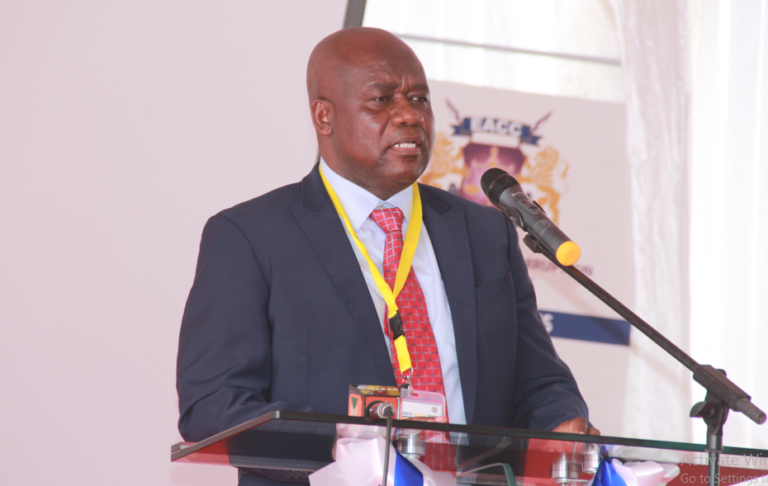
The Ethics and Anti-Corruption Commission (EACC) has today launched the first Nyanza Universities Integrity Clubs Conference that aims at nurturing the character and behaviour of young people.

The conference themed “Modelling of Integrity through University Integrity Clubs” The event brought together student leaders from seven universities in Nyanza, including Tom Mboya, Maseno, Kisii, Rongo, Great Lakes the University of Kisumu, Jaramogi Oginga Odinga and Uzima.

The Integrity Clubs in schools and higher learning institutions were introduced by the Ministry of Education in collaboration with EACC, to help curb corruption challenges at early stages.

Speaking during the official opening of the Conference, the Director of Preventive Services at EACC, Vincent Okongo, said the Conference gives them a platform to share the best experiences across integrity clubs in various universities in the greater Nyanza region.

According to a survey by EACC released in December last year, the corruption challenge is mainly witnessed in the universities among the youths.

“The industry is full of corruption and most of them are from universities, a situation that makes us bring together university leaders for training,” said Okong’o.
The Director stated that the program is a long-term Policy of the Commission, engineered toward a value-driven society.

“I’m glad that some impacts of the Commission’s efforts have been witnessed, especially the reduction of strikes in the learning institutions,” the Director stated.
He added that the youths can uphold integrity by becoming champions in society, enhancing positive values and also through active participation in leadership.

Homa Bay County Commissioner, Moses Lilan, said that tackling corruption is the right and the responsibility of everyone and it is only through cooperation and involvement of each and every person in the society that the vice can be controlled.

Lilan stated that corruption violates human rights, threatens security, drives organized crime, corrodes our economy, and crushes opportunities for development, thereby, trapping people in cycles of inequality and poverty.

“Integrity is earned and not purchased. You have to do a lot of work to instil it in yourself,” said Lilan.

He pointed out that corruption must stop because the communities are losing resources and countless opportunities, to develop and secure better lives.

Clickatell Predicts Mobile Messaging to be the Next Big Channel for Digital Commerce in 2023

0

Clickatell, a Chat Commerce and business messaging leader, conducted research on customer service trends and preferences for travel and retail and identified that brands that personalize both their digital and in-person commerce experiences can generate more meaningful and lasting customer relationships. In 2023, mobile messaging will emerge as the ideal channel to create these holistic commerce experiences for consumers as well as to accelerate business demand and grow revenue, according to Clickatell’s leaders. This and the five additional mobile messaging trends are likely to be the most relevant priorities in 2023 to help brands build and maintain consumer loyalty.

Chat Commerce is the next wave of digital commerce
The next wave of digital commerce will strongly emerge in 2023. Shopping digitally, whether on the web or on a mobile device, is now widely adopted by consumers. But strong demand by consumers for even more convenient shopping will make 2023 the tipping point for Chat Commerce, with more consumers engaging with their favourite brands within the messaging apps they use every day, such as SMS, Apple Messages and WhatsApp. In 2023, the commerce experience within messaging apps will evolve to be more functional, with experiences that rival that of other mobile apps,” said Pieter de Villiers, CEO and Co-Founder at Clickatell.

 Convenience adds a critical layer of satisfaction for consumers
“Brands add a layer of convenience by offering a real-time mobile option for consumers to receive order updates, new offers and the ability to simply shop and transact through the messaging channels they already use daily, rather than shopping at a separate digital destination such as a website or mobile app.

According to Clickatell’s Chat Commerce Trends Report: Retail Edition, 51% of consumers want access to special offers via mobile messaging and 46% of consumers want to receive personalized promotions for things like last-minute deals. Retailers need to be meeting consumer expectations and that points to messaging commerce,” said Jennifer Shambroom, CMO at Clickatell.

Providing customer service exclusively online is a smart move
“With increasing costs and labour shortages, brands are looking for ways to simplify and consolidate, and leveraging mobile messaging with chatbots and the convenience of asynchronous communication with customers is a good decision. Millennials and Gen Z are more likely to view messaging as a preferred communication channel. Further, with rising expectations of customer service departments to generate sales revenue, mobile messaging provides a seamless and secure venue for transactions that allows representatives to support customers along their entire path to purchase, while also encouraging the opportunity for increased sales,” said De Villiers.
 Consumers want to use mobile messaging to make payments
In 2023, brands will need to double down on mobile, and mobile messaging channels are the place to focus. Consumers want to use mobile messaging with a retail company if it is as convenient as chatting with a friend,” said De Villiers.

Mobile messaging apps are the new super app
“Consumers live on their mobile phones, especially in mobile messaging apps. As consumer behaviour continues to trend toward engaging with brands within messaging apps, the need for a business to invest in a custom mobile app will become less viable. Mobile messaging apps will become the Super App in 2023 and beyond, going beyond linear message threads to deliver the full range of commerce experiences, allowing consumers to receive special offers, make immediate purchases, coordinate item drop-off and pick-up, and contact customer service, delivering satisfying, personalized experiences across the entire customer lifecycle,” said Shambroom.

IEBC Portal, Rigathi Gachagua, Martha Karua, Tushangilie Kenya Lyrics Among Most Trending Searches In 2022

0

Google has today released the top trending Google Searches in 2022 showing Kenyans looked for information about general elections, movies, education, health, sports, and local and global politics. The trending Google Search Trends also reveal top-10 searches on general knowledge information on ‘what is and ‘how-to’ queries on health, tech and general issues.
Ms Sharon Machira,  Google’s Communications and Public Affairs Manager in Kenya, said, “Google’s 2022 Year in Search lists the moments, people, topics, events, and places that captured Kenyans’ attention during the year. Especially off the back of an election, we saw people come to Google Search to find answers to their biggest questions.”

IEBC Portal which was used to display the presidential results in the 2022 General Elections topped the general trending searches. Kenyans searched for the portal to follow the results as they streamed in from the polling stations as they were eager to know who their next president would be. Kenyans’ love for football dominated the Trends with World Cup 2022 Fixtures and AFCON emerging as the second and third trending general queries. Kenyans sought to know the countries that qualified for both the World Cup and AFCON and how they were paired. They searched to know the fixtures, and results of their favourite teams as they followed the tournaments. Other queries were KNEC Portal which is used to check primary and secondary national results, KUCCPS Portal which is used for university admission applications, and the online social multiplayer game Pakakumi. The top ten list of the general trending searches are closed by Climate Change, COVID-19 Registry, and the Russia-Ukraine Conflict.

The Trending Local Personalities category was dominated by searches on Deputy President Rigathi Gachagua, Azimio La Umoja Deputy Presidential candidate Martha Karua, Root’s Party presidential flag bearer Professor George Wajackoyah, Nairobi Governor Johnson Sakaja, Wiper Party Leader Kalonzo Musyoka and Education Cabinet secretary Ezekiel Machogu. Searches were also made on  IEBC vice chair Juliana Cherera, IEBC chair Wafula Chebukati, nominated MP Sabina Chege and, 100m and 200m sprinter Ferdinand Omanyala, currently the African record holder and eighth fastest man of all-time in the 100 metres after clocking a time of 9.77 on 18 September 2021 in Nairobi.

On the how-to category, Kenyans searched how to update the Safaricom line, how to check KCSE results, how to check KCPE results, how to check their polling station online, how to buy KPLC tokens, how to make a marionette, how to register Airtel line, how to make a kite, and how to download from one admission letter.

In the Global Personalities category, Kenyans closely monitored information about Gabriel Jesus, Casemiro, Lisandro Martinez, Putin, Jaden Smith, Simon Leviev, Will Smith, Erik Ten Hag, Rishi Sunak and Raphinha.

In the trending loss, the death of local and global personalities saw Kenyans seek more information about Queen Elizabeth, Mwai Kibaki, Takeoff, Osinachi Nwachukwu, Paul Gicheru, DJ Lithium, Kevin Samuels, Frank Obegi, Coolio and Ivana Trump. The top trending searches on Sports were AFCON, World Cup, UEFA Nations League, EPL Table, Ballon D’Or, Winter Paralympics, Commonwealth Games  Schedule, Carabao Cup, IPL and Community Shield.

The Search results in the Movies and TV Shows category show Kenyans closely monitored Tinder Swindler, Zora, Sultana, Jeffrey Dahmer, House Of The Dragon, Stranger Things, Black Adam, Wakanda, The Terminal List and Inventing Anna.

In the Health category, Kenyans sought information on how to maintain facial health by controlling the type of food consumed, how to register for the COVID vaccine, how to get pregnant fast, how to calculate BMI, how to register NHIF online, how to remove pimples naturally and permanently, how to gain weight in a week, how to treat UTI at home and how to grow hair faster naturally in a week and how to manage stress. Search on the diseases category was on Monkeypox, Swine Flu, Alopecia, Moh Chanjo, Fournier Gangrene and Ramsay Hunt Syndrome.

In the Tech category, many Kenyans looked for information on how to update GB Whatsapp, How to delete a page in word, how to convert a word document to pdf, how to clear cache, how to screenshot on Windows 10, how to pin location on Whatsapp, how to cast phone to TV, how to backup Whatsapp chats, how to delete a Facebook account and how to download apps on a laptop.

In the Music Lyrics category by various artists among them Rush Lyrics, Tushangilie Kenya Lyrics, Sugarcane Remix Lyrics, Girlfriend Lyrics, Calm Down Lyrics, Finesse Lyrics, Overdose Lyrics, Cough By Kizz Daniel Lyrics, For My Hand Lyrics and Love Nwantiti Lyrics.

Boomplay and France’s Generations Radio in Partnership to Promote African Music

0

Africa’s largest music streaming platform Boomplay has partnered with Generations Radio, France’s premier syndicated Hip Hop and Soul radio station, to launch the Top Africa Charts show to promote African music and spotlight African artists.

The partnership establishes the Top Africa Charts show as the first ever African music charts show on mainstream radio in France, sourced from Boomplay’s African charts and produced by Generations Radio. The show features top songs from Ghana, Nigeria, Cote d’Ivoire and many other African countries every week while spotlighting new artists, songs and key music developments across Africa.

The Top Africa Charts show broadcasts live on Generations Radio from its Paris studios every Sunday from 20h00 – 21h00 GMT+1  and assumes two broadcast formats; in French and English. The French format is a live radio show and podcast hosted by sensational OAP, Ornella and the English version is in podcast format, presented by Cleopatra, with both shows hosting special guests.

Regarding the partnership, the Director for Artist and Media Relations at Boomplay, Tosin Sorinola, disclosed, “As an Africa-focused streaming service, Boomplay is constantly seeking opportunities to promote African artists and their content. Thus a collaboration to provide more reach for African music and introduce many African artists to the french market fits our vision of empowering the African music ecosystem to unlock its potential and taking African music to the world. We couldn’t be more excited to have an influential partner as Generations Radio to realise this.”

Commenting on the partnership, Director at Generations Radio, Laurent Beauvain, also noted, “African music is today the most represented international music on our music programming at Generations. This is a big step for our radio station, which has a music editorial strategy that is mostly Hip Hop and Soul. Boomplay has the best music insights and indicators of trends and future revelations in key countries such as Nigeria, Ghana and Cote d’Ivoire. We are excited to partner with Africa’s leading streaming platform. Generations Radio continues in its mission to spotlight and empower new talents every year and is excited to be able to expand its audiences and impact in Africa as well.”

The Co-Founder and Executive Producer of Top Africa Charts Show, Cleopatra Mukula, also shared, “It was important to us to curate a partnership blueprint that puts all listeners and the artists first while simultaneously bridging the gap between young people in the francophone diaspora and Africa. Every artist playlisted on Top Africa monetises via radio play and also from all streams generated via our playlist on the Boomplay app. This is a milestone shift for African music and culture in France, and I am so proud to be part of this African story we are telling through music.”

Generations Radio is a leading radio station in France with a massive youthful listenership owing to HipHop and Soul. The station views music partnerships as an avenue to further amplify the voice of young talents. Boomplay, as a key player in Africa’s digital music scene, has, through strategic partnerships, continued to invest in the African music industry.

The Top Africa Charts show podcast is available exclusively on Boomplay in English and French after the live broadcast. Eight pilot episodes of the show have already been introduced to listeners of Generations Radio and are currently streaming on Boomplay.

Business Confidence Report celebrates African women entrepreneurs’ optimism about business

0

Women entrepreneurs in Africa are expressing widespread optimism and continuing resilience despite the prevailing economic climate, according to the 2022 Lionesses Business Confidence Report and Index launched on Global Women’s Entrepreneurship Day.

The report, prepared by Lionesses of Africa Public Benefit Corporation and New York University finds that ninety-three per cent of women entrepreneurs anticipate their companies will be better off a year from now, with only 2% anticipating that their companies will be worse off. The report is funded by the African Development Bank Group, through the Affirmative Finance Action for Women in Africa (AFAWA) Initiative.

The second edition of the 2022 Lionesses Business Confidence Report and Index, comes at a critical moment, benchmarking last year’s data and evaluating African women-owned business performance, access to finance, and digital transformation. Furthermore, it allows stakeholders to learn how 100 of Africa’s top women business leaders were surveyed, and assess the state of their businesses and their opportunities for the upcoming year.

“The Bank, through the AFAWA Initiative, is pleased to collaborate with Lionesses of Africa on the latest Lionesses Business Confidence Report and Index. We hope women entrepreneurs, financial institutions, and governments use the rich data provided to make strong business and policy decisions to unlock the potential of women-owned businesses across the continent,” Malado Kaba, African Development Bank Group Director of the Gender, Women and Civil Society department noted.

The report also assesses women entrepreneurs’ external financing plans and their confidence levels in the willingness of financial institutions to fund their ventures, as 66% of women anticipate looking for external funding in the future (up from 61% in 2021). More of than 50% of women anticipate that financial institutions will be willing to provide loans or credit to their business in the next six months, with women in East Africa reporting the greatest confidence.

“Even before the pandemic, women-led businesses faced significant challenges accessing financing, often lacking the financial track record and collateral required to secure business loans, causing financial institutions to perceive them as risky,” said Esther Dassanou, AFAWA coordinator at the African Development Bank Group.

“The Bank is committed to accelerating women entrepreneurs’ ability to access finance by unlocking up to $5 billion by 2026. The Bank is also committed to working with African governments to ensure that inclusive policies are in place to benefit women entrepreneurs,” she added.

Lionesses of Africa Founder and CEO, Melanie Hawken confirmed that access to finance remains a dominant concern. Lionesses financed their companies’ activities through 2021 and into 2022 largely by tapping internal sources of financing, mostly retained earnings and personal capital. There was a sizable drop off in access to Covid-19 business support programs and other government grants compared with the previous year.

Another positive trend is the strong signs of recovery from the impacts of the pandemic, with two-thirds having either returned or expecting to return to pre-COVID-19 business levels by the end of 2022.

“Two-thirds of the Lionesses anticipate looking for external financing soon but only half perceive financial institutions willing to provide the loans or credit they will need. However, this represents a larger percentage than in 2021, suggesting modest but growing confidence in securing funds from financial institutions, and that is a trend in the right direction,” Hawken said.