Friday, December 19, 2025
Home Blog Page 15

Ombudsman wants Lands PS fired over incompetence

The Commission on Administrative Justice, Ombudsman, has asked the President to remove from office Lands Principal Secretary, Arch. Mariamu el Maawy.

The Ombudsman says this is on grounds of prejudicial and improper conduct through inaction, unresponsiveness, inefficiency and ineptitude.

In a statement, the commission said

“The Commission has noted with concern that the Principal Secretary has failed in her ultimate role as the Accounting Officer of the Ministry, and has failed to satisfy a constitutional requirement under Article 232(1) of the Constitution on values and principles of public service.”

The statement continues,

“Ministry of Land, Housing and Urban Development remains one of the public institutions complained about: in 2014, the Commission handled a total of 86,905 complaints, of which 7.63 percent were against the Ministry; while the complaints against it in 2013 stood at 9.73 percent of 18,257 complaints handled in the year.”

The complaints relate to a number of service issues ranging from delay and inefficiency in service delivery, unlawful official conduct to abuse of power, unresponsiveness and inaction at the Ministry, unlawful official conduct to abuse of power. The Commission has encountered difficulties in resolving the complaints as most of the inquiries to the Ministry go unanswered or take inordinately long to be addressed.

“In respect of the Ministry the Commission has always made inquiries to the Principal Secretary or copies her in such correspondence as the Accounting Officer, and in some cases served her in person. However, the Principal Secretary has persistently failed to respond to the inquiries or resolve the complaints,” the statement adds.

In an effort to address this challenge, the Commission held a meeting with the Principal Secretary on 23rd May 2014, where she acknowledged unresponsiveness on the part of the Ministry and undertook to ensure responsiveness on inquiries by the Commission. In spite of the foregoing, the state of responsiveness by the Ministry has, allegedly, not improved.

The commission stated that the action and conduct of the Principal Secretary has affected the turnaround time for resolution of complaints thereby prolonging the suffering of the complainants, public sector reforms that seek to improve service delivery as well as have a bearing on the area of Land Reform

From the aforementioned,

the Ministry impinges on the constitutional values and principles on leadership and integrity, and service delivery as well as other relevant laws such as the Commission on Administrative Justice Act, Leadership and Integrity Act, Fair Administrative Action Act and the Public Service (Values and Principles) Act.

The ombudsman has given a summary of 165 cases representing the long pending complaints the Ministry is yet to respond to, and a copy of a letter to the CS, Ministry of Land, Housing and Urban Development, notifying him of the action by the Commission.

The Constitution grants the President powers to dismiss any Principal Officer directly or through recommendations by Parliament. Since this is a request from a constitutional commission to the President, it is unclear whether the call will be heeded considering that new Principal and Cabinet Secretaries were sworn in less than a fortnight ago.
Climate change: Is Your New Year Resolution Green?

By Boaz Opio

A survey by Google published by Climate Analytics indicates that the word “Climate Change” and “Go Green” was mentioned over 800,000 times within a time span of one month in social media.

As if that’s not enough, this year, climate change has been the biggest topic in the news. It’s the only cause that brought together nearly 200 countries to Climate Change summit in Paris. The resolution was a pleasing one. For the first time, the world gathered to agree on cutting carbon emissions, discuss cutting edge production technologies to keep average global temperatures below 2 degrees Celsius…

Recent satellite images taken by America’s NASA reveal that deforestation rate has been increasing on a faster rate than the rate at which new trees leaf. The total number of trees is estimated by a BBC science documentary to be 3 trillion, 30 times less than 30 years ago and this has a say on the rising global temperatures.

While a study conducted by World Bank Group in partnership with Korea Green Growth Partnership, Promoting Green Urban Development in African Cities notes that Urban Africa has seriously lost much of its green vegetation. In Uganda, the so called Pearl of Africa, former public spaces and parks in Kampala and other towns have been converted into other urban uses.

Throughout Africa wetlands have been severely reduced in size and function as a result of encroachment and pollution as industrial effluent is channeled into the wild lands and rivers. A 2014 report “Wet lands or Waste lands” published by African Development Bank (AfDB) further estimates that 50 percent of African wetlands are in “dire filth.”

This makes me question, as we concoct our 2016 heart desires, if your back yards and front yards don’t look like another desert within the desert’s Oasis?

Well, if you answered No, it is probably because you value the green of nature and you certainly are aware of the benefits of trees on earth’s natural processes. Let’s not beat around the bush greenies, trees are of matchless standing without which we can bet you couldn’t have made into the last days of this year.

Unless you’re still green about how human activities have injured the beauty of the environment, you will continue destroying forests or demanding more charcoal. With sparse tree cover, the vast carbon dioxide released into the atmosphere increasingly causes our one and only home, the earth to warm up to extinction a microbe after all living things.

Ever heard of ‘green revolution’? Everything is going green and if your front yard looks like a Second World War grave yard, then am afraid, it’s year to change as everyone will be ‘re-fixing’ something about themselves. Planting more trees will help a great deal.

Also promise you’ll agree to use green products growing in acceptance. These include recyclable packaging material; win yourself odd favour from mother earth lest you should buy the farm in the even numbered year. Uganda just abolished the use of polythene packaging bags!

Whereas huge undertakings to adopt renewable energies such as Wind, Solar and Geothermal is even more resolute for even banana republics.  Clean / green energy productions have shoot to 17 percent. This is a call on all economies to embrace green movements. In developed countries like Russia, UK, Japan, electric cars are increasingly hitting roads, a promise to break away from the bondage of Urban Carbon Karma. So 2016 is a year when cruising yourself in an electric Mercedes should make your ball roll past putting green.

Some countries are seriously embarking in ambitious tree planting programmes. Rwanda aims to plant 10 million trees across the country between 2015 and 2017. If these efforts could be accompanied by public consciousness, humanity’s future would blossom.

From manufacturing plants to our studious digs, a thought of sustainable development is necessary for watering every development goal. Challenging our awareness of the role of individual actions as a potentially potent force towards asphyxiating climate change epidemic by being part of the new green movement would guarantee a proper transplant of eco-friendly resolves that germinated during the just concluded Paris climate summit. To do this, you must go green.

The author is a Climate Tracker, Kampala, Uganda.

Does Narok chaos portend expectations for 2017?

It is like a tradition that every end of the year, a section of Kenyans has to be uprooted from their homes due to ‘inter-community’ skirmishes.

In what is seemingly a deeply programmed malaise in the national psyche, these displacements are a pointer to the deep-rooted problems that Kenyans have when it comes to relating with each other.

Despite voting overwhelmingly for a constitution that was meant to change the face of the country, Kenyans are still fighting five years after its promulgation.

Historians say that the late Tanzania’s President Mwalimu Julius Nyerere once described Kenya as a man-eat-man society where all that mattered was self. This could be true in that naturally and typically, everyone wants to be first even now.

The latest occurrence of violence is in Narok County where inter-tribal skirmishes have escalated over the past few days.

Capital FM reported on Saturday that one child died following a flare-up of inter-community clashes at Olposimoru in Narok after the killing of two herdsmen.

Police Spokesman Charles Owino who was quoted by the outlet said that the child was hit by a motorbike as the family was fleeing the fighting.

Owino added that more than 20 houses were also torched in the incident which occurred on Friday night and several people are nursing arrow wounds at Olenguruone and Tenwek hospitals.

“Tension is high in the area and several houses have been torched and several people injured following a conflict between the Maasai and Kipsigis communities,” he said.

And in this era, should this be happening?

The country seemingly has a long way to go in terms of addressing tribal tensions. Most of these tensions are due to land ownership and despite recommendations offering ways to resolve these issues being numerous, they keep accumulating dust in government archives.

On the national scale, it is now an open secret that those who commit crimes against Kenyans are above the law. What with the ICC bungling the 2007 PEV cases so badly? The victims of the violence are yet to be fully resettled despite the politicians’ lives continuing without hitches.

It seems like Kenyans have no recourse whatsoever when it comes to getting justice for crimes committed against them in a place they should call home.

And in their usual version, Kenyans on Twitter expressed their dissatisfaction with how the security concerns are being addressed. Some feel that the government is not doing enough to deal with problems that cause tribal tensions.

And some thought that the communities were to blame:

On Sunday, December 27, the Nation reported that fighting continued in Olpusimoru even after Interior Cabinet Secretary Joseph Nkaissery and the Inspector General of Police, Joseph Boinnet, arrived in the area to contain the violence which started on Christmas eve.

At least 1,000 families have fled from their homes, displaced by the clashes that have also claimed three lives and left several other people injured. This is double the number that fled on Christmas day.

Nkaissery, who addressed the two warring communities separately, urged them to stop fighting at once and ordered police to arrest those found with arrows and other weapons. He also ordered the arrest of local leaders who are said to have been inciting both sides to violence.

There have been allegations that politicians were behind the fighting that has claimed three lives since it broke out on December 24.

And as we head into 2016 when political campaigns will gain momentum, does the chaos being experienced now portend what is to be expected?

God forbid.

Equity Bank to give 2,000 comprehensive scholarships to needy students

The Equity Group Foundation has announced that 2,000 comprehensive scholarships will be available for needy but bright students.

This comes just a day before the release of the 2015 Kenya Certificate of Primary Education (KCPE) results on Wednesday.

The comprehensive secondary school scholarships under the Equity Group Foundation’s Wings To Fly Program are designed to provide financial and related relief to academic achievers from financially constrained backgrounds who would otherwise not afford to join Form 1 without financial support.

Beyond school fees settlement, the unique Wings To Fly program scholarships cater for transport, pocket money, shopping, books and uniform costs for students countrywide, through their four-year secondary school education.

Speaking when she confirmed the Wings To Fly 2016 Class, the Foundation’s Managing Director, Hellen Gichohi said that the release of the KCPE results will also automatically open the application period for the Wings To Fly scholarship running from December 30 to January 6.

An audience at one of the Equity Foundation's event. 2,000 students will benefit this year. [Photo: mastercardfdn.org]
An audience at one of the Equity Foundation’s event. 2,000 students will benefit this year. [Photo: mastercardfdn.org]
This year, the eligibility cut-off points for students wishing to be considered for the Wings To Fly Comprehensive scholarship has been set at 350 marks.

“We encourage the potential applicants, as soon as the results are announced, to present themselves to the nearest Equity Bank Branch or Equity Agent with their KCPE result slips and a letter of introduction from their respective head teachers confirming their results to be issued with the Scholarships Application forms,” Gichohi said.

Shortlisted students, she added, will be invited for interviews which will be conducted by the Equity Group Foundation Regional Scholarship Selection Board (RSSB).

The RSSB comprises of at least 12 local community stakeholders, two of who must be women, including chiefs, educationists, civil society leaders, Equity Agent representatives and religious leaders in the County and is chaired by the County Education Officer (CEO) and coordinated by the respective Equity Branch Managers.

The shortlisting of the beneficiaries will be done on January 7, 2016 followed by interviews on January 8 and 9, 2016. Thereafter, home visits will be between January 10 and 13.

The 2016 Wings To Fly cohort will all travel to Nairobi for induction the same day January 15, 2016, as part of their preparations to later go to the respective schools.

Now on its seventh edition, the Wings To Fly Comprehensive scholarship program has been implemented by Equity Group Foundation (EGF) through a fund created by a partnership between Equity Group Foundation and The MasterCard Foundation (MCF) with support from USAID, KfW, PEPFAR, UKAID and generous contributions from individuals and corporates.

The scholarship support program for top performing yet needy (orphan or vulnerable) is meant for students in the counties across Kenya.

Its objective is to provide financial support and leadership empowerment tools to such students.

Equity Group Foundation was established by Equity Bank to create the financial and operational infrastructure for social programs aimed at low-income populations.

Will garbage in Nairobi send Governor Kidero home?

Nairobi Governor Evans Kidero is the talk of Twitter town following a report aired on Citizen TV detailing how the City in the sun has become one big dump site.

The accumulation of garbage in Nairobi has become synonymous with the county government as collection and disposal seem to have died with the coming of the county government.

Most people feel that the defunct City Council was doing a better than Kidero is.

The gripe continues with many Nairobians having called for Kidero’s resignation over the menace.

On Monday, #KideroFailedNairobi was the trending topic:

Indeed, a Tweet Poll conducted on Monday showed that the governor is doing everything wrong when it comes to garbage.

A screenshot of the poll. Most Nairobians feel the governor has failed on garbage collection. [Photo: Njenga N]
Others jibed:

Others predicted that the governor will be sent packing come 2017.

And a voice of reason in the midst of the displeasure:

Earlier in the year, activists Benjamin Ndolo and Victor Oluoch sued Kidero seeking information from over payments made to a garbage collector.

Governor Evans Kidero. He has been accused of sleeping on the job causing garbage to increase in the City. [Photo: nairobidigest.co.ke]
The two alleged that the county government of Nairobi made a fraudulent payment to a bank account of a private limited company.

They also wanted the court to order the Co-operative Bank of Kenya to produce bank statements for the said company for inspection.

The activists, who appeared before High Court Judge Mumbi Ngugi, alleged that the County Government of Nairobi, led by Governor Kidero, paid sh7.6 million to Peposi Freighters Limited only four days after it was incorporated as a Limited Liability Company.

The court was informed that the firm opened a bank account on December 16, 2014 and the deposit made four days later at its City Hall Branch.

Despite there being garbage collectors, the piling filth continues to be an eyesore to residents and visitors alike.

In August, the Nation reported that City Hall had invited a foreign company to help the county government manage waste disposal.

This is after admitting that collecting garbage and disposing it had become a big challenge.

Kidero attributed the increased garbage heaps in most parts of Nairobi to a drastic increase in the population.

Hong Kong-based Mezzo Holdings Ltd was to share with City Hall in their waste management experience

“We have a very good method of solid waste management in Fukuoka State in Japan which we hope to apply and teach in Nairobi County,”

the company’s group Director, Shreshta G.P said then.

The city authorities have been having trouble managing garbage collection fleet and despite having bought new trucks and hired more drivers, the amount of trash collected around the city had not changed.

In a project aimed at easing this challenge, IBM learned that:

“It turns out that drivers of the garbage trucks were illegally using their vehicles to transport sand and building stones for private businessmen outside Nairobi, instead of collecting and disposing of garbage from the city’s residential areas,”

said Evans Ondieki, Nairobi county executive for waste management and the environment.

IBM developed a GPS fleet management system for the Nairobi City County that the city authorities used to rein in errant drivers. The system transmits real-time data on the amount of fuel used, distance covered, time and place spent idling, and the routes used.

The Mail and Guardian Africa reported in June that IBM’s approach saw tonnage of garbage collected increase from 800 metric tonnes to 1,400 metric tonnes a day.

The question, however, is how long it will take for the garbage menace to be addressed conclusively since the public-private partnership in applied research by IBM shows it can work.

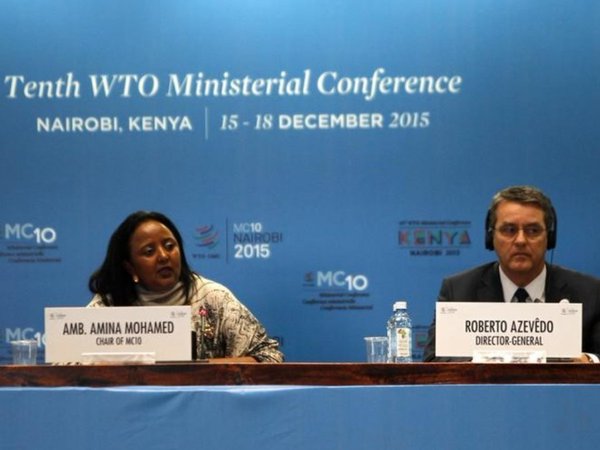
WTO Nairobi conference ends with UNEP launching Trade Hub but who wins?

As the World Trade Organization’s (WTO) 10th Ministerial Conference concluded in Nairobi, many felt that it failed to earn the poorest countries any advantage.

Activists at the meet felt that the poorest nations were short-changed and that the rich nations came out the winner – again.

Several organizations, especially Non-Governmental entities protested but it remains to be seen what will come out of the Nairobi talks.

But, Information Technology ‘won big’ as the US and China signed a deal that will see a great deal of savings on IT products and services and which the United Nations Environment Programme (UNEP) may have capitalised on to launch the Environment and Trade Hub to achieve the 2030 agenda for sustainable development.

The initiative by UNEP is aimed at assisting countries use sustainable trade as a vehicle for achieving the 2030 agenda goals.

When launching the initiative, UNEP Executive Director Achim Steiner said,

“UNEP is already working directly with many governments and other stakeholders to implement an inclusive green economy in countries across all continents.”

He added,

“The Hub holds enormous potential to build on this experience and help unlock the true capabilities of developing countries, using trade as a motor for sustainable development and environmental protection, and benefitting every single one of us.”

The Hub was formally launched at an event on the sidelines of the WTO’s 10th Ministerial Conference in Nairobi.

UNEP co-hosted the plenary session titled

“Trade and the 2030 Sustainable Development Agenda”

with the International Centre for Trade and Sustainable Development (ICTSD) at the opening of ICTSD’s Trade and Development Symposium.

Trade is a key means of implementation for the Sustainable Development Goals (SDGs) and Steiner underlined the many ways in which cross-border trade, not to mention investment, now drive global economic growth.

Sustainable trade can impact positively on goals across the board, in areas such as food security and sustainable agriculture, sustainable management of water and sanitation, access to modern energy, and mitigating and adapting to climate change.

“We need to ensure that the 2030 Agenda for Sustainable Development, including the SDGs and the Financing for Development Action Agenda, are fully incorporated into national trade policies and trade agreements that are negotiated at bilateral, regional and international levels,” said Steiner.

Many countries are unable to make effective use of international markets, gain access to sustainable global value chains to equitably grow their economies, and attract overseas investment to build modern, sustainable industries and contribute to global value chains. African countries, for example, account for less than two per cent of international trade.

Countries need support to change this – not only from UNEP and other international organizations, but from multiple partners around the world dedicated to working with countries to build their capacity to engage in sustainable trade.

The Hub aims to enhance the capacity of countries to design and implement trade policies that foster environmental sustainability and human well-being; to assist countries in the realization of trade opportunities arising from a transition to greener economies; to strengthen the sustainability aspects of cross-border trade and investment agreements in negotiations; and to realize a shift of trade practices and trends to more sustainable pathways.

The initiative offers the capacity to building services for developing countries such as tailored technical trainings to support international, regional and national design and implementation of sustainable trade and investment policies;

It also targets stakeholder trainings; technical assistance in designing trade and environment related agreements; development of tools, methodologies and indicators for sustainable trade;

The Hub will also help with the identification and dissemination of best practices; support to stakeholder consultations and national, regional, and international dialogues on advancing sustainable trade and the identification of sector – or region-specific sustainable production and trade opportunities.

KDF soldiers shoot 2 in Mandera creating rift with locals

On December 21, headlines of reputable publications worldwide brought to the fore an unusual view of a rare act in the fight against terrorism in Kenya.

The BBC headlined their story, Kenyan Muslims shield Christians in Mandera bus attack while USA Today headlined it; Muslims shield Christian passengers in attack on Kenyan bus.

Al Jazeera aptly put it thus: Muslims in Kenya offer a Christmas present to the world.

And this was rightly so as the Muslims refused to be separated from their colleagues who would have been killed as has been done before in Mandera by the outlawed Al Shabaab terrorists. The act was heroic.

Despite this being a major blow to terror, local publications gave the story a small, almost unnoticeable headline. But had it been more gruesome, papers would have – in their usual style – published the doomsday news.

The selfless act by the travelers who shielded the non-Muslims was hailed as great and this reignited a sense of nationhood in many Kenyans-albeit briefly.

Just a few days after this act, Mandera is the trending on social media no less due to terrorism. But this is on a different scale.

This time round, there is condemnation for alleged abuse of power by the Kenya Defence Forces (KDF) officers in the area following the killing of two people and the injuring of three others.

Allegedly, KDF soldiers in Mandera Town on Monday shot the two after their vehicle blocked the oncoming military car.

Mandera County Commissioner Fredrick Shisia who confirmed the incident said the military shot at the occupants after allegedly blocking their way at a road junction within the town.

“Preliminary investigations show the civilian vehicle blocked the military van and KDF sensed danger, hence opening fire. Three people were injured, including a lady who was hit by stray bullets,”

Shisia said of the 10.45am incident.

The shooting happened at the junction of Hills View Hotel and ‘Soko Miraa’ which has a relatively high flow of traffic.

Following this shooting, Twitter was abuzz on Tuesday with the topic #ManderaHeroesBetrayed where those who weighed in said the victims of the shooting were not terrorists but locals who were well known.

Others defended the reaction by the soldiers:

In the past, military officers have been killed in the town by assailants using taxi cabs.

However, KDF has been accused of being complicit in the area due to thriving illegal business.

But with all said and done, when do nationhood and defense of human rights unite?

Inspector General of Police, Joseph Boinnet. He has warned of attackers by Al Shabaab insurgents calling for vigilance. [Photo: citizen.co.ke)
According to Shisia, KDF officers shot at the car after hearing the sound of an explosion coming from the vehicle but area Governor Ali Roba who visited the scene of the shooting disputed the security report.


Roba said there were no obvious signs of an explosion on the vehicle.


Following the incident, residents protested the shooting which came as a major security operation was mounted in the county on Monday following terror attacks that left two police officers dead at Lafey on Sunday.


Inspector General of Police Joseph Boinett has already issued an alert over the risk of fresh attacks by Al Shabaab insurgents who have split into rival factions inside Kenya, with some shifting allegiance from Al-Qaeda to the Islamic State.

Will 2016 herald a new dawn for Kenya after Eurobond scandal?

We are heading into the end of the year and with just a few days remaining, it is a year whose events Kenyans hope will not be repeated.

Corruption has threatened to tear the country apart as different camps take sides for or against those accused of benefitting from the vice.

Kenya is now heavily indebted and pundits have given shadowy prospects to the country’s economy in the near future.

Indeed, David Ndii, the Managing Director of Africa Economics, has cast aspersions on development projects the Jubilee government has prided in for long.

The Eurobond saga has become the biggest scandal to rock the Uhuruto government and Ndii says that unless there is a clear trail of the expenditure, then there is a lot more than needs to be done to bring to book all those involved in the scandal.

In the article published in the Daily Nation on December 18, 2015, Ndii says,

“It has been pointed out that the government has published three different accounts of how the Eurobond flowed into the Budget. Two of the accounts do not exhaustively account for all the monies.”

The reason for the publication of more than one book of account means there is a lot that the government is not willing to let on when it comes to the Eurobond proceeds.

A screenshot of the deduction on a Kenyan making Sh30,000 a month. Kenya's debt is putting many Kenyans under immense pressure to finance the ballooning borrowing. [Photo: Njenga N]
A screenshot of the deduction on a Kenyan making Sh30,000 a month. Kenya’s debt is putting many Kenyans under immense pressure to finance the ballooning borrowing. [Photo: Njenga N]
And Kenyans have not been amused by this cover up which seems to keep burdening Kenyans and yet there is little to show for it.

Earlier in the month, Kenyans took to social media to complain against the debt that the government kept burdening the country with but little seems to be done to address this unease among citizens.

And some sense being spoken:

In Kenya today, anyone earning a gross salary of Sh30,000 has to part with close to Sh7,000 in taxes, most of which is wasted by a spendthrift government and bloated workforce with duplication of duties.

A screenshot of the tax calculator on KRA's website. This is a tool one can use to tell how much they pay in taxes. [Photo: Njenga N]
A screenshot of the tax calculator on KRA’s website. This is a tool one can use to tell how much they pay in taxes. [Photo: Njenga N]
It, however, remains to be seen who will blink first; the government or the people on the issue of reducing the burden on an already impoverished nation.

And with politicians proving daily they cannot be trusted to be clean when it comes to corruption, the country’s only saviour would be sensible voting to eradicate the political elite who care not for the masses unless it is in terms of votes.

Sexual abuse against children on the rise in Makueni, says children officer

Makueni Children Officer Rasto Omollo has decried the rising number of sexual abuse cases committed against young boys and girls in the county.

Omollo said in every two weeks a child related sexual abuse case is reported and attributed the increase to lack of awareness on children rights.

Addressing a stakeholder’s forum held on Wednesday at Kwakathoka Agricultural Training Institute, the children officer noted that child sexual abuse was alarming in Kilala, Kaiti and Kathonzweni and underscored the need for relevant stakeholders to collaborate and protect children against the abuse.

Omollo also accused parents of sexually abused children of settling cases out of courts with perpetrators of the offences hence making it difficult for victims to receive justice.

“Many parents are compromised by those who sexually violate their children while others do not report the cases,” he said.

To fight the vice, Omollo disclosed that the children’s department in collaboration with key stakeholders in the county will roll out a program aimed at creating awareness on the need to protect children against sexual abuse cases.

“This program will run from the ward up to the county level so that the community can be empowered and enlightened on child protection rights,” he said.

The children officer’s sentiments on child abuse comes barely two months after the County Commissioner Pauline Dola raised concerns over the rising number of defilement cases and failure by victims to report the cases for prosecution.

Speaking during Mashujaa Day celebrations held in October at Unoa grounds, Makueni County, Dola noted that majority of sexual abuse and domestic violence cases are never reported as the victims fear victimization from the society and perpetrators of the violence.

The County Commissioner however called on the victims not to shy away and use existing legal frameworks to pursue justice.

The rise of defilement cases in the county is definitely worrying and there is a need for stakeholders to collaborate and put in place proper measures to ensure that children are protected from any form of abuse.

Robert Alai to be charged with improper use of licensed telecommunication systems

Blogger Robert Alai is set to appear in court to answer charges of improper use of licensed telecommunication system.

Alai is accused of committing a crime when he made a comment to the effect that the Ethics and Anti Corruption Commission (EACC) CEO Halakhe Waqo lacks proper academic documents. The charge reads that

On the 18th day of November at unknown place within the Republic of Kenya, using Twitter account RobertAlai @RobertAlai posted “How do you expect EACC to arrest anyone for corruption when its head (Waqo) used a forged UON degree certificate to get into office” knowing it to be false and intended to cause annoyance to the said Halakhe D. Waqo.

This is not the first case that Robert Alai is facing the law using the same charge, Section 29 of the Kenya Information and Communications (KICA) Act 2009. The Act says;  

29. A person who by means of a licensed telecommunication system (a) sends a message or other matter that is grossly offensive or of an indecent, obscene or menacing character; or (b) sends a message that he knows to be false for the purpose of causing annoyance, inconvenience or needless anxiety to another person commits an offence and shall be liable on conviction to a fine not exceeding fifty thousand shillings, or to imprisonment for a term not exceeding three months, or to both.

  Alai charge sheet In August 2012, he had an altercation with the then Government Spokesman Alfred Mutua, which led to his arrest, brief detention and charged under section 29 of the Kenya Information and Communication Act , 2009, for sending abusive and annoying messages. In March 2013, Alai was summoned and questioned by detectives after a series of tweets regarding Francis Kimemia, the then head of Civil Service and former Secretary to the Cabinet and later charged in court for causing annoyance to Mr. Kimemia, which a crime under the same section 29 of the same Act. Alai was expecting this charge by yesterday,  

While he has made many comments on the EACC, some notable ones are


While Alai is expected to go before a court tomorrow, it is likely that the case will drag for long considering that his other cases have yet to be heard. This could be a blessing for all his three cases and others also charged with the same crime.

Geoffrey Andare who was also charged with the same crime moved to court to file a counter suit, challenging the constitutionality of the section in the law.

Web developer challenges constitutionality of infamous charge ‘misuse of licenced telecommunication equipment’

His case comes up for hearing before Justice Mumbi Ngugi on 28th January 2015. A positive outcome from his case will free Alai and many other bloggers, facing this unconstitutional charge, which infringes on the freedom of speech.

Other cases with the same charge are

Nakuru journalist charged with misuse of licensed telecommunication equipment

Patrick Safari aka ‘Modern Corps’ arrested and charged for ‘annoying tweet’

While intimidation using this charge has seen some online users also being questioned using the same charge

Journalist Wahome Thuku arrested for allegedly defaming Kabando wa Kabando


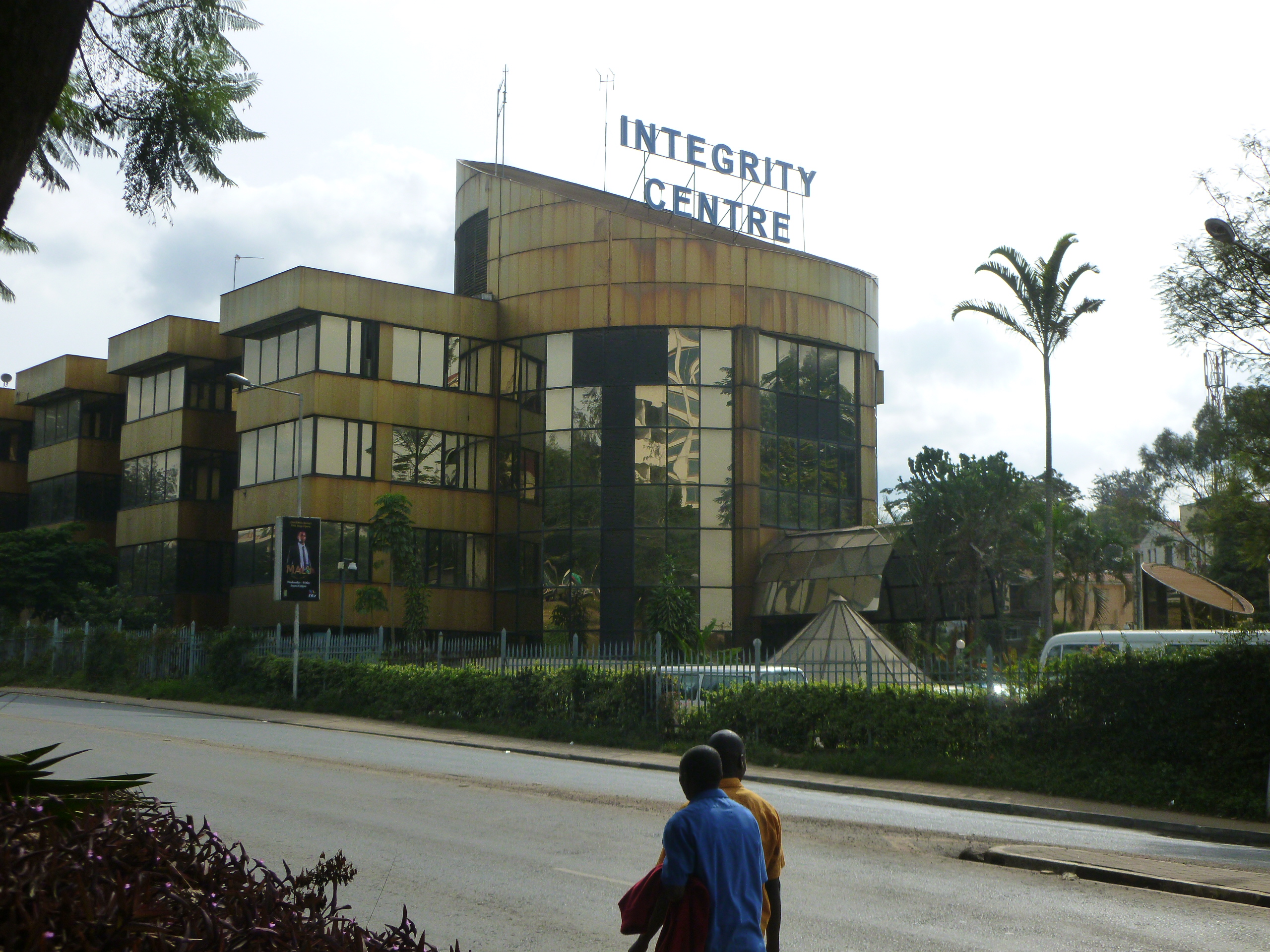
Anti-corruption war continues despite several transformations of Integrity Centre

From a shed that was used to recover/receive the lost items and stolen cattle to a church, disco club, bank and coincidentally, to a home of now five anti –corruption bodies-the ‘Integrity centre’. Malachi Motano takes a look of the intrigues, surrounding her history.

At one time when Kakamega senator Bonny Khalwale (when he was still MP for Ikolomani) rose to speak in parliament, he had scathing allegations to make against one of the countries’ fastest growing and most innovative bank

“Mr. Speaker Sir, the current CEO of Equity bank, was the finance Manager at the collapsed Trade bank. This makes me fear that Dr. James Mwangi may sink the bank the same way they sunk Trade bank”

So, what is Integrity centre all about?

Boaz Owino is the Principal of Maranda high school.

“It is our school motto which reads, ‘Put on Integrity’. We ask our boys to put on integrity as it is the spear to character development. Like one time a Nokia advert, it is not one thing, it is many things.”

With the history dating back to 1930s according to records at the national archives, the sight in which the Integrity Centre structure stand  was a shed used for recovering stolen cows, goats sheep and other lost items, during the colonial period. Communities from which the animals had be rustled would come to the cite to identify and receive back their livestock

Later in the 1940s and 50s, missionaries established auspices Church under the church of England on the grounds, which was doubling up as  a school where subjects like modern farming methods, basic science, all matters of hygiene, home science and relevant topics were taught  and the ambitious African graduates were promoted to the ‘Bush schools’. The missionaries were particularly concerned with what they deemed as retrogressive practices for example the practice of female genital mutilation (FGM).

Does the current site of the beautiful building have a case as cradle of early formal school in Kenya?

According to John Mreria at the Kenya National Archive, the 1960s, and 70s, saw the emergence of glamour into Kenyan Society, the establishment of a night club called ‘Starlight’ owned by Robbie Armstrong which was a sophisticated joint haunted by local elite precursors of today’s yuppies. The premier entertainment venue to enjoy dancing, music, and consumption of all types of drinks and beverages.

“The 1980s, I mean 1984 to be precise saw the incorporation of the now infamous Trade bank which might have been the first bank ever to offer interest earning current accounts. The bank was like one of the most brilliant ideas in the Kenya’s banking industry during that time, and was a brainchild of an Israeli Businessman Alnoor Kassam who today lives in Canada with his brother Iqbal Kassam. The bank was later acquired in 1990 by an Entrepreneur, who was later sought by Interpol to face criminal charges in Kenya.”

The building has since then housed a succession of anti-corruption bodies.

As a point of interest, Kenya’s anti-corruption legislation actually dates back to 1956 with the enactment of the now defunct Prevention of Corruption Act (cap 75, LOK).

The present Ethics and Anti-Corruption Commission (EACC), is by no means just a new kid on the block. There has been a succession of such bodies starting with the establishment of the anti-corruption squad with the police in 1993, which was disbanded two years later.

The disbandment led to the creation of Kenya Anti-corruption Authority (KACA) in 1997, established under the Anti-Corruption Prevention Act cap 65 with Hon. Harun Mwau as the first Director. A Tribunal later declared him as incompetent in 1998 and Justice Aaron Ringera was appointed in 1999.

KACA was dissolved in 2000 after a court ruling. The Anti-Corruption Police Unit (ACPU) was then created by an executive order in 2001. ACPU which operated under criminal investigation department in the police force took over KACA’s mantle in September 2001 until the creation of Kenya Anti-Corruption Commission (KACC), a public body established under the anti-corruption and economic crimes act 2003 as the main agency with statutory mandate to fight corruption in Kenya.

The commission was established on May 2, 2003 when the anti-corruption and economic crimes act came into force. Today, transformation within the building has continued with KACC becoming Ethics and Economic Crimes Commission (EACC).

As the fight against corruption continues to haunt EACC, the Integrity Centre, the building that houses the commission also continues to haunt it. Kenyans today consider the commission toothless and a waste of public funds. When the location was being used as an auction site, the irony that in later years it would be used for fighting corruption could perhaps be ‘haunting’ it’s service delivery.


Pregnant women in Kenya risking lives from eating odowa, the ‘mineral stone’

Nancy Akoth is four months pregnant and like many women in her state has strange cravings.

Some women eat coal, gherkins or soap but Akoth craves soft stones, known in Kenya, where she lives, as ‘odowa’.

“I just have this urge to eat these stones. I do very crazy things. I would even wake up at night and go looking for them. I consulted my doctor and all he told me is that maybe I’m lacking iron and gave me medication on iron, but I still have the urge to eat those stones,” she shares freely.

Luckily for Akoth, she is not alone in craving stones and they are easily found on sale in country’s sprawling retail markets like Gikomba in Nairobi market, Kibuye in Kisumu and the rest in the country

Having observed this over a period of time near Kajulu Hills on the busy Kisumu-Kakamega highway, she felt that the stones the women and especially the pregnant ones, craved for must be having a potent that was of irresistible value to them.

According to Dr. James Obondi, a senior specialist surgeon at the New Nyanza Provincial hospital, the craving for the stones among pregnant women is a physiological reaction to supplement iron deficiency in the body.

He says most pregnant women crave for mineral because most of them suffer from deficiency of iron as a lot of it is supped up by the developing baby in the womb.

“Odowa” as it is locally known, is rich in magnesium, calcium, zinc, iron among other minerals although it is available only in small amounts despite its likeability by pregnant women.

Dr. Otieno says the mineral stone is used worldwide by many communities and not just in Kenya.

It is due to its increased demand that people like Omondi, a mother of four children decided to venture into some kind of business to earn a living.

She felt she could dig out the stone, ‘odowa’ from underneath the rocky Kajulu Hills and offer them for sale.

Indeed when one visits the site, one would find sweat trickling down her face, but she perseveres to move on to accomplish her mission of bending down beneath the trench to get down her mineral.

Armed with a panga, she clears the bush and using a hoe, digs deep to remove the top soils and stones to get to the mineral stone.

“I have to do it to survive!”

she says with a broad smile.

After nearly an hour of operation, Margaret lays down her harvest for the day.

“It’s not yet ready, I have to pay people to transport it to Kisumu-Kakamega road so as to get the market for the commodity from owners of lorries who transport it to Kibuye market in Kisumu town or other parts of the country,”

she adds as she peels off the unwanted cover before packing them in a 50kg sack for transportation to the road.

For several years now, Omondi has always earned her living through selling the stones.

The business has enabled her through educate her four children who are aged 14, 12, 10 and 6 years respectively.

Asked what drove her into the business, she boldly replies,

“I had no any other source of income and women always wanted these stones which are scarce in other parts of the country.”

“I started the business like a joke by hiring land from my neighbour whom I paid a small fee on a weekly basis,” she explains.

Although she does not get a large profit from her sales, she is determined that through the business she will be able to educate her children through secondary education.

Stone digging and selling is more of an income generating activity to most residents of Kisumu’s Kajulu hills and Kisumu town where it is sold in the market.

The stone are also packed and sold in major supermarkets in the country.

Zacheaus Omedo, who appears to be a middle-man in the trade, says he buys the stones from the diggers before offering them for sale to potential buyers.

He says that the process to get the final product is not as easy as one may think when the stones are dug; the outer covering is removed at the site.

The stones are later boiled with a pinch of salt to add taste then later dried in the sun before sold for consumption.

Dr. Obondi says the essence of boiling the stones is to remove impurities and acts as a form of sterilization to curb diseases.

“The stones should be boiled at a temperature of between 100-150 degrees to remove impurities lest they cause appendicitis,” he warns.

The medical experts say chances of contracting appendicitis will depend on the surrounding environment where one resides, citing that slum dwellers are more prone to the disease.

“We sell the stones at Kibuye market in Kisumu city from where they find their way to other markets like Nairobi and Kakamega,” says Omedo.

Among the challenges they face are lack of enough capital, lack of savings for future use, and illiteracy which is very high among traders, the fear of exhaustion and use of child labour.

This issue of child labour is very common since it is cheaper and easily available; the charge is sh20 per sack for a distance of about a kilometer.

“When in the market, a 50kg sack is sold for sh250 but after deducting all the expenses we get like a profit of sh100 per sack,” he adds.

“When business is very nice we sell about 250 bags in a day, with Saturday being the busiest day,” Omedo adds.

It is common to see school children helping their parents during weekends ferry the stones to the main road.

Dennis Omondi says that he has been in the business for the last ten years and is able to meet his daily needs and educate his children.

He said that he has taken up the business like any other. He sells the particles in small quantities, ranging from five shillings to wholesale price.

Despite women craving for the stones yet it has negative implications, they are not 100 percent clean and can contain a lot of worms that lead to dangerous diseases like blockage of the billiary system, amebiosis etc.

He says children are particularly susceptible to roundworms, and sometimes must undergo surgical operations.

Dr. Otieno says that pregnant women craving for the stone could use spinach, liver, omena, terere and mrenda that are rich in iron instead of chewing Odowa, whose iron potent he reckons is very minimal.

He says those who can afford may also buy iron tablets that are available at local pharmacies.

Linet Achieng, a mother of three says that all her three pregnancies drove her to stone eating.

The craving was so strong, just like a thirsty person would madly need water for drinking, but funnily upon delivery the craving stopped automatically.

“I bet it is the unborn baby who craves for the stones!” adds Linet.

Will Karua, Wetangula survive the BAT corruption scandal?

When The Independent’s headline mention iron lady Martha Karua on Friday last week, this time it was pushing her to a corner she has not been to before.

The reaction was prompt after the headline ‘British American Tobacco ‘bribed’ Kenyan politician Martha Karua to stop action against cigarette smuggling’ implicated the former justice minister in corruption.

When she responded, through her lawyer Gitobu Imanyara, Karua did not deny the allegations. She said the money, Sh5 million less than quoted by the Independent, was given as a donation for her presidential campaign in 2013.

“I am aware that a businessman whose name I remember as Paul (Hopkins) affiliated with BAT made what I understood to be a personal donation to my presidential campaign. At no time did I ever discuss the award or influence of contracts/tenders whether at KRA or indeed within any other government entity with Paul or anyone else,” Karua said on Friday.

This was in response to questions by the Independent journalist David Connett.

She added

“My recollection is that Paul’s donation was about Sh2 million. If any person within my campaign team or beyond purported to accept a donation in exchange for influence of government procurement (they were) acting beyond the scope of their authority, without my knowledge and in their individual capacity not for me or my campaign,” she said.

Karua denied that the donation was a bribe, allegations which set off a social media frenzy with many dismissing her anti-corruption crusade.

Despite her denial, the allegations are hard to shake off especially taking into consideration that the ‘donation’ was for political ambitions.

The Independent adds:

“It is understood that the key meeting – at which Mr Hopkins and BAT’s senior regional legal officer, Naushad Ramoly, negotiated the deal with a key aide in Ms Karua’s election team – was filmed. The Independent has seen emails between Mr Hopkins and Ms Mukindia’s campaign email address in which the KRA contract is openly discussed. The aide, Mary Mukindia, is now a member of the governing board of the Kenyan tax authority.”

Ms Mukindia’s legal representative confirmed she had attended the meeting but claims she did not know they were BAT employees. Ms Mukindia was

“clear that in her then role that she could not have had useful access to Government officials nor have been able to obtain any contract specifications.”

She said she was not aware “of any donations” BAT may have made.

Mr Ramoly, who has since left BAT and now works in the Gulf, was unavailable for comment but denied bribery allegations to the BBC.”

The allegations are a big dent on the Narc Kenya leader especially bearing in mind that she has been very vocal against corruption.

Here are some tweets which seem to indicate that Kenyans are tired of this corruption gravy which seems to have sucked in every Kenyan interested in political office.

— Obar Mark (@Obar_Mark) December 19, 2015

Unfortunately for her, the allegations come at a time when she has been publicly seen with Cord whose co-principal Moses Wetangula was also adversely mentioned in the BBC report. The two have been very vocal calling for resignation of corrupt officials and it remains to be seen if any from their ranks will resign their position if need be for investigations to be unimpeded.

Already, some Cord supporters feel that Karua is a liability to the coalition and she should not associate with the party leadership.

The two have been very vocal calling for resignation of corrupt officials and it remains to be seen if any from their ranks will resign their position if need be for investigations to be unimpeded.

Despite this, it seems like Kenyans like aligning themselves in political camps to support their own.

The BAT corruption scandal has touched almost every East African country and with the revelations now, the company may lose billions of dollars due to penalties in Europe and the US.

But, what happens to the public officers who breached their code of conduct as they served in Kenya may just be an addition to the long list of cases and personalities who are untouchable because of the financial and political power they wield.

Paris climate pact puts death knell on fossil fuels

By Boaz Opio

The campaign to achieve 100 percent renewable energy by the end of this century finally reached a point of no return when the world came together to sign climate agreement that spells the need for urgent action on global climate change.

The deal means global energies will from now on be directed to transforming national energy trajectories away from fossil fuels or non-renewable energy sources. The just concluded two weeks summit forged an agreement between nearly 200 nations who are now committed to tackling climate change, aiming to limiting average global temperatures to “well below 2C”.

This means fossil fuel use will face radical cuts, as countries have agreed to “pursue efforts” to limit temperature rises to what macroclimate scientists say is a safer 1.5C threshold.

Holding on to the goal of long-term full decarbonisation is what leaves oil moguls and coal magnates conjecturing the next business paths. Some like Total in Africa is already seen levitating between clean energy nest eggs and black gold gluttony. Moreover, to the fancy of every business ideal, the costs of renewables continues to fall, and clean energy is quickly gaining market share in richer and poorer regions alike.

Earlier this year, 1,000 cities, including Paris, wickedly announced targets of 100 per cent renewable energy. Just as quickly as by all charming deals, businesses like Google, Coca-Cola, BMW, Microsoft and many others jumped on the bandwagon to a fully renewable electricity destiny.

The other side of the renewables boom is the crumbling of fossil fuels – particularly coal – with projects cancelled, firms in dire financial straits, and prices in turmoil. The divestment movement that began as a simple protest against coal pollutants enchantingly gained huge amounts of strength, with economic experts such as the Bank of England’s Mark Carney warning of the risks of stranded assets owing to the impending ruin in coal markets. In retort, over 500 institutions pulled away their moneys from fossil fuels reaching a total of $3.4 trillion during Paris sessions.

From the agreement, India, China and other leading polluters have accepted the need to steadily decarbonise economic growth over time.

As fossil fuel firms realised they were being pushed out of the picture, some tried to stay relevant by promoting a global carbon price, by creating new social media campaigns – including even inventing their own followers – by sponsoring the very climate talks whose success would hurt their bottom lines irreparably, and by paying lobby groups to do their dirty work for them.

“This offers a clear signal to developing countries, especially those aiming to decouple growth and fossil fuel use,”

said Monica Araya from the Costa Rica think tank Nivela.

Araya could just be right. Developing countries especially on the African continent are on the verge of developing clean energy systems. However, these poor countries stand high risks of being target of dirty-energy lobbyists. In 2014, Uganda pulled ropes with Tullow oil after learning that they have breached sections of their contracts. The same UK oil firm reportedly prepared mining plans without minding about environmental conservation in pearl of Africa.

Wary of such threatening issues, from 2020 all governments will be expected to detail how they will reduce their dealings of coal, gas and oil every five years, building on the 185 climate plans received ahead of the Paris summit.

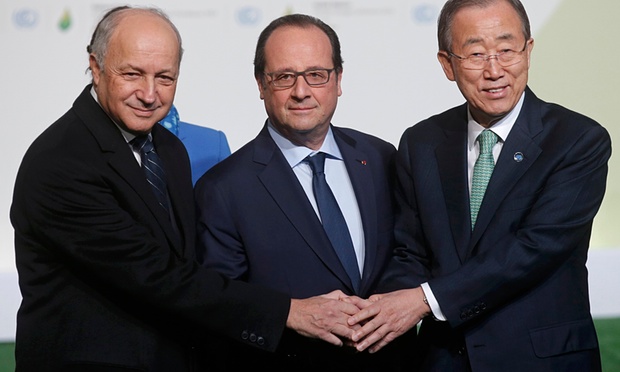
Enshrined by Paris, the inevitable demise of fossil fuels is underway. The UN ritual gavel and magical wand has decided. The small harmer with which France foreign minister Laurent Fabius, president of the COP21 talks, banged the podium symbolize global break away from the bond of carbon karma initiated by pollution from fossil fuels.

The writer is a Climate Tracker, Kampala Uganda.

Parents are to blame for bad conduct among teens

By Elly Mwaghumba

In recent times, we have been astonished by cases of improper conduct among high school students with hundreds being arrested by the police for being found in night clubs contrary to the law. Some other students were even found in a school bus smoking bhang, taking alcohol, and indulging in casual sex.

These incidences should not be taken lightly by the society as they give us a picture of how parents have neglected their key responsibility caretakers of their children – that of bringing up children in the right direction. A child who has been well taken care of and who has been cautioned against such bad baits will always listen to their sixth sense before they join bad company and be part of some un-comely acts.

Such a role is first and foremost the responsibility of parents.

As it is, teachers should not be wholly blamed for bad conduct and poor upbringing among teenagers. After all we took away from them the task of disciplining students when they err. So parents should be double responsible.

But parents have no time with their children. It’s the demands of the modern world, some argue as they put more time to attending to their daily duties and leave none with their offspring.

Most parents, especially in the cities, wake up early in the morning to go to work when perhaps most of the children are asleep only to come up late at night when they are asleep. In this situation it is house maids that have been left with the responsibility of parenting – this in addition to their house hold chores.

While some of the housemaids may have time for the children, and hence help them some never manage at all. After all some of the housemaids are usually too young to even guide themselves, let alone guiding someone else’s child. The result is, a number of children have ended up being abused by the very housemaids.

Then we have the danger of the media and the internet to which teenagers get exposed to, some at a very early age. Reflecting on what Pope Francis acknowledged that the media is responsible for the creation of a certain kind of noise that has been killing human relationship.

As much as media is informative, the Pope cautions against too much consumption of it. Yet children, without the guidance of parents have been consuming it without any kind of rationing. The result is a group of youth who as we have seen in the recent past are destroyed from within.

Well, it is pivotal to know that these little ones are the future of our society and if proper direction is not given to them while they are still young then we will definitely be endangering the future generation and our society at large.
This should be a wake up call for parents to lead the way in effectively ensuring that they bring up their children in the right direction. This is the only way we can be guaranteed of a society with a bright future.