Sunday, December 21, 2025
Home Blog Page 28

Ambitious NYS restructuring program pillars for success revealed

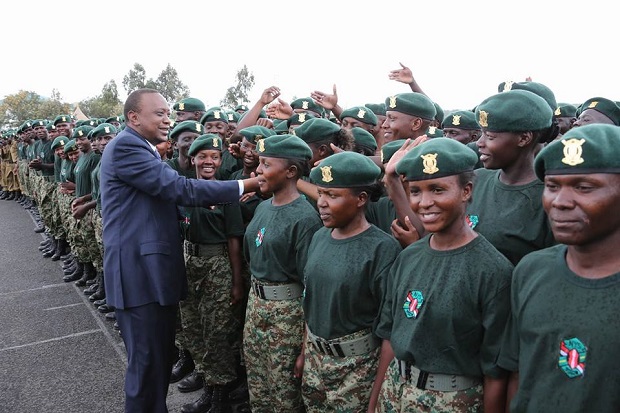
President Uhuru Kenyatta greeting new NYS graduates. Photo courtesy of mygov.go.ke

Even as concerns over alleged corruption at the National Youth Service (NYS) continue to dog the devolution and planning ministry, documents with Kenya Monitor reveal that the institution plans ambitious restructuring that will see it not only become a money making public institution but also provide credit (loans) to members. The plan is premised on four pillars;

1. Paramilitary training and service regimentation

2. National service and youth re-socialization

3. Social transformation and vocational training

4. Enterprise and youth economy

Each of these pillars are differently structured in what the vision is to

“Catalyze Transformative Youth Empowerment in Kenya.”

The document is believed to have been prepared by a team led by Mutahi Ngunyi’s consulting company Consulting House for NYS and the devolution ministry. In recent days, Ngunyi has defended the consultancy payments stating that he was paid much more than sh38M reported, going further to state that he was considering suing The Star newspaper for reporting a lower figure than he was actually paid.

It is evident that the document in our possession is already being implemented as the listed changes are already being acted upon. For instance, during vetting before the joint parliamentary committee of labor and finance, the devolution Cabinet Secretary Ann Waiguru stated that youths in areas like Kibera have already saved some huge sums of money through the Sacco which they can use to borrow loans.

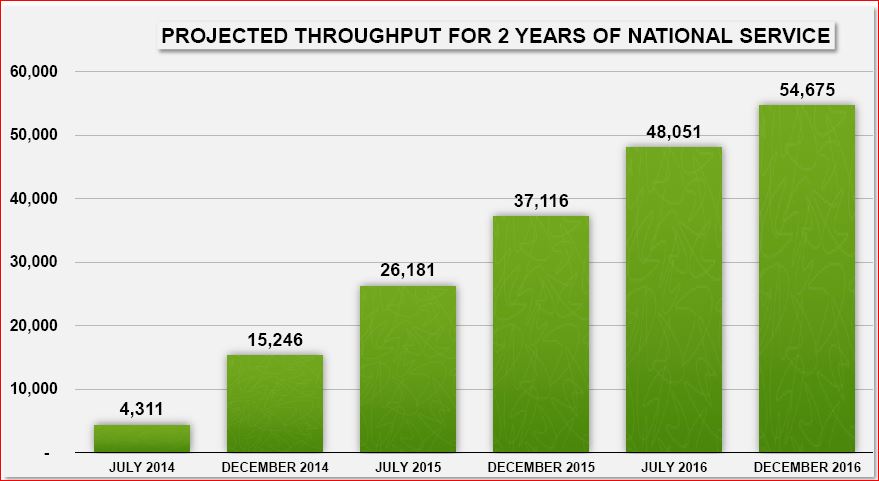
Under the first pillar, Paramilitary and Service Regimentation, NYS will recruit and train 21,870 youth every year. To recruit 10,935 twice a year where start date for each cohort to be in July and January. The graduation is planned for November and May of each year ensuring that every 6 months a Huduma Corps of 10,935 will be graduated. The recruitment for this is planned to be inclusive to ensure it abides by the dictates of the Constitution and also promotes efficiency of operations. projected NYS growth
The second pillar, The National Service and Youth Re-Socialization,  is referred to as the ‘high-impact’ stage – at least in the short to mid-term periods. This has been put into nine categories;

Vector Control Unit – This will be constituted as a stand-by unit at the level of a service division numbering 3,645 servicemen and women. This is the second highest level in military formation. Three divisions constitute an army.

Traffic Control Unit – This will be pitched at the level of a service brigade. It has been divided traffic zones in Nairobi into 12 sectors.

  1. Mombasa Road/Westlands
  2. Airport/Kariobangi/Gsu
  3. Kilimani/ Kileleshwa/Lavington
  4. Kasarani/Mwiki
  5. Embakasi/Utawala
  6. City Centre
  7. Jogoo/Railway Roundabout
  8. City Stadium – Enterprise
  9. Haile Selassie/Ngong
  10. Pangani, Juja Road
  11. Parkland Highridge Area
  12. Others Including Feeder Roads

Each zone will be manned by a Squad-Minus supported by designated officers from the Police Service. This is the third highest level in military formation. Three brigades constitute a division. In regimentation lingua, a group that is less than the assigned number of service men in a squad (15) is a squad-minus.

Dam Construction Unit – Government intends on constructing 1,100 dams a year. The NYS Dam Unit will constitute a Service Brigade-Plus of 2,250 who will be primed to undertake these dam construction works.

Road Construction Unit – Split into three categories, it is expected to help build roads of different classes across the country.

Slum Civil Works and Public Environment – They will work alongside the servicemen/women in the cleaning, minor constructions, beautification and other environmental activities in the slums.

Huduma Kitchens – These servicemen/women will be stationed in different urban spaces and will use the existing infrastructure of government partners such as religious institutions and other philanthropic bodies to provide a meal a day for the poor and homeless.

Public Duty and Security – The goal in the Public Security component of national service is to make NYS the premier choice for professional, disciplined and military trained drivers for government and private sector VIPs and guards.

NYS Service Constabulary – This will comprise of young people, interested in regimentation and engaging in petty public duties at county level. The ultimate aim of this unit will be to connect the constabulary members (ex-NYS trainees) with the Collection Guilds of unemployed youths to form business partnerships that would serve county governments in two areas on a piloting basis:

  1. Revenue and fees Collection (currently colonised by militia groups)
  2. Community Security and Policing at county level

The documents say

Demand for NYS services in these areas is on the increase from county governments. We will structure this and have it piloted in a number of counties.

Agribusiness – This regiment will be tasked with leading agribusiness endeavors in counties and even national projects like the Galana Ranch Project and sell the produce to make money for government and they will be paid.

Pillar three is called the Social Transformation and Vocational Training. It is split into Social transformation training which is about inculcation of civic competence and technical training. The technical training is divided into seven schools

  1. School of Engineering. This will absorb NYS Engineering Institute Nairobi, Nairobi Engineering Craft School (NECTS), MTB/OJT, Turbo Rural Craft Training Centre, VTI, Technical College Mombasa.
  2. School of Construction. This will absorb Yatta Plant Operators and Mechanics School, Tana Plant Mechanics and Operators School (OJT Tana), and Advanced Building School.
  3. School of Agribusiness. This will absorb the Yatta School of Agriculture.
  4. School of Hospitality. This will absorb the NYS Catering School in Gilgil.
  5. School of Fashion. This will absorb the Tailoring and Dress Making School in Naivasha and the Textile and Garment Institute.
  6. School of Enterprise and Technology. This will absorb the Institute of Business Studies.
  7. School of Public Duty. This will absorb the NYS Driving School.

The fourth pillar is dubbed Enterprise and Youth Economy. It authors that

This thematic pillar will provide a strategy for exploiting the youth bulge to become a demographic dividend. It answers the question ‘what next after NYS training’. Through its revitalization, the NYS can become a youth transition institution that connects the youth to gainful employment opportunities and self-employment in the present day economy. This exit phase will be the vehicle for realizing the pledges of the Jubilee government. The discipline, work ethic and vocational skill derived from NYS training will be a distinct selling point for these graduates as they enter the job market.

It is split into

1. SEPU/SACCOs – Establish a revolving fund to provide startup capital to NYS graduates. NYS graduates will be encouraged to organise themselves in squads (15), and will benefit from the funds as squads. The purpose of the squad is to provide social collateral

2. Integrated Construction Company – Multi-disciplinary company integrating masons, carpenters, plumbers, electricians and civil engineers. Graduates from school of construction and members of youth construction guilds are absorbed here. It will also include retraining and certification of skilled construction labour.

3. Youth Labour Export – Refereed labour export bureau for middle level blue collar skills and building forward linkages with private sector abroad through Kenya‟s economic and commercial attachés.

4. Commercialization of NYS training institutes – The idea in this is to create a module II training programme for percolation of social transformation training to non-NYS recruits. The intention is to double the capacity of trainees from 6,000 to 12,000. It will also create production units in the training centers. It also envision creating a revolving fund for expansion and maintenance

These pillars are certainly sound in terms of their target to various sectors in the economy. Only time will tell how they transform youth in the country and also positively contribute to nation building.

You can download and read the document here
Nakuru should work hard to regain her lost glory of the cleanest town in the region

IMG_1087
A section of Gioto dumpsite in Nakuru county. Nakuru town is not as clean as it used to be in past years (Photo: Kioko Kivandi).

By Njeri Mwangi

Nakuru town was once known throughout Africa, and by extension the whole world, to be the cleanest of all towns in East Africa. So clean was it that it is said, a question about it would be tested in exams in the country.

But that now is history for the town that is famous with flamingos. From a glittering town, Nakuru has been transformed into a littering town. Poor infrastructure and poorly coordinated solid waste disposal mechanisms form the narrative of its current state of affairs.

Every time it rains it is given that raw sewage pipes will burst and their content will leak and flow, sometimes even from the center of the town. This situation is even worse in estates where low income earners live such as Rhonda, Ponda Mali and Kaptembwo.

In the recent months cholera outbreak that led to the death of over 60 people in the country, the county lost at least 10 people to the water borne disease that is caused by poor sanitation. And as we get ready for what looks like another rainy season, not much has been done on clearing solid waste that can lead to the blockage of our sewerage system and hence lead us to the mess we always find ourselves in every other day.

Even as we speak, the town is filthy with rubbish heaps right from its center. One wonders why for instance the County government has not cleaned the rubbish that was dumped at the Gate House roundabout a few weeks ago during the crackdown on illicit brews. Once it rains, such rubbish will be drained into the sewerage system and block it.

Besides to continue having the rubbish heap at the roundabout, which is the main gateway into the town, for all this time says a lot about the commitment of the County government to solid waste disposal in the town. It shows the government is not much concerned on the state of cleanliness of the town let alone laying down the necessary measures that will ensure Nakuru regains its former glory.

It is because of this that I urge the County Executive Committee member Richard Rop to show direction on delivering this dream of a clean Nakuru.

First he should clean the mess at the roundabout as he has no reason why the heap of broken glasses should continue being an eye sore at the town. He should also clean all other regions with heaps of garbage in the town. This he should do as he strengthens garbage collection strategies so that the town is eased from solid waste.

Secondly, we need strong legislative measures on management of solid waste management in the county banning of the use of plastic bags. Such measures can also involve giving incentives to residents to practice environmentally friendly solid waste management mechanisms such as the use of kiondo during shopping.

A clean environment not only leads to a healthy community but leads to an improved economy as investors want to put their money in regions that are clean. I long for that time when Nakuru will regain its lost glory. And this I am sure is the dream of every resident in the town.

Patrick Safari aka ‘Modern Corps’ arrested and charged for ‘annoying tweet’

patrick safari
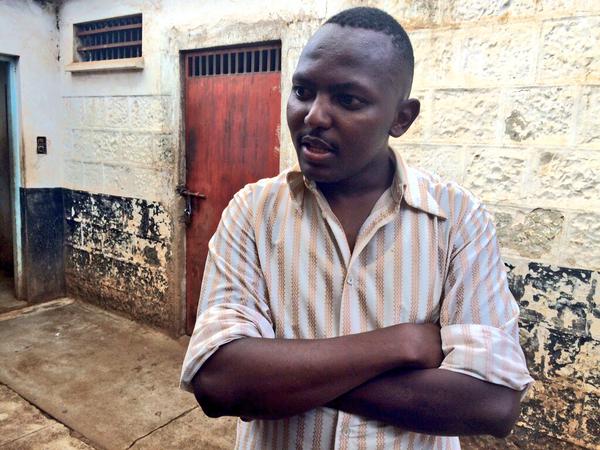
Patrick Safari. Photo courtesy of krazyinsidekenya.wordpress.com

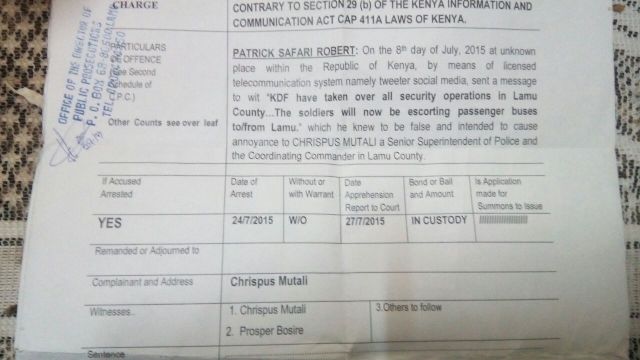
Prison officer Patrick Safari popularly known as modern corps, @moderncorps on Twitter was on Monday arraigned in a Lamu court and charged with the infamous section 29 of the Kenya Information and Communications Act ‘misuse of licensed telecommunications system’ for annoying a police officer, Chrispus Mutali.

Safari who uses his account to tweet a lot about security issues is based in Maralal, Samburu County. He was picked by the District Criminal Investigations Officer (DCIO) Samburu and taken to Mlolongo where he spent the night before being picked up by Criminal Investigations Department (CID) officers from Malindi where he also spent the night in cell before being finally taken to Lamu where he also spent the night before being charged on Monday, 27th of July 2015.

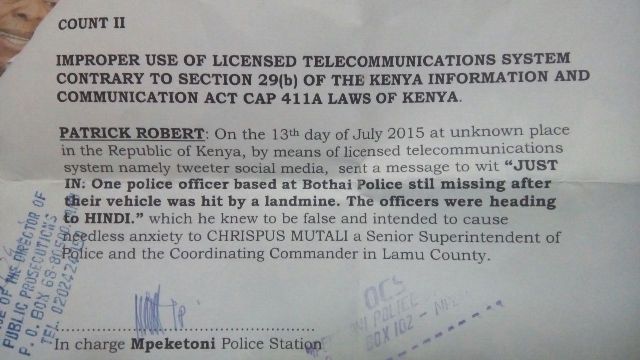
safari p1


safari p2


He is accused to have sent a false tweet involving Bothai police vehicle. The complainant is Chrispus Mutali, a senior superintendent of police and coordinating commander in Lamu County.


The Kenya Information and Communications Act defines a telecommunications system as

“telecommunication system” means a system for the conveyance, through the agency of electric, magnetic, electro-magnetic, electro-chemical or electro-mechanical energy, of—
i. speech, music and other sounds;
ii. visual images;
iii. data
iv. signals serving for the impartation (whether as between persons and persons, things and things or persons and things) of any matter otherwise than in the form of sound, visual images or data; or
v.  signals serving for the activation or control of machinery or apparatus and includes any cable for the distribution of anything falling within (i) to (iv) above
Section 29 of the Act says
Improper use of system

A person who by means of a licensed telecommunication system—

a) sends a message or other matter that is grossly offensive or of an indecent, obscene or menacing character; or

b) sends a message that he knows to be false for the purpose of causing annoyance, inconvenience or needless anxiety to another person,

commits an offence and shall be liable on conviction to a fine not exceeding fifty thousand shillings, or to imprisonment for a term not exceeding three months, or to both.

Safari was previously arrested in connection with allegedly obtaining money from a prospective recruit in the prisons department. During his stay at the police cell awaiting prosecution, the 28 year old said that he had been investigating claims that prisons heads were obtaining money from new recruits to offer them the positions. He was later released and eventually transferred from Nairobi to Maralal.

The police officers have confiscated his phone, laptop, ATM card and some receipts that were in his possession.

The police left him without any cash or means of communication. He was saved by a colleague in the prison who gave him his phone and he called his family. The family managed to raise and send him sh50, 000 which he paid as cash bail and was released. He had an option of paying sh100, 000 bond or sh50, 000 cash bail.

The case is set for hearing on 27th of August 2015.

Audit report shows massive misuse of public funds by Makueni County Assembly – Part two

Makueni County Assembly Photo:Communication Unit
Makueni County Assembly
Photo:Communication Unit

Members of the Makueni County Assembly made unnecessary foreign trips that cost the County Government Sh27M in the 2013/2014 financial year.

A report released by Auditor General Edward Ouko on the finance operations of the County Assembly showed that various select committees and the Speaker Stephen Ngelu traveled to Singapore, Malaysia, Rwanda, USA, United Arab Emirates and Ethiopia without following due procedures.

The report further states that no documentary evidence supported the unnecessary trips, which the auditor said, were not related to the mandate of the County Assembly.

“There were no documents such as back to office reports and travelling documents casting doubts as to whether due procedures were followed before the trips were undertaken. No register for the purpose was maintained as required by subsection (2) of the Standing Orders,” reads the report.

Sh14M was paid to Members of County Assembly (MCAs) as subsistence and mileage allowances contrary to Salary and Remuneration Commission circular on mileage allowance.

The auditor general also revealed double payments of traveling and subsistence allowances to MCAs and other assembly officers.

In one incident, six MCAs were paid subsistence and traveling allowances totaling to Sh690, 000 for attending a sectorial committee on Social Economic and Planning in Mombasa between November 10 and 15. However, the same MCAs were paid subsistence allowances for having sat in various committee meetings in Makueni during the same period.

Similarly, four other MCAs were paid subsistence allowance amounting to Sh64,000 for attending a two-day meeting in Mombasa between the 1st and 2nd of August but the same MCAs were paid similar allowances totaling Sh104,000 for attending a meeting convened by Association of Members of County Assemblies in Nairobi on the same dates.

In another similar incident, a senior procurement officer was paid a total of Sh176, 120 as remedial fees at the Kenya School of Government in Mombasa that took place between June 14 and 20, and travel allowances for a retreat in Kilifi that took place on the exact dates.

The report further revealed an irregular payment of Sh3.6M paid as subsistence and traveling allowances to some officers alleged to have attended workshops in Nairobi and Kwale without documentary evidence.

The County Assembly flouted the procurement procedures during the purchase of furniture and general equipment worth Sh14M during the period under review. No documentary evidence was provided to ascertain that the Public Procurement and Disposal Regulations, 2006 was adhered to. Similarly, the procurement procedures of the construction of the Makueni County Assembly Block at the cost of Sh39M was not supported by relevant documents.

The auditor also raised eyebrows on an insurance premium of Sh20M and legal fees amounting to Sh6M paid to various firms without payment vouchers and procurement records.

“In these circumstances it is not possible to confirm the validity and accuracy of the Sh26M paid as legal fees and insurance premium,” outlines the report.

The auditor further points out irregular recruitment in which some assembly officials were recruited despite their names missing in the list of short listed candidates for the advertised jobs.

“Procurement officers Jane Mwongeli, Madona Muse, Stephen Muse, Commissionaire III Felistas Matheka, Dennis Kimeu, Stephen Makau, Josphat Kimanthi Sergeant at arms Clarice Komu, Leonard Ndwala and Librarian/ research officer Shadrack Mutunga were not shortlisted candidates for the advertised jobs,” says the report.

During the period under review, the county assembly did not maintain a creditor’s ledger making it impossible for the auditor to establish the indebtedness of the assembly to its suppliers.

The report of the auditor general detailing possible embezzlement of public funds in a county that has been embroiled in leadership wrangles for the last two years is quite unfortunate.

Although the auditor general has raised similar audit queries in other counties, Makueni presents a rather unique scenario owing to the fact that the Governor Kivutha Kibwana is seen to have zero tolerance for corruption.

This perhaps explains the reason why the governor initiated the dissolution of the county (he has vehemently denied the claims) following a bitter fallout with the MCAs over budget related issues.

During the infighting that derailed development for more than two years Kivutha, accused the MCAs of making unrealistic budgetary demands and useless abroad trips that cost the county millions of money, trips that the auditor has also termed as unnecessary.

On the other hand, the MCAs accused the governor of incompetence and abetting corruption, claims he dismissed. However, a report by the auditor general on the financial operations of the County Executive has also revealed massive misuse of public funds.

Is it a case of the pot calling the kettle black? Only time will tell.

Mombasa residents urged to report lost IDs to reduce electoral fraud

Image (www.businessdailyafrica.com)

Members of the public are being urged to report stolen or lost identification documents at the earliest opportunity and get a police abstract of the same to enable them actively participate in nation building like elections and also reduce crime from happening. They should also keep a copy of the abstract for personal records.

This call was made in Mombasa during a training event for Jukumu Letu partners that was held at the Little Theatre. Amina Soud of Independent Electoral & Boundary Commission (IEBC) who heads the South West Region which encompasses Mombasa, Kwale and Taveta revealed that this dark trade is going on in Mombasa and its environs.

Other sources revealed that these ID’s are sold for sh3,500 or more. They are then used to register SIM cards later used by criminals to commit various crimes. Swindlers, fraudsters, extortionists and terror sympathizers are some of the criminals who could be using these SIM cards.

It is also possible that stolen ID’s could be used to commit Electoral fraud as the election nears.

The training session was one of the activities going on during the Jukumu letu week in Mombasa which will climax on 1st August at Mama Ngina drive.

Amina also informed the participants that IEBC will be actively involved at the event to carry out voter education and new registrations. Mombasa residents are invited to attend the Jukumu Letu event and also register as voters.

The training session was attended by Jukumu Letu partner organizations.

Dance into Space which is training local artists on dance theatre. The Kenya Institute of Puppet Theatre (KIPT) are taking trainees through making of puppets and how they communicate socially conscious messages. Also involved is KATUNI who are training local artists on cartooning and illustration especially on governance.

One of the trainers and participants was the Bloggers Association of Kenya (BAKE) who were educating the partners on using blogs and social media in advancing messages online.

The overall coordination for the Jukumu Letu events in Mombasa are being coordinated by Constitution and Reform Education Consortium (CRECO) & Ilishe Trust.

Mombasa County Assembly audit report reveals irregularities

county mombasa logoBy. Davis Mwandawiro

The recently published report by the Auditor General on the expenditures of county governments during the financial year 2014/2015 for Mombasa County Assembly is telling of public funds being pilfered. It was nothing but shock and disbelief as Mombasa Senator Hassan Omar had earlier pointed out. As inscribed in the Constitution of Kenya and the Public Audit Act 2003, the report had been conducted on all County Governments. Nonetheless, in focus of the Mombasa Assembly County, the report led to the discovery of vast amount of funds unaccountable for. Among the key audits was the sitting allowances.

According to audited report, it revealed that a total of sh14,448,150 had been spent but a further sh14,515,359 committed but not paid. The payment vouchers showed a total of sh45,668,306 had been spent. Thus it was not clear how the commitment of funds were made.

Another revelation was on the payments for training and seminars. The expenditure could not be verified since there were no payment vouchers and it was still unclear the people who were trained, the nature and venue of it. It was revealed that there were officers holding imprest for more than six months recorded at an outstanding total of sh34,481,237. The same goes for accommodation and subsistence allowance where the records availed show sh8,531,142 and sh5,771,881 were spent and no any payment vouchers were available during the audit to ascertain who was paid the subsistence allowance or the supplier of the accommodation.

The audit report also revealed a lack of procurement plan for the period under review. There was indication of pre-qualified supplies which is against the Public Procurement and Disposal Act 2005. However, the County Assembly had purchased 24 pieces of iPads with a total value of sh2,520,000 split into three orders of sh840,000 done through a request of quotation and not via open tender.

Further ahead, the assembly had spent sh1,545,960 on hiring of vehicles to transport County Assembly members to Kisumu for a workshop not subjected to a competitive bidding. To add salt into injury, no members who had attended the workshop were present during the audit.

Among other procurement vices was the purchase of approved stationery at sh30,000 with a total payment of sh1,614,500 in cash to the contrary of the Public Procurement and Disposal Act 2005. The report noted that the County Assembly had not established or constituted procurement committees. No tender evaluation, inspection, or acceptance and negotiation committees whatsoever.

There was also irregular payment of air tickets amounting to sh8,427,707 that was unaccountable for. Likewise, it was also availed that there was irregular payment of Ward rents. An expenditure of sh3,319,200 could not be ascertained.

The final stroke to the camel’s back was the advance sh3,000,000 car loans given per member amounting to an outstanding sh117,000,000 which is above the regulated sh2,000,000 resulting to a total of sh39,000,000 in excess.

Residents of Mombasa County are still trying to wrap their heads over the amount of cash that could have been lost. Perhaps they should use the opportunity availed in the Constitution to seek answers from the County Assembly on the use of these questionable deals. In addition, they could petition the Senate to intervene and the Ethics and Anti-Corruption Commission (EACC) to further investigations and take necessary action against those whoa re found guilty of misappropriating public funds.

A faux start turned out to be a passion for photography and activism reveals Nakuru DW hero James Wakibia

Wakibia Photo
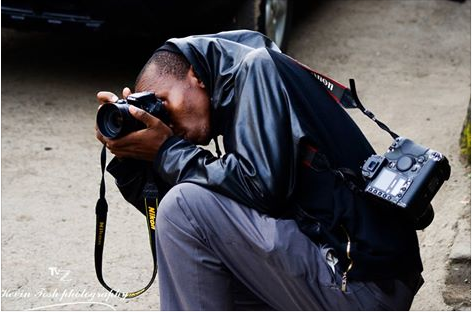
James Wakibia doing what he loves and knows best (Photo: Courtesy).

By Lorna Abuga.

When Egerton University student Jonathan Masongo won the Deutche Welle ‘Local Heroes’ media competition about two weeks ago, James Wakibia, was made a hero.

While awarding Masongo the main prize in the competition that had sought to recognize persons who do mundane but extra ordinary things in their communities, judges pointed out the skill in which Masongo’s story (see video here) was told as the one of the reasons why he won.

But deep beneath their decision, was a winning subject – Wakibia – an activist who uses photography and social media to push for social justice.

“I use photographs because they aid in telling out the untold stories of the people including social and environmental matters which affect them in their day to day life,” he told Kenya Monitor.

James Wakibia says that he began developing interest in photography at a tender age. When he was in Class Six, his father came home with a camera and with it he did his first photography project, only it ended up as a faux.

“I looked at the camera and I fell in love with it. Secretly, I took it and moved around the village taking the photographs of people only later to realize it did not have any film roll.”

With the determination to become a photographer, he started saving money so as to buy his own camera. And he did so by the time he was in Form Two. At Jomo Kenyatta High School, Nakuru, where he went for his O level, he soon became the school photographer taking photos of his school mates whenever an opportunity arose.

Having sat for exams in 2004 he went to Nairobi to look for a job. He worked in several places as a casual laborer and many a times he would leave his workplace at odd hours and consequently he would be harassed by the police in patrol on his way home. This he says is what motivated him to become an activist

“so as to highlight the plight of the common mwananchi.”

“Whenever I had free time I would take photographs of people protesting, in slums and around dump sites.”

Mentorship.

In early 2011 he says he met Boniface Mwangi, a Nairobi based Photographer who is best known for his photography work during the post election violence of 2007/08. Soon they developed a friendship and Mwangi would mentor him and shape his career.

“He took time to nurture my passion for photography and as a result whenever there was event we would cover it together. This boosted my skills and passion for photography.”

Wakibia who just graduated from Egerton University with a Bachelor of Arts in Communication and Media runs a twitter account @Streetnakuru on which he posts the issues of public interest.

“Most of the time I do documentary photography and post on the account and as a result some of the issues I raise have been addressed by the county government.”

One of those issues was the plight of Baby Jeremy, who had been detained at a Nakuru hospital as his parents could not clear his bill. Through his twitter account Wakibia started the discussion and soon the Baby was ‘rescued’.

Other projects in which he has been involved include road safety, environmental rights and highlighting the shortage of chairs at the Nakuru National library.

All these formed the content of the story that brought him the recognition by DW.

“I really appreciate the event organizers because they brought to limelight many unsung heroes who are serving Kenyans in different ways,”

says the young man who is an orphan and the fourth born in a family of eight.

Wakibia is looking forward to strategic partnerships to scale up his work so as to impact more in society and keep campaigning for social justice issues.

Audit report shows misuse of public funds by Makueni County Executive – Part One

image


A report released by the Auditor General has revealed massive misuse of public funds and blatant flouting of procurement procedures by the Makueni County Executive.

The report on financial operations for the 2013/2014 financial year showed that the executive arm of the County Government did not utilize funds amounting to Sh1.3B, an equivalent of 24 percent of the available funds thus impacting negatively on service delivery to the county residents.

Out of the budgeted local revenue collection of Sh350M for the period under review, only Sh189M was collected according to the report resulting to under-performance of Sh159M.

The report by Auditor General Edward Ouko signed on May 5, 2015 further states the County Executive paid out Sh11M for domestic travel and subsistence allowance without complying to the laid procedures.

The report points out glaring anomalies in which trips undertaken by officers were neither supported by work nor bus tickets while payments for seminars and trainings did not provide evidence of attendance in form of invitation letters, timetable or list of participants.

“In some instances vital details like the personal numbers of the payees listed in the schedules, place of visit, the number of days spend out of the duty station and the purpose of the visit were not disclosed,” says the report.

In one instance a temporary imprest of Sh1.4M was advanced to the Director of Youth Boniface Mutinga for training of boda boda riders in the 30 ward. However, the payment voucher lacked relevant supporting documents of the surrender.

The County Executive had an outstanding imprest of Sh5M, which had not been surrendered by the 30 June 2014 deadline. The imprests were issued to various officers including the Devolution and Public Service Executive Kawive Wambua with an imprest of Sh990,000 and former Roads and Infrastructure Executive Molly Kamene who was relieved off her duties with an outstanding imprest of Sh49,000. Others include former County Commissioner David Ole Shege with a imprest totaling to Sh550,000 and Sospeter Musembi with an imprest of Sh1.9M.

The report also revealed an expenditure on fuel and lubricants totaling to Sh7.9M without documentary evidence. Subsequently the County Executive paid Sh17M for routine maintenance of motor vehicles and other transport equipment with no inspection report detailing defects and estimated repair costs.

The report further states that no post inspection reports for the vehicles were available and the auditor could not establish whether there was need to repair the vehicles or the repairs were actually carried out on the respective motor vehicles.

The County Executive also made unsupported bursary payments amounting to Sh11M. The bursary payments further included a Sh2.9M paid as Governor’s bursary to various students. No records on how the needy students were established and there were also no indications that the institutions received the funds.

On human resource, the County Executive did not have a proper staff records making it impossible to establish whether recruitment of employees during the period under review was done within the approved staff establishment.

Subsequently, some employees were paid salaries amounting to Sh152M through manual payrolls, which could not be verified. The report also revealed an irregular salary payment of Sh295, 540 to a ghost employee between May and November 2014.

The report also questioned the payment of legal fees amounting to Sh7M to Nyamu and Nyamu C0. Advocates without proper documentary evidence with auditor terming the legal fees payment as irregular.

Direct procurement of seedlings for a tree planting exercise budgeted at Sh15M exceeded by Sh32M, a 215 percent variation over the recommended 10 percent. Out of the Sh42M, of Sh 17M in cash payments were made to undisclosed persons. The report states that the project was a blatant waste of money as all trees planted dried.

“Due to lack of sustainability in the project planning the said seedlings were not taken care of after planting .They all dried up making the total expenditure of Sh47M a loss of public funds,” reads the report.

Further, the report states that the County Executive flouted the Public Procurement and Disposal Act, 2005 and Regulations, 2006 during the procurement of Wi-Fi Connectivity at the county headquarter offices located at Wote town.

Though the procurement report indicated that invitation to tender the project at a cost of Sh7M was done on 21 December 2013, the Local Purchase Order (LPO) was prepared on 11 December 2013 nine days before the bidding while the County Government was invoiced on 17 December and a completion certificate issued on 20 December 2013 four days and a day before the bids were invited respectively.

The report that has already been tabled at the County Assembly further indicates that a physical verification of the project revealed the signal was too weak and could not be detected in some locations of the five – storey building leading to a waste of public money.

In the procurement of website update, all the three companies that bidded according to the report were owned by the same directors and the tender documents and evaluation minutes for the Sh1.4M project were unavailable.

Similarly, procurement procedures were disregarded in the procuring of toners and cartridges amounting to Sh7M where payments were done through an unnumbered and unauthorized voucher.

The report also states that the County Government of Makueni had failed to take over assets and liabilities of the three defunct local authorities and called on the County Government to expedite the process in liaison with the Transition Authority.

The report, undoubtedly paints a grim picture on the state of devolution and those responsible for the plundering of public funds should be charged accordingly. Already seven members of the County Executive Tender Committee have been arraigned in a Machakos court for flouting procurement procedures in the establishment of Kikima Dairy project in Mbooni.

Part two will analyze the auditor’s report on the Makueni County Assembly finance operations for the 2013/2014 financial year.

Exit POTUS, enter PONTIFF

Obama leaves kenya
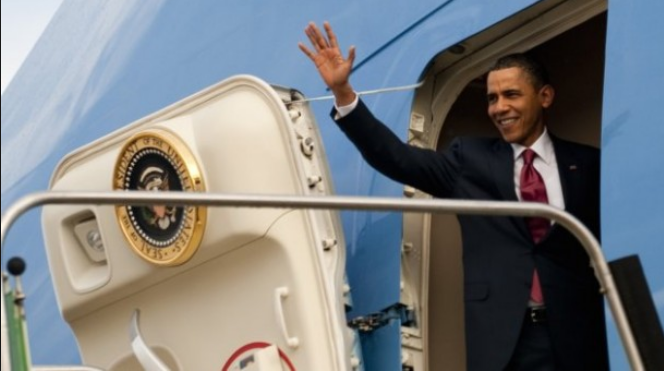
Obama was in the country from Friday evening. He left on Sunday. (Photo: www.jambonewspot.com).

After the visit of the President of the United States of America, Kenyans will now turn their eyes to Vatican from where its head and head of the Catholic Church, Pope Francis VI will be coming for a visit. Pope Francis VI is expected to come to Kenya in November in a tour that will also see him visit Uganda.

The Pope is expected to arrive on November 25, a Nakuru Priest told his congregation in his Sunday homily on July 26.

The priest whose name we will hold as he is not the one who communicates officially for the Catholic Church in the country said upon his arrival the Pope will be received by the President Uhuru Kenyatta as he too (the Pope) is also “a Head of a State.”

On 26 the Pope is expected to celebrate mass at Uhuru Park before meeting with priests in the country. The Pope’s itinerary also includes a meeting with the youth on November 26 at Kasarani, a day he is also scheduled to visit one of the slums in Nairobi, the priest further disclosed.

The last Pope’s visit in the country was in 1995. The then Pope, John Paul II had visited the country for the celebration of Phase 2 of the African Synod. His main host at the time was Cardinal Maurice Otunga who was the then head of the Catholic Church in Kenya.

Pope Francis
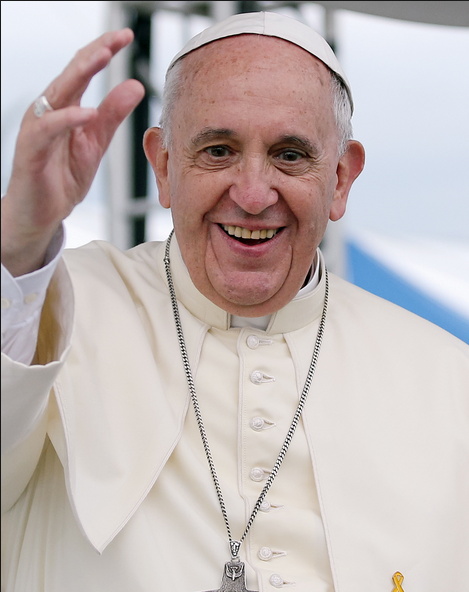
Pope Francis. He is expected in Kenya on November 25 (Photo: Wikipedia).

While the Pope’s visit might also be key on building strategic and bilateral talks between Kenya and the Vatican, and thus be felt by all Kenyans, it will have a meaning more among Catholic faithful. Already there are expectations that the Pope will declare Christians who were killed during the Mau Mau war as martyrs.

The visit is thus going to arouse what one may refer to as ‘the Catholic spirit’ in the country just several months after the Catholic gathering in Nyeri in which Italian nun, Sr. Irene ‘Nyaatha’ Stephanie was beautified. It will also have economic ramifications as it will boost ‘religious tourism’ just as the Nyaatha event did.

Politically, like Obama’s, the visit will be a symbolic endorsement and a statement to Uhuru Kenyatta’s Presidency. Whether directly or indirectly, it will boost their ratings on the confidence world leaders have about him and his Deputy William Ruto.

About Pope Francis:

Born Jorge Mario Bergoglio, Pope Francis (79) was elected in March 2013. He is the 266th Pope in the Church’s history and took over from Pope Benedict XVI. As a Priest he belongs to the Society of Jesus (Jesuits) and once taught Literature and Psychology. He is from Argentina and is the first Pope from the America’s . His parents though are said to be of Italian ancestry. His twitter handle is @Pontifex.

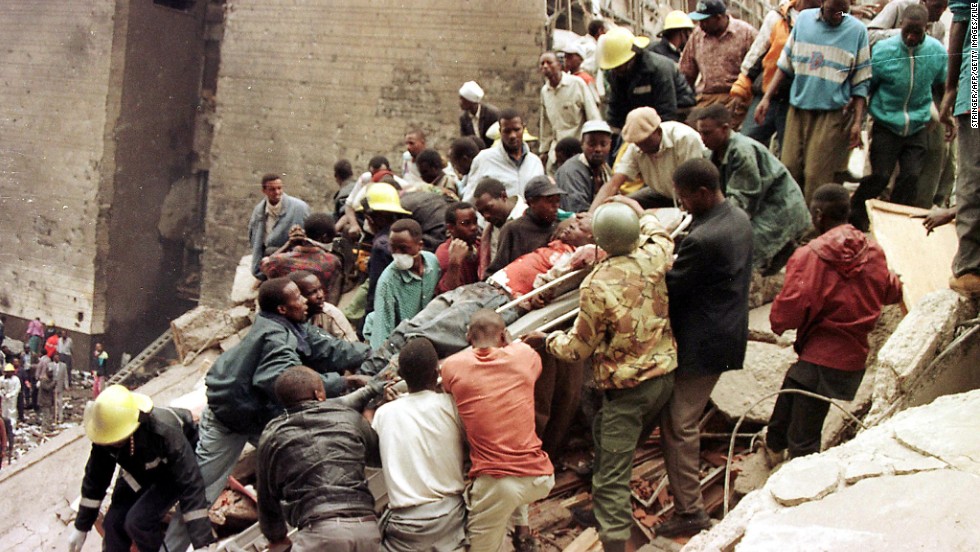
1998 Bomb blast victims eye compensation as Obama visits site

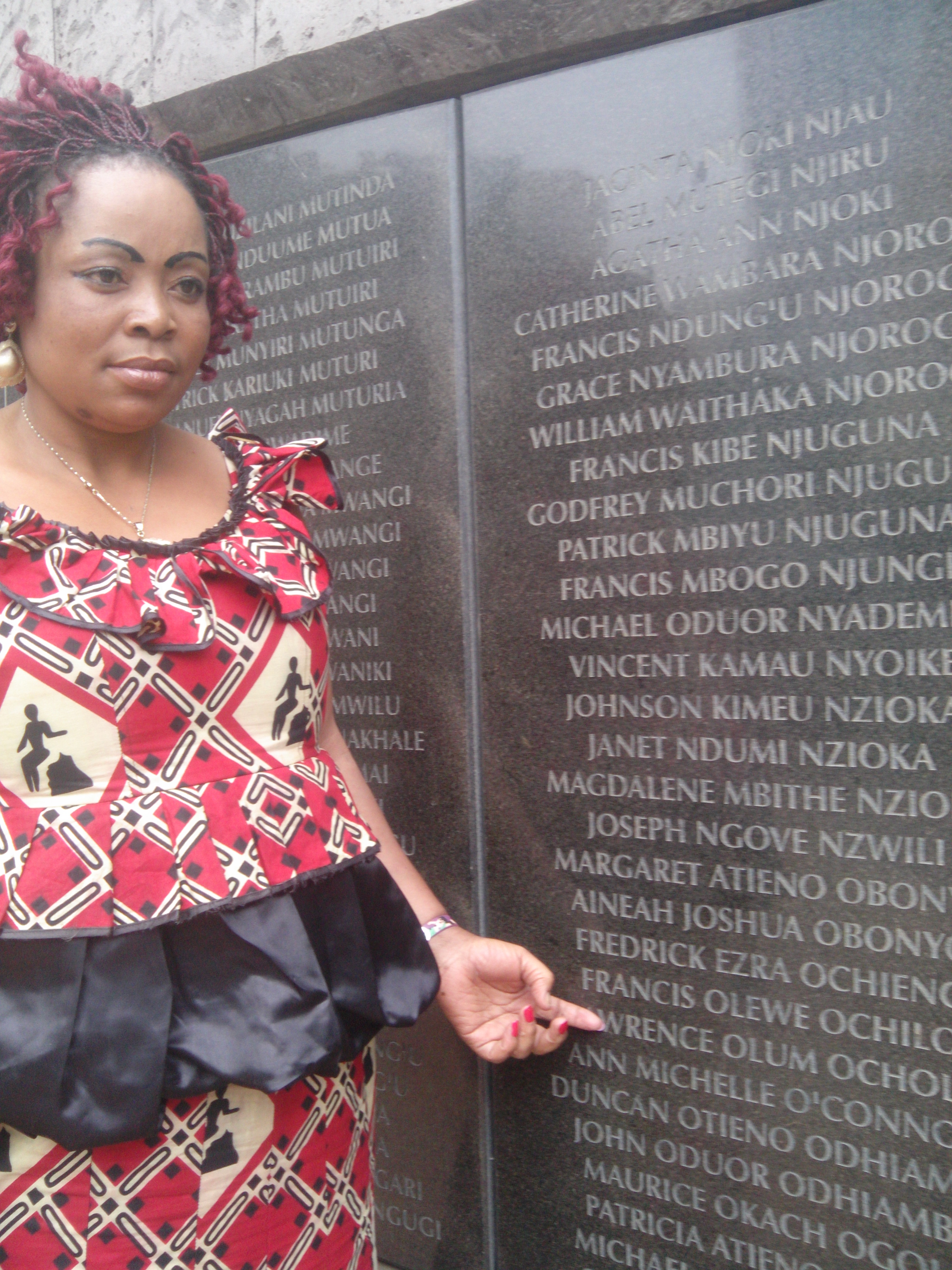
Photo courtesy of www.cnn.com

Victims of the 1998 bomb blast at the United States Embassy on cooperative house building in Nairobi are optimistic that the visit by US President Barack Obama and his Kenyan counterpart Uhuru Kenyatta will bear fruit in having them compensated.

The 7th August 1998 Bomb blast Victims Association Kenya Chairman George Ngige said that he was optimistic that the matter will be addressed by Obama who visited the memorial park on Saturday.

“We think the matter has now been laid bare before President Kenyatta and Barack Obama and we believe they will discuss the matter and leave us with solutions,” said Ngige.

On Saturday, Obama paid a visit to the memorial park located right where the then US embassy stood, before the 1998 bombing by Al-Qaeda. The US president laid wreaths at the monument, took a moment of silence before continuing with his visit in Kenya that began on Friday July 24th and ended on Sunday July 26th.

So far, the association has laid petition before the office of the president, the US embassy, national assembly as well as the Attorney General ‘s office.

“We took a petition to President Uhuru Kenyatta’s office through the Cabinet Secretary Ministry of Interior and Coordination of National Government Joseph Nkaisery on July 8th. We also took a petition to the United States Embassy here in Nairobi on the same date as well as to parliament and to the Attorney General’s Office,”

said Ngige, adding that the victims association had given the government seven days to reply to their petition.

According to Ngige, the human rights officer at the embassy promised to look at the into the issue and give a reply.

“However, the spokesman at the Interior and Coordination of National Government Ministry in Kenya denied having knowledge of the list of the 1998 bomb blast,” said Ngige.

Having written to various state organs, the victims now say that it is time the matter is addressed by the state or even the United States government. Said Ngige:

“We also wrote to Amref but they said they would write to the Ministry of Interior and Coordination of National Government but there is no feedback yet. We now feel that the matter must be addressed by President Kenyatta or even the US President Barack Obama.”

Ngige says that if the state does not heed to their pleas to compensate the over 2,000 victims, orphans, widows and widowers of the 1998 bomb blast, the association will stage a hunger strike outside the office of the President.

“We will stage a hunger strike outside the President’s office so that if they want to kill us they can do so,”

said a distraught Ngige.

He represents over 2,000 victims of the 1998 bomb blast that targeted the United States Embassy. The blast that brought down the building claimed over 200 lives and left more than 4,000 injured. Seventeen years later, the victims have not been compensated either by the US government or the Kenyan government. During the August 7, 1998 attack, 213 people lost their lives, among them 12 Americans. A simultaneous attack took place in neighbouring Tanzania, killing 11 people and injuring over 100 others.

Media’s coverage of the Global Entrepreneurship Summit draws strong criticisms

The 6th Global Entrepreneurship Summit happening in Nairobi Kenya on 25th & 26th July 2015

The Global Entrepreneurship Summit 2015, arguably the biggest international business meet up that Kenya has had in the last two decades received criticisms from Kenyans as to how the media covered it. Co-chaired by President Obama and President Uhuru Kenyatta, the global event brought together some of the top entrepreneurs and companies together in what can be seen as a once in a lifetime opportunity to catalyze entrepreneurship in Kenya.

Kenyan entrepreneurs, companies and startups had an opportunity to pitch their ideas to the likes of Richard Branson and Daymond John among others.

The coverage of the events on the other hand, left many people unhappy due to the media’s coverage of sideshows and non issues. There were murmurs about a week ago when the media was awash with reports and pictures of the vehicles that were brought in for President Obama’s use while in Kenya and little on the GES Summit opportunities.
This was captured in a Facebook post by Sam Gichuru where he called on his followers to keep the GES summit debate alive on his wall following the disappointing coverage by the local media.

image
After the first day of GES summit, Kenyans took to social media to vent on their frustration at the media coverage which seemed to weigh more on the side issues than the Entrepreneurship conversations, dealings and opportunities at the conference. Some did it with more than a healthy dose of sarcasm.


Some Kenyan journalists took to social media to engage with those that were criticizing the media coverage. Some of the challenges faced in coverage of GES come to light such as the difficulty in accessing the venues.


The journalists also weighed in on the debate, in different ways.

Finally, for the media the criticism is also an excellent opportunity to gather insights and improve as advised by some. Will they heed ?

Perhaps media will do more now that the GES Summit has come to an end to enlighten masses on what the agreements were and how they will benefit.

Nakuru residents enlightened on internet and the law

IMG_4034
A Langalanga Secondary School student during the training that was held at the Kenya National Library (Photo: Kioko).

 The Bloggers Association of Kenya (BAKE) held a training on internet and the law in Nakuru last Saturday, July 24.

The training which was conducted by Mugambi Laibuta, an Advocate of the High Court and Riva Jalipa of Article 19 was attended by internet enthusiasts among them, a section of bloggers in the county. It was also attended by a students from one of the schools in the county.

IMG_4026
Mugambi Laibuta at the training (Photo: Kioko).

Here are some take away tips from the training:
• There are two ways in which the law will apply when you misuse the internet; as a criminal case and as a civil case.
• One of the laws that is being applied in the country in charging those who misuse the internet is section 29 of the Kenya Information and Communication Act (KICA) which outlaws the “misuse of a licensed telecommunication equipment.”
• It is important for you to have control of the internet platform on which you post information.
• Always be cautious not to tweet or re-tweet unconfirmed reports.
• Beware that the internet never forgets and that what you post today may be used many days to come against you.
• Always remember to protect the privacy of others.

What to do when arrested on misuse of the internet:
• Arm yourself with information on the rights of an arrested person.
• Always ask why you have been arrested.
• You can apply for a cash bail or bond.
• Ask for opportunity to contact a lawyer.
• Keep in mind that you have right to a fair trial.
• When in court never accept liability.

IMG_4038
Riva Jalipa of Article 19 who also a trainer (Photo: Kioko).

Defenses against defamation:
• Truth – having your facts right.
• Honest opinion – being objective on issues you comment devoid of malice or other hidden intentions.
• Public interest – highlighting on issues for the sake of the public good.
• Commenting for academic purposes – this involves analyzing issues within academic circles.

Constitutional articles that highlight on internet and the law:
• Article 27: The article is on ‘Equality and discrimination’ and states among other things that

“every person is equal before the law and has the right to equal protection and equal benefit of the law and that”

equality includes the full and equal enjoyment of all rights and fundamental freedoms.”

• Article 31: Privacy: States that

“every person has the right to privacy, which includes the right not to have information relating to their family or private affairs unnecessarily required or revealed,” among other issues.

• Article 33: Freedom of expression: That every person has the right to freedom of expression which includes freedom to seek, receive or impart information or ideas.” But

“the right to freedom of expression does not extend to propaganda for war; incitement to violence; hate speech; or advocacy of hatred that constitutes ethnic incitement, vilification of others or incitement to cause harm.”

• Article 34: Freedom of the Media: That

“freedom and independence of electronic, print and all other types of media is guaranteed,”

and that

“the State shall not exercise control over or interfere with any person engaged in broadcasting, the production or circulation of any publication or the dissemination of information by any medium; or penalize any person for any opinion or view or the content of any broadcast, publication or discrimination.”

• Article 35: Access of information: That

“every citizen has the right to information held by the State; and information held by another person and required for the exercise or protection of any right or fundamental freedom,”

and that

“every person has the right to the correction or deletion of untrue or misleading information that affects the person.”

• Article 49: The rights of an arrested person which include “the right to remain silent” and “the consequences of not remaining silent.”

• Article 50: Fair hearing: That

“every person has the right to have any dispute resolved by the application of law decided in a fair and public hearing before a court or, if appropriate, another independent and impartial tribunal or body.”

• Article 51: Rights of persons who are detained, held in custody or imprisoned: That

“a person who is detained, held in custody or imprisoned under the law, retains all the rights and fundamental freedoms in the Bill of Rights, except to the extent that any particular right or a fundamental freedom is clearly incompatible with the fact that the person is detained, held in custody or imprisoned.”

This includes right to petition for a habeas corpus, petition a court to have an arrested person and who cannot be traced presented in court either dead or alive.

Organizations that can be of help:

There are quite a number of organizations involved in the business of dissemination of information to large masses and they that can be of assistance either directly or indirectly when you are in trouble. It’s important that you get to develop a network with them early enough.
Article 19.
Media Council of Kenya.
The Kenya Correspondents Association.
Bloggers Association of Kenya.
Committee to Protect Journalists.

Lively conversations at Maskani Mombasa

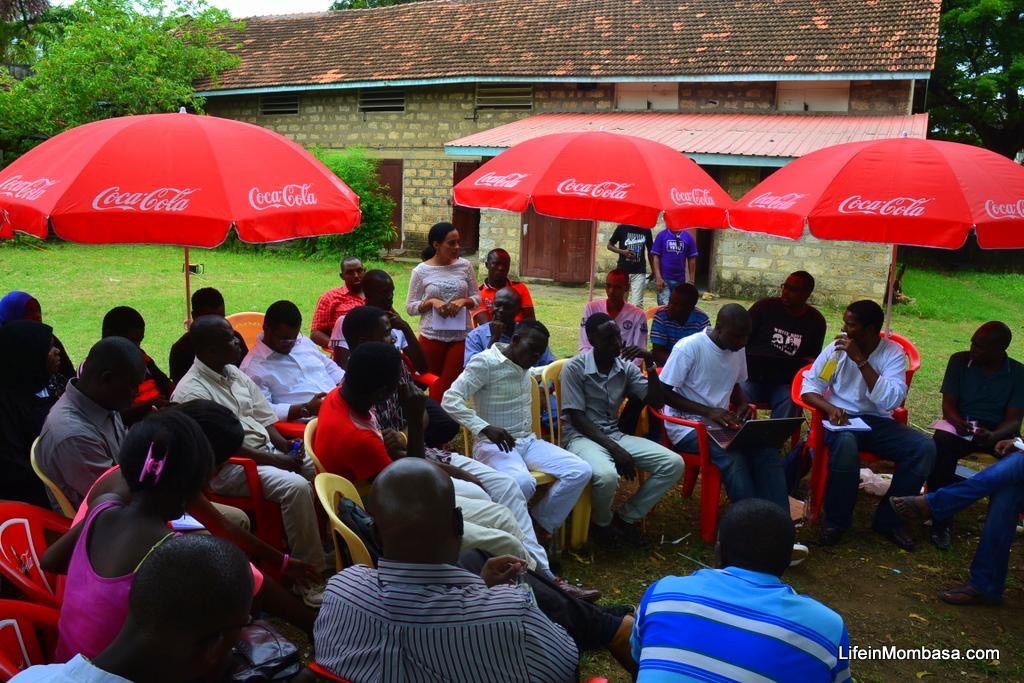
Participants at Maskani Mombasa

By Davis Mwandawiro

Maskani held their long awaited event on Saturday 26th of July in Mombasa. It was organized by Nisisi Kenya as part of the activities for the Jukumu Letu week. A first of its kind in Mombasa held at Little Theatre Club following previous “Maskani Events” in Nairobi, Mombasa and Nakuru.

Maskani’s aim is to get important social-political conversations from online venues (social media) to face-to-face interaction. People of all walks of life attended ready to ventilate their opinions on various issues affecting Mombasa. One of the surprise attendees was Mombasa Senator Hassan Omar whose intrusive arrival at the event caught many by surprise.

The debate centered mostly on issues of governance of the county. The alleged embezzlement of funds following the audit report that was released a week ago, insecurity, role of citizens and youth radicalization were key discussion points.

The Maskani team was resourceful enough to live stream the event for all those not able to attend and the heated conversation trickled into Twitter making it one the trending topics for Saturday and Sunday via the hashtag #MaskaniMombasa.

image

One of the least publicly discussed matters in Mombasa is that of youth radicalisation into extremism and terrorism. According to some of the participants, the youth are leaving Mombasa in numbers and joining AlShabab. Even more alarming, is the recruitment of Mombasa youth into joining the ISIS in Syria.

The conversation were forthcoming and offered a forum where they can critique leadership and governance without the shouting that characterizes political rallies. The conversations are an important first step for citizens to claim their rightful voice in the political space.

Maskani coordinator, Peter Irungu said

“These conversations shall go on. We promise to organize more other events in the coming weeks.”

All those who attended felt a sigh of relief that perhaps all the sentiments they aired will finally be conveyed to those in power and they will be forged into action.

Nakuru muslim cleric convicted of child sex tourism files appeal

Snip on law
The cleric who was sentenced to 10 years imprisonment says his life is in danger (Photo: Google).

By Lorna Abuga.

A Muslim cleric who was sentenced to 10 years imprisonment for child sex tourism by a Nakuru court has filed for an appeal. Through his lawyer Lawrence Karanja, Ali Samoja who was convicted and sentenced by on July 6 this year says his life is in danger.

“My client is suffering from asthma and many a times he can not be able to access good medication in prison and as a result his health is deteriorating.”

The cleric was found guilty of participating in the trafficking of a 15 year old girl from Nakuru to Nairobi where she was defiled by a man with a Lebanese origin. The Lebanese Sayyid Muktadha, who was facing defilement charges, later fled the country after he was granted a bond by the court.

Samoja also argues that the decision to imprison him was made erroneously.

“The magistrate who convicted him erred in the law and in fact by holding that the offense of child sex tourism had been established whereas there was no such evidence and she also erred in the law by not evaluating the entire case but took the prosecution evidence in isolation,”

his Lawyer argued as he presented the appeal.

Samoja who is serving his sentence at the Naivasha Maximum prison wants the case considered as urgent.

According to the father of the minor in early July 2011 they handed over the girl to Samoja after he said that he would get her a sponsor in Nairobi who would take her to Lebanon for studies after the month of Ramadhan that year.

“When I asked him about the passport and visa required for my daughter to travel he assured me the sponsor would cater for that.”

“We gladly released our daughter to travel because we wanted her to get better education and as result secure a bright future.”

But

“a few days after my daughter left for Nairobi Samoja called me and told me that she could not travel because she had been declared as medically unfit.”

When she came back home he said, out of the trauma she had gone through, the girl attempted suicide. It was then that she disclosed what had happened.

He said when his daughter traveled to Nairobi, the Lebanese man had taken her to his house in Westlands and one day he came back home in the evening he tore her clothes and consequently defiled her, before she fled to a nearby mosque where she was assisted.

Part of the trauma the girl was going through he said was as a result of the mockery she faced from her fellow students and teachers for the failure to travel as had earlier been thought.

“Life lost meaning because the same people who had opened a leeway for me to be taken advantage of where now humiliating me and as a result I wanted to eliminate my life,” the minor had testified earlier.

The appeal will be heard on July 28.