Tuesday, December 16, 2025
Home Blog Page 3

Canon inks deal to Foster & Fortify the Spirit of Filmmaking Across Africa

0

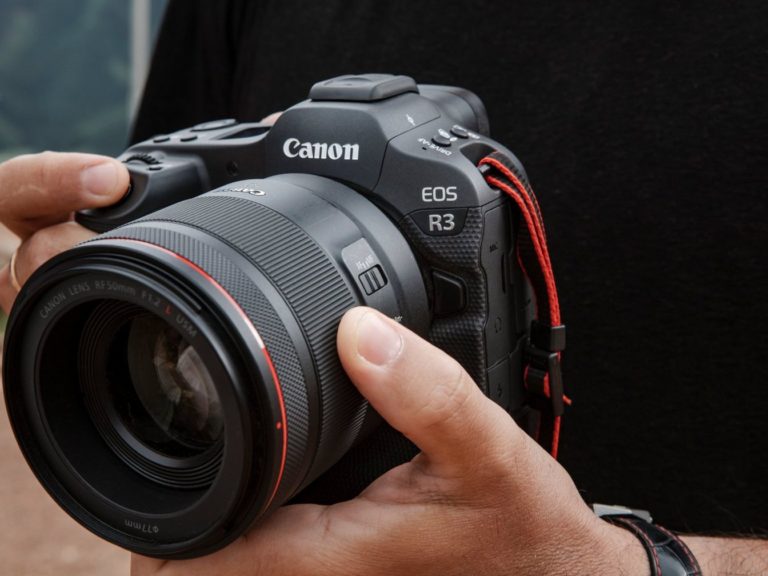
Canon Central and North Africa announced its alliance with Multichoice Talent Factory (MTF) to promote the creative art of filmmaking through a series of workshops and pieces of training for the 2021/22 MTF cohort of students. The MTF Academy is an education programme that develops emerging TV and film talent in Africa, through an accredited 12-month immersion programme including both theory and hands-on experience in cinematography, editing, audio production and storytelling.

The MultiChoice Talent Factory partnership with Canon is an exciting and important opportunity for the African film & TV industry. These training sessions enable us to equip industry professionals with practical and time-relevant skills. Most African film-makers and content creators are self-taught, and access to masters and technical skills development is hard to attain – therefore collaborations such as these are crucial for upskilling and development of the industry.” -Nwabisa Matyumza, MultiChoice Talent Factory Director

Canon continues to roll out its several creative initiatives that are focused on promoting job opportunities and future livelihoods for the young population in Africa to enhance and support their skill sets, under its prodigious Miraisha programme. Falling under the umbrella of Canon’s widespread Miraisha initiatives, the company plans to support MTF Academy students to hone their filmmaking and technical skills through a three-month series of workshops that focus on developing a strong foundation of technical know-how, and filmmaking basics and introduction to different cameras and lens types.

Our endeavour through this association with Multichoice Talent Factory is to nurture the already kindled spirit of creativity in the MTF academy students, through a series of pieces of training that will set a strong foundation for them when they’re ready to step into the professional world. The workshops are planned and structured in a manner that will provide students with an exposure to a compressive overview and understanding of the actual products which are being used across the industry by leading professionals. Such training is paramount in developing the right technical guidance needed to score creative opportunities when starting fresh in the industry. We are excited for the students to get the best insights from industry experts through these sessions.” – Amine Djouahra, Director of Sales and Marketing, Canon Central and North Africa. 

The company plans to take these training courses in time from a virtual set-up to a physical in-person set-up, based on the safety compliance guidelines for the COVID19 pandemic. The training will encompass a total of 60 students from 13 different African countries with physical training taking place in the hub countries at the MTF Academies in Nigeria, Kenya and Zambia.

The training programme will kick off with an introductory session on the brand and the best-in-class technological line-up catered for photographers and filmmakers along with technical training on other Canon products. Moving into the physical training, the students will have the opportunity to get hands-on training whilst delving deep into filmmaking incorporating a thorough overview into DSLR and Mirrorless, XA & XF and Cinema EOS Filmmaking Cameras along with other sessions on the art of shooting.

In a bid to further encourage the art of filmmaking, Canon has organized four Miraisha Masterclasses that will be open to the general public as well as MTF alumni. These classes will be based on various industry topics and cover introductions to video and lens basics along with some advanced classes, thereby providing people with an opportunity to learn the basics when it comes to technical aspects of filmmaking, as well as have the option to do the advanced workshops. The Masterclasses will commence in June 2022 and continue through August 2022.


Fake news and their identity as we near elections

Ever heard about Fake news and how fast they spread?  Fake news is always a norm in Kenya especially this period towards general elections. This year, Kenya will lead to polls on 9th August to elect new leadership. As general elections draw near, Fake News and political misinformation are becoming a major problem.  Fake News Machinery always hold Kenya’s general election as a hostage. For instance, Voters intentionally spread fake news via social media. This ultimately undermines Kenya’s democracy in the process. Some wonder whether this election will be different. Journalists are working to protect Kenya’s information infrastructure. Political parties use Social media influencers to spearhead spread of  Fake news.

The use of social media has become spread in Kenya. For instance, there are over 21 million internet users in Kenya with internet penetration of about 40 percent. Also, about 61% of the nation’s population is 24 years old hence a demographic that is active on social media. Facebook and WhatsApp rank high in active users. Besides that, twitter continues to be primary news and information trendsetter. As a result, it is becoming ground zero of the news flourishing disinformation industry. This article therefore presents to you some of the fake news that have been on public domain concerning various organizations and corporations. Moreover, it gives you tips on how to easily identify the perceived fake news.

How do you identify fake news?

Are you tired of seeing news that are fake? Sometimes you face dilemmas in knowing what to trust or whom to trust. Here is some guide in terms of sorting out facts as well as weighing out information. Also, being knowledgeable both online and offline.

Check the Source to identify whether it is fake news.

When you come across an article that cites sources, it is advisable that you go and check the sources out. Keep in mind that sometimes some organizations that sound to be official, tend to represent a fridge view of large number of people. Likewise, if you cannot find the source, you can read more about the information that is spread out. It enables you to decide for yourself whether the information is true or otherwise.

Check the author to identify if the news is fake.

As a reader, take your time to identify the credentials of the author. Check if the author has some specialty in the field they are writing about. Go ahead and check the LinkedIn. Do some little google check to see if the author has some authority about the accuracy of the information.

Concentrate on the bias side.

Putting your attention at the bias point of view will enable you to ascertain facts about the news. Some information tends to lean towards one point of view hence ignoring to give the whole story. In addition, focus on the sensational part. That information that is sensational, you should doubt about it. Sometimes, headlines use more of emotional language hence an exaggerate.

What are some of the emerging Fake News as we near elections ?

Fake News purporting to be Safaricom’s response to Rigathi Gachagua.

Fake News in form of a statement emerged on the Social Media platform purporting to be Safaricom’s response. The statement condemned Gachagua’s utterance to Safaricom following the Kenya Kwanza’s running mate interview  on Inooro TV. Later, the telecommunication giant came out and disowned the information. Consequently, the company said that it shares its official communication through its official Social-Media Channels

Rigathi Gachagua had demonstrated how big firms like Safaricom and Kenya Airways are worthy selling . He also added by saying how that money will be in the possession of small firms. ‘’Being corporate companies like Safaricom to be sold and process given to the small firms.’’ Speaking in Inooro TV, Rigathi explained how small businesses stand a better chance of paying more taxes that few corporate entities. He asked questions on the reasons for having major tax -paying companies like Safaricom and Kenya Airways [KQ]. He therefore recommended to sell them and give money to small businesses

Igathe’s appointment as CEO Rubis Energy.

Fake news recently emerged indicating that Polycarp Igathe was to take over as the Chief Executive Officer [CEO] of Rubis Energy Kenya. This was due to the alleged deportation of Jean- Christian Bergeron to France. Rubis  later  denied that statement concerning  Bergeron’s  deportation. The company maintained that Bergeron had travelled to France to brief the head office on the ongoing fuel crisis in Kenya. The NTV which is owed by the Nation Media Group [NMG] later confirmed that the widely circulating image featuring a news -bite on Igathe’s appointment was fake.

Kenya Airways Recruitment.

Fake News emerged that the Kenya Airways was in the process of recruiting toll attendants, clerks, and some cleaners. Fact -Checker identified that the notice was fake and the motive behind it was to target unsuspecting Kenyans who are looking for jobs with the aim of conning them. Kenya Airways [KQ] distanced itself from the advertisement that was being spread on the Social -media purporting that it was hiring.

In a post on Twitter, the National Air-line asked Kenyans to ignore the notice. Furthermore, it termed the advert as fake. Therefore, Kenya Airways, asked members not to be conned. KQ added that all the available vacancies are always on their official channels including official LinkedIn Channel.

Fake News from USIU concerning Senator Malala’s academic records

A letter ,which United States International University [USIU] claims to be fake ,emerged concerning Senator Malala’s academic records .The Press-statement which was thought to be USIU’s response to Malala’s degree  was fake. The fake statement stated that Malala does not have or hold any academic document from the university. The Kakamega senator has been on the public debate whether he has valid academic credentials .

This is also political in nature since were are almost close to the general elections. Therefore, the doubt concerning the credible academic credentials was a way to deter him to vie for Kakamega gubernatorial seat .Later on ,USIU came and verified how fake the letter was .In addition ,the Institution clarified that it posts its information on its Social -media handles .


Have you recently come across any fake news, share with us how you identified it …


AstraZeneca vaccine approved in the EU as third dose booster against COVID-19

0

AstraZeneca’s COVID-19 vaccine has been granted approval in the European Union (EU) by the European Medicine Agency (EMA) as a third dose booster in adults.

Healthcare professionals can now use the AstraZeneca COVID-19 vaccine as a third dose booster in patients previously given a primary vaccine schedule of either AstraZeneca COVID-19 vaccine or an EU-approved mRNA COVID-19 vaccine.

The authorisation is based on a review by the Committee for Medicinal Products for Human Use (CHMP) of the substantial body of evidence demonstrating an increased immune response after a third dose booster with AstraZeneca COVID-19 vaccine following a primary vaccine schedule of either AstraZeneca COVID-19 vaccine or an mRNA COVID-19 vaccine. [1-5]

Although more than 65% of the global population has received at least one dose of a COVID-19 vaccine [6], there remains a significant challenge to ensure people receive both their primary vaccine schedule and third dose booster, and healthcare professionals now have greater flexibility in their choice of vaccine.

Mene Pangalos, Executive Vice President, BioPharmaceuticals R&D, AstraZeneca said: “Today’s marketing authorisation for AstraZeneca’s COVID-19 vaccine as a third dose booster is an important step towards our goal of providing continued protection against COVID-19 for all populations. Ensuring a longer duration of immune protection is essential to the long-term management of COVID-19 globally, and boosters can address the waning of protection over time that has been seen with all primary vaccine schedules to date.”

There is a substantial body of evidence supporting AstraZeneca COVID-19 vaccine as a third dose booster following all primary vaccination schedules tested to date including AstraZeneca COVID-19 vaccine, mRNA vaccines, and CoronaVac [1,7-12].

AstraZeneca COVID-19 vaccine is already authorised as a homologous booster (patients previously given a primary vaccine schedule of AstraZeneca COVID-19 vaccine) in the UK, and several countries in Asia and Latin America. It has also been authorised as a heterologous booster (patients previously given a primary vaccine schedule of either a viral vector vaccine other than AstraZeneca COVID-19 vaccine or an inactivated vaccine or an mRNA COVID-19 vaccine) in a number of non-EU countries.

AstraZeneca COVID-19 vaccine is estimated to have helped prevent 50 million COVID-19 cases, five million hospitalisations, and saved more than one million lives worldwide, based on model outcomes assessing COVID-19 worldwide

Uganda tourism board holds roadshow to attract more tourists from Kenya

0

Uganda Tourism Board (UTB) is seeking to partner with Kenyan tour operators to boost intra-African tourism between the two East African countries with a focus on encouraging more tourists from Kenya to explore the natural, adventure, leisure, and business and cultural attractions that Uganda has to offer.

The roadshow comes in the wake of an intensified campaign by UTB to reposition Uganda – The Pearl of Africa as a leading tourism destination in Africa under a new brand dubbed “Explore Uganda”. To kick off the activities, UTB has launched a roadshow at the Sarova Stanley Hotel in Nairobi, Kenya, from 23rd to 25th May in a bid to increase tourist arrivals from Kenya by 50% in 2023.

Kenya is a key tourism source market making up almost half of the African arrivals to the country. With Kenya’s developed travel trade sector, coupled with its connectivity to the rest of the world, Uganda Travel Trade partners will bank on the roadshow to secure partnerships that increase tourists to Uganda from Kenya. Over 278 operators from Kenya will create business linkages with 35 operators from Uganda.

Speaking at the launch ceremony, Uganda’s Deputy High Commissioner to Kenya, His Excellency Evans Ryabaha hailed the tourism industry as a powerful catalyst that will enhance the bilateral and cultural relations between the two countries.

On her part, Ms Claire Mugabi, UTB Marketing Manager said that Kenya is the biggest source market of tourists in Uganda, and outlined future plans to increase awareness of Uganda as a destination that offers an adventure of a lifetime.

“Our refreshed destination brand identity captures the essence of the Pearl of Africa with its mesmerizing experiences cater to the needs of diverse travellers with its endemic and endangered flora and fauna, pleasant year-round weather, punctuated by unique scenery,” she added.

Kenya Association of Tour Operators Chair Mr Fred Odek emphasized the need for joint tourism promotional activities by Kenya and Uganda tourism stakeholders. “We see a great opportunity for outbound tourism to the East African Community (EAC) countries to get more tourists to Kenya and simultaneously send tourists from Kenya to other countries in the region. Uganda will benefit significantly owing to its geographical proximity and long history of good relations with Kenya,” said Mr Odek.

Over 278 Kenya tourism and travel agents are expected to participate in the roadshow that is aimed at enhancing Destination Uganda’s presence in the Kenyan market. The event will also boost business-to-business opportunities while strengthening Explore Uganda brand in Kenya.

The highlights of the three-day roadshow include the Pearl of Africa brand launch in Kenya, direct engagements with key tourism trade partners, government representatives and ravel media. Before the pandemic, Uganda received over 1.5 million tourists in 2019 and registered over 512,000 travellers in 2020. However, the country’s tourism industry is poised for recovery with a renewed emphasis on the intra-African travel market as a key marketing strategy. in 2019, the Tourism sector contributed 7.7% of Uganda’s GDP and over 667,000
jobs. 58% of the Uganda tourism workforce is composed of women.

Tourism data from 2019 shows the top three African source markets in included Rwanda (32%), Kenya (24%) and Tanzania 6%. President Yoweri Museveni described the new brand Explore Uganda, Pearl of Africa as a key strategy to re-imagine Uganda’s tourism sector and position the country as a competitive international travel destination.

Child Protection Experts Deliberate on Challenges, Solutions in the Wake of COVID-19

0

A group of delegates from across Africa and partners from Europe and the USA have converged to discuss the child protection problems and solutions in and for Africa, in the wake of the COVID-19 pandemic.

The gathering set for 23rd and 24th of May, will be  convened by the Jesuit Justice and Ecology Network – Africa (JENA) of the Jesuit Conference on Africa and Madagascar (JCAM) in collaboration with The Vatican COVID-19
Commission – Africa Taskforce, The Association of Member Episcopal Conferences of East and
Southern Africa (AMECEA) and the Catholic Care for Children (CCC) with a focus on the Theology and Practice of Child Protection in Africa in Times of Pandemics.

“The immense challenges that the COVID-19 global pandemic has brought to this region of the world
has sharpened our thinking and made the need for deep reflection on how we care for and protect
the most vulnerable in our societies ever more important,” observed Bishop Charles Kasonde,
President, AMECEA. “How we care for and safeguard children must be at the heart of that
discernment,” he added.
In attendance will be child protection experts representing the governments of Kenya, Uganda and
Zambia. Other partners are religious organisations such as the Association of Sisterhoods of Kenya
(AOSK), the Association of The Religious in Uganda (ARU), Changing the Way We Care and the
Zambia Association of Sisterhoods. Also attending will be representatives from UNICEF, World Bank,
US State Department officials and USAID.

The conference will formulate recommendations in the form of operative theology and practical
strategies regarding child protection that are faithful to God’s will and purposes. First and foremost
will be the question of how best we protect children from various forms of violence, harm and abuse.

“The COVID-19 crisis and its impacts provide an opportunity for rethinking child protection,” said Fr
Charles Chilufya, Director, JENA during a pre-conference interview. “The pandemic has exposed
significant gaps in theories and practices of child protection when analysed from various
contemporary perspectives, whether theological, scientific, cultural or social,” he continued.

Even though children have not been the face of the COVID-19 pandemic, they are probably among
the largest proportion of its victims. Children, of all ages, and in all countries, are being affected by
the disease itself, particularly by the socio-economic impacts and, in some cases, by mitigation
measures that may inadvertently have done more harm than good.

The pandemic is a universal crisis affecting all countries and peoples but for some children –
especially in Africa – its impact is more specific to them and some of the impacts will be lifelong. Nor
have the harmful impacts of the pandemic not been distributed equally. They have been most
damaging for children, especially those already in vulnerable situations and in the poorest places and
regions. Ultimately, the COVID-19 crisis has had and is still having a profound effect on children’s
well-being.
The outcome of the conference will be policy and context-relevant knowledge outputs for
well-informed action to assure child protection

Twitter outlines new crisis misinformation policy to deal with fake news

Twitter has outlined a new crisis misinformation policy that will guide its efforts to push for credible and authoritative that will ensure viral misinformation isn’t amplified.

In times of crisis, Twitter vows to make reliable information more available during times of crisis while slowing down the spread of fake news.

“Today, we’re introducing our crisis misinformation policy – a global policy that will guide our efforts to elevate credible, authoritative information, and will help to ensure viral misinformation isn’t amplified or recommended by us during crises. In times of crisis, misleading information can undermine public trust and cause further harm to already vulnerable communities. Alongside our existing work to make reliable information more accessible during crisis events, this new approach will help to slow the spread by us of the most visible, misleading content, particularly that which could lead to severe harm.” as captured on Twitter blog.

Twitter is committed to expanding its approach around the emergent global crises, informed by the United Nations Inter-Agency Standing Committee (IASC)’s emergency response framework, and other global humanitarian frameworks.

“Conversation move especially during periods of crisis, and content from accounts with wide reach are most likely to rack up views and engagement. To reduce potential harm, as soon as we have evidence that a claim may be misleading, we won’t amplify or recommend content that is covered by this policy across Twitter – including in the Home timeline, Search, and Explore.”

Twitter will also prioritize adding warning notices to highly visible Tweets and Tweets from high profile accounts, such as state-affiliated media accounts, and verified official government accounts.

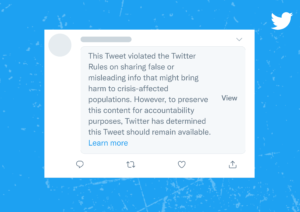
Starting today, Twitter will add a warning notice  for false coverage or event reporting, or information that mischaracterizes conditions on the ground as a conflict evolves.

Any false allegations regarding the use of force, incursions on territorial sovereignty, or around the use of weapons, demonstrably false or misleading allegations of war crimes or mass atrocities against specific populations and finally, false information regarding international community response, sanctions, defensive actions, or humanitarian operations will also be accompanied by warming.

People on Twitter will be required to click through the warning notice to view the Tweet, and the content won’t be amplified or recommended across the service. In addition, Likes, Retweets, and Shares will be disabled, and the notice will link to more information about our approach to crisis misinformation.


Canon Partners up with Ishara Mara to Launch a Canon Experience Center in Kenya

0

Canon Central and North Africa have partnered with Ishara Mara to launch the Canon Experience Centre in Kenya, in an announcement earlier this week, The partnership is dedicated to supporting the education and empowerment of people in the region.

Canon’s Experience Centre aims to raise awareness about nature and wildlife whilst empowering the indigenous Maasai people by providing unique and immersive photography, video and print experiences at the national reserve.

Basically, the canon experience roots for:

An Experience for All

From indoors to outdoors, the Canon Experience Centre will offer visitors a range of options to explore the captivating beauty of the national park. Canon’s touch and try the experience at the centre will allow visitors to get their hands on the company’s cutting-edge cameras, lenses with lens bar experience, and binoculars with binocular bar experience along with official Canon Experience vehicles. A dedicated kid’s zone at the centre will offer engaging opportunities for families with children to interact, engage and immerse in the world of photography with products such as Selphy, Zoe mini along with access to Canon’s creative park – Pixma. Additionally, a family photo-booth at the centre with exciting dress-up and back-drop options for adults and kids has been set up to turn moments into memories. Photography enthusiasts will also be able to get their own photographs printed at the print centre.

Chasing the Thrill – Capturing Wildlife

As part of the experience, visitors can also opt for a tour that incorporates wildlife and nature photography lessons at the centre or during game drives along with an option of mentor/teacher assistance. Additionally, the experience centre will also be part of some guided tours provided by external agencies in order to ensure maximum access for the general public. In an endeavour to promote the spirit of creativity and imagination, visitors at the centre will also be invited to participate in the ‘Best Shot’ photography competition with the winning shots being displayed at Canon Mara gallery at the centre. Furthermore, yearly Mara photography awards will be organized to felicitate the best wildlife photographs taken during the year.

“We are extremely proud of this partnership with Ishara Mara that is rooted in spreading awareness and education as well as empowerment of the local communities. Through the Canon Experience Centre at the Ishara Mara, our vision is to create a space where each party be it the visitors or the local communities or even nature itself, can benefit in some way. There is something for everyone at the center and it is the true embodiment of Canon’s core philosophy of Kyosei which means living and working together for the common good,” said Somesh Adukia, Managing Director – Canon Central and North Africa.

Power in the Hands of Local Communities 

As part of the company’s relentless bid to empower people and give back to the communities, Canon’s Experience Centre at Ishara Mara initiative envisions educating and training the local Maasai indigenous tour guides with necessary skills thus transforming them into Canon ambassadors and content creators. The grassroots initiative envisions playing to the strengths of the local Maasai people and their excellent knowledge of the area by placing the power of photography in their hands. The first step of the program is to ensure the local Maasai guides get a thorough understanding of the basics of photography along with comprehensive training on how to use Canon equipment to further enable and empower them to teach guests, photographers, tourists as well as local Maasai people. The initiative also looks at encouraging the local community in the area to become content creators by creating content on various topics such as Human Coexistence with the Environment and Wildlife, Maasai Tribe and Culture, Wildlife Photography, Wildlife Beauty, Protection, Preservation and Environmental Conservation. Likewise, the initiative also looks at promoting and empowering women to become Maasai tour guides by providing various training and educational opportunities. Canon will further support these trained guides to purchase official Canon equipment through its exclusive packages designed for the Maasai tour guides. Moreover, a referral scheme from Canon will allow the Maasai tour guides to earn an added commission should a Canon customer visit the experience centre.

How informal sector workers were unmasked during the pandemic

The informal sector was not spared during the Covid-19 pandemic. A pandemic is normally known to cause disruptions in our society thus the COVID-19 was not exemptional as it caused challenges to both the public health system and local economies. Due to the need to save lives, various countries announced partial or total lockdown. The result was unexpected social and economic disorder in the world population. Those working in the informal sector were affected.

Due to the pandemic, the government was ordered the closure of the country’s boundary.  Neighboring countries closed their boundaries too hence restricting the movement of goods and services. The government announced economic and social insurance policies to reduce the social and economic impacts of COVID-19. Unfortunately, the policies did not favor the informal sector.  The pandemic has made the situation worse. The article, therefore, outlines the affected groups in the informal sector.

The affected groups in the informal sector as a result of the pandemic 

Women in the informal sector were  affected

Women are believed to have been affected by the pandemic as most of them work in the informal sector. Women’s economic and productive life was affected. In low-income countries such as Kenya, you may have realized that more women work in the informal sector as compared to the male. Many women lost work as other sources of income got lost.

Remember, as they lost their jobs in the informal sector, they had to take care of many children whose schools and childcare centers were closed. Just imagine, suppose you put yourself in their shoe, what a burden? If you were keen, you will have noted how the increased burden of providing meals for the children. They also had to do extra purchasing and cooking.

LGBTI individuals were affected 

Lesbian, Gay, Bisexual, Trans, and Intersex[LGBTI] people were also not spared by the diverse effect of the Covid-19 pandemic. Most of them are more likely to be unemployed than the rest of the population. Majority of those LGBTI work in the informal sector. As a result, you may note that they hardly get sick leave payment, unemployment compensation, and coverage. Furthermore, discriminatory paid leave policies do not cover all gender equality. The LGBTI people may not have been able to find time to take care of their families.

Human rights activists and experts on gender identity released a statement noting the way the transgender population was highly dependent on informal work due to the challenges they face. The challenges include discrimination and education. Some of their names are not visible in national registries as some experience regular denial of access to health services.

Elderly informal workers 

The elderly were severely affected by the pandemic. Due to their old age, they are supposed to be accorded protection and care. Elderly informal workers needed additional protection to ensure that they have enough monetary support. They were also to be guaranteed care and support that meets the health protocols related to the COVID-19.

It can be difficult for elderly people to recover from the lost assets. The international response was slow and inadequate in recognizing the special vulnerability of older people. Thanks to various governments including the Kenyan government that later on, supported the elderly financially as a result of the pandemic

Illiterate informal workers faced challenges.

The illiterate informal workers must have suffered due to limited interactions. The limited interactions caused people to rely on social -media platforms and media for information. For instance, the illiterate may not have easy access to information on government and relief programs. You know such people in your rural villages some who cannot even fill the applications.

The language barrier problem disadvantaged the illiterate people in rural homes. Most of them could not read the newspapers and social media. As a consequence, they kept on missing important updates from the government.

The lives of the young people were disrupted.

The young people were affected the pandemic began. There was a disruption in learning and training. Unemployment effects due to the closure of public and private sectors lead to income loss. There was also much difficulty to find another job. In fact, the majority of the young workers stopped working since the pandemic began. Also, most of the young people are artists and comedians who were not left behind by COVID-19 effects.

For sure the COVID-19 pandemic unmasked the vulnerability of the informal sector workers. They are neither visible in social protection programs nor protected by formal sector employment despite being the majority in the economy. It has revealed the significant gap in the social protection system, and it cannot be predicted when situations and circumstances will bounce back to normalcy.


Hey there! That’s how the pandemic has affected most of us. Share and help spread the message


Did COVID-19 complicate Kenya Media Sustainability problems?

0

The Kenyan media was concerned when Covid-19 hit the country on 13th March 2020.  Journalists with other staff aimed to remain relevant and sustain themselves. They played a central role in notifying the general public concerning the disease. The media played a very critical role in disseminating information. As you all know, staff such as journalists are always up and down in searching for information and reporting matters to the general public. They always interact with the public to make their work efficient. How could this happen amidst COVID -19 where social interaction was prohibited?

Media houses had to adjust very fast during the pandemic to maintain efficiency at their work. The houses have so many employees and sometimes work hand in hand with the government hence, had to sustain themselves by all means. As some of you may say that the pandemic unmasked the ills in the media houses, they sought to be flexible and adapt quickly. This article simply aims to reflect back concerning what the media houses went through as COVID began.

How COVID-19 brought complications in the media house fraternity

Newsrooms turned on to work from Home.

Various newsrooms had no choice but to change their working areas, especially working at home. Essential media staff was the only ones who were allowed to access the office to minimize exposure. For instance. If you are a Social-media staff, you could not be allowed to live-tweet from the studio. Team working on YouTube or Newspaper uploads had to get special software on their devices so they could work from home.

Each team had to present a business continuity plan to the management in the face of the pandemic just to show how they have coped. Managing pandemic coverage while transitioning newsroom processes to adhere to public health guidelines was a little bit challenging to the newsroom.

Digital Newsrooms had to adapt more quickly.

Investing in the digital tools that allowed for remote work shortened response time to the new public health regulations. There was a purchase of tools that would work from anywhere now that flexibility was necessary. The tools included laptops, cameras, production equipment that are portable in nature. Much time was spent through the recruitment and induction process of online content creators to inform their online community concerning the pandemic. This was to allow content creators to understand the style or workflow and the expectations from the audience.

Engaging the Audience in content creation.

There was an increase in audience engagement as the crisis began. All citizens including you sought to be participants in the public dialogue concerning the handling of the Virus.  A lot of engagement went on the social -media platforms and SMS especially before and after national press conferences. Kenyans were particularly interested in understanding the impact the state directives will have on their day-to-day lives.

You were also eager to raise your concerns concerning the government handling the pandemic. You should remember that your response as the audience was key in making appropriate response strategies as the situation continues to unfold. The media monitoring your responses across platforms enabled quick focus to life under what many of you described as the ‘new normal ‘.Your direct feedback as audiences collected from various stations, social media, SMS, and Web-Platforms provided insights on how to engage the audiences.

Employees were laid off as Advertising Revenue dropped.

With COVID-19, there was much decline in the economy, advertising sector, and revenue. Most of the companies went back on spending. The media owners could not hesitate to announce measures that could reduce spending including mass layoffs and probably some pay cuts due to financial strains. Later on, the affected employees including the representatives and their unions sought to litigate the matter. Since the pandemic hit the country, media owners have been laying off journalists, supporting staff, and enforcing pay cuts.

Media Sustainability needs to be addressed.

Since the media is always very important in updating us in our daily life, its sustainability is fundamental hence needs attention. The COVID-19 pandemic really exposed the mess in many media houses even as many of you say that the houses were in a big mess even before the COVID-19.

The industry has witnessed many numerous changes. As the markets and the audience evolved, the industry approach is said to have remained static. Even when new ideas are formed, they struggle to implement them. Projects that do not show immediate financial promise are totally abandoned altogether.

Governments need to honour their obligations to media.

The mass media fraternity led by the Media Council of Kenya [MCK] called upon the state to walk the talk as far as sustainability is concerned. There were calls for the payment of outstanding bills owned to market organizations. Imagine the state which is the biggest advertiser currently owes media organizations billions of shillings. This is happening amidst the media owners laying out staff and imposing salary cuts. The government is being called upon to rescue the media the way it rescues other sectors like the tourism sector.


Media owners, Editors guild and Media council to host presidential debate a head of August polls

0

The Media Owners Association of Kenya, Media Council of Kenya and the Kenya Editors Guild have partnered to launch the Presidential debate 2022.

The venue  and the exact date of the event will be announced later by the three parners.

The media industry aims to play its requisite role during the electoral process to help Kenyans make the right decisions while choosing the right candidates

“We reassure the public and stakeholders in the electoral process we will give Kenyan’s quality issue-based Presidential and Deputy Presidential Debates that will enable their decision making and effective participation in this year’s election,” according to a statement issued by the partners.

The team will be headed by Clifford Machoka, the head of external affairs and marketing at the Nation Media Group. Machoka will liaise with partner institutions, political parties, and other stakeholders in the electoral process including organizing this year’s presidential debate.

Machoka will be assisted by Leo Matisya, the head of Research and Media Monitoring at the Media Council of Kenya and Rosalia Omungo, the Chief Executive Officer Kenya Editors Guild as the deputy.

“A team of senior editors from across media houses has been established to provide stewardship of the content aspects, given how critical the debates are to ensure the public legal obligations are served. Structures have been put in place to ensure the interest of Kenyans and to deliver fairness to all concerned,” the partners said.

The first presidential debate in Kenya was held in 2013, attracting eight candidates including the outgoing President Uhuru Kenyatta, ODM leader Raila Odinga, Narc-Kenya leader Martha Karua, former Gatanga MP Peter Kenneth, ANC leader Musalia Mudavadi, Lawyer Paul Muite, former Education PS James ole Kiyapi and Mohammed Abduba Dida.

The second was held in In 2017 which President Uhuru Kenyatta did not show up for the debate but the two debates have been celebrated for signaling a positive turn in the election campaigns in Kenya.


Anne Muraya appointed as Deloitte East Africa’s First Female CEO

0

Audit and consulting firm Deloitte East Africa has appointed Anne Muraya as its new chief executive and first female CEO effective June 1. She takes over office from Joe Eshun who has been promoted to lead Deloitte Africa.

She rose through the ranks to a partner in 2009, East Africa audit leader in 2017, and in 2021 Africa Managing Partner for Responsible Business and Public Policy. Ms Muraya started her career at Deloitte in 1994 as an auditor after graduating from Kenyatta University with a Bachelor of Education (mathematics and chemistry) degree.

In her new role, she will be in charge of operations in the East African Block that will encompass Kenya, Tanzania, Uganda, Rwanda, Burundi, Ethiopia, South Sudan and Somalia.

“I am excited about working with our teams to serve our clients and continue to contribute to the growth in the profession and the whole reporting ecosystem,” Ms Muraya said of her appointment.

She said she was committed to being “part of the solution to climate change and social and economic inequalities.”

Speaking on the new appointment, the outgoing MD Mr Eshun said “We are confident that Anne will be a force in driving Deloitte forward in an exciting but also challenging post-pandemic environment,”

To add to the new appointment, MS Muraya also sits in the Deloitte Global Advisory Council, a 30-member team of executives that advises the firm’s global CEO. She is also a member of the Institute of Certified Public Accountants in Kenya (ICPAK) and Uganda (ICPAU).


Siemens South Africa and Aspen join forces to enhance vaccine production for Africa

0

Siemens South Africa and Aspen pharmaceuticals have formed a  strategic partnership that will enable Aspen Pharmacare to increase production capacity to meet the rising demands for COVID-19 vaccines in Africa. Co-financed by funds from the develoPPP programme of the German Government, digital technologies will enable faster and more efficient production while ensuring consistent product quality.

The project will strengthen the global competitiveness of the South African pharmaceutical industry and improve the continent’s resilience against other diseases and future pandemics. Against this background, the German Federal Ministry for Economic Cooperation and Development (BMZ) has commissioned DEG to finance the establishment of home-grown vaccine manufacturing capacities. South Africa is the most advanced pharmaceutical market on the continent with Aspen being Africa’s leading pharmaceutical manufacturer.

Aspen is in the process of licensing the rights for the first African COVID vaccines, which it will launch as Aspenovax during the early parts of quarter 2. Aspenovax will provide Africa with its own COVID vaccine, produced on the African continent by Aspen for African patients. The production of Aspenovax, and consequently the continent, stands to benefit from the joint Siemens-Aspen project.

This will include a suite of Siemens digital technologies to enhance the current manufacturing processes at Aspen and provide enhanced production execution, energy efficiency, product tracking, central management of the entire production network and introduce additional energy monitoring devices, flow instruments and temperature sensors. A key aspect of this project will also include training and development of skills for the effective maintenance of Aspen’s production facility in Gqeberha, in the Eastern Cape.

Sabine Dall’Omo, Chief Executive Officer for Siemens Southern & Eastern Africa explains, ‘With our innovative Digital Twin simulation, the production environment will be kept up to date to be leveraged in determining the impact of strategic improvement initiatives. The full scope of supply is aimed at improving efficiency, thereby reducing wastage of valuable vaccine doses while introducing energy management to minimize carbon emissions. We are proud to collaborate with Aspen and DEG in South Africa, thereby supporting the pharmaceutical industry to intensify the production of vaccines globally.

This partnership between Aspen, DEG and Siemens clearly demonstrate how our digital technologies can benefit society. Ultimately, our collaboration will accelerate the development of vaccines thereby reducing time to market, while maintaining quality as we try to win the race against time to save lives.”

Stephen Saad, Aspen Group Chief Executive said, “We are pleased to be able to partner with Siemens for additional digital technologies that will further complement our existing high-technology, state-of-the-art pharmaceutical equipment and systems used to manufacture advanced sterile medicines, including vaccines for the continent. Aspen has invested in excess of R3.0 billion at our Gqeberha-based flagship sterile manufacturing site in the Eastern Cape, the single largest investment in the pharmaceutical industry in South Africa.”

“Africa has remained vaccine constrained, importing some 99% of its vaccine requirements and the COVID-19 pandemic highlighted the continent’s inequitable access to vaccines globally. Aspen has manufactured over 100 million doses of the Janssen COVID-vaccine and, in November 2021, we secured a non-binding agreement to manufacture and sell Aspenovax, Aspen’s own brand of the vaccine in Africa thereby providing a COVID-19 vaccine made in Africa for Africa,” added Saad.

TSC rolls out virtual learning in primary schools

0

The Teachers Service Commission (TSC) has launched a revolutionary education programme that will see learners connect with the best teachers online.

TSC  is banking on the new programme to solve the teachers’ deficit experienced in some parts of the country by providing quality education to learners through the programme. Kenya  Universities launched a similar programme during the covid-19 pandemic period that has eased the disruptions among universities.

Primary schools in the country have a deficit of  84,000 teachers while high schools have a deficit of 12,000 tutors according to KNUT Secretary Collins Oyuu.

He says “I am happy TSC is mitigating performance gaps through interventions like live streaming. We shall have better performance of learners in target subjects and balanced syllabus coverage.”

The first set of beneficiaries of this programme includes schools in 30 counties, representing 110 sub-counties whose quality of education is often sabotaged by insecurity and natural disasters.

Once the programme is rolled out, students in the 30 counties will access live streaming lessons from teachers of top schools in the country to ease staff shortage and disruptions.

Speaking during the launch at the Alliance Girls High School on Wednesday 26th January, TSC CEO Nancy Macharia said, the commission will carry out a pilot programme  in the next two months before its official launch later in the year”

“The live streaming lessons will be piloted for two months, focusing on Sciences, Mathematics and English subjects,” she added.

Teachers from two schools, Alliance Girls and Machakos boys high schools will tutor 10 other satellite schools students alongside their own.


The Covid-19 situation in Kenya two years on

1

The first Covid-19 case in Kenya was confirmed on 12th March 2020 just one day after being declared a pandemic. Since the severity of the pandemic started being felt across the globe, several effects started being experienced and witnessed. 

Kenyans, like other citizens across the globe, started being more alert and coming out freely to educate others concerning the emerging enemy.

The government of Kenya went ahead to initiate an economic recovery initiative to cushion Kenyans from the harsh effects of the pandemic. The continuous spread of the COVID-19 pandemic stimulated different organizations to come in with a different variety of donations, some from private sectors and some from philanthropic individuals. The main aim was to join hands to fight the new enemy that could not recognize status. Unity was necessary and many Kenyans could say ‘Save me I save you ‘.
How is the Covid-19 situation in Kenya two years on?

Updates concerning the pandemic as of 31st December 2021.

As the pandemic continues to spread across the country and more people getting tested, the total confirmed positive cases as of 31st December 2021, according to the National Emergency Response Committee on Coronavirus is 297,155 while the cumulative tests that had been conducted by that time were 3,036,982 and fatalities were 5,381. 

Health workers are in the constant fight to curb the disease, fortunately, sometimes they win the war as some patients recover from the disease. For instance, as of 31st December 2021, the total recoveries stood at 253,715. From the population, it’s good for you to know that 204,590 were basically from Home-base care and isolation programs while the remaining 41,125 were from various health facilities across the country. The home-based care system, as you could remember, was initiated in May 2020 due to the overwhelming health systems as COVID cases were increasing rapidly.
Talks concerning vaccination

On 3rd March 2021, Kenya received the first batch of covid-19 vaccines, a total of  1.02 million doses of the AstraZeneca oxford Covid-19 Vaccine. The Kenya government through the Ministry of Health approved the AstraZeneca oxford Covid-19 Vaccine, alongside other vaccines namely Pfizer, Moderna, Sinopharm, and Johnson &Johnson. 

Astra-Zeneca Oxford Covid-19 Vaccine, Pfizer, Moderna, and Sinopharm are administered in two doses at an interval of between 4 to 12 weeks while Johnson &Johnson is administered as one dose for you to be fully vaccinated as the World Health Organization [WHO] recommends.

The first batch was given priority to frontline workers who include, health workers and those in the education profession, uniformed officers and the aged above 58 years. 

As of 31st December,  10,100,193 vaccines had been administered at that time; of which 5,862,875 were partially vaccinated while those who had been fully vaccinated were 4,206,106. Kenyans between 15-18 years received 20,868 doses while booster doses were 11,144.

Diversity of information and communications concerning vaccination.

As the vaccines were being rolled out to be made available to Kenyans, fear and anxiety were witnessed among Kenyans as most feared the jab.

While there was so much sensitization, there were also myths and misconceptions around the vaccination that spread fear.  People were curious if there were health implications upon taking one that really slowed down the vaccination process. 

However, with time, more people came out to support the governments move to sensitize citizens for vaccination. The government also developed a digital platform [Chanjo-KE] to support COVID vaccine delivery to show registration, vaccine schedule, and digital certification including installation of 800 vaccination centres in both private and public entities. 

The inter-religious leaders launched a three-month vaccination campaign to declare their support for vaccination. They backed up the government’s effort for vaccination. They urged other religious leaders to shun away myths and misconceptions about vaccination and be ready to take a jab and protect their own health 

Were there any innovations to curb the spread of COVID-19?

As the effects of the Covid-19 pandemic were being felt across the Country, innovative and creative minds could not hesitate to improvise some facilities so that they could reduce the pandemic’s effects. This includes few organizations, institutions of higher learning, and a few committed individuals 

For instance,15 Medical and Engineering students from Kenyatta University, a Kenyan University, could not tolerate the severeness of the pandemic as they innovated to fill in the Covid-19 ventilator shortage. According to the innovators, the ventilator could detect oxygen and normal air then it gives it enough pressure and volume required to ventilate a patient.

Also, the Dedan Kimathi University of Technology, a Kenyan University engaged in the Voluntarily making of the Personal Protective Equipment [PPE’s] to fight against the epidemic. The University committed itself towards the production of Face masks to protective suits and they were aiming to produce ventilators hence boosting the critical health system.

Did the Kenya Government take any relief actions amid COVID-19?

Due to uncertainties because of the pandemic, the Kenyan government, like any other government around the world, could not forget to support citizens and businesses. In his speech that he read on 25th March 2020, Kenya’s President announced various directives intended to provide relief to businesses, employees, and taxpayers.

Specific tax measures that were proposed include 100% tax relief for Kenyans who were earning a Gross monthly income of up to Ksh.24,000. There was a reduction in the income tax rate, known as Pay-As-You-Earn [PAYE] from 30% to 25%. Resident income tax [corporation tax] was reduced from 30% to 25%. The turnover tax rate was reduced from where it was,3% to 1% for all Micro, Small, and Medium Enterprises [MSME’S].

There was a reduction in the Value Added Tax [VAT] from 16% to 14% and the order was to be implemented and take effect as of 1st of April,2020. What about as far as cash flows for businesses are concerned? The Kenya Revenue Authority [KRA] directed to expedite the payment of all the Verified Value Added Tax [VAT] refund claims that were amounting to 30 billion within 3 weeks or allow the offsetting of Withholding VAT to allow cash flows for businesses.

The president went further and placed many economic measures; including the appropriation of additional Kh.10Billion to the elderly, orphans and any other vulnerable members of our society through Cash transfers by the Ministry of Labor and Social protection to cushion from harsh economic conditions due to COVID -19. Also, a directive that most Kenyans including you must have lauded is the temporary suspension of the listing with Credit Reference Bureaus [CRB] for any individuals, Micro Small and Medium Enterprises [MSME’s], and of course corporate entities whose loan account either fall overdue or is in arrears. The directive was to be implemented on 1st April 2020.

The Ministries and Departments were not spared. Ministries and departments were directed to pay Ksh.13 billion of the verified pending bills from 25th March and do it within 3 weeks. The private sector was also encouraged to clear all the outstanding payments among themselves. The aim of this was to improve liquidity in the economy and ensure that businesses remain afloat by enhancing their cash flows. The directive was to take effect in three weeks’ time from 25th March. A directive concerning the appropriation of Ksh.1Billion from the Universal Health Coverage Kitty to support recruitment of health workers to combat COVID.

Another directive and a relief for you who borrow from the banks was the lowering of the Central Bank Rate [CBR] from 8.25% to 7.25 % which will, in turn, make commercial banks lower the interest rates to their borrowers. Also, the lowering of the Cash Reserve Ratio [CRR] from 5.25% to 4.25% to provide additional liquidity of Ks.35 billion to Commercial banks to support borrowers that were humiliated due to the COVID-19 pandemic. Important for you to note is that the President directed the National Treasury to implement the directives of relief immediately.

The aspect of Fake news and Myths

Upon the emergence of COVID-19 from Wuhan China in December 2019, various rumours emerged from the global population including you Kenyans. Some of you assumed that it is a Chinese disease that cannot spread all over the world. Even the former United States President Donald Trump believed that it was a Chinese disease and ignored all the WHO protocols altogether.

Africans upon seeing the high death rates among the Whites believed that their dark skin colour could not contract the disease since a limited number of Africans were succumbing from the disease. Kenyans particularly could not believe the daily briefings by the Ministry of Health officials and rumours emerged that Kenya is updating daily on COVID infections to get ‘more money ‘from donors.

Fake news concerning COVID -19 pandemic was everywhere on the social media platforms such as Facebook and WhatsApp.There is a case where a senior government official in Kilifi County, the deputy governor, publicly disobeyed COVID-19 protocols and termed the COVID updates as fake. It was only after prominent people in Kenya started dying that Kenyans believed the reality of COVID-19 or after one loses a close relative. Despite this, believe me, or not, up to date, some Kenyans don’t believe that COVID -19 exists!  

Variety of donations to curb the spread of the COVID-19 pandemic in Kenya.

The COVID-19 Pandemic was really hitting hard, and the government had done all it could through the Ministry of Health [MoH]. You could see the government’s effort through mobilization, vaccination, and constant communication and updates on the media. As a result, various organizations, public and private sectors including philanthropic individuals could be seen giving a hand through donations with the aim of supporting the central government.

On 25th August 2021, the Ministry of Health received donations of medical equipment and Personal Protective Equipment [PPE’s] from the World Health Organization [WHO] . The equipment worth Ksh.32.1 spearheaded the fight against the COVID-19 pandemic. Principal Secretary Susan Mochache received the donations and called upon the government and its partners to put hands together to deal with the crisis. She also thanked the media for its constant role in sensitizing Kenyans 

On 28th November 2020, the Ministry of Health received donations from World Vision. The donations worth Ksh.536,500 were aimed at protecting the health workers who were at the forefront in fighting the pandemic. The donations included 50 knapsack sprayers meant to disinfect public spaces and health facilities.

The Association of Southeastern Asian Nations [ASEAN] while on a mission in Kenya, supported Kenya with Ksh.280,000. The 2700 USD was supported to encourage the Kenyan government in the fight against the pandemic. The ASEAN countries’ mission in Nairobi was simply showing their solidarity with the Kenyan government and you as the citizens during the pandemic.

The European Union [EU] donated Ksh.270 million to World Health Organization [WHO] Kenya through the Civil Protection and Humanitarian Aid Operations [ECHO]. The WHO Kenya used the donation to train the workers at the national and county governments to boost the fight against the virus.

A donation of the Modena COVID-19 vaccine was made by the United States Embassy in Nairobi on 6th September 2021. The donation was the effort of the US to combat the fight of COVID-19 in the whole world. The United States was pleased with its effort to assist you as Kenyans with the aim of curbing the deadly virus.

Kenya Medical Training College [KMTC] received 500,000 surgical masks in the form of donations from Kenya Covid-19 Emergency Response Fund Board through close partnership with the Equity Group Foundation. The fourth-year KMTC students were doing clinical practice as they received the donations.

At the individual level, the Chinese businessman Jack Ma, on March 24th, 2020 donated  Medical supplies that were received by the Ministry of Health. The tycoon donated 25,000  testing kits, protective gear, masks, and medical equipment 

The Bloggers Association of Kenya’s  take on Covid -19 pandemic Response 
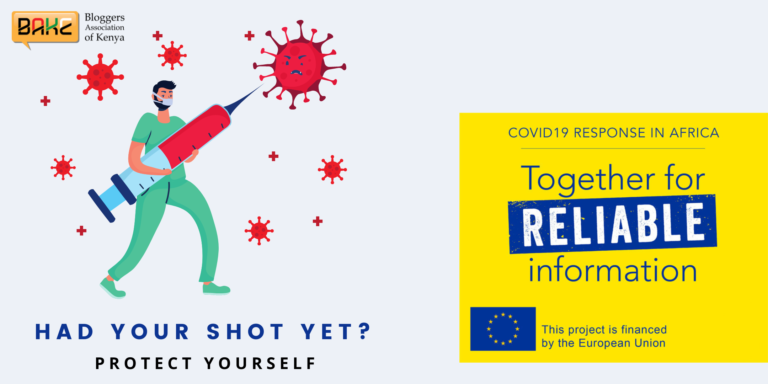
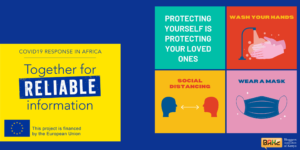
Towards the end of 2020, BAKE took an initiative to advance the response towards the containment of the virus in Kenya to create content that will see the government succeed in its efforts to mitigate the pandemic in Kenya. As such, we partnered with DW Akademie to create content on covid-19  “Covid-19 Response in Africa” a project that was geared towards creating public awareness of the pandemic in Kenya. This project was sponsored by the EU in Kenya. 

Although there have been improvements on the covid-19 response, misinformation and disinformation still is the biggest challenge we are facing especially theories around vaccination that have slowed down the vaccination process in the country.

As we stand, our biggest challenge with  covid-19 is misinformation as the biggest barrier that we need to demystify. How to bridge the misinformation gap. There is a lot of disinformation and misinformation around the covid-19 pandemic that includes hazardous self-medication techniques that we need to demystify.

Through the pandemic period, BAKE partnered with content creators and other partners to create content that will create more awareness to the public on the pandemic.

Africa Check, a non-profit fact-checking organization in Africa also took up the steps to demystify fake news around the pandemic. So far, they have trained journalists on how to report the right COVID-19 and tools where to get credible information on COVID-19 and even check image sources prior to posting them.

speaking during the BAKE Covid-19 Response in Africa event that was held at the Baraza Media Lab on December 15th, Sylvia Makinia, Africa Check Reprenetative said “To bridge the misinformation gap, We took up the steps to demystify fake news. we trained journalists on how to report the right covid-19 and tools where to get credible information on Covid-19”

As a result of the diverse effects of the COVID-19 pandemic and the many rumours and beliefs surrounding it, the Bloggers Association of Kenya [BAKE] took an initiative to campaign and therefore disregard the fake news about the same. The community organization called upon its members to remain vigilant amidst the virus as some of the Members took personal initiatives and responsibilities to give a hand to society amidst the pandemic. Throughout the year, BAKE has held all its activities virtually or if physical with so much precaution and Covid-19 protocols followed. 

Various issues concerning the Covid-19 pandemic were also raised during the event. There were calls for respecting COVID -19 barrier measures put in place by the World Health Organization [WHO] and enhanced by the Ministry of Health [MoH] hence a great step towards achieving the fight against the virus.

Fakenews globally is also a major concern that has slowed down the covid-19 response. WhatsApp was noted to be a social media that spreads most fake news. Present members noted an increase in domestic violence due to lockdowns.

As content creators and advocates of credible news, we need to be innovative and pass credible and reliable information on Covid to schools and various online platforms and create information that the audience could understand. 

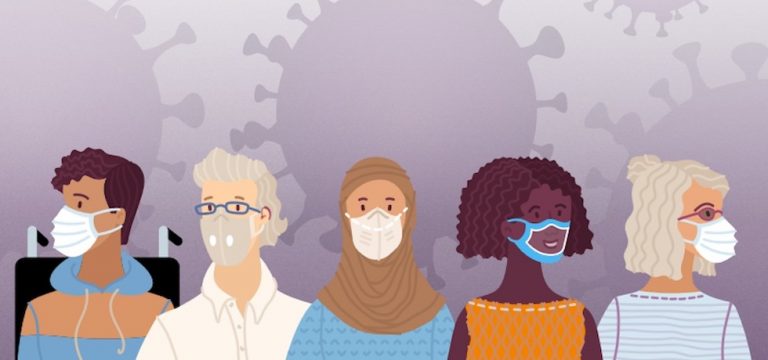
The Panelists generally agreed that it is not yet time to let our guard down. We must mask up! The Panelists too were against the spread of fake news and misinformation hence unanimously agreed that to reduce misinformation, one must verify the source. 

 Despite the fake news and myths surrounding every effort, the government has been able to administer vaccines, communicate to people as some of them responded positively after intense public awareness.

Reporting on covid-19 was one of the complex subjects for nay newsroom across the globe. Looking back at the tremendous work our community members have done is really fulfilling. We also give thanks to our partner DW Akademie and The EU in Kenya fully supporting and sponsoring this project to its fruition.

 The war against the COVID pandemic is not over hence the need for all of us to remain vigilant to fight the disease and make progress.




What’s the way forward on covid-19 response in Africa?

0

Being almost 2 years down, how have we handled the covid-19 situation in Africa?

When the first case of the covid-19 pandemic was discovered in China, to Africa and more of the rest of the world was rest assured it will stay and end in china probably in a few days.

Two years on, the less anticipated disease is a global pandemic that has claimed over 5 million lives. In Africa for instance, the early days of the pandemic were bundled up myths and misconceptions from all over the continent.

As such, we together with the EU in Kenya and the DW Akademie partnered to create awareness on the covid-19 scourge in Africa, curb misinformation and disinformation on covid-19 infections and vaccinations. 

Recently, we hosted an event to note how different stakeholders joined hands to mitigate the pandemic and the successful response efforts. 

Various issues concerning Covid-19 were noted during the event that could be hindering the seamless covid-19 protocols and even the vaccination process.

For instance, our political leaders have been at the forefront of breaking the measures put in place like social distancing and the ban of political gatherings that have been running around the country even in the pandemic period. 

There was a major improvement in stigmatization, more people now understand that the pandemic is just a disease like any other that is treatable unlike the early days of the pandemic where you couldn’t even share with a neighbour about it. 

Speaking during the event, Richard Mureithi, one of our speakers who was infected with covid-19 in the early days of the Pandemic said” I was afraid to share with my neighbours and friends about it because of the stigma at the time. Thankfully, I got better”. He further added, ” My experience with covid-19 was very bad. The government did not give out information on what to do to protect yourself and what to do that I feel if people had it, things would have been different.”

Although there have been improvements on the covid-19 response, misinformation and disinformation still is the biggest challenge we are facing especially theories around vaccination that have slowed down the vaccination process in the country. 

As we stand, our biggest challenge with  covid-19 is misinformation as the biggest barrier that we need to demystify. How to bridge the misinformation gap? 

There is a lot of disinformation and misinformation around the covid-19 pandemic that includes hazardous self-medication techniques that we need to demystify.

 Africa Check took up the steps to demystify fake news around the pandemic. So far, they have trained journalists on how to report the right COVID-19 and tools where to get credible information on COVID-19 and even check image sources prior to posting them. 

“To bridge the misinformation gap, We took up the steps to demystify fake news. we trained journalists on how to report the right covid-19 and tools where to get credible information on Covid-19” Silvia Makinia Africa Check

What can we do to create more awareness on vaccination and mitigate fake news? 

While the Ministry of Health has succeeded fully in implementing the measures, we all ought to bring together the efforts to combat the pandemic in Kenya. Efforts towards a course however small they are can impact a part of our lives. 

For instance, James Ouma the founder of Lifesong Kenya started a project to feed families in communities he works during COVID-19 despite lacking funds, but his friends raised money to spearhead the project.

Another project included working with boys in prison, feeding the low-income families during the pandemic and teaching the families to work and live within a very limited budget. 

“We wanted to do something just beyond charity and our efforts were geared towards offering skills and advise on what to do to sustain their families even post the pandemic- James Ouma.”

As content creators, we also need to create news content that is credible and something the audience can easily understand.

There were calls for the need of the Ministry of Health to work closely with the private sector to develop a comprehensive framework that ensures other safer vaccines are purchased, approved, and supplied to Kenyans that can afford them at reasonable prices. Members noted that getting vaccinated is the first step towards protecting each other hence one must make a point to get one.

The Panelists generally agreed that it is not yet time to let our guard down. We must mask up!  and if in doubt, get checked.