Sunday, December 14, 2025
Home Blog Page 45

MCA’s abandon oversight role

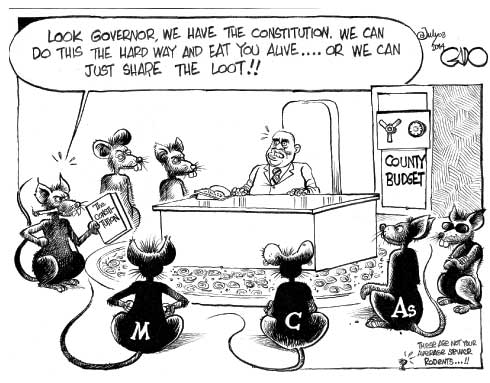
Cartoon depicting how MCA's and Governors are  "eating" (www.gadocartoons.com)
Cartoon depicting how MCA’s and Governors are “eating” (www.gadocartoons.com)

Members of County Assemblies (MCA’s) have morphed into something reminiscent of their national Parliament counterparts. They have with time since the promulgation of the new Constitution become the new faces of corruption. Whether it is in unnecessary trips both local and international, or bribery allegations, MCAs have been found to be just as corrupt, if not more, than other national and county government official.

A recent survey by research firm Afrobarometer in partnership with University of Nairobi’s Institute of Development Studies also ranked County officials, including MCAs, very high up on the list of most corrupt. This did not come as a surprise to some.

“Elected officials in Kenya have always looked at their offices as feeding ground, and their terms in offices as their ‘turn to eat’ so I can say this was expected. That is not to say their actions are excusable, but I’m not surprised,”

explains Ephraim Mwangi, an analyst working with a research firm in Mombasa.

Misuse of resources and abuse of office are some of the accusations leveled against the ward representatives. Sometime back, it was revealed that Uasin Gishu MCAs paid themselves sh236, 000 as monthly sitting allowances, making a show of flagrant abuse of office.

“We had issues in the past with members of the national legislature banding together to increase their salaries inordinately. Now devolution is here and we seem to have devolved the corruption to County level,”

says Jay Sikuku, a blogger with interest in activities in the counties.

It is becoming increasingly clear how the county representatives are pawns in the political games involving the misuse of public resources and embezzlement of funds meant for development. They serve as a defense, coming out to root for whichever official (such as the Governor, accused of corruption). Claims of political witch hunt are made and the accused official often walks away free.

“They are easily bought. Their silence can be gotten for a few thousands Shillings,”

says a Mombasa county assembly official, who declined to be named due to the sensitivity of the matter. He goes further to reveal how certain members were paid to keep mum on misappropriated funds in the office of the Governor, preventing a scam that would have had serious implications on many careers.

“We are only human. We have bills to pay and our pay cannot surely sustain our kind of lifestyle. When an offer comes through and all you have to do is look aside, then we do just that. Besides, the majority will take the money and you might be isolated,” says an MCA who declined to be named.

County representatives are supposed to be watchdogs for the county governments. They are supposed to hold the Governor and his staff, including County Executive Members, accountable. They are elected by the people and should be serving Kenyans’ interests. This seems, however, a distant dream as the county assembles have either become architects for corruption schemes or the protection of corrupt individuals.

It is hoped that the new drive shown by the office of the President and the Ethics & Anti-Corruption Commission will do something to tame the rampant corruption at the county level.
Makueni County two years on

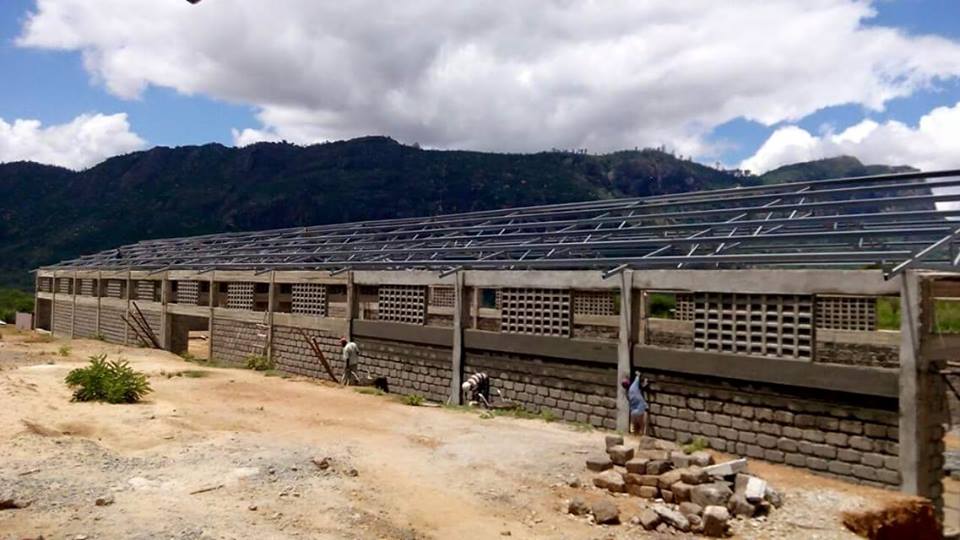
Kalamba fruit processing plant,a project initited by Makueni County government.
Kalamba fruit processing plant,a project initiated by Makueni County government.Photo:Facebook.

Devolution in Kenya is still in its formative stages, two years to be precise, and although there have been challenges in the implementation of the process, most counties have made remarkable strides.

However, some counties have had teething problems with incessant wrangles between the governors and Members of the County Assemblies (MCAs) being one of the main challenges that has adversely affected devolution. The frosty relationships between the two arms of government in these counties have led to poor service delivery due to the time and energy wasted on the wrangling.

Makueni, is certainly one of the counties that have witnessed persistent infighting between the Governor Kivutha Kibwana and MCAs. For the last two years, the county has been on the limelight for all the wrong reasons, thanks to the endless bickering of the county leaders.

Although the squabbling may have painted a grim picture on the status of devolution in the county, according to the governor, not all is lost and devolution has undoubtedly made a remarkable impact on the lives of Makueni residents.

During the devolution conference held last week in Kisumu, Governor Kivutha said devolution had taken resources to the doorsteps of the common man and has since taken to social media to highlight some of the developments that his government has achieved for the last two years.

In his official Facebook page the governor said, “Even with the critical budget crisis posed by our MCA’S, 2 years down the road, my government has had tremendous and tangible achievements for the people of Makueni.”

The governor enumerated acquisition of 12 ambulances, construction of the Yikisemei Primary School, Kikima dairy, Kalamba fruits processing plant, Kaiti sand dam, employment of early childhood teachers, among others as some of the projects that his government has initiated.

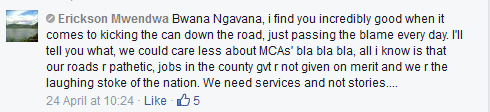
However, the governor’s sentiments did not go well with some of the residents who accused him of using the MCAs as his scapegoat for his poor development track record.

kis1

kis4Some were even blatant and stated that they had never seen any of the achievements.

kis2

kis9

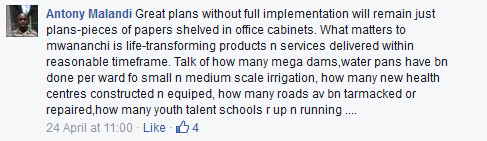
Others were utterly disappointed and called for a more comprehensive report on the projects that the governor had initiated.

kis5

kis3

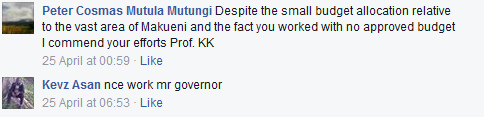
But there are those who extolled the governors achievements despite the wrangling.

kis6

kis7

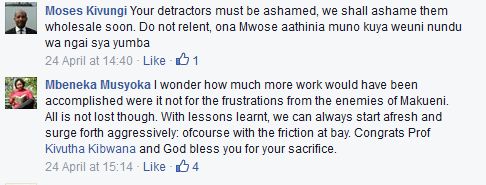
His supporters promised to rally behind him and put to shame his detractors.

kis8From the above comments, it is clear that although the residents of Makueni have had a taste of devolution, more could have been achieved if the leaders had agreed to work together.

Kenyans try to be positive amid the gloom of scandal

1
Kenya is famous the world over for its athletics prowess. (Photo/@LeonLidigu

Two news stories early this week brought home just how much Kenya is mired in scandal. On Sunday night KTN aired two documentaries that revealed how unscrupulous foreign investors had conspired with prominent politicians and government officials to set up a lead smelter near a slum in the Changamwe area of Mombasa thereby poisoning residents and heaping more misery on an already impoverished area.

“Survey: Kenya heading in the wrong direction” blared the front page of the Kenya’s newspaper of record the Daily Nation on Monday. According to the Ipsos survey on which the lead story was based, 52 percent of Kenyans currently feel that the country is headed in the wrong direction due to corruption, high cost of living and the spike in unemployment.

Amid these gloomy stories a group of Kenyans have tapped into some local pride and taken to social media to try and look at the positive side of the country using the hashtag #SaySomethingNiceAboutKenya


But the stench of scandal is too overpowering for some.

The hashtag has also put Kenya’s classic humour on display.

It’s not good to always dwell on the negative. Looking at the positive side of matters however reminds us how great this country could be if we get our act together.

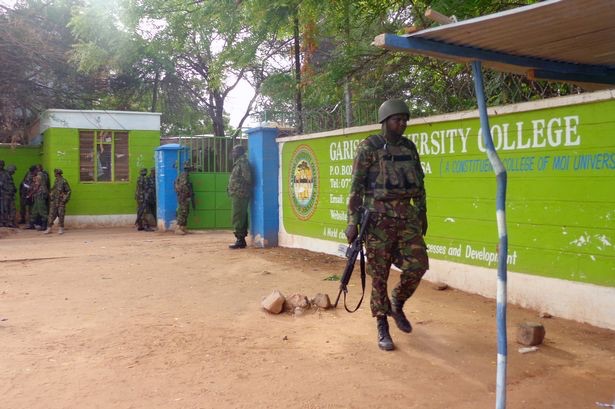
Students in Mombasa speak about Garissa attack

Armed soldiers outside Garissa University (www.mirror.co.uk)

Following the recent horrific terror attack that took place in the Garissa University College that shocked the entire world, we talked to a few students in Mombasa to get an opinion of the aftermath of the attack on their fellow comrades who died by the hands of terrorists. Most of the students are still in solidarity with the families of the 147 souls that perished on that dark day.

“The government has a part to share in the blame for all those lost lives. If it was true that they had received intelligence about the imminent attack, they should have prevented it. The blood of all those students is on their hands,” said Mutuma

Kimori, a 4th year student had this to say

“it is unfortunate that Kenya lost all those students who could have helped in the development of this country.”

When asked if the remaining students should go back, he added

“No. I don’t think any of them will agree to go back. Not until the government fixes the Somali border and the Al-Shabaab group is forever dismantled. Then maybe, just maybe they will rethink about going back.”

When asked if the government has done enough to ensure that these terror attacks don’t happen again, Makau, a 2nd year student, said

“the government has tried but they’re still far from eradicating terrorism. They should first start with condemning radicalization of youth. Unemployment is the reason most of these young men will join militant groups. If the government can create jobs for people here then I think that will be a major step towards peace.”

Most of the students interviewed are still hurt and bitter that the government allowed such a cowardly act to take place in our own country. They condemned the police and the task forces that took so long to respond. Wanjala, a third year student, said

“If only that Recce squad had arrived earlier, perhaps we could have dealt with those terrorists and rescued many lives. I blame our police for being late and also being ill trained on matters pertaining terrorism because they seem clueless each time we are attacked.”

All the students we spoke to are apprehensive about the security in their campuses within Mombasa Island. They feel that the institutions are in danger especially because Mombasa has become a hotbed of youth radicalisation. According to them, the security has not been beefed up to a satisfactory level in and around campuses since the Garissa attacks and institutions of learning in Mombasa are still soft targets.

Furthermore, news about the closure of Garissa Medical Training College this week after failure by the government to provide adequate security does not inspire confidence in the students.

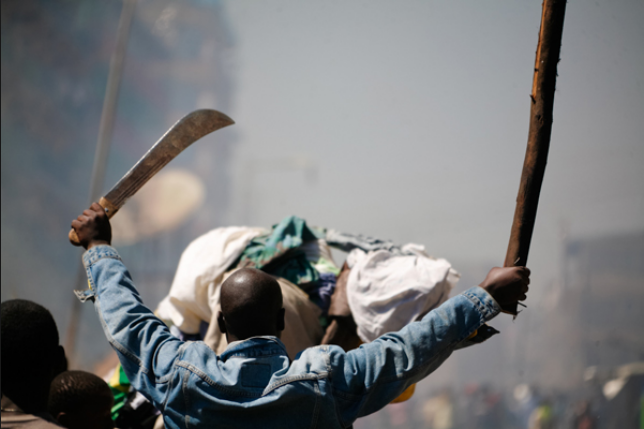
Mungiki in the eyes of Bensouda – Part 3

PEV snip
A man takes part in the 2007 post election violence. An OTP pre-trial brief says the Mungiki took an oath to take part in the violence so as to protect the interests of the GEMA (Photo/Boniface Mwangi).

According to the Office of the Prosecutor at the International Criminal Court (ICC), the Mungiki took an oath in 2007 to protect the interests of the GEMA community but to specifically

“ensure that the Presidency remained within Kikuyu hands.”

A pre-trial brief the office released in January this year says the oath was part of the initiation procedures that its members went through while being introduced to the group’s rules and procedures. Those who broke these rules, the brief says, went through a “quasi-judicial” procedure and if found guilty would be punished, the highest form of punishment being death penalty.

The OTP also says the Mungiki had an effective communication network, a quality which made it reliable to politicians.

“The Muranga and Uhuru Park rallies in November 2007 each assembling thousands of Mungiki from across the country, are indicative of the Mungiki’s ability to mobilize large numbers on short notice,” the brief says.

Sources of Finance:
The OTP says the Mungiki had several sources of finances. Apart from being paid by politicians to campaign for them, the group is said to have relied on the matatu industry to collect its revenue. The OTP also says the group sold protection services to business people, as well as providing

“essential social services such as garbage collection, security, water, electricity, and public toilets in certain areas.”

More than 1,000 people were killed during the violence that rocked the country after the general elections. Another 650,000 were displaced from their homes.

While President Uhuru Kenyatta has since apologized for the crimes, a number of proposals are yet to be met as way of ending endemic inequalities among communities that have been seen as a source of ethnic conflict in Kenya.

Most of these proposals are found in the Truth Justice and Reconciliation Commission (TJRC) report which is yet to be implemented.

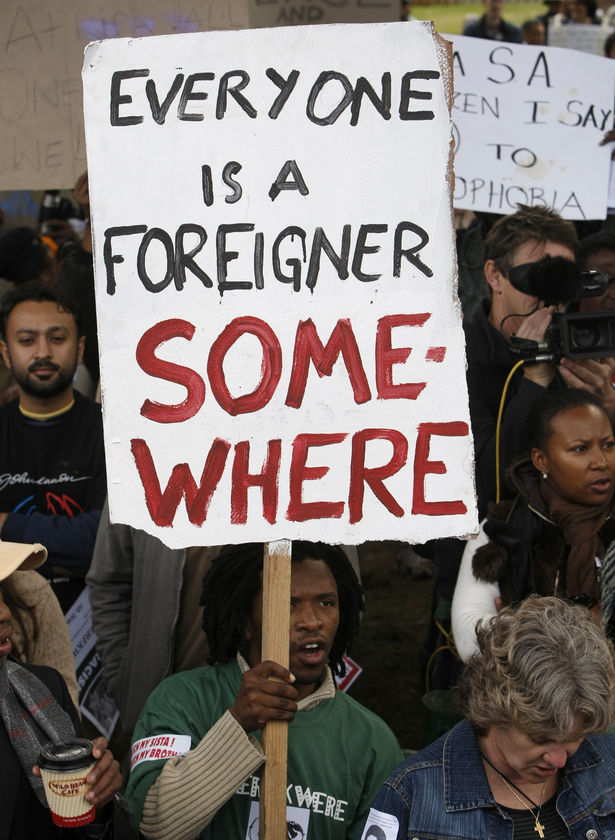
On Xenophobia, we are all strangers somewhere

Photo courtesy of www.thepeoplesview.net

By Irene Nyambura

Recently, there have been violent xenophobic attacks aimed at African immigrants in South Africa. The gruesome events started in Durban and spread to Johannesburg and other cosmopolitan cities, bringing memories of the 2008 similar attacks that left about 60 foreigners in South Africa dead. Earlier in the year, shops belonging to a section of foreigners were razed down in Soweto suburb of Johannesburg South Africa.

Xenophobia is an unreasonable fear or hatred of foreigners or strangers, or of that which is foreign or strange. Xenophobia may also involve treatment of foreigners with suspicion and malice.

The republic of South Africa has a strong manufacturing and extractive industries that attracts professional and blue labour jobs from neighbouring countries in the SADC region. The attacks that have continued for over a week are likely to have a negative impact on commerce and economy.  The effects of the attacks have reverberated across media and online spaces. Binyavanga Wainaina, a renowned Kenyan author that studied in South Africa pre 1994 wrote on his memories of life down south, reminiscing the hospitality and love he received from black South African friends and families that took him in as their son while he was a broke student, even as an illegal immigrant as he tried to start off his career in writing. But it seems times have changed.

Unlike South Africa, a large number of Kenya’s population of foreigners is made up of refugees. Daadab refugee camp in Garissa, north eastern Kenya is home to over half a million refugees mainly from Somalia. The camp was started over 20 years ago when trouble began brewing in Somalia after the fall of the then dictator Siad Barre. Other refugee camps such as Kakuma have been home to hundreds of thousands of refugees that fled from conflict in Burundi, Rwanda, DR Congo, Uganda and South Sudan in the past.  There are many urban refugees living outside camps in Kenya that have defied arbitrary Kenya government directives in the past for them to move into camps.

Kenya is also home to several international intergovernmental and nongovernmental organisations that employees a good number of expatriates as well as Kenyan citizens. Arrangements to host such institutions usually include legally binding documents that spell out the minimum number of Kenyan citizens that should be employed in these organisations to avoid disenfranchising local population. As such, there is minimal cry for jobs from citizens. But this has not wiped out been sporadic spells of negative online sentiments against sections of foreigners from specific countries. A general and sad norm has been for Kenyans online to castigate an entire country’s population that resides in Kenya. We must be informed and be accommodating of other if Kenya is to

Social media sentiments of major international media newsfeeds show that many Africans including Kenyans, have been angered by the recent xenophobic attacks in South Africa and the seemingly lack of immediate and deeper actions by South Africa’s government to act on or prevent the attacks.  Trevor Ncube, a South African journalist working for an international business journal was among the country’s prominent social media figures that started an online campaign against xenophobia. Trevor and many other writers, sports figures and artists joined online campaigns against xenophobia. In fact Tsepo Masilela, a South African footballer spoke boldly against intolerance to foreigners in a Facebook post that was widely shared.  Popular Facebook page ‘This is Africa’ carried  a post encouraging fans to debate on South African leadership  in relation to South Africa  president Zuma’s 2014 snide remarks  that South Africans ‘should not think like Africans’.

Back at home, there have been cries for Daadab refugee camp to be relocated back to Somalia especially soon after the Westgate and Garissa terror attacks.  The relationship between terror attacks and Somali community in Kenya including refugees has been overemphasised and generalised. Never mind that terror attacks in Kenya requires complex multifaceted solutions. The call to repatriate Somali refugees has been consistent online as initiated by Kenyan social media outlets debates.

Many Kenyans online support the move that is resonated by a few top government and business officials yet termed by some civil society actors as an action borne out of cathartic emotions and xenophobic fear. Can the same cluster of Kenyans that are appalled by South Africa’s xenophobic attacks be the same ones that are calling for repatriation of Somali refugees after the Garissa University terror attack?

A look at online images of suspects of Xenophobia attacks arrested by South Africa police reveals a pattern of young black men. There have been claims by perpetrators of this violence that immigrants have taken over jobs from local South Africans and interference with the normal social life of citizens by African immigrants.  Back in Kenya, a similarly generalised blanket excuse exists; that Somali refugee population poses a risk to our national security.

South Africa’s leadership should recognise that the black population’s entrepreneurial ambition and spirit had been suppressed for too long and initiate programmes to train and empower black youths in readiness for building entrepreneurship culture and job creation beyond seeking blue collar employment  in the country’s manufacturing industry.

For the Kenyan situation, it is imperative that national authorities and agencies work together to ensure harmonisation of international agreements with national laws and local realities (political, social and economic) while putting up systems that ensure refugees are documented and secured for specific periods of time. Refugee-ship should not exceed a certain number of years while compromising host countries’ economic systems.  Kenya government should set up programmes that help pockets of youth that feel disenfranchised socially, politically and economically from the governance systems.

As Tsepo Masilela, a well known South African footballer recently posted on Facebook:  ‘we are all strangers somewhere in the world’. We must therefore ensure that we treat foreigners with the dignity they deserve, respect their human rights and put up systems to ensure that immigrants abide by the national laws of Kenya if our country is to attract a cosmopolitan population that is characteristic of any growing and diverse economy.

Irene Nyambura Mwangi is a Special Correspondent (Development & Democracy in Africa)

Poetry and spoken word thrive in Mombasa

0
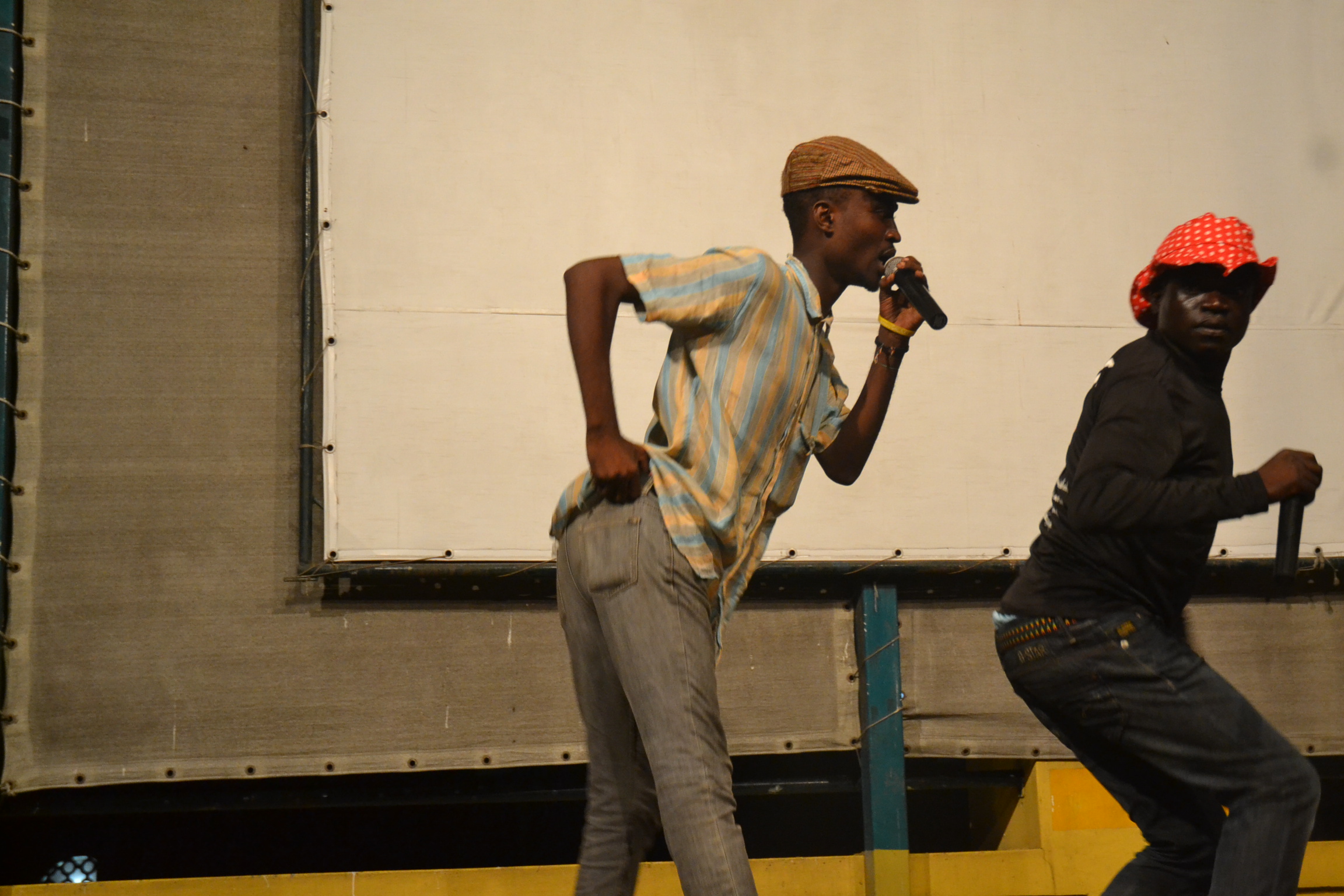
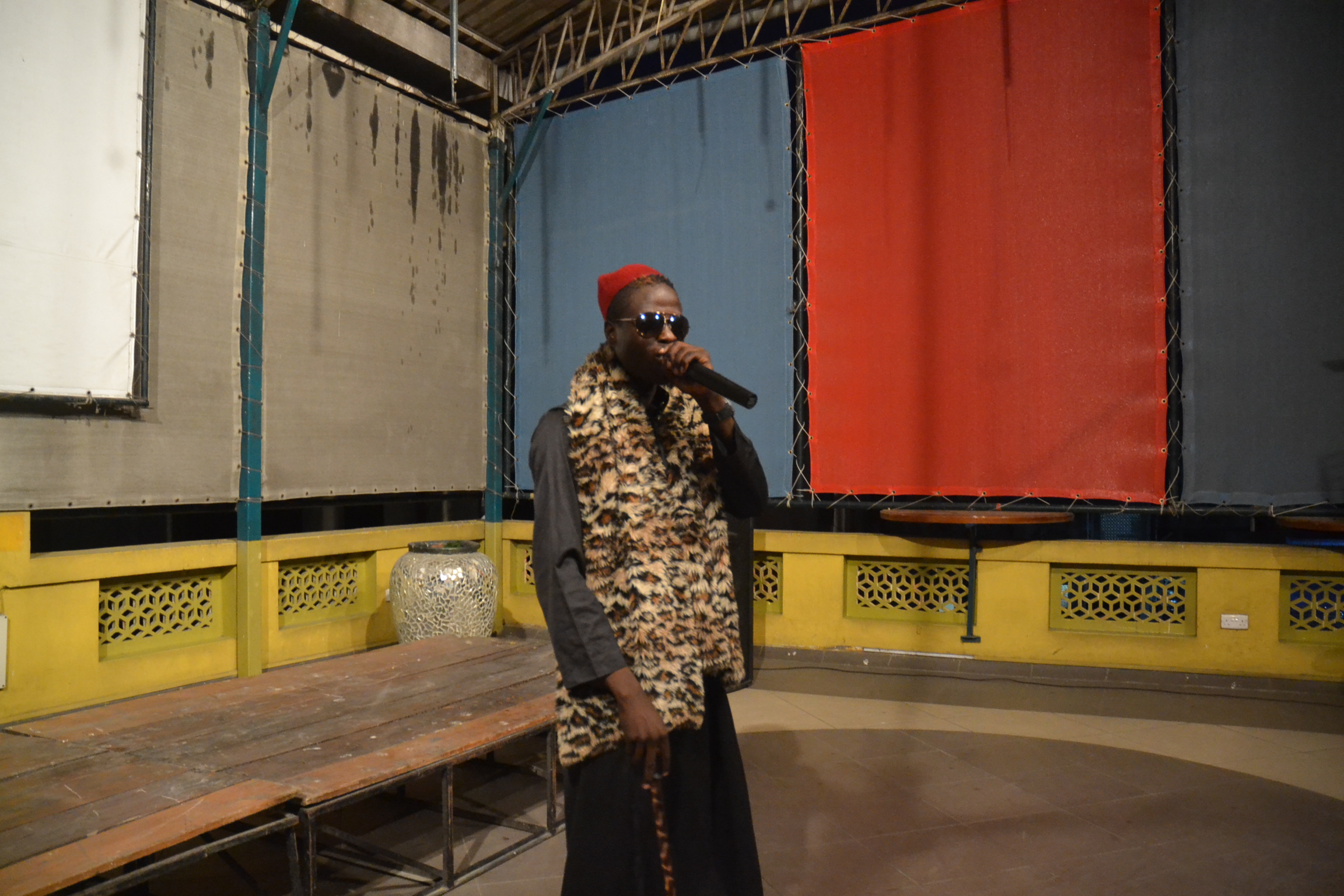
Comedian Entertains in Mombasa Last Word Standing Event
Comedians Entertain in Mombasa Last Word Standing Event

Mombasa City has always been a talent hub. Tapping the talent and bringing it to the limelight remains a challenge that has been unresolved. Nevertheless, all is not lost as the youth are taking initiatives to showcase their talent in poetry, spoken word and hip hop.

These youth have been performing under the banner of Last Word Standing (LWS) at the Alliance Francaise Mombasa. This event has become a platform for all emerging poets and spoken word performers to gracefully exercise their talent and reach their full potential in the arts. In turn these young men and women channel their energy to a more resourceful means instead of vices.

The spoken word and poetry enthusiasts that attend the event enjoy the performances and social aspect of Last Word Standing. Billy, a longtime fan said,

“Last Word Standing is a social event where you meet new people from all walks of life who come to either appreciate art or just to socialize. I see this becoming a very powerful movement in Mombasa that can bring a positive impact to coast scene in terms of deterring ill norms such as substance abuse, crime.”

Last Word Standing held their first event in August 2012 at Jahazi Coffee House and due to quick growth in numbers, the event moved to the bigger Alliance Francaise which has become a preferable venue for all things arts and culture in Mombasa.

Last Word Standing has immensely grown over the years and one of its remarkable achievements has been giving young artists exposure. Some of the top hiphop performers from Mombasa such as HustlaJay and Fikrah Teule performers have grown from this event. In this months event, there were performances by comedians and dancers in addition to the usual spoken word artistes.

Apart from the arts, LWS has been actively involved in mobilizing youth for philanthropic missions to inculcate the culture of giving back to society. They have visited Children’s Homes like the Twaayf in Likoni and Ma Fatma in Mikindani among others.

One of the performers. Perlexy had this to say on the impact this event has had to his career.

“LWS is like a maternity hospital where artists are born considering the fact that where I am today is a result of the nurturing I got on this platform. It is an important platform for both up and coming artists in Mombasa.”

Mungiki in the eyes of Bensouda – Part 2

Maina Njenga snip
Former Mungiki leader Maina Njenga. The OTP says the Mungiki had an organized leadership structure that went all the way to the village level (Photo/www.jambonewspot.com).

The Office of the Prosecutor (OTP) claims that the Mungiki had an organized leadership structure which streamed all the way to the village level. This structure was respected and the members’ adherence to it was absolute. It names Maina Njenga, Charles Ndung’u Wagacha and Maina Kang’ethe Diambo as some of the key leaders of the group.

• Maina Njenga: He is identified as having been the group’s founder, spiritual leader and Chairman. He was at

“the top of the hierarchy (with) ultimate decision-making authority, and decisions with national import required his approval.”

Although Njenga was incarcerated between June 2007 and April 2009, he still

“received a constant stream of information about the organization’s activities, made decisions on important matters, and retained a veto power,” the OTP says.

• Charles Ndung’u Wagacha: He is identified by the OTP as having been the Acting Chairman, at least during Maina Njenga’s imprisonment. His role was to supervise

“the day-to-day operations and, along with other senior leaders communicated with Maina Njenga and visited him in prison.”

• Maina Kang’ethe Diambo: He is the third individual to be mentioned by name in the brief in the organization’s leadership structure. He is said to have been in charge of the group’s military element, one of which was the ‘Bagation Squad’ and which was a platoon that was allegedly composed of hard core combatants who were mainly homeless children from the slums.

• Council of Elders:

• A group of about 50-100 senior Mungiki members, “who met regularly,” the Council of Elders (CoE) is identified as the level of leadership within the group which had a “a decision making authority,” and was just below Maina Njenga and Charles Ndung’u Wagacha. Its roles included,

“resolving disputes between regional Mungiki chapters and the formation and implementation of policy.”

It had a Secretary and a Treasurer the OTP says.

• Council of Elders’ Sub Groups:

Junction Five (“J5”): According to the OTP, this was the most powerful of two sub groups within the Council of Elders. It was comprised of the group’s original members from the families of Maina Njenga (the Kamunyas) and Charles Ndung’u Wagacha (the Wagachas). This was the Mungiki’s top leadership cell and its role was to advise Maina Njenga, “formulate policy, strategy and rules.”

Mutukumi: Also referred to as the ‘Governing Council’ or ‘Big Ten’, the Mutukumi which came just below the ‘J5’, is said to have comprised the longest serving and dedicated Mungiki members. They were the most respected and were influential in the national leadership.

• Regional Chairmen: These came just below the Council of Elders according to the OTP and their

“functions generally included administering oath-taking ceremonies, adjudicating disputes, and handing down punishments to members who broke the organization’s rules. They had three coordinators and an oath administrator, referred to as a ‘Mzebu.'”

The Mzebu is said to have had Archguards who worked with him.

• Itura: Identified as coming just below the Regional Chairmen, the Itura were village-level units that had a Chairman and three coordinators. They were responsible for

“organizing meetings, passing income up the hierarchy, and resolving conflicts under the organization’s disciplinary system.”

• Platoons: They came under the local chairmen and coordinators in the leadership structure, comprising of ten members one of whom acted as a leader or chief.

“Platoon leaders were responsible for resolving conflicts, organizing meetings, communicating information, coordinating business activities, and collecting money,” the OTP alleges.

The Mungiki is no longer the powerful group it used to be and most of its leaders have since died. Maina Njenga has also left the group to form a church.

How the County Governments are entrenching corruption; Part 1

Cartoon depicting how MCA's and Governors are  "eating" (www.gadocartoons.com)
Cartoon depicting how MCA’s and Governors are “eating” (www.gadocartoons.com)

Kenyans who fought for and celebrated devolution should read this keenly as the devolution dream is being wasted by County Governments who are simply “eating” money meant for the citizens. The loopholes are so many, that I genuinely fear that we have created 47 – Anglo leasings across the counties.

Nevertheless, it is about time we educated ourselves about the corruption in the counties and hopefully, citizens will make it their duty to hold the leaders to account. If you have realized, you don’t ever hear of governors condemning corruption as much as they ask for “more funds”. You don’t hear of county leaders who are working towards stronger audit or prudent management of public resources. Instead they want to be in charge of security at the county level.

So how is this eating going on at your county? Do you know?

Ni Jukumu Letu.

Consumption at source

Let’s simplify this first. If your County collects sh1,000,000 in parking fees today and then uses that money to buy stationery, that money has been spent at source because it did not go to the County Revenue Fund. Spending the money at source is illegal.

Article 207 of the Constitution and Section 109 of the PFM Act, 2012 requires that all funds raised or collected on behalf of the County be deposited into the County Revenue Fund.

In the last Audit  six Counties (Nairobi City, Homa Bay, Machakos, Murang’a, Meru and Trans Nzoia) were spending revenue at source. This is one of the biggest eating avenues at the counties. No one can truly account for the amount collected, distorts county budget and is easy to manipulate.

Disposal of Assets

Public Procurement and Disposal Act – The purpose of this Act is to establish procedures for procurement and the disposal of un-serviceable, obsolete or surplus stores and equipment by public entities.

When the county governments came to power, there was a flurry of purchases; equipment, furniture and other consumables. The focus has always been on how “eating” happens during procurement, on other flipside do you wonder where all the old things go?

By law, your county should have a tender committee and a disposal committee. At the county level, the disposal committee should dispose assets as follows in an open and transparent manner.

(a) transfer to another public entity or part of a public entity, with or without financial adjustment;

(b) sale by public tender;

(c) sale by public auction;

(d) destruction, dumping or burying; or

(e) trade-in.

Now, are you able track how your county disposes assets or is that process opaque?

Weak or No internal Audit

Dear citizens, has your county published an audit report? Was the report done by by the credible body?

If your county is not showing proper internal audit, then they are not serious about county resources, service delivery or the governors manifesto. Audit is important to preventing fraud and misappropriation of funds. The process must always start within, before external audits.

One of the weaknesses noted in the last auditor general report was lack of capacity to effectively manage public resources due to poor/weak internal audit mechanisms. This means that counties have inadequate monitoring and evaluation systems. In fact, some counties such as Garissa completely lack Audit Committees.

Kakamega, Mombasa, Kericho are some of the counties with weak internal audit processes.

MCA’s

Members of County Assemblies role in counties is to represent the citizens who elect them and ensure that the county government discharges its mandate in providing services to Kenyans. They are not in any way entitled to a share of the county funds as now seems to be the case.

The Salaries and Remuneration Commission (SRC) set the maximum monthly allowance for MCA at Kshs.124,800. Notwithstanding Kakamega, Kirinyaga, Kisii, Migori, Nyandarua, Nyeri, Siaya, Taita Taveta, Trans Nzoia, Turkana, Uasin Gishu and Wajir exceeded the set amount and paid MCA’s more meaning funds were diverted from other budgeted purposes.

The second part follows.

Sheikh Dor tirelessly evacuates Kenyans in Yemen

0
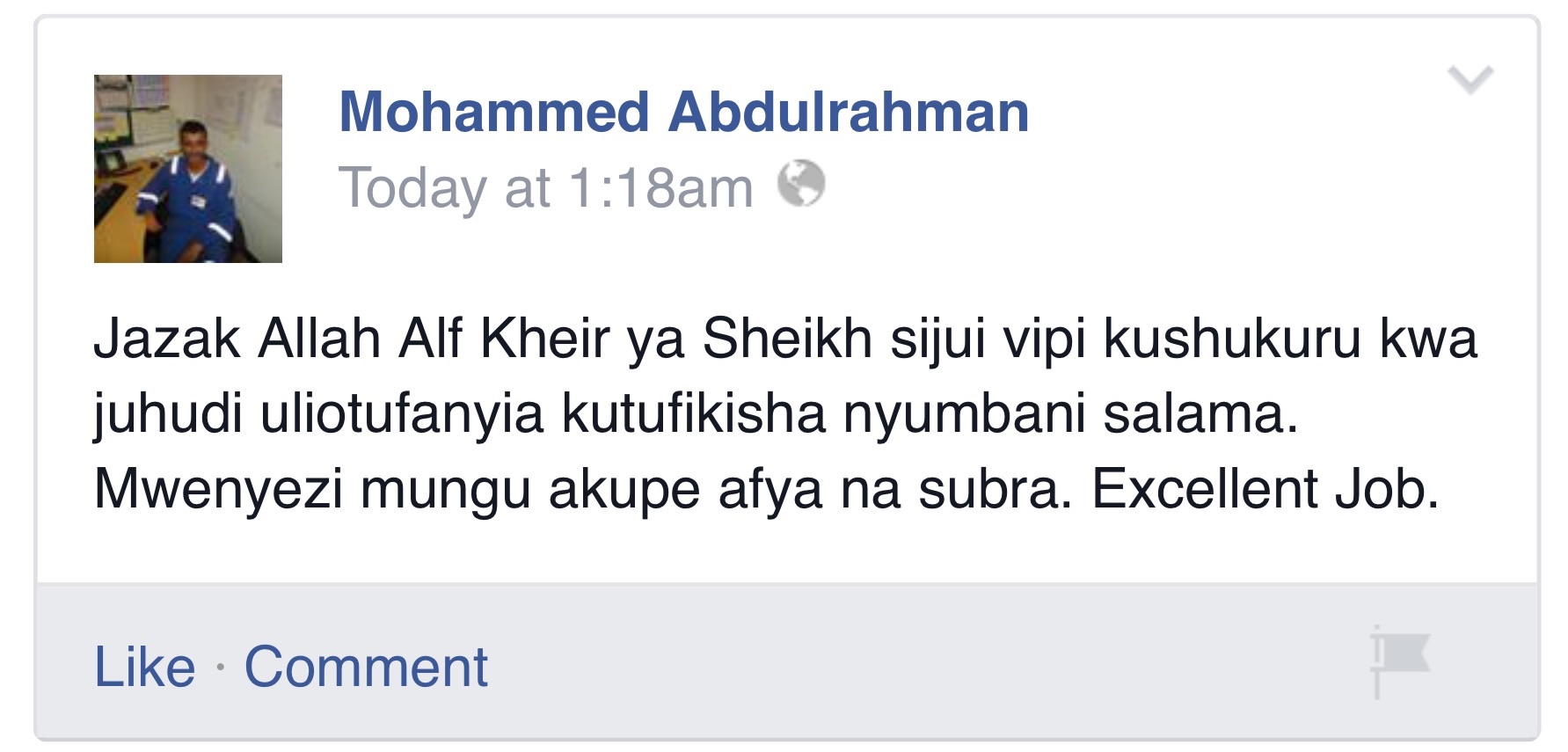
Sheikh Dor Facebook post
Sheikh Dor’s facebook post has kept Kenyans informed on efforts to rescue stranded Kenyans in Yemen. (www.facebook.com/SheikhMohammeddor)

Mvita native and Kenya’s ambassador to Oman Sheikh Dor has played a sterling role in ensuring that kenyans trapped in Yemen find their way back home amidst the crisis engulfing the state. His unrivaled efforts have won over Mombasa residents as he has worked day and night to bring home Kenyans stranded in Yemen who have been evacuated via Oman, Saudi Arabia and Djibouti.

Due to his efforts, Kenyans stranded Sanaa, Aden and Mukalla among other places in Yemen have been granted a safe passage.

Kenyans in Yemen have been able to leave by crossing overland to Oman where Sheikh Dor and has been on hand to receive them and process their flights to Kenya. Another lot have been leaving through Sanaa. Those in Aden have been crossing over to Djibouti with Chinese and Indian warships. Kenyans close to the Saudi border are also be allowed to cross overland to Jeddah from where the government will fly them back home.

The speed at which Sheikh Dor has been able to mobilise Kenyans and arrange for safe passage through Oman is impressive. He has kept the information flowing and also seen to that citizens are comfortable. Most importantly, it is refreshing to see a public officer take personal responsibility for his work, freely share information and his contacts.

Kenyan rescued from Yemen thanks Sheikh Dor
Kenyan rescued from Yemen thanks Sheikh Dor on facebook.

Between, 22nd and 23rd April, over 60 Kenyans were able to leave Salalah airport in Oman after crossing overland from Yemen in buses.

Not obvious to outsiders, the link between Mombasa and Yemen is very strong. A big part of Swahili/Arabs in Mombasa are of Yemeni ancestry. This is more so in some parts of Mombasa such as Guraya, Kuze and Old Town.

Therefore Mombasa is still closely tied to Yemen through trade, family and history. Yemeni dhows have docked at the old port for hundreds of years now.

When the Yemen crisis broke out, there was panic in some quarters of Mombasa where some have relatives studying, married, or working in Yemen. It seems that the country is in a slow slide to civil war with reported bombings of its capital Sanaa. A few days ago, President Uhuru’s jet had to turn back while on a trip to Dubai as the Yemeni airspace was too risky to fly over.

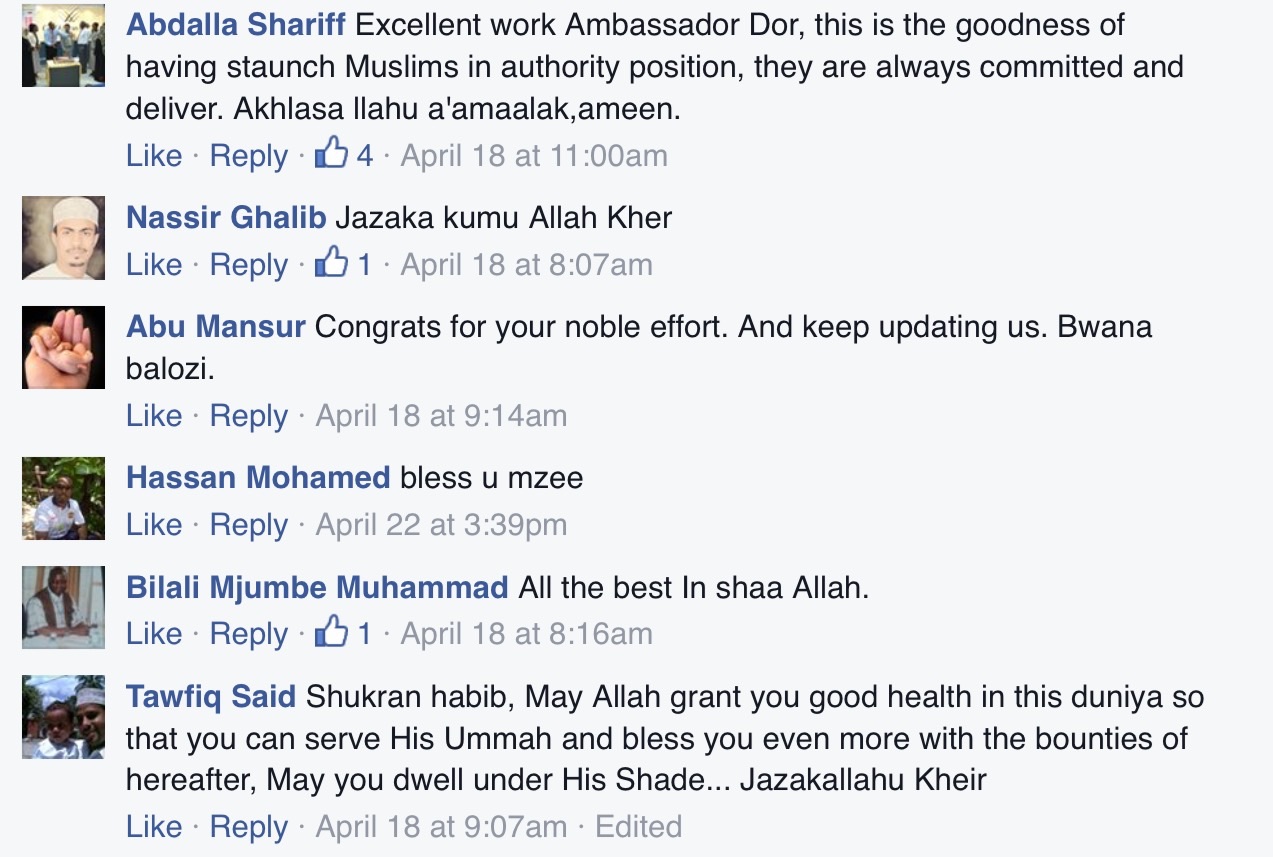
Appreciation for Sheikh Dor work can be seen through facebook posts on his wall.

Messages of appreciation for Sheikh Dor

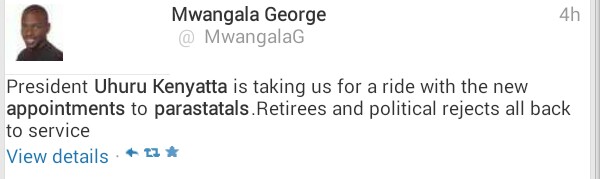
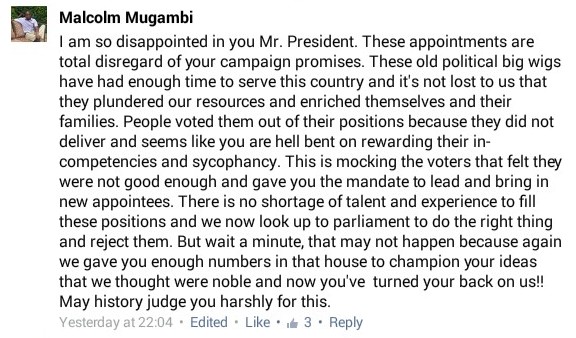
Kenyans feel cheated over Uhuru’s parastatal appointments

Some of President Uhuru's appointees
Some of President Uhuru’s appointees

“We rejected these people at the ballot and now they have found their way back into power through the appointments. Truly, Kenya hasn’t changed since Kenyatta and Moi times when sycophants afraid of staying in the political cold would be appointed to various board positions; disregarding the interests of Kenyans.”

These are the poignant views of Stewart Ocharo, a Nairobi resident, on the government notice from the office the president that has seen the appointment of former political kingpins and relatives of senior politicians to parastatal boards.

While a statement from the State House spokesman Manoa Espisu was quick to point out that the appointments were reflective of Kenyans’ diversity as they represented all 47 counties as well as women, youth and the disabled, few Kenyans actually share that feeling.


Kenyans React to President Uhuru Appointments

There was Backlash as Kenyans took to various media to air their disappointment and surprise at the appointments. Some were shocked to see the appointments, saying such ways are why we can’t have quality in most parastatals.

Kenyans React to President Uhuru Appointments

Reacting to the appointments, some Kenyans think Uhuru got it all wrong and if he’s not careful, this will be the most active catalyst in his political downfall. Rewarding loyalists, the elites, the retirees etc at the expense of the youth is a dangerous move, according to Muchiri Njoroge on Facebook.

One of the few accepted appointments made include perhaps that of Dr. Richard Leakey, once the Director of the Kenya Wildlife Services Board (KWS), who now returns to KWS as the Chairperson of the board. Dr. Leakey is a known conservationist who has in the past played a key role in helping reduce poaching in the country. He also recommended a complete overhaul of the KWS board and many hope he will put a stop to the rampant poaching in Kenya.

The appointment of Charles Njagua Kinyi to the National Campaign against Drug Abuse (NACADA) board has also come as a surprise to many. Mr. Njagua, otherwise known as Jaguar is a popular musician and businessman with reported ties to various people in government and political circles. He is one of the youthful appointees.

Some Kenyans decided to have a laugh instead, poking fun at some of the appointees past gaffes and putting a light side to everything. This tweet shows that Kenyans still have their humour intact even as political discussions heat up.

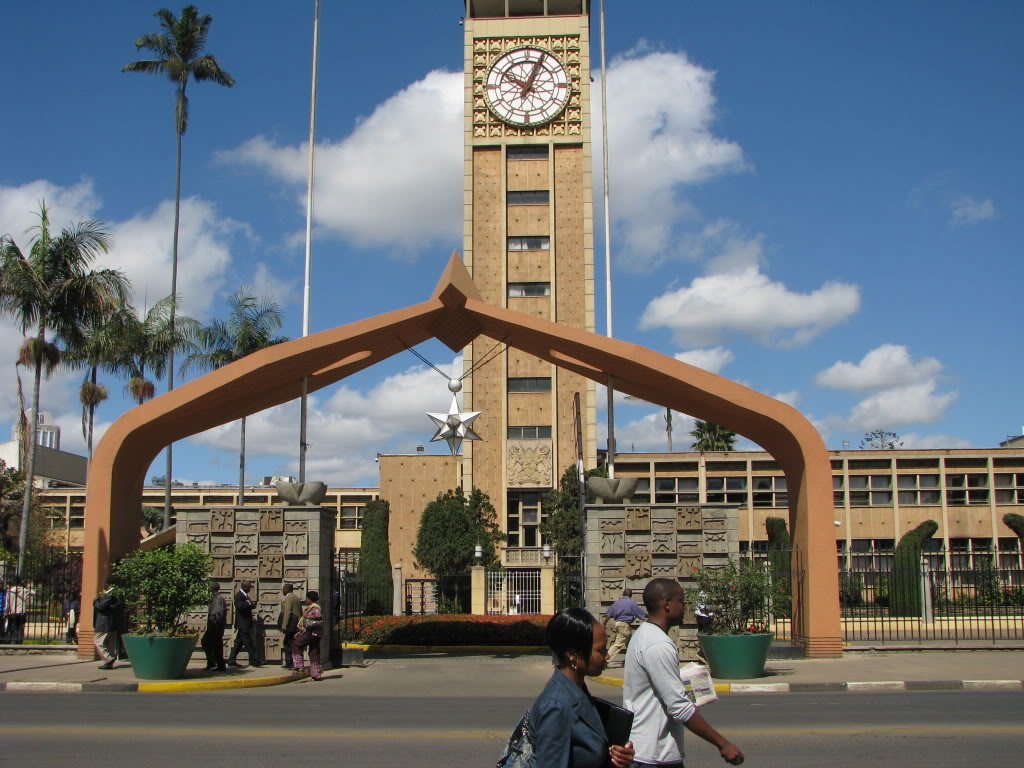
Senate staffer arrested in Al Shabaab plot to bomb Parliament

Police have arrested a Senate employee in connection to an Al Shabaab plot to bomb parliament

Police officers have arrested a Senate staffer in connection to an Al Shabaab plot to bomb the Kenyan parliament. Ali Abdulmajid, who has worked for the Kenyan parliament for nearly a decade, was arrested by officers on Sunday.

A leaked intelligence report that was widely shared on social media on Monday linked him to an Al Shabaab plot to execute an audacious attack on one Kenya’s most heavily guarded buildings. The report authored by Nairobi Central Police OCPD Paul Wanjama makes reference to Abdulmajid although it doesn’t explicitly mention him.

“The group intends to use an operative who is affiliated to Pumwani Riyadh Mosque who is also a staff member at the senate to actualize the attack,”

reads the report in part. Abdulmajid has been the vice- chairman of the Riyadh Mosque since 2009.

Abdulmajid association with the Pumwani Riyadh Mosque landed him in trouble in 2011 when a UN Monitoring Group on Eritrea and Somalia accused the mosque of funding Al Shabaab. Abdulmajid strenuously fought the allegations, even writing to then Police Inspector General David Kimaiyo to request an investigation to clear his name.

Prominent human rights advocate Al-Amin Kimathi has however leapt to Abdulmajid’s defense pouring scorn on intelligence reports linking him to terror.

Kimathi also thinks Abdulmajid’s arrest might have less to do with his alleged link to Al Shabaab and more do with the land tussle surrounding Gikomba market a substantial part of which is own by the mosque.

Binyavanga Wainaina takes on Safaricom

0
Binyavanga Wainaina has no love for Kenya's biggest mobile service provider Safaricom (Photo/blogs.bookforum.com)
Binyavanga Wainaina has no love for Kenya’s biggest mobile service provider Safaricom (Photo/blogs.bookforum.com)

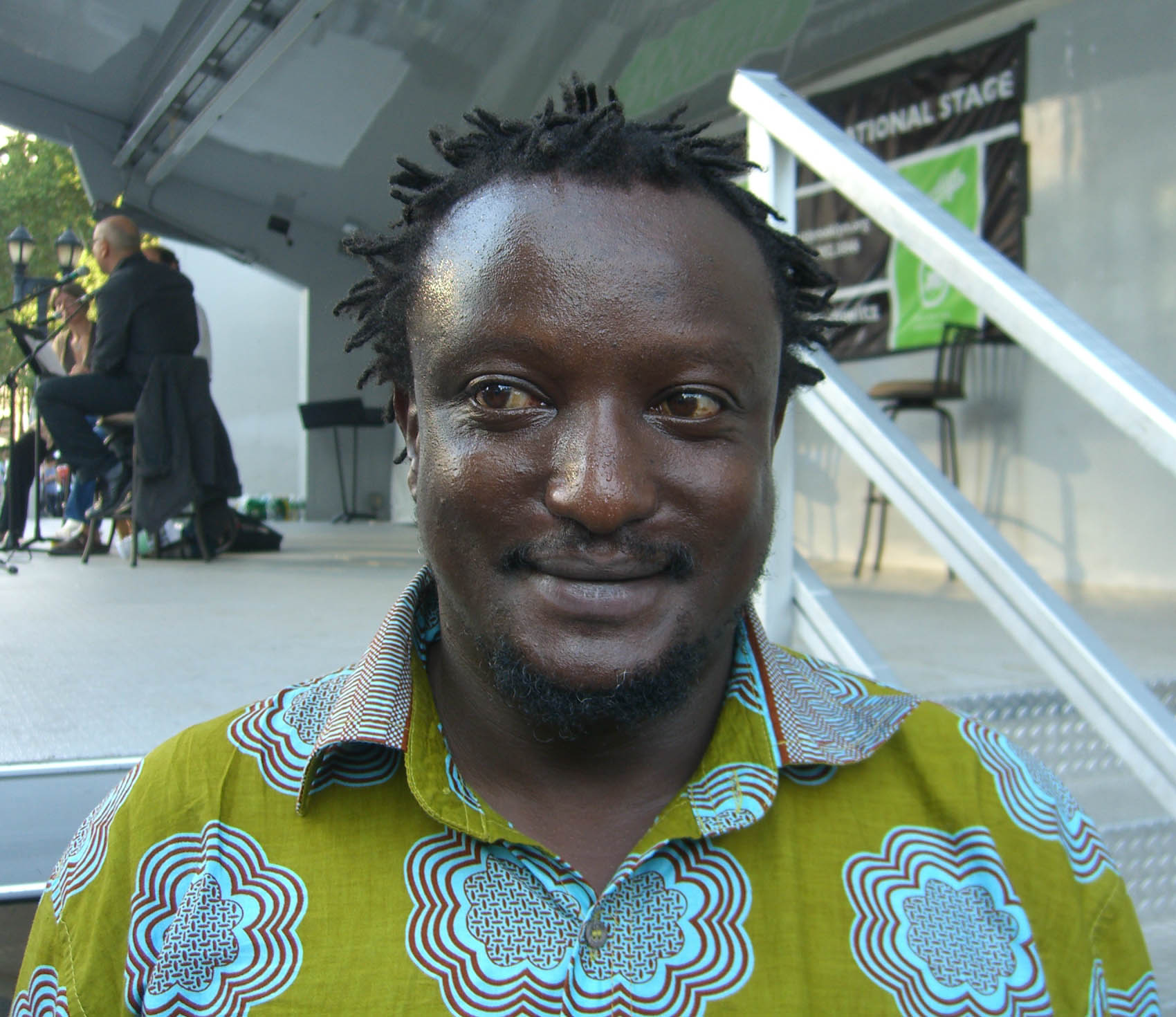
Award winning Kenyan author Binyavanga Wainaina has gone on a no holds barred twitter rant against the country’s biggest mobile service provider Safaricom accusing it of abusing its position as a virtual monopoly. In a tirade sprinkled with some unprintable words of the F-word variety, the celebrated author of the memoir One Day I Will Write About This Place lambasted Safaricom for making billions in profit while caring little for its customers.


The author seemed particularly aggrieved by how the mobile service provider runs its services suggesting that they could be more transparent.

A fair few Kenyans agreed with Binyavanga that Safaricom is shortchanging its customers.

The author also gave social justice advocates like Boniface Mwangi and Patrick Gathara some grief for apparently being soft on Safaricom.

Binyavanga also twitted of his own brush with Safaricom’s influence machine. Tucked in between his twitter rant is a revealing tweet that shows the lengths Safaricom will go to buy influence. Bob Collymore’s predecessor at Safaricom Michael Joseph apparently once offered him half a million shillings to write a puff piece for Safaricom in Kwani magazine.

If you’re still in doubt about how Bunyavanga feels about Safaricom, here’s a video of him setting his Safaricom model aflame.

Convinced yet?

Low season crunch throws tourism industry into desperation

0
Empty Beach Mombasa
Empty Beach Mombasa

By all indications, the industry has had enough of the government’s promises, meetings and task-forces on the tourism revival going by talk by top tourism association officials. They are in a nightmarish situation and accuse the government of paying lip service to the sector’s recovery. The hoteliers will now try to reach out to the markets directly in a desperate attempt to salvage their business.

“We lack commitment from the government. We are now going to bypass government and try to reach out to these new markets. We hope the government will not allow us to move to this state of confusion,”

stated Kenya Association of Hotelkeepers and Caterers (KAHC) Coast Branch chairman Harald Kampa.

Kenya’s tourism industry has been under strain for a while, seeing as tourist numbers have drastically reduced over the last few months. This can be attributed to the recent terrorist activities in the country. Still, this time of the year has always been a crucial for the local tourism industry, and this year has proved tougher than any other seen before.

Peak season for tourism activities often occurs around the later parts of the year. The months of August-December often see hotels and resorts recording impressive numbers. However, all is not rosy as the industry takes hits from both local events and the fact that it is currently off season.

The low tourism in Kenya would usually kick in after April and last until around the first week of August. This year however, it seemed to start as early as February, and the figures have been depressing for most of the part. There was reprieve over the Easter holidays, attributed to local tourists, but even that was short lived.

Jobs have been lost as Hoteliers and tour companies cut costs. An estimated 50,000 people have been relieved of their jobs in the last few months, according to industry insiders. Riding on that, more than 20 hotels have been closed until at least the problems facing the industry subsides and the numbers are back up. Hotels need at least a 60 percent bed occupancy for optimal returns.

The Kenya Association of Hoteliers and Caterers have expressed their worries that if things continue as they are now more jobs will be lost. Bed occupancy in major hotels at the Coast is now below 20 percent and as such they have either trimmed their staff or sent many on unpaid leave until the low season ends.

Matters are no different for the Kenya Association of Tour Operators, who say numbers of tourists requiring their transport services from hotels to attractions have dwindled immensely in the last few months.

The tourism industry employs more than 200,000 people, and the low season blues have been a big blow to the Kenyan brand and the economy as a whole.

“We made efforts to sustain the business hoping that the situation would improve but all indications point to a bleak future. Many of us have dropped rates but we can only lower the rates to a particular extent,” said Mr Kampa.

Nakuru residents urged to Guard the constitution

Jukumu Pic 24
Artists perform during the launch held at the Nyayo gardens (Photo/Kioko).

Nakuru residents have been urged to develop an interest towards the implementation of the constitution. During the launch of the Jukumu Letu initiative held on Saturday residents were urged to unite with the government in order to make that happens.

“We have a role in defending the constitution,”

urged Nyambura Gathumbi of HIVOS, one of the organizations that supports the Jukumu Letu initiative.

Gathumbi directed her message more to the youth saying they had a bigger role to play.

“Those who passed the constitution are old now, as they move out we want to ensure that no vacuum is left.”

Bake trainingThe launch that was held in Nakuru town was not attended by County Government officials and it is not clear why the Governor Kinuthia Mbugua led administration decided to skip such an important event on matters of public participation.

Regina Opondo of the Constitution and Reform Education Consortium (CRECO), another of the partner organisations for the initiative said implementation of the constitution was key to improving the lives of residents.

“If we don’t take the constitution and change it, then our lives will not change,” she said.

“Nakuru has challenges but the constitution has the answers,” she added.

Through the launch citizens were sensitized on their constitutional rights through artistic performances, a point that was stressed by Opondo.

“The constitution is a book but we want to make it more than a book through art,” she said.

MApart from having a history of ethnic conflict which makes ethnic balance in all sectors in the county, Nakuru has been facing the challenge of strained resources which include space to do business.

The county which was feted for being the cleanest town in the East African region has also lost its glory due to poor mechanisms to dispose garbage. The current dumping site at a place known as Gioto is full and the administration has not been making inroads in getting a new dumping site.

Apart from this the county’s cemetery is full and for long there has been a concern that residents might be recycling graves.

Cornelius Oduor of Center for Enhancing Democracy (CEDGG) told the residents that the launch of the Jukumu Letu initiative in the county was meant to remind them of the roles they play in the implementation of the constitution.

“We are here to see that we understand the constitution better and to see that we assign ourselves the roles,” he said.

How Nakuru residents internalize the launch and use the Constitution to better their lives is something only time will tell.