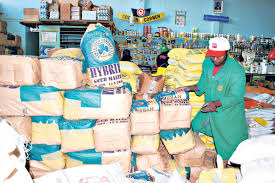
A certified seed shop.Makueni County Government has procured 36.5 metric tonnes of assorted seeds for farmers across the county Photo:Nation.co.ke
Makueni County Government has procured 34.6 metric tonnes of assorted seeds valued at Sh7M to be distributed to farmers across the county before the onset of the expected El Nino rains.
Out of the total, seeds worthy Sh2.4M will be dispersed to Kilili/Nzaui ward residents as a project under the 2015/2016 budget while the rest will be shared among the remaining 29 wards.
Agriculture Executive Jacobus Kiilu addressing the press in Mbuvo, Kathonzweni during the commission of the Mbuvo Solar Power plant said the assorted seeds include 16.5 tonnes of maize of DH02 and DH04 varieties, 12.5 and 8 tonnes of cow-peas and green grams respectively.
He said the seeds, which will given to farmers starting this week have been sourced from the Kenya Seed Company and Kenya Agricultural Research Organization (KARO) and called on residents to plant only certified seeds for good yields.
Kiilu noted that the county government was targeting to distribute over 100 metric tonnes of assorted seeds and disclosed that his department was working in collaboration with other relevant stakeholders to bridge the gap.
“We are working closely with the National Drought Management Authority and the National Government to meet our target and also ensure that there is no duplication of roles,” he said.
Concerning the El Nino rains, the Agriculture Executive urged residents to reap maximum benefits from the rains by planting different varieties of crops saying that the yields are likely to be higher due to the enhanced rains.
“Besides enhanced recharge of water table, crops and fruits will perform much better while pastures will be replenished and this will ensure steady supply of food for the livestock,” said Kiilu.
He added that the county government has set up sub committees which will collaborate with the National Government agencies to help residents cope with the rains and cautioned residents to prepare for floods and not to cultivate near rivers and dams.
Although Makueni County is classified as arid and semi-arid, with the expected El Nino rains are expected in some of the regions that are prone to floods and land slides.
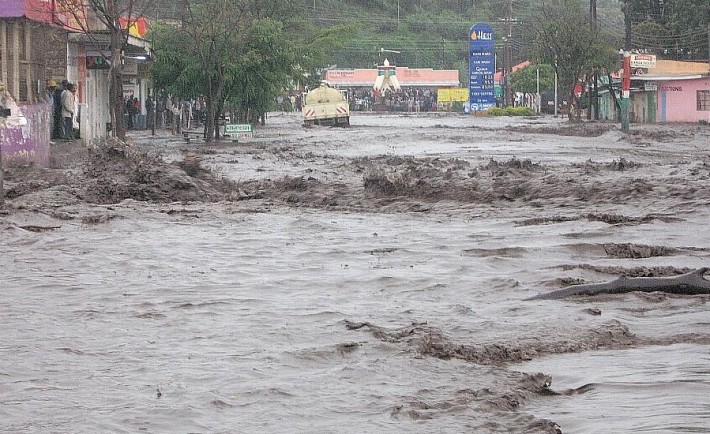
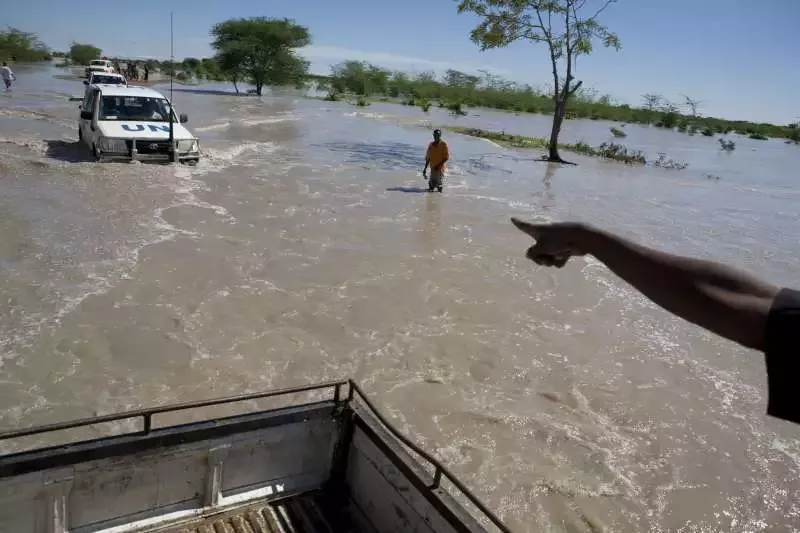
The hilly regions of Mbooni, Kaiti and Kilungu are likely to experience landslides while Nzaui and some parts of Kibwezi East and West will experience floods. During the last rainy season hundreds of residents from Nzaui were displaced due to floods and the situation is expected to get worse during the El Nino rains.
Meanwhile, the county requires Sh300M emergency fund in preparation of the rains. According to the County Drought Management Officer Daniel Mbuvi who is a member of the disaster management committee the money will be used to establish a rescue center, evacuation purposes, provision of emergency health care and to create awareness.
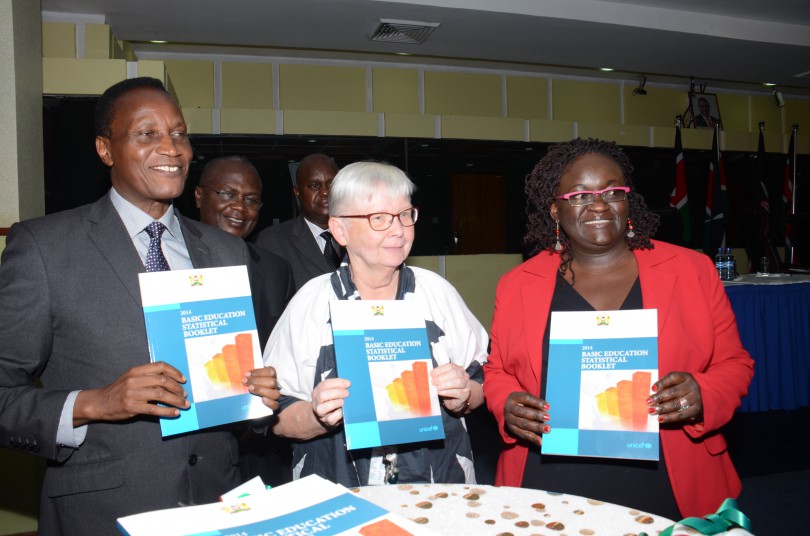
Education Cabinet Secretary Prof. Jacob Kaimenyi leads stakeholders in launching the 2014 basic education statistical booklet.
There are enough toilets in public schools for both boys and girls considering the high numbers schools have recorded since the free primary and subsidized secondary education started. Going by the pupil to toilet ratio, the facilities are not only adequate, but also favorably comparable to those in private schools.
The 2014 Basic Education Statistics booklet reveals that while public schools both primary and secondary have more students, they equally have adequate infrastructure to cater for the students. As a result, the quality of access to these facilities is not compromised.
Male pupils in public primary schools are 123,996 with a ratio of 34: 1 while female students are 142,663 with a ratio of 29: 1 in the pupil to toilet ratio facilities. Private primary schools have 30,673 male pupils with a ratio of 20: 1 while female students are 33,597 with a ratio of 17: 1. In public secondary schools, the male students are 51,041 with a ratio of 22: 1 while female students are 57,256 with a ratio of 18: 1. In private secondary schools, there are 4,883 male students with a ratio of 15: 1 while female students are 7,256 with a ratio of 11: 1.
These facilities also have a very high access to water with all primary schools having 92 percent while secondary schools having 94 percent. The sources of the water being tap, borehole, river and rainwater means that cleanliness in basic education can be guaranteed and help ensure quality education.
There is also a good electricity connection in the primary and secondary schools. The jubilee government has been talking of providing free laptops for primary schools while also seeing to it that secondary schools are ICT driven. Rural Electrification Authority (REA) partnered with the Ministry of Education to ensure that this is a reality.
Data from the 2014 school census indicate that 43.8 percent of all primary schools are connected to electricity while 56.2 percent are not connected. At secondary school level, 75.3 percent of all secondary schools are connected to electricity while 24.7 percent are not connected.
In terms of classrooms and average class sizes public schools have more permanent structures in use than private schools. While the class size for private schools in much lower than that of public schools, they both are within international standard of 40 students per class. It says
“the average class size in public primary schools was 36 while in private schools it stood at 16. The class size in public and private secondary schools was 40 and 23 respectively.”
Couple months ago the conversation about Cancer in Kenya was given a shot in the arm with Kenyans on Twitter gaining global recognition for pulling off a fundraiser for one Jadudi’s treatment overseas. This was particularly encouraging because most of the time Kenya’s online community is engaged in analyzing government woes and back and forth verbal attacks on each other.
The figure was over 6 million and get this, it was raised in two days. Jadudi‘s situation was brought to light by writer, Jackson Biko in an article on his blog and was then picked up by thousands of his followers and readers.
Taking you two years back, my cousin was also diagnosed with skin cancer and we consequently did a fundraiser for him to travel to India for treatment. By the grace of God both of them are well again.
Cancer has robbed us of great men and women in this country, notably The late Prof Wangari Maathai. Many Kenyans are diagnosed and many continue to succumb to the illness everyday. A lot of them are not as lucky as Jadudi to know the likes of Bikozulu to shed light about their illness, or command the influence of the online community. Many more don’t have the resources to seek treatment overseas. So what can we do?
Personally, not much. However the Wangari Maathai Foundation has taught me to do my little thing to make life better for others. This conversation needs to be kept alive so as to also keep the hopes and dreams of cancer patients alive.
My little thing is to support the vision to develop an Ultra Modern hospital block with a cancer wing at the Mathari Consolata Mission Hospital Nyeri. The approximate cost of the project is sh1 billion which includes building and equipment.
Join me in assisting through sponsorship and partnership so that together we can achieve our vision of providing better health care to residents of Nyeri County and the wider Mt Kenya Region.
The compiled sponsorship and partnership package is available for download. We hope to mobilize more than 1 million Kenyans (corporates, individuals, government and non governmental organizations to rally behind us and support this worthy cause.
You can check out the documentary on the history of the hospital and the new vision of the Ultramodern Hospital block.
The Table has organized a charity event to raise public awareness and fundraise for the project on 12th December 2015. It will bring Kenyans together to play golf, listen to music, dance at a live concert, wine and dine as they hear more about this cause. We welcome you on 10th to Nyeri Golf Club and The White Rhino Hotel to join us in supporting this cause. Juacali will headline the concert. To register for the event click here
You are open to register for the Golf Tournament, Concert, and Dinner.
Download the invitation card below .
Your little thing maybe contributing to this worthy cause or just sharing this on your professional and social networks.
Keep the Conversation going on Social Media using
#1MKenyans4TheHospital
#TheTableCharity
To contribute directly towards this cause :
Bank Name : Consolata Hospital Mathari The Table Golf Tournament
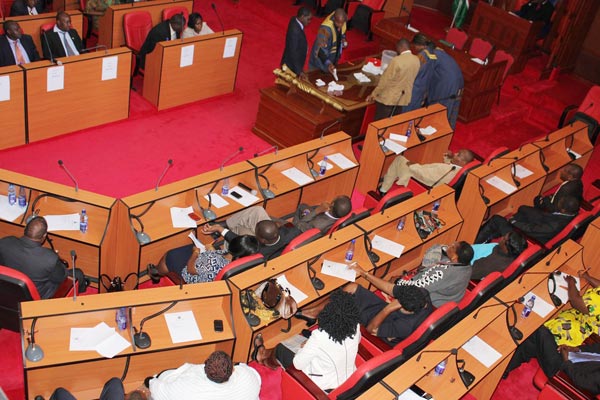
Makueni County Assembly. Photo courtesy of Makueni Communication Unit
Members of the Makueni County Assembly (MCAs) want the Department of Health to hire a resident pathologist to serve at the County Referral Hospital.
In a motion tabled by MCA for Kitise / Kithuki ward Julius Mwalali on Thursday, the assembly argued that a resident pathologist would enable residents of Makueni to obtain postmortem services at a subsidized fee as stipulated by the County Government’s Finance Act 2013.
“Families have been paying Sh10, 000 to get postmortem services which is beyond the reach of many poor families in the county yet the finance act stipulates that Sh2, 500 will be charged by government medical facilities for the pathology services,” said MCA Mwalali.
While supporting the motion, Kasikeu MCA Paul Malinda said a resident pathologist will provide quicker services to the residents and at a lesser fee and called on the County Government to move with speed and implement the motion.
Malinda’s sentiments were echoed by his Kithungo/Kitundu counterpart Keli Musyoka who termed the lack of a pathologist at the referral facility as unfortunate.
He noted that residents seeking postmortem services rely on private pathologists who are based in Machakos which sometimes forces them to keep their loved ones in mortuaries for one or two weeks waiting for the essential services.
“The county cannot afford to rely on a private pathologist, let’s have one at the referral hospital,” said MCA Keli.
The MCAs unanimously passed the motion and urged the County government to consider the matter as issue of urgency.
Although the MCAs idea of hiring a resident pathologist maybe noble, it should be noted that Kenya has an acute shortage of professional pathologists, a situation that has greatly affected postmortem services.
According to the President of the Kenya Pathologists Association of Kenya Dr. Andrew Gachie there are only close to 80 pathologists in the country based at different regions with each region having one or two pathologists.
The Lower Eastern region pathologist who serves Makueni county is based in Machakos. Notably, the field has also faced exodus of pathologists looking for greener pastures and there is need for the government to offer attractive remuneration to retain the professionals whose services are much needed by Kenyans.
Jadudi in happier days. The #1MilliForJadudi campaign raised KES7,256,096 through mobile money contributions. [Photo: kenyans.co.ke]#TheJadudiReport is out as mobile contribution to Sub-Saharan African economy surpasses US$100 billion according to a new report.
In what may seem like a well-timed coincidence, the #1MilliForJadudi campaign report was released on the same day as the GSMA, an association of mobile operators study which showed that mobile operator investments are fuelling innovation and inclusion across Sub-Saharan Africa.
The study, ‘The Mobile Economy Sub-Saharan Africa 2015’ shows that tech innovations have continually been gaining momentum in Sub Saharan Africa over the last five years.
Kenya, referred to as Silicon Savannah, has been the epicentre of this development and has been leading innovations in areas such as mobile money (M-Pesa) and crowd-sourcing (Ushahidi).
And herein comes #TheJadudiReport which has been hailed as a crowdfunding success by the creator.
Nyong’o says that the #1MilliForJadudi contributions ranged from Sh1-25,000.
Three days after its launch, the #1MilliforJadudi had raised Sh7,256,096 towards the cause, seven times the initial goal. The contributions were made through M-PESA only when the campaign began accepting contributions on August 4, 2015 and closing on August 6, 2015.
“An analysis of the campaign revealed that a total of 12,262 unique contributors from across Kenya made donations towards this cause, with contributions ranging from as little as sh1 (less than USD1) to as large as sh25,000 (USD237). The average donation was sh566 (USD5.40), and about 45 percent of the crowdfunders contributed sh500 (USD4.75) or more. Among them, 567 people made repeat donations using the same platform.”
While the campaign was initiated on Twitter, it developed a life of its own on other social media channels including Facebook and Instagram. The campaign finally and ultimately made to the mainstream media.
An analysis of the social media statistics for the campaign found that the #1MilliForJadudi hashtag originated in Kenya in 93 percent of the cases.
Though the crowdfunding took place in Kenya, the social media impact was far reaching and universal. There were 187 million estimated impressions from 19,527 Twitter mentions, generated by 9,640 users. The bulk of the Twitter mentions (79 percent) were comprised of retweets, with 15,464 retweets disseminated among users who relayed the hashtag.
Many Kenyans on Twitter have hailed the campaign’s success.
And to prove that the mobile industry is transforming economies, the GSMA report released in Cape Town on Thursday shows that the mobile industry in Sub-Saharan Africa contributed more than US$100 billion to the region’s economy last year.
The GSMA study was published at the ‘Mobile 360 Series – Africa’ conference being held in Cape Town this week.
Titled ‘The Mobile Economy – Sub-Saharan Africa 2015’, it finds that the US$102 billion economic contribution in 2014 was equivalent to 5.7 per cent of the region’s GDP.
Mobile operators directly contributed US$31 billion, representing 1.7 per cent of GDP. This economic contribution is set to increase over the coming years as mobile operators continue extending connectivity to unconnected populations across the region. Rolling out new mobile broadband networks and services will also have a big impact on the industry’s revenue growth. The industry is forecast to contribute US$166 billion in value to the region by 2020, equivalent to 8 per cent of expected GDP by this point.
“The mobile industry remains a key driver of economic growth and employment in Sub-Saharan Africa, making a vital contribution given the population growth and high unemployment levels seen in many countries in the region,”
said Alex Sinclair, Acting Director General and Chief Technology Officer at the GSMA.
He added,
“Despite revenue and margin pressures, local mobile operators continue to invest heavily to extend network coverage to serve unconnected communities and accelerate the migration to high-speed 3G/4G mobile broadband networks. Mobile technology is also playing a central role in Sub-Saharan Africa by addressing a range of socio-economic challenges, particularly digital and financial inclusion, and enabling access to vital services such as education and healthcare.”
Maseno University. The early Thursday morning fire that gutted the institution’s administration block is feared to have been caused by students due to elections at the institution which have allegedly been interfered with.
Kenya is perpetually in electioneering mode and the unfortunate events at Maseno University early Thursday morning can prove this.
It is alleged that Maseno University students descended on the institution’s administration block and burnt it down. This was in defiance of what has been termed as a case of the administration’s interference with student elections and missing marks for a number of students.
This is yet to be confirmed.
Administration and finance office was burnt down.#Maseno University
Following the fire, tension is palpable in Kisumu with police officers at the scene confirming that almost the entire administration block of the university was razed down.
With suspicion that students may have committed the offence, Twitter was awash with messages condemning the act.
Campus Politics should NOT lead to what just happened in Maseno University this morning!
Some lone voices also implied that the arson would have been due to bad politics at the university.
The case of Maseno University is an isolated one.The administration intereferred with Student politics by imposing leadership… — Protus wekulo jay (@ProtusWekulo) October 8, 2015
Two weeks ago, the university’s the Citizens against Violence (CAVI) held a meeting on the importance of a transparent and peaceful Students Organization of Maseno University (SOMU) election this year. The meeting was attended by Prof Mary Kipsat, the Deputy Vice Chancellor (DVC) academics and students welfare, Olela Edward the dean of students and SOMU. Those seeking elective posts proposed possible ways to ensure a free, fair and peaceful SOMU election but this may have aborted with this morning’s events.
Previously, SOMU elections were conducted in two days. On day one, health, sports security directors and the hall congress would be elected. The executive which includes presidents, secretary general, finance secretary were elected the following day.
With the new election schedule, all these persons were to be elected in one day. The team also proposed conducting the elections according to student departments for easy identification and to avoid voting more than once.
And with this failure, is the generation that is supposed to hold public office practicing what has been perfected by those in power as the best way to get to office?
It seems like Kenya is way behind on governance whether in public office or at the institutions of higher learning where violence, instead of dialogue, seems to take the upper hand in disagreement over ‘political’ cases.
maseno university fire is so hurting, they hav always had problems but burning the admin block is such a stupid act
Maseno University students are so dumb. Mtachomaje administration block halafu muexpect kurudi back to campus in a month time? Never! — Ibrahim Morowa (@iMorowa) October 8, 2015
Auditor General Edward Ouko. His report has questioned how a County Executive was hired in Nakuru County without the right qualifications as required by law. Photo courtesy of www.kenya-today.com
The process in which the county government of Nakuru hired a County Executive Committee (CEC) member who was allegedly unqualified for his post has returned to haunt the Kinuthia Mbugua led government.
In his report of the financial operations of the Nakuru County Executive for the period of 1st July 2013 to June 2014, the Auditor General has questioned how the CEC was hired without proper vetting.
“Documents available indicate that the County Executive Member in charge of Trade, Industrialization, Tourism and Wildlife Management used fake academic certificates to secure the job,”
the Auditor General says in his report while referring to Sam Gitau the now former CEC who was forced to resign after his case was exposed last year by The Standard.
“It was not clear how the member’s resume was scrutinized or why reference from the former employer was not sought,” the report reads.
“He resigned in May 2014 after a salary totaling sh2,632,500,” the Auditor General notes.
With this the Auditor General falls short of stating that both Gitau and his employers are liable for the money that he was paid following a process that was unauthentic.
The report is being received at a time when the county is being suspected of hiring staff irregularly. On Wednesday 7 th October, the Chairman of the County Public Service Board Dr. Waithanji Mutiti was grilled by the Assembly on allegations of over hiring 80 Ward Administrators instead of 55 (this being the official number of the Wards in the County).
Apparently Dr. Mutiti’s board’s expenditure has also been questioned by the Auditor General.
“The County Executive paid sh1,300,000 to the County Public Service Board members for accommodation in hotels while on duty in the County. However, the days in respect of which the amounts were paid were not indicated. It was therefore, not possible to confirm the genuineness of the expenditure,” the report reads.
The Auditor General has also questioned how
“the County executive transferred sh150 million to the County Assembly to cater for Members of the County Assembly Car grant.”
“The funds were not budgeted for and approved by the Controller of Budget,”
says the Auditor General while adding that
“failure to follow the budget leads to poor financial management and consequently poor service delivery.”
In addition to this, the Auditor General questions the transparency in which more than sh60 million was disbursed as bursaries to “County Wards” and through the “County Ministry of Education.”
“No returns were provided to indicate how the funds were utilized, who the beneficiaries were and confirmation that the funds were used for the intended purpose,”
he says about the sh1,375,000 bursaries to County Wards that he argues was unaccounted for.
“There is a risk of the funds not reaching the intended beneficiaries thus leading to loss of public funds.”
For the rest of the money that was spent on bursaries to secondary, tertiary and other academic institutions of higher learning he cites what he sees as an anomaly in the expenditure as the money may have been disbursed
“even though the education function has not been devolved.”
“There were no acknowledgement letters from the institutions to confirm receipt of funds. It was therefore not possible to authenticate the expenditure.”
Other issues that have been cited by the Auditor General include cash and bank balances of outstanding imprests amounting to sh20 million, settlement of inherited debts totaling to more than sh260 million, pending bills totaling to more than sh1.2 billion, and the procurement of motor vehicles, tippers, dozer, and shovels which cost the county more than 200 million.
But what might even arouse reaction even the more is the redirection of a conditional grant of sh390, 283, 988 that was meant for the Rift Valley General Hospital to other medical facilities that had not been factored initially.
“The services offered by level 5 hospitals were, therefore, negatively affected due to inadequate funding.”
There is also an income tax penalty of sh9 million that the County paid out of “poor cash flow management.”
“The nugatory payment could have been avoided had the executive followed prudent financial management systems,” he says.
Then there is also the process in which the “government procured 27 vehicles at a cost (of) sh161, 851, 596” in which the Auditor General cites “a risk of loss of assets” as he points out that “log books for 26 vehicles had not been received by the time of the audit.”
Still on procurement the Auditor General is not convinced the county government followed the right procedure while procuring some heavy earth moving machines.
“During the period under review, the County Executive purchased motor graders, dozer with Ripper 200-21HP and wheel loaders for sh55, 680,200.”
“However, the tender documents did not have the clear specifications of the machines to be supplied as required by Section 52 of the Public Procurement Act, 2005 leading to huge variations between the highest and lowest bidders.”
“Non adherence to procurement procedures may lead to loss of public funds,”
reads the report that was signed on July 1.
The findings of the expenditure of public funds by County governments are an insight on the future of devolution. Whether as a system of governance it (devolution) will take us to the promised land will depend so much on how the county governments will be efficient in the use of public funds now and in the coming years.
One can only hope that all the responsible offices in the County will offer adequate explanations on these and many other unseen anomalies.
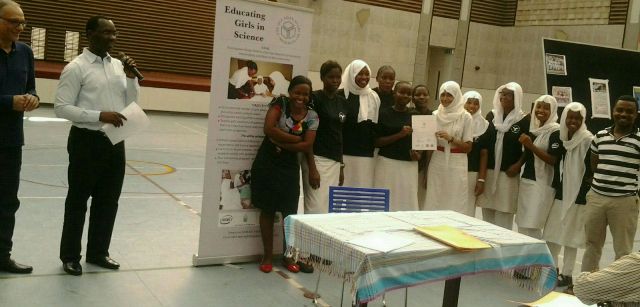
Students at Coast Girls School have developed a small black stone that is saving lives following snake and scorpion bites in Kongowea and Likoni in Mombasa County, through a school project led by Aga Khan Academy, Mombasa, and supported by Intel and the Aga Khan Foundation (USA).
Educating Girls in Science (EGIS) is a two-year pilot project launched by the Aga Khan Academy, Mombasa, in 2014, to empower girls by increasing their engagement in science and in applying their knowledge outside the classroom to benefit their community.
“Working with teachers, students and science clubs, we are using the Educating Girls in Science project to train girls how to use knowledge in science for problem-solving and not just for the exams,”
said Lucy Mwandawiro, the project’s coordinator and a teacher of chemistry at the academy.
The black stone, or viper stone, is a piece of processed bone made from the thigh bone of a cow used as a first aid measure for snake, scorpion and insect bites. Following training at the Aga Khan Academy, Mombasa, and intensive work with the academy’s project team, the girls conducted a community survey that found residents from the two areas were facing an ongoing challenge from snake and scorpion bites. Getting effective first aid and timely medical treatment was difficult because the communities are located a long way from hospitals.
In 1997, the Ministry of Health conducted a survey that showed that up to 30 per cent of snake bite incidences end in fatalities, because patients do not get timely first aid.
It was this need that saw the 25 girls from Coast Girls School base their project around ways of treating snake bites. On presenting the idea to the EGIS judges during the final project presentations at the Aga Khan Academy, Mombasa, in June this year, the students were provided with the financial and technical support to develop the stones for wider use.
The black stone is made by cleaning, drying and baking the thigh bone in order to increase its surface area and make it more absorptive. Traditionally, the black stone was prepared from any animal bone and left to cool in open air, a factor that re-oxidized the stone and reduced its absorptive ability. The girls improved on this method, using the thigh bone due to its highly porous nature, and cooling baked bones in an air tight container, in order to preserve their absorptive power.
Once prepared, the black stone neutralizes the fatal effects of a snake bite by soaking up the poison at the entry point. It is used by making a small cut on the bitten area until blood comes out and then placing the stone on the skin. The stone then absorbs the poison through capillary action reducing the fatality of a snake bite.
The Likoni and Kongowea residents are taking great interest in the stone. The few who knew about them thought they were a form of magic. But the Coast Girls School students are getting the residents to change this mindset by explaining to them how the stones work scientifically. They also found that some of the stones being sold in the areas were of poor quality so the girls are also embarking on the process of training people on how to make the stones more effectively.
They see this as a good way to give back to the community. The stones are cost-effective for the residents, since they can be re-used several times. Previously, residents would consult local healers who charged them up to Sh2,000 for each snake bite treatment, but the girls are empowering the communities to make the stones for themselves, as well as giving the first samples for free. After use, the stones are boiled in salty water, soaked for several hours in fresh milk and then dried again to restore the stones’ absorptive nature.
Coast Girls School is one of the 24 schools that Aga Khan Academy, Mombasa is working with to solve community-based problems using classroom science through the EGIS project. The project started with nine schools in Mombasa County in 2014, but extended to Kwale County in August 2015 where it is now working with 15 schools.
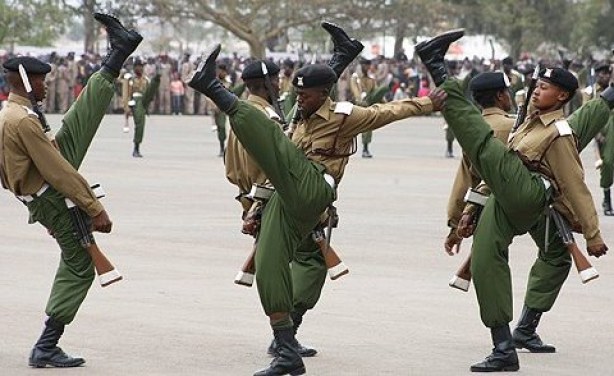
The National Police Service has on numerous occasions threatened to take part in go-slows in order to pressure the government to increase their salaries. Both the Kenya Police and the Administration Police (AP) have often lamented about being underpaid and under-resourced. The result of this blatant neglect of the police service by the government is severely reduced working morale.
The historical costing of the security function that annually increases the budget for national security has not correlated with the performance of the police service. It has not even increased their professionalism and working capability. Insecurity and crime has continued to rise and the situation exacerbated by recurrent terror activities that cause numerous deaths and extensive property damage.
In the current financial year, the national government allocated Sh10 billion for the purposes of police service modernization, Sh7.7 billion to cater for the leasing of police vehicles and Sh1.7 billion for the police medical scheme. However, police officers have rubbished these allocations saying that the national government should prioritize their salaries first. They accuse the government of failing to honor the agreement to increase their salaries by 42 percent.
The police service is not concerned with the huge operational budgets allocated to them by the government. They care more about how the government will motivate them to boost their morale and work performance. Poor pay is an inhibition to the police service implementation of the security policy. They do not need better houses, better vehicles, and better equipment if their remuneration standard is not improved.
The government should shift from giving more operational budgets to the police service and instead concern itself with how to work out the framework to improve their performance, morale and working environment. The first step towards achieving this is to honor their wishes and increase their pay.
A police officer earning less than sh20, 000 a month is left with peanuts to spend or save once the bulk of the money is taxed or remitted for other services like insurance and pension. The little they take home is meager to even support their families and household expenses. This motivates most of them to engage in corrupt activities to supplement their income.
The ways in which the government can boost police morale and motivation apart from revising their pay upwards is to educate, communicate, recognize and to treat them fairly. The police education curriculum needs revision and constant upgrading to be up to standard with emerging issues in the society and the security sector. They also need to have their skills constantly upgraded to implement their policies efficiently and effectively.
Recognition considers appraisal and rewards based on merit while communication should be positive and to the point. Fair treatment is ensuring impartiality, equivalence and lack of prejudice, for example, by guaranteeing fair administrative action if a police officer errs and upholding that the working standards are not favoring some officers over others.
This is a crucial lesson that the current government should learn and implement accordingly.
The writer comments on political issues in Kenya – blogs at Politics Kenya
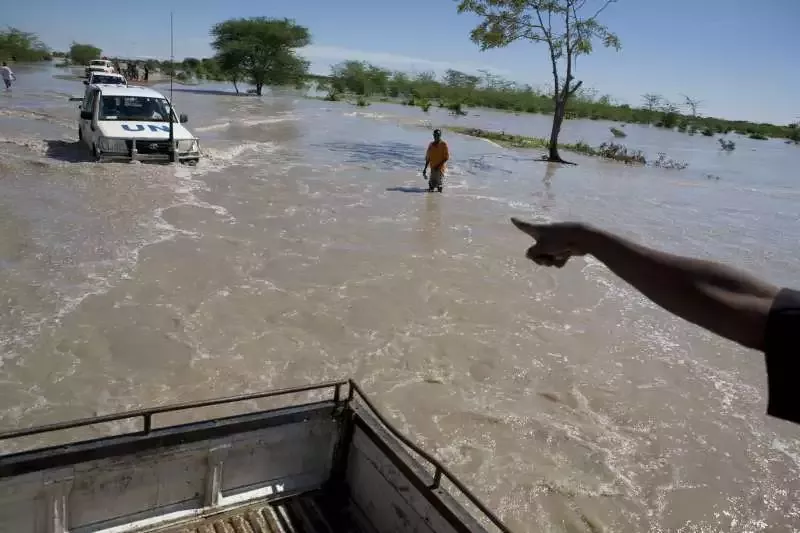
Kenya is expecting El Nino rains as from Thursday October, 7 as reported by Meteorological Department.
In a move to sensitize people about the phenomena, the department has issued alerts and direction on how residents in various places should prepare.
However, across the country, residents in vulnerable areas have despised the call to migrate as the rains assumed to be with accompaniment of strong storms and wind may cause huge damage to their properties.
In Nairobi, alerts have been given on areas which are prone to floods, flash flood zones and even zones in which there may be storms and strong winds.
On Tuesday October, 5, Director of Meteorological Service in Nairobi County, Ms Mary Kilavi, said the moderate showers will mark the onset of the short rains.
Such was realized on Wednesday in most parts of Nairobi with the vulnerable areas experiencing drizzles for a short period during the daytime.
Earlier, County Environment Executive Evans Ondieki said available data indicted a strong El Nino phenomenon, adding that the county was also in the process of discussing strategies to avert disaster.
“Predictions are that the enhanced rainfall will reach the strongest levels ever seen in the last four decades as the world heads into the El Nino season. Concerted efforts from residents and the county are necessary to avert a similar disaster like the one the world experienced last in 1997,”
said Ondieki during a press briefing at his office yesterday.
Additionally, he said 200 public schools had been identified where families living in slums on riparian land would be temporarily accommodated if they are relocated.
Different leaders have called for cooperation in the preparation for the rains a call which has been despised by many.
Deputy President William Ruto through his official twitter account urged Kenyans to unite in the move to prevent mass loss as realized in 1997.
As Gvt we don’t want a repeat of the past, we are making sure we control the situation before it affects citizens. pic.twitter.com/0UawUAycjp
However, residents from various estates in Nairobi have maintained that they will remain at their respective places despite alerts and warning. Some whom Kenya Monitor spoke to claimed that they don’t have places to move to hence can only afford to maintain their current areas of residence. Richard Momanyi from Mukuru Kwa Njenga said he has no enough money to move to a place where the floods cannot affect.
“Here is where I call home. Nowhere else. So where would I move to? This area floods but we just keep at it through,” said victor Bakari a resident of Donholm.
Maria Musyoki a resident at Blue estate in Shauri Moyo whose rentals are along a river bank claimed that she could not find a place with equal pay where she could migrate to. Poor drainage systems in most slums in Nairobi remain a threat to residents in slums while landlords in the better placed areas have increased house rent as the rains approaches. Slums at a high risk of damage include Mathare, Huruma and Kibera. The Nairobi County Government is assuring residents that is well prepared to deal with the heavy rains
Response &emergency teams have been established in all the subcounties within the City to ensure minimal damage to property & life #ElNino — Dr. Evans Kidero (@KideroEvans) October 7, 2015
And it doesn’t seem like Kenyans are prepared, both going by what was shared by some residents and others as well
The tragedy of our time is that folks are waiting to take selfies with #ElNino devastated backgrounds than call for action before the rains.
However, the government has provided some contacts to use in times of need
In preparation for El Niño, these are the numbers to call in case of emergency: 020-2151053, 020-212386, 1199, 0700395395, 0738395395 — Disaster Operations (@NDOCKenya) October 5, 2015
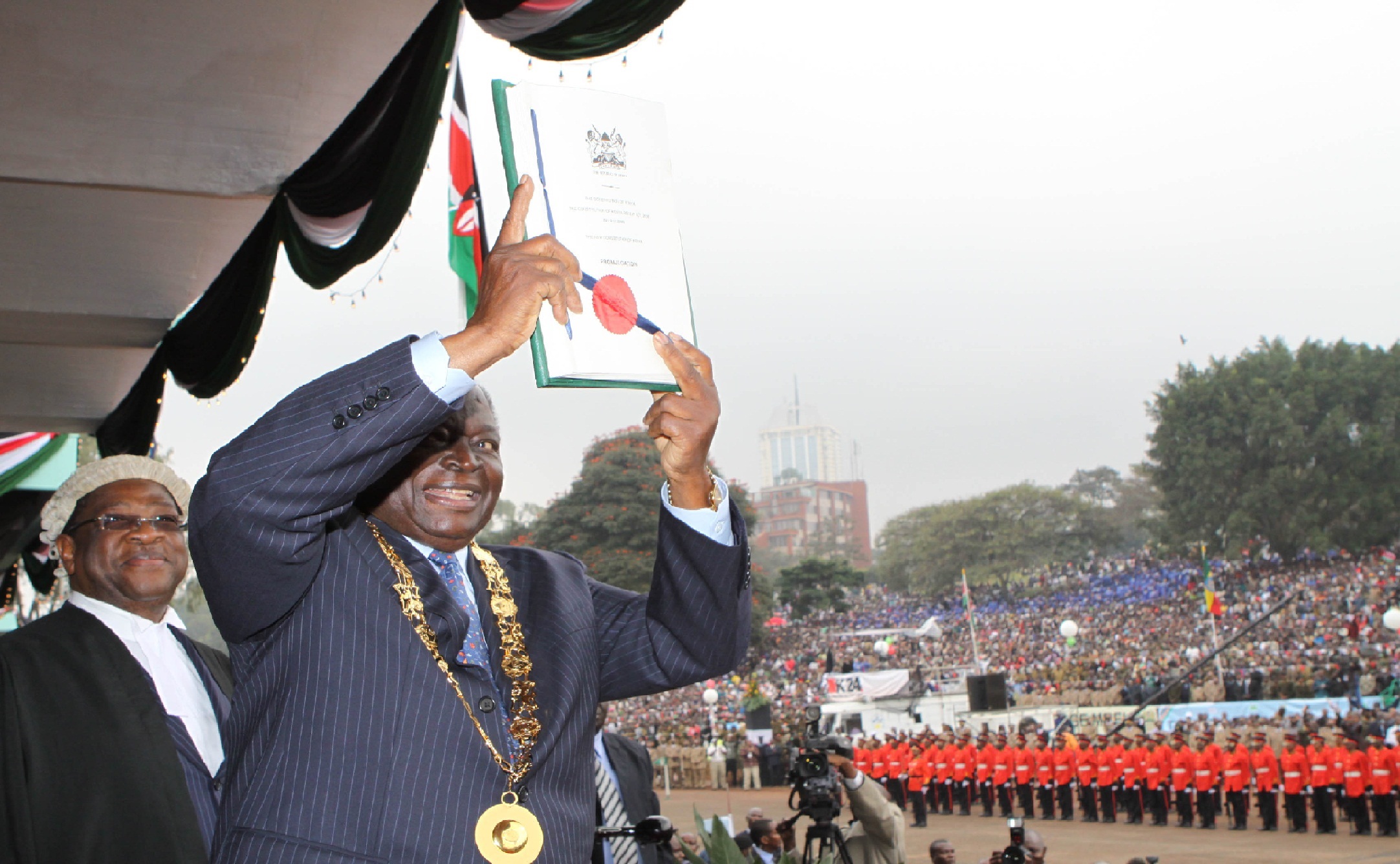
President Mwai Kibaki displays the new Kenyan constitution to the nation after he promulgated and signed it into law at a public function at Uhuru Park, Nairobi. [Photo: Africa Talks]Despite many Kenyans feeling that women representatives are unnecessary baggage for the Kenyan taxpayer, a report released by Mzalendo Trust shows that women are invaluable.
A good number of Kenyans feel that the constitution, which they overwhelmingly approved, created some positions to appease political allies who lost in the elections. The creation of the requirement for women reps was such a move which has been disparaged with many calling for abolition of such positions.
Not sure what the Women Reps’ in Kenya do,maybe their work goes unreported but seems our First Lady been doing all their work. — Peter Wanyoike (@Pete_Wanyoike) May 9, 2015
The report titled, “Debunking Myths: Women Contributions in Kenya’s 11th Parliament” shows that women parliamentarians – whether elected, nominated or selected under affirmative action provide just as much value as their male counterparts.
To answer questions like this:
I bring this question in reference to women reps in Kenya. What are they doing?
the report sought to prove that the women leaders are as good as their male counterparts. It looks at contributions captured in the Hansard published from March 2013 to 30th June 2015 which shows that women did not solely focus on Family Bills (The Marriage Bill, The Children’s Bill, The Protection against Domestic Violence Bill and The Matrimonial Property Bill) but went ahead to contribute to other areas including; security, finances, water, health, devolution, infrastructure, waste management, environmental issues and mining among others depending on either their counties, constituencies or national interest.
“Findings presented in report and infographic disprove biases, stereotypes and accusations against women Parliamentarians by showcasing their actual contributions,” said Jessica Musila, Mzalendo’s Executive Director.
Contrary to public opinion, Women County Representatives (WCR), in particular, do not represent women’s agenda only but all the challenges faced in their counties including problems that affect men. In fact, those from the Northern Region of Kenya were outstanding in their articulation of the security challenge their counties face and the solutions the government should consider.
The analysis also revealed women MPs contributions are also greatly influenced by their level of education, professional background, work and life experience.
In the report, Mzalendo has grouped counties into six climatic zones as presented in the Socio-Economic atlas and then ranked the women MPs based on the potential impact of their contributions on their regions and the nation. Leading legislators in the regions are Florence Kajuju (Mt. Kenya Region) Joyce Emanikor (Northern region), Zainab Chidzuga (Coastal Region), Rachael Nyamai (South Eastern), Millie Odhiambo (Western Region), Joyce Laboso (North Rift), Amina Abdalla (Nominated MNAs) and Agnes Zani (Nominated Senators). Each region had three nominees.
The full implementation of the two third gender principle has been extended to August 27, 2016 but Kenyans’ attitudes towards women reps seemingly may not be extended. This has been exacerbated by the continuous debate on reducing the country’s wage bill which makes Kenyans disdain most constitutional offices which they feel are vestigial.
do woman/women reps in Kenya even know their JD??they r the most useless posts devolution gave us — #baba Elvis (@benahnji) February 11, 2015
3 million girls in Kenya already can’t afford pads and then the govt taxes them, women reps? What’s your role?
It is gender discriminatory to even think abt removing women’s reps in kenya parliament to address the #bigquestion of wage bill @NaisolaL — Dinah Musindarwezo (@DinahRwiza) March 18, 2014
The guest speaker during the event was Dr. Betty Gikonyo, CEO – Karen Hospital (Photo: Kioko Kivandi).
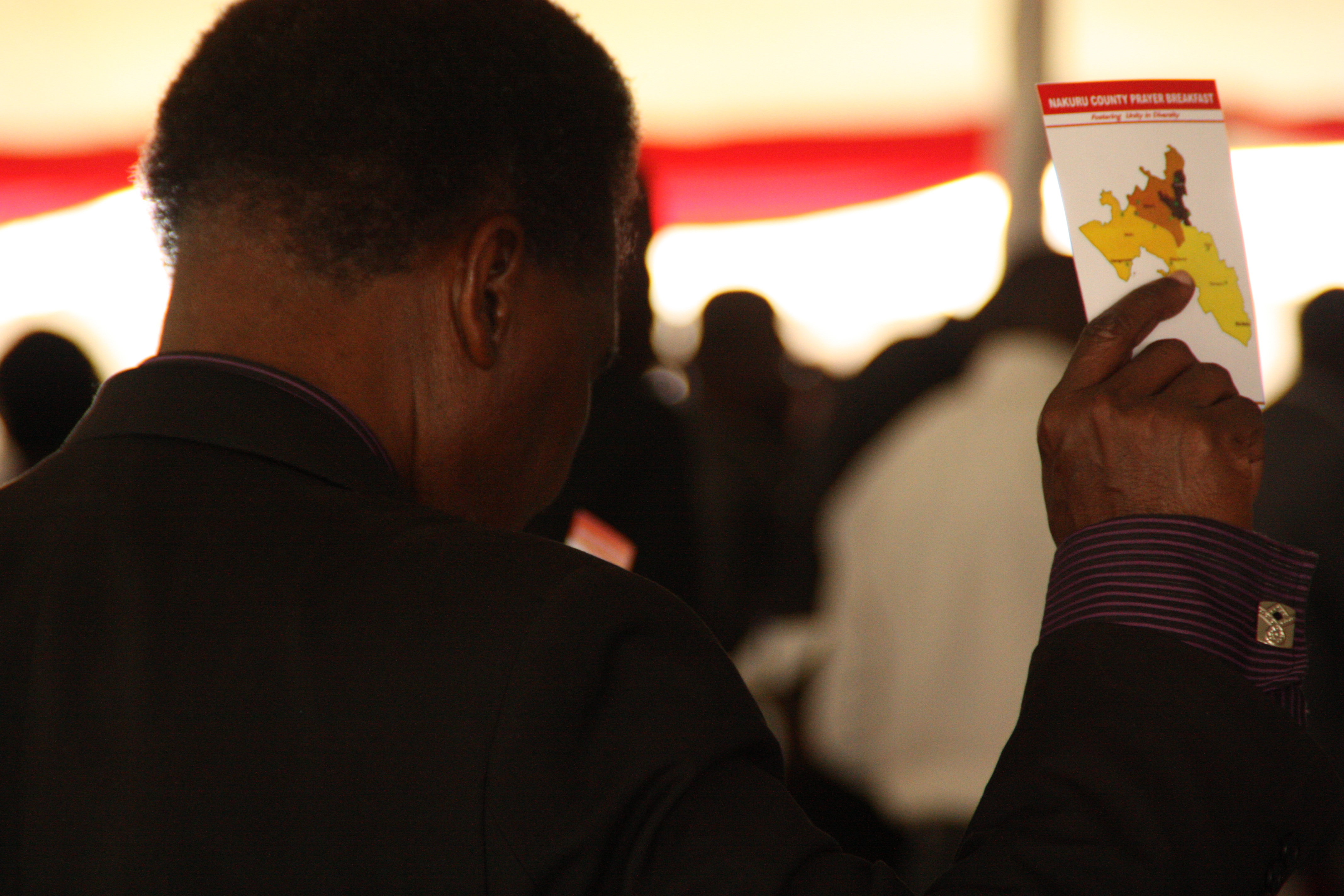
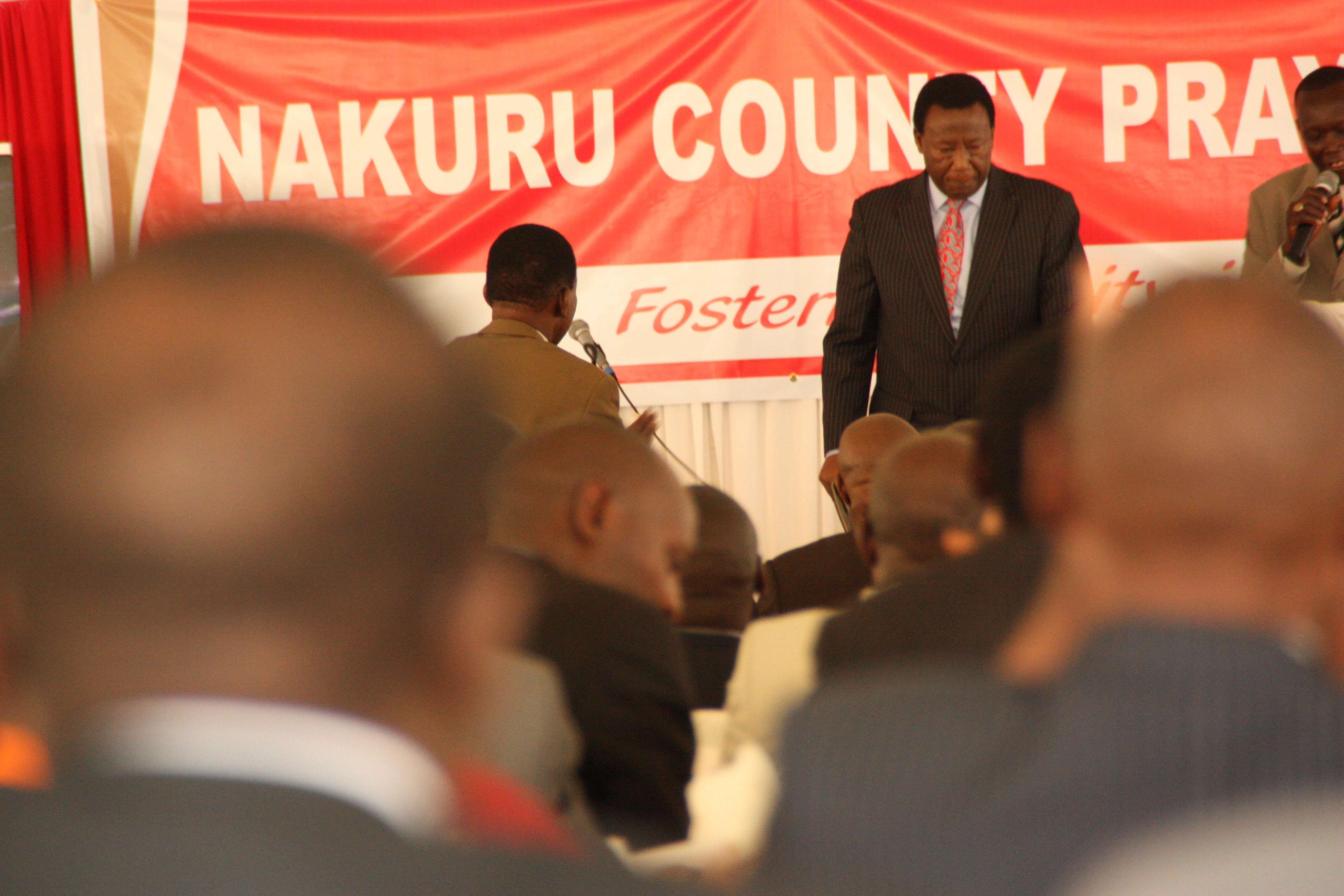
On Friday October 2 the county government of Nakuru held a prayer breakfast that brought together a cross section of leaders from different sectors of the county.
The event which is the first in history saw the residents reflect on the history of the county that was the administrative center of the Rift Valley province in the past days. Actually to date the office of the Regional Coordinator (arguably a Provincial Commissioner) still sits at the county.
Key among the aspects of the county’s past that residents reflected about is its history of ethnic and political violence spanning from the days of retired President Daniel Moi’s regime and which hit its worst in 2007/2008.
The theme of the event was fostering unity in diversity ( Photo: Kioko Kivandi).
So notable about this history of violence and its connection to the county is the fact, the ethnic clashes of the 1990’s are usually traced to the county. Again, Nakuru is one of the counties that were heavily hit by the 2007/2008 post election violence.
Thus as different speakers took to the podium they had a way of going back to this history. But most importantly, the prayer breakfast was also used as an opportunity to reflect on the culture of diversity that is celebrated in the county. Of central mention by most speakers was the belief (or myth) that, Nakuru is a special county in the country that has the ability to determine the direction of the rest of the country.
Below is a collection of selected quotes from the speakers at the event in which Nakuru Town East MP David Gikaria declared he had cleared his issues with the Governor Kinuthia Mbugua. The two had been at logger heads for a while.
Osman Warfa – Regional Coordinator:
“Unless you are a fool, you can’t say you don’t know where we are coming from.”
” Nakuru is the heart beat of the Rift Valley and the whole nation.”
“Counties are young and you can’t expect a child to be born and start walking.”
Bishop Mark Kariuki – General Overseer, Deliverance Church
“It is God who appoints leaders. If you an MCA (Member of County Assembly) then you know you are fulfilling the will of God.”
This was the first prayer breakfast in the county (Photo: Kioko Kivandi).
Bishop Jotham Opicho – Chairman Church Elders Council
“It is said that Africa is one of the richest continents but her people are poor. Why? It is because of leadership.”
Dr. Betty Gikonyo – CEO Karen Hospital:
“Our unity must begin even in our diversity of thoughts. To think differently is actually healthy.”
“The county we are building today belongs to tomorrow. Listen to the young voices. They too have a story to tell.”
“I have authored a book – The girl who dared to Dream – but not dreams that are empty. Our big dreams will say there is something extra.”
“People do not care how much you know, they care how much you care about them.”
Paul Mugo – Chairman, Nakuru Christian Professionals Association:
“Our propensity to go back to where we have come from is very high. We can only overcome that by being disciplined.”
Rajen Shah: Chairman Kenya Association of Manufacturers, Nakuru Chapter
“A lot has been said about leadership. I want to introduce something new. Spirituality.”
At the event MP Gikaria declared he had mended his ways with Governor Mbugua (Photo: Kioko Kivandi).
Liza Chelule – Nominated Senator:
“Let us work for the people of Nakuru County because they are the ones who elected us.”
Samuel Arama – MP, Nakuru Town West:
“This county is ours, Kenya is ours and we should come together.”
Kimani Ngunjiri – MP, Bahati Constituency
“We love (Samuel) Arama, but we usually deal with him like a child who has come with its mother.”
David Gikaria -MP, Nakuru Town East:
“Even Peter denied Jesus three times but finally he repented. I am now born again. I got saved two weeks ago.”
Samuel Maigwa – Chairman Nakuru Council of Elders:
“We always say that when you see boys fighting, there are always old men sitting behind them.”
The chief guest was Dr. Betty Gikonyo and the theme for the event was ‘fostering unity in diversity’.
Solar panels at the Mbuvo off grid solar power plant Photo: Mary Lole
Close to 300 cassava farmers under the Mbuvo Commercial Village Cassava plant in Kathonzweni, Makueni County are set to benefit from a solar power project funded by the World Bank through the Kenya Agricultural Productivity and Agribusiness Project (KAPAP).
The off grid solar power project constructed at the cost of Sh8.7 million at Mbuvo trading center will operate the high powered equipment installed in the cassava plant for milling and baking purposes besides providing power to the local establishments like shops where feasible.
According to Makueni Regional Service Unit (RSU) Coordinator Esther Wambua the plant will have a power output of 16.5 kilowatts and an expected energy production of 128,146 Amperes per day and will replace the use of diesel and petrol hence reducing the production cost of the cassava commercial plant drastically.
Ms. Wambua added that the construction of the power plant is complete and will soon be fully commissioned and handed over to the community for management.
“All the works that included the installation of the solar panels and construction of the building to host the plant is complete and operational,” she said.
The RSU coordinator said the project was necessitated by the need to link and integrate electricity and others forms of energy to achieve KAPAP’s ultimate goal of enhanced agricultural productivity.
“For improved agricultural output to be achieved several factors are involved among them increased efficiency, enhancement of the value of the produce and energy is also a key input that can improve farm productivity,” said Ms. Wambua.
She added the cassava commercial village had improved livelihoods for area residents and since the town lacked electricity to run the plant, solar power was the only viable option for providing cheap, efficient and sustainable source of power.
“The area classified as semiarid is endowed with solar energy, that could be harnessed to provide power for increased productivity and other uses,” she said.
Area Chief Mr.Joseph Masyuki who is also the chairperson of the cassava umbrella farmer group said the power plant would enhance production and improve the social economic status of the members.
“The milling machine that lay idle due to lack of electricity is now operational with the cassava plant now producing 300 kilograms of cassava flour per day,” he said.
The cassava commercial village plant was established in 2010 through KAPAP with the main objective of improving food security in the famine riddled semi-arid region through growing and value addition of suitable crops like cassava.
Some of the products produced by the plant include cassava flour, cakes and mandazis that are sold to the locals.
Kenya and Tanzania have agreed to scale up corporation in war against terror, drunk trafficking and poaching in a move to boost economies in the two countries.
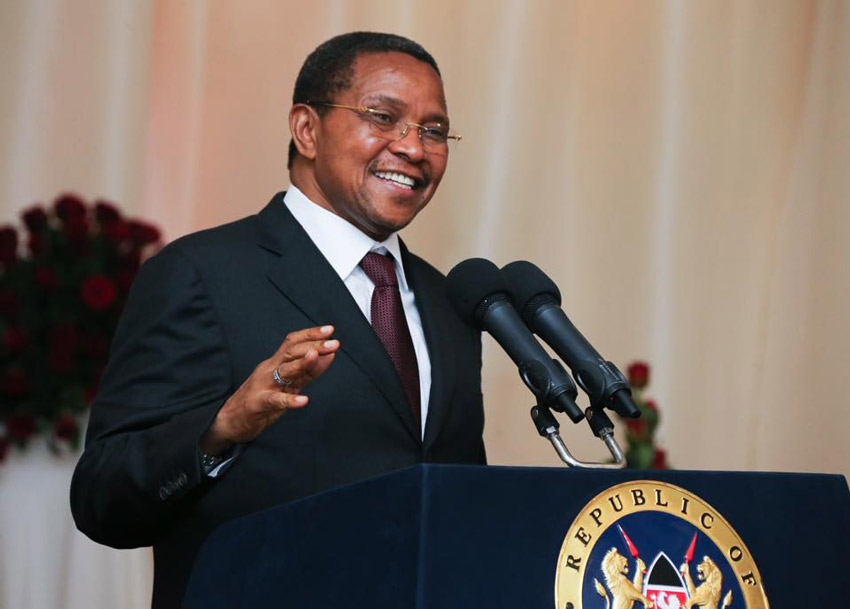
President Uhuru Kenyatta and President Jakaya Kikwete who held bilateral talks in state house in Nairobi have formed commitment of the two countries in fight of the vices.
The two Presidents also agreed to make stronger ties in trade and economic development policies.
The Presidents discussed more on issues affecting the welfare of the countries during the first day of Kikwete’s three days state visit to Kenya.
In fight against terror, President Uhuru said they have to continue addressing the propelling factors which include children and youth radicalization.
He cited that providing jobs, promoting education and ensuring equity in resource allocation and public participation for the youths are some of initiatives to eliminate terrorism.
“We have to keep on sensitizing our people on how to cur terror so as to see that our children and youths are not radicalized,” said Uhuru.
Supporting the same sentiments, President Kikwete said that unity among the two countries would boost fight against terror phenomena majorly poaching, which has highly affected Eastern Africa.
In addressing economic development strategies, Tanzania’s President said the two will work together to have the high linking the two countries made.
“The President of Kenya used to tell me that he will take 14 hours from Voi to state house in Tanzania. I know if the highway is complete, one will only be taking two and half hours,” said President Kikwete.
He said that the completion of the road will be a great move towards economic development of the two countries in relation to transportation of goods.
While addressing trade on the two eastern Africa countries, President Uhuru said people from the two countries are the same and do not understand of any difference due to be boarder division.
He explained that both people from Tanzania and Kenya have highly interacted socially and economically hence its only the governments to chip in and enhance the bond for development benefits.
“Our people don’t have any difference. We only need to come in as government to help in achieving smooth interaction hence enhance trade between the two communities,” said Mr. Kenyatta.
Tanzanian’s President visit to Kenya comes few days as before his term ends as the country is expected to hold general elections in 20 days time.
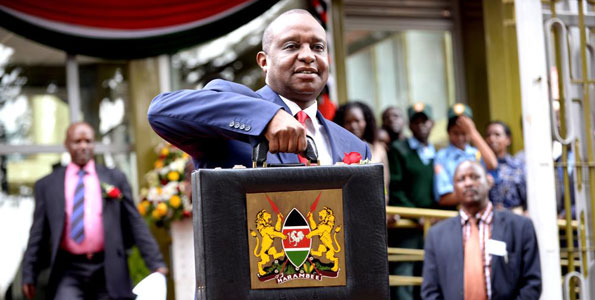
Treasury secretary Henry Rotich poses outside the National Treasury when going to read the budget statement. Photo courtesy of www.businessdailyafrica.com
By George Githinji
The government came up with an ambitious budget in the 2015/16 financial year of sh2.234 trillion to finance its programmes and activities.
Of the two trillion shillings, sh784.2 billion will finance the recurrent expenditure of government ministries whereas sh721.3 billion will be used on capital expenditure, also known as the development expenditure.
The government will also spend sh287 billion for county transfers (money allocated to county governments from the national government), sh27.3 billion as parliamentary allocation and sh7.2 billion for the Judiciary. Sh441.5 billion will go towards the Consolidated Fund Services (CFS).
The Consolidated Fund (Article 206) is a constitutionally established fund where all money raised or received by or on behalf of the national government is allocated, other than the money that is excluded from the fund by an Act of Parliament or retained under an Act of Parliament by a state organ to finance its costs.
Key priority areas for 2015/2016
The theme for this year’s budget is “Enhancing economic transformation for a shared prosperity.”
The key priority areas that the government has identified to spend money on in 2015/16 are security, education, and health, social safety nets, infrastructure, agriculture, tourism, county governments and the Constituency Development Fund (CDF).
The government will invest Ksh241.8 billion in security for the military, police and prisons service. In education, it has allocated sh336.3 billion for programmes that include free primary and secondary education, the school feeding programme, tertiary education, the Teachers Service Commission and the laptop programme.
It also allocates sh59.2 billion for preventive and curative health that includes free maternity health and leasing of medical equipment. Under social safety nets, the government intends to spend sh31.5 billion on social protection, culture and recreation services.
The government intends to spend sh404.7 billion on infrastructure as an area of priority. The programmes under this sector include energy, roads, the Standard Gauge Railway (SGR) and airports. To develop agriculture, it has allocated sh79.7 billion for the ongoing irrigation projects, launch of fisheries and livestock development.
The tourism sector gets sh5.2 billion for tourism recovery and sh287 billion is set aside as the shareable revenue for all the 47 county governments, that is divided equitably among them. In addition, sh35.2 billion is set aside as the Constituency Development Fund (CDF) shareable to all the 290 constituencies equitably.
Overall Budget Financing
To finance its sh2.234 trillion budget for the financial year 2015/16, the government expects to collect sh1.358 trillion in the same financial year. The sources of the local revenue are sh310.3 billion in Value Added Tax (V.A.T), sh142.1 billion in excise duty, sh82.2 billion in import duty, sh103.1 billion from ministerial and departmental fees, sh97 billion from other sources. The bulk of the local revenue will come from income tax, which amounts to sh623.2 billion.
In addition, the government projects to receive sh73.4 billion in form of grants, sh283.7 billion in foreign borrowing and sh222.5 billion in domestic borrowing. The government has a domestic debt roll over of sh174.9 billion and it expects to receive sh121.5 billion from other sources.
The writer George Githinji comments on political issues in Kenya – blogs at Politics Kenya