
Saturday, December 20, 2025
Home Blog Page 50

Fear Dampens Easter in Mombasa

0
Suspicious Car Mombasa  Cathedral
Suspicious Car is towed from Mombasa Cathedral

Easter is one of the seasons when Mombasa springs to life. Visitors from all over Kenya stream in to enjoy some sun and sand. For a week or so there’s a mini boom in the city that is felt by all businesses. For a few days residents learn to live with traffic jams, crowded restaurants and a packed beach.

However, this was not the case in Mombasa this year as fear, travel advisories and the attack on Garissa University college dampened the mood for many would be travelers. There are no official records, but this might be the quietest Easter in recent memory for most. A situation that puts the general economy of Mombasa in jeopardy due to the heavy reliance on tourism inflows.

The hospitality and tourism industry has so far lost close to 30,000 jobs as more hotels close. In January 2015 the figure was at 21,000,  according to Kenya Association of Travel Operators chairman Adam Jillo.

“At this time of the year, we should be doing lots of business at the public beach, but as you can see we’re not. There are very few visitors and even Mombasa people have kept away”, Shadrack a vendor at Pirates Beach lamented.

Travel Advisory

On 27th March the Foreign and Commonwealth Office (FCO) updated the travel advisory against all but essential travel to:

  • Within 15km of the coast from the Tana River down to and including Tiwi; this area includes Mombasa Island, Moi International Airport (including transit through the airport), Malindi, Kilifi and Watamu.

This advisory came a few days before the Garissa University attack, the worst in Kenya’s history since the US Embassy bombing of 1998. This advisory weighed heavily on Mombasa which saw yet another round of foreigners cut short their holidays and evacuated.

The attacks on Garissa added to the the gloom even as there was heightened security throughout the Easter period.

Cloud of Fear at Mall & Church

Perhaps, due to heightened vigilance or fear two dramatic arrests were made in Mombasa. At City Mall, a car whose number had been circulated, was stopped and the occupants arrested for interrogation. The people are alleged to have been spotted earlier surveying the mall. The police are yet to issue a statement on the matter or take the suspects to court.

The fear was palpable, the malls at Nyali suffered the most as people stayed away especially on Friday and Saturday. The parking lots were generally empty at a time when Mombasa is bustling with human and vehicle traffic. Things however looked up on Sunday and Monday as residents fears eased.

At the Anglican Cathedral, the Easter sermon was stopped and worshipers evacuated due to a bomb scare. An abandoned car at the parking lot was the cause of the fear, there was a veiled lady inside making calls. The police and bomb squad were called in midst the panic. After inspecting the car with a sniffer dog, the police then towed it to central police station.

Inaccurate reports shared on social media,  reporting of gunshots inside the church only heightened the fear.

According to one of the guards, the vehicle forced its way through the rear gate and then parked in front of the church raising even more fears after the driver and another male passenger took off, leaving a young lady behind. She was arrested for interrogation.

These events served to add more apprehension in an already tense situation. Easter coincides with the April holiday season when domestic tourism peaks for about 3 weeks before the start of the low season. This year however, security fears and the shadow of Garissa attack leave Mombasa with little to smile about.

Will Going topless salvage Kenya’s tourism sector?

1
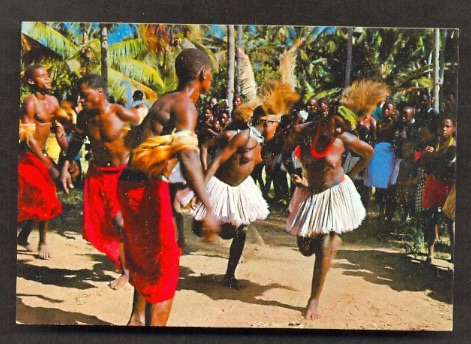
Giriama youth in a traditional dance
Giriama youth in a traditional dance (Photo www.pinterest.com)

She did not tell people to go naked, that is what Senator Emma Mbura says in her defence. The story has spread like the legendary bush fire. Nominated Senator, Mbura allegedly asked women in the coastal region to go topless so that more tourists can visit the region. This has raised questions as to what the value of the coastal woman is. Is that all she is worth- An object of trade?

Senator Mbura Facebook post
Senator Mbura’s Facebook post

So, how did her statement reflect in the minds of Kenyans? Majala, a Taita lady from Mombasa says,

“Look at all the people supporting Miss Mbura on Facebook and show me one woman.”

She says that the only people agreeing with the senator are unmarried men, men without children, lost men and men with nothing better to say. According to Majala, no modern woman who is educated and civilized will agree to walk around topless.

“Why then should the woman in the village be subjected to such action so that they can keep the banks of the well dressed overflowing?” She poses.

Some girls interviewed about this story held a very different opinion. Some thought that there is no problem in wearing their traditional mahando and leso. However they are skeptical about leaving their chests exposed since men have in recent times proven capable of molesting even well-dressed women. If the tourism sector cannot be creative and find other ways of bringing back tourists, then they can as well close down.

Speaking to the Star later, Senator Mbura clarified the whole matter saying

“I have not told anyone to go naked. But we must know where we came from,” She was later interviewed on K24TV where she clarified her remarks and urged a more serious approach to cultural tourism. The senator took her message further by attending a conference in Addis Ababa dressed in traditional wear.

According to Mbura, the other African countries like Uganda and Nigeria are selling their traditions. Question is, are they topless? There is so much that Kenya has that can attract tourists. There are wild animals which the tourism sector should put more effort into protecting instead of complaining of poaching; there are historic buildings, respectable cultural activities and splendid hotels.

Most people feel that Mbura’s claims are unfounded and just an excuse.

‘She probably wanted some attention’ says Dorcas of the Technical University of Mombasa.

“Nobody cares for the woman in the village who never went to school. Women are always used as a tool of money making and pleasure.”

Sen. Mburas facebook post
Reactions to Sen. Mburas facebook post


Why, they ask, is the man not being told to remove his trousers and dress in a skin to attract female tourists? Why is he allowed to be at the top receiving the respect while women crawl in the dirt of misuse?

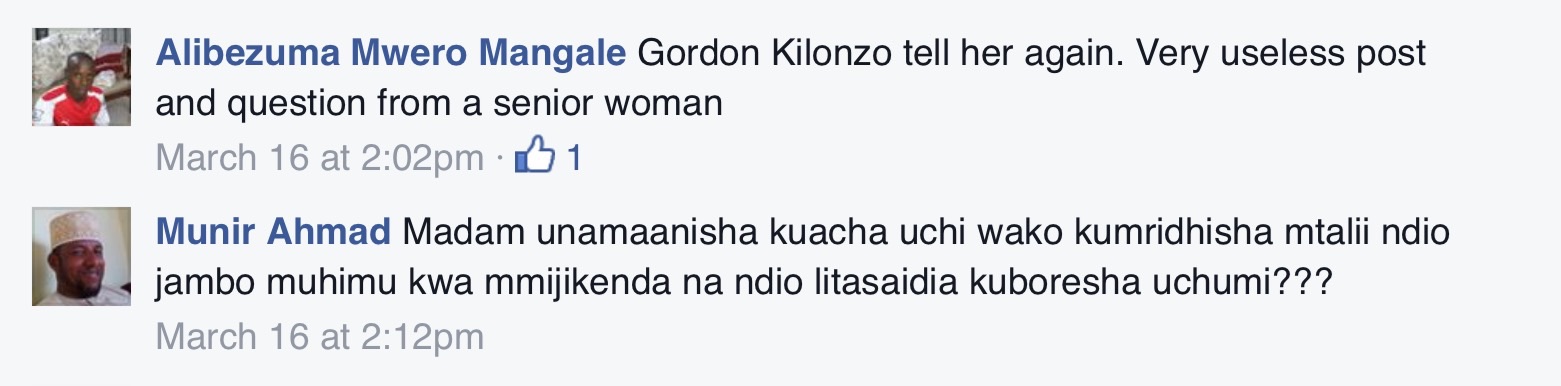
Reaction on Facebook to Sen. Mburas post

There are others who feel that she was right, on the other hand.

A few men, dressed in colorful kanzus think that she has got it right.

“Mila zetu hizi mpaka tuzichunge sisi wenyewe basi. Mzungu akija anafurahia anawacha mapesa” said one, finishing with a hearty laugh .

They argue that it does not necessarily mean that the woman should shed her clothes but that the region should go back to its old culture.

“Too many half clothed women have inhibited the coast and the tourists have enough exposed skin in their countries, they need a touch of the old Africa,” says a renowned school director who did not want to be named.

Do you think this is a worthy strategy?

Run, hide, fight. Fight?

0
Fight an active shooter
The last option when dealing with an active shooter.

When I was at the local yesterday, the news on TV as has been recently was about Garissa and the atrocious attack that took place there. Everyone watched quietly and when it was all over, an elderly citizen ranted angrily about people being armed in order to fight back. In his view, it was unacceptable that each attacker killed about 40 people, no mean feat considering they first had to round up and sort their victims. All this while resisting the KDF soldiers. His opinion is debatable, question is “Can we fight back”

It would be grossly insensitive to suggest at this point that the victims should have reacted differently, the fear at that point must be paralysing and without a plan death is certain. In Mandera, victims of the attacks on the bus and quarry were rounded up and executed one by one. When shots are fired, the first thing we all do is run, and when there are no exit routes. We hide.

We’ve seen it before with the Westgate attack where people hid in all sorts of places and survived to tell the story.

What happens when you are cornered and facing certain death?

My search for knowledge ended on the Federal Bureau of Investigations (FBI) website where they have a page that advises on running, hiding and fighting as ways of surviving an active shooter in an enclosed area. To this end, the city of Houston in 2012 produced a short video that shows citizens how to deal with a shooter in an office, school etc.

Interestingly, this video is published on the Houston disaster preparedness website and youtube channel in both English and Spanish. The video shows how to coordinate exit with others, calling for help, how to hide and importantly staying out of harms way when law enforcement arrives. Watching it, you realize how powerful knowledge can be when preparing for disaster.

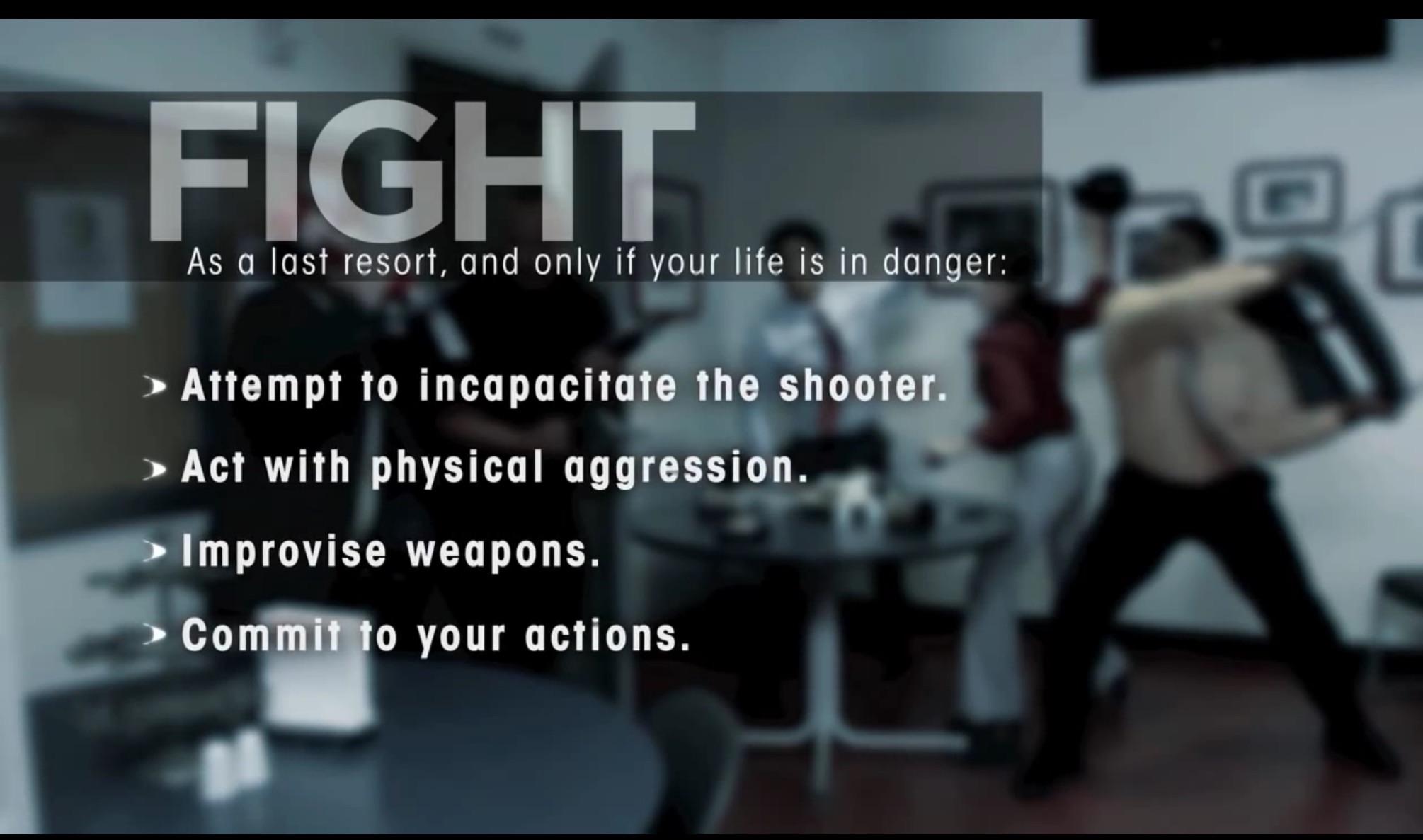
The last option according to the city of Houston, is to fight and with all you got. In this case, the characters have a chair, fire extinguisher and a belt to fight back.

When fighting back,  you are adviced to;

  • Act with physical aggression.
  • Improvise weapons.
  • Commit to your actions.

Should Kenyans now change their thinking? Terror attacks have become frequent and the manner of attack is similar. The Americans have recognized the threat and damage shooters have caused and given the people a last resort option – Fight back when facing certain death. If you (individual or group) are face to face with a shooter, then there’s nothing to lose by fighting back. If anything, rifles are much less effective at close range.

The police department of Houston has made the Run, Hide, Fight presentation available for high school students and older citizens. Empowering them with knowledge that will improve chances of survival during an active shooter event. Shouldn’t we do something to educate our people as well?

We don’t know where and when the next attack will happen, but perhaps we should prepare ourselves to fight back when it is the last option. Knowledge is power and maybe being prepared for all eventualities could save lives.

Comments by Pius Masai Mwachi, the acting Director of National Disaster Management Unit that compared the Garissa victims to cockroaches are in poor taste and insensitive especially to mourners and survivors. Mwachi, a police superintendent was quoted as saying,

“If you are in the hands of terrorists, free yourselves as soon as possible. Don’t just be killed like cockroaches.”

This article on the other hand is about a different approach to disaster preparedness. Borrowing heavily from the city of Houston model which has been adopted by other cities in the USA. A proper plan would involve research, educating the public and changing mindsets. Certainly, poorly thought out comments by the likes of Mr. Mwachi will not help the situation.

Negative stereotypes are the cancer eating Kenya

A photo of one the Al Shabaab attackers responsible for Thursday's attack on Garissa University College. A former schoolmate of the attacker has identified him as Abdirahim Mohamed , a former student at the University of Nairobi's Faculty of Law. (Photo/ Twitter)
A photo of one the Al Shabaab attackers responsible for Thursday’s attack on Garissa University College. Religious stereotyping can be used as an element for classifying the attach that only targeted non Muslims. (Photo/ Twitter)

Every time I think about the challenges we face as a country in pushing for a culture of ethnic diversity, I cannot help but conclude that it lies in the negative stereotypes we peddle against communities.

Negative stereotypes are to me the main reason why we fought each other in 2007/2008 and are still the reason we still fight each other, unconsciously, sometimes.

We have created an image about each community in Kenya, a lens through which we look and judge. And afterwards we have been so perfect in grading each community and thereafter rewarding it as we wish. I will point out four examples.

We always see the Kikuyu as greedy, so much so that we never appreciate even that which they have acquired something through sweat and hard work. We also see them as a power hungry people who will do anything on earth to remain being the fulcrum around which the presidency rotates.

And the Luo? We see them as a destructive group of people always proud and therefore should be denied power as much as possible. And even more, since culturally circumcision is not their main rite of passage, then we still see them as ‘boys’ who will mess with power.

We then see the Akamba as the ‘black magic’ community, so much so that all that they do revolves around ‘kamuti’ (witchcraft). On top of this we see them as a lazy lot only interested in women and sex.

Then the Abaluhya. We see them as gluttonous, a community that can’t stop at anything until they get their ugali and a chicken on their plates. Like the Akamba, we also portray them as loving sex. Even recently we reported that men in Nambale (a Luhya region) had been promised Akamba women, almost implying that, these two communities can make a match on matters sex.

In a very big way we have allowed these and many other categorizations to guide our inter-ethnic debate. And because of them we usually waste a lot energy.

The Al-Shabaab have also been pushing for a stereotype through which they might divide the country if not addressed well. I may not know much about the meaning of the word ‘Kaffir’ but its alleged constant use during the attacks against Christians is what concerns me. In the way it has been used by terror agents, the word fits as a stereotype meant to profile Christians and present them as valueless.

Stereotyping is a process through which members of one community label members of another community with an intention of taking away their human face. Once dehumanized the stereotyped community is presented as a people fit for attack, even elimination.

This is what happened in Garissa last week and is what has been happening in all attacks, whether terror or ethnic related.

To eat its young ones it is said, the hyena first classifies them as goats, that is, it has to label them as worthy of attack. In fact in doing so the hyena justifies why it ought to kill its young ones – they are goats and goats are meat before the hyena.

We need to work towards neutralizing stereotypes of whatever nature if we are to have a peaceful coexistence. This is what will make us to constantly see a human face in the other tribe and religion. And this is a task that every Kenyan needs to undertake.

Stakeholders collaborate to end Human-Wildlife Conflicts in Makueni County

0
A elephant and its calf Photo:Google.com
A elephant and its calf
Photo:Google.com

Makueni County has in  the recent past witnessed increased number of human- wildlife conflicts that have had devastating effects. In the last one year, close to ten people lost their lives in human wildlife related conflicts while scores of others have been maimed in deadly animal attacks.

The animals have also wrecked havoc, destroying property essentially farm crops worth millions of shillings leaving a trail of despondency among farmers who already struggle enough to plant their crops under the county’s harsh climatic conditions.

Makueni County borders Chyulu Hills and Tsavo National Parks to the south and human-wildlife conflicts especially rogue elephants are a common phenomenon.

Makindu, Kibwezi and Mtito Andei  bear the brunt of most wildlife invasions due to the areas’ proximity to the national parks while Mavindini  and Kanthuni also hot spots of similar attacks which Chyulu Senior Warden Peter Mbote attributes to an elephant migratory route dating back to over 100 years.

The problem is further aggravated by lack of an electric fence in a 42km stretch along the Tsavo park which makes it easy for the animals to freely move in and out of the park especially during dry seasons in search of pasture and water.

Cases of fatal attacks especially by hippos have also been reported in Kitise and Ivinga Nzia  areas  close to Athi river, which is used by both humans and animals.

The latest incident of human wildlife conflict reported in February 10 this year after a 40 -year- old man was shot dead in Makindu, allegedly by Kenya Wildlife Service (KWS) rangers in a confrontation with locals while rescuing a jumbo that had stuck in shallow well angered residents who demanded for a lasting solution to the human wildlife conflicts.

The elephant was part of a herd of 11 jumbos believed to have escaped from the nearby Chyulu park that had in the early hours of the fateful day trampled a 70 year- old woman to death in Nguu, Kibwezi west sub county.

The killings, sparked demonstrations along the busy Nairobi -Mombasa highway and residents barricaded the road causing a traffic snarl up that lasted for several hours.

Makueni Governor Prof. Kivutha Kibwana and his deputy Adelina Mwau, led the demonstrators in urging the KWS to completely fence off the park to avert further attacks.

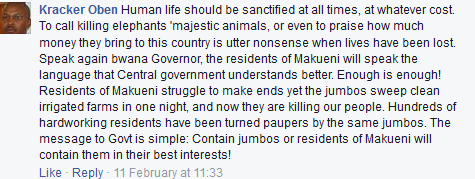
The residents also took to social media and especially Facebook to register their displeasure of the rampant attacks and the KWS’ apparent lack of concern.

In his official Facebook page, the governor gave the national government and the KWS an ultimatum to offer a permanent solution failure to which the residents would take matters in their own hands.

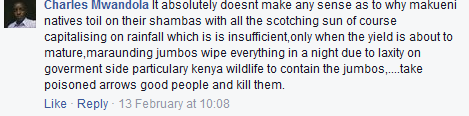
The governors’ call was supported by a majority of residents and some even suggested drastic measures.

Judging from the comments of the residents including the Governor, it was clear that the people of Makueni  were fed up with the human wildlife conflicts. It is against this backdrop that the KWS and the national government have come up with measures  to hopefully end the menace.

In his recent visit to the county, Interior Cabinet Secretary (CS ) Joseph Nkaissery said the national government will help stop the conflicts by fencing off the Tsavo park.

Interior Cabinet Secretary Joseph Nkaissery when he paid a courtesy visit to Makueni Governor Kivutha Kibwana in his office at the County headquarters in Wote  Photo:Governor's Press
Interior Cabinet Secretary Joseph Nkaissery when he recently paid a courtesy visit to Makueni Governor Kivutha Kibwana in his office at the County headquarters in Wote
Photo:Governor’s Press

The CS retaliated the government’s commitment in curbing the attacks and promoting a peaceful co-existence between the residents and the animals.

“This is a matter that the government is treating with a lot of seriousness and we shall put in place measures to stop the conflicts once and for all,” said Nkaissery.

On its part, the KWS has also explored available options to help curb the conflicts. According Senior Warden Mbote, David Shedrick Wildlife Trust Fund a non governmental organization has already donated Sh14M to fence off the 42km stretch in Tsavo in a bid to reduce the human wildlife conflicts.

Mbote says the works of the fencing have already started with the clearing of bushes to pave way for the electric fence.

“Kibwezi West CDF  has funded the clearing which is ongoing and once the process is over we shall expeditiously initiate the fencing,” says the Senior Warden.

Mbote also discloses that they have set up a conflict crisis center in Kiboko for handling conflicts and matters of compensation.

“We established the center so that residents can quickly report the incidents for quick resolve, besides we have already kicked off a recruitment exercise in which we intend to employ close to 1, ooo rangers for increased surveillance,”says Mbote.

The fencing of the park brings an array of hope for many farmers who have suffered immense losses due to the continuous wildlife invasions. Julius Kamula a farmer in Makindu knows too well what it means to have ones farm invaded by the animals especially the jumbos.

For the last 13 years he has endured the havoc wrecked by the animals in his mango and maize plantations running into millions of shillings.

“I have watched in disbelief as the elephant destroy the crops that I have struggled to plant in a single night,” says the distraught farmer.

Kamula’s pain is further heightened by KWS slow response when the elephants attack, which more often that not force him and fellow villagers to use unconventional methods to chase away the animals, putting their lives at risks.

“We use torches or lit bon fires to chase the jumbos away, KWS officers take long to respond to our distress calls,”he says.

Nguu/Masumba Ward MCA Timothy Maneno also a farmer echoes Kamula’s words, saying that he has lost count on the number of times jumbos have invaded his mango plantation.

The last time the elephants struck in his village in February,mango farmers were left counting losses after thousands of mature mango fruits were destroyed by the marauding elephants.

“Besides killing a 70 -year -old woman in my ward, millions were lost and not a single farmer has ever been compensated by the KWS despite a new act in place,” he adds.

According to the Kenya Wildlife and Conservation Act 2014, the family of a person killed by a wildlife animal shall be paid Sh5M up from Sh200,000 while injuries leading to permanent disability shall be compensated Sh3M and Sh2M for any other injury. The law also includes compensation for property including crop damage.

With the fencing of the park and government assurances to curb the human wildlife conflicts, the residents of Makueni especially those living in vulnerable areas of wildlife invasions can now breathe a sigh of relief, and with the onset of the long rains, the residents can only hope the fencing will be complete before the drought season sets in when most animals leave the park in search of water and pasture.

Pictorial: A peek into Lamu

0

imageLamu County is an important cultural and heritage place in Kenya. Due to it’s importance, the entire Lamu Island is a protected UNESCO heritage site. During the Easter Weekend, Lamu held its inaugural Food Festival. An event that drew visitors from far and wide to sample Lamu’s culture through its food.

This unique event comes at a time when Lamu’s economy has been ravaged by terrorism following Mpeketoni attacks and killings which brought its vibrant tourism to a grinding halt. Recently, the United Kingdom government issued a stern travel advisory to its citizens against travelling to Lamu, further worsening the situation.

Nevertheless, the food festival was a success and the beauty of Lamu is undisputed as shared in these photos.

Lamu Island Food Festival
A silhouette of men getting on one of the public boats that is used to ferry people to Lamu


Lamu Food Festival
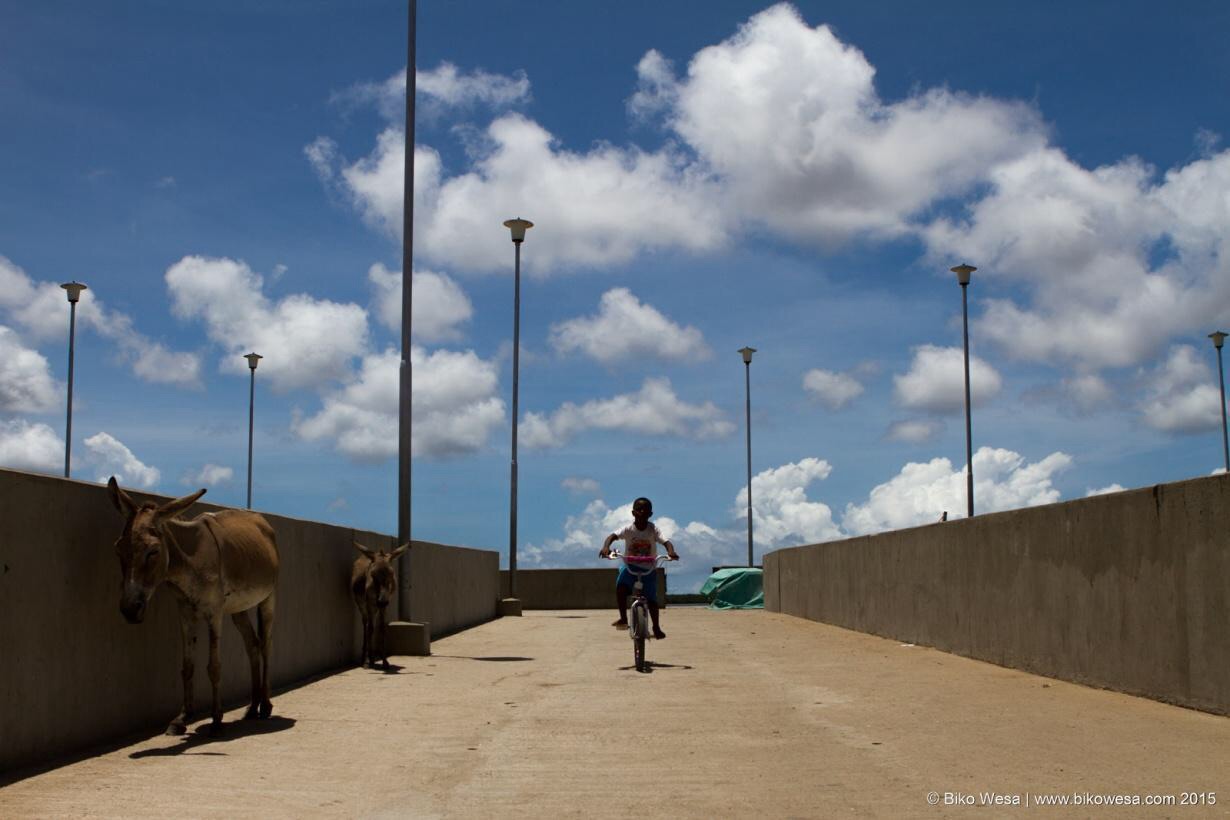
A young boy cycles in an empty jetty walkway. One of Lamu’s On the sidewalls are donkeys trying to escape the midday heat.


Lamu Food Festival Pictures
An man goes down the stairs  of Lamu Fort where the food festival was taking place.


Lamu Island Donkey
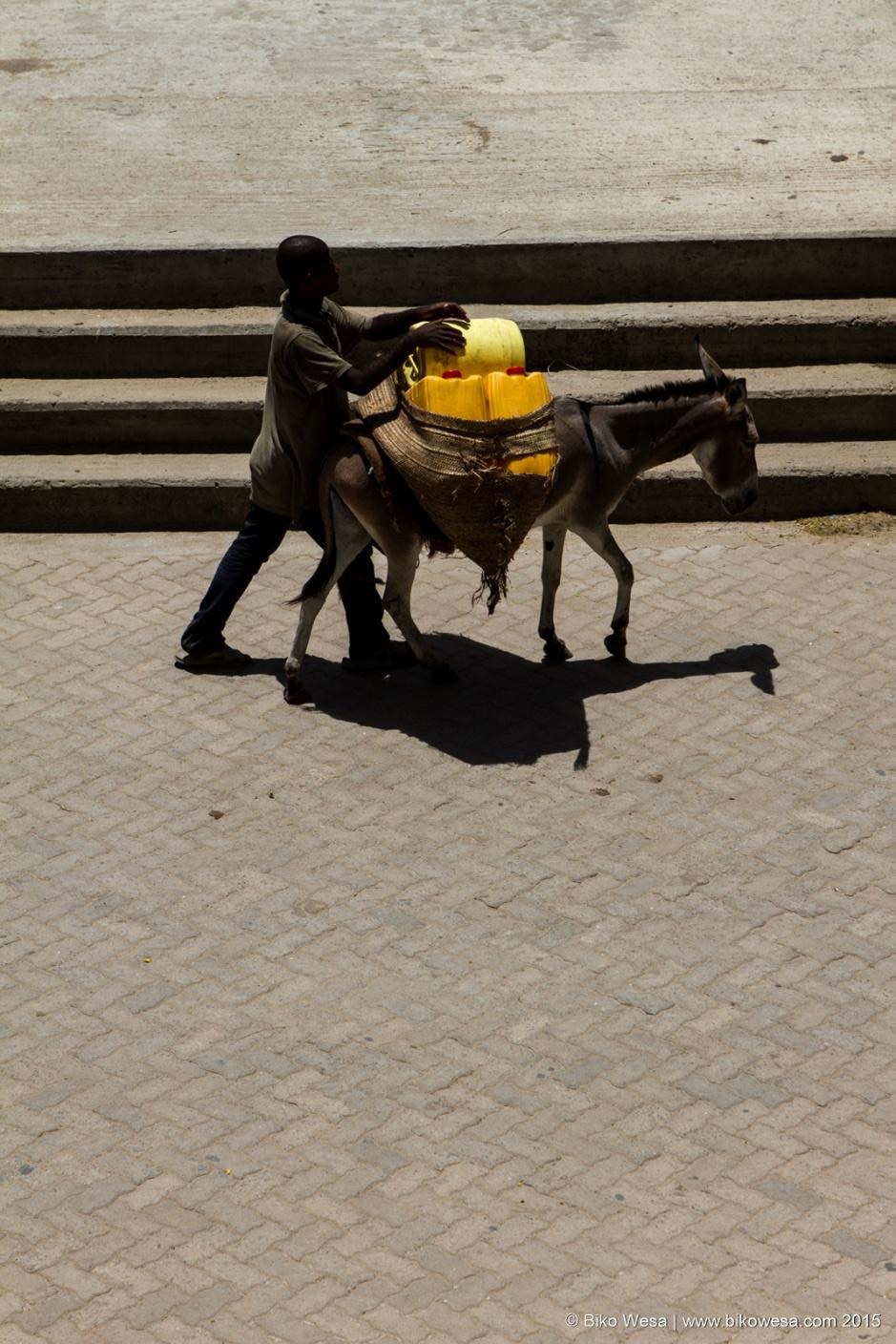
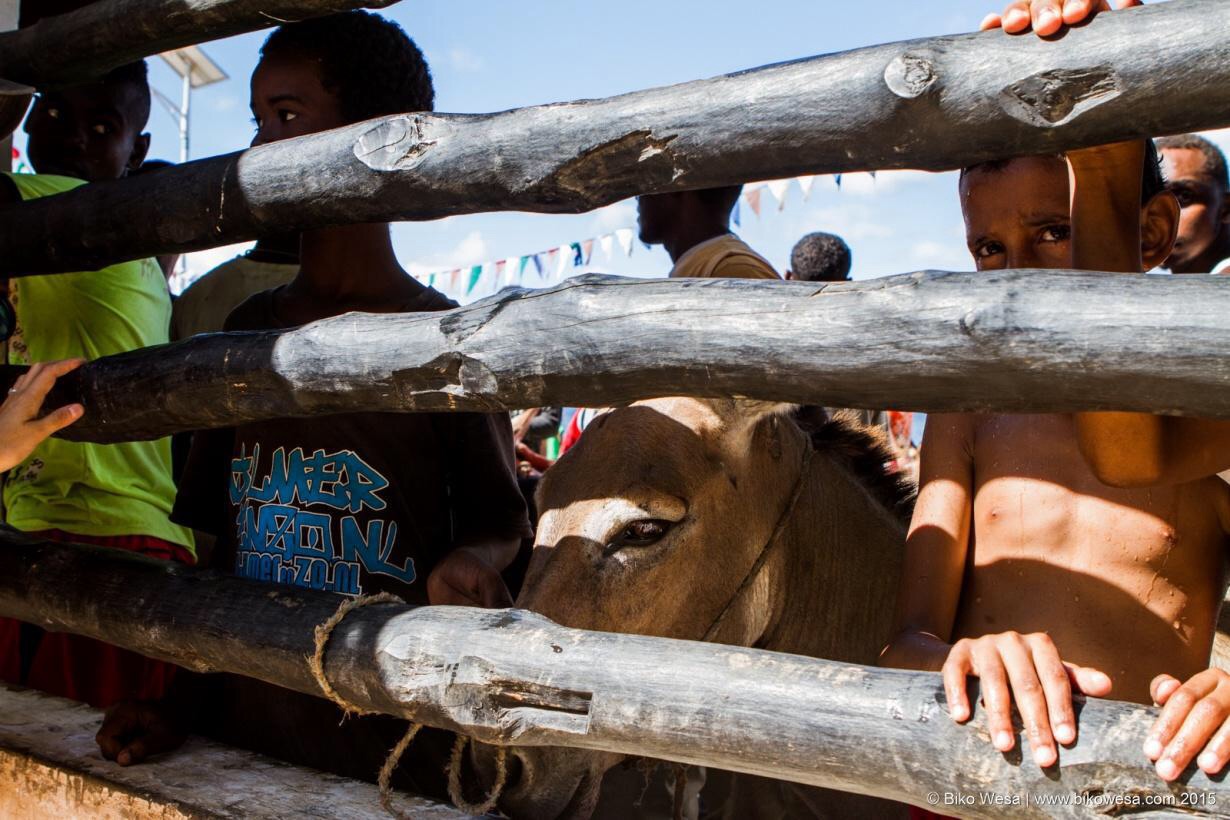
Donkeys are all the transport you get in Lamu Island.


Lamu Island, Lamu Fort
Ladies observing from the windows of rooms across the Lamu fort, where the cooking competition organised by the Lamu county government was taking place.


Lamu Food Festival, Chef Ali
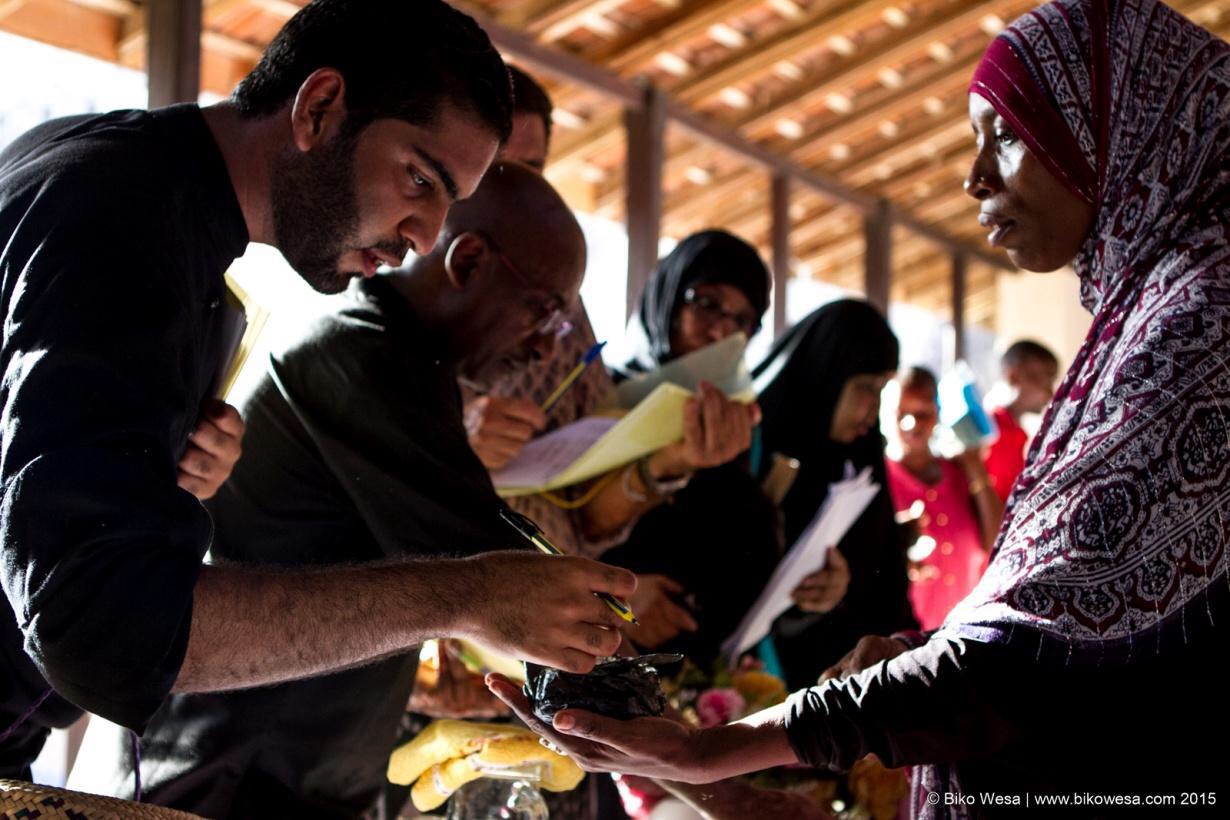
Chef Ali, a popular chef reaches over to taste food where he was a judge at the cooking contest.


Lamu Island
Fishermen deep at sea wait for their baited lines to catch fish. Fishing is a major economic activity for Lamu men.


Lamu Food Festival
Some of the spices that were in use at the food festival.


Lamu Beach
A speed boat cruising on the surface of the blue waters of Lamu carrying tourists passes by the sand dunes on Lamu beach.


Lamu Island Donkey
A boy helps a man give a donkey a bath in the shallow waters of the Ocean while another watches.


Lamu County Donkey Pageant
Boys and a donkey follow the donkey pageant, one of the activities that was organised by Lamu County.


image
Dhows sail back to the Island at dusk after a day out fishing.

Photo Credits

Varsity students arrested for spreading terror message released…

0
Security Snip 2
A picture doing rounds on social media of a terror suspect in connection to the Egerton University terror scare message that was circulated last week. Two students were arrested and later released.

Two Egerton University students who were arrested over the weekend for spreading a terror message on social media have been released.

The two Titus Nyaga and Alex Wachira were arrested on Saturday at around 1 am for spreading a message on Facebook saying that the University which is situated in Njoro would be the next target after the Garissa University attack that claimed at least 147 lives.

Njoro Police Boss Fredrick Lai has confirmed that the students were released on bond the same day.

“We released them at around 5 pm” he said adding that investigations were still ongoing.

“The two were not the originators of the message. After we interrogated them we established that they were only passing the information to their colleagues.”

The man who posted the information has been identified as Robert Mungai alias Robert Mohammed Blues and has already been named in a police wanted list.

Lai said they will work with cyber crime experts to identify the man as his search continues. He said the two students will continue being treated as suspects.

“Until we cancel the bond they are still suspects,” he said.

Following the Thursday morning attack which was the worst since the 1998 bomb blast the leaders from the North Eastern region have vowed to identify Al-Shabaab sympathizers.

Led by Garissa Township Member of Parliament and Majority Leader Adan Duale the leaders also pledged to contribute Ksh15 million towards assisting the survivors and families of the victims of the Garissa attack.

A Nakuru human rights defender has however criticized the move as coming too late and riddled with hypocrisy.
Mwangi Muraya of Midrift Human Rights Network wondered why the leaders were doing it now after all the deaths that have occurred in the country due to terror related attacks.

“These are people who are known. The leaders should have done this earlier,” he said.

One of the four attackers in the Garissa attack was identified as the son of a local chief who studied law at the University of Nairobi. Abdirahim Mohammed Abdullahi was killed in the attack which only mainly targeted Christians.

Muraya opined that the leaders should be questioned by police for any leading information on terror attacks in the country.

“Kenya will go to the dogs if we continue with these kinds of attacks fueled along religious lines,” he said.

The Internet and Law in Kenya Workshop goes to Kisumu City on 11th April

The Law and Internet in Kenya Kisumu Workshop

Over the last year, Kenya has witnessed State harassment, arrests and conviction of Kenyan Internet users.  Interaction between the law, the Internet and the State has been unclear and ambiguous.

We are happy to inform all residents of Kisumu that we will be having a training on the Law and Social media on 11th April 2015. This will take place at Lake Hub, Harleys Building on Oginga Odinga Street next to I & M Bank at 9am to 2pm.

Entry is FREE

The guest speaker will be Mr. Mugambi Laibuta who is an Advocate for the High Court of Kenya.

Below are the main topics that will be discussed

  • The Legal system,
  • Defamation,
  • Criminal Law Process,
  • Communication Laws,
  • Privacy,
  • Confidentiality,
  • Intellectual Property,
  • Consumer Law and
  • Social Media Policies.

About the trainer

Mugambi Laibuta is the team leader at Mugambi Laibuta & Associates. He is Advocate of the High Court of Kenya with experience in legal research and project management. He has academic and practical expertise in constitutional review, design and implementation plus legislative drafting. Currently he is a lecturer at the Kenya School of Law and a former Research Fellow at the African Centre for Business and Human Rights at Strathmore University. He is also a Trained Mediator and a Monitoring,  Evaluation Professional and advisor on business innovation and sustainability.

Mixed feelings greet Nairobi’s closed roundabouts

Gridlocked traffic on a Nairobi road this morning. Changes to ease to ease the traffic have been met with mixed results (Photo/Ma3Route)

Nairobi County’s decision to close five roundabouts in the city has been met with a mixed responses on the first morning that the new system has been put to the test. There have been angry complaints and joyful cheers in equal measure on social media as Nairobians reacted to the new changes this morning.

In a desperate bid to decongest Nairobi’s traffic, Governor Evans Kidero announced the decision to ban right turns on at least five of the city’s roundabouts in March. Among the roundabouts affected are University Way-Uhuru Highway, Kenyatta Avenue-Uhuru Highway, Haile Selassie Avenue-Uhuru Highway, Bunyala and Lusaka. Most of the changes to the roundabouts were made during the Easter weekend and Kidero last evening did his best to give Nairobians tips on how they can make the new system work for them.

On Tuesday morning, though, there were plenty of road users who thought that Kidero’s cure for Nairobi’s gridlocked traffic was worse than the disease. Several drivers on Mombasa road complained of being stuck in snail-slow traffic for more than two hours.

But it would be a mistake to think that the new changes have been met with universal criticism because they seem to be paying off for some road users particularly those on Waiyaki way and Langata road:

So the results are a mixed bag.  Although there has been plenty of criticism, Kidero and his charges – particularly Walter Mongare the County’s communications director – must be happy that at least some Nairobians are warming up to the changes. In fact there appears to be some optimism behind the initial hostility and indifference:

So will the roundabout tweaks stand the face to time? We’ll know for sure in a few weeks because, as some have observed, the changes won’t truly be put to the test until all the personal cars and school buses in the city hit the road at the same time.

Mombasa residents throng Mshikaki Street Festival

0
Mshikaki Festival Mombasa

The fifth edition of the Mshikaki Street Festival took place on Saturday 6th of April at the Tusks on Moi Avenue, against a backdrop of fears of another attack by militant terrorist group,  Al-Shabaab.

Some people were of the view that the fete should have been postponed. After all, the nation was in mourning after the terrorist attack in Garissa that left 147 people dead and scores injured. In neighboring county, Lamu, the Food Expo and festival was only happening during the day and not at night due to the curfews imposed after an attack similar to the Garissa one occurred last year. But most people who attended the festival thought otherwise.

“If we put off our celebrations, our daily activities, then the terrorists will have won. We need to show them that they do not frighten us.”

That the food festival happened even with the dark cloud of the massacre hanging in the air,  only goes to show how resilient Kenyans are. Mombasa residents planned a candle-lighting memorial for those who lost their lives in Garissa earlier in the day before proceeding to the Mshikaki Street Festival. Security arrangements were made and precautions taken,  including having Lamu County security officers supplementing the Mombasa county security.

For security purposes, the live band,  a staple of the fest,  and who always entertain revelers in the Uhuru Gardens,  were this time moved to the road. This did not in any way prevent the band’s performance to be anything less than spectacular. People indulged themselves by joining in dancing in the middle of the road and enjoyed themselves immensely. One Chris Muga, who graced the dance-floor with his friends,  had this to say,

“The band was awesome, especially the lead vocalist.  She sang like an angel. In that moment,  we put aside our worries about terrorists and gave ourselves to the music”

Mshikaki is cuisine tourism at its best, and a conversation on the festival is definitely incomplete without mentioning the food. The fifth edition of the festival did not disappoint. Samosas, Rice patties, cakes,  mahambri,  Shawarma, Squid, Kebab, were among the foods on display and on sale; as well as drinks such as fresh fruit juice and madafu, coconut water. There were considerably more stalls than before, with inclusion of corporates such as Pwani Oil with their Fresh Fri cooking oil. Seats and tables were set out in the middle of the road for people to eat at.

The event was hosted by Dj Gates Magenge of Pwani Fm and MC Chris of Baraka Fm with Dj. Ivory on the decks,  all of whom did an excellent job. There were performances by singers, rappers,  dancers and even Spoken Word artistes.

Perhaps the best part of the night (besides the fact that Nigerian songstress Yemi Alade graced the stage as the closing act, setting the crowd wild with excitement) was that the event went down without a hitch. This is a clear message to terrorists and other ne’er-do-wells that Kenyans are ever united and no amount of terror will intimidate them and keep them from having fun and carrying on with their lives as usual.

“It is good to see all these people here,” said Valentine Mathai who was at the festival, “they are from different ethnic and religious background but united as one. Everyone is having fun. This is how it should always be”.

Photo Credits

Garissa University attacker identified as former UoN law student

0
A photo of one the Al Shabaab attackers responsible for Thursday's attack on Garissa University College. A former schoolmate of the attacker has identified him as Abdirahim Mohamed , a former student at the University of Nairobi's Faculty of Law. (Photo/ Twitter)
A photo of one the Al Shabaab attackers responsible for Thursday’s attack on Garissa University College. A former schoolmate of the attacker has identified him as Abdirahim Mohamed , a former student at the University of Nairobi’s Faculty of Law. (Photo/ Twitter)

As Kenya continues to mourn the loss of an estimated 147 young students at Garissa University College, there is mounting proof that one of the Al Shabaab attackers Abdirahim Mohamed is a former University of Nairobi law student.

The apparent confirmation came from a former schoolmate of the attacker on twitter. Ricky Razorlar identified Abdirahim as one of the attackers saying he graduated from UoN with a law degree in 2013.

Peter Wakaba, a well-known local journalist, said Abdirahim was a former legal adviser at first community bank.

The news that one of the Al Shabaab attackers appears to have such an accomplished academic background has been met with surprise.

A twitter account linked to Abdirahim @Ababmo doesn’t reveal much about him other than his apparent displeasure at sitting through boring lectures in school.

The University of Nairobi is yet to respond to a query on whether Abdirahim was a student there. This article will be updated as soon as we receive any communication from the university.

Lawyer Ahmednasir Abdullahi, popularly referred to as Grand Mullah, has said that if Abdirahim is officially identified as one of the attackers he will be the second graduate of UoN known to have participated in a terror attack in Kenya.

Official confirmation that Abdirahim was a student at UoN would add yet another disturbing plot twist to what is already a grim story. It would mean that the dreams of the young students at Garissa University College were cut short by a “learned friend” who knew full well the benefits of a good education.

More disturbingly though, Ahmednasir says the attacks by radicalized ethnic Somalis – such as Abdirahim – could have less to do with grievances over KDF’s invasion of Somalia and more to do with a rebirth of a secessionist movement that wants to see the Northern Frontier District tear away from Kenya and again be part of Somali.

If Ahmednasir is right then this is indeed a startling development since it will mean that Kenya has to steady itself to fight a war on the home front that it hasn’t fought since 1967 when the Shifta War ended against an enemy that has recruits from its youngest and brightest.

CS Nkaissery dismisses police vetting as pointless

1
Police officers during a past function. Photo courtesy of All Africa News
Police officers during a past function.
Photo courtesy of All Africa News

Interior and Security Cabinet Secretary Joseph Nkaissery has dismissed the current police vetting exercise headed by the National Police Service Commission (NPSC) as meaningless and a waste of time. Nkaissery said the vetting, had killed morale in the police force and asked the parliament to disband the Johnstone Kavuludi led commission together with the Independent Police Oversight Authority (IPOA).

Interior and Security Cabinet Secretary Joseph Nkaissery  Photo Courtesy of Capital.co.ke
Interior and Security Cabinet Secretary Joseph Nkaissery
Photo Courtesy of Capital.co.ke

Speaking last Friday in Mbumbuni, Makueni County, when he officially opened Mbooni East deputy commissioner’s office, the security CS said he will compile a report on the vetting exercise and present it to the parliament as a petition to have the National Police Service Commission Act, 2011 repealed and sent home the two oversight bodies.

Nkaissery said the act, had been formed due to pressure from the civil society and wondered what the commission would achieve by vetting a senior police officer who had worked in the service for more than 30 years.

“How do you vet an officer who has 30 years’ experience for the same job ,this exercise is just a waste of time and we cannot afford to have such laws,” he said.

The CS added that those heading the vetting had no idea what police work entailed and therefore could not determine which officer was fit for the job or not.

“The wrong man is vetting the right man, how does a civilian who does know the command structure in the force examine a police officer?” he posed.

The CS also noted that some of the questions asked during the vetting were not only embarrassing but also portrayed police officers in bad light.

“To ask a police officer who has served in the police force for close to three decades why he has sh3 million on camera is humiliating and demeaning aren’t police officers supposed to save,” he asked.

Nkaissery’s sentiments comes shortly after a senior police officer wept  during a vetting session in Eldoret town.

Joshua Ongoro, a Director of Operations at Vigilance House,  shed tears after he was put to task by the NPSC to explain how he got his wealth and especially the Sh8 million he had in a fixed bank account.
President Uhuru Kenyatta has also raised concerns over the vetting process during his state of the nation address and termed the process as slow. The president said the vetting had created anxiety in the police service and called on the Parliament to devise another way that will not kill morale among the officers.
National Police Service Commission Johnstone Kavuludi  Photo courtsey of m.news24.com
National Police Service Commission Johnstone Kavuludi
Photo courtsey of m.news24.com

The National Police Service Commission is an independent government commission established under the Constitution to ensure smooth functioning of the National Police Service (NPS). It is mandated to exercise disciplinary control over and remove persons holding or acting in offices within the service through vetting.

Vetting of close to 78,000 police officers by the National Police Service Commission (NPSC) began in November last year and is expected to to end in August 2015.

However, human rights groups and security specialists in Kenya have also expressed concerns of the process especially its delays, lack of transparency and little public participation.

The vetting process could be thrown into limbo after the chair’s name appeared in the list of shame of 175 public officers accused of corruption by the anti graft body. In the list, but whose names were not made public, is over 100 police officers under investigations and whose names are with the Inspector General of Police Joseph Boinett.

Kavuludi is accused of financial impropriety and abuse of office at the NPSC and with the president’s directive that those mentioned in the Ethics and Anti-Corruption Commission (EACC) list should step aside,  it is still not clear whether the vetting will stop or continue.

Why Kenyatta ticks and why he should do more

Kenyatta Snip
President Kenyatta congratulating First lady Margaret Kenyatta after completing the Beyond Zero Marathon held recently in Nairobi. The Kenyatta’s have given Kenyans a real experience of what it means to have a first family. Photo: Standard

The announcement that the American President Barrack Obama will be visiting Kenya in July this year, is the best example of the definition of news in real time. Given the kind of opposition the American government had shown towards the election of Uhuru Kenyatta as Kenya’s fourth President, the announcement came as a surprise to many. Perhaps this is the reason why a section of Kenyans were adamant to give any comment until they were sure about it.

Coming just days after the International Criminal Court (ICC) had cleared Kenyatta of the crimes he was facing at The Hague based institution, the announcement raises questions on whether America has foregone its “choices have consequences” remark towards Kenya and Kenyatta.

It also comes after Kenyatta gave a stern warning to all senior government officials implicated in graft in the country – among them Cabinet Secretaries and Governors – to resign and pave way for investigations. Actually the other question that Kenyans may want to ask, even if for the grapevine, is whether ‘Big Brother Obama’ had a say in influencing the decision taken by the President.

And as we wait for the July 2 day visit, Kenyans will be waiting to see how Kenyatta will make history as the only Kenyan President to ever host a sitting American President.

Obama Snip
A hilarious message doing rounds in social media about the coming of Obama. Kenyatta will be the first Kenyan President to ever host a sitting American President.

Yet this alone is not the reason why I think Kenyatta ticks. Far from it. If the 53 year old whose name means ‘Freedom’ was to be awarded it will be on how he has managed to demystify the seat of the Presidency for us.

To start with it is with Uhuru that most Kenyans have come to know what it means for a country to have a ‘First Family.’

When a good number of us opened our eyes Daniel Moi was Kenya’s President. But Moi did not have a woman we could officially identify as his wife. Therefore we did not know who a ‘first lady’ was during his time although we got to know about his children.

Moi was succeeded by Mwai Kibaki, whose wife Lucy Kibaki, did not stay long in the public lime light. We also got to know Kibaki’s family but there was this constant talk about him having another wife who he would often deny in public.

So during Moi’s and Kibaki’s time the office of the first lady was not as active.

But in Uhuru’s time we have seen a first lady, Margaret Kenyatta, who is youthful and energetic. She even participates in cross country events and through her you feel you have a mother of the nation you can identify with. And when she takes part in such events the President usually comes out to wait for her at the finish line, if only to embrace and congratulate her.

A year ago Uhuru was hosted for a meal in Kajiado while on his road trip back from Tanzania. He almost took the meat on the grass. Who would ever imagine a President doing that, or even travel by road. And the other day he was caught on camera singing the a song by Sauti Sol.

All this and many more makes you feel, for the first time, that the Presidency is not as mysterious as it was meant to look some years back.

His challenge now is to live the talk. His simplicity one should hope, will trickle down to all the government offices and officials. The President must be seen to act on the directives he gives and fulfill all his promises. It is with this that we hope the fight against corruption will not be relented or end up as a public relations ploy.

Mt. Elgon leaders want TJRC report implemented

Francis Kaparo
NCIC’s Chair Francis ole Kaparo. Through dialogue led by the commission, leaders from Mt. Elgon have agreed to a peace formula which will see community resources shared equally. Picture: Nation.

Leaders from Mt. Elgon region and the larger Bungoma County want the report of the Truth Justice and Reconciliation Commission (TJRC) implemented.

The leaders who met in Nakuru this week to agree on a long lasting peace formula said implementation of the report will address historical injustices in the region which they identified as drivers of violence in the region.

The Mt. Elgon region has been making headlines since 2006 following atrocities committed by the Sabaot Land Defence Force (SLDF). Commentators have identified competition for land as the major cause of the conflict and negative ethnicity as its driving force.

In 2009 the government was blamed of extra judicial killings while countering the SLDF in a report by Philip Alston, a United Nations Special Rapporteur on extrajudicial, summary or arbitrary executions.

On the other hand the TJRC report made a raft of recommendations on how to deal with historical injustices committed on Kenyans from independence to the February 2008 when former President Mwai Kibaki and former Prime Minister Raila Odinga agreed to a power sharing deal as a way of ending the blood bath of the post 2007 general election.

The report was presented to President Uhuru Kenyatta 3 years ago but has never been implemented. The report is with Parliament. However, only two recommendations were made during the President’s state of the nation address last week. He apologized for all past atrocities by previous governments and directed Treasury to set up a sh10B fund to compensate victims of Post Election Violence.

Meeting under the National Cohesion and Integration Commission (NCIC) the leaders also recommended investigations of what they termed as ongoing allegations on human rights abuses in the region. They also agreed to engage former and current political leaders on constructive dialogue for sustainable peace and development.

The peace plan also called for the prosecution of all leaders and aspirants found to have violated spirit of the Constitution on leadership and integrity. Such leaders they say should barred from contesting any elective position or even appointed to public offices.

The meeting as led by the Commission’s Chair Francis Ole Kaparo and was attended by area current and former legislators John Serut and Fred Kapondi respectively. Commissioners Morris Dzoro and Gitile Naituli were also present.

Among the resolutions was also a commitment to embrace non-violent means in managing political differences and in resolving communal conflicts.

All leaders found engaging in hate speech and funding violent activities should be arrested and prosecuted, the leaders also agreed.

Other resolutions are: the profiling and settlement of all squatters and internally displaced persons (IDP’s) in the region; sharing of community resources including jobs equally and a commitment by leaders to support community disarmament by the police and the military.

Past experiences on arriving at communal peace deals have shown that they at times remain as resolutions without being implemented. The challenge thus lies among the leaders to remain true to the recommendations.

Makueni speaker among ten county public officers in the list of shame


Makueni Speaker Stephen Ngelu Photo Courtesy of Makueni County Facebook Sharing Forum
Makueni Speaker Stephen Ngelu
Photo Courtesy of Makueni County Facebook Sharing Forum

Ten officials from Makueni County are among 175 public officers alleged to have engaged in corruption in a report prepared by the Ethics and Anti-Corruption Commission (EACC) and tabled in parliament on Tuesday.

Makueni Speaker Stephen Ngelu, the County Assembly Clerk Edward Libendi, six Members of County Assembly (MCAs) and two senior county executive officials made it to the infamous list of shame and now will be required to step aside to pave way for investigations.

Kibwezi West MCAs Bernard Kiswii, Cosmas Mutunga, Bensley Mathuku, Timothy Maneno, Muli Mwenze and Bernard Musau who is also the deputy speaker are alleged to have traveled to Dubai on an all-expense trip courtesy of area Member of Parliament

Dr.Patrick Musimba but upon return conspired with Speaker Ngelu and the county assembly clerk to claim a full per diem.
The MCAs are said to have been paid at total of close sh2.4 million, with each pocketing sh390, 000. It is alleged that each MCA was to give a kick back of sh100, 000 to be shared by the clerk and the speaker.The EACC report says investigations have been concluded and the case is awaiting review.

Also in the list is the Acting County Secretary Rael Muthoka and County Supply Chain Manager Alex Mutuku who are together accused of violating procurement procedures during the implementation of Kikima dairy processing project.

The report says, the project was implemented without following proper procurement procedures and exceeded the budget set by the county government hence making it a ghost project. The case is still under investigation.

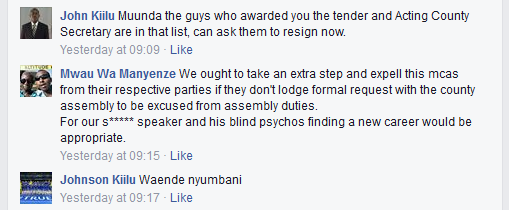
Reports of the public officers appearing in the list have elicited a flurry of emotions from Makueni residents in social media with a majority calling for their resignation.

The residents took to  Facebook to demand the leaders to take responsibility.


facebook

However there are those who disagreed with the  corrupt allegations and even tried exonerated the acting county secretary from any wrong doing.

Others took to Twitter to express the views with some wondering when the  county will settle down and perform its mandate.

With the list already out, it will be interesting to see whether the officers  and especially the speaker, who has on several occasions accused the Governor Professor Kivutha Kibwana of presiding over a corrupt government will bulge to the pressure and step aside.Already the speaker has denied the report, terming the allegations as false.

Speaker Ngelu said he will not resign despite calls for him to step aside.

Meanwhile two MCAs mentioned in the EACC have stepped aside.Minority leader and MCA for Nguumo Muli Mwenze and his Nguu counterpart Timothy Maneno both from the governor’s Muungano Party stepped aside this evening to pave way for investigations.

The two MCAs stepped aside from all the committees and are said to have written to the speaker informing him of their decision.

Their decision did not go unnoticed in social media and some supported the move.

Others chided the MCAs.