Friday, December 19, 2025
Home Blog Page 11

Social Media Fake News in times of the COVID-19 Pandemic

By Ernest Mwanzi

Dictionary.com defines Fake News as false news stories, often of a sensational nature, created to be widely shared or distributed for the purpose of generating revenue, or promoting or discrediting a public figure, political movement, company, etc. However, some writers have argued that the term False Information is more appropriate as “Fake News” is most appealing and used in the political arena.

Since the beginning of the COVID-19 pandemic, various reports have shown that fake news has taken root all across the world. For instance, US President, Donald Trump, has been quoted as saying that ingesting disinfectants could potentially be used to treat coronavirus. Locally, there was information widely circulating saying that the coronavirus could not survive the tropical climate, reducing our risk of exposure to it. 

The Ministry of Health in Kenya (MOH) and the World Health Organization (WHO) have been on the forefront in fighting fake news by providing platforms which people can verify any information about COVID-19. The Ministry of Health, for instance, has been active on Twitter, providing frequent updates and information on the coronavirus, while the World Health Organization has an automated WhatsApp line through which people can get information on the virus instantly and at any time. Social media companies such as Facebook and Twitter have also taken the lead in fighting this pandemic by having anchor posts on their respective platforms with verified information related to the virus.  

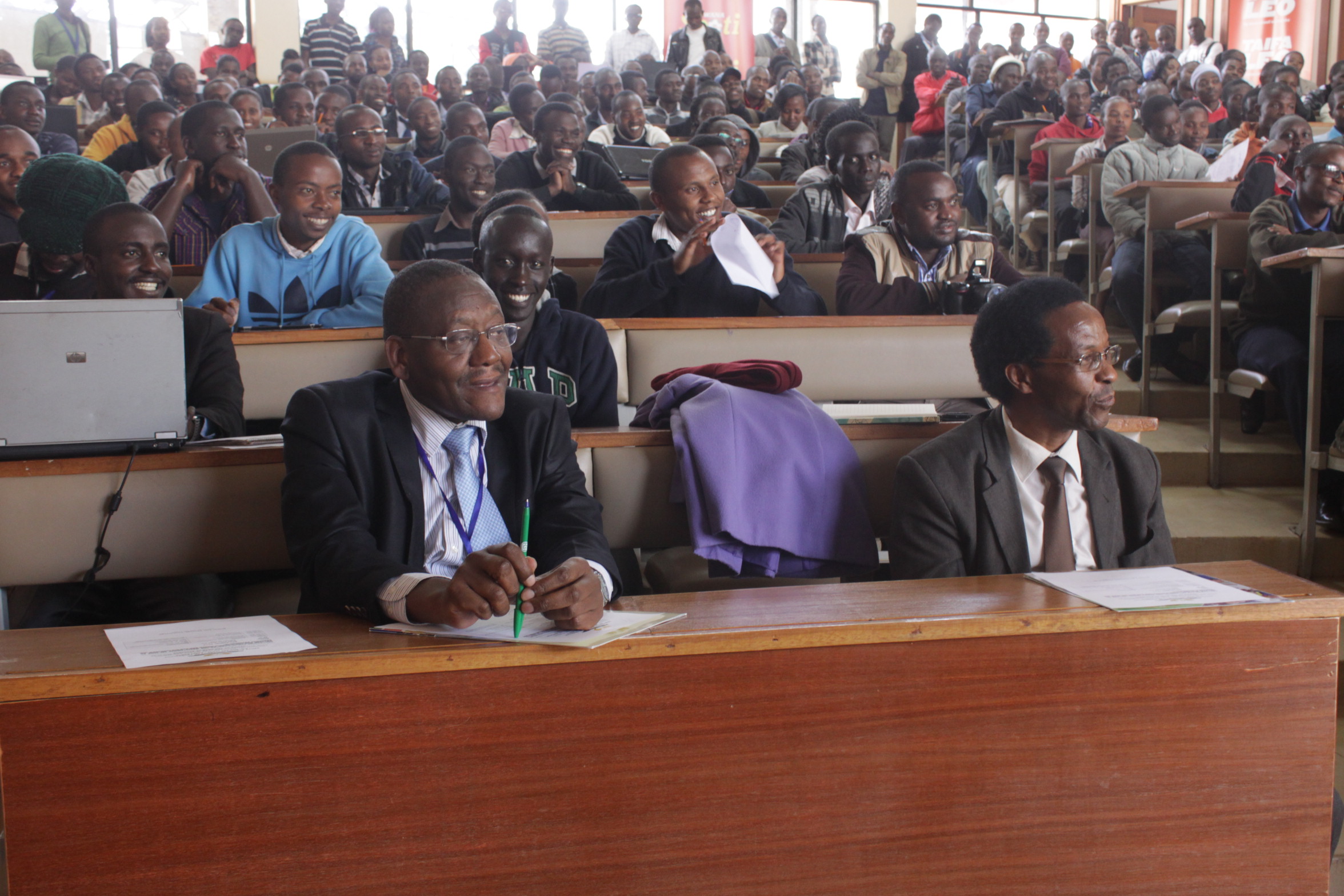
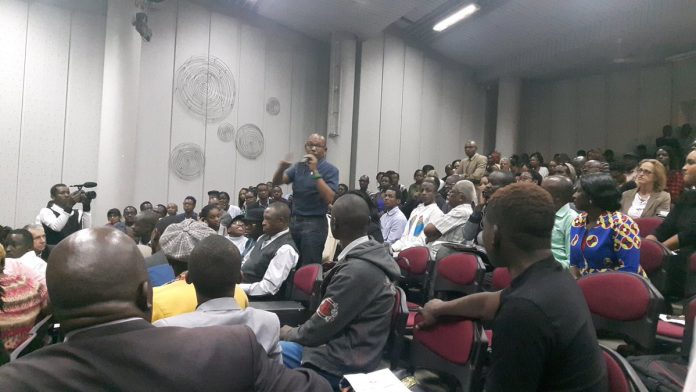
For these reasons USIU-Africa through the Social Media Lab realized the need to host a webinar to tackle the emergent issue on “Social media Fake News and Mental Health in the Age of COVID-19”. The webinar which was held on Thursday, June 4, 2020, brought speakers from both the Academia and industry experts to discuss Fake News and their effects on mental health

Prof. Melissa Tully, Associate Professor, School of Journalism and Mass Communication, University of Iowa noted that the pandemic presented a set of unique communication challenges due to the level of uncertainties revolving around health issues and thus making it easy to spread fake news. 

She reiterated the dangers of spreading fake news, adding that governments should invest on practical research that can help in coming up with practical solutions to empower people not to share misinformation and how to find quality information.

“There are many ways of ignoring online information that can’t be authenticated in circulating, but we all need to take responsibility and politely advise any users, especially those on closed sites such as WhatsApp, against spreading fake news without substantiated facts. Now, more than ever, it is crucial to ensure that we use our time constructively by doing things that take our thumbs away from our smartphones, “she said. 

Dr Stephen Ndegwa, a clinical psychologist noted that fake news was like adding salt to injury, as it multiplied the anxiety that came with COVID-19. “As social beings, when we are put in isolation and are unable to verify any information received, it causes stress, thereby affecting our mental health even further, ” he said. Mr Philip Ogolla, Founder Digital Humanitarian and New Media Consultant indicated that our Health workers are strained and battling fatigue and that misinformation on COVID-19 demotivates them further. 

“Fake News in the country is spread by individuals who want to be first to break news, with some of them going to the extent of creating screenshots and fake quotes. I know some families affected by coronavirus who no longer go online or visit social media sites, because of the misinformation around the pandemic,” he noted. 

He also underlined the need of using all digital platforms to capture testimonies that can educate and create awareness of the pandemic and to all who deliberately think they won’t become victims – adding that for most Kenyans, this pandemic only becomes a reality once it hits closer home. Philip urged all to use the available credible resources, such as the WHO website, which has real-time statistics and facts of the ongoing pandemic.

According to the UNESCO Handbook for Journalism Education and Training; Fake News is an old story, fueled by new technology; mobilizing and manipulating information was a feature of history long before modern journalism established standards which define news as a genre based on particular rules of integrity. An early record dates back to ancient Rome when Antony met Cleopatra and his political enemy Octavian launched a smear campaign against him with “short, sharp slogans written upon coins in the style of archaic Tweets. “The perpetrator became the first Roman Emperor and “fake news had allowed Octavian to hack the republican system once and for all”.


Image

Role of social media in promoting governance in the counties

By Kennedy Odweyo

Social Media provides a virtual platform, through mobile and web-based technologies, where different special interest groups; whether geographic, economic, social or spiritual can create, share and exchange ideas and information on matters that are relevant to their special interests and effectual on their day to day lives and eventual well-being.

By its global and real-time outreach, social media has provided and continues to provide an affordable, unrestricted and effective avenue for civilian engagement in matters that affect their well-being, including governance.

Within Nairobi County and Kenya as a whole, various social media platforms and digital tools have been used to highlight various governance issues and helped in the promotion of good governance practices at the county and national level, as well as within the local communities; and in the private sector.

Through Youtube, Facebook, Twitter, and Instagram, citizens have been able to share and access critical information and reports on governance; in form of photos, written content and video recording; on matters such as police brutality, overzealous civil servants, the poor state of roads, hospitals and schools; among other civilian basics.

The result of the aforementioned has led to improved service provision in hospitals, enhanced infrastructural developments in schools and roads, suspension of civil servants caught up in various improprieties like corruption and abuse of office.

At a personal level, I use my Facebook and Twitter pages, as well as my newly developed blog to enlighten the public on governance issues, while highlighting some of the administrative and political decisions and misdeeds within my authoritative and conclusive knowledge.

To achieve the above-mentioned objectives, among many others, and enable the various social media platforms to serve their purpose optimally, there are various categories of digital tools and applications that can enable a user in the optimization of their online purpose:

Production Tools such as Hootsuite and Buffer & Buffer Extension that facilitate the management of social media accounts, scheduling and publishing of posts as well as the retrieval of analytics on each channel; or Canva that can be used to make quick graphics from flyers to social media posts on topical governance issues that can be easily interpreted and understood by other users within the community or area of interest.

Collaborative Tools such as Slack through which you can collaborate and coordinate with individuals and teams during messaging; or Any. Do that provides an “easy and convenient to execute” module for all your digital communication works by allowing you to digitise your daily tasks, set alerts and reminders, and save notes while syncing the data on all your devices for ease and convenience of access.

Data and Listening Tools like Chart Beat that gives you real-time data activity on your website regarding the source of the traffic, the popular content, and what is being shown; to enable you to make real-time decisions on what to share and when to share it; or Klout Extension that is a mobile and website app that uses social media analytics to rank users according to online influence; thereby enabling you to know who to follow or learn from in terms of content creation, the authenticity of content, outreach and relevance.

It is clear that social media has enabled people to freely express themselves and hold people in government accountable. social media can cause an uproar and call people to action on a societal issue. How have you used your social media platform to better the society around you?

Facebook:  Odweyo Odweyo. https://www.facebook.com/Od.Kenato

Twitter:    @RadicalKayne

Image

Using Digital Tools to Promote Good Governance in Bungoma County

By Job Kiniale

Kenya has a long and interesting political history. This history has shaped our democracy, governance, rule of law, our social-economic life, and politics. Come 2010, Kenyans ushered in a new constitution that offered hope in modernizing our political system and institutions of governance.

For the first time after independence, the 2010 constitution introduced devolved units of government. We now boast of 47 counties that also double up as single-member constituencies for the election of Senators and special women MPs.

Never had expectations been so rife over a constitution document like the one for 2010. We envisioned a nation where development would come down to the grassroots. It was time for the hoi polloi in the devolved units to get their fair share of the national cake. 

I remember how excited I was to elect my first governor, senator, and special women representative in my home county of Bungoma.

According to Narendra Modi, India’s Prime Minister, “Good governance depends on the ability to take responsibility by both administrations as well as people.”

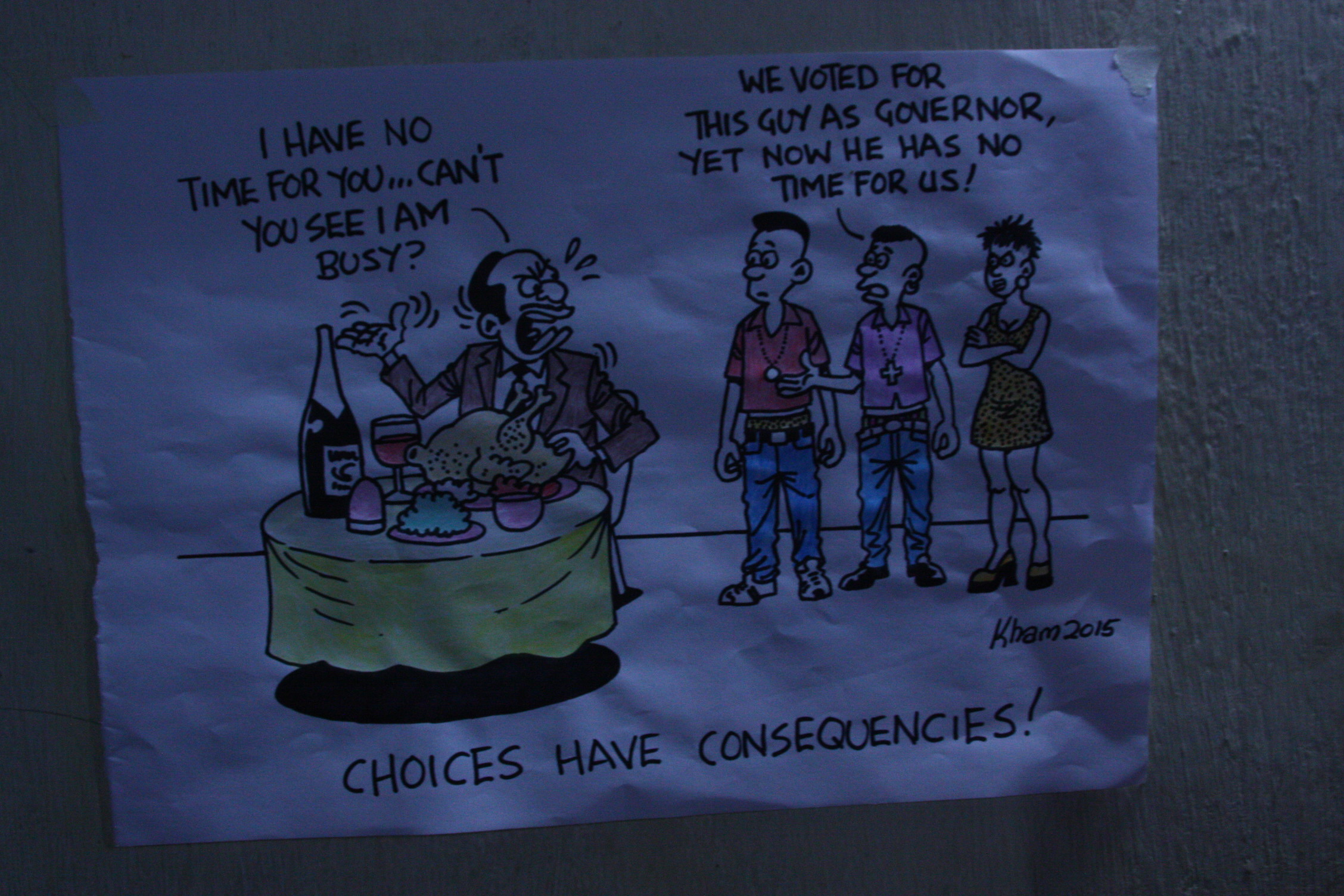
It’s time we residents of Bungoma took responsibility for our own County. It’s time we stop divisive politics and engage in a constructive political debate on the future of our county. We have the responsibility to elect the right leaders into the office and also highlight the governance ills bedevilling our county.

We have a range of tools at our disposal that we could use to highlight governance issues in our county. A good tool, for example, is like this blog post. Through blog posts, we can highlight the right and the wrongs and call our leaders to take responsibility for their irresponsibility. 

We can also use social community forums like Facebook group Bungoma Digest to voice our concerns on governance issues in the counties. Lately, WhatsApp groups have also become popular in constructive criticism and debate and raising awareness on key governance issues that our leaders need to address. We could also use Webinars to educate and encourage the public to take responsibility for their civic rights. 

It’s also time we face our leaders head-on and write them letters/emails that highlight key governance issues that they need to address. Whether it’s your MCA, MP, or Senator, you elected him or her and you have a right to tell them what you need to be done right. Gone are the days we took handouts and kept silent over key issues.  

Thanks to the digital space we live in today there are lots of platforms we could use to highlight and launch campaigns that call on our leaders to respond and sort out governance issues affecting the public. Key platforms to use include Facebook, YouTube, WordPress, eBlogger, and Twitter

For instance, Governor’s Wangamati’s administration is already grappling with a COVID-19 funds scandal that saw money (Ksh. 6 million) meant to buy handwashing jerricans being misappropriated by key county officials close to him.  A social media campaign dubbed #Return COVID funds for Bungoma County could go a long way in bringing the much-needed accountability in our administration.  

Image

County Revenue Allocation is the Kenyan Political Crosshairs and Musical Chairs 

By Rapudo Hawi

The Senate of Kenya witnessed “Game of Thrones– borrowed from the famous Movie series in Hollywood. The drama on revenue allocation has been accompanied by praise and ululations, shouting matches and arrest on senators perceived to opposing the recommended formula over 316.5 billion, which is about 15% of the National Budget. At the fulcrum, the public opines that leadership of the speaker has been captured by the powerful government forces; the majority whip that has grown into voice leading “One Shilling One Person” that quivered the Politics of Handshake and the Building Bridges Initiative (BBI). 

Citizens witnessed clear attempts to decry gains through Constitution 2010 founded on democratic checks and balances. The Presidency has now limited powers over the legislative assembly despite strong political influences. The 1969 Constitution centralized power appointing ministers and restraining the parliament to influence national agenda. Even an NGO last week, blamed the presidency for systematically killing devolution hoping confidently that Kenyans will reject such a scheme.

Kenyans stand for a constitutionally sanctioned equal society and public expenditure that guarantees equitable development across the country. This comes as the county assembly legislators in Nairobi believe that it should not lose its resources due to the highest poverty index. The formula has to benefit more people in the capital. 

The stalemate has endured without workable formula among the senators. A lot of questions have emerged on the way the Senate conducted its audit queries with governors who come before it. Their continued failure to find closure on the county governance matters raised during probes has become complicated. The ongoing controversy that has resulted in a financial crisis for counties is another mark of failure by the Senate. There was a proposal to continue with the second-generation formula until the national government can give additional funds which add up to 35 per cent. Some quarters feel that little resources allocated to the counties have caused a crisis in terms of inefficient delivery of devolved services.

Ravaged by the impact of COVID19, Kenyans lost their livelihood, stalled education for children and imminent deaths. The health services depleted their services, with a lack of Personal Preventive Equipment (PPE) and county government operations. The threshold decided by the commission of revenue formula is always anchored on the last audited accounts. Counties in marginalized regions are under threat due to fragile infrastructure and inefficient supply of basic needs. The governors seek the dissolution of the Senate to enhance county operations. 

The intricacies and complexities in the senate are the yardsticks for the 2022 politics. This Game of Thrones broadcasted the Senate Committee failure to reach no consensus and consolidated unified position using taxpayers’ funds for allowances. After nine Sittings, the Senate proceedings were briefly disrupted in the tenth sitting with a section of members led by Elgeyo-Marakwet Senator walked into the house wearing green caps and a fist. Even a senator referred their actions similar to those on Kenyatta Avenue known as “Haki Zetu Street”. This is a test on citizens who worked harder to achieve democracy and participatory governance in Kenya.

Email: [email protected] 

Image

From raw to artificial bone: How Catholic Diocese of Nakuru is contributing to water safety

By Kioko Kivandi

In 1984 Kenya was hit by a severe drought. The country’s food banks were severely stressed just as were its water sources.

Writing about it in July that year, Allan Cowell, a New York Times journalist noted that rain clouds would gather in the morning but by noon they would all vanish, “like a promise betrayed by the seasons”.

It is because of this that the Catholic Diocese of Nakuru (CDN) – whose vastness stretches from Nakuru to Baringo regions – felt obliged to supply water to communities in hard hit areas, especially, those in Baringo.

“We started drilling boreholes in Baringo,” says Hillary Korir, the Diocesan Caritas Director. Unfortunately the water from the boreholes was worsening the situation.

“When we conducted tests we realized that it had very high levels of fluoride. It’s like we were giving people poison.”

The consumption of high levels of fluoride can lead to dental fluorosis – a condition in which teeth lose their milky colour and slowly turn brown. While this can be embarrassing from a social point of view, severe cases can lead to loss of the teeth all together.

The World Health Organization (WHO) recommends a fluoride content of not more than 1.5 mg per liter in water that is used for cooking and drinking. Research has established that ground water sources in the Rift Valley (the region in which Nakuru and Baringo are found) can have fluoride levels of up to 50 mg per liter of water.

“We discovered that we were denying people opportunities,” Korir says.

Apart from dental fluorosis, over consumption of water with the chemical contaminant can lead to skeletal fluorosis – a condition where someone’s bones are damaged and become too painful to even support them.

It is because of this that in 1998 the diocese launched a programme on water quality whose mandate was to research, develop and implement a technology that would reduce the fluoride levels in water to the WHO recommended guidelines.

The challenge then was to have a technology that would not only serve this task but also be simple enough to be a ‘do-it-yourself’ among the target communities. So the diocese decided to use the bone char technology.

Bone Char Technology

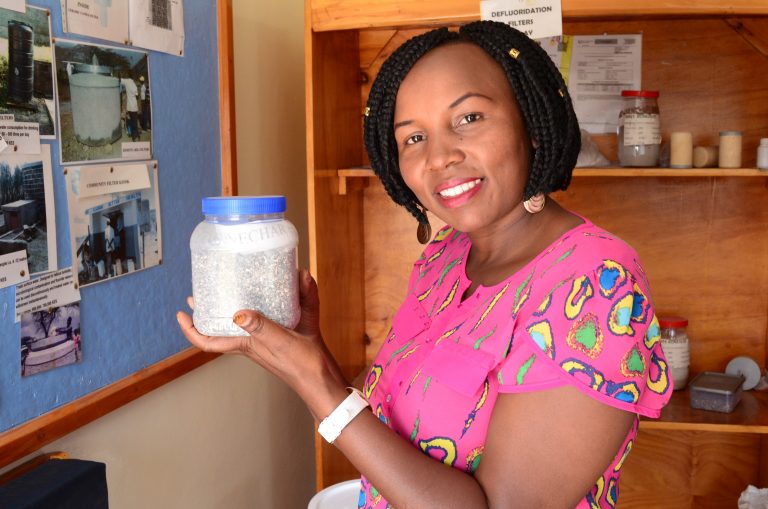
Bone char technology involves the use of raw bones to siphon fluoride from water. The bones are burnt at very high temperatures for close to two weeks, they are crushed, sieved, cleaned, and put in containers through which water is run as the fluoride ‘sticks’ to calcium, a chemical found in bones.

Since its inception this technology has seen hundreds of households supplied with low-cost family sized filters. These filters are also fitted with ceramic candles to take out bacterial contaminants.

And apart from the family sized filters the diocese has had the same technology applied in bigger tanks that supply water to communities.

But bone char had a low uptake of fluoride and it was not easy to regenerate. Thus the diocese devised a new model that involved the use of pellets rich in calcium and phosphorus that are mixed with the bone char and put in the water filters.

“This elongated the life span of the bone char three times,” discloses Nancy Wanjiku, a Laboratory Manager of the programme that has since grown to become a fully-fledged company – the Nakuru Water Defluoridation Company.

However, just like the bone char, the pellets were also difficult to regenerate and this is how the diocese devised the use of an artificial bone or the hydroxyl-apatite model (HAP).

 Hydroxyl-apatite (HAP) model

This involves the industrial production of an artificial bone that serves the same purpose as the bone char; its trade name is ‘Fluorolith’.

Wanjiku says, this technology which is more than two years since it was introduced, has a higher fluoride uptake than the first two.

“HAP is made from calcium hydroxide and phosphoric acid feed grade. This is usually put in containers that can withstand some pressure,” she adds.

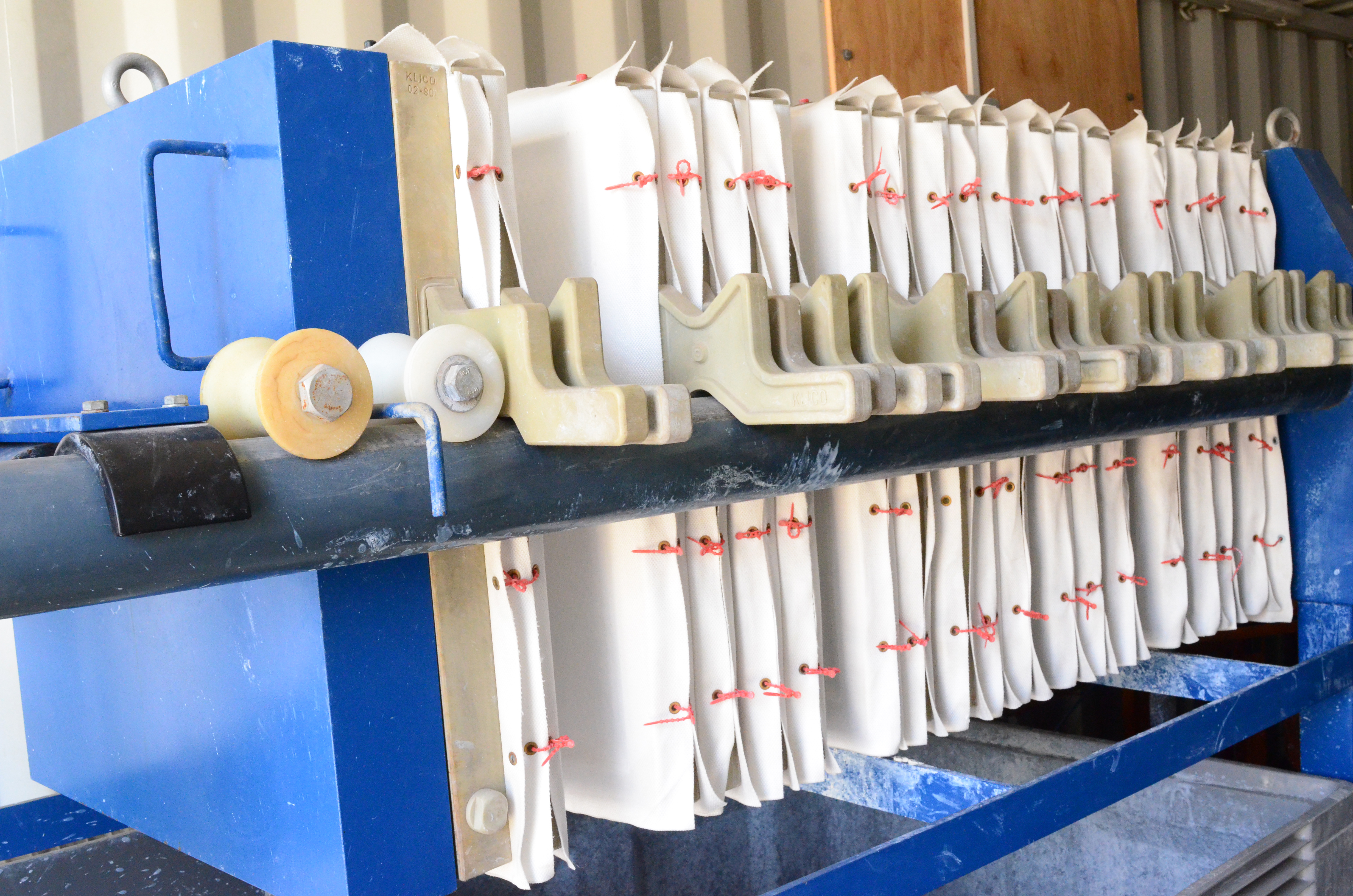
The project's plant that in which the artificial bone is made. This is the latest technology that the programme is employing to filter fluoride from water.
The project’s plant that in which the artificial bone is made. This is the latest technology that the programme is employing to filter fluoride from water.

Thus this technology is unlike the first two that only depend on gravity. It is also much more industrialized, can be used in places whose water sources have very high levels of fluoride and is easy to regenerate since the diocese has an automated regeneration system that is fast and efficient. This makes the HAP technology much better than the first two.

Need for water safety policies

Apart from Kenya, the diocese has implemented water quality projects in South Sudan, Tanzania, and Ethiopia.

Such projects have been necessitated by the rising demand of water among communities that has seen an increase in the use of underground water sources which unfortunately, have high fluoride content in some regions. The rising demand has partly been pushed by increase in populations and changes in climate change that have seen depletion of surface water and a drop in rain water.

According to Esther Wanja, the programme’s Project Officer, since communities are unable to sustain their demand using surface water, there is need to put more emphasis on the quality of underground water sources.

“We need policies that track on chemical contaminants,” she says as her colleague Wanjiku adds that provision of quality water should be given the same priority as water supply.

“Sometimes you find that there is no enough water, leave alone quality water. So supply is always prioritized.”

It’s been a long journey; from an awakening call of a dry spell to the provision of ‘poisoned’ water, and finally, to the provision of quality water. As the diocese lives to fulfill its vision of a “fluorosis free society” it also hopes that one day communities will embrace its slogan on water quality dabbed “my water, my esteem”.

Dangerous Meal: Reflections of a Nature Photographer

By Kioko Kivandi

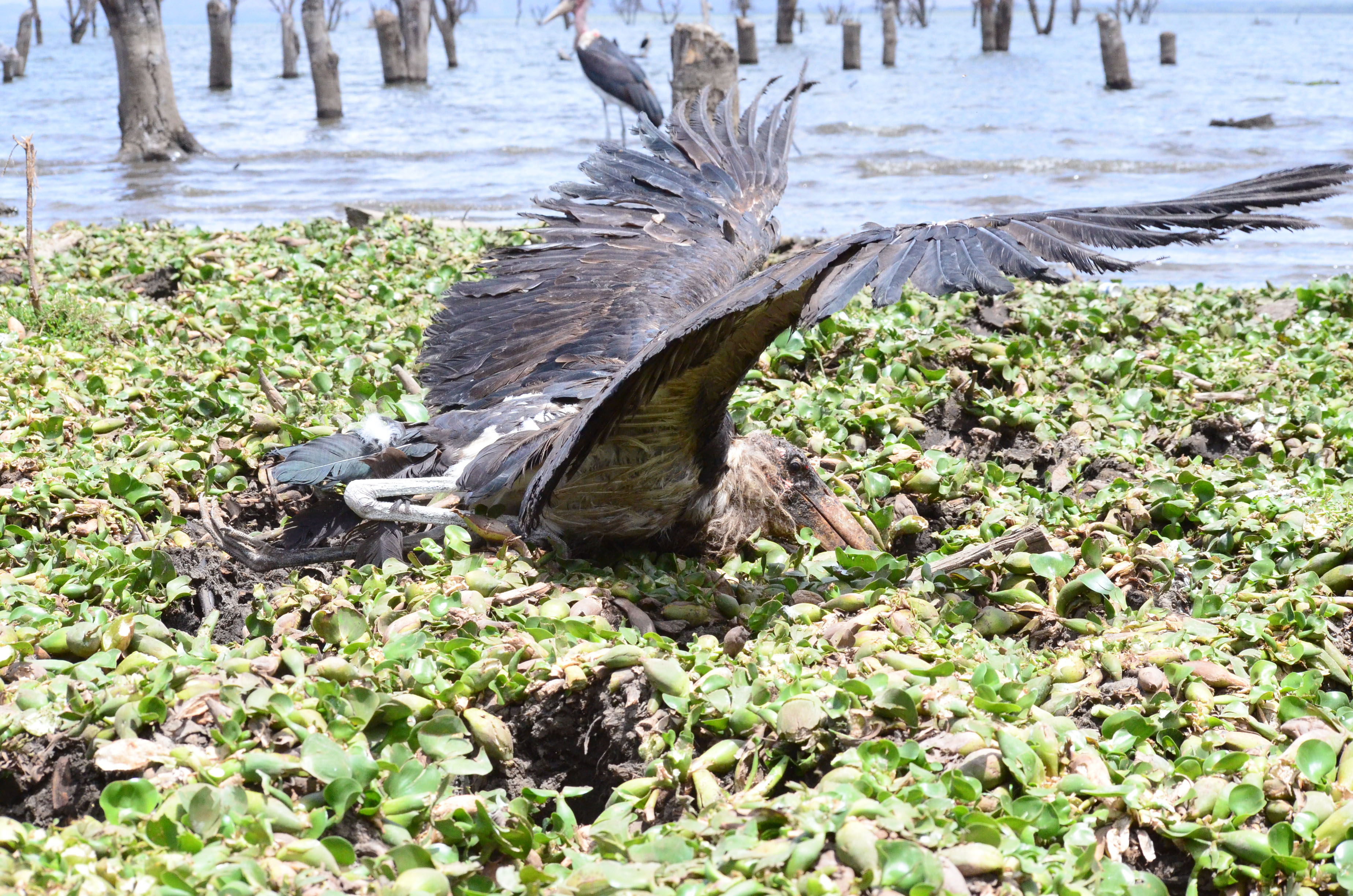
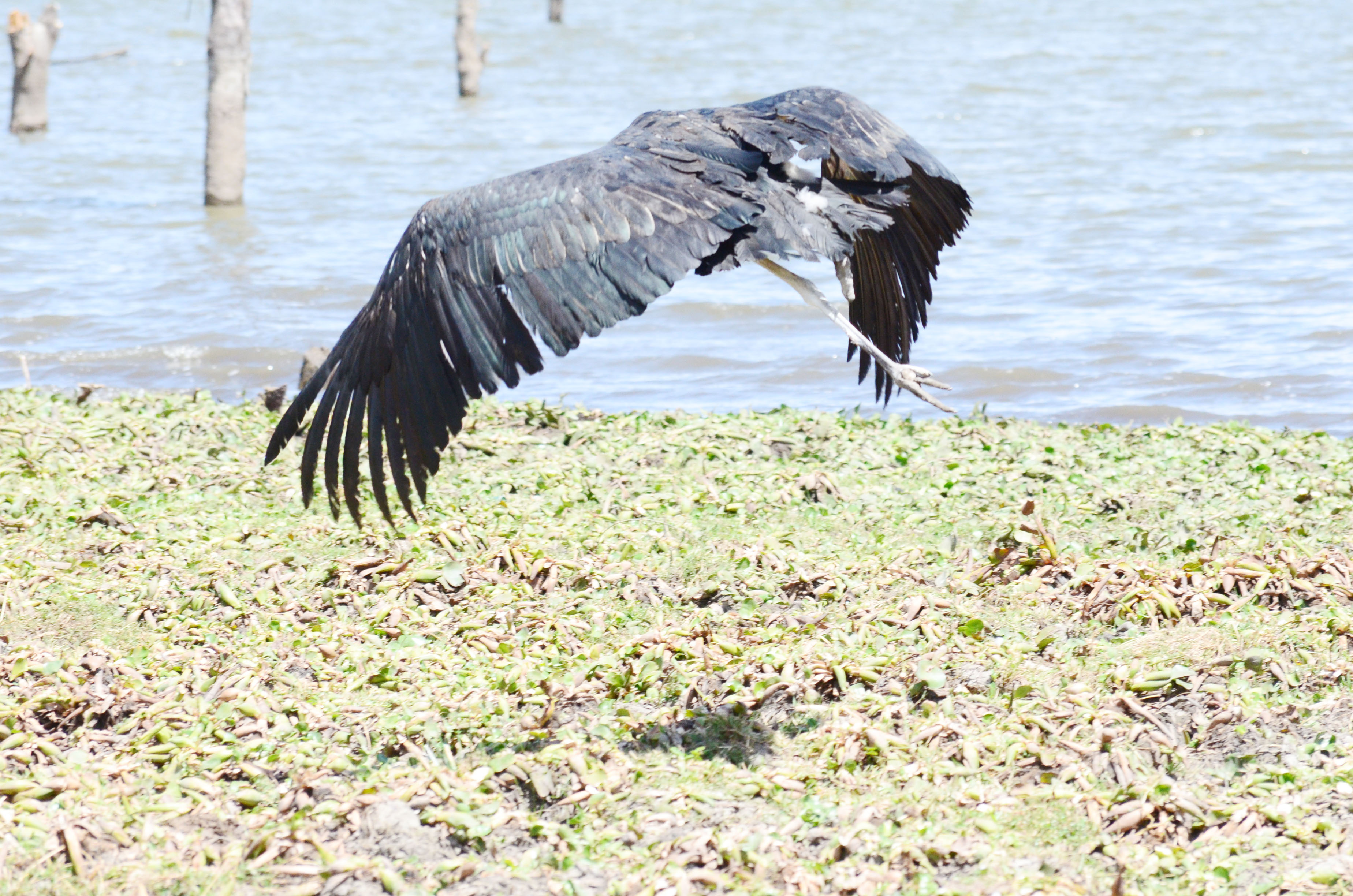
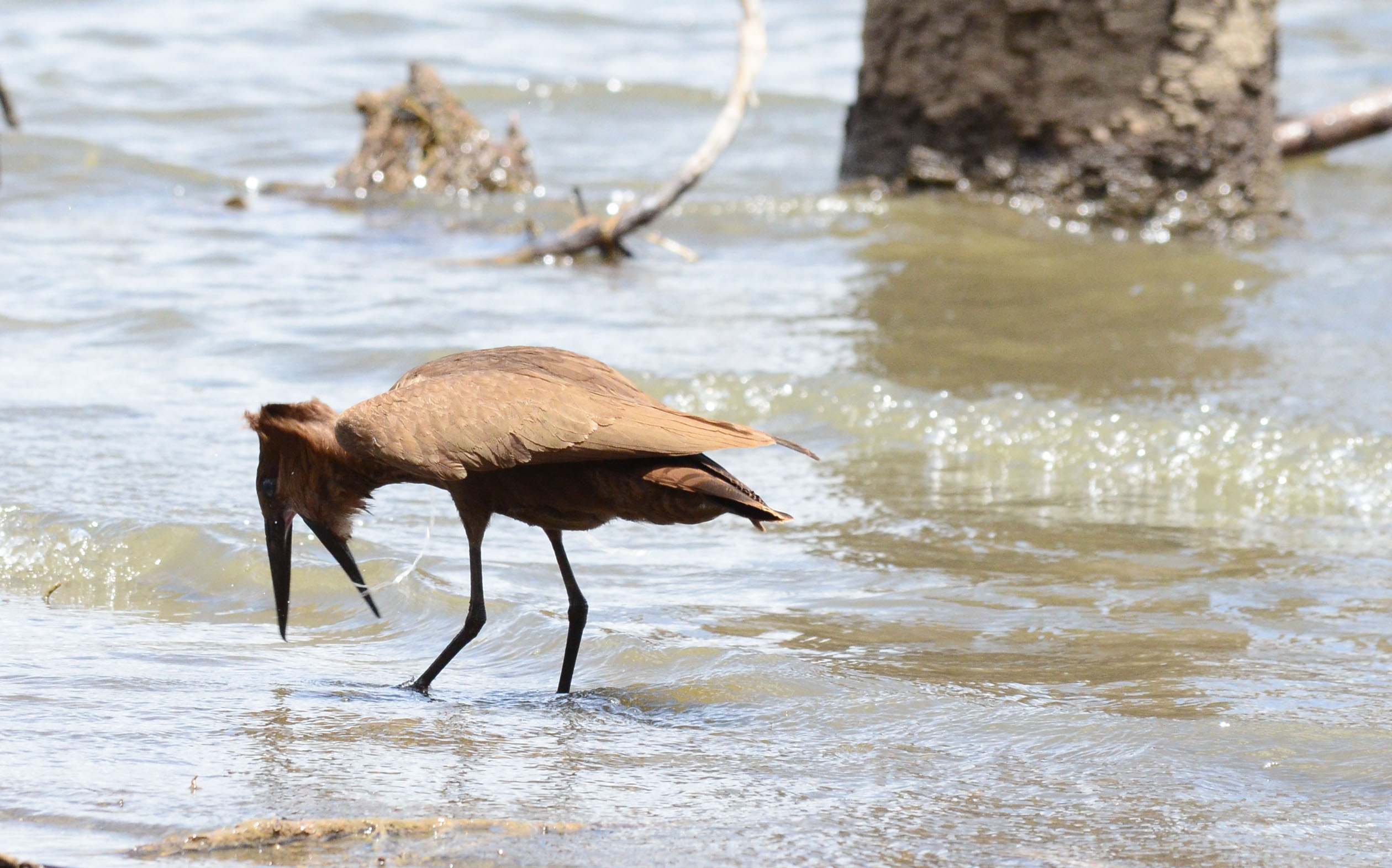
I was photographing a wounded Marabou Stork on the shores of Lake Naivasha on Saturday March 25 when a Hammerkop appeared from nowhere and rested on the shallow end of the lake.


Naivasha 2

Nearer to thee: This stork had a difficulty in walking and it seemed as if it was nearing its death bed.

At first the hammerkop did not manage to steal my interest from the stork. Earlier on I had spotted another stork with a missing leg, thus, when I spotted the wounded one, I told myself, “Lake Naivasha must be a very dangerous home to storks.”


Naivasha 1

Crippled: It was not easy to establish how this stork lost its leg.

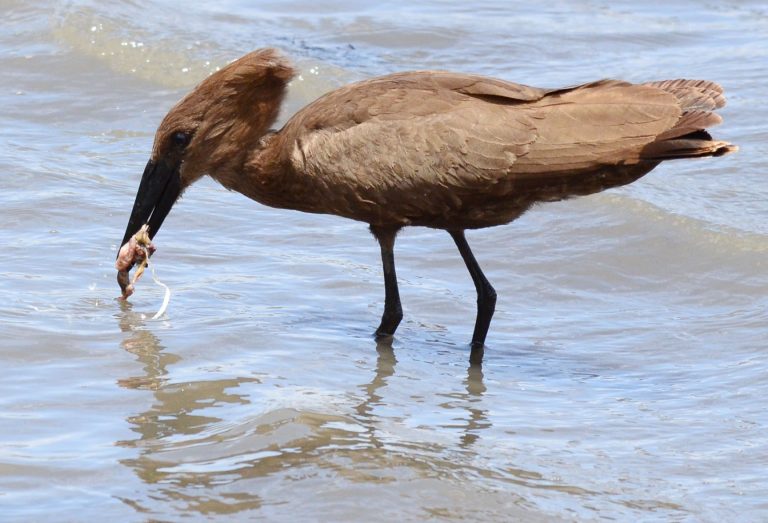
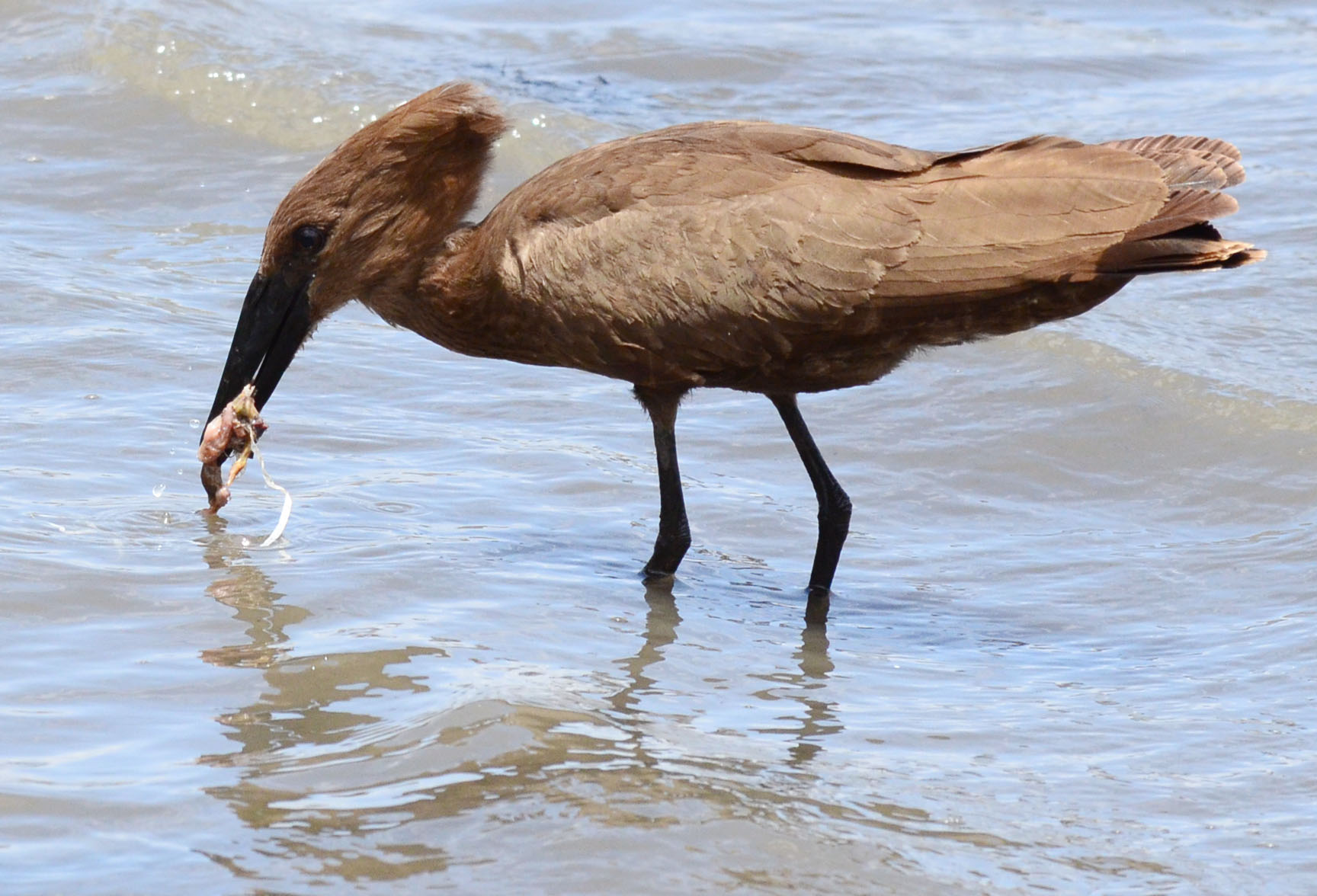
What however made me look at the hammerkop was a ‘meal’ it was gobbling all alone, perhaps fast enough before she faced competition from her fellow birds.


Naivasha 4

Survival for the fittest: Perhaps due to strained food sources, every bird at the lake will always want to eat whatever it comes across before other birds take notice.

But no sooner had she ‘cleared her plate’ than she discovered it was a dangerous meal.

Naivasha 5

Dangerous meal: The hammerkop was unable to swallow a nylon thread tied to its meal.

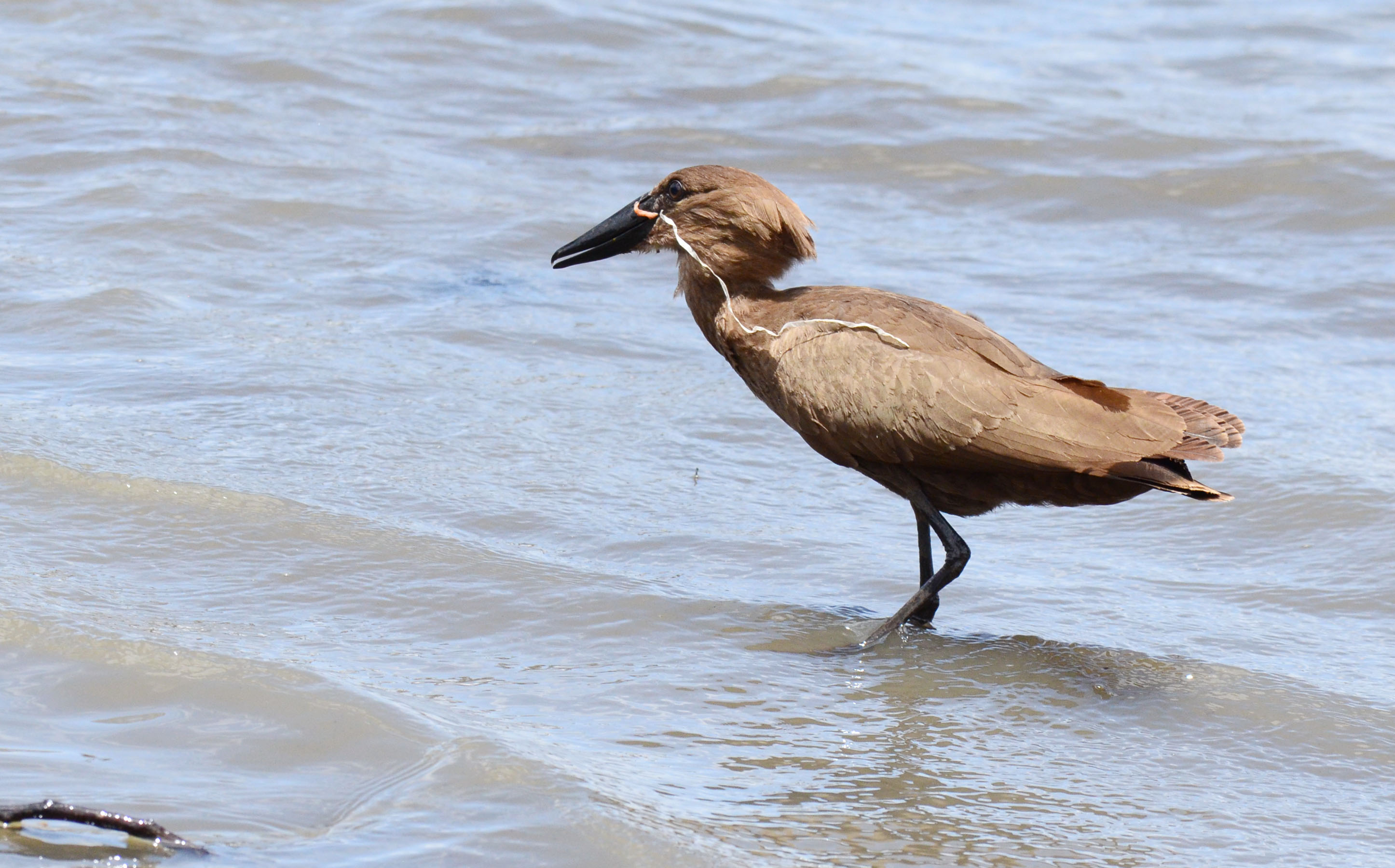
All over a sudden its life was taking a tricky tingling twist: from a heavy meal to an uncertain future.


Naivasha 7

Uncertain future: Though lying beautifully on its wings like a priestly chasuble, the thread was not lesser than a hang man’s noose, waiting to smoke life out the hammerkop once it is tightened. 

How I wished I could be of help.

Naivasha 9

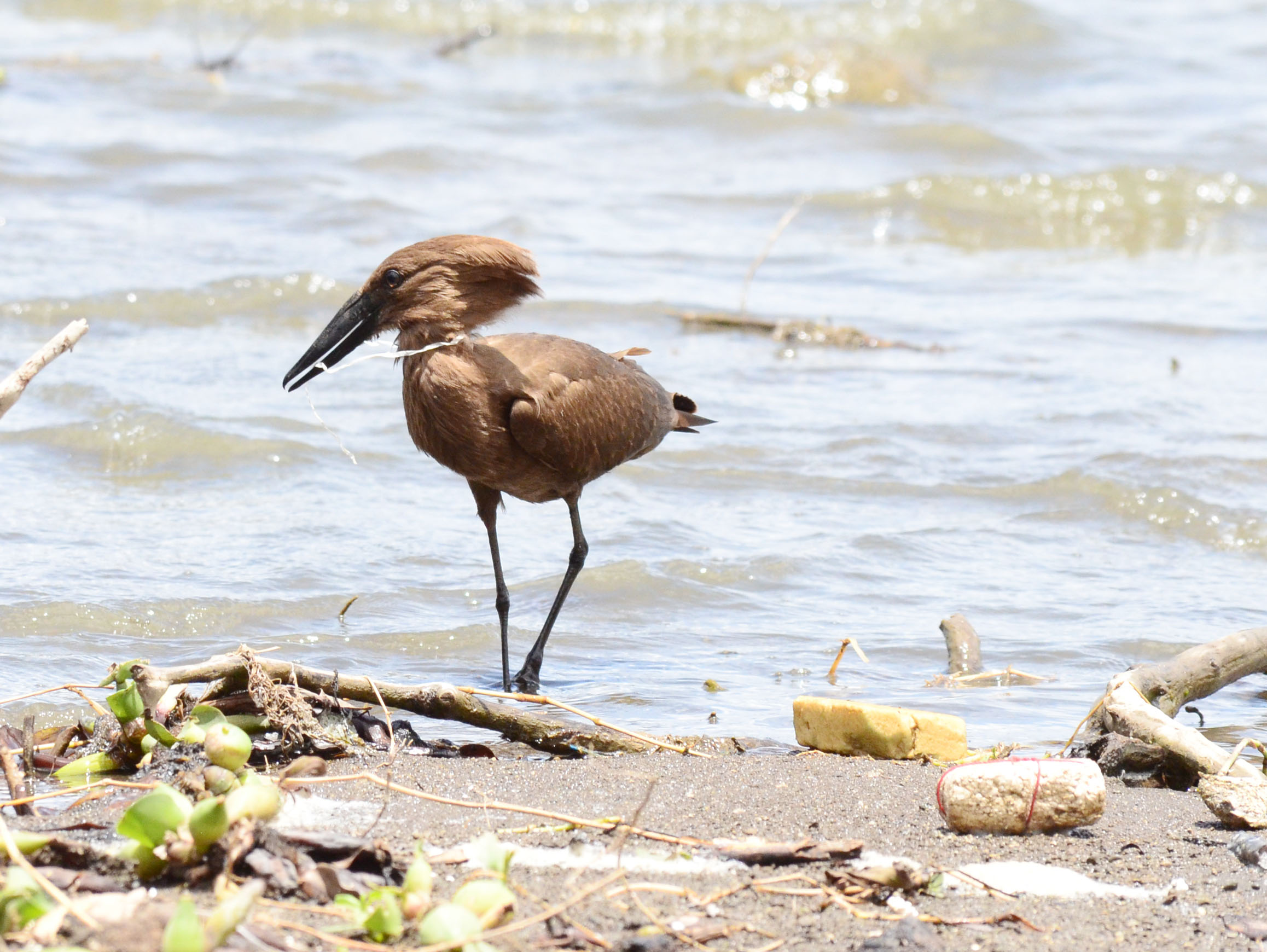
Deadly tools: Conservationists have pointed out fishing gear as one of the threats to the Lake’s ecosystem.

Like Emmanuel Sithole, the hammerkop soon became to me a victim of xenophobia, and the lake, a South Africa where men kill other men, consciously or unconsciously because they believe they are entitled to all what the world has, and that all the other people, are children of a different mother who are not worth of the same goodies.

Naivasha 8

My Emmanuel Sithole: Sithole was a Mozambique national who died of a xenophobic attack in South Africa in 2015. His killing was captured in camera by James Oatway. 

Lake Naivasha, a Ramsar site, is a wetland of international importance and is home to more than 350 bird species. Apart from the use of unsustainable fishing gear, chemicals emptied by horticultural farms at the lake also pollute it heavily.

Naivasha 10

Man is to blame: Thousands of animal species die daily the world over out of pollutants dropped in water bodies by man. A study has indicated that by 2050, there will be more plastics than fish in the world’s oceans.

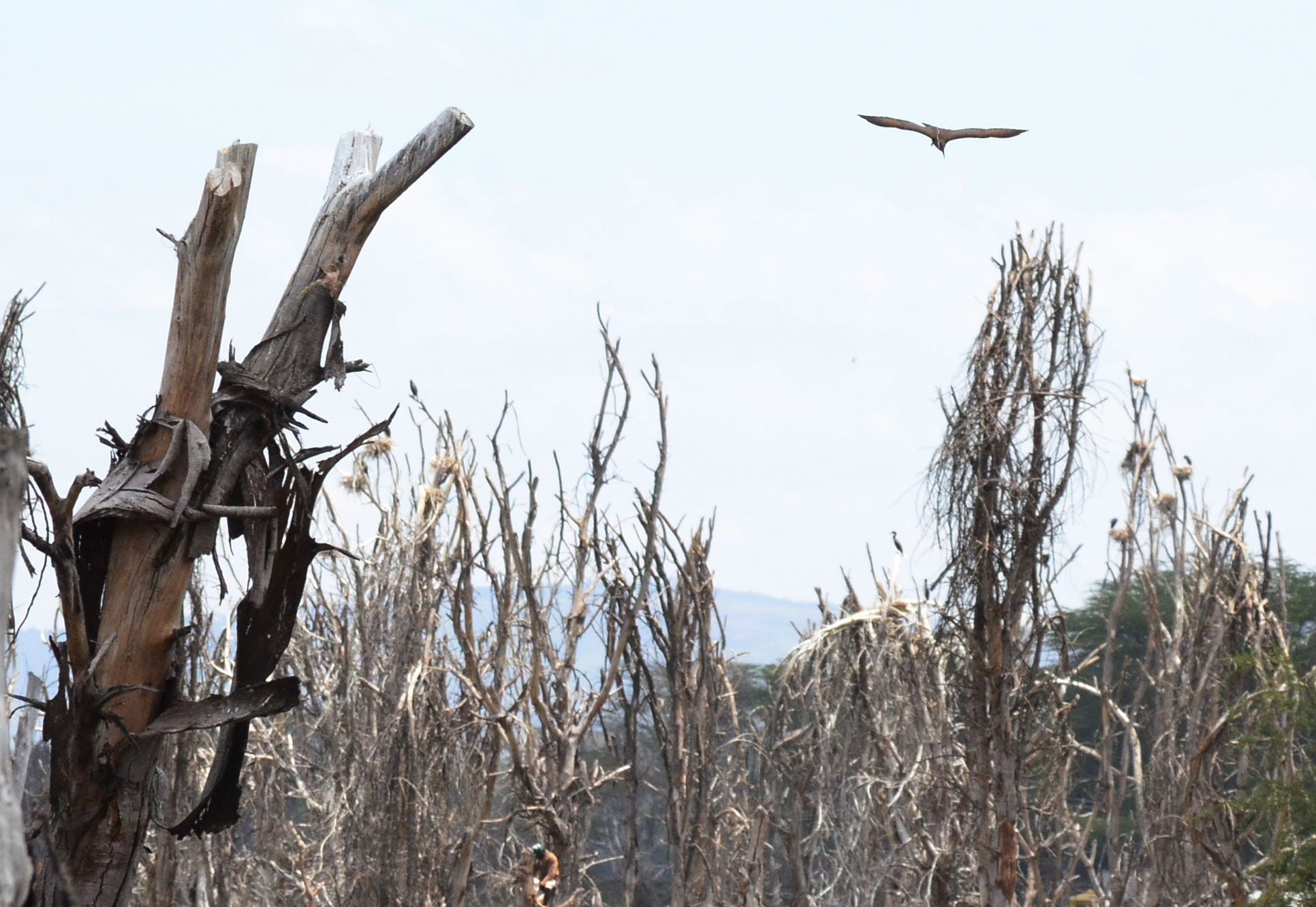
When the hammerkop flew above me, I discovered, with a clear sky but a blurry image, its future would remain shaky for as long as that thread remained stuck in its body.

Naivasha 12

Help me ooh Lord: Such life-threatening moments, only need the help of God, or so I thought of the comment I would get from my spiritual advisor, had I asked.

Coincidentally, at the time all this was happening, a group of volunteers, including me, were at the Lake to clean it of such pollutants. The solid waste we picked on this day would later be taken to a nearby community cooker that uses plastics as fuel. If only one of us had picked this piece of nylon in time.

Naivasha 13

In search of help: With none of us helping it, the hammerkop flew away, to seek help from where God knows.

At the same lake, this sister (or is it brother) of hers, continued with life as if nothing had happened unaware that tomorrow its beauty and love for life would be chocked by another piece of nylon thread.

Hammerkop 1

Next victim?: Too beautiful a sight until an anthropogenic act turns the tables.

All photos by Kioko Kivandi.

Why organizations should pay and train their interns

By George Githinji

In the last few years, organizations claim that the current groups of graduates are unemployable. They make further claims that universities and other tertiary institutions of learning are churning out ‘half-baked’ graduates whose needs are out of league with the needs and trends of the market.

What that means is that the current crop of graduates lack the necessary skills to fill the vacant positions in these organizations. While some of these claims might be true, the organizations also play a part in demeaning the skills and potential of these graduates.

Blaming the graduates does not solve the problem of their inexperience. The organizations are responsible in one way or another to develop the potential skills of students before they become graduates by offering them internships. However, many of them have negated the main essence of internships, which is to gain essential skills.

Rather than the internships becoming a source of hands-on knowledge for the interns, they end up being exploited. The interns are treated like slaves and subjected to heavy workloads and minimal free time.

Some interns are treated like office messengers. They are subjected to running errands and serving tea to the office staff. They are also subjected to somehow menial tasks such as filing that is way out of line with their academic specialization.

At the end of the internship, the interns barely learn anything that relates to what they study in class. If this happens continuously, and when they graduate, they barely have any experience to carry out or fit in the job of their choice.

Therefore, organizations need to ensure that they set aside funds to pay their interns. Most of the time, the stipend is small but it is essential because it facilitates bus fare and lunch for the interns. This puts morale in them to deliver quality services. In addition, employers should stop treating interns like slaves or casual workers and later cry foul that the interns are ‘unemployable’.

Apart from that, the organizations need to train their interns. They cannot cry foul that graduates are unemployable when they ask for 2-5 years’ experience from graduates who have no training whatsoever. If that falls through, then we can have fewer ‘half-baked’ graduates and the organizations will take pride in having an efficient workforce.

The writer is a socio-political commentator and he blogs at Political Kenyan

Engaging with the Constitution of Kenya

By Freshiah Wairimu

Ever heard someone explain a concept so well that you had to share it?

At the recently concluded training for CSOs on ‘Monitoring the Right to Health’ conducted by Kelin, I did. Mr. Awele, an advocate, explained the Constitution in a simple way.

As he put it; In the beginning, each individual’s rights and privileges were limitless. The resources were in plenty and each human being lived by his own rules. If an individual, Mr A, wronged another, Mr B, the punishment would be decided by Mr B as he see fit. If your neighbor took something you considered yours, you dealt with that situation as you wanted to. You could ignore it or even beat him up without much external interference. Clearly this situation could not possibly go on forever.

With time, there was growth in population, the resources began to diminish and there arose a need for order in the society. Individuals recognized the need to have a common set of rules to govern their interactions and ensure commonality and justice especially where punishment for a wrong doing is considered. Thus the Constitution came to be. The Constitution is a set of rules/laws that govern the society. Constitutionalism is when all are in agreement that they have to be guided by common rules. It is acceptance that, as an individual, my rights and privileges are not limitless…they are limited by the Constitution, which makes us equal.

However, even as individuals gave up their rights for the sake of the common good, they maintained the right to keep those with the mandate to safeguard the Constitution in check.

Personally, I do not even remember how I voted during the referendum, mostly because my opinion was informed for me by the politicians, neighbors, friends and family. Very few people read up the Constitution before voting…we all collected shaky data about the ‘contentious issues’ in the Constitution and voted accordingly. Once Mr. Awele explained the concept of what the Constitution is, it got me thinking. If your rights, and my privileges have been curtailed for the sake of the Constitution, wouldn’t you want to read up and find out what it is all for? Aren’t you curious on what exactly are the rights every individual gets a chance to enjoy! At the very least, each person should have the knowledge on how to interact with the Constitution and on who forms and enforces the rules of Kenya. Also, how to make yourself heard if you do not like the rules formed on your behalf by your leaders. We should get the chance to understand devolution, that is, the National Government and the County Government.

Read the Constitution. Well, at least skim through and grasp a few facts about what your rights are.

The writer is an Accountant.

Victor Yegon wants Boniface Mwangi charged for hate speech for his social media posts

Victor Yegon, an activist wants the Director of Public Prosecutions and the Director of Criminal Investigations compelled to lodge a hate speech case against photojournalist and activist Boniface Mwangi for his social media posts.

Mr. Yegon accuses Boniface of inciting Kenyans through his social media pages. He says the contents of the messages are likely to fan violence and breach peace in the country hence he should be stopped from further publishing inciting comments on his social media pages. He argues it is against the National Cohesion and Integration Act (NCIC Act) hence Boniface should be stopped.

Through lawyer, Ham Langat, Mr. Yegon claims that Mwangi has been using his social media platform to fan ethnic violence and incite the public contrary.

He adds that unless the court issues orders, there will be continuous degeneration as well as constitutional breach of peace. The activist further claimed that if the situation is not arrested by the courts, Mr. Mwangi will continue to polarize the country and create ethnic animosity, which if left unchecked, will destroy peace within the country.

Mr. Yegon further takes issue with the pouring of a red substance to police Spokesman Charles Owino during the Willy Kimani protests terming the act undermining the authority of a public officer which is a crime in the Penal Code.

“Mwangi’s conduct should not go unpunished. His actions are enough evidence that the offence of hate speech and public peace has arisen and should not be left without legal consequence,” said Yegon.

Court declines Vimal Shah’s request to compel Google and Twitter to pull down Blogger Nyakundi’s posts

A request by billionaire Vimalkumar Bhimji Depar Shah and his company Bidco to compel Google and Twitter to enforce a mandatory injunction on content by blogger Cyprian Nyakundi was declined by Justice Aburili Roselyne Ekirapa in an ongoing defamation case.

In the case, civil suit 300 of 2015, Vimal Shah and Bidco have sued Stephen Jennings, Rendeavour Group, Preston Mendenhall, Artem Gurevich, Aly Khan  Satchu and Cyprian  Nyakundi for defamation alleging that they made various injurious comments in different ways against the plaintiffs.

In a sworn affidavit Mr. Vimal Kumar  Bhimji Depar  Shah on 31st August  2015, accused the six to have used their different platforms to defame him. For instance, Aly Khan Satchu is accused to have hosted Stephen Jennings on Mind Speak where ‘a speech to a  large audience  of influential  investors, in which he  uttered the words which  were  defamatory to the Vimal. Satchu further fielded questions which  questions were meant  and did encourage the Jennings to utter  further defamatory  statements  regarding the first plaintiff. Jennings  proceeded to  post and publish the said  defamatory  statements on their website.’

Stephen Jennings, Preston Mendenhall and Artem Gurevich hold different positions at Rendeavour Group, a real estate company that is embroiled in several legal tussles with Vimal Shah over Tatu City project, the first private metropolitan city to be constructed in independent Kenya.

On his part, Blogger Cyprian Nyakundi is accused to have been hired by Stephen Jennings to undertake

“a vile  smear campaign against the plaintiffs and he had  during the months  of July 2015  to August  2015 published  various  defamatory statements  on his  blog site http://cnyakundi.com as well as  on the various  online  twitter  platforms vide @c-nyakundi.”

It is further alleged that despite the gravity of  the allegation being  made  against the Bidco and Vimal, they  have

“despite  repeated  demands failed to pull down  from their  websites  the defamatory article  despite  their  knowledge of the said  articles  causing  distress  and exposing  the plaintiffs to  odium, ridicule and contempt.  The  said defamatory  articles  continue to  expose and cause the plaintiffs  untold distress  as they are being  viewed by hundreds of  thousands and /or  millions of Kenyans  and other nationalities  spread across the world  on the  world  wide web system  of the internet.”

In a ruling, the plaintiffs wanted interim  injunction and mandatory injunction against them. The interim  injunction were to bar them from posting  and forwarding on any electronic  media, or publishing, or disseminating defamatory  words, statements against the plaintiffs.

The mandatory injunction were to direct them to erase  from their  various  posts, websites, blogs  or their  other forms of electronic  and social media the said defamatory  words, statements, pending the hearing and determination of the case.

In the ruling dated, 10th August 2016, Justice Aburili said

I find that granting  the mandatory  orders sought  by the plaintiffs  would be tantamount to issuing  final orders. Accordingly, the prayer for a mandatory injunction fails.

She added

The prayer for a mandatory injunction and for Google and Twitter to assist in enforcement is declined.

She however granted interim orders against their continued publishing of the defamatory words against the plaintiffs. She said

 I am satisfied that on affidavit evidence available, the plaintiffs have established a prima facie case with a probability of success that the defendants should be restrained by way of a prohibitory injunction from publishing any defamatory statements or words, of and concerning the plaintiffs.

The parties  were directed to expeditiously prepare the suit for trial within 12 months from the date of this ruling.

Blogger Dennis Owino held by Police for six hours without a reason

Blogger Dennis Owino, popularly known as @KinyanBoy was yesterday arrested and held for six hours without being told the reason for his arrest. Dennis was also not told of his accuser.

While walking along Harambee Avenue around 1.00pm yesterday, Criminal Investigations Department (CID) officers who had been trailing him arrested him and took him to KICC police station. They did not question him or book him.

News of his arrest were broken by blogger Cyprian Nyakundi and Patrick Safari earlier in the day.


During the entire six hours, Mr. Owino was also not allowed or asked to write a statement. The police officers only kept telling him that they are consulting and he should be patient.

Some minutes past 7.00pm, he was released.

Dennis Owino blogs on www.kenyaninsights.com where he focuses on accountability. On his Twiter handle, @KinyanBoy, he also questions authorities on various issues.

Why bloggers should worry about the Films, Stage Plays and Publications Bill, 2016

The dust is yet settled on the Films, Stage Plays and Publications Bill, 2016 going by media coverage of the aftermath of the public participation session that followed the draft Bill. In the Standard, Kenya Film and Classification Board CEO Ezekiel Mutua said that the meeting at the National Museum was the first of a series of consultative meetings on the review of the law. He added that they will be  moving to meet other stakeholders in private and public sectors such as parents, religious institutions, consumer protection groups and other government agencies and legislators.

This position contradicts an earlier one which he is recorded to have said that the document has been trashed and the process will start afresh with input from all the relevant stakeholders.

At the forum, Mr. Mutua said it came about from the spirit of changing the current law Cap 222 in order to lower costs of rating film content which stands at sh100 after a petition from Kenyan film producers.

From a freedom of expression perspective, the Bill has serious implications on film, publishing, advertising, theatre, games, artistic creativity and online expression. While the current Act restricts KFCB’s mandate only to films, stage plays and posters for their promotional purposes, the Bill expands the mandate to include broadcast content, online content, outdoor advertisements, print publications and registration of cinemas and theatres.

Children have a legal right to be protected from all forms of exploitation and material that is likely to compromise their innocence. However, the Board is mandated to classify films and play acts to enable parents to prevent their children from accessing such content. The board is also mandated to ensure that certain material is not aired during times that children are likely to be watching TV.

The shift from regulation by classification of films to regulation creation of films is a significant change that infringes the freedom of artistic creativity secured in the Constitution.

Clause 39 (2) attempts to regulate and penalize Internet Service Providers for actions of their users.

In clause 26 (1), the power of the police or appointed persons the making of a film has a chilling effect on freedom of artist creativity.

In addition, clause 53 (1) on the determination of objectionable and non-objectionable publications left at KFCB’s board discretion. This is dangerous as they could overstep the limitations to freedom of expression not categorically outlined in Article 33 of the Constitution.

Read the statement by BAKE on the Bill.

Deputy President William Ruto sues Boniface Mwangi for defamation over a tweet

Deputy President William Ruto has filed a defamation case against activist Boniface Mwangi over a tweet terming it false and malicious.

In his suit papers filed today, Ruto wants the court to compel Boniface to delete the message, posted on September 28, and publish an apology.

Also read Deputy President William Ruto threatens to sue Boniface Mwangi for defamation

Through lawyer Kioko Kilukumi the DP says the apology and retraction should be given prominence on social media, newspapers and electronic media.

Boniface Mwangi had earlier declined to apologize and retract the tweet arguing that as long as he holds the office of Deputy President

he must accept that he will attract and continue to attract not only praise where it is due but also most robust criticism for any conduct or behavior that falls below the requirements of the Leadership and Integrity provisions set out in Chapter VI of the Constitution.

Boniface further said that the Deputy President has no reputation worth protecting or being injured.

Our client will seek to persuade the court that that he has no reputation worthy of the indulgence of a court of justice either in Kenya or elsewhere.


Ruto also wants him barred from ever publishing or posting on social media any defamatory material against him.

The Deputy President is further seeking damages for libel.

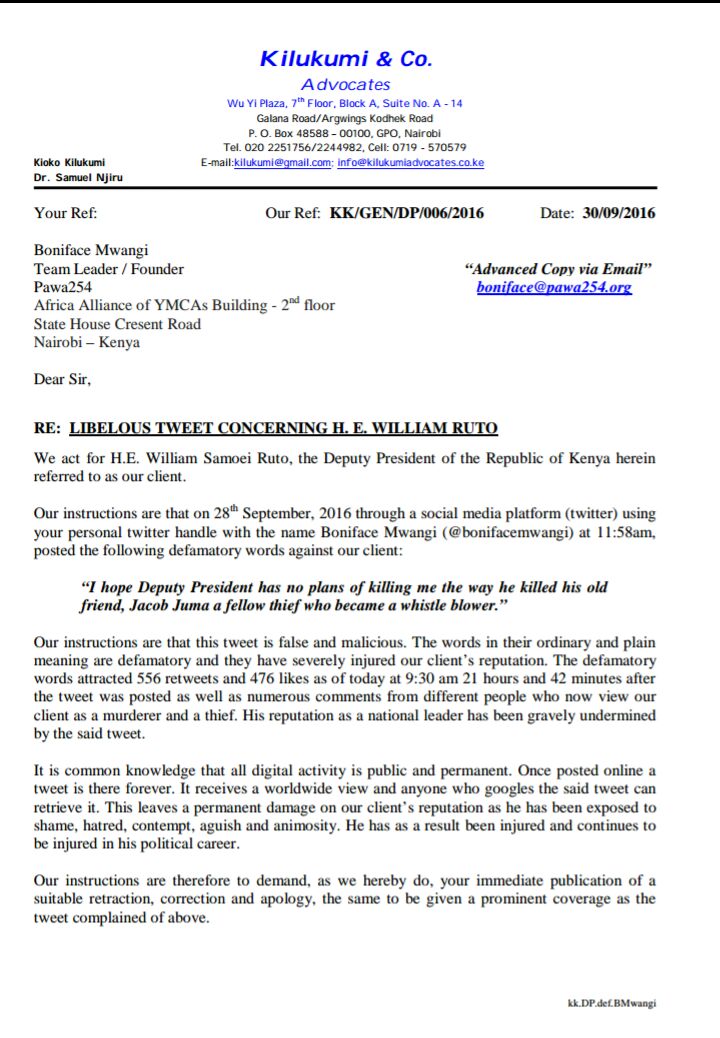
Deputy President William Ruto threatens to sue Boniface Mwangi for defamation

Deputy President William Ruto has threatened to sue Boniface Mwangi over his tweet which he says was false and malicious.

The words in their ordinary and plain meaning are defamatory and they have severely injured our client’s reputation,

reads a demand letter from Ruto’s lawyer Kioko Kilukumi.

The tweet from Boniface Mwangi reads


Ruto’s lawyer goes ahead to allege that the defamatory words attracted 556 retweets and 476 likes as of the time the demand letter was written.

bm-defamation


bm-defamation-1

His reputation as a national leader has been gravely undermined by the said tweet.

Ruto demands that Boniface Mwangi publishes a

suitable retraction, correction and apology, the same to be given a prominent coverage as the tweet complained,

it reads in part.

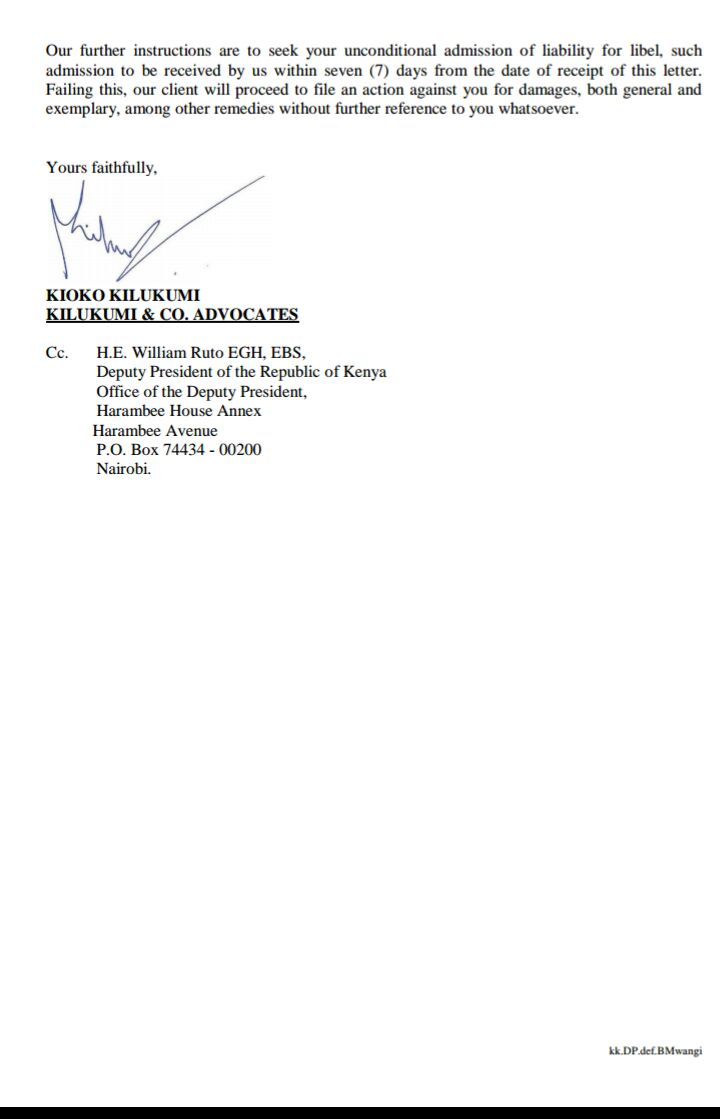
In addition, the DP wants Boniface’s unconditional admission of liability for libel.

sub admission to be received by us within seven days from the date of receipt of the letter.

Failing this, the lawyers will proceed to file an action against him for damages, both general and exemplary, among other remedies.

Boniface was served in person, on email and whatsapp. He affirmed that he is speaking to his lawyers before responding.

Media Council of Kenya condemns assault of a K24 reporter

The Media Council of Kenya (MCK) has condemned the assault of K24 reporter Duncan Wanga two days ago terming it an unlawful and unfortunate act against freedom of the media.

On 27th September 2016, Duncan Wanga while covering an event in Eldoret,  was allegedly harassed, brutally attacked and his camera destroyed by police. According to Mr. Wanga, the police had earlier warned him not to cover them during their operation to disperse the protesters who were opposed to the alleged arrest of Governor Jackson Mandago (Uasin Gishu) and Alex Tolgos (Elgeyo Marakwet).

Dr. Haron Mwangi, the Chief Executive Officer and Secretary to the Council said

These unlawful actions by the police pose great risk to the lives of journalists conducting their lawful and constitutionally protected responsibility to inform the public.

He said that this has happened soon after other cases of harassment and intimidation of journalists in Nyeri, Mumias, Busia, Elgeyo Marakwet and Lamu where MCK and other media stakeholders urged the police to uphold journalists’ right to media freedom as provided for by Article 34 of the Constitution.

He added

Growing cases of harassment, intimidation and assault of journalists by various groups including the police, politicians and their supporters is a worrying trend and should be condemned in the strongest terms. Such acts are not only unconstitutional but also demeaning for a democratic and progressive country such as ours.

Dr. Mwangi urged the National Police Service to take stern action against the officers who are involved in such inhuman acts against journalists.

Kenya Union of Journalists (KUJ) Secretary General Eric Oduor added that as an organization they will not take a back seat as freedom of the media is being threatened. He said they intend to take legal action against all officers and individuals who are intimidating, threatening and harming journalists in order to protect the Constitutionally enshrined freedoms.