Saturday, December 20, 2025
Home Blog Page 26

MPs should keep off county matters, says Makueni Speaker Stephen Ngelu

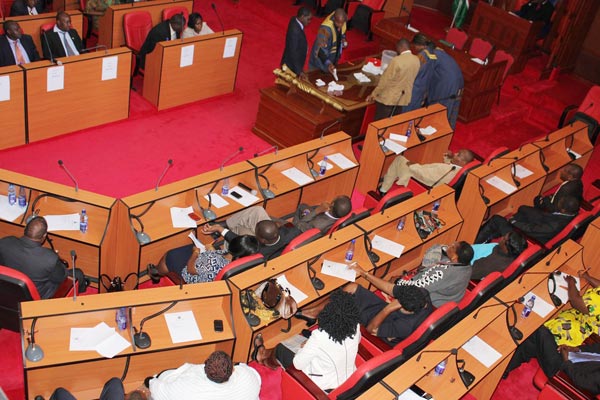
Makueni County Assembly Photo:Communication Unit
Makueni County Assembly
Photo:Communication Unit

A section of Makueni County Assembly (MCAs) members led by County Assembly Speaker Stephen Ngelu have castigated Senator Mutula Kilonzo Jnr and two MPs for allegedly interfering with the County Government operations.

Speaker Ngelu and MCAs Bernard Musau and Francis Mutuku have told off the senator and Mbooni MP Kisoi Munyao and his Kaiti counterpart Richard Makenga for what they termed as efforts by the legislators to derail development in the county through witch-hunt and infighting.

The leaders who had accompanied Makueni Governor Kivutha Kibwana at a fundraiser in Makindu in a rare show of unity termed the allegations by the parliamentarians that the County Government has misused public funds as revealed by the Auditor General Edward Ouko as malicious and false.

They in turn accused the senator and the MPs of fueling the wrangling between the assembly and the Governor and asked them to keep off county matters.

The speaker in a shocking revelation singled out the senator as the one behind the chaos that rocked the county last year in September in which six people were shot and injured after Kibwana and his supporters stormed a leaders meeting which he had not been invited at the County Assembly.

“They started the fight at the assembly and later took off leaving me alone and am tired of fighting said,” Ngelu.

The speaker said that the County Assembly was willing to unite and work together with the governor and retaliated that they would not allow anyone to sow seeds of discord among them.

Ngelu sentiments were echoed by  the two MCAs who said the two arms of government were only interested in developing the county for the sake of the residents.

“We only want to work together as a government and deliver our mandate,” said MCA Musau.

The leaders however challenged the governor to sack corrupt and inept officers in his government.

“Let Kibwana send packing those officers culpable of corruption as they are tainting the image of his government,” said Mutuku.

On his part, Governor Kibwana said time for politicking and wrangling was over and called on fellow leaders to concentrate on development.

He added that he had no qualms with those firing salvos at him saying that he had done his best as the governor.

“Those accusing me of corruption and other ills I leave them to God,” said Kibwana.

Since the audit report was released detailing possible embezzlement of county funds MPs Kisoi and Makenga have been on the forefront asking the governor to take responsibility and explain to the residents how the money was possibly pilfered under his watch while the senator has called for the prosecution of those culpable.

The sentiments by the three youthful legislators have however rubbed Kibwana in the wrong way .The governor has vehemently denied the corruption allegations and in a recent Facebook book post vented his anger and accused the MPs of wanting to derail development after he brokered a truce with the MCAs.

In a weird twist of events, the speaker who is now Kibwana’s foe – turned – friend and a section of MCAs have launched scathing attacks on the parliamentarians. The MCAs who for the last two years have engaged in endless battles with the governor mainly on budgeted related issues seems to have a change of heart and are now rallying behind him.

At the climax of the wrangling last year, the senator and six MPs convened a meeting to discuss the county affairs after the squabbling between the MCAs and Kibwana escalated bringing the county operations to a near halt.

The meeting held at the County Assembly however turned into bloody chaos after the governor stormed the meeting. What followed was a petition by more than 50,000 residents to have the county dissolved owing to the persistent wrangling between the two arms of the government. The Mohammed Nyaoga- led commission looking into the possible dissolution of the county has completed most of its work and it is no doubt that the county leaders and the residents are waiting the commission’s verdict with abated breath.

Could the possible outcome of the Nyaoga commission the reason behind the new found friendship between the governor and his rivals? Time will tell.
Social media vigilance may have averted an injustice by Pastor James Ng’ang’a

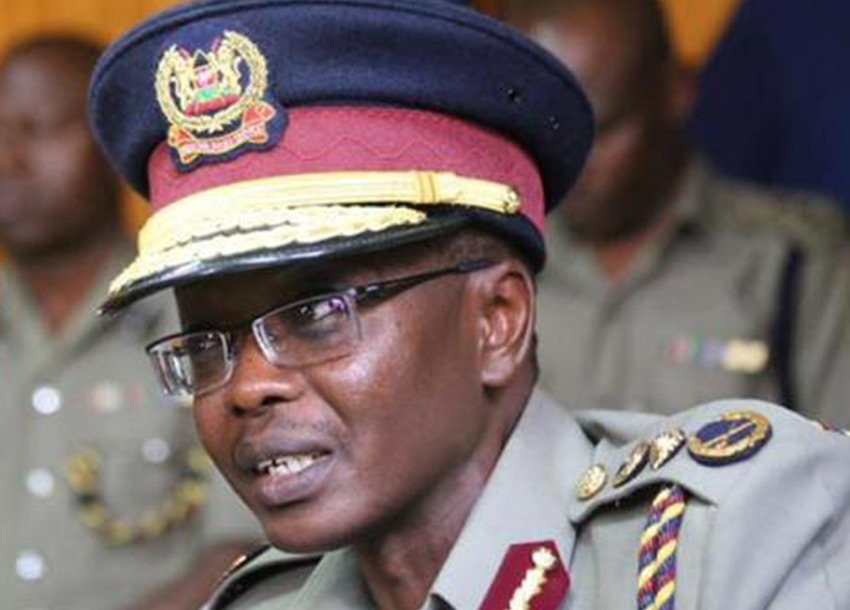
Inspector General of Police, Joseph Boinnet (www.citizen.co.ke)

By Davis Mwandawiro

The past two weeks has seen chain of twisted events over the controversial fatal accident involving popular televangelist Pastor James Ng’ang’a that robbed Mercy Njeri her life on July 26th at Limuru along the Nairobi-Nakuru highway.  Social media has been instrumental in highlighting the case and emphasizing on the possible miscarriage of justice.

It has been alleged that the police had tried to cover up the involvement of Ng’ang’a by tampering with evidence and ignoring witness testimony as reported by the daily newspapers since it was claimed by eye witnesses at the scene of the accident.  After the initial uproar, the Inspector General in a series of tweets gave the police account of events which was in complete contradiction with media and eyewitness recollection of events. He even got the number plate of the offending vehicle wrong. Furthermore, the hasty release of the vehicle from the police station was unusual.

In a dogged display of resilience social media users have kept the pressure on the Inspector General of Police Joseph Boinnet through a stream of tweets with the hashtags #PastorofImpunity and #ArrestPastorNganga which has resulted in Boinnet ordering an investigation into the police handling of the accident. While ordering new investigation into the matter, Boinnet noted that information submitted by members of the public via social media revealed a possible cover up by officers at Tigoni police station.

Indeed the vigilance by Kenyans could have yielded some fruits. Police now believe that Pastor James Ng’ang’a was behind the wheel of the vehicle that killed Mercy Njeri in Limuru on July 26, thanks to the probe. They have also dismissed Mr Simon Kuria, who presented himself as the driver of a Range Rover, registration number KCD 060Q, when it collided head-on with a Nissan car, registration number KBZ 709W, at Manguo in Limuru, Kiambu County.

The file has been sent to the Director of Public Prosecutions Keriako Tobiko for prosecution. It is hoped that justice will be served including having police officers who could have taken part in the cover up prosecuted.

Here are some of the tweets following the uproar.

Most of them demanded Inspector General of Police Joseph Boinnet to take action and arrest the pastor.

Some argued the law was unequal.

The late Mercy Njeri was laid to rest in her Murengeti Village and father hoped that justice will prevail and the family will finally have closure.   Social media in Kenya is become a watchdog that doesn’t sleep until justice is served.

Jukumu Letu highlights some of Mombasa County’s challenges

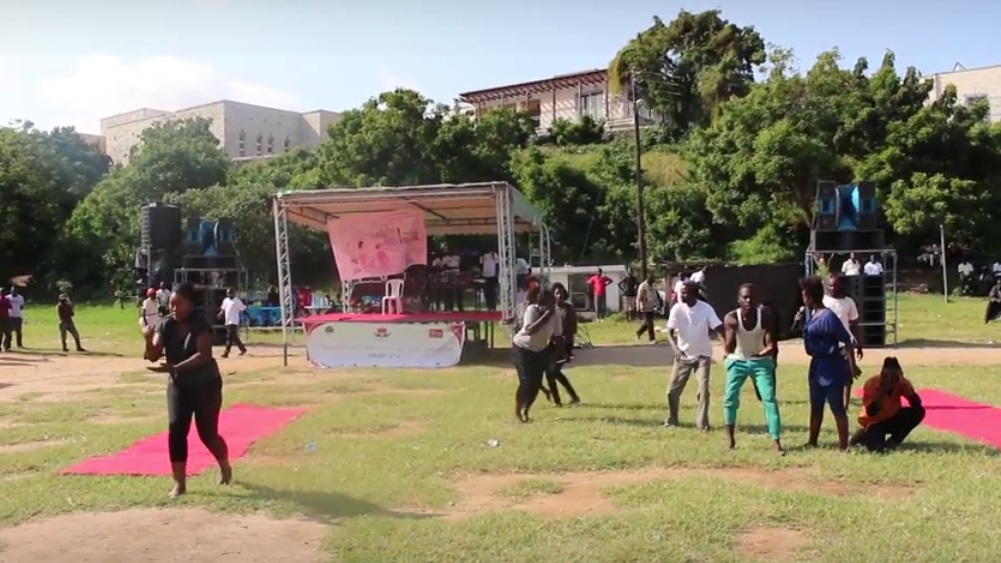
Wingu la Fuskani Performance at Jukumu Letu Launch in Mombasa

Wingu la Fuskani means A cloud of Despair. This is a play that was presented by actors based at the Little Theater in Mombasa during the recently concluded Jukumu Letu launch. The play was highlighted various problems that Mombasa residents face in relation to governance and the people’s understanding of the Constitution.

To deliver the message, the performers decided to incorporate dance, theater and spoken word in a performance that highlighted;

a)Unemployment
b)Drug abuse
c)Poor education standards and Radicalization.

The animated crowd at the Jukumu Letu launch was captivated by the performance which was mostly in swahili. In the first part of the performance, The Spoken Dance sought to capture and express the emotions people living in Mombasa go through. Their performance was the first step in engaging the audience for the next part The Drama.

This performance had the audience in stitches at times and mouths agape in others. The performance on unemployment had a story of a woman, her eight children and the two men that fathered her children all who depend on her for their living. The dire employment situation was highlighted amid humor and satire.

The performers also highlighted drug abuse with a story about two drug addicts one of whom was raped and is now pregnant. Coincidentally, during the performance a young inebriated woman in the crowd was shouting herself hoarse, demanding the that the Dj’s play her music.

In the last bit, a frustrated teacher who has no classrooms or books to teach was imparting knowledge on her troublesome students. The poor standards impacting negatively on her motivation and that of the students. Without proper education, the students subsequently fall prey to radicalisation and lofty promises of six figure salaries if they join terrorist organisations.

The performances were the culmination of an intensive week of preparation where Dance into Space, one of the Jukumu Letu partners worked hand in hand with Mombasa based performers to ensure that the dance theatre captured the issues that the people face. Dance into space engages in  high quality performances, training of youths and collaborations at the grassroots levels to pass the Jukumu Letu message to audiences. They have been involved in previous launches in Nairobi, Makueni and Nakuru.

One of the performers,  Kulola Mlaghui was happy to have played her role in the highlighting the Jukumu Letu message through art.

“It was a new and a strange experience, I have never performed out of the stage before and on the grass. Nevertheless it was great, I learned perfection isn’t everything and sometimes you just have to let go and work with what you have. I loved it.”

At the end of the launch, one of the performers said

“It was done in a way that wasn’t preachy, it was entertaining and put questions in people’s minds. For example, why should we go through all these (troubles) when we have a constitutional avenue of having our issues addressed. By raising the questions, we will provoke people into asking themselves questions as well as give the leaders food for thought. For Mombasa people, “kuwajibika na kutimmiza jukumu Lao” (be a responsible citizen by fulfilling your constitutional duty).

See the play Wingu la Fuskani below


and part two

Climate change is posing tremendous health threats to humans

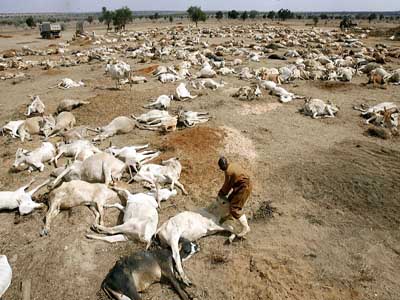
Dead goats and sheep starved to death due to drought. Photo courtesy of www.newstimeafrica.com


By Caroline Kibii

Climate change stopped being a myth. It became a reality. We are feeling the effects. Our health is facing a huge threat.

Rarely do we think climate change could turn human health upside down. It is challenging making most people understand how the changing climate is a major issue of concern. Some people view it as fictional; they think it is a creation in human minds.

Truth be told, climate change has a hand in the increasing cases of malaria. For a long time, malaria has been a killer disease in our country especially in the lowlands.

A study by the World Health Organization (WHO) shows that lack of enhanced control measures, climate change has a potential of increasing malaria prevalence in most parts of Kenya. In regions where malaria is already dominant, there is a high likelihood of increased transmission intensity and longer transmission periods.

A new projection indicates that malaria will spread into new areas, specifically highland areas, places with higher altitudes. Because of low immunity and low active monitoring, people living in altitudes beyond 1,100 meters are at high risk as outlined by World Health Organization. Climate variability and lack of preparedness will heighten the risk.

Presently between 13 and 20 million Kenyans are vulnerable to malaria. World Health Organization says the figures will rise because climate change is facilitating malaria transmission up the highland areas. Warmer temperatures attract disease-carrying vectors to regions they never existed before.

Prolonged drought is a result of climate change. The recent dry spell, January to March 2015 was a serious experience where you could hardly see any green leaves or trees. Animals died. People died. Accessing water points was a problem.

The rains then followed in April. The intensity of rainfall was high to an extent most places including the capital city of Nairobi experienced prolonged floods. Mombasa, Nyando and other places were flooding. Obviously, floods facilitate breeding places for disease causing vectors and waterborne diseases. Stagnation of flood waters cause contamination, which provide an avenue for diarrhea, typhoid and dysentery. Mosquitoes also breed well in such places and spread malaria.

Agriculture being the backbone of our economy, it does not thrive well during long drought periods. The changing weather patterns have turned most parts of the country to be food insecure. Relying on rain-fed agriculture has proven to be a huge problem in drier areas.

Because of food insecurity, malnutrition has gripped in. Balanced diet is a luxury to most people. Accessing even one meal, a day is a problem especially in the Northern parts of Kenya. We have seen children who are malnourished due to lack of food. Often, diseases such as kwashiorkor take advantage of such individuals; we end up losing lives.

When you have not taken any meal, we do not expect you to be energetic enough to hit the road in search of water and food for your family. How can a hungry person walk for 20 kilometers to fetch water?

Disasters after disasters have been occurring across the globe. The recent Indian heat wave in May 2015 that claimed more than 2000 lives is attributed to high temperatures. Australia was also a victim of heat waves in 2014. We may not have witnessed this literally but the high temperatures during dry seasons may be a warning sign to harder times ahead. Who knows what will happen tomorrow. We could be the next victims. We have been experiencing wild fires in our forests.

If climate change is not addressed immediately then we are yet to encounter many health implications. The government should allow the health sector representatives to participate in making decisions, during budget allocations and policy making sessions.

Nevertheless, it is possible to minimize the adverse health effects by developing mitigation and adaptation strategies. Mitigation means acting on reducing greenhouse gas emission into the atmosphere. It requires a collaborative approach. The gaseous particles in the airspace could contribute to respiratory allergies. It interferes with air quality.

We are not ready as a country to respond to disasters. Responding to floods or drought has been a nightmare. What would happen if a heat wave struck? I believe prevention is better than cure and preparedness is not an option.

Instead of rewarding our politicians with huge sums of money in the name of sitting allowances, we should accumulate that money and procure machines to help in predicting and responding to disasters. More professionals should be sponsored to acquire technical expertise to handle disasters. The problem with us is that, we are used to acting when the problem has already occurred, when we have lost lives and property.

The complexity of addressing climate change effects is that different parts of the world experience different implications. For instance, people living in the floodplains will experience rivers or lakes flooding.

Increased global temperatures do not know tribe or race. Floods will not select a few; it will sweep everyone irrespective of the social class. We share oxygen, when it is contaminated with greenhouse gases, we shall all be affected. Not unless you have your own air, control the atmospheric temperatures and rainfall, you are not immune.

The writer is an environmentalist

Why the Auditor General’s report may gather dust

Auditor General Edward Ouko. Photo courtesy of www.kenya-today.com

Kenyans have been outraged by the recent Auditor General’s report on corruption and misuse of funds in various public institutions but perhaps nothing concrete, in terms of prosecutions will come out of it, giving credence to calls for a shift in how auditing process is done. In audits for the period 2013 to 2014, the financial records of the institutions were spotlighted, some having grave issues while others it was largely failure to provide documentation.

Indeed the main issue raised of the sh66.7 billion of unsupported expenditures in the national government was because of failure to provide evidence of the expenditures. This will certainly be cleared soon when Parliament sits to deliberate on the matter.

First things first, the Auditor General Edward Ouko is expected in Article 229 (4) to provide the report six months after the financial year. He has done so seven months after the deadline.

Secondly, Parliament is expected or supposed to deliberate on the report and recommend actions taken within three months of receipt of the report. Going back past reports, from the Public Accounts Committee (PAC) nothing concrete may come out of their discussions hence the statement the reports may gather dust.

A look at the PAC report of the 2012-2013 audit from the Auditor General provides snippets into how PAC works and expectations of the report they produce.

One thing that stands out is that it is a copy paste of the Auditor’s report where the first parts of it are the exact same.

Secondly, sweeping or general statements are made that paint a gloomy picture to Kenyans who expect the August House to raise to the occasion and stamp out corruption.

Thirdly, deadlines made have no mechanisms for counter-checking or rather Kenyans have no way of knowing whether they were met and if not what was done afterwards. This is something the Access to Information legislation should help unearth but which citizens should take up to do some follow-ups.

On the Ministry of State for Defence in the basis for a disclaimer opinion on the failure to prepare financial statement by the KDF, PAC report says

The Accounting Officer admitted the audit query and attributed the occurrence to lack of format for preparing the statement.

The committee was not persuaded by the Accounting Officer’s response and recommends that he must engage the National Treasury with a view to agreeing on a format for preparation of the accounts after which she should prepare the statements and submit them for audit verification not later than 31st December 2014.

As at today, no information is public as to whether she actually provided that information to PAC or took up the recommendation to engage in Parliament. The Accounting Officer was actually Nancy Kirui. A disclaimer audit opinion letter is the worst audit report an institution can receive. Auditors issue the disclaimer letter to indicate they cannot form an opinion regarding the institutions’ financial statements.

On a different issue in which PAC made a substantive decision regarding the same KDF and Accounting Officer, nothing has been done, or has been provided to the public.

The Auditor General raised concerns regarding the illegal transfer of funds totaling to sh6,684,970,958.00 and PAC agreed with the findings of the Auditor. It therefore stated that

Whereas the Accounting Officer argued that the transfer was legal because it was sanctioned by the National Treasury, the Auditor General maintained that it contravened Section 5.2.10 of the Public Financial Management Act 2012 which prohibits reallocation of funds from one entity to another.

The committee (PAC) finds the Accounting Officer to have breached government financial regulations and procedures and recommends that the Appointing Authority should hold him personally liable pursuant to section 68 (1) and (2) of the Public Finance Management Act.

There was a change in government and the previous Accounting Officer, is out there and nothing happened.

In the Ministry of Education, on the basis of a disclaimer opinion on the accuracy of the appropriation account regarding a variance of sh184,924,488.79, the Auditor General flagged this as amounts that could not be explained or reconciled. PAC report said

The committee heard evidence that this matter had been resolved as the Accounting Officer had explained and reconciled the differences in question and the Auditor General was satisfied.

Te Committee noted that had the Accounting Officer ensured timely action on the Auditor General’s management letter, this matter would not have been an audit query.

The committee recommends that the Accounting Officer should institute measures to ensure that the Ministry always acts promptly on the Auditor General’s management letter to forestall audit queries.

The above, in paper, indicate that the Auditor General agreed or was able to reconcile the figures. However it is not clear whether the Auditor provides to PAC a list or institutions and amounts reconciled and which ones have not. Such a list would help cement a belief that indeed this was done.

The above comment is copy paste on all of the issues raised in other institutions like Ministry of Roads, IEBC and Ministry of Defense.

On the basis of qualified opinion raised to the Independent Electoral and Boundaries Commission (IEBC) on un-Vouched expenditure totaling to sh4,690,168,908.00 raised by the Auditor General, PAC report states

The Accounting Officer informed the Committee that the expenditure of sh4,690,168,908.00 was incurred at the Regional Offices relating to hire of transport services for various activities such as the general election and voter registration.

The Committee recommends that the Accounting Officer should ensure that the vouchers are submitted for audit verification not later than 31st December 2014 failure to which the Appointing Authority should hold him personally liable pursuant to Section 68 (1) and (2) of the Public Finance Management Act 2012.

A qualified audit opinion letter indicates that auditors found issues in an institution’s financial information. These issues prevent the auditors from issuing a clean opinion on the institutions operations.

It should be remembered that PAC has had wrangles and the current one just took office a few months ago. Certainly the previous PAC did not inform Kenyans of whether these deadlines were met and if not what was done thereafter as they recommended.

Where a similar issue or that of unsupported expenditure comes up, the response is as above, word for word and only specific details like amount changes.

Perhaps Kenyans should observe what the current PAC does with the latest report. It is hoped that they will not wait until next year to release their report which will also be toothless.

Critically also, the Auditor General needs to be producing these reports in time so that future audits be used as a basis for budget allocations and those who failed to undertake proper accounts management and expenditure be punished so as to serve as a lesson.

Makueni County Assembly passes Supplementary Budget Appropriation Bill

Makueni County Assembly Photo:Communication Unit
Makueni County Assembly
Photo:Communication Unit

Makueni County Assembly has passed a Supplementary Appropriation Bill that seeks to allow the County Government to spend a supplementary budget of Sh2.4B.

The Sh2.4B is a balance of the funds that the county was allocated in 2014/2015 financial year budget and was not utilized. Out of the total, Sh2.1B has been allocated for development while approximately Sh336M will be used for recurrent expenditure.

The Department of Water, Irrigation and Environment received the highest allocation of Sh588M. The department has embarked on an ambitious water harvesting program that is aimed at cushioning residents against the perennial water problems and this could perhaps explain the allocation. The department also received the second largest share of the 2015/2016 budget of a whooping Sh791M.

The Department of Health Services, which received the highest allocation in 2015/2016 budget of close to Sh2B, received the second largest share of the supplementary budget of Sh265M followed by the Department of Transport and Infrastructure with an allocation of Sh250M.

Other departments that received significant allocations in the supplementary budget include the Department of Agriculture and Livestock with an allocation of Sh230M and the Department of Gender, Youth and Social Services, which received Sh222M.

The Department of Finance, Devolution and Information, Communication and Technology and the County Assembly are among some of the departments that received the least allocation with each receiving an allocation of Sh13M, Sh17M, Sh32M and Sh39M respectively.

Chair Budget and Appropriations Committee Francis Mutuku while addressing journalists after the bill was passed expressed his confidence that the County Executive will implement both the supplementary and the 2015/2016 budget for the benefit of the residents.

Mutuku also appealed for patience and support from the residents saying that the County Government has now embarked on development.

Mutuku’s sentiments were also echoed by Mavindini MCA Martin Mutuku who said that the onus now lies on the County Executive to implement the budgets.

The passing of the bill comes barely a month after the 2015/2016 budget of sh6.3B was approved. If the budgets are fully implemented then the residents of Makueni will have a reason to smile as the two budgets can have a great impact in terms of development

Meanwhile, the County Assembly has gone for recess and will resume of September 8.

Mbooni MP urges residents to register as voters


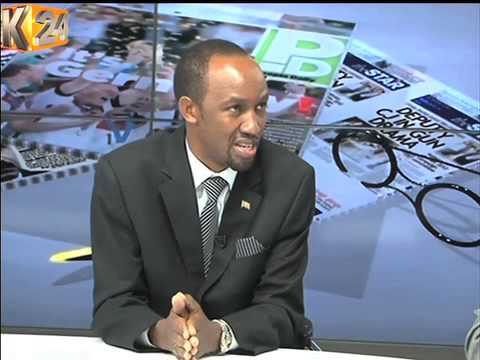
Mbooni MP Kisoi Munyao Photo:K24
Mbooni MP Kisoi Munyao
Photo:K24

Daniel Kituku

Mbooni MP Kisoi Munyao has urged residents in his constituency to register as voters ahead of the next general elections. Kisoi said for residents of Mbooni and the rest of Kenyans to elect leaders of their choice they should register as voters in large numbers and vote in leaders who will serve them.

Speaking recently when he inspected Constituency Development Fund (CDF) projects in Mbooni, the legislator said the Kamba community should rally together and ensure that as many people as possible have registered as voters so that the community can have a bargaining power at the national politics.

“It would be unfortunate if those eligible as voters do not register. We need to have numbers as a community,” said the MP.

Kisoi also called on the youth to get identification cards to enable them registers as voters and challenged them cast their votes during the elections day.

“It is one thing to register as a voter and a totally different thing to vote,” he said.

The MP call comes at a time when an Independent Boundaries and Electoral Commission (IEBC) official in Makueni Sub County has expressed concern over the low turnout of residents registering as voters in the ongoing continuous voter registration exercise.

Registration Officer John Waita said since the exercise kicked of last year, only 646 people have registered as voters in Makueni Sub County.

Waita attributed the low numbers to apathy especially among the youth and underscored the need to have campaigns to educate people on the need to register as voters.

“Many people are ignorant on voter registration and some wait until the last minute rush and some miss out due to the stringent timelines given,” he said.

Kenya can achieve its 30 percent reduction target in greenhouse gas emissions by 2030

solar

By Caroline Kibii

Last week, Kenya became only the fourth African country to commit to binding targets to reduce carbon emissions under the UN. Kenya seeks to reduce its greenhouse gas emissions by 30 percent by the year 2030. To achieve the target, the county aims to continue implementing the National Climate Change Action Plan of 2013-2017.

In the spirit of the late professor Wangari Maathai, part of this commitment includes the goal of achieving at least 10 percent tree cover of all land area. However, there are those who believe that it is possible to meet, and even go beyond the target.

It is not news anymore when we hear of a politician illegally owning a large piece of land in the middle of a forest. Not just owning the land, but also engaging in other developments that alter the natural state of the forest.

In a manner that preserves human dignity, the government has been keen on evicting and relocating people living in the forests as a way of enhancing an intra and inter-generational equity.

Under Kenya’s Intended Nationally Determined Contribution, Kenya recognizes its total greenhouse gas emissions standing at 73 metric tonnes of carbon dioxide equivalent in 2010.  This is because a larger population relies on wood fuel as their only source of energy.

In order to mitigate the risk, Kenya has committed to provide clean energy technologies to lower over-reliance of wood fuels by enhancing solar, wind and geothermal energy productions.

With the expected high rate of population increase, it calls for more infrastructures and more land for settlement and agriculture. Enlargement of urban centers will be inevitable. More energy will be needed to serve the needs of the growing population. A combination of these factors will eventually contribute to high emission levels that heighten Kenya’s vulnerability to climate change.

Natural catastrophes like floods and droughts resonate well with Kenyans thanks to climate change. These extreme climatic conditions have led to an economic loss to the country. Such events occur almost at the same time annually, a situation that can be reversed if the necessary mitigation and adaption measures are put in place.

Under the National Climate Change Action Plan, extreme climatic occurrences could cost the country’s economy approximately US$500 million annually. This translates to about 2.6 percent of national GDP together with long-standing effects curtailing economic growth.

The action plan further indicate that the 1998-2000 drought is estimated to have led to about US$ 2.8 billion loss emanating from lower hydropower generation, reduced industrial activity, loss of livestock and crops and forest fires. The 1997-98 floods that affected about 1 million people led to a loss of around US$ 1 billion. Lives were lost, crops destroyed, infrastructure damaged and high health demands.

Kenya has lost more than it can quantify to disasters contributed by climate change. Landslides, water pollution, soil erosion and air pollution are some of the occurrences that human beings partly contribute in one way or another.
With the right approaches, Kenya can effectively mitigate climate change risks. Promotion and financing of climate smart agriculture is a vital way of addressing soil erosion and food insecurity. Such issues drive citizens to engage in damaging activities as a way of generating income to support their families. Irrigation has proven to be sufficient in arid areas where crop production is almost impossible through rain-fed agriculture.

Perkerra irrigation scheme is now producing food that is consumed as far as Nairobi.

Burning fossils for instance, charcoal has become a major source of income to most rural dwellers because they can easily access trees. The activity requires neither skills nor a license to practice.  While it may not be easy to enumerate the amount of carbon emitted through burning charcoal, it stands as a major contributor.

The US$ 438 million committed by the Government of Kenya between 2005 and 2015 towards programmes considered significant in addressing climate change risks as per the Action Plan is commendable. Nevertheless, committing money without considering the views of the public, when making decisions may delay or hinder target attainment.

That ‘mama’ in the village needs to understand the meaning of cleaner technology, climate smart agriculture or renewable energy. She needs to understand why the government is putting aside that much money to some projects. Until now, people cannot comprehend how a natural disaster like drought would have been contributed by human activities hence the need for civic education.

Proper implementation of policies will make it possible for Kenya to move from a lower middle-income country to a higher level. Adherence to the provisions under the Climate Change Bill of 2014 and the formation of a Climate Change Council will ease the process of developing mitigation and adaptation approaches.

The writer is an environmentalist.

Nakuru PWD’s accuse government of sidelining them in NYS jobs

IMG_0683
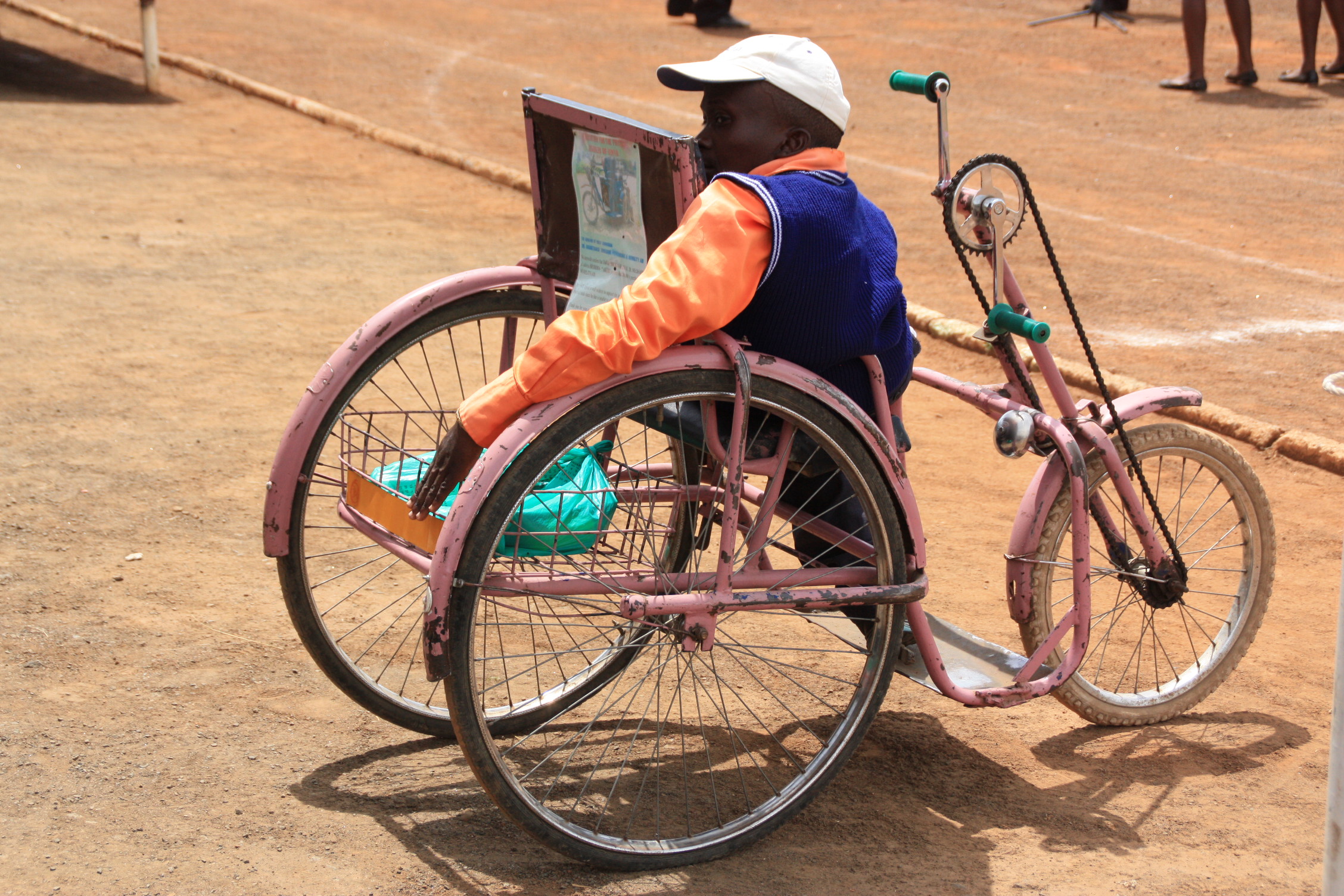
A man with disability a pas function in Afaraha stadium. The Senator’s office has confirmed to having received complaints of the discrimination (Photo: Kioko Kivandi).

By Lorna Abuga.

Persons living with disabilities (PWD’s) in Nakuru County feel sidelined in the ongoing community projects in which the government is engaging youth through the National Youth Service (NYS) programme.

The NYS community projects include road construction, dam construction, upgrading of slums and agribusiness training and were launched in the county about a month ago.

Peter Maritim who is physically challenged and is who is one of the leaders of PWD’s in Nakuru claims that when the residents of the county were recruited by NYS officials in the social transformation and vocation training they were left out.

“None of us was recruited for the training exercise and this made some of us to feel inferior,”

he told Kenya Monitor. Maritim who is also the Vice Chairperson of the Nakuru sitting volley ball team argued that this was a form of discrimination based on physical conditions. He said it should be discouraged.

Echoing Maritim’s words, Philip Omondi another PWD in the county told Kenya Monitor that persons with physical challenges in the county are facing numerous hurdles in all spheres of life.

“I am shoe cobbler and when the hawkers were registering to be given stalls I did so but when the time came for the allocation I was left out,”

he said recalling the exercise that saw the Nakuru County Government relocate hawkers from the middle of the town at the crack of the year.

Both Maritim and Omondi feel by being segregated from the projects they are being denied an opportunity to transform their lives.

“Most of the people who have benefited from the NYS project have experienced social and economic transformation because they are paid wages based on the services they render and on top of that they are organized into saving and cooperative societies (SACCO’s) where they save 30 percent of their monthly allowances,” said Maritim.

While Martim admits that most of them can not carry out heavy tasks he feels but they are better placed to carry out supervisory roles and thereby there were no tangible reasons for them to be discriminated in the project.

“It is a fact we are not in a position to do heavy work but most of us are intelligent and when given a chance we can supervise people.”

“When we raised an alarm to the NYS authorities we were assured that we will be considered but that has remained to be an empty promise.”

What the group is asking from the county government is to take measures to ensure that they are fully involved in all projects including tenders.

“The society needs to nurture the talents and skills of people living with disabilities by providing necessary facilities and resources,” says Omondi.

“This will place them in a better position of becoming independent and financially stable and make them stop living in the streets as beggers that has been associated with the vulnerable group,” he adds.

The Constitution of Kenya encourages the involvement of marginalized groups such as women, persons with disabilities and youth in all activities of the county. All the instruments of devolution are also encouraged to do the same. The Constitution also advocates against discrimination of any kind including of persons with disabilities.

While the PDW’s in Nakuru are optimistic of benefiting from the devolved system, they feel more needs to be done.

“The county government has failed to boost our living standards by providing us with necessary resources,” he concludes.

The NYS projects were launched in Nakuru County last month with an aim of involving youth in community activities such as slum upgrading in the Nakuru Town West constituency. An official at the Senator’s office in the county has told Kenya Monitor that they have received official complaints of alleged irregularities in the recruitment process of those being involved in the projects.

“We have been told that there was no proper ethnic composition, the job descriptions in the projects are also not clear and most of the time there is no work to do,” said Joseph Omondi.

Omondi who is the Manager at the Senator’s office said they will investigate and give an official report of the situation by end of the week.

Dedan Kimathi University students climbing Mt. Kenya to raise money

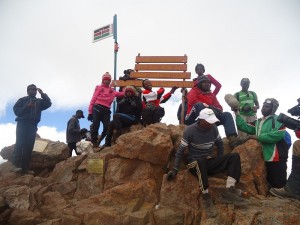
Students of Dedan Kimathi University at Mt Kenya during the 1st Edition of Climb To Educate

When I first heard of Mt Kenya Climb to Educate Charity Campaign, my thoughts quickly ran to back in high school and I remembered students who could barely afford to stay in school as they lacked adequate school fees. In high school we paid just about sh13, 000 for a whole term. Then the school would offer to pay your school fees if you were a good performer and it worked out for majority of the students until we were done with school. Now the years have passed and the tides have turned it is now three years into campus and the thought of these financially needy students escaped our minds because we were busy building careers and getting ready to be self-sponsored adults.

One thing has remained constant all through be it as it may, are the financial problems with students. Students need school fees, clothes, and money to support their up-coming talents. They also need credit to call home once in a while, books and stationary and laptops among others. The government does as much as it could but more often than not you will find students taking academic leaves due to financial issues. Parents can only handle so much, so they prioritize taking younger siblings to school and you totally understand and agree with their motive but what do you do? In an ice cold world few options are left to make a way through and the light at the end of the tunnel grows dimmer and dimmer as times progresses and your dreams come crushing all around you like hail.

The Higher Education Loans Board (HELB) will throw a sh14, 000 loan at you and suggest you make it sh17, 000, pay your fees then sort your food somehow but then that is as much as the government can do and for that we are grateful. The community will raise you, support you up your feet and hold you close to its bosom like an infant, pay your fees, give you pocket cash and send you to school with utmost expectancy if you are lucky, if you are not, you may have to seek  an academic leave due to financial reasons.

Endowment Fund

Dedan Kimathi University of Technology students found this inhuman and decided none of their own would have to go through this and therefore came up with the Climb to Educate Charity Campaign. This campaign saw to it that the school had its own endowment fund whereby students who could not afford their schooling had an assured source of support. So when you would go to queue in front of the registrar’s office with a heavy heart and out of choice to ask for an academic leave because of finances, he would pick your hand and lead you to class assuring you with reasons beyond doubt that everything would be okay.

Climb to Educate launched on early this year and saw a population of about 300 and staff climb up Mt Kenya in February this year to Lenana peak 4, 000 and 85 KM above sea level. And through the intrepidity of the mountain. Together students and staff combined, we sought to catch the county’s eyes and ask for them to light this lamp that had been turned off at the end of the tunnel and they did. Sponsors had come in and promised to work hand in hand with us. Amongst them was the Kenya School of Adventure and Leadership, Vevo Energy, The Senate, students and staff. That was February.

Climb to Educate 2nd Edition

The Mt Kenya Climb to Educate Charity Campaign Second Edition has already begun. Mt Kenya Climb to Educate Two has a governance of six committees namely:

  • Endowment Fund Committee
  • Publicity Committee
  • Physical Fitness Committee
  • Logistics Committee
  • Community Service Committee
  • Drugs and Substance Committee.

The Chairman of the initiative Mr Darius Muthui Mindu is a very energetic and passionate leader, he keeps everyone on their toes with energy chants all through and hilarious jokes. In contrast to the first edition, the second edition initiative has put in plans to bring in more students and staff, more corporates and the Nyeri County Government as sponsors. Apart from that, the physical fitness group has launched martial arts training for interested participants. Languages such as German and French have been introduced also for interested candidates.

The Dedan Kimathi University endowment fund is now open for contribution all over the world visit www.dekut.ac.ke for details.

Nakuru volley ball veteran promotes self actualization of PDW’s through sports

0
Sitting volley ball
A sitting volleyball team in a match. Ofwenje is the coach of the Nakuru county sitting volley ball group (Photo: Paralympic Movement).

By Lorna Abuga.

When Florence Ofwenje was retrenched from the Kenya Posta and Telecommunication Company in 2007 she opted to use her volleyball skills to nurture the talents of the younger generation.

Ofwenje who is the Nakuru sitting volleyball team coach began playing volleyball at a tender age says her talent made her to secure a job at Kenya Posta and Telecommunication, Nakuru branch immediately she finished her O levels.

But in 2007 when she received a retrenchment letter signifying that her employer was longer interested in her services, she sensed danger.

“When I lost my job I encountered a lot of difficulties and this provoked me to use the skills that I had garnered in sport to offer voluntary coaching training to youths who had interest in volleyball so as to make a difference in their lives.”

However she recalls in the year 2013, when she was training some youths at Afraha Stadium, people living with disability (PWD’s) approached her and requesting to be trained so as to enhance themselves through sports.

“I had never trained individuals with special needs but this motivated me to acquire skills of training them because individuals with disabilities are often sidelined and often take part in activities as passive participants,” she said.

Luckily though within that period the ministry of sports organized a training for coaches at in the town where they were equipped with skills of handling people living with disability.

This acted as a motivator and as result she was able to mobilize people living with disability and they formed a team known as the Nakuru Sitting Volleyball Group.

When she started coaching the team they faced many difficulties as the team did not have enough resources.

“The team mainly consists of players who are physically challenged and this means that they always play while sitting down on the grass which in most cases distracts their movement.”

“To stop that they required a special carpet as well as also a special shade to shield them from direct sunlight,” she said.

Over the years the team has been able to represent the county in several competitions country wide with two of its players being selected to join the national team early this year. This makes her proud.

What pulls them back however is the fact that most of her group members have to balance between fending for their families and the training. Most of them are either cobblers or hair dressers and earn very low incomes yet the sport does not earn them anything.

“Since I was retrenched I have been selling second hand clothes for my upkeep,”

she says while revealing that even getting funds to attend competitions is usually an uphill task for them.

“I think the players should be funded to boost their morale.”

Ofwenje is a mother of four who cleared her O levels in 1985. While working with Kenya Posta and Telecommunication she was selected to be part of the Kenyan Queens team. She was from 1992 selected to represented the country in international competitions for several years.

Constitution is the cure to Kenya’s problems says Mombasa Senator at Jukumu Letu launch

Hassan Omar addressing Jukumu Letu participants at Mama Ngina grounds Mombasa

By Davis Mwandawiro

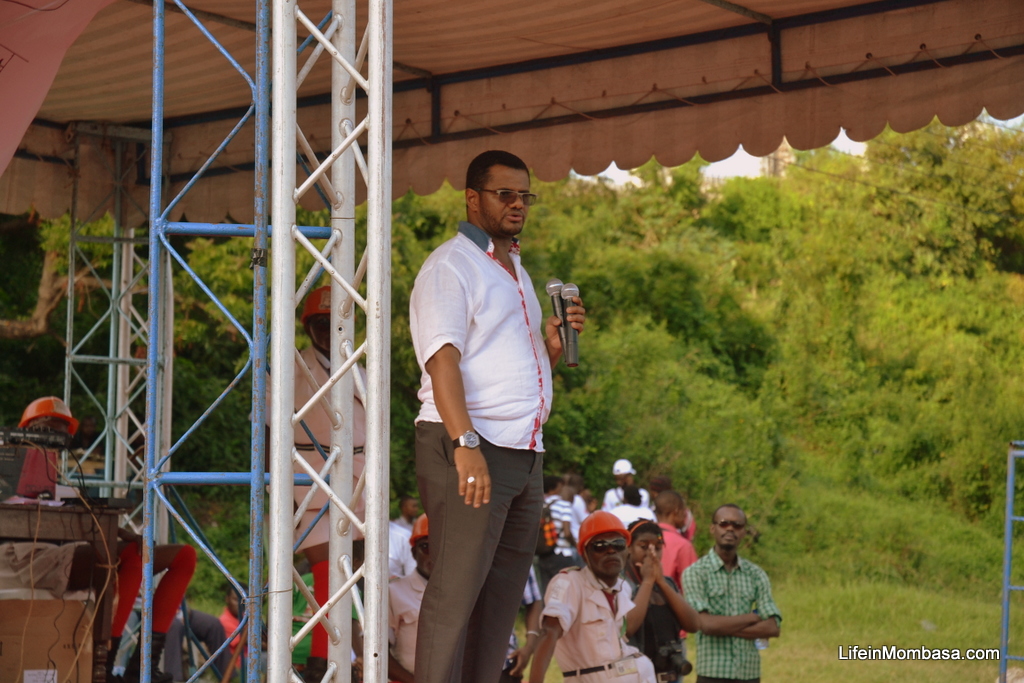
The Jukumu Letu launch at Mama Ngina in Mombasa during the weekend was nothing short of pomp and beauty. The event was gracefully attended and was full of entertainment from dancers to puppet shows all focusing on the main objective of sensitizing the public about the Constitution of Kenya.

Among the attendances was Senator Hassan Omar who as always came out guns blazing about the recently released Auditor General report that has been the bone of contention in the region over allegations of misuse of public funds.

“The Auditor General released a report but we Kenyans are arguing with each other based on tribal lines. People should be accountable. The funds that are missing must be recovered,” he said.

The Senator also urged the county officials to go the public accounts offices and answer those queries instead of responding to the press.

“We must all answer the queries raised by the Auditor General. All those in positions of power must uphold their responsibilities. If you (the people) don’t push the leaders, stop petty tribalism arguments or don’t know your constitution you will not bring the change Kenya needs.”

Senator Hassan Omar is well known as an activist and a champion for human rights. He encouraged the masses to create public participation forums in which meaningful discussions can be held with the hope that those words may be forged into actions.

“I am very pleased with the online forums about public participation in Mombasa. I like what young people in the civil society are doing and I attend all the forums when called upon because I have nothing to be afraid of”

said the senator.

However he also criticized the lack of good governance in the counties

“I was an activist and still I am. Obama talked about all the issues in the country. We have a new Constitution but we don’t have new leaders to effectively implement it.”

He further emphasized on public participation by urging the people to push the leaders and check their actions especially the ones in rural areas,

“Push them to be more accountable for their actions and be as much involved as possible with matters concerning not only the county but the whole nation as well. County governments should not only bring good governance and democracy but also deliver services to the people.”

Senator Omar’s parting short was that leaders should uphold the Constitution of Kenya and hoped that Mombasa county will strive to be better.

MP David Gikaria conflict with Governor Kinuthia Mbugua replicated in court

David-Gikaria

By Lorna Abuga.

When David Gikaria Mbugua appeared in court to face charges of “disposing solid and liquid waste on a public highway” last week, he made a plea that added to the growing rift between him and Nakuru Governor Kinuthia Mbugua. Although the two are allied to Jubilee they have constantly been at logger heads and one might actually think Gikaria is the official voice of opposition in the county.

Gikaria who is the Nakuru Town East M.P had been arraigned before Resident Magistrate Judicaster Nthuku on Wednesday on charges of disposing waste in areas that are not approved by the National Environment Management Authority (NEMA).

According to the NEMA prosecutor, Moses Mburu the legislator had been a bad example after he spearheaded the dumping of crushed bottles and boxes of liquor collected from factories and depots raided in a crackdown on second generation alcohol on un-designated public land.

“He failed to give proper directions on the disposal of waste and as result making the environment hazardous and thereby endangering human lives.”

Two of these areas as is public knowledge are the main roundabout that Gate House Cigma Building and the KFA roundabout.

The first time M.P who is not new to controversy however declined to take plea claiming that the charge sheet was defective.

“I expected the charge sheet to be signed by the NEMA prosecutor owing to the fact they are the ones who have levied charges against me and not an official of the county government,”

he said raising queries on why an official of the Mbugua-led county government had signed the charge sheet.

Further he took issues with the court in which he had appeared terming it a “Municipal Court” and even threatening not to accept summons form it. Apparently the court is housed in within the building that houses Governor Kinuthia Mbugua’s office, an issue he was not at peace with.

“The court is “illegal and unconstitutional” because it is run by the county government and thereby I have no confidence that it will handle the matter fairly,”

he argued asking the Magistrate to let his case be handled by another court which is not “associated with the county government” which he accused of conspiring to have him charged.

The Magistrate however dismissed him saying that she is a judicial officer employed by the judiciary and not by the county government as he had alleged. He was released on a cash bail as his case was set for hearing on October 19.

Although Gikaria has denied having any interest in the Nakuru gubernatorial seat, observers think by being in constant clash with the incumbent, he is indirectly testing the waters.

Nakuru lady cries after doctor ‘terminates’ her pregnancy

Pregnancy SnipThis is the story of Mary* a 20 year old lady from Nakuru who was allegedly forced to believe she had lost her pregnancy when her baby was still alive. And even she was induced into labor and she delivered the baby, doctors at a hospital she visited in the county may have done little to save the baby. In this piece we share the transcript of her testimony.

I used to go to a clinic at a different hospital, (before I came to this hospital). They used to treat me very well. They used to tell me that my baby is well positioned. But after a while my legs started swelling, so I was told may be it is because of standing for too long. They told me to keep on going for check up, but I decided to come to this other hospital so as to confirm if my baby is okay.

So at this second hospital, I was booked for consultation and the doctor told me that swelling of legs during pregnancy is normal. The doctor however told me that if I have enough money, I can go for a scan. I told him I have enough money and I was booked for the scan. The scan (allegedly) indicated that the baby was not breathing (sic).

I asked what that means and I was told that it shows the baby is dead. When I asked what I will do next, I was advised that I would be admitted in the hospital and then have the doctors assist me ‘remove’ the baby. But all this time I would feel like the baby was moving inside me. I told the doctors but they would not listen to me. So they induced me into labor.

On the first day, no one attended to me. I was induced on the second day. I waited. On the first day after they induced me, nothing happened, so they induced me again on the second day, and still nothing happened. When they discovered this, they doubled the dose and I went into labor. It took me about 6 to 7 hours.

I had been told initially that once I get into labor I should move to a delivery bed that I was shown. When I pushed the baby, the baby came out alive and cried so much before falling down. It took about 30 minutes for the doctor to come. It was at night and those on shift were asleep, so I was assisted by one of the patients with whom I was admitted who went to call them.

When the doctor came, the baby was not attended to but continued to lie on the floor. I was attended to first. the doctor then told me, “I don’t think your baby will make it.” I asked for the reason but no explanation was given. The baby then yelled so loudly and I told the doctor, “but how come you are saying the baby will not make it yet he is alive?”

I had told the doctor that I want to go to the toilet, so I was told to just go. By the time I came back, the baby had been taken to an incubator. I rested on the bed and the doctor gave me some medication while telling me that it will take the mercy of God for the baby to survive. I kept on asking what the baby’s problem is but the doctor was not giving me any clear information that I could understand.

The next morning I was called to go and see the baby and saw that all was well. I asked the doctor at the incubator if anything was wrong and I was told I should just pray as the baby was very small. I had gone in the morning. So in the afternoon that day, I was called to go and see the baby again only to find that the baby was dead. I confirmed that the baby was dead, as the baby had even been placed out of the incubator and when I checked I saw for sure the baby was dead. After that I went back to the ward and was given some pain killers. Till now no doctor has attended to me more than 24 hours.

I came to the hospital on Tuesday last week. The doctors have been giving me medication and they are asking me if I am in pain. They have not given me the body of the baby and they have not even told me where it is but it’s okay. I don’t want to go bury the baby. I just saw the body and left. It’s very painful. There were rumors that other mothers have gone through an experience such as mine. But I confirmed with one of the ladies and I realized that hers was a miscarriage.

For now I am just waiting. I don’t know when I will be discharged. One of my relatives, my uncle, asked the hospital what I should do but they told him to stop disturbing them.

What I am asking from the hospital is to let me go. I was not ready for this. Now I have a hospital bill to clear yet we were not ready for it now. We were to get ready by the ninth month. I am in pain and sorrow but I will be strong. What can I do? Even if the doctors ‘killed’ my baby, what can I do? They can’t bring the baby back to life. What can I do? I however don’t mind if someone asks the hospital on my behalf about my predicament.

This is not the first time that doctors have allegedly pronounced dead a baby before its time. While the foetus Mary was caring was pronounced dead before birth, recently, a baby who had been pronounced dead after birth in Nyamira was rescued just before relatives could conduct its burial rites.

But as Mary’s case is investigated and confirmed one of the questions that needs to be answered is whether doctors at this hospital killed her baby at the incubator to prove that it would not survive.

In our next post, we will give details of the hospital.

Krackwizz One Man Band, his story and why you should think outside the box

IMG_4091
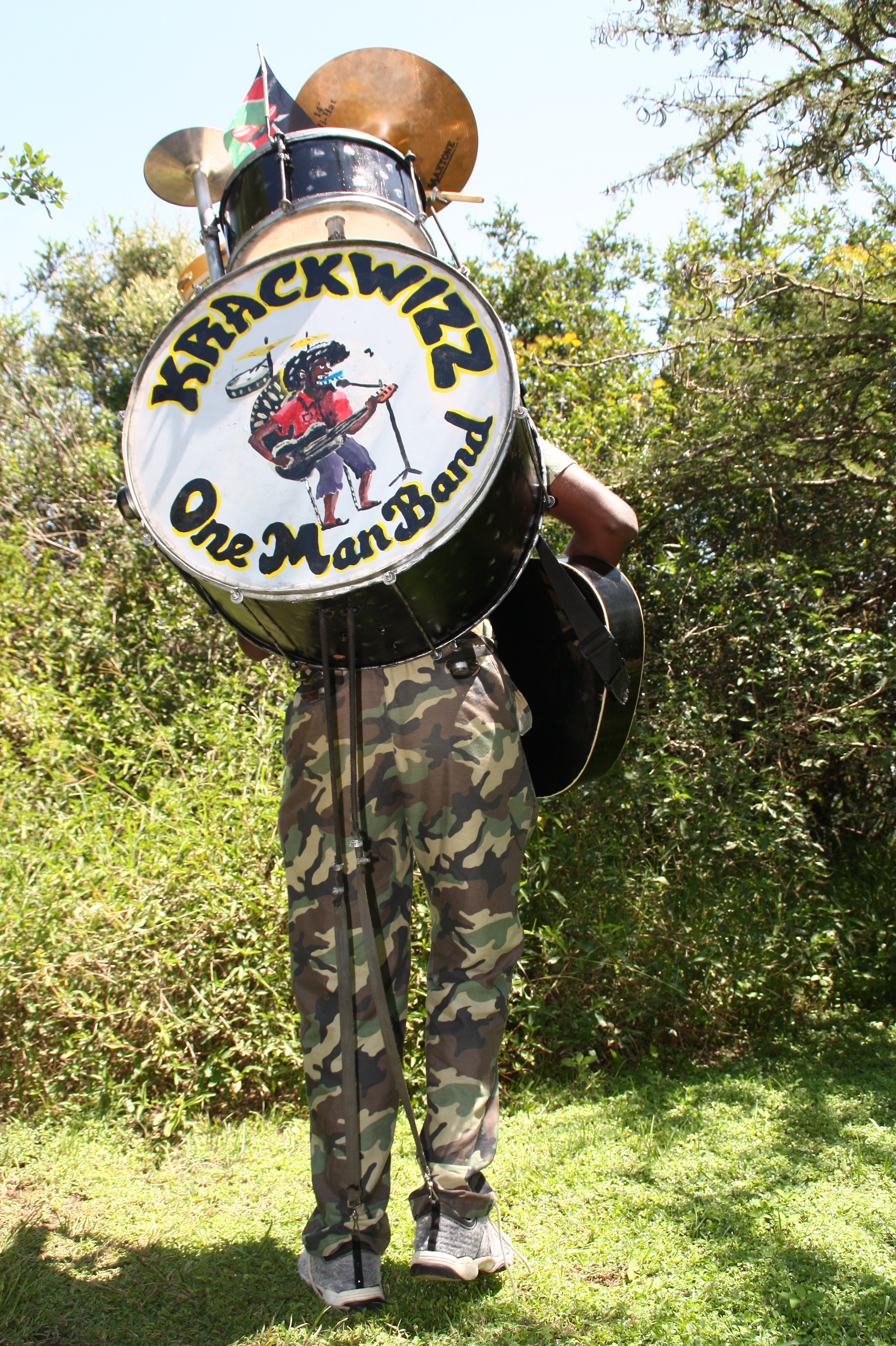
Joshua Kamau. He formed a one man band after his friends showed no interest in forming a band with him (Photo: Kioko Kivandi).

When Krackwizz, Joshua Kamau was let down by his friends after he approached them with the idea of forming a band, he decided not let go his dream of becoming a musician.

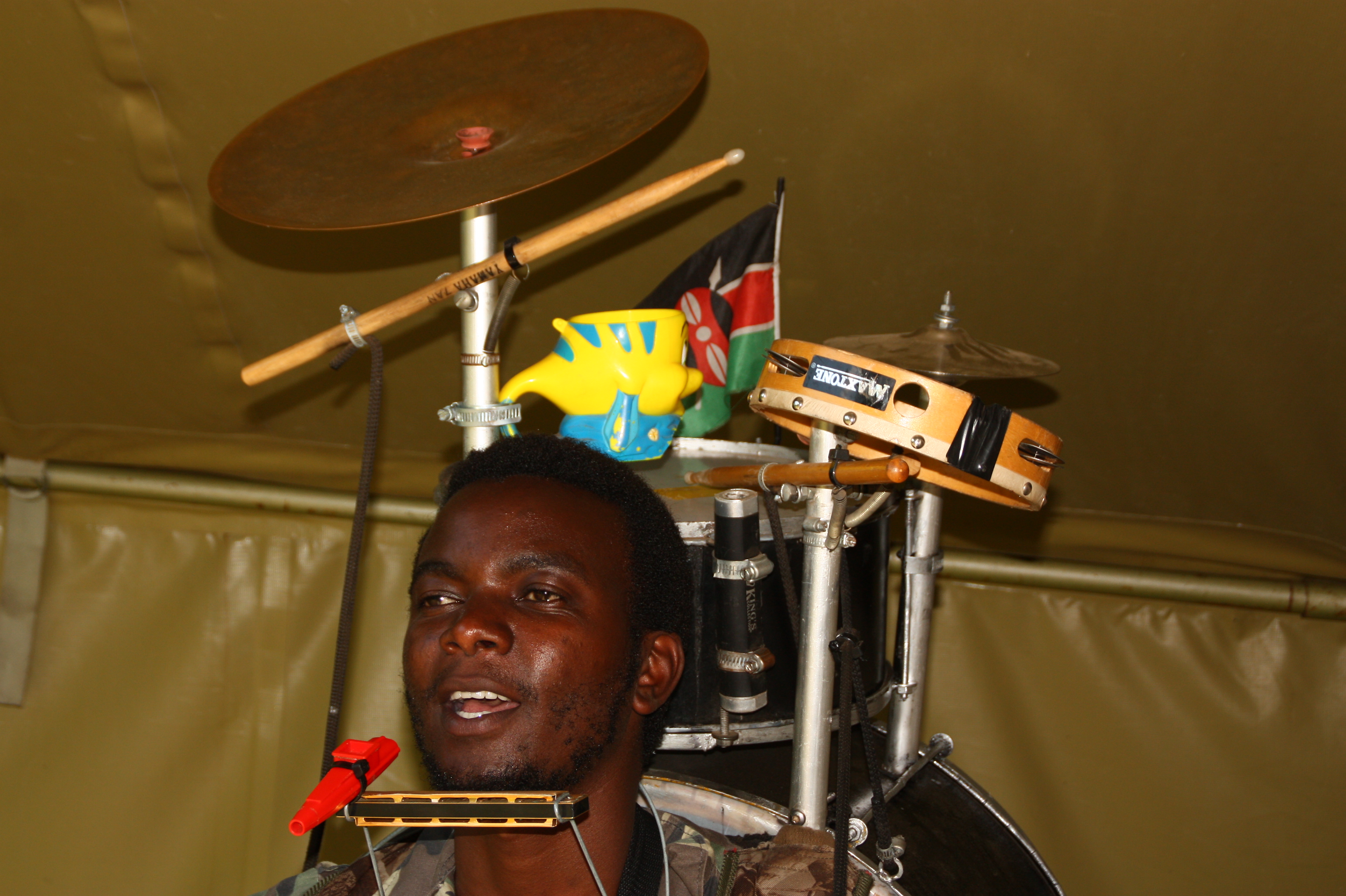
So instead of locking himself up in a closet he decided to go alone forming a one man band that would later see him get attention even from a corporation that is as big as Safaricom. But perhaps it is because he is so easy to notice. And that out of the way he does his art, or should we say “his thing” – he has more than ten music instruments that he connected together and that he carries on his back all the time during his performances.

His sight at times is that of a clown, not until you talk to him and realize he knows what he wants with his life. Added to his singing he says he usually plays 14 instruments, all by himself.

“They keep on changing depending on the performance,”

says the 30 year old man who hails from Murang’a county but who currently resides in Kibera, Nairobi.

“I started building the one man set up in January 2014,”

he adds of his music component saying that his first public music performance was in June the same year. That was after his neighbors and some of his friends who saw him perform asked him to try singing in the streets.

“It was at Yaya center,”

he reflects of the day that brought him his first pay, a cool sh10,000 which he used to buy more music instruments.

Krackwizz
Kamau and his music component which has more than ten instruments attached together (Photo: Kioko Kivandi).

But little did he know that he was being noticed. Within no time, Citizen T.V invited him for a show which did help to open up his world as it would see him get invited to other T.V shows in the country. And apart from being featured in a Safaricom advert in which he appeared as an extra, the Music Copyright Society of Kenya (MCSK) invited him to perform at its gala event last year.

Last week, the Kenya Monitor caught up with him at a camp in which the Institute for Education in Democracy (IED) was training youth from across the country on how to be ambassadors of democracy in their respective counties. He was a trainer at the camp.

“I was contracted by IED as a music trainer,” he disclosed.

“My job is to train the youth ambassadors on how to use music to communicate and share ideas with the community which can be through dancing, singing, and playing a music instrument.”

Although as a one man band, who works without a manager, he has been faced with many challenges, he is determined to realize his dream and now encourages other young people to work hard to achieve theirs.

“Everyone has a talent. Everyone has ideas and there are so many opportunities (for everyone),”

he sums up saying that he has made close to a million through his music in the last one year.

Listening to Kamau’s story one realizes that the world is nothing but an equal stage for anyone who is willing to take part in the act that life is. But above all, it resounds with this unending theme that opportunities only come to those who are willing and have the urge to take to the stage. It’s about thinking outside the box, or more still thinking like the box never existed in the first place.