Sunday, December 21, 2025
Home Blog Page 30

Obama’s Nairobi visit should unlock funding to tackle climate change

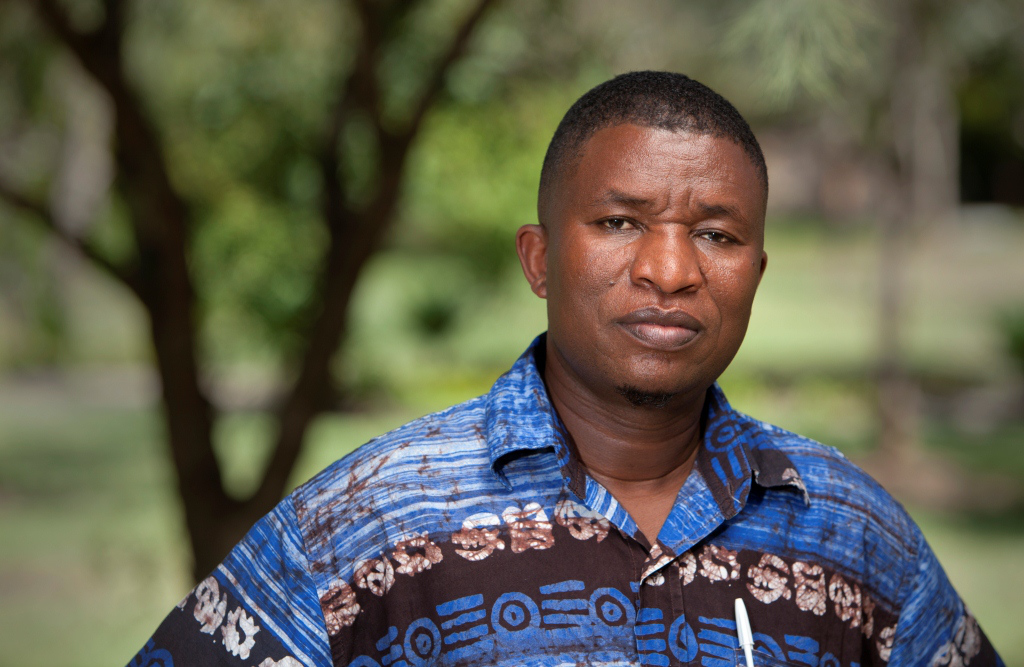
Mithika Mwenda Profile Pictures
Mithika Mwenda

By Mithika Mwenda

More than five years ago, in the dark negotiating halls of the Copenhagen climate talks, an agreement was struck that included a pledge of 100 billion dollars to help developing countries, like my beloved Kenya, cope with the havoc caused by climate change and facilitate a shift to low-carbon development pathways.

Back then, we didn’t call it a success. But it was something. A concrete manifestation of the understanding that rich countries caused climate change, and developing countries are on the front lines in the fight against it.

As momentum is growing ahead of the Paris climate talks in December, I’m hopeful that the time is right and world leaders can come together and build on that commitment and understanding. Because this is a crucial year when it comes to tackling climate change. The world has a unique opportunity to collectively turn one of the biggest challenges facing humankind into one of the greatest opportunities to build healthy planet. It’s an opportunity that we must capitalize on to ensure a better world for future generations.

But the question nagging me is: how can we reach a new agreement when old commitments haven’t been fulfilled? As of today, Development Agency Oxfam estimates that less than $20 billion per year of the $100 billion pledged for the Green Climate Fund have been flowing to developing countries.

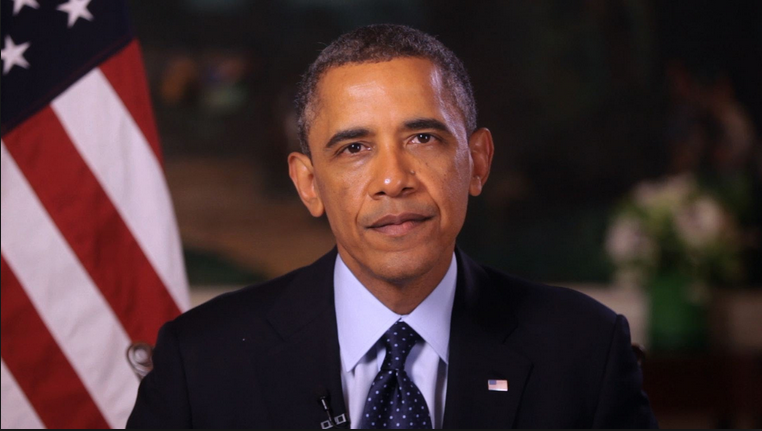
As President Obama pays us a visit to demonstrate his commitment to his brothers and sisters in Africa, I’m sure that he also brings a renewed commitment to help the continent adapt to climate change.

The UN Environment Programme (UNEP) estimates that by the year 2100, a 4.1°C increase in global temperature will cost the African continent 10 percent of its net GDP. UNEP also estimates that the costs of adaptation in the Least Developed Countries alone will rise to $50 billion per year by 2030, with a total of around $150 billion per year in all developing countries.

Countries in sub-Saharan Africa are not simply sitting by. Instead, they are collectively spending around $5 billion annually from their own budgets to adapt to climate change – far more than they receive from international sources in climate finance. Sadly, this is money that could be instead going towards building schools, roads and hospitals. Increasing financial flows to developing countries is essential to accelerate their transition to low-carbon energy systems and to protect vulnerable communities. And it is essential to bring about success in Paris.

Time and time again, President Obama has emphasized that no challenge poses a greater threat to future generations than climate change. Now, more than ever, it’s crucial that the United States stands up as a leader to ensure more governments deliver strong commitments on how to close the funding gap.

The climate crisis will never be tackled unless vulnerable developing countries receive the financial support they need to build resilience and cope with natural disasters and weather patterns. Taking actions now is not only important because of the dangers of disruptive climate change, but because a new climate economy will create better business opportunities, and improve our health, prosperity, and security.

Failure is not an option for Kenya, or Africa, and indeed for humanity.

The dramatic scenes of Vanuatu, where a Cyclone Pam left widespread destruction, will happen time and time again around the world, with increasing frequency. Even our own Mombasa will not be spared in the whole equation. It also is at risk of sinking.

I urge President Obama to stand in solidarity with the African continent, which has by far borne the greatest brunt of the global climate change crisis, despite us contributing the least.

Developed countries must demonstrate that they will abide by their previous commitments before entering into new ones. The survival of African countries – and our planet, depends on it.

It’s not about charity. It’s about justice. And survival.


Mithika Mwenda is the Secretary General, Pan African Climate and Justice Alliance (PACJA)

Stay safe online despite heightened cyber surveillance

Protect your data in an era of heightened surveillance.
Protect your data in an era of heightened surveillance. (wired.co.uk)

If you have been following the news lately, you may have come across the recent expose of the Hacking Group on wikileaks where confidential files from the company were exposed. Kenya is one of the nations that was in contact with the hacking group over plans to acquire cyber surveillance software Galileo.

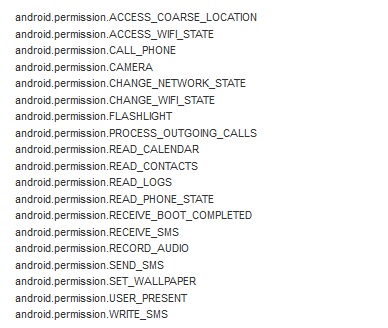
Using this system, an operator can switch on the microphone to listen to your conversation, track location, read messages and take photos stealthily.

The question on many people’s mind is how can one stay safe with so much cyber snooping going on. Someone could be looking over your shoulder this moment so read on for some important tips on how to maintain privacy online.

From time to time, developers discover holes in commonly used systems and send alerts on the updates to devices. Always update  your  android, windows and iOs systems as soon as one is available.

Another option is to download and run Detekt, an anti malware software that was developed specifically to find surveillance software like Galileo. Detekt was developed with the support of  Amnesty International.

Claudio Guarnieri, the developer behind Detekt was quoted on Amnesty’s website amnesty.org,

“There’s no transparency on how these technologies are being used, by whom and in what kinds of circumstances. The only thing we know is that they are being used a lot to stop activists and journalists.”

Detekt does not have malware removal capabilities, but it can tell you if your device is under surveillance, after that you have to seek expert advice.

Also, avoid torrents, cracked software and other illegal sites. Modified copies of legitimate software are put up for download on illegal sites and torrent shares with spyware and trojans embedded. Ensure you download software from sites of origin and always run an internet security scanner.

Your browsing activity is the easiest way to compromise your identity. You can remain anonymous by connecting through a Virtual Private Server (VPN) or using the Tor browser.  Both methods hide your IP address (and your location) to make sure that your online activities are not tracked. You can also use combine Tor and VPN for an anonymous but slower experience. This is especially important when you are sending information as a whistle blower and do not wish your location or identity revealed.

READ: How Hacking Team software is used to track down dissidents and activists

Other ways you can protect yourself disabling browser history, auto logins and cookies. Lots of websites have tracking cookies and can monitor your online activity and history. Some Trojans steal this information and transmit it to a control centre. In addition, simple but sensible measures such as strong passwords and access codes for all your devices and online accounts will  go someway in protecting your accounts. We all remember the case of the Kenya Police website that was hacked simply because the password used was ‘password’. Enabling 2 factor authentication also ensures that even if your password is stolen, it is still useless without your phone.

Finally, you need to take measures in case your device falls in the wrong hands. Burglaries and theft that targets devices not for the value of the device but for the information in the devices. Recently, journalist and blogger Leon Lidigu was arrested in Rongai and later released without his iPad or laptop.

It is likely that his devices have been put through unauthorized search. You can ensure that your data stays safe even when your device is taken off your hands through encryption. Encryption is the practice of converting data into mangled code that cannot be accessed without a passkey or password.  You can encrypt your computers hard drive so that unauthorized access when laptops are lost or stolen is impossible. You can also encrypt your flash drives, external storage memory, phones and tablets.

The only caveat is, your device will be useless if you ever forget your password after encryption. No one can help you.

Kenyans angered by CNN story on Obama, roast it on Twitter

image

By Davis Mwandawiro

Kenyans on social media woke up to a CNN report today morning that referred to Kenya as a hotbed of terror. This report coming in just before President Obama’s arrival rubbed a lot of people the wrong way. US President Obama will be in Kenya over the weekend where he is scheduled to co-host the (GES) Global Entrepreneurship Summit with President Uhuru Kenyatta. CNN also tweeted

This is  Obama’s first visit to his ancestral homeland as president and the first ever visit of any sitting US president. According to CNN, they believe that Al-Shabaab militants are posing new threats to his arrival and may be prompted to conduct an attack. This follows after US military conducted air strikes in Somalia. However, reports from the US officials indicate that the militant group cannot get anywhere near the president but may attempt to hit a soft target while Obama is in Kenya.

This is not the first time that Kenyans have disagreed with CNN reports and have used the hashtag #someonetellCNN 4 or 5 times in the last three years to protest what they deem as unfair coverage given to Kenya on CNN.


Nonetheless, some decided to grab the opportunity to showcase Kenya’s beauty on social media using the same hashtag. To show the other side of Kenya that CNN missed in their report.

Some took it upon themselves to remind CNN of the problems that America facing such as shootings, racial injustice among others.

What do you have to say to CNN?

Witnesses testify in Naivasha ‘Vampire’ case

Matheri Snip
Geoffrey Matheri, also known as Fongo was arrested in 2008 for the crimes (Photo: Standard).

By Lorna Abuga

The case in which a former Naivasha street boy is accused of kidnapping and torturing two women was heard in a Nakuru court on Monday July 21. Geoffrey Njoroge Matheri alias Fongo is said to have drained the blood of his victims before drinking it as they watched. Matheri who is currently in prison is also accused of killing Miriam Wairimu.

Testifying before high court judge Maureen Odero, John ole Mpoke, a witness said that he had been involved in the rescue operation of one of Matheri’s victims.

“On August 14 2008 I received a distress call from Philip Gachie who is one of the neighbours of the accused person informing me about a woman who had been kidnapped by the accused person but had managed to escape.”

“Gachie told me that the woman had disclosed that she had left behind another woman who was still being held captive by the suspect,”

said Mpoke who worked as a Community Policing Officer at the time.

Mpoke said that it is at this point that he mobilized his colleagues and they drove up to the compound of the accused person where they found him seated outside his house with a lady. However when the suspect saw them he escaped leaving behind the woman.

“We did a quick search in the house and found a school girl’s uniform, a mattress and a mug which had blood stains.”

He said when they interrogated the woman the accused had left behind, she disclosed she was a resident of Kihoto and that she had been kidnapped on her way to the shop and had been tortured by the suspect.

“When we examined her we realized that she was very weak and had bruises allover her face and some wounds on some parts of the body, so we decided to rush her to the Naivasha District Hospital for treatment.”

He told the court that a few days after the incident, the neighbours of the accused alerted his team that they had discovered a grave in one of the rooms. Police would later exhume body from the house.

“I was asked to conduct a postmortem on a body which had been exhumed from the grave by the investigating officer. However the deceased body was in a bad shape because her clothes were tortured and full of blood stains,”

another witness Peter Muriuki told the court.

Muriuki said that on physical examination of the body, he realized that one of her toes had been amputated, there was a deep wound on the left breast and the chest cavity. He added that the lungs had been perforated and some ribs were missing.

“It is quite obvious that sharp objects were used to harm the deceased because her body was disfigured due to severe cuts all over her body,”

he said while adding that a DNA test was also conducted on the body for identification.

The Prosecution Officer Nelly Ngovi produced the mattress, the school uniform of a girl and a whip as exhibits as the next hearing was set for December 2.

When the story of Matheri was broken it got many Kenyans by surprise as he confessed to having done ungodly acts to his victims. Two years later, Philip Onyancha, another resident of Naivasha was arrested on similar charges.

Maskani tweetup is coming to Mombasa

Maskani Comes to Mombasa

Maskani Conversations is an iterative online-to-offline initiative hosted by Maskani Ya Taifa, through Tweetups, to facilitate public participation and promote engagement on issues relevant to all Kenyans. Maskani Ya Taifa’s idea (Maskani Conversations) has brought together a number of Kenyans (mostly bloggers), from various regions in the country, who we have interacted with on a day to day basis on our online platforms and who have shared same sentiments and ideologies as us.

Maskani is an initiative of  Ni Sisi! which is a Nationwide social movement that is uniting Kenyans to forge a collective identity to drive transformation in leadership. This initiative starts at the the grassroots level of society and connects with individuals and organisations to foster social change around a set of core values that include respect and dignity for all, equality and ethnic inclusiveness and self-belief.

The tweet up events are organised to bring together progressive social media minds in one space to discuss issues and events of county and national interest in order to move Kenya beyond the usual political melee.

#MaskaniMombasa will be the first tweet up in the region and will take place at the Little theatre in Mombasa. Maskani conversations have also been organised around  Nairobi, Nakuru and Kisumu.

A number of issues for discussion have been raised for discussion, which include Devolution (is it working or not, sectors affected), insecurity, extrajudicial killings, education, radicalization, education among others.

Hussein Khalid of Haki Africa and renown social justice activist and human rights defender Al Amin Kimathi are some of the invited guests for a session of social-cultural expression, ventilation, aspirations and other leadership related issues in the country .

Mombasa residents have an opportunity to utilize Maskani Ya Taifa as an issue-based agenda-setting platform for civil society organizations and Kenyan citizens. The goal of Maskani Ya Taifa is to have; ‘A transformed Kenya through informed citizenry’

Mombasa is currently grappling with service delivery challenges with various important sectors struggling. The Coast General Hospital and Port Reitz are in need of staff and supplies. Infrastructure in some parts is in dire shape especially roads after the recent rains. In addition, the auditor general has raised serious questions about the County Government’s expenditure and revenue collection.

According to Ni Sisi!

“By hosting #maskaniMombasa will offer a space for ventilation of issues and begin to concretely interrogate what we can do as citizens. In our experience so far, we have noted that the slightest change after a citizen action is not only emboldening citizens, but also making them realize that they have and have always had the power. “


Politics cloud Mombasa County audit queries

Senator Hassan Omar
Senator Hassan Omar of Mombasa

By Davis Mwandawiro
On Friday last week, Senator Hassan Omar spoke out about an alleged amount of county funds that was missing after an audit was conducted on the finances of the County in an Iftar meeting.

The audit reports reveal that sh496 million was un-banked and without the approval of the budget office. This revelation has hit airwaves in not only the county but the entire nation which is already dealing with recent speculations that devolution has further widened corruption with county leaders.

The two are members of CORD, however this new expose has split the county into two with most of the leaders in the region siding with Governor Joho stating there is nothing that is being covert and that every penny is accountable for.

When he spoke to K24 news on the 17th July, the county speaker Mr. Thadeus Rajwahi said the County Assembly was not even aware that such a huge amount of money had not been banked. He further told Mr. Hassan Omar to stop dragging the assembly into the alleged loss of county funds.

In the KTN breakfast show today, where Senator Hassan Omar is a regular, he spoke out demanding accountability from the Mombasa government. Citing audit reports that around sh10 million was spent on suppliers who were not even qualified and large amounts of money banked in non-designated accounts. He raised fears that there could even be more revenue that was misused prior the audit report.

“There is no fall out between me and the governor. For me these issues have never been personal. When I fight for accountability, it matters not my relationship with you. What matters is whether you’ve been successful to the sacred task people have given you,”

Senator Hassan said when asked if all was well between him and Hassan Joho.

This revelation of embezzling county finances has rocked the city of Mombasa with now residents keen to see how it will end. People of the coastal region have come out demanding that the county explain the missing funds.

“We are not shocked. We knew something was going on but we just didn’t know what it was. The governor has a lot of explaining to do. We voted him in and we have the power to vote him out,”

John, a local resident, said when asked about his thoughts on the saga.

Alphonse  from Bamburi could not hide his disappointment.

“Nothing seems to be going right in the county. Instead of our leaders demanding that the county government delivers, they have started attacking the Senator yet they know very well he did not write the audit report.”

Some however, read malice in the senators queries. Khamis, a resident of Bamburi questioned his motives and timing.

“The Senator is speaking out now after all these years, where was he all this time? He is speaking out now  to gain political relevance and hide his failings. If there was corruption he shouldn’t have waited this long.”


Drought situation in Makueni normal and stable, says report.

 A report by the National Drough Management Authority say the drught situation in Makueni is normal and stable
A report by the National Drought Management Authority says the drought situation in Makueni is normal and stable

The drought situation in Makueni County is normal and stable according to a report released by the National Drought Management Authority (NDMA).

The report based on a survey done on the drought situation in the month of June, says no drought was recorded in all the six sub-counties with Kaiti, Kilome and Mbooni sub counties, classified as high potential areas exhibiting very good conditions.

The Early Warning report further states that there will be a bumper harvest of leguminous crops such as pigeon peas, cowpeas and green grams, which performed well across the county. However, the performance of cereals especially maize and beans was poor with most areas especially in the marginal areas reporting crop withering before maturity.

Although there were no rains under the period of review, the report says that pastures have regenerated adequately across all livelihood zones and as a result, livestock body condition has improved.

“The pastures are likely to last for two to three months when the next rainy season will begin,” reads the report.

However, the report indicates that the return distances to water sources for livestock and domestic use has increased to an average of 1.86km from 1.64 and 1.58 respectively from last month due to the declining water sources following the cessation of the rains.

“Water sources are currently adequate but have begun decreasing since the rains ceased. They are however expected to last for 2 to 3 months,” says the report.

Pricing of cereals and other food products have also remained stable and according to the report, most commodities are easily available in markets. A kilogram of maize is retailing at Sh35 while the same quantity of rice and beans is going for Sh84 and Sh87 respectively.

On health and nutrition, the percentage of children under-five years who are at risk of malnutrition stands at 6.98 percent an increase from last month’s 6.68 percent and out of the total 1046 children sampled, 37 children in marginal areas are at risk of malnutrition while only 4 children in high potential areas face malnutrition. However according to the report, the statistics present a normal trend at this time of the year.

Despite the normal and stable drought situation the report has recommended for a raft of measures to be undertaken as coping strategies among them promotion of water harvesting technologies and tree planting to increase water recharges and infiltration.

The report also recommends for food aid especially in marginal areas to help cushion residents against hunger. Already 100 bags of maize, 200 bags of rice, 100 cartons of cooking oil and 100 bags of beans have been received from the Ministry of Devolution for distribution to families hard hit by drought.

The report by NDMA on a stable and normal drought condition is definitely good news to the residents of Makueni, a county that is characterized by perennial droughts and famines. With only three months before the October short rains begin, one can only hope that the situation will not worsen beyond the intervention measures put in place.

Makueni Trade and Tourism Executive appointed County Secretary

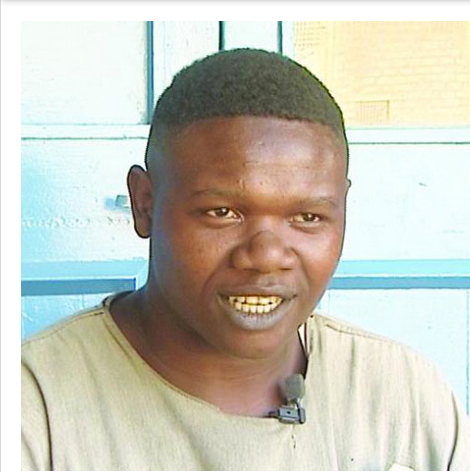
wambua

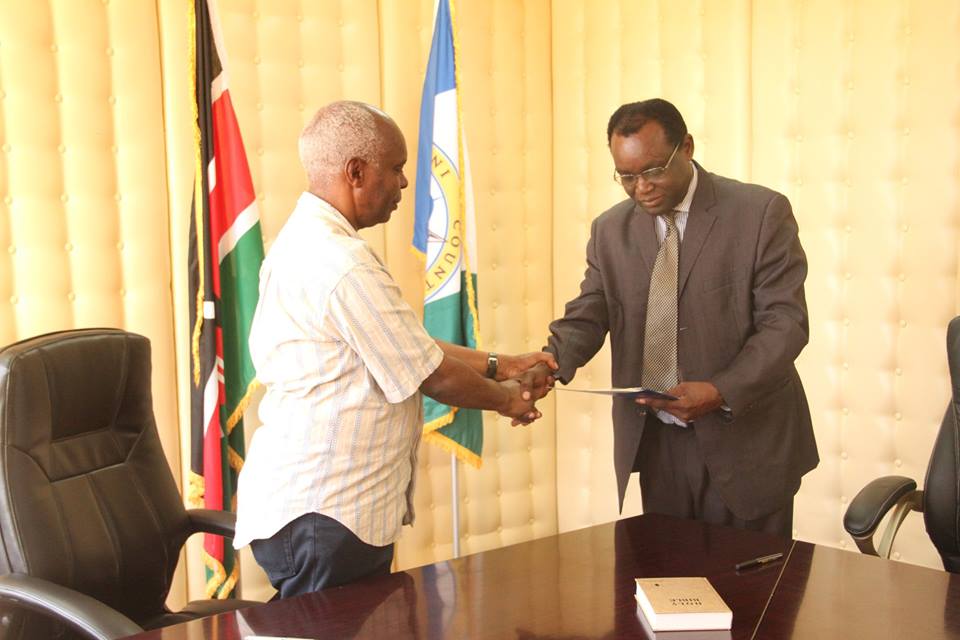
Makueni County Government has a new County Secretary (CS). Joshua Wambua was sworn in the presence of Governor Kivutha Kibwana as the new head of public service following a successful interview and approval by the County Assembly.

Members of the County Assembly unanimously supported the appointment of Wambua. Nguumo MCA John Mwenze while voting in support of the report for the approval, said Wambua was suitable for the position due to his impressive credentials and experience in the public sector.

“He has the experience needed to be the county secretary and with the signing of the county performance contracting Wambua will ensure timely implementation,” said Mwenze.

Nominated MCA Gideon Mwango (Wiper) described Wambua as a person of high integrity that the county government will not regret having as the CS.

The position fell vacant in 2014 after the former County Secretary John Muteti was sacked by Governor Kibwana following a tree planting scam that saw the county lose millions of money.

Subsequently, the Acting County Secretary Rael Muthoka who took over the office from Muteti was suspended from work last month together with other seven members of the tender committee for flouting procurement in the establishment of Kikima Dairy project in Mbooni Sub County.

Before the appointment, Wambua was serving as the Trade and Tourism Executive a position he held since February 2014. Previously he served as the Finance Executive before he was moved to the trade docket following a reshuffle.

In his acceptance speech, the new CS promised to re-organize the county executive to ensure faster implementation of development to the people of Makueni besides establishing a working relationship between the executive and the legislative arm of the government.

Wambua holds a Masters of Business Administration Degree with a major in Finance from University of Nairobi and a degree in Business Administration in Finance. He is a fellow of the Institute of Certified Public Secretaries of Kenya. In 2012, he was awarded the Moran of the Burning Spear (MBS) by the President Mwai Kibaki for his outstanding contribution to the nation building.

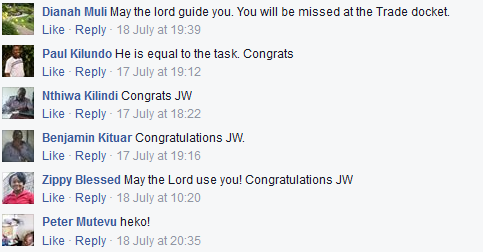
Residents took to Facebook to congratulate the new CS.

wambua 2

The County Secretary post is a key position that is instrumental in driving the development agenda of the County Government. Residents of Makueni can only hope that Wambua will inject new blood and energy that will enhance service delivery in a county that is already reeling under poor service occasioned by the persistent wrangling between the Governor and MCAs.


How Hacking Team software is used to track down dissidents and activists

RCS_Config
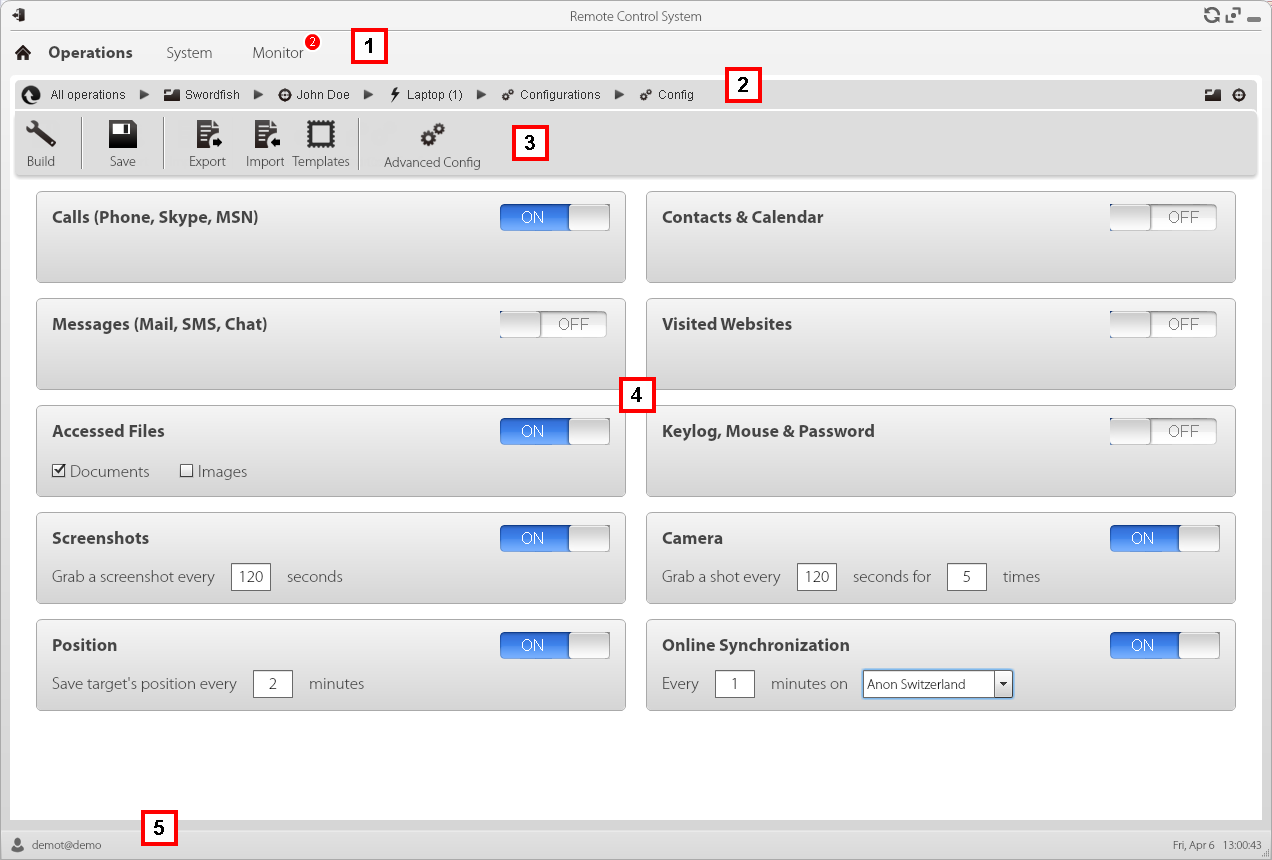
Galileo Control Panel showing device surveillance options. (citizenlab.org)

The Hacking Group was recently exposed by Wikileaks which published files that included confidential employee emails. In the emails, hacking group staff and Kenyan agents were in touch over a long period of time in an attempt to procure Hacking Teams software online surveillance system marketed to governments as Galileo.

There was global uproar when the emails revealed that the system was sold to Governments with a poor human rights records and could have resulted in the tracking down and arrest of activists, human rights advocates, journalists and politicians.

One such activist Ahmed Mansoor from the UAE clicked  a link to open a Microsoft Word attachment. That document had a hidden file, a trojan which installed itself on his computer. Thereafter, thugs were able to track the online pro-democracy campaigner and beat him up on two different occasions.

Using well known exploits in commonly used applications such as MS Word/Excel/Pdf/ a malicious file can easily be embedded and emailed to the victim. Once a person tries to open the file, the application crashes, however the spyware will be installed and running from there on. This practice is known as spear-phishing and is one of the ways Galileo finds its way into victims phones, computers and tablets.

Another popular technique is social engineering. You may have been online and been lured to click on a link you came across shared widely on Facebook, Twitter or as a viral email. After the click, there was nothing or the page did not open however, it most likely opened and installed a small file discreetly. This file is known as the dropper which then triggers further downloads of complex spyware and connects to the command center where an operator begins surveillance.

Most of the spyware that are in use for espionage are able to gain root access to devices meaning a ‘file wipe’ will not remove the file from your hard disk, or phone. Root access also enables the the stealth spyware to avoid detection by anti virus scanners.

Read: Hacking Team expose reveals Kenyan actors

Kaspersky an antivirus company and Citizen Lab have extensively researched on Galileo’s surreptitious software.  Some of the other methods that they have identified include.

  • Tactical Network Injection: on LAN or WiFi (watch out for unsecured networks)
  • Melted Application: bundling a Hacking Team dropper alongside a bait application (mostly on android applications)
  • Local Installation: mobile installation via USB or SD card
  • Silent Installer: a desktop executable that will install the implant
  • Infected U3 USB: an auto-infecting USB drive
  • WAP Push Message: the target will be infected if the user accepts the message (works on all mobile operating systems apart from iOS)

    Galilleo analysis
    A compromised device gives up and transmits all crucial information about the targets device (citizenlab.org)

The control center gets alerted once a new device has been compromised and the operator can then see from information gathered if the target is worth pursuing. The system will have complete control over devices. The operator can switch on your webcam and microphone to see and listen to what is going on at anytime. When the Citizen Lab had a look at the the exploits, they found that the application had unlimited access to the device functions.

Once the device has been compromised, the system has tools to listen in and find out home network, or workplace wifi and subsequently install onto the the targets other devices. If successful a target will be under surveillance 24 hours a day on all devices. The system operator will synchronize with targets devices and can get minute by minute updates of screenshots, key logs (showing keyboard activity) file system, location, calendar, sim information and messages. With this information, tracking down the target is the easiest part.

No one knows for sure if the government bought the system as was discussed in the emails revealed. Whereas Galileo is primarily used for security purposes, it can be easily abused by governments seeking to suppress dissidents and activists as has been experienced elsewhere.

Is it possible that such effective surveillance tools can be abused in a system rife with corruptions such as ours?

Coast based health blogger featured on Vaccineswork

5

tabitha mwangi


A Kilifi based health blogger Tabitha Mwangi was recently chosen to be part of a research on pneumonia vaccines by a global health organization. Vaccineswork.org is website that  focuses on vaccines that is powered by Gavi, The Vaccine Alliance. Gavi is an international organisation – a global Vaccine Alliance that brings together public and private sectors with the shared goal of creating equal access to new and underused vaccines for children living in the world’s poorest countries. It is funded majorly by the United Kingdom, Bill and Melinda Gates Foundation and a host of nations mainly drawn from the European Union.

Recently GAVI was analyzing the results of the pneumonia vaccine that were recently concluded and chose Coast based blogger Tabitha Mwangi to breakdown the results on GAVI’s blog and her blog HealthKenya.co.ke. Health Kenya was recently voted the second best blog in the 2015 Bloggers Association of Kenya (BAKE) awards health category. Tabitha is a public health specialist who enjoys writing science for public consumption.  She is also lecturer and a  freelance journalist who holds a PhD  in Malaria epidemiology.

In 2011 the Government of Kenya became one become one of few African countries to try out a new powerful vaccine to fight pneumonia. In the published blogposts, Tabitha examines the surveillance results and compares the vaccine’s performance in Kenya with other places like England and Wales.

The pneumococcal conjugate vaccine (PCV-10), was introduced as part of the EPI schedule in Kenya from valentine’s day of 2011. PCV-10 is not a cheap vaccine and it’s introduction was facilitated by Gavi, The Vaccine Alliance.  At the moment the government contributes $2 cents per dose for the vaccine that costs US$ 3.50 per dose. However, the agreement with Gavi is that as the economy improves, the government will pay more for the vaccine to the point where they will no longer require support.

Governments in the region were therefore very keen to know whether the vaccine will reduce the disease. An impact study was therefore conducted at the KEMRI centre in Kilifi which already had pre-vaccination data that would be compared to post-vaccination data. All children under 5 years of age within the area around the hospital were also vaccinated in order to get more impact data.

Scientists reported that PCV-10 reduced X-ray positive pneumonia by 48 percent. They concluded that PCV 10 introduction would avert 30,000 hospital admissions in children under 5 years of age in Kenya each year. The vaccine will not eliminate pneumonia completely but reducing it by half is no mean feat. Such a huge reduction would also ease the burden on health facilities and free up beds and resources for other critical diseases. The benefits once this vaccine is availed to all the infants in Kenya will be huge and will certainly lower the national infant mortality numbers.

Fact sheet on the GES Summit 2015

Obama Snip 2
Barrack Obama, President of the USA who will be coming to Kenya for the GES. This is the first time that a sitting American President is visiting Kenya (Photo: Google).

Genesis: The Global Entrepreneurship Summit can be traced to a 2009 speech by Barrack Obama. In the speech delivered in Cairo, Obama

“pledged to host a Summit on Entrepreneurship to broaden and deepen ties between business leaders, foundations, and entrepreneurs in the United States and Muslim communities around the world.”

Inaugural Summit: The first summit was held in Washington, D.C. between 26th and 27th April, 2010. It highlighted the importance the importance of entrepreneurship, job creation and community development.

Other Summits: Other countries that have hosted the Global Entrepreneurship Summit (GES) before are Turkey, the United Arab Emirates Malaysia and Morocco in that order.

The Nairobi Summit: It will be an event of its kind as Kenya hosts all kinds of business entrepreneurs between the 25th and 26th of July.

Summit Agenda: Going by the agenda of the first summit held in Washington D.C, the summit will focus on the following: Innovation and Technology, Access to capital; Catalyzing youth entrepreneurship; Mentoring and giving back; Fostering a culture of entrepreneurship; Unleashing the power of women entrepreneurs; Promoting entrepreneurship and enabling business; Social entrepreneurship.

History made: This will be the first time that the summit is being held in Sub Saharan Africa. It is also the first time that Kenya will host a sitting American President.

How Kenya will benefit: Reports indicate that Kenya is set to benefit from aid totaling to sh50 billion. A good chunk of this money will go to HIV/AIDS programmes. Civil societies are also said to be part of the sectors that will benefit from this funding. Others are marginalized groups such as the youth and women.

Boosting tourism: The summit is also an opportunity for Kenya to showcase its heritage and to market itself as a tourist destination as thousands of delegates some of whom are world’s biggest names in business are expected to attend.

Joyous Eid celebrations in Mombasa

0

Eid Mombasa

As expected, Eid Ul Fitr was celebrated on Saturday the 18th of July 2015 after the sighting of the moon, in some quarters the celebrations started on Friday the 17th. Eid is the  festival of breaking of the fast celebrated at the end of Ramadhan.

Preparations started on Friday as residents of Mombasa thronged shopping malls and shops in the central business district. Traders with shops along Old town, Marikiti, Mwembe Tayari and Mwembe Kuku were doing brisk business as people stocked up for Idd. Foodstuffs, apparel and gift items were in high demand.

Most shops and businesses remained closed on Saturday as residents spent the better part of the morning in prayers. Mombasa leaders, and residents were united in prayer. The prayers were held at various grounds including Tononoka, Serani, Mbaraki and Mvita on Mombasa Island.

Political rivalry was also shunned as the Governor Ali Hassan Joho came face to face and hugged his long time rival Suleiman Shahbal. He also shared cordial moments with Senator Hassan Sarai who has been in the news lately with queries about the county financial audit.

Afterwards, it was a rush of colour as men in new Kanzu’s, women in stylish dress and children thronged the streets in “shamra shamra za Idd” (Idd Festivities)

Residents made merry with friends and family at their homes and various leisure spots around Mombasa. As expected, residents thronged Mama Ngina drive where vendors outdid themselves selling food, toys, horse rides and other forms of amusement to the residents. Other places that residents chose to make merry were City Mall, Lunar Park and Nyali Beach.

Goat traders at Soko la Mbuzi were almost out of stock by mid day while food traders who sell biryani, pilau and other delicacies in bulk were struggling to meet the demand.

As promised by the county commissioner Nelson Marwa, there was heightened police presence all over the city to ensure that the people had a secure Eid. Police were on the beat in numbers, alert and fully armed and supplemented by vehicle patrols.

Eid festivities continued through Sunday as most of the eateries were packed. The food court at City Mall was completely packed as were other popular restaurants Barka and Tarboush in old town.

Women entrepreneurs to benefit immensely from GES 2015

0
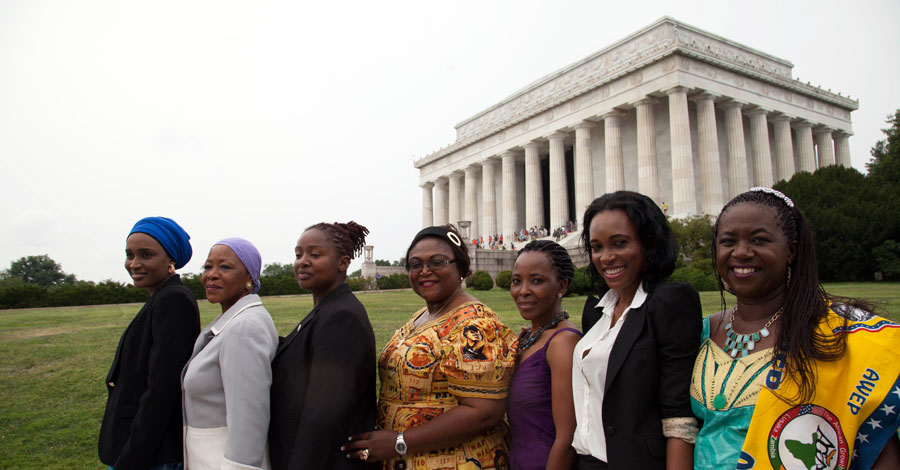
The 2014 African Women's Entrepreneurship Program (AWEP) participants in Washington, D.C. (http://blogs.state.gov)
The 2014 African Women’s Entrepreneurship Program (AWEP) participants in Washington, D.C. (blogs.state.gov)

In the afternoon of the first day of the Global Entrepreneurship Summit (GES 2015) , an interesting session dubbed  “Expanding Horizons”  will take place. The goal is to find ways of unleashing the next brilliant cadre of women entrepreneurs. The discussion will center on

“The rising power and potential of women entrepreneurs to create innovative businesses and social impact; what it takes to bring the next big idea to global markets; how to scale a successful domestic business to be able to compete in regional and global value chains; and the important role of building strong entrepreneurial Eco-systems to advance women’s entrepreneurship.”

The GES summit has put women entrepreneurship at the center of its agenda. Expected to attend is GES 2015 African Women’s Entrepreneurship Program (AWEP). AWEP is a White House initiative that targets African women entrepreneurs in order promote business growth, increase trade both regionally and to access U.S. markets through the African Growth and Opportunity Act (AGOA). In addition AWEP hopes to create better business environments, and empower African women entrepreneurs to become voices of change in their communities.

On July 24, the GES Youth and Women’s Day will see 150 entrepreneurs from around the world to meet investors, policy makers and industry leaders in Nairobi to learn new skills and get business advice from the experts.

According to Catherine Russell, the United States Ambassador-at-Large for Global Women’s Issues, study after study shows women have the capacity, confidence, and follow through to start and grow a business, to the point where women entrepreneurs actually outpace men. In Kenya, we have a saying that empowering the woman, empowers the community. An empowered woman will ensure the children get better education, nutrition and shelter. On an entrepreneurial level, the empowered woman is also most likely going to hire other women.

Locally, we have success stories both in entrepreneurs who have climbed the ladder in male dominated business world and organisations that cater for the woman entrepreneur. Perhaps none  exemplifies this better than Kenya Women Finance Trust (KWFT). The firm that lends to women has grown from a one branch micro-finance lender to a 50+ branch organisation that now employs  2,500 people. It is Kenya’s largest micro-finance bank by both branch network and client base and boasts of an asset base that places it at par with Kenya’s mid-tier banks.

According to the KWFT website

“It has created a portfolio of products and services focused on meeting the needs of women entrepreneurs. KWFT’S success is based on the recognition that women are a key niche market that has significantly lower levels of access to financial services than the rest of the general population.”

GES 2015 will be an additional spark that should help send women entrepreneurs to a higher level. The exposure to successful icons in business and the valuable lessons, insights and experience should be valuable for Kenyans that will be in attendance.

Chipuka externship project gives a voice to artists in Nyeri

Untitled-1 copy

Chipuka Group is a platform for the changes that the Technical world of The Dedan Kimathi University, Nyeri, allows the Arts to thrive. As the Swahili term Chipuka means, the group voted in the name to symbolize its sprout. Standards set for a people to try different objectives through activities cut off from their various study dockets. In the group therefore, they will set a clear view to elevate the members in their own worlds/space as well as collectively as a group.

For the group, the sky is the limit. There is so much that comes into inspiring the group and the individual members. The mutual feeling being that, there is much we as a people can do. It is just a matter of proper co-ordination and planning. Ways are being looked into to explore as much activity as possible within the group.

There are activities already up and running. They are as follows;

Performance Arts and Music

Performing arts was the start. The plays, a testament to the group’s creativity, get drive from various themes which always sync with the wider society. From set books to other fictional narratives, education becomes part and parcel to their practice. Having the vast variations of themes, the group does not rely on any singles script writer and at times, even create scripts through the members. They are in preparations to represent the University in folk dance ceremonies.

As the seasons and times pass, the thrills have not missed; the group is ever forging better ways to encourage longevity and purpose. It has found it better to allow more Arts/Crafts in their space; both for the purpose of self reliance/ stability and acquiring skills adding values to their drama sets.

Crafts

Wambui Jeannette is a lady who has forged her way to the masters of multimedia crafts. She has a well educated background in Multimedia crafts as well as fine arts. Colorful yet very professional are her pieces of work. Her day to day workings have allowed her craftsmanship to gain a deeper understanding and ingenious ways of advancing her creations.

Wambui, to the Chipuka group, is the instructor of the crafts/multimedia sessions. In her ingenuity, she trains the group on ornaments and adornments creation. From strings to wires and from papers to colored stone, she guides the group in exploring their genius to open up to their beautiful worlds. More so, the same energy is spread to the costume designs and development.

Fine Arts

Owino Mathew is a gentleman with an expound value to life. He is a fine artist, whose practice cuts lines through drawing, illustrations, painting, poetry and fictional writing to mention but a few. With an elaborate education and experiences, he does not only stops at creation of art pieces but, he goes as far as imparting knowledge and skill through training.

To the Chipuka group, Owino is the fine arts instructor. The imagery that would complement the drama and the performances the group prepares are handled in his sessions. From the simple use of lines, to the detail based on color mixing, the basics are set to be translated as far as creating backdrop pieces, and beyond.

Photography and Video        

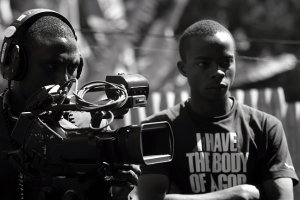
The documentation speaks through images more than we would use words. Being an element of interest within the externship program, Kairu Sam is a name we would not miss to mention. Apart from creating the easiness in the photography session, he carries the overall arm of coordinating the team. Kairu acts as the connection to the different entities that come into play for the success of the project.

From this post, Kairu’s work is on display. On top of that, most of the photos have been done by the students he mentors.

The Chipuka Group instructors therefore allow themselves, to come into this space, not as solution providers but as just a part of us only with a different set of approaches to our same challenges. In this way, mostly guidelines are offered and space is allowed for the members to create upon their views. Withstanding their inspirations, creativity and visual experiences, there is a freedom to be tapped into, but if we only allow ourselves. In all these, planned for or not, solutions/freedoms are to prop up in their own times and ways with each one approaching life passionately through the vast knowledge gained in the externship program

Author: Mathew Owino is a fine art guru from Buruburu Institute of Fine Arts and one of the Mentors in the Chipuka Externship Project

Photo Credit :Kairu Kuguru

Corporal punishment leaves a 14 year old boy nursing injuries


we2

Fourteen year- old Titus Mwendwa*(not his real name) walks with a noticeable limp. His face contorts in pain with every single step he makes.

His mathematics teacher, Mrs. Dinah Wambua reportedly assaulted him on the 22nd day of June injuring him on his private parts. His crime; he could not crack one of the sums given by the teacher as an assignment during a maths lesson.

Although the standard six pupil from Mathagathi Primary School in Kathonzweni, Makueni County had answered all the other questions correctly, that single wrong answer attracted the wrath of his maths teacher. The severe punishment by Ms. Wambua has left the innocent boy at the brink of infertility, although that could be the least of his worries for now.

The teenage boy’s greatest nightmare is the excruciating pain in his inflamed private parts. Besides the agony when walking Mwendwa* has also difficulties passing urine.

He narrated to journalists at Wote town, how on that fateful day the maths teacher seized him from his desk, held his tiny short tautly and allegedly grabbed one of his testicles before thrashing him with a cane.

“The teacher grabbed me by the lower abdomen and held one of my testicles against my shorts and started beating me,” said Mwendwa*.

He said after the punishment he, reported the matter to the deputy head teacher Mrs. Mary Musembi but was instead reprimanded and dismissed.

“She asked me to get some warm water from the kitchen to relieve the pain,” he said.

The school’s cook who requested anonymity for fear of reprisal confirmed to Kenya Monitor that the boy had indeed sought warm water from the kitchen.

“He came to the kitchen and requested for warm water but because I was preparing tea for the teachers I didn’t pay him attention but he later came back crying,” said the cook.

“I honored his request but I never bothered to find out why he was crying. I came to know later that he had been assaulted,” she added.

According to the mother, Zipporah Mueni the boy arrived home on that fateful day and disclosed to her that he had inflamed lymph nodes on his groin. Upon further inquiry by the mother, Mwendwa* confessed that his mathematics teacher had caned him on the calf part of his both legs, hence the inflamed nodes.

“My son told me he had been beaten by his teacher and I immediately bought some painkillers hoping the pain would disappear,” said Mueni.

The mother of five however said after several days she noted that his son had developed difficulties while walking and when she insisted on checking his groin, she realized that one of testicles had swollen. It is at this point that her son disclosed that the teacher had pulled one his testicles inflicting the injuries.

“After further prodding he told me the teacher had hurt him on that fateful Saturday,” she said.

Mueni said that she immediately took her son at the nearby health facility at Mavindini but claimed that the boy was discharged after three days for unknown reasons, despite his condition. She now reads mischief on her son’s sudden release from the health center.

“Certain forces are conspiring to have this case bungled but I will pursue the matter to its conclusive end,” she vowed.

The boy has since been referred to Machakos Level Five Hospital for specialized treatment and has already booked an appointment in August for a scan to establish the degree and possible the cause of the injuries. Consequently, he has has stopped going to school due to the injuries.

The matter was first reported to the Makueni Children Officer Mr. Rasto Omollo who directed the boy to record a statement at the Kavumbu Police Station. However, the boy is yet to fill a P3 form that could help pursue the matter in court and the father of the boy Nganda Mwamuu has expressed fears that the medical report at Mavindini health centre might have been tampered with.

“The medical report only indicates about the inflamed testicles and not the cause,” he said.

A police officer at the police station who requested for anonymity, as she is not authorized to speak to the press said it would be difficult to fill the P3 form without proper medical reports.

“The scan would reveal the nature and degree of injuries which would now form a good basis for a case in court,” she said.

The case had already generated a lot of heat in the education circles with Kenya National Union of Teacher (KNUT) County top officials accusing undisclosed forces of witch-hunt.

County KNUT Secretary General Benson Ndambuki has already dismissed the allegations as mere fabrications. He said that the boy was suffering from orchitis, an inflammation of one or both of the testicles.

“Orchitis is an infection that is common among young boys of Mwendwa’s* age,” he claimed.

Ndambuki also refuted claims that KNUT was trying to shield the teacher from the alleged offence but said that preliminary investigation revealed otherwise.

His sentiments were also echoed by Kathonzweni Deputy Sub county Education officer Mr. Ngumbi who also cast doubts on the possibility of the alleged assault.

Mr. Ngumbi said though investigations are still going on, the boy could have been injured elsewhere and disclosed that he was punished alongside other six boys who have given conflicting statements on the incident.

“The teacher alleged to have injured the boy is a young lady employed by Parents Teachers Association and I doubt if she can do such an act,” he said.

He however said that they will wait for the medical report and decide the next cause of action. Efforts get comments from the teacher or the school administration failed as they refused to talk to the press.

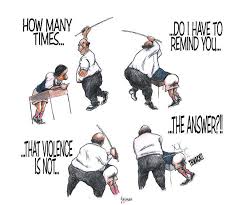
Corporal punishment in Kenyan schools is still being used by teachers despite a ban. The government prohibited the punishment in 2001 and legislated a Children’s Act which seeks to protect children from all forms of abuse and violence.

If investigations prove that the teacher abused Mwendwa* then legal action should be taken against the teacher for causing bodily harm. This perhaps will serve as a lesson to other teachers who resort to using the outlawed punishment.

If the case is however proved otherwise, then proper measures should also be put in place to protect teachers from cases of witch-hunt, which Mr. Ngumbi says are increasingly becoming common.