Thursday, December 18, 2025
Home Blog Page 53

Corruption: Uhuru and Ruto’s war on reality

“Uhuru acts to rein in sleazy deals” blared the headline of the Daily Nation on Monday. The story noted that Uhuru is “getting upset with the increasing cases of fresh corruption under the Jubilee administration”. Deputy President William Ruto isn’t too happy with the corruption either, telling the Ethics and Anti-Corruption Commission (EACC) over the weekend that it “must account for the public resources allocated to them to fight corruption.”

Mario Cuomo, the venerated late Governor of New York, used to say that politicians campaign in poetry and govern in prose. In the war against corruption, with a little help from a gullible press, Uhuru and Ruto are governing in misleading sound bites.

By making the right noises at state functions and rallies, Uhuru and Ruto have reduced their contribution to the war on corruption to a public relations exercise that is designed to give Kenyans the illusion of motion in the war against sleaze when we are really just standing still. In a sense, instead of waging on corruption, Uhuru and Ruto have picked a fight with a more defenseless foe: reality.

Jubilee is, of course, not the first Kenyan administration to try and kick the can down the road for the next administration to handle when it comes to corruption. Moi only set up the Kenya Anti-Corruption Authority after some nudging from donors. The choice of Harun Mwau, later to grace the US’s drug kingpin list, to head the nascent body was an obvious giveaway that Moi wasn’t taking the fight against corruption too seriously.

Then there is Mwai Kibaki. Kenya’s third president was voted in with an overwhelming mandate in 2002 with the pledge of “zero tolerance” on corruption. Then he appointed John Githongo as his anti-corruption czar and, as the song says, “nothing was the same again.” Githongo’s discovery that high stakes corruption was not only happening under Kibaki’s watch but could very well have enjoyed the president’s blessing would later be the subject Michela Wrong’s aptly named “It’s our time to eat.” If nothing else, Wrong’s book is an instructive tale of how a Kenyan president lost his way in the fight against graft.

The good news is that it’s not too late for the Jubilee administration. So what can Uhuru and Ruto do inject a semblance of seriousness in the fight against graft? Two things. Firstly, talk is cheap. Uhuru and Ruto have to start weaning themselves off the cheap high they get from making statements at rallies that appear tough on corruption but are ineffective.

They have to embrace action instead and do a little house cleaning by forcing members of the cabinet whose names have been mentioned in corruption scandals to resign. It says a lot to Kenyans that Charity Ngilu, David Chirchir and Mutea Iringo are still in office. The charges against them haven’t been conclusively proved but taking the fight against graft seriously demands that Uhuru and Ruto surround themselves with people who don’t carry the faintest whiff of scandal.

Secondly, statecraft is soul craft. Governing is a continuous process of winning hearts and minds. It is not enough for Uhuru and Ruto condemn corruption at rallies and threaten to take action against those who perpetuate it. They must make Kenyans understand what corruption costs the country; how it makes Kenya uncompetitive economically by increasing the price of doing business; and how it aggravates Kenya’s other social problems like insecurity and inequality. Uhuru and Ruto must Kenyans understand that by engaging in corruption they are being complicit in the destruction of their own country.

Dj Mo to start arts academy in Nakuru next month

Dj Mo with Egerton Administrative Assistant Samuel Kimani when he visited the institution on Thursday. He said he will start a DJ academy in Nakuru next month.

Renown Nairobi based disc jockey (DJ) Moses Muraya popularly known as Dj Mo will start an arts inclined academy in Nakuru next month.

The academy to be based at the 5th floor of the Prime Plaza Building which is situated at Nakuru’s main roundabout will offer classes to aspiring disc jockeys for both radio and television and is set to open its doors officially on April 5th.

“Although our target is the youth our doors will be open to all ages,” DJ Mo told Kenya Monitor.

With the growth of the media and the entertainment industry – partly due to the growth in the digital migration, such skills are likely to open up unlimited opportunities to the youth all over the country.

Unfortunately most developed disc jockey academies are only based in Nairobi. This leaves out a whole lot of interested youth in many other counties. “We hope this academy will open up opportunities to youth in Nakuru by cutting down on their expenses of traveling to Nairobi to access such academies,” added DJ Mo.

A full disc jockey training will take 2 months to complete and will cost sh30,000 which can be paid in installments said Dj Mo who is also a gospel presenter with NTV.

It will be noted that over the years Nakuru has produced big names in the entertainment industry in the country. Renown female musician and actress, Avril Nyambura, hails from Nakuru as well Haman Kago aka Hamo the Professor of the Churchill Show. Other top artists from the county include gospel musician Evelyn Wanjiru among others.

Besides, the county has always produced serious competitors in almost every season of the annual Tusker Project fame show. Some of these include Bernard  Ng’ang’a aka Nga’ng’alito who featured in Season 4. It is such talent that DJ Mo wants to capture through his academy while still raw. “We don’t want the youth to keep on remaining idle. We want to awaken their talent,” he said.

Already his idea has been welcomed by the youth in the county. Daniel Obwocha an upcoming DJ said the idea timely. Obwocha, who is the Director of Entertainment, Sports and Gender at Egerton University Njoro campus said it will expose the youth in the county to the entertainment industry the more.

“We have disc jockey academies in Nakuru but they don’t offer quality studies as those based in Nairobi,” he said.
“What I know about Nairobi based academies is that they usually help you in networking with other artists and even corporate organizations.”

Being a big name in the entertainment industry, DJ Mo’s academy once launched is expected to attract quite a sizable number of youth who want to horn their skills in the arts. One can only hope that this will boost their chances of getting employment. It is also hoped that it will unleash more creativity from the County’s youth.

Nakuru County Assembly learnt bad manners from National Assembly, says Speaker

Susan Kihika, Speaker of the County Assembly of Nakuru. She sensationally said that MCA's who fought at the assembly last week copied the national assembly.
Susan Kihika, Speaker of the County Assembly of Nakuru. She sensationally said that MCA’s who fought at the assembly last week copied the national assembly.

Members of County Assembly (MCA’s) of Nakuru learnt how to fight and engage in uncouth behavior from the National Assembly, Speaker Susan Kihika has sensationally said. As if reading from the lyrics of the song ‘I learned from the best’ by Whitney Houston, Kihika fell short of saying that they are not to blame for what happened last week when MCA’s engaged in a fight at the house.

“Let us also remember that we saw a similar thing at the National Assembly”, said Kihika adding that “it’s not that far from the realm.”

Kihika was speaking at a fund raising event at Kiamaina Primary School in aid of projects by women in Bahati Constituency that was attended by Deputy President William Ruto on Saturday. She however noted they were ashamed of what happened saying that they had resolved their issues. “We are now okay. We have it together. And we shall continue working as we have always done.”

There have been divisions at the assembly caused by a scramble for the seats of the Leader of Majority and Deputy Speaker. Last week the assembly elected Kiptagich MCA James Tuei as the new Deputy Speaker a day after impeaching Nessuit MCA Samuel Tonui. On the other hand a case in pending in court for the seat of the Leader of Majority for which Mosop MCA George Mwaura and Naivasha East MCA Samuel Waithuki are pulling and pushing each other.

Apparently Kihika spoke after Gatundu South Legislator Moses Kuria praised his Bahati counterpart Kimani Ngunjiri for taking part in the misconduct in National Assembly that the Nakuru MCA’s might have copied.
During the December 2014 scuffle, Ngunjiri is alleged to have bitten Dagoreti North legislator Simba Arati on his right hand thumb. While Ngunjiri has since said that he will do the same, Kuria said he would assist him.
“He is the Commander in Chief if the Jubilee Defense Forces. I am his deputy. I tell him what finger to bite,” said Kuria amid laughter from the crowd.

But Deputy President William Ruto cautioned the MCA’s against involving in such misconduct saying it was a disgrace. “Policies towards service to the public are planned intellectually, not physically with fists and fights,” Ruto said.

It will be noted that a section of MCA’s led by Stephen Kihara of Dundori had asked the President and his Deputy to intervene. Although the MCA’s have now promised to set aside their differences, reading from what the Speaker said as well as well as the comments by Kuria, or even the comments by Ngunjiri, it is clear that Kenyan leaders are least moved every time they misbehave in public.

If anything they are usually least remorseful perhaps because cases of misconduct brought before them rarely lead to any positive and fruitful end, that is, legally speaking.

Bribery claims among MP’s disheartening…

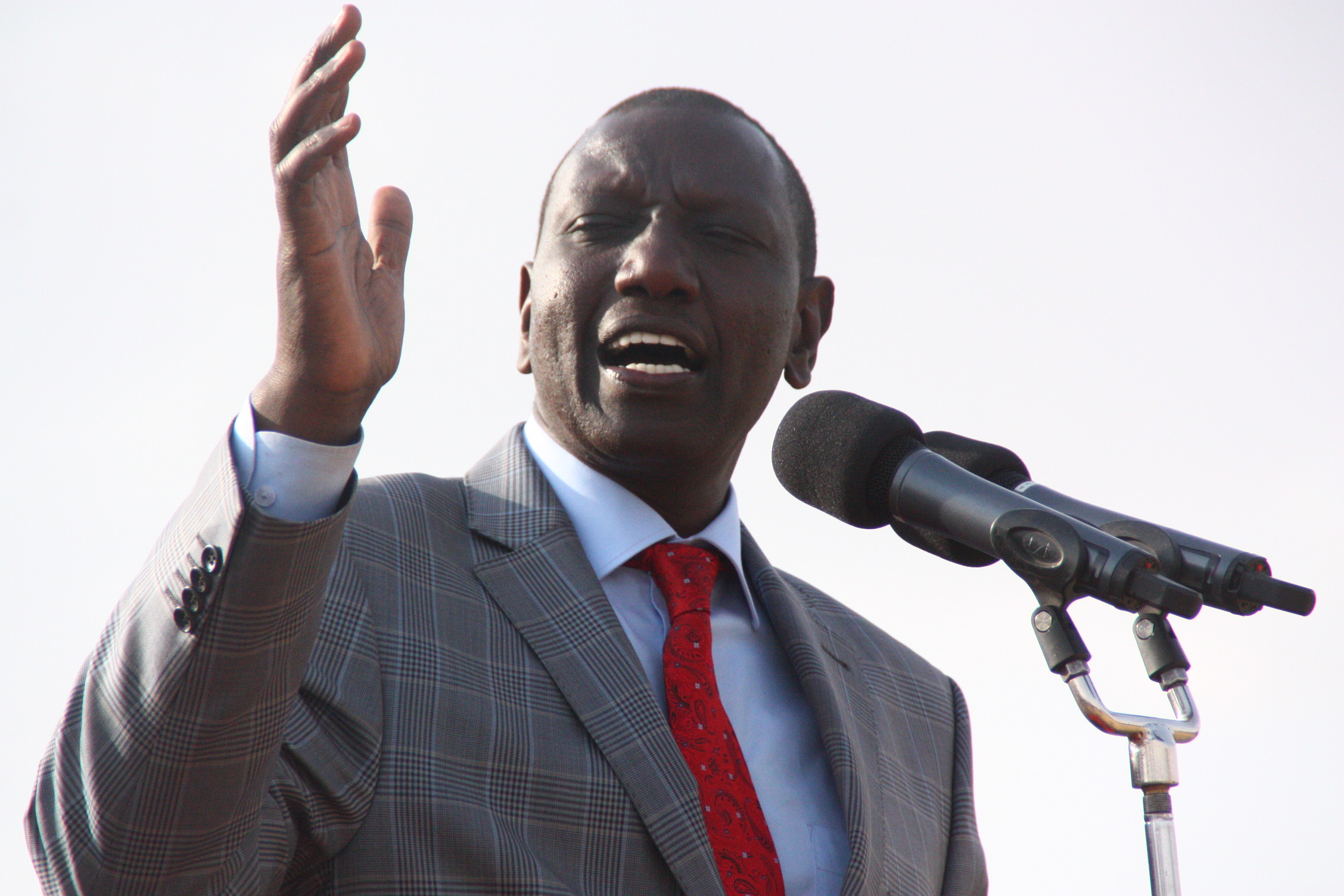
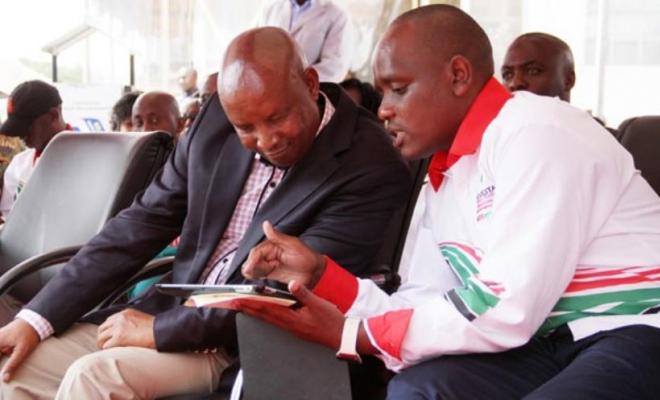
Deputy President at a function in Nakuru last Saturday. He said Parliament and EACC were letting Kenyans down in the fight against corruption.
Deputy President William Ruto at a function in Nakuru last Saturday. He said Parliament and EACC were letting Kenyans down in the fight against corruption (Photo/Kioko).

The ongoing trend in which Kenyans keep on waking up to reports of bribery claims among Members of Parliament is disheartening. By end of last week Kenyans were discussing claims that members of the Parliamentary Accounts Committee (PAC) had been bribed to water down a report on misappropriation of funds in the Office of the President.

Then this week we woke up to the claims that another Parliamentary Committee – the Agriculture Committee – may also have been bribed to doctor a report touching on the collapse of Mumias Sugar company.

While these are just allegations, they are raising questions about the spirit and will among our Parliamentarians to fight corruption. They also raise the question of whether as a country Kenya will ever be able to deal with corruption if the people who are supposed to lead us in stemming out the crime are not far from being involved.

Besides asking whether this is a sign of a grand comeback of the vice, commentators are asking whether this is a sign of corruption fighting back.

What is even worrying is the fact the institution that the law has mandated with the legal instruments of investigating the crime – the Ethics and Anti Corruption Commission (EACC) – is also engulfed in a war of its own with differences being reported among its commissioners.

Last week it was reported that the Chairman Mumo Matemu sacked his Deputy Michael Mubea before the Commission’s Chief Executive Halakhe Waqo reinstated him, a standoff that painted negatively on the image of an institution that should show the way on matters of integrity.

And now with reports that EACC has only prosecuted three graft cases in three years, Kenyans need to ask whether the institution is worth its salt.

Last weekend Deputy President William Ruto remarked that both Parliament and EACC were letting Kenyans down.
Speaking in Nakuru Ruto first challenged Members of Parliament to protect the integrity of the August house.

“What is at stake when we hear of all these allegations of corruption and bribery in parliament. It is an indictment of the August house. It is a disgrace to their mandate as their legislators. It is an insult to the electorate who elected Parliament, and it is a shame to our country. We want Parliament to put their house in order.”

He then turned on to EACC. “What they are doing, the supremacy wars that are going on; who is interdicting who, who is sacking the other, who is greater than the other, that is not the mandate they were given. They were given the mandate to look at after the collective interest of Kenyans, to look after their resources, and to make sure those who are corrupt and those who want to misuse resources are brought to book.”

As Ruto has put it, MP’s and EACC are letting Kenyans down. They need to lead the way in the fight against corruption. But looking at what has been happening in the last two weeks there isn’t even the slightest sign that are ready for the task. It is so disheartening.

Ababu Namwamba’s secret recording causes stir

0

Parliament’s Accounts Committee (PAC) Chair Ababu Namwamba’s secret recording in which he alleges to have recorded some of his committee members admitting to bribery claims has continued to elicit mixed reactions from Kenyans with some calling for his resignation.

 Parliamentary Accounts Committee Chair(PAC) Ababu Namwamba
Parliamentary Accounts Committee Chair(PAC) Ababu Namwamba

Ababu was first involved in a leadership tussle of PAC where members of his committee accused him of high handedness and taking bribes to influence reports. PAC is the most powerful committee as it audits all public accounts of government. In the recent months it has been investigating tthe IEBC’s conduct of the 2013 General Elections, Auditor General’s Accounts, the Hustler’s jet leasing and investigations into the questionable transfer of Sh2.3 billion from the Office of the President between 2012 and 2013 among others.

The legislator however fought against the allegations and retained his position as the PAC chair. However, his accusers, who are fellow MPs, wanted to vote him out afresh the following week and this, coming at a time when the leadership of Parliament was meeting in Mombasa led to further increase uncertainty on the workings of the committee.

Leader of Majority Aden Duale then decided to seek the direction of the Speaker through a motion in Parliament. This resulted in the Speaker suspending the committee to allow for investigations into the corruption allegations by the Powers and Privileges Committee. It is at this point that it was revealed that to retain the position as PAC chairman, Ababu played a recording in which MP Samuel Arama, Junet Mohammed and CORD leader Raila Odinga were in attendance in which he recorded that conversation. The recording contained assertions by Arama that corruption was influencing the leadership wrangles Ababu was facing. Hear the recording

Kenyans therefore took to social media to show their dissatisfaction on how the PAC chair who is also the Secretary General for Orange Democratic Movement(ODM) has handled the corruption allegations  that has dogged his committee for the last two weeks urging him to step aside and pave way for investigations.

Under a hast tag #Ababu that was trending last week Kenyans on Twitter did not mince their words and now want the embattled Budalangi MP to stop incriminating others in the corruption saga and take responsibility for allegedly receiving a bribe from Defense PS  Mutea Iringo to alter a report on investigations on how the Interior Ministry spend sh2.9 billion shillings from the secret funds.

— Joseph Musau (@Mutuku1969J) March 14, 2015

Some  also questioned the motive of Ababu’s recordings with others dismissing it as a ploy by the PAC chair to absolve himself from any wrong doing by gathering evidence for defense.

Corruption in Kenya: How Graft is Chocking Kenya

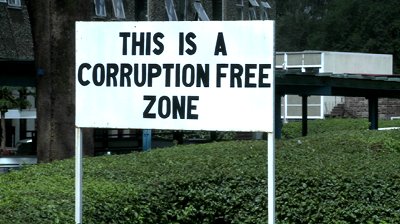
stock-footage-a-sign-at-the-university-of-nairobi-in-kenya-proclaims-a-corruption-free-zoneCorruption in Kenya is systemic. One of the institution that allegedly fuels it is Parliament. In addition, most of the elected and appointed leaders have been adversely named in various reporting casting aspersions on their integrity. However, they still hold high profile state positions.

In this second and third part, Captain Wanderi discusses it in more details


PART 3: My encounter with Corrupt MPs – Mkate & Siagi to Approve Public Appointments

Sometimes in 2011/2012 I accompanied BSJ, a friend to Continental House where he was to sign a business agreement with an MP. Before we got to his Office, the MP called and changed the venue to the Main Parliament Buildings. We were picked at the gate by his security aide who ushered us into the Member’s Lounge (Restaurant) where our host ordered drinks for us.

BSJ introduced me as his lawyer and after signing the agreement, our host MP (now a Senator) asked where my offices are. I told him what I did but due to my title/rank he asked many other questions. After mentioning one place I have served in, in public service, the MP asked if I knew a certain person. I answered affirmatively and he asked a lot of questions about that individual which I answered to the best of my knowledge. Our host then called another MP (now a Governor) to our table and asked me to repeat what I had told him about this individual. The two then engaged in a conversation (in our presence) which went this way:


Host MP: Mheshimiwa, nilikwambia huyu jamaa ni mtu mzuri, si umesikia sasa?

2nd MP: Ni sawa lakini ulisikia maneno ya wazee.

Host MP: That is okay, hiyo tutatengeneza bora uzungumze na group yako.

2nd MP: I will do that, but wee pia upigie nani (name withheld)………3rd MP (lost his seat in 2013).


As we were being ushered out of Parliament Buildings, our host was on call with another person (I guess the 3rd MP) and I could clearly pick words & phrases like, “chairman na watu wake” “nimesema atumane kwako”, “ataongeza” “mkate”, “siagi”, from the one sided conversation. Before we stepped out of the Building I clearly heard our host say this to the other person; asante brother, hiyo nitamwabia leo, saa hii tu; wazee hawawezi kula mkate bila siagi, ataaongeza ……”

As you read this, the person the MPs were discussing is a very vocal member of one of the most powerful and important State Agencies; a Constitutional Body in the Republic of Kenya. Any time I watch this individual addressing the media, I always wish I had a tape recorded that day. Despite objections raised by some groups he still got the job. You know how and why.

NB: Do not waste time asking me to report to the EACC. I know how things work there and my faith in the Kenya Witness Protection Program is something else. What should concern you is whether the Speaker of the National Assembly is right to waste time & public resources investigating the “hon” members of the PAC for receiving bribes to doctor reports.


PART 4: A peek at Kenyan’s corruption files


  1. Every year, China publicly executes about 3000 public officers involved either in corruption, complicity in drug trafficking and other serious offences. Before March 2013, the executions targeted low-grade officers or what Chinese call “flies”. However since President Xi Jinping took office, his administration has taken the fight to the big guys; the “tigers” involved in mega corruption. Senior people who are mentioned in past government reports for involvement in corruption are being purged from the Communist Party and government offices. Many have been paraded before courts, tried, convicted and their property confiscated. The whole process is primed to be very humiliating for maximum effect.


  1. Kenya has volumes and volumes of past reports of corruption; theft of public resources, bribery, land grabbing, abuse of office etc by the Auditor & Controller General, Public Accounts & Public Investment Committees, and Commissions of Inquiry etc. I have had the privilege of reading some of those reports and I can tell you without any fear of contradiction that the names of 40-50 percent of the people who currently serve in public office either as Cabinet & Principal Secretaries; Senators & MPs, Governors & Deputy Governors, Chairmen & CEOs of State Agencies & Security Agencies appear in those reports. To his credit, the name of President Uhuru Kenyatta does not feature in any of those reports.


  1. China is considered a Third World country like Kenya. But we buy almost everything from them and they are lending Africa, the USA and EU Countries money! Why? The difference lies in leadership. China may not be a democracy but the leadership is sane enough to realize that corruption increases the cost of doing business; kills enterprise and reduces competitiveness and Comparative National Advantage.


  1. Since H.E Uhuru Kenyatta is not named in any past graft report, he should now purge his Government; Cabinet, the Civil Service, Security Agencies, parastatals inter alia of all people mentioned in graft reports. We must support and encourage him to do that. I don’t know when, but I think he will do it. He will mark tw2 years in office on 9th April 2015. He still has another 3 years. He should do it; he has little choice.


  1. To fight corruption in government, it must be done from within by people who know and understand the operations of government. It is insiders who know the lapses and loopholes that create opportunities for abuse and graft. Outsiders do not; but they can, do and MUST continue to provide impetus and support to reformists and good insiders in order to seal loopholes & lapses that foster graft in government.


Coming up in PART 5: Why KACA, KACC, the Ethics and Anti-Corruption Commission (EACC) and the National Anti-Corruption Steering Committee hardly make any impact in the fight against corruption.


The author is an Advocate of the High Court of Kenya and the Chairman Kenya Institute of Forensic Auditors. You can follow him on Twitter @DecaptainCFE.


Phases in Kenya’s Constitution History

Kenya-constitution-006Kenya’s Constitution Making History can be traced to the period 1890-2010. In 1890, the British started settling in Kenya after the Imperial British East Africa (IBEA) Company had navigated the country. In 1920, the British declared Kenya a protectorate and a colony: a colony in the interior parts of Kenya and a protectorate at the 10-miles coastal strip that was under the reign of the sultan of Zanzibar.

There are five phases which define Kenya’s search for a Constitutional order that promotes justice, equality and rule of law.


PHASE 1: 1890-1960

This phase was marked by subordination and subjugation of the local people by colonizers leading to an undying need for freedom. Colonial rule was by decree, ordinances and also was marked by dictatorship of the colonial governor, who represented the queen of England. Africans clamored for land and freedom which had been taken away by the colonizers. However, the northern parts of Kenya were neglected. Marginalization of these people therefore started during this period to date.

The birth of the Legislative Council (LEGCO) in 1944 followed great negotiations in which the colonizers decided to have some Africans to represent African interests. This call for representation increased over the period as seen in amendments to the Lyttleton and Lenox Boyd Constitutions of 1954 and 1958 respectively.


PHASE 2: 1960-1962

This phase was marked by emerging constitutional moments. In this phase, three conferences were organized in London to draft Kenya’s new constitution. In these discussions, some of the key problems in phase one resurfaced. For instance, the Mwambao United Front, coming from the then coastal protectorate, was demanding federalism and to some extent a high level of autonomy for their region. The Maa speaking communities were demanding back their fertile grazing land, which has been deprived off them after signing the ‘Lenana Agreements’ of 1904 and 1908. The Somali and communities in the northern region, which had been marginalized demanded full independence as a country on its own. Thus, the way in which the British administered Kenya came back to haunt the three conferences in Lancaster.

Two political parties stood out. The Kenya African Democratic Union (KADU) rooted for a federal state, and was backed by minority groups including the then settlers. The Kenya African National Union (KANU) pushed for a centralized system akin to how colonialists administered Kenya, and also favored a parliamentary system similar to the one in United Kingdom.

In summary, by the time 1962 came, an independence Constitution was drafted largely ignoring the issues of marginalization and freedom of northern people and coastal protectorate; ignored the question of African administrative structures that had existed prior and during colonialism; and also ignored the claims about land. However, the drafters and parties present agreed that right to own property be constitutionalized; agreed on citizenship can be acquired after birth or through other processes; agreed on an independent judiciary; a parliamentary system; and also agreed that the prime minister and governor co-exist together among other things. All these were to change in the next phase.


PHASE 3: 1963-1991

Kenya became independent partially by having self-government under a prime minister, then later full independence but still with the governor as head of state representing the queen. But before one year was over, the first amendment was passed to abolish this latter post, and equip the same powers to the prime minister. The rain started beating Kenya on this material day.

By 1969, ten amendments had been made that increased powers in the presidency. The independence Constitution was totally modified to suit the power hungry elite, who equipped so much power in the presidency.

Other amendments were made like parliamentary language be both in English and Kiswahili, removing and returning security of tenure for constitutional office holders and creating a de jure one party state.


PHASE 4: 1992-2002

This phase was marked by numerous agitations for change. The pressure both locally and internationally saw Kenya introduce multiparty democracy and other electoral reforms. This period also saw the rise of civil societies and political parties pushing for a new Constitution and certain reforms geared towards de-centralizing power around the presidency.

In this phase, three critical steps were taken. First was to forge a common ground for reforms, within the Ufungamano Initiative. Second was to organize and push for legislative framework to govern the process. And third, was the push for further Constitutional amendments under the Inter-Party Parliamentary Group (IPPG).

This period also saw the commencement of writing a new Constitution for Kenya by Kenyans. The Bomas process saw representatives from across the country meet and start writing a new supreme law. Finally, KANU and Moi lost power at the end of 2002.


PHASE 5: 2003-2010

In Kenya’s history, this is the most promising phase in the search of a new order. First was the promise by President Kibaki that a new Constitution will be ready within 100 days of taking power but this was not to be. Squabbles about power sharing in the coalition government were evident during the process and the result was the defeat of the proposed constitution in a referendum in 2005. It is argued that this division birthed the post election violence of 2007/8.

After the defeat of the constitutional draft at the referendum, there were efforts aimed at jumpstarting the review. Such efforts included a taskforce set up to investigate why Kenyans rejected that draft; parliamentary attempts by front- and back-bench MPs; and also, political parties’ initiatives to re-start the process. All these were in vain.

Perhaps a reason for the failure to collectively decide on a new constitutional dispensation was the fact that many of those who agitated for reforms now were in power, enjoying the status quo. However, the post-election violence compelled leaders to sit together and map a new supreme law.

A committee of experts was formed to harmonize all documents that informed the reform process primarily: (a) the summary of the views of Kenyans collected and collated by the Commission; (b) the various draft constitutions prepared by the Commission and the Constitutional Conference; (c) the Proposed New Constitution, 2005; (d) documents reflecting political agreement on critical constitutional questions, such as the document commonly known as the Naivasha Accord; (e) analytical and academic studies commissioned or undertaken by the Commission or the Constitutional Conference. This process yielded the current Constitution of Kenya 2010.

Credits to Katiba Sasa Campaign.

Amendments in Kenya’s First Constitution

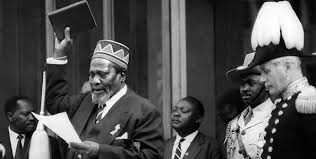
jomo kenyatta taking oath of officeThere were 27 amendments to Kenya’s first Constitution, starting in 1964 to 2008. The amendments provide a glance into what Kenyans; either the public or the powers that be, hoped to achieve with each amendment.

1. Constitution of Kenya (Amendment) Act No.28 of 1964: Established the office of the Vice President who would be appointed from the elected Members by the House of Representatives.

2. Constitution of Kenya (Amendment) Act No. 38 of 1964: Repealed the provision allowing Regions to levy independent regional revenue, hence making the regions fully dependent on grants from the Central Government. This weakened the majimbo system by centralizing power.

3. Constitution of Kenya (Amendment) Act No. 14 of 1965: Amended the Parliamentary approval for a state of emergency from a majority (65 % in both houses) to a simple majority. 2 In addition, the majority requirement for amending the Constitution was reduced from 90% in the Senate and 75% in the House of Representatives to 65% in both Houses.

4. Constitution of Kenya (Amendment) Act No. 17 of 1966: Provided that if a Member of Parliament was absent for more than eight consecutive sittings without the permission of the Speaker or were imprisoned for a term exceeding six months, then they would lose their seat in Parliament. The President could, however, pardon a Member of Parliament guilty of the above. The aim of this amendment was to ensure the attendance of Members of Parliament to their Parliamentary sessions. It also granted the President extensive powers to appoint persons to the various positions in public service, as well as terminate them at their discretion.

5. Constitution of Kenya (Amendment) Act No. 17 of 1966: This amendment required a Member of Parliament who resigned from the political party that sponsored him during the election at a time when that Party was still a parliamentary party, to vacate his seat. This amendment was effected after the ruling party (Kenya African National Union) experienced an outflow of sitting Members of Parliament to the Kenya People’s Union.

6. Constitution of Kenya (Amendment) Act No. 18 of 1966: Removed the exercise of emergency powers from Parliament and vested the same in the President. The President could therefore order detention without trial at his own discretion.

7.  Constitutional Amendment Act No. 40 of 1966: Established a unicameral legislature by abolishing the Senate and merging the two Houses.

8. Constitution of Kenya (Amendment) Act No. 16 of 1968: Removed the last traces of majimboism. This was achieved by abolishing the Provincial Councils, repealing all past laws of the regional assemblies, and deleting from the Constitution all references to provincial and district boundaries.

9. Constitutional Amendment Act No. 45 of 1968: Provided that the President can be elected through a General Election, as opposed to election by the National Assembly.

10. Constitutional of Kenya Act No.5 of 1969: This Act was passed in 1969. It was a consolidating Act, bringing together all the constitutional amendments since 1963. Other amendments made include: removing the powers to appoint the members of the Electoral Commission from the Speaker of the National Assembly, and vesting the same on the President.

11. Constitution of Kenya (Amendment) Act of 1974: Lowered the voting age from 21 years to 18 years. The Constitution of Kenya (Amendment) Act No. 2 of 1974 introduced Kiswahili as an official language of the National Assembly.

12. Constitution of Kenya (Amendment) Act of 1975: Provided that bills should be presented in English, and debated in either English or Kiswahili.

13.  Constitution of Kenya (Amendment) Act No. 14 of 1975: Extended the prerogative of mercy (sole power of the President) to include the power to pardon a person found guilty of an elections offence.

14. Constitution of Kenya (Amendment) Act No. 13 of 1977: Upon the collapse of the East African Community, it established the Court of Appeal of Kenya and the Court of Appeal for East Africa. Allowed the Chief Justice to sit as both a High Court judge and a Court of Appeal judge. If he/she sat as a Court of Appeal judge at any particular time, he/she would act as chair of the Appellate judges. Abolished the right to remit compensation after compulsory acquisition

15. Constitution of Kenya (Amendment) Act No. 1 of 1979: Affirmed that English could now be used as an alternative to Kiswahili in parliamentary proceedings, including the presentation and debate of bills.

16. Constitution of Kenya (Amendment) Act No. 5 of 1979: Provided that a public officer who wished to contest parliamentary elections had to resign at least six months before the elections.

17. Constitution of Kenya (Amendment) Act of 1982: This significant amendment introduced Section 2A to the Constitution, which converted Kenya into a one party state. The effect of this amendment was that all political power in Kenya was vested in the ruling party, the Kenya African National Union (‘KANU’). One had to be a member of KANU to vie for any political office. Furthermore, at the time of this Amendment, Kenya was experiencing strong political tension after the attempted coup d’etat in August 1982.

18. Constitution of Kenya (Amendment) Act No. 7 of 1984: The High Court now had finality in relation to determination of election petitions. Membership of the Public Service Commission increased from 7 to 17. It also gave the Public Service Commission powers to appoint officers to the local authorities.

19. Constitution of Kenya (Amendment) Act No. 6 of 1985: Repealed Section 89 of the Constitution. The effect of this was that a person could only be recognized as a Kenyan citizen if the mother and father are Kenyan citizens.

20. Constitution of Kenya (Amendment) Act No. 14 of  1986: Removed security of tenure of the offices of the Attorney General, Controller, and Auditor General, thus eroding the independence of the two offices. The limit of parliamentary seats was set to a maximum of 188 and a minimum of 168

21. Constitution of Kenya (Amendment) Act No. 20 of 1987: All capital offences punishable by death as provided in the Penal code (Cap 62) were made non-bailable

22. Constitution of Kenya (Amendment) Act No. 4 of 1988: Changed the requirement for holding suspects of capital offences. Previously, such suspects were not to be held for a period exceeding 24 hours. The Amendment now provides that suspects of capital offences are not to be held for a period exceeding 14 days. Removed security of tenure for the office of the Public Service Commission, High Court judges and Court of Appeal judges. Created the Offices of the Chief Magistrate and Principal Magistrate.

23. Constitution of Kenya (Amendment) Act No. 2 of 1990: Restored security of tenure of the office of the Public Service Commission, High Court judges and Court of Appeal judges.

24. Constitution of Kenya (Amendment) Act No. 10 of 1991: Increased the maximum number of constituencies to 210 from 188 and the minimum number of constituencies to 188 from 68.

25. Constitution of Kenya (Amendment) Act No. 12 of 1991: Repealed Section 2A of the Constitution, which converted Kenya to a one party state in 1982.

26. Constitution of Kenya (Amendment) Act No. 10 of 1997: Reinforced the above repealing of Section 2A of the Constitution by introducing Section 1A. The effect of this was to change Kenya from a one party state to a multi-party state. It also amended Sections 7, 33, 41, 42A, 82 and 84 of the Constitution. In effect, the President was allowed to form his government from members of other political parties, the role of nominating members to parliament was transferred from the president to the parliamentary parties, the number of electoral commissioners was increased, voter education and ensuring free and fair elections was included as additional roles of the electoral commission, and lastly persons were allowed to appeal to the Court of Appeal on constitutional matters.

27. Constitution of Kenya (Amendment) Act 2008: Created a coalition government by establishing the office of the Prime Minister and the Deputy Prime Minister. This was necessary following the disputed elections of December 2007 and the ensuing violence that continued in to 2008

From the amendments, it is clear that most of them were to increase the power around the President. This became a core impetus for people to agitate for a new constitutional dispensation.

This article is indebted to Nelly Kamunde-Aquino, Lecturer Department of Public Law Kenyatta University School of Law (KUSOL) whose research and publication on the topic were invaluable. Original publication is available for further reading.

Corruption in Government: An Insider’s Perspective

0
Photo courtesy of AFP

From #CheckenGate to #TyreGate, now PAC, Kenya, lately, seems to latch from corruption scandal to corruption scandal. Just when the Ethics and Anti-Corruption Commission (EACC) appears to be awakening from its slumber by finally bringing the culprits of the decades-old Anglo Leasing scandal to book comes revelations that the Public Accounts Committee (PAC), Parliament’s powerful watchdog body, is also mired in sleaze.


With everything that’s happening, it’s never been more important to hear from a government “insider” on how Kenya found itself in this position. In this multiple-part expose Capt (Rtd) Collins Wanderi, the Chairman Kenya Institute of Forensic Auditors, gives a fly-on-the-wall account of how corruption is choking Kenya.


PART 1: Lessons from working in three regimes


I have been in government long enough (3 regimes) to know and appreciate that:


  1. Kenyans have no problem with corruption as long as the person(s) involved or suspected of involvement is from their tribe, clan and family, County or Village. In case you did not know, even nepotism; clanism & tribalism or helping a relative to be employed whether in government or private company is CORRUPTION under our law!


  1. Kenyans hardly do things in time; they rush the last minute and prefer shortcuts instead of following established and/or statutory procedure. Such people are and will always be ready to pay an inducement to cover their own indolence.


  1. That for as long as political parties in Kenya are funded by business racketeers & wheeler-dealers, criminal cartels and syndicates, corruption will never end. It will always remain part and parcel of our national pastime. Corruption and transnational crime fund our politics. Period.


  1. That fighting graft; investigating & prosecuting corruption is the most dangerous & thankless job anybody can do in Kenya. If you doubt me ask Prof. PLO Lumumba & Justice (Rtd) Aaron Ringeera.


  1. That out of every 100 employees in Government, there will be 80 good ones (grass eaters) and 20 bad ones (meat eaters). The meat eaters are in it for gain and they have daily, weekly, monthly and annual personal targets. The 20 percent make all the others look very bad and the public demoralizes the 80 percent by making wholesome condemnations. The country would gain more if we learnt to recognize, appreciate and positively reinforce the majority good ones.


PART 2: Corruption in the current regime: The big snake in the room

 Corruption in Government: The Big Snake in the Room


  1. On March 4, 2013 Kenyans elected very many people into office, President & Deputy President; Governors & Deputy Governors; Senators; MPs & MCAs. Subsequently others like Cabinet Secretaries, Principal Secretaries, County Executives & Chief Officers were also appointed into office. What this large state bureaucracy means is that the number of rent seekers and bribe takers in the government has increased almost 5 fold (Apply the 80/20 Rule I mentioned earlier). All these functionaries together with peddlers of influence close or related to them are taking from the same size of economy and public that existed before March 2013. This is why everybody else is feeling the pain of excessive bureaucracy which is preying on us; our resources & taxes.


  1. When Mwai Kibaki took power in 2003 he purged the top echelons of the public service; sacked all Ministry/Parastatal Procurement Officers at a go and scattered the entrenched cartels and syndicates which controlled the provision of goods and services to government and in many instances even appointments to public office. Although he later paid a heavy political price for this action, all civil servants got the message. Nobody was invincible or indispensable. This is how & why most of Kibaki’s flagship projects were completed in time.


  1. 2 years since they were sworn into office, President Uhuru Kenyatta & his Deputy William Samoei Ruto are yet to make a clear and unequivocal statement on corruption; particularly in relation to procurement of goods and services by government. I wrote in October 2013 and reiterate once more that the old order remains intact and the old cartels and syndicates know it. They are exploiting this to access government contracts and largesse. Maybe this is why all the flagship projects of the Jubilee government always have a stench of staleness. I will give just one example: The Big Snake in the Room!


  1. Some infrastructure projects in Kenya began when somebody was the Chief Engineer Roads. He was later promoted to Permanent Secretary. Then the projects stalled and remain incomplete to date but the contractors were paid. He was promoted to something bigger by this regime and those projects are now buried and forgotten. There is one in my village which is now over 10 years old, so I am speaking with facts. This person may be a blue-eyed boy of the regime, but also its weakest link as far as infrastructure projects are concerned. Due to the entrenched culture of “protectionism” and “I owe you; you owe me” in the public service, this person can never discipline juniors who worked with him before he was promoted, they know him, he owes them! Now you know why almost all infrastructure projects have virtually stalled; and, the cow-boy contractors are back in business!


Coming up in PART 3 and 4: A personal encounter with corrupt MPs and taking a peek at Kenya’s corruption files.


The author is an Advocate of the High Court of Kenya and the Chairman Kenya Institute of Forensic Auditors. You can follow him on Twitter @DecaptainCFE.

Building the Nation: Makueni County a start

Nelson Mandela, lead singer of Sarabi Band popularizing Jukumu Letu

This week, Jukumu Letu partners start training of various artists in Makueni County, on how they can and should contribute to national building. The initiative targets creating a social conscience population of the Constitution and rights therein through the use of Disk Jockeys (DJs) – they can use their platforms to play social change songs, musicians – they can sing and write songs that have a social impact, theatre and puppetry – they can mimic to illustrate societal ills and raise awareness and social media users who can use their platforms like on Facebook and Twitter to drive debate and actions towards a better nation.

As Makueni residents prepare to host Jukumu Letu partners, perhaps a poem should suffice. It is an old great poem that should poke and remind us about humanity. Humanity from those in power and how they relate to their staff, those whom they lead. Hope you enjoy it.


Building the Nation

By Henry Barlow (Uganda)

Today I did my share

In building the nation.

I drove a Permanent Secretary

To an important, urgent function

In fact, to a luncheon at the Vic.


The menu reflected its importance

Cold bell beer with small talk,

Then fried chicken with niceties

Wine to fill the hollowness of the laughs

Ice-cream to cover the stereotype jokes

Coffee to keep the PS awake on the return journey.


I drove the Permanent Secretary back.

He yawned many times in back of the car

Then to keep awake, he suddenly asked,

Did you have any lunch friend?

I replied looking straight ahead

And secretly smiling at his belated concern

That I had not, but was slimming!

Upon which he said with a seriousness

That amused more than annoyed me,

Mwananchi, I too had none!

I attended to matters of state.

Highly delicate diplomatic duties you know,

And friend, it goes against my grain,

Causes me stomach ulcers and wind.

Ah, he continued, yawning again,

The pains we suffer in building the nation!

So the PS had ulcers too!

My ulcers I think are equally painful

Only they are caused by hunger,

Not sumptuous lunches!


So two nation builders

Arrived home this evening

With terrible stomach pains

The result of building the nation

– Different ways.

Public Participation a Challenge in Makueni County

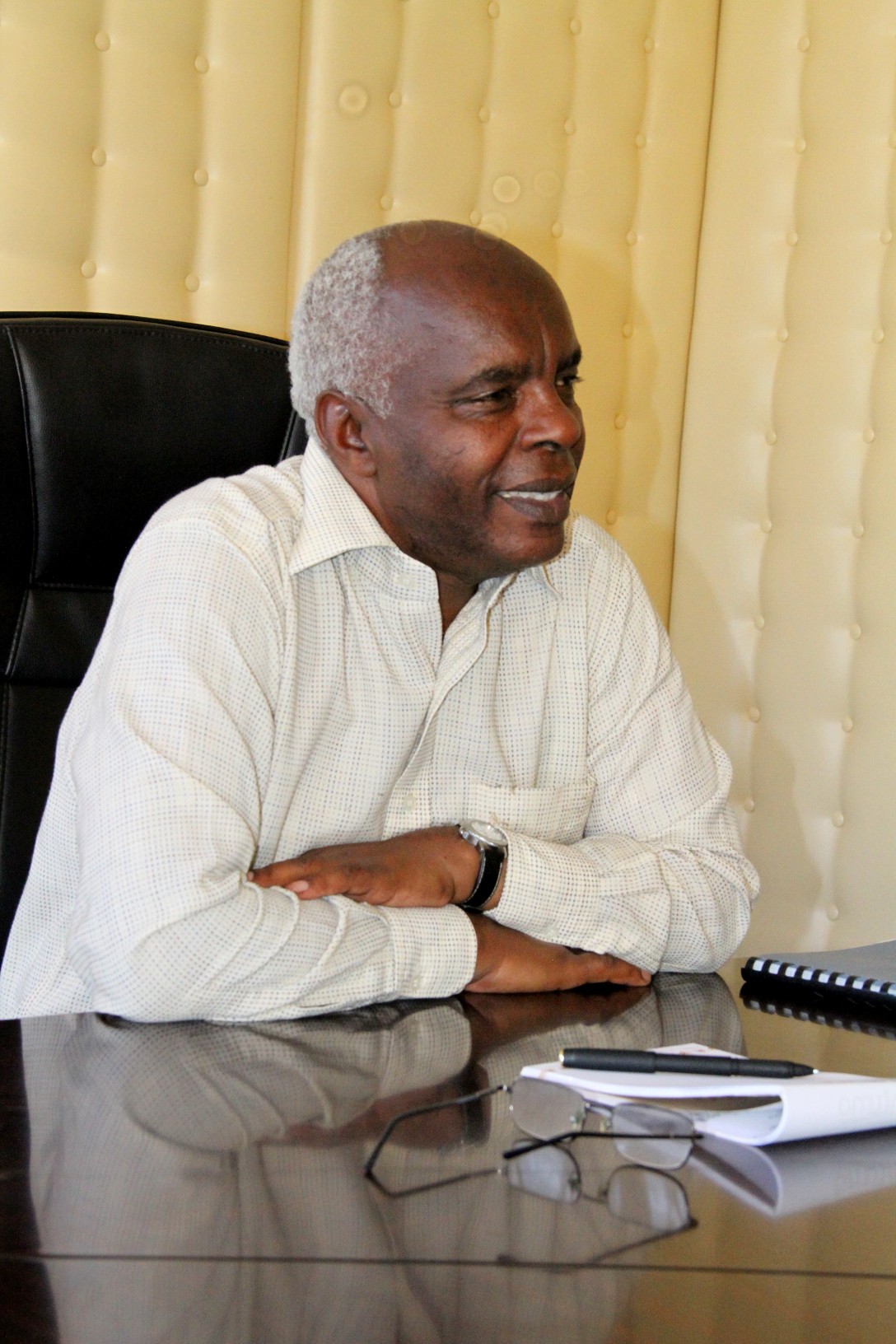
Makueni Governor Prof. Kivutha Kibwana. Photo by Charity Nzomo - CRECO
Makueni Governor Prof. Kivutha Kibwana. Photo by Charity Nzomo – CRECO

“We said we want Uhuru, then Africanization, then Constitution, then devolution, now it is public participation and the next will be revolution, which will not spare people,” stated Makueni Governor Prof. Kivutha Kibwana, when giving remarks on a visit to his offices by Jukumu Letu partners.

The comment was reflective of how the county is applying public participation, a national value and also principle of devolution and governance. “It will probably be an artistic revolution,” responded George Nderitu, the Manager of Sarabi Band for which the Governor quickly replied “that will be very kind.”

For Governor Kibwana to remark this, a person of no mean credentials in the struggle for a new constitutional dispensation in Kenya is not only pivotal, but weighty. But it probably reflects the reality in his own County, two years into office and already the citizens feel that their county leadership is wanting and want the entire leadership sent home and a new one, more responsive to them, is elected.

“We actually have public participation forums here, like to inform budgets. They are however public relations exercises because the Members of County Assembly (MCA) have normally decided on what is said and who can say it,” explained John, a boda boda rider in Mbumbuni market, Mbooni sub-county.

Makueni has 30 wards and six sub-counties with a population of 884,527 according to the 2009 census covering an area of 8,008.9 km².

The County has designed the county into various units, going down to the village level for better communication and participation of people in governance but the Governor still feels they have yet to crack the puzzle as it should be. The administrative units are the six sub-counties, nine administrative districts, 25 divisions, 90 locals/sub-wards, 250 sub-locations and 3, 500 villages.

Participation starts at the village level where they map out the issues and challenges and what should be done. This information is then relayed at the sub-location level and the information moves up to the Governor.

A key challenge the Governor reckons are existing networks on various issues that prevent better service delivery. The political gatekeepers like on sand harvesting determine whether sand will be harvested in a certain area, who will harvest it, why and when. It is a position, shared by Anne Karimi, a chair lady of various women groups in the county.

“MCAs have total control of these public participation forums directly and through their henchmen. These henchmen ensure what is said in the meetings is to the benefit of the MCA and not the people. This helps them to push for own projects. For instance there is this time when one suggested a place for sand dam at a place where there is no river! But no one objected since if you do, you will be castigated by the henchmen who also hire members of the public to restrict diverse and mostly contrary views,” asserted John Syoki, an activist in the County.

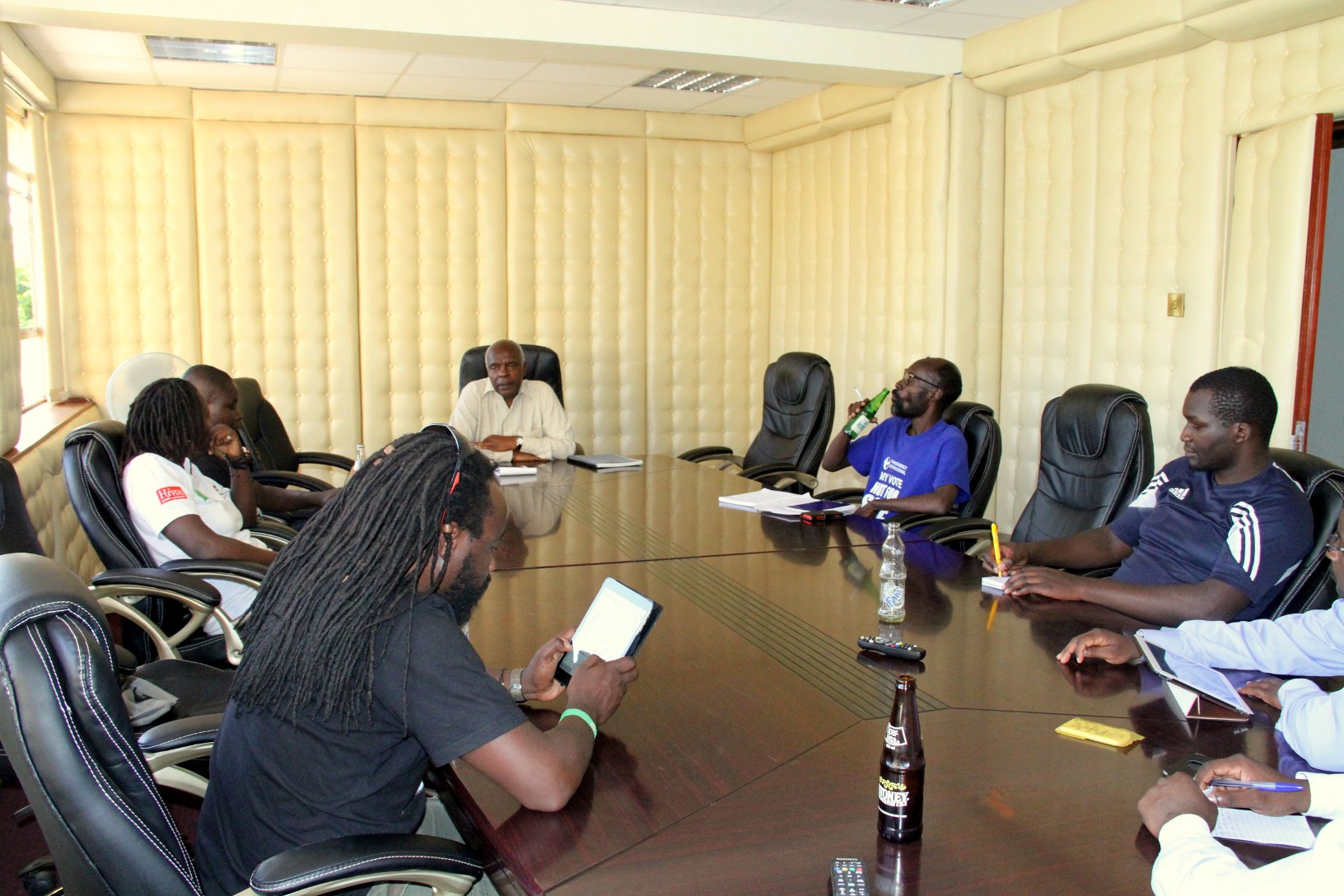
Jukumu Letu partners with Governor Kibwana

It is a position that was not out-rightly objected by Hon. Kelly Musyoka, the MCA for Kithungo/Kitundu ward. “Most MCAs want to control public participation processes and mobilize those the know will sing their songs. This is to ensure their desired results are achieved,” he asserted.

He adds that this certainly brings rifts between the MCAs and the county executive since they feel it should be as open as possible. He reckons that the executive always conduct open forums where anybody who wants to participate and contribute is allowed to do so.

The County uses public forums to engage the public on Bills, budgets and projects. This is done either at the ward level or selecting 10 representatives from each county and assembling them in one location to get their views.

Antony Ndolo, the Mobilization, Urgency for Paralegal Communities in Africa (MAPACA) program officer stated that he has witnessed three instances where MCAs show high handedness on public interest issues. “One was the Ward Development Fund which was unconstitutional, the other was the sand Bill and the other was the disability fund Bill.” He added that this is done by picking 10 representatives from each ward who are then paid sh2000.

Commenting on the Jukumu Letu initiative, the Governor said “the project seems to talk to society in a way society listens.” This could be because the initiative is using forms of art including social media, blogging, music, puppets and theatre to pass messages about the Constitution.

As Makueni residents prepare to present their views to the commission of inquiry into the affairs of the county, they are thinking of not just of electing new leaders, but also ways in which they can better have a say in their affairs in public participation opportunities. They are also hopeful that through avenues like music which many residents like, more will be enlightened of their rights and take part in deciding their fate.

In addition, there is a need for the county to legislate on what public participation entails, albeit this law does not exist at the national level, apart from the constitutional provision. “We need a well structured law on this. That law should state the threshold for adequate public participation so that it is not just about quantity but also quality. This should should also take cognizance of certain parameters that the public at large do not merit. For instance, if we have a Bill on nurses, only nurses will best say what should be legislated and not just anyone, same to issues of trade and taxes or levies, otherwise you can end up getting views that do not add value to the process,” asserted Hon. Kelly.


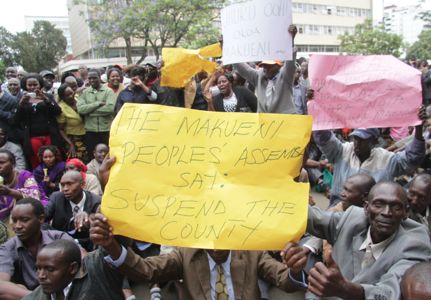
Makueni Residents feel disenfranchised

Photo courtesy of Mediamax Limited

“Before this Constitution, a pastor would mess around, like sleep with people’s wives and no one questions because they felt he is closer to God hence is above the law. Today, when they make mistakes, people walk up to them to inform them of their mistakes and many are changing. It is quite open and progressive,” asserted Pastor Michael, a local pastor in Mbubuni town, Mbooni sub-county, Makueni County.

These comments resonate with many issues and people in Makueni, perhaps a positive note but the move by the residents who made precedence by being the first County to petition the President to dissolve the County government over what they term ‘greed’ from Members of the County Assembly (MCAs) who were aggrieved by the refusal of the Governor to approve the 2014/15 Budget speaks a different script.

Makueni politicians have over the period used the poor roads infrastructure as an election pledge, an issue which the residents hoped will come to an end with the Constitution. They have four main issues they want urgently addressed; roads, water, land tussles and education, which under the current governance stand-off in the County will not be realized.

“We are better off removing this County government now, have an election and get new leaders, whom even if they have just one year to work for residents, will ensure we get better services for that one year, than bicker for five years,” stated Joseph Syoki, an activist in the County.

The residents who are proud of the move to petition for the dissolution of the county say the MCAs are only concerned about foreign trips in far flung countries and in subjects which they are not conversant with neither will they be of benefit to the residents. Anne Karimi, a chairlady of several women groups in the County asked “how can an MCA claim to be learning something in Israel yet they do not know basic English as they quit school in class two?”

To them, the county assembly has refused to ensure that the county realizes development. They are however in praise of the Constitution stating that it has had some tangible differences in the people since its promulgation on 27th August 2010. They explain that power now belongs to the people unlike before, the government is nearer to the people through the offices of the Governor and Ward Administrator and people awakening through various civic education forums.

Last week, the Senate approved the nomination of commission of inquiry into the affairs of the County. The commission that holds the fate of the County will be chaired by lawyer Mohammed Nyaoga. Other members include National Police Service Commission (NPSC) Chairman Johnston Kavuludi, Emily Gatuguta, former Mombasa Mayor Taib Ali Taib, Alice Wairimu Nderitu and Harrison Maithya.

The President picked the commission after the Independent Electoral and Boundaries Commission (IEBC) verified the names of the 50,826 residents who petitioned him over the dissolution of the county. This followed a unanimous decision by the Council of Governors who blessed the process to take its rightful course. The team has since been sworn in by the Chief Justice.

During the vetting process, some nominees like Nyaoga and Gatuguta told the Senate that while they have six months to hand over their report to the President, they expect to finalize within two months. “The ground rules have been laid. We will take two months to complete this process and if anyone has any intentions to delay this process, he will not be tolerated,” Nyaoga asserted.

Makueni County residents say they have had their issues drag for too long. They lament that the divisions between the executive and the assembly have delayed budget making process such that during the first financial year, it delayed by six months while in the second year, it delayed by nine months.

Moreover, they were taken aback by the President’s decision to drag his feet to appoint the commission. Neither the Constitution nor the County Governments Act provides timeline for the President to nominate the Commission, a lacuna which the residents say needs to be filled.

Makueni County is setting precedence that people have a right and power to determine their political leadership. How this case is decided will have ramifications on the future of counties especially in terms of dispute resolution, management and general governance of devolved units. However for the residents, their hope is that the commission will quickly get down to business and wrap up its work fast enough to ensure that they go back to the ballot and elect a new County leadership that they know will safeguard their interests. They are confident that new people, especially MCAs will have taken a lesson from the current members and not repeat their mistakes.

Nakuru County Assembly Misbehaves


Nakuru County Assembly Speaker Susan Kihika

By Kioko Kivandi

Members of the County Assembly (MCA’s) of Nakuru on Tuesday, March 10, 2015 engaged in fists and blows in what is now turning out to be a leadership battle growing out of proportion.

Trouble started when the MCA’s noticed a suspicious man in the house standing in the space that is usually set aside for members of the Press. At first the man, who would eventually turn out to be a plain cloth officer, claimed to be a journalist. But a section of the MCA’s who were not satisfied with his explanation asked him to produce his Press card upon which he failed and thus ejected him out.

But by then the house had already been set on a fighting mood, literally. By the time the Speaker, Susan Kihika got into the house battle lines had already been drawn pitting supporters of two members fighting for the seat of the Leader of Majority.

The two are Mosop MCA George Mwaura who was ousted from the seat last year after he allegedly fell out with the tough talking Speaker, politically, and Naivasha East MCA Waithuki Njane who replaced him. Although Mwaura was reinstated by the Political Parties Disputes Tribunal last week he has not resumed his position as his opponent acquired a High Court order blocking him from doing so.

Although a section of MCA’s refuted that this was the reason why the house burst into flames of fists and punches instead of reasonable debate, it was easy to see how deep the divisions in the house had gone as the leaders pounced on each other.

Speaker Kihika was forced to conduct the business as Sergeant at Arms stood by the mace and often having to stop to give a break for wrestling matches among the MCA’s.

Among those who seemed to have had their hell broken loose is Nesuit MCA Samuel Tonui. Tonui who is also the Deputy Speaker kept on exchanging blows with those he fell out with during the session that lasted for more than half an hour. Later he justified his conduct to the Press saying he was fighting for his rights.

“The Speaker had goons. I was defending myself and will continue to fight,”

he said moments after the chaotic session came to an end.

A section of MCA’s also accused the Speaker of high handedness in handling the business of the house. Dundori MCA Steve Kihara said she was a dictator and they want to impeach her.

“When we fought for the Constitution she was not there,”

he said while referring to Kihika who came to Kenya recently from America where she was an attorney.

“This County is going to the dogs and we ask President Uhuru Kenyatta and his Deputy William Ruto to help us sort out the issues. George Mwaura, one of the people who it is believed is in the midst of the chaos supported this stand.

“This issue had nothing to do with the seat of the Leader of Majority, it’s about the Speaker being partisan and a dictator,”

he reluctantly told Kenya Monitor while avoiding to say whether if the standoff continued he would relent and let go the seat.

But those opposed to Mwaura and his likely supporters were quick with a rejoinder supporting the Speaker. Biashara Ward MCA Stephen Kuria even asked for the conduct of all rowdy MCA’s to be investigated by the Ethics an Anti Corruption Commission while terming the turn of events as shameful.

Kaptembwa MCA Daniel Ambale who is also the Leader of Minority said the presence of the police officer in the house should not have been an issue saying such a scene had been foreseen hence the need of more security.

“We are aware of the presence of the police in the house today. The best way my colleagues would have done is to follow the rules and procedures of the house,”

he said terming the chaos as “barbaric.” The MCA’s have vowed to continue with their business in the succeeding sessions with both factions promising equal response to whatever actions of their opponents.

And unless a quick solution is arrived at the standoff promises to continue scattering the little gains of devolution at the county so far.

Free Wifi in Nakuru County partly working


Director of Digital Media and Diaspora Communication Dennis Itumbi (right) shows Nakuru County Governor Kinuthia Mbugua the basics of Wi-Fi connectivity. Photo Courtesy of Nation Media

By Kioko Kivandi

Going digital, a key plank of the Jubilee administration with its flagship area being Nakuru County is experiencing a mixed bag in its launch of free WiFi. It is available in certain ‘strategic’ areas only for now with the hope of expanding in future. Identifying these areas seems the way forward in using the internet for entertainment, recreational and also marketing opportunities available online.

The Information and Communication Technology (ICT) Director for Nakuru County is urging residents to make use of free internet being provided by the government in Nakuru town.

The WiFi project which is being done in collaboration with State House Nairobi and Liquid Telecom was launched in March 2014 but did not pick well much to the disappointment of residents. It was then launched again at the start of this year.

It aims at cutting the cost of doing business online including doing research for students and their lecturers in colleges of higher education in the county.

Although the WiFi is only being accessed in specific spots within the town, Leonard Kirui wants residents to take advantage of the service as they wait for the town to be fully connected. “Try it it’s there,” says an optimistic Kirui.

According to the County Government the free internet is accessible at 13 different spots beginning with the county headquarters. Other spots include the CK Patel building and the Afraha Stadium.

In some of these spots, for instance at the Old Town Hall, it is strong enough to stream live T.V. especially if there is only a single user doing the streaming. And while there is a good presence of businesses in most of these spots it remains to be known how many of these businesses are making use of the internet considering that it was set up for them.

“The aim of having the internet services at Afraha Stadium is to make it possible for people attending sporting activities at the stadium to post information with ease,” says Kirui. This perhaps suggests a cultural inclination by the County to inform the world of Nakuru County.

The Afraha Stadium is Nakuru’s main sports facility with an estimated capacity of 5,000 persons. Apart from being the main ground for Ulinzi Stars, it also hosts Nakuru All Stars Top Fry and St. Joseph Youth football clubs.

But unless the government publicizes the free internet it is very likely that sports enthusiasts visiting the County and the stadium will never get to know about it and use it since even now residents are yet to make maximum use of the internet partly because of technical challenges and partly because of lack of information concerning the services.

Maureen Macharia, a trader who runs a boutique shop next to the Nakuru Town Campus of Jomo Kenyatta University of Agriculture and Technology (JKUAT) – where the service is available – says she would like to use it while advertising her business but it has a weak signal.

For her to post pictures on social media platforms on which she usually advertises her products she has to leave her shop unattended as the signal cannot be accessed within it even though it is available at its verandah.

“It has become common for people to stand outside my shop to browse through the free WiFi and I wish it was strong enough for me to access it without having to go out,” she told Kenya Monitor.

Apart from JKUAT the WiFi is also available at the Nairobi Aviation College.

“We use it to do research for our studies,”

said John Ogoi the Chairman of the students’ body at the college.

But a business man who did not want to be named complained that he has never been able to access the service despite his premises being close to the college.

“When it was launched we thought it would be economical for us in doing business, but it is not. We thought it would be accessible to everyone.”

Responding to the complaints the County government has said that it is aware of such challenges saying that they are technical and will be handled with time.

“For you to get any WiFi signal you need to be at a place where you can get a line of sight,”

says Kirui the ICT Director who wants residents to be patient until the project which is fully underway.

Apart from the technical challenges Kirui has sited resistance from a section of residents towards the project. “Some people don’t want us to fix our antennas at the top of their buildings,” he said with disappointment.

A successful free WiFi access to residents in Nakuru County, even just in the Central Business District would be another plus for the town which is considered to be the fastest growing in the region. But before it records it as a success, the county government will need sensitize residents of its availability in order to increase its uptake.

Nakuru Court hands man 75 year jail term for indecent act with daughter

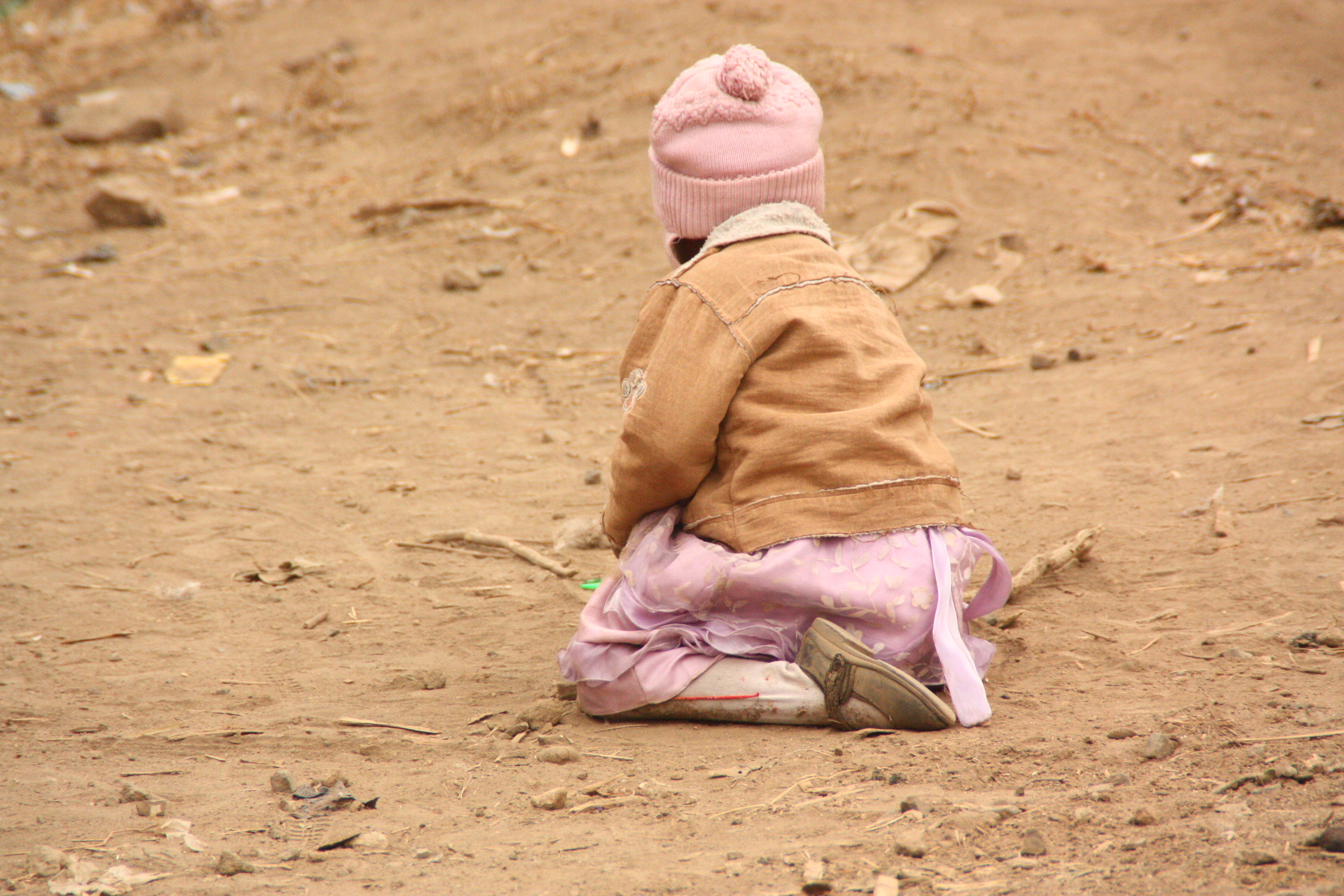
A baby girl plays at the Pipeline camp for the internally displaced persons in Nakuru where a court has sentenced a 44 year old man to 75 years in prison for committing an indecent act on his daughter (not this one) predisposing her to HIV infection.

By Kioko wa Kivandi

A Nakuru Children’s Court has sentenced a man to 75 years in prison for committing an indecent act with his daughter and for deliberately infecting her with HIV. While sentencing the 44 year old man, Senior Resident Magistrate Judicaster Nthuku compared him to a Stoat – a short tailed weasel found in North America – and termed his act as morally, ethically and legally wrong.

David Waweru (44) will serve 25 years for the first crime while concurrently serving 50 years for the second crime.

The court was told that on 12th January 2013, Waweru, while fully aware of his HIV positive status committed the offence to his daughter at their Kianjoya home in Njoro, Nakuru County.

“Knowing that he was infected with HIV, (he) intentionally, knowingly and willfully have sex with the (complainant) when he ought to have known that he would infect her with HIV,” his charge sheet partly read.

The court heard that, on the material day, Waweru came home late and drunk, and after he was served with supper by his daughter, he asked her to move her bedding away from where she was sleeping with her siblings. He then asked her to undress and she complied. He also undressed and forced himself upon her and warned her not to tell anyone lest he beats her up.

She however told her grandmother the next morning who informed her mother and the accused was later arrested and charged with the offence.

While delivering the sentence Senior Resident Magistrate Judicaster Nthuku ruled out incest on him choosing instead to sentence him for the indecent act with his daughter who was aged 12 at the time the offence was committed.

Nthuku observed that there was no evidence to show that there had been penetration during the act. However on the count of deliberate infection with HIV, Nthuku observed the court did not need tests to confirm that the complainant had been infected for the crime to stand.

“All the court needs to be satisfied with (is) that the accused knew he’s HIV positive and that he deliberately did an act which would lead to transmission of the virus to the victim.”

To convict him the court observed that the accused was aware of his HIV status as his wife (and mother of the complainant) had confirmed that she knew his HIV status. Besides, the accused had also confirmed of his status and had even asked for a “special diet” at the prison as he was held since his arrest.

He also admitted to having been a drunk and even used the drunkenness factor in his mitigation.

“I have decided I will never take alcohol again or get myself drunk from whatever substance,” he told the court as he asked for leniency.

“I am a parent with a young family which depends on me for all their needs. I have suffered a lot in prison,” he begged.

The court however said he may have inflicted indelible marks in his daughter’s life and thus gave him the stiff penalty

“so as to be an example to like minded sex predators.”

“The child having been betrayed by her own father may never trust anyone else in her life,” partly read the sentence.

“The acts of the accused are morally, ethically and legally wrong. Even in the animal kingdom other than the Stoat, no animal does this act of having sexual intercourse with its young ones or babies.”

According to the Sexual Offences Act incest or indecent acts can attract imprisonment of not less than 10 years while deliberately infecting someone else with HIV can attract a fine of “not less than 15 years but which can be for life.”

An Appeal has been granted in the next 14 days.