Sunday, December 14, 2025
Home Blog Page 56

The Mirage of Constitutional Participation In Kenya

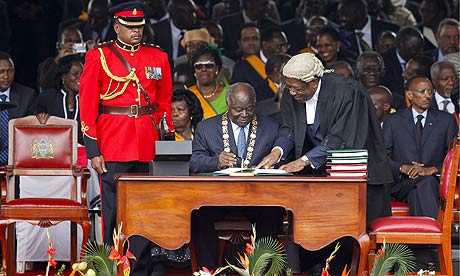
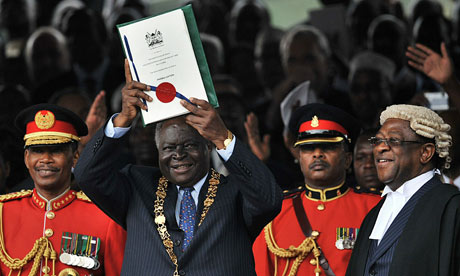
The former Kenya President Mwai Kibaki at the promulgation of the new-constitution
The former Kenya President Mwai Kibaki at the promulgation of the new constitution(image courtesy)

Some commentators have referred to Kenya’s 2010 constitution as the most progressive constitution sub-Saharan Africa has ever seen. Well, that might sound a little bit like a hyperbole but the Kenyan constitution lays the perfect foundation for a constitutional a democracy. Of great importance is the role of the constitution gives to citizen sovereignty, the preamble for example explicitly states that,

“All the sovereign power belongs to the people of Kenya and shall be exercised only accordance with this constitution.”

Simply put, the promulgation of the current constitution in 2010 was Kenya’s Magana Carta moment.This is unlike the Lancaster Constitution which begun by stating that;

“Kenya is a Sovereign Republic.”

Remember it was not until the 1991 that Section 2A of the Lancaster Constitution was repealed to pave way for multi-party democracy. It is clear that the Lancaster Constitution did not pay any attention, however remote to citizen sovereignty. Though the current constitution is ambitious in approach, it does underscore the importance the people of Kenya place on progressive people centered governance.
The pitfalls of the Lancaster Constitution, particularly its relegation of citizens to mere appendages of statecraft was the reason it was critical to have a new constitution in the first place and a new constitution we had ourselves in August of 2010. Save for the supremacy of the citizen sovereignty which the constitution granted to the people of Kenya, the inclusion of citizen participation on critical issues of social, economic and political concern to Kenyans is also an important and progressive feature of this constitution.
Citizen participation in all spheres of life is an important feature of 21st century good governance best practice. In fact the rationale behind devolution was that it would provide citizens further away from the center of power that was Nairobi with a real chance to prioritize and decide how resources would be used for their benefit. Article 174 (C)of the constitution states that the objects of devolution of government is,


“to give powers of self-governance to the people and enhance the participation of the people in the exercise of the powers of the State and in making decisions affecting them.”


Article 174 (D)provides a new bottoms-up development paradigm providing for the need,


“to recognize the rights of communities to manage their own affairs and to further their own development.”


These articles from the constitution show a clear departure from the way of old, the constitution heralds in a new era of people centered development. From the onset in the preamble the theme that the ‘citizen’ is the single most important actor in Kenyan threads through the entire document.
But perhaps there is no more pronounced role for citizen participation than in the management of Public Finance. Previously the executive almost unanimously had discretionary sanction to decide how public finances were utilized, not anymore. Article 221 (5) provides room for the public to play a constructive role in budget making in the country,

“in discussing and reviewing the estimates, the committee shall seek representations from the public and the recommendations shall be taken into account when the committee makes its recommendations to the National Assembly.”


The public thus have a much more refined role to play in creating sectoral equity through the budget process. The public can for example assert they need more spending in education rather than health or security for that matter, the prerogative is really with them. The Public Finance Management Act (2012), the subsidiary act that qualifies the Chapter 12 of the constitution on Public Finance Management obligates the Treasury to include the views of the public in the preparation of the Budget Policy statement.
Before we celebrate these small constitutional victories, there is need to examine whether the spirit of the constitution of providing for consistent citizen participation in matters of governance is being giving more than superficial adherence.
There is need to know whether indeed to know whether citizens and citizen groups understand that they are indeed a critical cog in the balanced development of the country. Whether indeed executive structures have created the avenues necessaries to facilitate citizen participation. For example the Parliamentary Budgetary Office gave the National Treasury 53% compliance rate when it comes to release the of important document for citizen participation.
In addition there is need to deal with deep set issues of apathy, historical occurrences of insensitivity to citizen needs in the past get into the way of effective participation. Perhaps citizens feel that public forums to discuss key issues are no more than window dressing exercises meant only to comply with constitutional thresholds rather than exercises to mainstream them in the determination of resource prioritization.
Indeed there is need for further civic education, not only to enlighten them on their roles and responsibility in development planning but also to increase their capacity in order to alleviate the asymmetries that occur when engage with governmental officers.

(image source)

Human Rights Abuses continue in the new Constitution

Inside Kenya's Death Squads  - An Al Jazeera documentary
Inside Kenya’s Death Squads – An Al Jazeera documentary

Aljazeera aired the highly talked about, ‘Inside Kenya’s Death Squads’ feature this week. Straight off the Ross Kemp rule book that one, from the special effects, the grotesqueness, and the human side imbued through torturous images of cold blood murder by Kenyan state agents, everything was the same. One could almost certainly see the Ross Kemp narrate his profile of the Mungiki and the violent reprisal from the government some years back. Yet, a fact that escapes mention is that Ross Kemp shot his documentary a few years before the Kenya promulgated the new constitution, the Aljazeera feature was shot in a new Kenya, a new republic, anchored on rule of law and constitutionalism.

Why? Why do such wanton extra-judicial killings happen in a country that is trying to redeem its image to appear like a bastion of virtue in and rule of law in Africa? Why didn’t the cold blood murder of two robbers on Kimathi Street a few days ago by police attract the ire of the public like the Aljazeera feature did? Weren’t all these murders excesses by law enforcement officers? Why the selective application of public sympathy?

Although Kenya changed its constitution in 2010, a few things have remained the same, one of them being the total collapse of the criminal justice system. The police usually justify their street executions with the paralysis that is the Kenyan justice system. One could say they have a case, but more often than not it is a culture of impunity that permeated the police as an institution since colonial times that is to blame for all this street side mayhem. Sad as it is this culture seems not have been adequately addressed by the constitution.

Institutions, particularly the ones that deal with law and order, seem not to have gained the affinity for rule of law that the rest of us did when the new constitution came into being. What be the problem? The constitutional is unequivocal in its reverence for human rights and it is ironical that the police and other state agents treat Kenyan citizens with imperious contempt and without due regard to the constitution.

Chapter four of our constitution “Bill of Rights” defines the rights and freedoms of Kenyans, the chapter defines the rights and freedoms in such explicit terms that there is absolutely no chance of misinterpretation, it provides the basis for limitation of powers for state organs. Article 19 (3)a; states that, “the rights to and freedoms belong to each individual and are not granted by the state,” these rights and freedoms are innate, are universal and ensue from natural law. In other words state organs are not supposed to deny individuals their rights and freedoms in discretionary and arbitrary manner.

The limitations of rights and freedoms of individuals are only limited by the constitution itself. In other words there is a presumption of freedom and liberty in our constitution, an individual is free to act or not act as pleases as long as action or inaction does not interfere with the rights and freedoms of others, for example an individual cannot kill another because the ‘right to life’ of that other is guaranteed by the constitution. Something that almost escapes mention is that the constitution grants ‘rights and freedoms’ to individuals not groups of people, this is important, it does not leave the lacuna which would have allowed groups to act on or hold the rights of individuals in trust. This clause also ensures that the ‘tyranny of the majority’ is not a determining factor for rights and freedoms. Civil groups can have their opinion, but this opinions do not provide the basis for constricting individual freedom.

The recent stripping of women on the guise of poor dressing by Neanderthal men comes to mind, these men cannot decide how a woman dresses, they cannot argue that particular women dressing abuses their rights, if they do so, they are burden of proving that that their rights have been abused is on them not on the poor women and they should prove that in court. This idea of marrying rights and freedoms with the individual is a built around the ‘libertarian maxim’ that individuals know what’s best for them.

Part of the blame for this, squarely lie with the citizens they are ignorant and seem not know their rights and even if they do, they suck at demanding for them. The constitution is very clear and the presumption of innocence for accused persons is not mere rhetoric, the rights of the accused persons and other persons in the country are well enumerated Article 50 (2) of the constitution stipulates that,“every accused person has the right to a fair trial, which includes the right to be proved innocent until the contrary is proved.” This does not leave the police with a caveat to execution supposed criminals in the streets. Innocent people, at times caught in the cross-fire suffer because the state has had a particularly bad record at prosecuting crime, there are numerous cases of the innocent wallowing in jail and guilty walking free.

Abuse of rights and freedoms start when the police are allowed to get away with small abuses. For example citizens do not know that they do have the freedom from arbitrary search in fact the constitution assumes that the individual own their own property and all property is protected by the constitution. Yet the police carry out arbitrary searches without abandon.

In Kenya we do not have people who stand pedestals of virtue, we do not have people who stand when the rights of the constitutional rights of others are abused, now is the time we need persons to instigate a virtuous to call out rights and freedoms abuses immediately.

The Constitution has been a blessing to Kenya

Kenya's former President Mwai Kibaki promulgating the new Kenyan constitution (image courtesy)
Kenya’s former President Mwai Kibaki promulgating the new Kenyan constitution (image courtesy)

Kenya’s 2010 Constitution has had a fair share of success in its four years of implementation. It certainly a reality that without the 2007/8 post election violence and the ensuing mediation efforts, Kenyans would still have the old Constitution. Be as it may, the document which I call the political bible will still need time to be tested for a concrete appraisal to be made but so far, a fairly positive comment on it is apparent.

The first success has been the assertive independent Judiciary. The February 2014 Ipsos Synovate Poll said that the trust in the Judiciary among Kenyans stood at 12 per cent. The same poll had levels of confidence in the Supreme Court and the Chief Justice at 16 per cent. These results, though below par, still put the Judiciary among the top institutions Kenyans rely upon.

The vetting of Judges and Magistrates saw a number of Judges and Magistrates leave the bench, albeit some still have challenged decisions in court. This move was lauded by many who saw it as a good way of ensuring those who serve in the corridors of Justice are men and women of repute.

This trust could also be derived from the way the institution has criticized and ruled against the government on a number of occasions. For instance, In November 2011, Justice Nicholas Ombija issued arrest warrant for President Bashir should he step in the country so that he is extradited to face charges at the ICC. After this ruling, many other judges have been bold to call the executive and Parliament to order.

Chief Justice Willy Mutunga has also not disappointed. He has stood firm in defending the Judiciary and informing all that he does not direct any Judge on a matter and that the institution will maintain fidelity to the Constitution and laws passed. Its greatest soul has been independent financing from the consolidated fund unlike before when the President determined its budget.

In recent months, various organs of government have gone to court to seek its opinion on certain matters or even quashing some issues they deem unlawful. The supremacy battles between the Senate and National Assembly is a good case in point. Kenyans still feel that justice can be bought by the highest bidder but the institution has made tremendous milestone thanks to the Constitution and over time, it could win more hearts should it continue being vocal and transparent. Certainly some issues of accountability against former Registrar Gladys Boss Shollei and leaked emails between the CJ and senior Judiciary officials’ bleak the view but all is not lost.

The second benefit Kenyans derived from the Constitution is Public Participation. The participation of the public in public affairs is first seen in Article 10 on national values. It means that engaging the public before deciding on policies, laws and decisions is a national value which should be accorded and respected. This is the spirit that informs all decisions to be made especially those that go through Parliament or County Assemblies.

This practice has been considerably successful in national politics. Parliament has sought the views of the public on numerous occasions before deciding on issues especially Bills and appointments. This has been through written memoranda or attending public forums. The public have also taken interest in governance by presenting petitions to the House through the speakers of Parliament.

The challenge or question has been how effective these initiatives have been. For instance, an audit of how Kenyans respond to request for memoranda on Bills and appointment will shed more light. Parliament uses newspapers to announce for the memoranda. These newspapers are not accessible to all whilst it is a good attempt. Knowing its effectiveness could be by checking the quality and quantity of memoranda submitted. This has yet to be done. The scenario could be poor in counties which have yet to settle and Kenyans take a deeper interest in the affairs of the county governments.

The third and probably most profound success of the Constitution has been giving Kenyans hope. From time to time, Kenyans in their diverse walks of life cite rights and freedoms that the Constitution guarantees them. For instance, the right to picket has been utilized and when police try to scuttle protestors, some cite them.

There was hope that the Constitution will protect Kenya from bloodshed in the March, 4 2013 General Elections and indeed it did as Presidential aspirant Raila Odinga sought the Supreme Court’s intervention in the polls and respected its decision. He has on numerous occasions said he did not accept it but he respected it, something that calmed his supporters and Kenya has been able to move ahead with nation building.

There was also hope that the new Executive with professionals running ministries will help steer the country better unlike before when ministers were from Parliament. While some attempts are being made to allow the President to choose Cabinet Secretaries from Parliament, that will require an amendment to the Constitution which the process is yet to commence.

In addition, Kenyans feeling that the country is not being steered correctly have made their stand in the referendum push. They are using the popular initiative which is shielding the initiative from Parliament which could easily sabotage the process. The laborious process enshrined in the Constitution with various ways of amending the Constitution has certainly been a good provision that inter alia could be a quagmire.

People centered governance, as enshrined in Article 1 (1) of the Constitution is something to celebrate. The effectiveness could be questioned, which will take a process and concerted efforts but in principle, the political bible has moved Kenya forward.

Its greatest weakness was the belief among the drafters that goodwill shall prevail in its implementation. Many clauses were left as abstract or without clear provisions on the basis that those implementing it, majorly the governments arms of Parliament and Executive will maintain fidelity to the spirit that informed the over 63 per cent that voted for the document on August 4th 2010.

A classic example is the lack of clarity of which house is the upper one between the National Assembly and the Senate and this has seen them squabble from time to time. Some other issues like gender principle have been challenged in court with the courts taking a progressive interpretation of the document. It is a challenge that Dr. Ekuru Aukot, who served as Director of the Committee of Experts has underlined adding that given another chance, such a body should ensure nothing is left on ‘goodwill’. It must be clearly provided.

(image source)

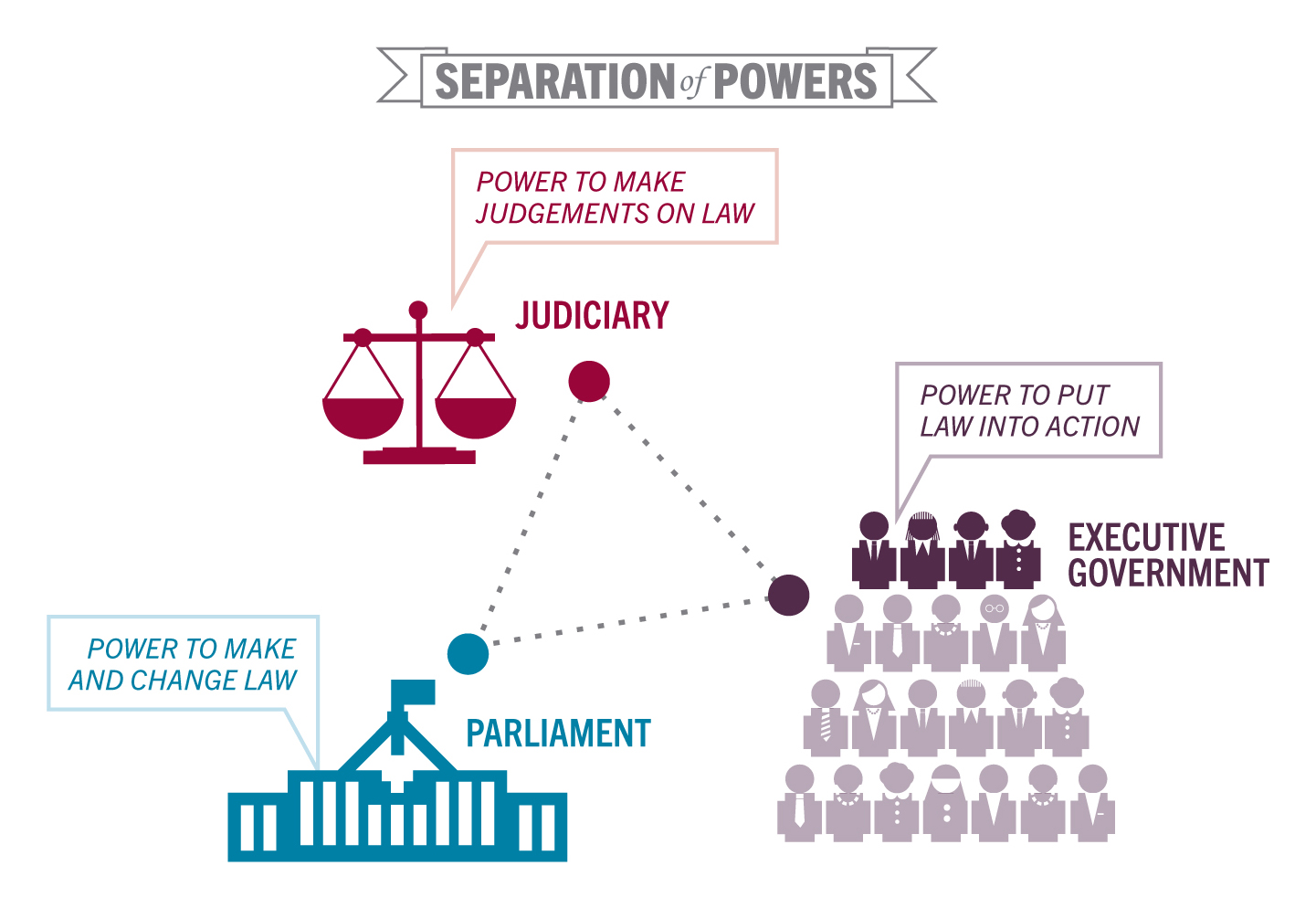
Separation of Powers Principle needs to be cultured

separation-of-powers
(image courtesy)

James Madison on the need for the “separation of powers” because “men are not angels,” profoundly stated


“But the great security against a gradual concentration of the several powers in the same department, consists in giving to those who administer each department, the necessary constitutional means, and personal motives, to resist encroachments of the others… Ambition must be made to counteract ambition. The interest of the man, must be connected with the constitutional rights of the place. It may be a reflection on human nature, that such devices should be necessary to control the abuses of government.”

These are very noble words which aptly capture the ideals of the separation of Powers principle in public affairs. The Kenya Constitution breathes life to this practice and principle for the first time in our 52 years of independence. As such, the lack of a culture and people who believe in it has been gravely lacking albeit recognizing that it is a process.


National Cohesion and Integration Commission (NCIC)  in their recent report on cohesion in the country alluded to the supremacy wars between the Senate and the National Assembly as ‘breeding’ the lack of cohesion in the country. The reasoning could be that the electorate looks at these political leaders and expect to be guided through actions and when they publicly bicker, it sends the wrong signals.
Parliament; Senate and National Assembly, have been aggrieved by how the Judiciary has stepped up and rules them out of order when they fail to follow the law. They have threatened to take unspecified actions against the Judiciary, something that should not be thought of. Their best bet is however through the budget.

Parliament, as it considers and approves the budget can grossly reduce the allocation required by the Judiciary for its various functions. This carrot would be meant to invite them to go easy on them, especially as a House, not individuals. It is the only way they can exercise some control, unless they change some laws, say on who appoints Judges, which will largely mean an amendment to the Constitution.

A few weeks ago, Senate and the Judiciary had a meeting. It was meant to provide grounds for a good working relationship. On numerous occasions, CJ Willy Mutunga has stood firm that they will not be intimidated, something the meeting should have insisted on. This meeting, irked MPs who felt they ought to have been included. Does chicken need a duck to eat corn?

The Executive has also been unhappy with the way the Judiciary has been vocal. This Jubilee government has not been affected much but the famous case in when the courts quashed the appointments of Constitutional office holders; Director of Public Prosecutions (DPP), Chief Justice (CJ) and Attorney General (AG) without following procedure.

MPs have also proposed an amendment to the Constitution to allow the President to pick Cabinet Secretaries from Parliament. This was the practice in the previous Constitution and they seem to want it citing lack of ability to exercise adequate oversight. So far, the MPs managed to amend standing orders to allow the Secretaries to appear before them, a move that was later halted after a meeting between Speaker Muturi and the President.

This move was not only unwise but unfortunate. The elected leaders want to control everything. They can ably do their oversight role as is tradition of having them go before committees and even allow any other member who has a question to attend a committee meeting and seek answers. It was a classic example of the Assembly becoming bullish and wanting to bulldoze everyone.

It is not all gloom. Kenyans need to appreciate that over 48 years under the system will take more time, not just four, to change the ways of thinking and practice. Leaders will over time recognize the distinct roles of each government organ and accord it respect and space. Separation of Powers is core in instilling checks and balances in government.

The main concern however is the tyranny of numbers in Parliament. It is good that the Executive has an easy way in passing decisions as they are from the same coalition. It however blurs prudent and accurate oversight from the legislators since the executive can easily arm-twist them through political parties. Politicians owe their offices to party leaders whom some consider demi-gods.

In developed democracies, the fact that the President and a certain MP or the majority come from the same party or coalition is no panacea to lack of checks and accountability from both parties. This should be the ultimate goal and ambition as Kenya’s democracy matures. This will take men and women and good standing and character to occupy these offices and ‘cleanse’ them of pedestrian beliefs of supremacy. Supremacy is the Constitution and the People.

The Constitution aptly guarantees human rights

(image courtesy)
(image courtesy)

There is an ongoing concern among human rights defenders and lawyers on The Security Laws (Amendment) Bill which is intended to empower the government and security agencies to fight terrorism. There are many glaring concerns on the Bill, like how Parliament want it rushed which have been captured here How new security law to fight terror infringes on rights.

Human Rights can be defined as ‘moral’ entitlements or claims that have legal recognition. In tweet in response to these concerns, Lawyer Ahmednassir Abdullahi remarked “Kenyans shouldn’t be alarmed or scared by the draconian security laws…The antidote/answer is the constitution, the courts and LSK.”

Ahmednassir is apt in instilling confidence in Kenyans that even if the Bill is passed, it will not hold water so long as it infringes on human rights provisions that the Constitution protects. A good starting point is Article 19(2) of the Constitution of Kenya, 2010 provides that


“the essential purpose of human rights is to preserve the dignity of the individuals and communities and to promote social justice and the realization of the potential of human beings.”

Elements of human rights shed light into the gravity of the matter. First, human rights belong to every human being by being human/ they do not depart and cannot be separated from the person. Secondly, they are universal. Thirdly, they are unchallengeable, absolute, immutable, incontrovertible, indisputable and undeniable. Fourthly, they belong to the human person at all times irrespective of circumstances such as imprisonment, conflict, poverty, illness, or any other compromised situations of the human person. They do not depart, and cannot be separated from the person. Lastly, the rights must not be mere moral aspirations, they should be practicable.
The state has a duty to Respect, Protect, Fulfill and Promote human rights at all times. However, the reality is that Rights are not absolute. They are subjected to certain recognized limitations and in certain circumstances to suspension as enshrined in (Article 24(1) of the Constitution. These limitations must however be justifiable in an open democratic system, reasonable and necessary and must not affect the general content of the right.
Despite Article 24, Article 25 affirms that certain rights cannot be limited at all costs. They are freedom from torture and cruel, inhumane or degrading treatment or punishment, freedom from slavery, right to a fair trial and right to order for appearance before a court and for the court to make a determination on lawful authority to detain the prisoner, otherwise known as habeas corpus.
The amendment Bill highlighted above seeks to amend 22 laws, quite massive and profound on fundamental rights and freedoms. The fight against terrorism has informed this Bill especially in light of recent attacks on Kenyans by suspects Alshabaab members.
The Bill is therefore considerably punitive, as it affects not just suspected terrorists but information purveyors like citizen journalists and media stations as it has clauses that will impede access to information and distribution of the same.
The International Commission of Jurists (ICJ) Kenya chapter correctly affirms that the fight against terrorism cannot be used as an excuse to derogate from fundamental human rights principles enshrined in the Constitution. The implementation of human rights does not promote terrorism. It is the violation of human rights that promotes terrorism.

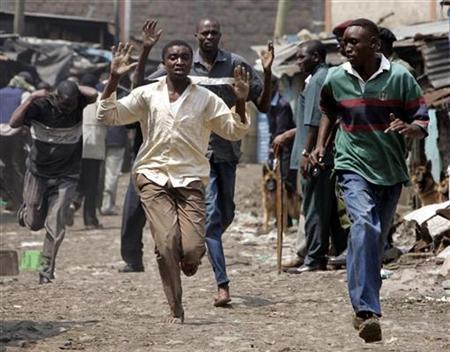
Activist groups in at a past demonstration
Activist groups in a past demonstration (image courtesy)

A basic failure of this Bill is not even substantive but procedural. When introducing the Bill, Administration and National Security committee chairman Asman Kamama, the Bill’s sponsor, urged that the Bill be fast tracked and passed before Christmas. The basic failure of procedure is adequate public participation where the public must be informed, asked to give views in good time, before it is further discussed and passed. The tradition has been 14 days which this Bill violates but which will most likely not pass the test. However, after presenting the Bill, it took the speaker his intervention to rule that the public must have a say on it as it is of public importance and a hurried forum at County Hall was organized.
There is already precedence on inclusion of public input before a Bill is passed. This was the case in Kiambi County; Court Strikes Down Kiambu County Finance Act for Lack of Public Participation. Any Judge will easily use it.
What also gives hope to these efforts not seeing the light of day in terms of enforcement is the robust courts. The judiciary has asserted its independence and as Ahmednassir captured it, they will quash any law passed which infringes on fundamental rights guaranteed by the Constitution.
The Constitution is clear that any law that is inconsistent with the Constitution is null and void to the extent of its inconsistency. This Constitution is the supreme law and binds everyone (Article 2).
The meaning and importance of the Constitution and any judicial review on such matters that could arise is to challenge the enforceability of the laws. In the past, the courts have given stay orders on implementation of issues until they have been heard and determined. This gives promise to Kenyans, not just on this matter, but in the general fundamental rights and rights that they enjoy as guaranteed by the Constitution which recognizes that they merit because they are human beings and deserve dignity.
Kenya is not only unsafe because of terrorism; every neighborhood is unsafe due to unemployment and high cost of living. Tacking these insecurities requires social and economic capital in the drivers of insecurity. Seeking ways of providing basic needs to families like creating jobs are what will ensure people deviate from crime and engage in positive economic activities.
Kenyans have come a long way from days of detention without trial to forced disappearances and extrajudicial killings. The Constitution protects against this dark history. The enforcement of these rights has not only to be undertaken by the state, but all stakeholders who should remind government officers that no one is above the law. The media and civil society groups owe this to Kenyans.

(Image Sources one, two)

Why should witches be burnt? The Witchcraft Act in the Kenyan Constitution


Burning witches
(image courtesy)

A major human rights scandal that has been neglected for ages

‘It is late Afternoon in Nyamataro Village. I hear wailing sounds filled with anger and excitement. At first, my mind churns that it could be a celebration of release of young men from the circumcision dens. I keep peeling my cassavas. Today, I am preparing my favorite ‘city-meal’ for my granny. The wailing turn into ugly grunts a midst screams for help and it goes on and on. I walk out of the hut only to be greeted by smoked air, full of unpleasant meaty smell. I reach out to my neighbor who seemingly had left earlier for this ceremony. I then call the assistant chief who is a close friend of my granny. We then head to the community square.

The sight on arrival is not that to stare twice; not even once. Five human beings set on fire. I am dumbfounded by this unfathomable act. The assistant chief explains to me that these are witches who have been torturing the people in this village. He does not seem disturbed by the sight. I am quite terrified and trying so hard not to show my disapproval of this act. One villager shouts pointing towards me ‘She is the last born of the witches’ daughter’ the rest shout even louder ‘Which one?? Throw her in’ ‘Throw her in’ ‘She deserves to die’. My legs start to shake, my intestines turn upside down, and my heart is jumping out of my throat. I can’t even breathe. No air. All I am seeing are numerous enraged lions and tigers heading for my flesh. What crime have I committed?’

Among many other evils, burning of witches both male and female has continued to happen in Kenya and other African countries. Perpetrators carry out these activities in broad day light. These witches are majorly elderly women who have dependents and relatives. Burning of witches is clearly a major human right scandal that no one has ever been prosecuted of. This, among other acts of mob justice is never taken into serious consideration. Hardly is anyone prosecuted for an act of mob justice.

Burning of witches are by all means a cruel and crude mechanisms of punishing individuals. Why is nobody stepping forward to effect punishment for persons who lynch witches and burn in broad day light?

Not long ago, highly graphic videos of women being burnt mercilessly were doing rounds on social media and even mainstream media. Witches in Kisii and Nyamira were beaten and burnt in broad day light. How do such atrocities take place in modern society without any action being taken? These monstrosities were not the first of their kind in this region. They occur regularly. They put our country to shame and above all subjected the victims to excessive pain. The relatives of the victims also experience a lot of depression seeing their loved ones dying in broad day light and not even the law can protect them.

The law clearly outlines that ‘no one should be condemned unheard’. All humans of Kenya and all over the world must be treated as innocent until proven guilty in a court of law.No one has any rights whatsoever to burn another to death irrespective of their wrong doings. They need to be given a chance and only be sentenced by the law.
A long term solution needs to be designed to help end these monstrosities ones and for all. This will require the entire community involvement. These witches also have a right to life. They have the right to live freely without fear of discrimination of violence of whatever kind. If proven guilty of any crimes, they need to be sentenced in a court of law.

The knowledge I have about witchcraft tells me, sometimes a witch has no control over their powers. In such a case, they could be a nuisance to the people around them. And, in turn infringe on their rights and freedoms as citizens of Kenya. In the Kenyan Law Cap 67, Witchcraft Act which protects the public against acts of a person practicing witch craft. It states that “any person who holds himself out as a witch doctor able to cause fear, annoyance or injury to another mind, person or property, or who pretends to exercise any kind of supernatural power, witch craft, sorcery or entrenchment calculated to cause such fear, annoyance or injury, shall be guilty of an offence and liable to imprisonment for a term not exceeding five years.” We all have the right to sue any one practicing witch craft. We are protected by the law.

Then, what happens when someone takes the law into their own hands to punish? or rather, to beat mercilessly and burn to death. What does the law provide to protect the witches from being mistreated by the members of the public? Once a suspected witch is dead, they are dead.

Section 6 of the Witchcraft Act talks about charging persons with witchcraft. It states that “Any person who accuses or threatens to accuse any person with being a witch or with practicing witchcraft shall be guilty of an offence and liable to a fine not exceeding five hundred shillings or to imprisonment for a term not exceeding five years:Provided that this section shall not apply to any person who makes an accusation to a District Commissioner, a police officer, a chief or any other person in authority.” Does this section render the members of the public helpless? How then will you prove someone is a witch in a court of law?

When it is reported to a District Commissioner that a person is suspected of practicing witchcraft, the District Commissioner, after due inquiry and having satisfied himself that the person so suspected causes or is likely to cause fear, annoyance or injury in mind, person or property to any other person by means of pretended witchcraft, may for reasons to be recorded order the person so suspected to reside in any locality within his district to be named by the District Commissioner, and alternatively or in addition to report at the office of the District Commissioner every seven days or at longer intervals until further orders.

The perpetrators of burning of witches are guilty of murder which is punishable through life sentence or such other punishments that may be declared in a court of law.

(image Source)