Wednesday, December 17, 2025
Home Blog Page 6

South Africa to produce Pfizer/BioNTech Covid-19 vaccine exclusively for Africa

0

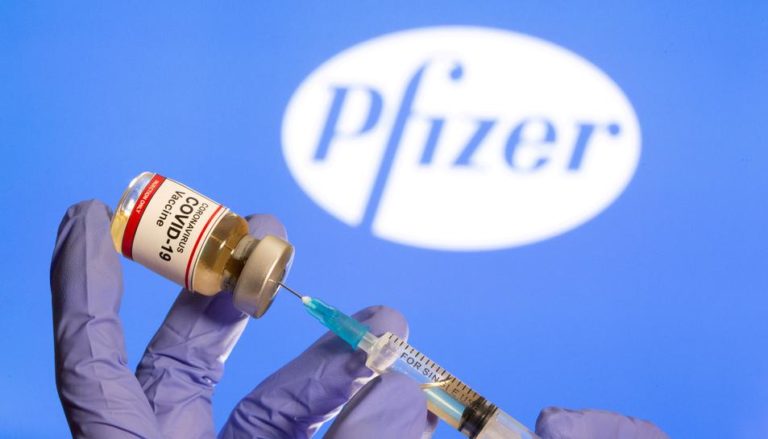
Pfizer and BioNTech have inked a deal letter of intent with The Biovac Institute (Pty) Ltd, known as “Biovac,” to manufacture the Pfizer-BioNTech COVID-19 Vaccine for distribution within the African Union.

This is a welcome move on the continent that has been decrying inequality in Covid vaccines access and distribution among countries.

Basically, the Cape Town-based company will perform manufacturing and distribution activities within Pfizer’s and BioNTech’s global COVID-19 vaccine supply chain and manufacturing network, which will now span three continents and include more than 20 manufacturing facilities.

To facilitate Biovac’s involvement in the process, technical transfer, on-site development, and equipment installation activities will begin immediately. Pfizer and BioNTech expect that Biovac’s Cape Town facility will be incorporated into the vaccine supply chain by the end of 2021.

Biovac will obtain drug substance from facilities in Europe, and manufacturing of finished doses will commence in 2022. At full operational capacity, the annual production will exceed 100 million finished doses annually. All doses will exclusively be distributed within the 55 member states that make up the African Union.

“From day one, our goal has been to provide fair and equitable access of the Pfizer-BioNTech COVID-19 Vaccine to everyone, everywhere,” said Albert Bourla, Chairman and Chief Executive Officer, Pfizer. “Our latest collaboration with Biovac is a shining example of the tireless work being done, in this instance to benefit Africa. We will continue to explore and pursue opportunities to bring new partners into our supply chain network, including in Latin America, to further accelerate access of COVID-19 vaccines.”

“We aim to enable people on all continents to manufacture and distribute our vaccine while ensuring the quality of the manufacturing process and the doses,” said Ugur Sahin, M.D., CEO and Co-founder of BioNTech. “We believe that our mRNA technology can be used to develop vaccine candidates addressing other diseases as well. This is why we will continue to evaluate sustainable approaches that will support the development and production of mRNA vaccines on the African continent.”

“We are thrilled to collaborate with Pfizer and BioNTech to produce and distribute the Pfizer-BioNTech COVID-19 Vaccine within Africa. This is testament of the long-standing relationship we have had with Pfizer through the Prevenar 13 vaccine,” said Dr. Morena Makhoana, CEO of Biovac.

“This is a critical step forward in strengthening sustainable access to a vaccine in the fight against this tragic, worldwide pandemic. We believe this collaboration will create opportunity to more broadly distribute vaccine doses to people in harder-to-reach communities, especially those on the African continent,” he added

Pfizer and BioNTech selection process is based on several factors: quality, compliance, safety track record, technical capability, capacity availability, highly trained workforce, project management abilities, prior working relationship, and commitment to working with flexibility through a fast-paced program

Pfizer and Biovac have worked together since 2015 on the sterile formulation, fill, finish and distribution of the Prevenar 13 vaccine.

To date, Pfizer and BioNTech have shipped more than 1 billion COVID-19 vaccine doses to more than 100 countries or territories in every region of the world. The companies aim to provide 2 billion doses to low and middle income countries in 2021 and 2022 – 1 billion each year.

This includes an agreement to supply 500 million doses to the U.S. Government at a not-for-profit price, that the government will, in turn, donate to the African Union and the COVAX 92 Advanced Market Commitment (AMC) countries, as well as a direct supply agreement with the COVAX facility for 40 million doses.

The Pfizer-BioNTech COVID-19 Vaccine, which is based on BioNTech’s proprietary mRNA technology, was developed by both BioNTech and Pfizer. BioNTech is the Marketing Authorization Holder in the European Union, and the holder of emergency use authorizations or equivalent in the United States (jointly with Pfizer), Canada and other countries in advance of a planned application for full marketing authorizations in these countries.



Kenya-based suppliers are risking almost USD4bn in exports if they don’t cut carbon emissions in line with their biggest clients’ net zero plans

0

A new study by Standard Chartered reveals that multinational companies will cut suppliers for failing to curb carbon emissions, with 78 per cent of multinationals (MNCs) planning to remove suppliers that endanger their carbon transition plan by 2025.

For Kenyan suppliers who fail to transition alongside their MNC partners, this could mean a loss in export revenue of USD3.9bn. However, the study also reveals a USD1.6tn market opportunity for suppliers who decarbonise in line with MNC net zero plans.

According to Carbon Dated report, which looks at the risks and opportunities for suppliers in emerging and fast-growing markets as large corporates transition to net zero, 15 per cent of MNCs have already begun removing suppliers that might scupper their transition plans. In total, MNCs expect to exclude 35 per cent of their current suppliers as they move away from carbon.

The study also found that:

  • Supply chain emissions account for an average of 73 per cent of MNCs’ total emissions
  • More than two thirds (67 per cent) of MNCs say tackling supply chain emissions is the first step in their net-zero transition, rather than focusing on their own carbon output
  • Suppliers in 12 key emerging and fast-growing markets can share in USD1.6tn worth of business if they can remain part of MNC supply chains
  • 87 per cent of MNCs with a supply chain in Kenya have set emission reduction targets for their suppliers, asking for an average reduction of 35 per cent by 2025

The net-zero supply chain revolution

Racing against the clock to hit their net-zero carbon goals, MNCs are increasing the pressure on their suppliers to become more sustainable, with companies based in emerging and fast-moving markets facing the biggest challenge.

Some 64 per cent of MNCs believe emerging market suppliers are struggling more than developed market suppliers with their net-zero transition, and 57 per cent are prepared to replace emerging market suppliers with developed market suppliers to aid their transition.

MNCs are concerned that emerging market suppliers are failing to keep pace with for two key reasons; insufficient knowledge and inadequate data. Some 56 per cent of MNCs believe that the lack of knowledge among emerging market suppliers (41 per cent for developed market suppliers) is a barrier to decarbonisation.

With MNCs struggling with the quality of data, two-thirds are using secondary sources of data to plug the gap left by supplier emissions surveys and 46 per cent say that unreliable data from suppliers is a barrier to reducing emissions.

Risks and rewards

The study also reveals that the current approach taken by MNCs could create a USD1.6tn opportunity for the net-zero club: those businesses reducing emissions in line with MNC net-zero plans.

This represents a major opportunity for net-zero-focused suppliers across the 12 markets in this study, but also quantifies the potential losses to companies not embracing net-zero transition.

MNCs are also willing to spend more on net-zero products and services. Some 45 per cent said they would pay a premium, of 7 per cent on average, for a product or service from a net-zero supplier.

Carbon, collaboration and compromise

MNCs are exploring other ways to help their suppliers’ transition to net zero. Some 47 per cent are offering preferred supplier status – a sales advantage – to sustainable suppliers, and 30 per cent are offering preferential pricing.

Some MNCs are going further, offering grants or loans to their suppliers to invest in reducing emissions (18 per cent) or data collection (13 per cent).

Kariuki Ngari, CEO Standard Chartered Bank Kenya & EA says: “Decarbonisation is vital for the survival of the planet. Emerging markets are most at risk from climate change and are among the least prepared and represent the fastest growing sources of new carbon emissions. Kenya for example aims to achieve a net-zero carbon neutral economy by 2050. The government also aims to set up an emissions trading system that will allow companies and other bodies to buy emissions allowances. These are bold steps and a catalyst towards net zero. Currently, 70% of the nation’s installed electricity capacity comes from renewable energy sources, which is more than three times the global average.

Our Carbon Dated report shows that as multinational companies transition to net zero, they are starting to look to their suppliers to help. These multinationals are willing incentivise their suppliers to help them kick start their transition journey. Governments and the financial sector must also play a key role by creating the right infrastructure and offering the necessary funding. At Standard Chartered, we believe we have a unique role to play in facilitating a just transition to net zero carbon economies where it matters most. We are committed to reaching net zero carbon emissions from our operations by 2030, and from our financing by 2050. We also aim to reduce the direct environmental impact of our operations in our branches and offices through sustainable initiatives that allow us to reduce our energy, water and paper usage including waste.”

Carbon Dated surveyed 400 sustainability and supply chain experts at MNCs across the globe.

54 countries ban travel for Kenyans as Covid -19 effects continue to bite

0

A total of 54 countries have banned Kenyan passport holders from setting foot in their countries because they have not approved the vaccine used to fight against Covid-19 in the country.

Kenya, which is grappling with the pandemic including the deadly Delta variant, was placed at number 77 by the Henley Passport Index, which monitors the world’s most travel-friendly passports.

The index, which has been in place since 2006 is based on exclusive data from the International Air Transport Association (IATA). The latter is the largest, most accurate travel information database – and is also enhanced by Henley & Partners’ research team.

According to the index, some of the countries that have banned Kenyans include Australia, Argentina, Belgium, Cambodia, UK, Canada, Portugal, Denmark, and  Bulgaria. Others include Hong Kong, Bangladesh, Chile, Czech  Republic, and Cyprus.

Cameroon is the only African country to place restrictions on Kenya.

“Borders remain firmly closed in several countries including Australia, Canada, and New Zealand while many others continue to ban travelers from high-risk regions,” the Henley and Partners report noted.

Recently, The African Union decried the fact that the applicability of the EU Digital COVID Certificate “Green Pass” to different COVID-19 vaccines was not inclusive.

According to the index, Kenyans can only travel to 59 countries without a Visa and this is a significant drop from 79. This has also been attributed to the Covid-19 restrictions. Within the African continent, it lies alongside Ghana and Tanzania on the index at position 11 having dropped position 9.

Some of the countries ahead of Kenya include Seychelles, South Africa, Mauritius, Botswana, Namibia, Tunisia, and Swaziland, among the other African States.

Basically, a Kenyan can visit 29 countries without a visa and obtain the entry document on arrival in 30 countries.

Just as with many other countries, Kenya is grappling with the Corona pandemic and according to the Ministry of Health as of 12th July 2021, a total of 1,547092 people had been vaccinated. The country has taken a myriad of measures to ensure that the delta variant does not spread to other areas after warning that the  Covid-19 Delta variant could spark a fourth wave of infections in Kenya.

Kenya is yet to take any retaliatory measures on any of the countries that have banned its passport holders.


CIC Group launches a self-service portal for Garages and Assessors

0

The CIC Group, has launched a claim’s self-service provider portal for Garages and Assessors to increase efficiency in the claims’ reconciliation process.

The portal which will operate 24 hours a day, 7 days a week, under the General Business unit will serve garage owners, assessors, investigators, and adjusters.

Speaking during the launch, Managing Director, CIC General Insurance Mr. Fred Ruoro said ‘’For a long time, insurance companies have been left behind in technological advancement. With this portal, we have invested in a technology that empowers the garage owners and the company to transact effortlessly. This technology shortens processes, brings to reality our goal of going paperless and provides efficiency for the benefit of our clientele’’.

The portal will automate the bidding system aiding garage owners to respond to bid invitations from CIC Group online, confirm receipt of repair vehicles at the garage, initiate release, and aid the re-inspection process of motor vehicles among other services. The portal will also allow tracking of turnaround time and improve documentation for garages.

Commenting about the portal, CIC Group GM Marketing & Customer Experience Mr. Kamiri said, “The platform is part of CIC’s transformation process, incorporating technology and eliminating paperwork to serve customers efficiently. Through this innovation, we plan to continue keeping our word, ensuring that we provide our customers and partners with the best customer experience”.

Through this portal, CIC Group plans to increase engagement with garages and assessors through a robust system with processes such as assessor fee notes updated in the core system instantaneously. The portal will also promote better document management while improving communication to the various stakeholders through email triggers.

CMA and KEPSA sign MoU to support market deepening and uptake of capital market products

0

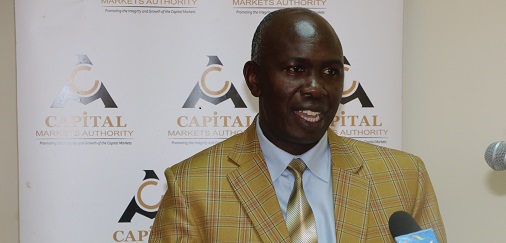
The Capital Markets Authority (CMA) has signed a Memorandum of Understanding (MoU) with the Kenya Private Sector Alliance (KEPSA) to support market
deepening and leveraging capital market products to catalyse growth in line with the Big 4
Agenda and Sustainable Development Goals.

Through the MoU, CMA and KEPSA will seek avenues for private and public sector finance and
investment necessary to support Kenya’s economic growth and complement development
funding gaps.

The two institutions seek to collaborate in the development of policy and regulatory interventions to create a conducive business environment that will support a robust, resilient, and inclusive financial sector through the growth of the capital markets.

The CMA Chief Executive, Mr. Wyckliffe Shamiah observed; ‘This partnership is expected to promote Small and Medium-Sized Enterprises’ (SMEs) utilization of the capital markets to raise long-term capital in appreciation of the critical role of SMEs in the economy, and especially in facilitating economic recovery from the effects of the Covid-19 pandemic.

One of the strategies adopted by CMA to support SMEs tap into the capital markets is a review and possible revision of the existing eligibility and disclosure requirements under the Capital Markets (Securities)(Public Offers Listing and Disclosures) Regulations 2002 regulatory framework to make it more responsive to emerging and evolving market needs.’

KEPSA’s Carole Kariuki

‘With many of our Kenyan businesses adversely affected by the Covid-19 pandemic, this partnership will go a long way in ensuring that many of them discover their way to recovery. This MoU compliments our series of trainings that we have been conducting on businesses, especially in accessing financing. Our MSMEs will now be able to access the capital market products, hence easing their burden of getting credible financing for their operations’, said Ms.Carole Kariuki Karuga, the KEPSA Chief Executive Officer.

KEPSA and CMA will develop a joint workplan to support the activities under the partnership.
Some of the planned activities include: – joint quarterly fora to engage KEPSA members on
capital market products, and joint publications and research on financial markets to create
financial quick reference materials to be distributed to critical stakeholders such as the youth,
investment clubs and professionals.

Greenpeace appalled by inaction in protecting Kenya’s rivers

0

In response to the media report of the Thwake dam water being declared unfit for human use Greenpeace Africa Campaigner, Amos Wemanya has said:

“Water pollution in Kenya is threatening our economy, the lives, livelihoods and health of Kenyans. Families and communities that depend on the flowing rivers for domestic and human use are at risk of contracting water-borne diseases due to water contamination while our authorities watch in silence and inaction.”

Kenya’s water bodies have for a long time been a sink of untreated effluent from industrial and municipal activities. The waste disposed of in Nairobi and Athi rivers including its tributaries has been causing a lot of challenges to the residents of Nairobi and the communities in the neighbouring counties. Most of the water systems in these areas have turned into drainage channels and are quickly dying.

‘’Authorities that are mandated to protect Kenyans and our water bodies from the harm of water pollution must take decisive and firm actions to stop pollution of these water bodies. It is time that the Kenyan authorities through state agencies such as the National Environment Management Authority (NEMA), Water Resources Management Authority and the Ministry of Environment and Forestry acted urgently and decisively to protect Kenyan water bodies, lives and livelihoods.”

A report by the United Nations revealed how contaminated water is difficult, costly, and often impossible to restore to its former state where it is safe for human use. Water pollution includes human and animal waste, chemical pollution from mines, salinity from irrigation and plastic pollution which negatively impacts freshwater ways. The government needs to take a leading role in protecting these water resources.

Dr Githinji Gitahi Appointed to the New Commission on African COVID-19 Response by South Africa President, H.E Cyril Ramaphosa

0

Dr Githinji Gitahi, Group CEO, Amref Health Africa has been appointed as a commissioner in the newly constituted Commission on African COVID-19 Response.

This comes after the announcement of the appointment of H.E. Cyril Ramaphosa as the African Union Champion on COVID-19, by the African Union Bureau of Assembly of Heads of State and Government (AU Bureau) at the 34th Ordinary Session of the AU held on 06 February 2021.

‘‘The rising surges of COVID-19 in various Africa countries continues to be a growing concern, particularly for health systems that are being pushed to a breaking point as well as for Africa’s social and economic health and recovery. In many of these African countries, oxygen is running out, hospital beds are full and there are no vaccines available for those who need them most. In addition to the disease burden, communities have suffered a great social and economic burden especially born by women, girls and children.”

“A lot needs to be done to mitigate the outcomes for the health and well-being of Africans during these uncertain, and unprecedented times and I’m confident that the commission under the leadership of H.E Cyril Ramaphosa will be a great addition to the continuing laudable response on COVID-19 in the continent witnessed since the first case in Africa,” said Dr Gitahi.

The Commission will be chaired by President Ramaphosa and deputised by the Director of Africa Centres for Disease Control and Infection (Africa CDC), Dr John Nkengasong.

Together with other Commissioners, Dr Gitahi will support the President in his Championship role in order to enable his continued leadership in guiding the continental response to COVID-19.

The Commission’s mandate is two-fold: 1) identify gaps in the continental COVID-19 response strategy and propose evidence-based interventions within the scope of practice of the Commission, and 2) generate evidence to assess the impact of COVID-19 on social and economic harm on the continent and propose ways to a strong recovery.

Since COVID-19 was declared an emergency by the World Health Organisation (WHO), Dr Gitahi has contributed to national, regional and global discussions aimed at empowering communities and governments with key information about COVID-19.

Under his leadership, Amref Health Africa has been at the forefront of COVID-19 response in Africa, sharing technical expertise and leveraging its strong relationships with communities. Amref has been responding to the pandemic in 10 countries across East, West and Southern Africa. These include Kenya, Tanzania, Uganda, Rwanda, Ethiopia, Zambia, Malawi, South Africa, Senegal and Guinea.

By sharing its technical expertise and leveraging its strong relationships with communities, Amref has contributed to shaping the national strategy on COVID-19.

Kenya, US resolve ARVs stalemate, normal distribution to resume

0

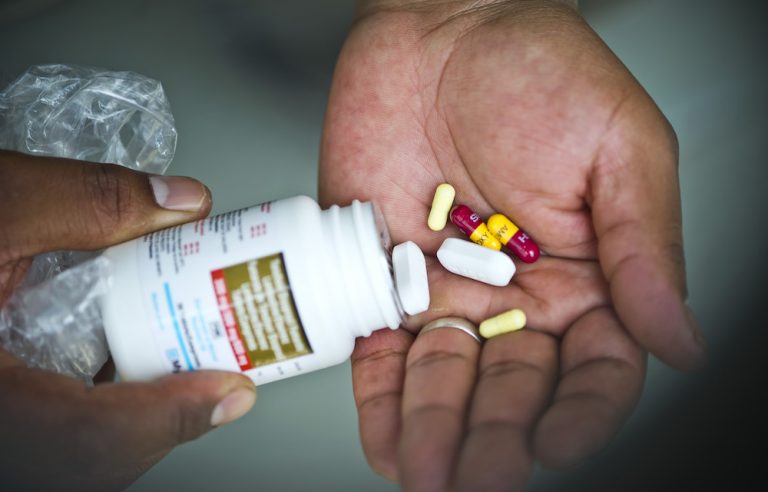
People living with HIV and AIDS can now heave a sigh of relief after National Aids Control Council met with US representatives to resolve some pending issues that had led to a stalemate causing anguish to PLWHA who were running out of drugs.

According to NACC Chief Executive Officer Ruth Masha, after several meetings,the resolutions include the signing of a framework and implementation letter to facilitate tax and fee waivers, and distribution of age USAID purchased commodities

“These commodities are now cleared and ready for distribution,” said Masha

Masha appreciated the long standing partnership with the US government and said Kenya will continue to work with all stakeholders to address gaps and challenges in the HIV response including the issues affecting the commodities supply chain.

“The council looks forward to continued access to safer and efface-us drugs by people lining with HIV and the resumption of dispensation of multiple months’ supply of ARV drugs as guided by differentiated service delivery model developed by NASCOP,” she added.

Apart from tax issues, the distribution of the drugs is yet another matter that caused bad blood between Kenya and the USAID representatives.

Kenya upholds law on FGM

0

It is still illegal to carry out Female Genital Mutilation (FGM) on women after the High Court of Kenya on Tuesday 29th June 2021, voted to uphold the ban on the harmful practice.

The move was necessary after a female doctor; Dr. Tatu Kamau filed a constitutional petition in 2017 to legalise it arguing that it was unconstitutional, discriminates against “national heritage” and that women above the age of 18 would get the right to choose.

Photo courtesy of Amref

Basically, FGM is the ritual that entails cutting or removal of some or all of the external female genitalia. So far, 4 million girls have undergone the cut with harmful repercussions prompting the country to outlaw the practice in 2011.According to the World Health Organisation FGM can cause profuse  bleeding, infections, infertility as well as complications in childbirth.

On Tuesday, the three-judge bench voted against her petition observing that there was no conceivable advantage of undergoing the cut. They also opined that revoking the constitution harm women and following survivors’ testimonies there was conviction that any woman or girl would consciously and freely consent to it.

According to Lady Justice Achode, the implication of this is that FGM/C cannot be rendered lawful because the person on whom the act was performed consented to that act. She was emphatic that no person can license another to perform a crime,

Kenya has made commendable strides towards ending FGM and President Kenyatta had vowed to end the practice by January 2022. Practicing FGM can land you in prison for up to three years.

FGM is seen as a rite of passage among tribes such as the Gikuyu, Maasai and Kuria among others. According to the United Nations, 21 percent of Kenyan women between the age of 15 and 49 have been cut and at least 200 million girls and women across 30 countries are also affected by the practice.

Statistically speaking

According to the AMREF health Africa,

  • It is estimated that between 100and 140 million girls and women currently live with the most consequences of FGM, most of them in 28 African countries
  • FGM in Kenya has been on a decline (32% in 2003and 21% in 2014)
  • Prevalence has remained highest among the Somali (97%), Kisii (96%), Kuria (96%) and the Maasai (93%), relatively low among the Kikuyu, Kamba and Turkana, and rarely practiced among the Luo and Luhya.
  • In Africa, 3 million girls face the risk of undergoing FGM every year

 So what is the alternative?

The Community-Led Alternative Rites of Passage (CL-ARP) Model instituted by Amref Health Africa to address Female Genital Mutilation/Cutting (FGM/C) in Kenya has contributed to a 24% decline in the prevalence of the practice over the past decade in Kajiado county.

CL-ARP, which has been implemented by Amref in Kajiado County since 2009, seeks to retain the harmless cultural rituals and celebrations around the transition to womanhood while encouraging communities to shun FGM/C and embrace alternative rites of passage (ARP) that do not include the cut.

A study titled Impact of Community Led Alternative Rites of Passage on Eradication of FGM/C in Kajiado County, Kenya & The Effects of COVID-19 Pandemic on FGM/C and Child, Early and Forced Marriages in Kenya, carried out to assess the effectiveness of the CL-ARP approach, revealed that the model has contributed to a 24% decline in FGM/C, from 80.8% before its roll-out to 56.6% in 2019.

The model has also led to a four-fold reduction in child marriage rates from 1.2% to -6.1%, and consequently an increase in schooling years, with girls who previously attended school for only 3.1 years now staying in school for 5.6 years.

‘‘We believe in community-led, community-driven cultural alternatives to FGM/C that don’t subject girls to any form of cutting or force them to become child brides or teenage mothers, and those that enable them to continue their education,’’ said Dr. Meshack Ndirangu, Country Director, Amref Health Africa in Kenya while speaking during the release of the study.

‘‘We have been championing an end to FGM/C to promote empowerment of girls and women. While we recognise the cultural significance of the practice especially among pastoral communities, we must also acknowledge that it poses significant health risks, endangers the lives of girls and women, and infringes on their human rights.”

“In light of this, Amref is working closely with communities to educate them on the health and socio-economic risks of FGM/C, and to give them culturally relevant alternatives that still allow for the celebration of this milestone – the transition from childhood to womanhood – while protecting girls and women,’’ he added.

FGM/C prevalence stands at 27% according to the latest Kenya Demographics Health Survey (KDHS, 2014). Although there has been a decline over the years the practice is still rampant in many pastoral communities, exposing young girls to early marriage and teenage pregnancy, which forces them to drop out of school.

EU Digital COVID Certificate “Green Pass not inclusive of everyone-AU

1

The African union has decried the fact that the applicability of the EU Digital COVID Certificate “Green Pass” to different COVID-19 vaccines excludes persons who received the Covishield vaccine.

Basically, while the AstraZeneca vaccine (ChAdOx1_nCoV-19) produced and authorized in Europe (Vaxzervria) is included, the same formation of the vaccine (Covishield) produced under license by the Serum Institute of India (SII), is excluded.

In a statement, the African Union Commission and the Africa Centres for Disease Control and Prevention (Africa CDC) notes that with the given regulations, persons who received Covishield, despite being able to demonstrate proof of vaccination, would continue to be subject to public health restrictions, including limitations of movement and testing requirements, with considerable administrative and financial implications.

“The availability of such a Certificate, with its potential to significantly facilitate free safe movement across all EU Member States and certain associated countries, is a significant step forward. However, the current applicability guidelines put at risk the equitable treatment of persons having received their vaccines in countries profiting from the EU-supported COVAX Facility, including the majority of the African Union (AU) Member States,” said the two entities in a statement

“According to official information, while the goal is for EU Member States to issue vaccination certificates regardless of the COVID-19 vaccine type used, the granting of a “green pass” applies, only to vaccines that have received EU-wide marketing authorization,” read another part

These developments are concerning to the two aforementioned organizations given that the Covidshield vaccine has been the backbone of the EU-supported COVAX contributions to the AU Member States’ vaccination programmes.

Furthermore, given that the expressed goal for the Serum Institute of India production is to serve India and lower-income countries, the SII may not apply for EU-wide market authorisation, meaning that the inequalities in access to “Green Passes” created by this approach would persist indefinitely.

The Covidshield vaccine, alongside the versions of the AstraZeneca/Oxford COVID-19 vaccine produced by AstraZeneca-SKBio (Republic of Korea), was one of the first available candidates considered safe and efficacious through the World Health Organisation’s Emergency Use Listing (EUL) process.

Both candidates received approval as early as 15 February 2021 with the explicit goal of rolling it out through the COVAX Facility, providing access to lower-income countries, and making the global population safe from COVID-19.

On the FAQ part of the European Union press corner, the EU has also maintained that : “Where the Commission is satisfied that a non-EU country issues certificates in compliance with standards and systems, which are interoperable with the EU system, the Commission can adopt a decision on the basis of which such non-EU country certificates would be accepted according to the same conditions as EU Digital COVID Certificates”

The African Union and Africa CDC, therefore, urge the EU Commission to consider increasing mandatory access to those vaccines deemed suitable for global rollout through the EU-supported COVAX Facility.

Covid -19: is Kenya stuck in a perennial loop?

0

A police station in Emuhaya Vihiga County has been closed for 14 days after three officers tested positive for Covid-19. This is according to Commander Reuben Kemboi. Vihiga is among the 13 hot spot counties now under a 7 pm to 4 am curfew alongside Kisumu, Busia, V Kisii, Nyamira, Kakamega, Bungoma, Kericho, Bomet, Trans Nzoia, Siaya, Homa-Bay, and Migori.

This comes against the backdrop of an additional 155 more positive cases of coronavirus announced on 23rd June 2021,  from a sample of  4,171 tested in the past 24 hours.

According to the Chief Administrative Secretary (CAS), for Health, Dr. Mercy Mwangangi, the country now has a total of 4,952 confirmed cases with the total number tested by the government so far at 146,537 samples.

The move by the government was necessitated by the need to contain the spread of the Covid- 19 virus after the highly contagious delta variant was detected in the region and started on Friday, June 18th, 2021

According to the Ministry of Health reports, the positivity rate in the 13 regions averages 21 percent, while that of the remaining parts of the country is at 9 percent.

“The surge of infections in the aforementioned counties is further compounded by their proximity to the neighboring Uganda, which has similarly reported a surge of Covid-19 infections,” said Health Cabinet Secretary Mutahi Kagwe

The implications of a closed police station are just too severe to even start imagining and these are beside the deaths and economic suffering that is bound to hound any region afflicted by the Coronavirus and especially the delta variant.

What is happening right now in the western belt of the country is just a matter of the same script but different cast. The more things change in Kenya where we are always asked to observe the Covid-19 protocols, the more they stay the same.

As soon as the number of affected people reduces people become lazy and careless both at the individual level and as far as collective responsibility is concerned. The latter is more concerning as the politicians in Kenya seem not to care and continue to pull crowds as they campaign for and against issues such as the Building Bridges Initiative (BBI) and by-elections.

The infodemic that has plagued the country and the rest of the world is now shifting from the denial of the disease and has eyes firmly trained on the vaccines and the many reasons there should be no vaccine uptake. Despite the infodemic and inaccessibility to the vaccine for some people, so far a total of 1,201,325 people have been vaccinated, 997,420 are on their first doses while 203 905 are on their second doses. The vaccinations above are 20.4% and 0.75% of the total population respectively.

Testing for many people seems to have taken a back burner as well with many of the afflicted people opting to self-medicate at home and this can largely be attributed to the stigma that comes with a confirmed case.

At the moment, we seem to be taking several steps ahead which often brings about a sigh of relief then we go back a few more steps. Meanwhile, the impact of the disease seems totally lost on us; if we realized the seriousness of the effects of the disease then we will be serious about individual and collective responsibility. Below are some articles that help to paint the chronology of Covid-19 in Kenya from where we started and where we are as a country.

 http://danielominde.co.ke/2021/06/11/covid-19-politicians-worsening-an-already-bad-situation/

https://techmoran.com/2021/06/15/tech-innovations-that-have-come-up-due-to-the-pandemic-in-the-last-year/

https://kendesk.co.ke/2021/06/15/covid-19-vaccines-how-is-the-progress-in-kenya/

 https://chetenet.com/2021/06/16/effects-of-covid-19-on-learning-in-kenya/

https://khusoko.com/2021/06/17/kenya-needs-a-booster-for-its-overstretched-health-sector/

https://www.dhahabu.co.ke/2021/06/16/tourism-sector-takes-significant-heat-from-coronavirus-restrictions/

https://techmoran.com/2021/06/17/covid-19-conspiracy-theories-fake-news-and-misinformation/

http://danielominde.co.ke/2021/06/11/covid-19-politicians-worsening-an-already-bad-situation/

  https://kendesk.co.ke/2021/06/19/embracing-the-new-norm-how-covid-19-is-changing-the-work-environment/

https://chetenet.com/2021/06/18/kenya-covid-19-vaccination-challenges/

https://www.dhahabu.co.ke/2021/06/17/kenyans-struggle-to-maintain-covid-19-protocols/

https://khusoko.com/2021/06/18/covid-19-impact-reopening-coronavirus-stressed-kenyan-economy/

Kenya first country globally to approve genetically modified cassava

0

The National Biosafety Authority (NBA) Board during the 41st Full Board Meeting held on 15th June 2021, approved the application for environmental release of genetically modified (GM) cassava.

The approval was based on food/feed safety and environmental safety assessment which showed that the cassava varieties containing Event 4046 are unlikely to pose any risk to human and animal health or to the
environment when consumed as food or feed or when cultivated in an open environment.

The variety was thus shown to be as safe as the conventional varieties that have been cultivated by farmers over the years. This approval implies that
Kenya is the first country globally to consider a request for environmental release involving cassava crop.

After several years of laboratory, greenhouse, and confined field trials conducted locally in Mtwapa, Alupe, Kandara and Nairobi by Kenyan scientists, the application for environmental release and placing on the market of genetically modified (GM) cassava was submitted to the NBA by Kenya Agricultural and Livestock Research Organization (KALRO) on 9th March 2020. The GM Cassava has been developed using RNA interference (RNAi) technology.

RNAi is a natural biological mechanism that regulates the expression of genes. The improved cassava is resistant to Cassava Brown Streak Disease (CBSD) because of the modern biotechnology used to express
the high levels of resistance.

CBSD is a common viral disease present in Kenya and
is spread by whiteflies and by infected cuttings. Cassava farmers will be protected from devastating losses caused by CBSD. Together with consumers, farmers will
benefit from increased cassava root quality and marketable yield.

This technology has been used globally in other already commercialized crops like papaya, squash, and plums consumed by humans in China and the USA without any known human or animal health implications.

Earlier last year, an announcement to invite the public to submit written comments or memoranda within 30 days was made. The cassava application summary was
placed in the dailies (Daily Nation and Standard Newspaper), Kenya Gazette, and NBA website on 15th May 2020and comments were received until 14th June 2020.

Public forum on the application was also held on 10th June, 2020. Issues raised during the public participation were adequately addressed. The GM cassava application was reviewed by experts on food safety, environmental
safety assessment, and the Relevant Regulatory agencies and was shown to be as safe as the conventional cassava variety.

For socio-economic impact assessment, analysis and expert opinions indicate that GM cassava is not expected to change the farming systems currently in Kenya. The effective management of CBSD disease will be of economic and social benefit to the Kenyan population.

The anticipated increased in cassava yields as a result of the intervention will significantly contribute towards addressing Food Security and Nutrition, and
Manufacturing. The two are part of the governments’ ‘Big 4 Agenda’, which were launched to end hunger, achieve food security, improve nutrition, and promote
sustainable agriculture.

This approval is for the purpose of conducting National Performance Trials (NPTs), which is the penultimate stage for full environmental release and placement into
the market. Full approval will be considered by the Board after the NPTs have been finalized. This approval is valid for a period of five (5) years from the date of
authorization.

Varsity body, ICPAK and civil society condemn whistleblower Sankale firing, call for immediate reinstatement

0

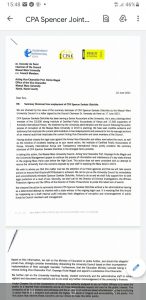
The Masai Mara University has found itself in hot soup with the Kenya Universities Staff Union (KUSU), Institute of Certified Public Accountants of Kenya (ICPAK), and civil society bodies such as Amnesty International and Transparency International terminating the services of Spencer Sankale.

You will remember Sankale as the whistleblower at the heart of a Citizen TV expose ‘The Mara Heist’ that revealed a lot of graft at the institution of higher learning back in 2019

Sankale’s services as Chief Finance Offier at the Masai Mara University were terminated on June 17, 2021in a letter signed by the institution’s council Chairman Dr. Kennedy Ole Kerei.

Sankale had appeared before the University Council last September; it was followed by two other meetings and the body concluded that he had continued with what it called “gross misconduct.”

‘Sustained insolence to the employer, cyberbullying, malicious representation, libel, defamation, and falsely maligning the image and reputation of the University,’ were cited by the council as the reasons to summarily terminate Spencer’s employment.

“Due to the aforementioned, the council resolved to summarily terminate your employment with the university with immediate effect in accordance with section 44 (4) (d) (g) of the Employment Act,” read the dismissal letter

Now, the above bodies want the former CFO reinstated with immediate effect. During a press conference on Monday the Kenya Universities Staff Union (KUSU) chairperson, Dr. Phillip Onyango, termed the dismissal as illegal and unfair.

“On the unfair dismissal of Spencer sankale, we demand of his reinstatement and the University council be disbanded,” he said adding that Sankale has not been given a fair hearing and the council is guilty has charged.

The union has also called on the government to intervene and save the Maasai Mara University, alleging that the level of graft at the institution is alarming.

In a raft of new recommendations the Union wants the University council disbanded and replaced with a new one and acting Vice-Chancellor Prof. Kitche Magak removed from office and investigated.

“Masai Mara has reached a stage where a paradigm shift is needed, the chairman of the Council must step aside with his entire team,” KUSU Chairperson Dr. Onyango added.

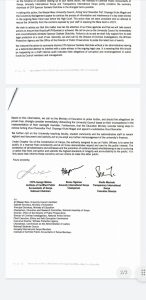
“The Maasai Mara University Council, Acting Vice-Chancellor Prof. Onyango Kiche Magak and the University Management appear to continue the process of intimidation and interference of a key state witness in the ongoing Mara Heist case before the High Court,” the lobby groups said.

“We call on you as the University Council to immediately and unconditionally reinstate Spencer Sankale Ololchike.”

The group said Sankale’s dismissal is an attempt to interfere with a state witness in an ongoing legal case.

“It is worrying that this should be happening as a draft internal audit indicates fresh allegations of corruption and mismanagement of public funds by Council members and management,” they said.

“We call on the Ministry of Education to probe further, and should the allegations be proven true, strongly consider immediately disbanding the University Council based on their incompetence in the implementation of their oversight mandate,” the lobby groups said.

Safaricom partners Trans Nzoia County in cashless payment system

0

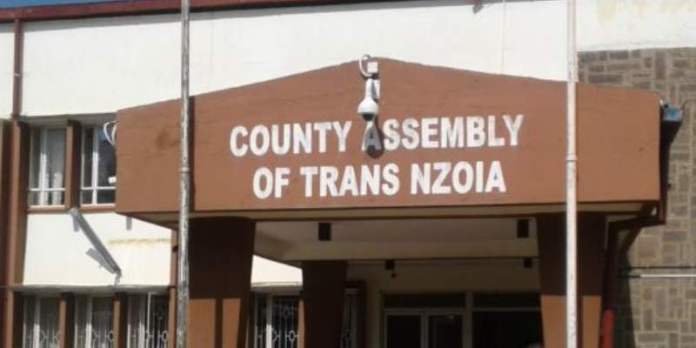
Residents of Trans Nzoia County can now pay for parking fees and market fees etc electronically thanks to a new partnership between the telcom and the county government.

“We are delighted to enable digital lifestyles for the people of Trans Nzoia County through M-PESA. This will greatly enhance convenience for residents, enabling them to pay for county services wherever they are and at whatever time,” said Peter Ndegwa, CEO – Safaricom.

To use the service, residents of Kitale Municipality, Cherengany, Kiminini, Saboti, and Kwanza will dial *818#, which will give them several options to choose from easily.

“Through M-PESA, we look forward to strengthening revenue collection in Trans Nzoia County by plugging losses. It will also give us better visibility of collections through timely reconciliation and reporting. By interlinking different systems, we will be able to enhance service delivery and efficiency for the benefit of the people of this county,” said Patrick Khaemba, Governor, Trans Nzoia County.

Besides *818#, county payments for Trans Nzoia and other counties are available under the consolidated *334# M-PESA menu, under the Lipa Na M-PESA option. Customers can then select “County Services” and the particular county to make payments.

Across the country, 25 counties have fully integrated their payment collection systems with M-PESA. In addition, all 47 counties accept cashless payments through M-PESA

Culture among the sectors badly affected by Corona pandemic- UNESCO

0

90% of countries were forced to close or partially close their World Heritage sites at the height of the Corona pandemic. In 2020, a 66% drop in site visitations and a 52% decline in revenues at surveyed sites were reported.

This is according to the United Nations Educational, Scientific and Cultural Organization (UNESCO) series of reports, which revealed that the pandemic which disrupted lives, communities and businesses around the world, and has deeply impacted the entire cultural ecosystem as well.

The World Heritage in the Face of COVID-19 also revealed that “13% of sites surveyed noted that staff has been laid off as a result of COVID-19, with an average of 40% of permanent staff and 53% of temporary staff made redundant.”

The culture body is launching a series of reports that reveal the scope of the impact of COVID-19 on the culture sector. The series, which is based on recent surveys and research, provides revealing snapshots across 5 areas: World Heritage; living heritage; cultural and creative industries; museums; and cities.

Living Heritage in the Face of COVID-19 highlights the impact of the pandemic on the ability of communities to engage in and transmit their living heritage, but also the way communities turned to living heritage as a source of solace and resilience. The report suggests three broad areas of action for post-pandemic recovery plans.

First, it will be important to strengthen direct support mechanisms to living heritage bearers. Secondly, opportunities offered by digital technologies to support resilience and safeguarding and to increase the visibility and recognition of living heritage must be leveraged.

Finally, the integration of living heritage safeguarding into emergency preparedness, response and recovery plans should be intensified.

Cultural and Creative Industries in the Face of COVID-19: an Economic Impact Outlook shows that the cultural and creative industries have fared consistently worse than national economies overall. It is estimated that they contracted by US $750 billion in gross value added in 2020, while job losses in this field are estimated conservatively at 10 million worldwide, suggesting a rapid drop in employment that is profoundly affecting the livelihoods of creative workers, especially freelancers who are experiencing higher levels of income loss and unemployment.

The report also features examples of digital innovations launched in response to this unprecedented crisis and showcases how the digital adaptation underway in most of the cultural and creative industries has triggered the development of new production, distribution and consumption patterns

Museums Around the World in the Face of COVID-19, UNESCO’s second report on the impact of COVID-19 on museums, estimates the current number of museums around the world to be approximately 104,000. It found that in 2020, museums were closed for an average of more than 5 months (155 days), and since the beginning of 2021, many of them again had to shut their doors, resulting, on average, in a 70% drop in attendance. The report urges the implementation of digitization policies to inventory collections and support education and outreach.

It also raises the alarm on the importance of public support for museums during this time – 50% of respondents noted a significant reduction in public subsidies, in some cases as high as 40% – and stresses that without urgent policies the place of museums in national cultural policies may be jeopardized.

Cities, Culture, Creativity: Leveraging Culture and Creativity for Sustainable Development and Inclusive Growth is a joint position paper published by UNESCO and the World Bank. It puts forward a framework (the CCC Framework) for cities to become more creative by harnessing six enablers, including urban infrastructure and livability, skills and innovation, networks and financial support, inclusive institutions and regulations, uniqueness and the digital environment.

It is estimated that for every creative job in a cultural and creative industry, 1.7 non-creative jobs are created. It also reveals the link between the cultural and creative industries and city dynamism and development, with up to 13% of city employment in creative industries concentrating in major cities worldwide. The report presents a series of recommendations and guiding principles to support cities in implementing the CCC Framework to sustainably advance their socio-economic development.

UNESCO Creative Cities’ Response to COVID-19 gathers good practices of culture-based responses to the pandemic from across the 246 UNESCO Creative Cities. It encompasses seven creative fields and will be followed by a second report later this year, which will include examples such as the “City to City” project launched by nine UNESCO Creative Cities of Media Arts in response to COVID-19, highlighting the role of the arts in finding solutions to global challenges.

Ms Virginia Raggi, Mayor of Rome, said “Today we are at a very important crossroads of history. It is up to us to be able to provide the quickest and most efficient answers for our cities. This is what citizens expect from us. This is what we are committed to doing day after day, drawing on the creativity of all of us.”

The overall picture painted by these reports clearly indicates that as the health crisis limits access to and participation in culture, it has heralded new ways to experience it – especially through virtual and digital means. But engagement online requires increased access, skills and investment. The reports also amplify the experiences and concerns of governments and other diverse stakeholders – from culture professionals to national and local governments to civil society – highlighting the real need for policies that strongly support culture for a successful comeback. The series of reports and publications can be accessed at:

“At the same time, the crisis has further revealed the important role of culture as a major resource for resilience, connection, and recovery,” said UNESCO on their website