Friday, December 19, 2025
Home Blog Page 9

DCI Arrests Blogger Edgar Obare Over Fraud Claims

Blogger Edgar Obare was last evening arrested for publishing information that is deemed false on his Instagram handle.

According to the Directorate of Criminal Investigations (DCI), the blogger runs a social media syndicate that blackmails influential citizens by threatening to taint their images online and demanding cash to clear them.

According to Detectives from the cybercrime unit, the blogger and his employee Desy Oduor have been stalking prominent personalities for monetary exploration.

In his recent controversial posts, the blogger had shared a conversation with a lady who is allegedly pregnant with Governer Alfred Mutua’s baby which detectives have rubbished the claims as the said lady is not pregnant.

Alongside his Accomplice, Edgar was arrested and detained at the Muthaiga police station and the charges against him are under the Computer Misuse and Cybercrimes act of 2018 contrary to section 23 and section 27.

Similarly, the blogger was once again arrested last year after sharing private information about Vlogger Natalie Tewa where he was released on a cash bail of Ksh100,000.

This is not the first time that the blogger has been arrested for the acts. In August A few months ago, he was arrested for the same issue against Natalie Wanjiru well known as Natalie Tewa, a content creator and a social media influencer and the court case is still ongoing.


Most Kenyans state that they will be worse off financially if the spread of Covid-19 continues

The negative impact of Covid-19 on the country’s economy continues to be felt across the country in almost all households. It is said that nine out of ten Kenyans say that they will be worse off financially if the spread of the virus continues. Citizens with higher education are slightly less to say that the situation will be worse for them.

Two research briefs were released by Twaweza, titled ‘Learning to live with Corona?’ The research sought to analyse/ understand Kenyan citizen’s knowledge, attitudes, and practices based on data from Sauti za Wananchi, Africa’s first nationally representative and high-frequency mobile survey. It shows that the worst affected sectors are; education which was at about 67%, the informal sector, which is the Jua Kali-67%, and the health sector at 51%. Citizens also mentioned that the tourism and hospitality industry at 32% and not forgetting the public transport industry at 29%.


How the COVID-19 pandemic will affect informal workers. Insights from Kenya


These citizens suggested that the government could provide grants or funds to businesses, to create employment opportunities or provide loans to young people to start or grow their businesses as a way to support them. They also mentioned tax relief for businesses and provision of the Covid-19 protective equipment which includes sanitisers, masks and fumigation would come in handy.

The panel for this research was established through random sampling from a database of contacts from previous surveys to establish a new representative panel of the country’s population. The data was collected from 3000 respondents on the third round of the special Sauti za Wananchi panel that was conducted between 18th, November and 2nd December 2020.

Beyond their general economic outlook, households are now twice as likely to say the food they have at home will only last a day compared to June 2020 (60% compared to 31%). But they also seem to have more money than in June, reporting their money would last a week (34% compared to 27%) or a month (23% compared to 18%). Despite the alarming apparent decrease in household food stocks, more households now say their food would last for 1 month or more (20% compared to 11% in June). Those in Mombasa (31%), those with no education (32%), and those who earn a living from casual work (32%) are more likely to say they have no food at home.

The majority of the Kenyans say that their households’ daily food intake has gotten worse over the past month, with the worst situations in urban centres and among casual workers. Looking at the government’s management of these economic issues, half of the citizens think that the government recovery strategies are sufficient while the rest don’t think so. Most educated citizens, especially those who are employees or business owners, and residents of Nairobi or Mombasa are more likely to say these measures are insufficient.

A great number of the Kenyans do not think that the national and county governments have spent the Covid-19 funds appropriately. The residents of Nairobi, in this case, men and those with higher levels of education are less confident than others about the management of the funds. Some of the citizens on the other hand are likely to say that the government has handled the outbreak of the virus in the country well.

However, the citizens’ concerns are now more evenly distributed between their worries for their health and economic hardships. The health concerns may be related to the increase in awareness about the virus where most of them now say they know about it. In the case of taking protective measures, self-reported mask-wearing has increased since June 2020. Also, only going out when necessary was reported by 48% previously but by 31% of citizens in December.

If the citizens show symptoms of the Covid-19 virus, they are now likely to visit a health facility but much more likely to quarantine at home and much less to contact the Corona hotline. James Ciera, Country Lead for Twaweza in Kenya, said: “Citizens behaviours and attitudes have evolved with the context. They are looking more and more for ways to survive and stay safe while carrying on with their daily lives. We can see increased mask-wearing, and more self-quarantine but less use of the hotline. Kenyans are now more worried about health issues relative to economic concerns than was previously the case.”

“At the same time,” he continued, “Covid-19 continues to highlight existing inequalities – educated and salaried citizens and business owners are still better able to cope with the economic hardship while a significant share of the population does not have any food or only have food for a day at home. Yet citizens have a rich set of ideas for how government can help them to cope. Their voices just need to be heard.”

The Freedom of Expression and the Digital Environment in Eastern Africa

In 2015, Kenya accepted a wide range of recommendations including to specifically guarantee freedom of expression, associations, and peaceful assembly of journalists, activists, and participants in demonstrations in both law and practice. However, the right to freedom of peaceful assembly is not sufficiently protected in the Kenyan law, and the right is routinely violated by law enforcement authorities responding to protests. The government has also failed to put in place measures to ensure the safety and protection of journalists, bloggers, and others expressing their opinion.

However, the right to freedom has never been protected fully in Kenya and the Article 19 has been at the forefront of working towards a world where all people everywhere can freely express themselves and actively engage in public life without fear of discrimination. They have recently released a report on the same that examines the digital environment across six countries which are: Ethiopia, Kenya, Rwanda, South Sudan, Tanzania, and Uganda.

Article 19, Eastern Africa’s Regional Director, Mugambi Kiai stated that the internet and digital technologies offer vital opportunities for individuals and communities to share news and information to take part in peaceful protests and engage in key issues that impact their daily lives. He, however, mentioned that over the last year, governments have increasingly undermined people’s rights to free expression, privacy, and access to information, and have criminalized both access to information and dissemination of it which in this case puts their citizens’ health and lives at risk.

The Covid-19 pandemic has not made the situation any easier. Authorities are now using vague and overly broad laws to restrict speech in what they term as a bid to tackle the issues of misinformation and hate speech. For instance, in Tanzania, the Prime Minister threatened to punish anyone spreading false information about the virus and even forced other citizens to report others who shared any unauthorized information. These restrictive laws and/ or policies are being used to intimidate, detain, summon, arrest, charge, or imprison not only the internet and digital technology users but also targeting activists and independent media.

Is the public’s data safe across Eastern Africa?

Governments have enacted or approved data protection laws in Kenya, Uganda, and Rwanda. However, these positive efforts are overshadowed by the unchecked development and use of digital contact tracing applications and robotic technologies without sufficient safeguards.

Rwanda, Tanzania, Ethiopia, Kenya, and Uganda have developed and deployed some of these technologies to varying degrees. According to the findings by Article 19, here are the ways in which these challenges can be addressed:

  1. Countries should comply with their international, regional, and national freedom of expression and other human rights obligations under international laws and standards.
  2. They should refrain from criminalizing free speech and ensure that domestic legislation, regulations, and policies imposing criminal restrictions on the right to freedom of expression are repealed or amended.
  3. Promote societal resilience to ‘misinformation’, ‘disinformation’, and ‘hate speech’ by developing and implementing nationwide civic education and empowerment programmes alongside multi-stakeholder groups, including CSOs and the media sector.
  4. Proactively promote the public’s Right to Know by regularly publishing comprehensive annual reports on universal access/service funding mechanisms to improve accessibility and affordability of the Internet and digital technologies.
  5. Refrain from adopting and using Covid-19 contact tracing applications without appropriate human rights safeguards, including sunset clauses to strengthen privacy and data protection.
  6. Judiciaries should promote human rights protections in the digital environment by enabling rather than watering down digital anonymity protections.

Article 19 Eastern Africa’s Regional Director, Mugambi Kiai continues to state that poor reporting standards, inadequate information, and lack of transparency by governments in Eastern African countries prevent civil society bodies and the public at large from understanding how funds are used and who benefits from projects. This remains a key challenge in ensuring that the Internet is made accessible and affordable to all.

The Freedom of Expression and Digital Environment in Eastern Africa Report.

Invitation for public participation and submission of memoranda

0

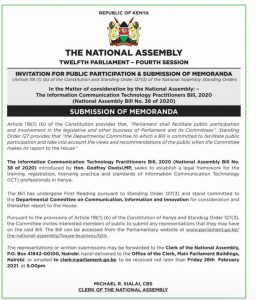
Finally, there is some progress and good news to the ICT practitioners in Kenya. The Information Communication Technology Practitioners Bill, 2020 (National Assembly Bill No. 38 of 2020) introduced by Hon. Godfrey Osotsi, MP, seeks to establish a legal framework for the training, registration, licensing practice and standards of Information Communication Technology (ICT) in Kenya.

Article 118(1) (b) of the constitution provides that, parliament shall facilitate public participation and involvement in the legislative and other business of the parliament and its committee. Standing order 127 provides that “the Department Committee to which a Bill is committed to facilitate public participation and take into account the views and recommendations of the public when the committee makes its report to the house.”

A while back, BAKE joined other stakeholders that include; the Kenya Private Sector Alliance (KEPSA), Kenya ICT Action Network (KICTANET), Kenya Information Technology and Outsourcing Services (KITOS), Technology Service Providers of Kenya (TESPOK) and iHub to review the Bill in its entirety to guarantee that if it has to be passed, it promotes growth in the sector.

The Bill has undergone First Reading pursuant to standing order 127(3) and stand committed to the Departmental Committee on Communication, Information and Innovation for consideration and thereafter report to the House.

Back in 2016 when the ICT practitioner Bill was first revealed, there were some issues that were submitted by the stakeholders which include the following:

  1. Lack of stakeholder participation in the legislative process
  2. The Bill contravened and was unsupportive of the Government policies on ICT, youth and unemployment.
  3. The Bill had adverse labor implications
  4. Lack of research and analysis to identify gaps as the basis for legislation
  5. The lack of harmonization with global ICT standards and licensing regimes
  6. The Bill failed to take into account review of ICT policy
  7. The proposed institutional framework lacked clarity and merit.
  8. The Bill was incongruent with the realities of ICT Training, Research, and Development opportunities in the ICT sector
  9. Innovation and learning/ knowledge, technology transfer, and fostering tech entrepreneurship would have suffered if passed.


Pursuant to the provision of Article 118(1)(b) of the Constitution of Kenya and standing order 127(3), the Committee invites interested members of the public to present any representations that they may have said on the Bill. This Bill can be accessed from the Parliamentary website . The representations or any written submissions may be forwarded to the Clerk of the National Assembly, P.O BOX 41842-00100, Nairobi; hand-delivered to the Office of the Clerk, Main Parliament Buildings, Nairobi; or emailed to [email protected]; to be received no later than Friday 26th February 2021, at 5.00 pm.

Looking at the positive side of the COVID-19 pandemic

0

By Lynn Anyango

what is really going on in the world right now might think I am crazy right? Covid-19 is devastating but we all have to be strong and believe that God is going to take this pandemic away from us. We have to agree that there are positive effects brought by this and I am delighted to highlight them for you.

The things that really mattered in this world have been put on pause and from nowhere everyone wants to breathe and live for that one present second. Things like money, power, fame, travelling the world and all pleasures of this world have no meaning at all. We are reduced to the human beings that were earlier meant to be, the fact that we are all concerned about being healthy and just breathing. Anyone can contract covid-19, no one is safe and it doesn’t know the status, gender, age or religion. This simply passes the message that we are all dependent on God who gives us the breathe we crave for the next second. After all, we are only humans and He is the superior one.

Most people find it hard to stay at home I’m guilty of that. One of the most effective ways to stop the chain of this virus is by staying at home and it has hit hard on most of us but we have to do it anyway. This is what we need to do to save our lives and for the ones we love. Staying at home is never easy for a person who is always on the run. Now that we are bound in between the four walls of our houses we need to start appreciating our homes and the people around them.

This period is when you can make your home as interesting as possible. Paint that wall into a more exciting color, if you are into drawing have that portrait that you never had time for done, fix that door knob that has been hanging, reorganize your living space and that might bring a whole new vibe about your space. Its the unique time that we have our homes and the people around them as companions we have to embrace that.

‘I have been very busy lately’ or ‘my week was very tight’ are phrases used by a lot of people and some can also be busy doing nothing. With the ‘busy’ schedules we normally have we rarely find time for ourselves. Now that staying at home is the only option we have what about having time for God and re-align your relationship with Him? What about meditation and focusing on being a better version of yourself in all aspects of your life? What about working out to stay fit and also boost your immunity? We have no excuse in working on the betterment of ourselves such that when we go back to the streets we can be able to serve others.

With the rise of the campaigns of washing hands and sanitizing, the rate of cleanliness has increased. Everyone is making sure their hands remain clean at all times to prevent the transmission of the virus. This has also reduced the number of communicable diseases in the country. All this is thanks to covid-19 and I really hope that basic hygiene like having cleaning hands doesn’t end when the virus is gone.

We all have the fear of this disease and we also fear for our loved ones. You wonder if they are safe, taking precautions and if they are fine mentally and emotionally. This pandemic has shown us the importance of living for now for we never know what tomorrow holds. We should use this chance to tell the people who we love that we care for them and appreciate them. Those that are far call and check on how they are faring and the distance should not weaken your bond.

Those that you live under the same roof have meals together, play games or even do house chores together. To those who prefer having their space let them be but also remind them that you value them and waiting for this pandemic to end won’t be boring.

The covid-19 pandemic will not stay forever so we should take whatever that comes with a clear head. Avoid panicking and I am glad that most people if not everyone has moved from fear to accept that it is here with us and that gives a good environment to follow the guidelines the government and WHO is giving us without overreacting.

We should stay at home, sanitize, wash our hands, go out only when it is necessary and don’t forget your mask. We are together in this and we definitely will break its chain. Stay safe.

Image 

IEBC urges Kenyans to verify their information on the BBI supporters list

1

The Independent Electoral and Boundaries Commission(IEBC) has urged Kenyans to verify whether they recorded their information to support the Building Bridges Initiative (BBI) or not after the successful submission of the various parties.

The commission has this week verified the signatures of the BBI Constitution of Kenya Amendment Bill after a three weeks long review process of the data capture of the hand copy information by the commission.

While the commission has verified the data, the commission has gone public to announce that voters can confirm if they rightfully signed the bill.

The Commission undertook a data cleaning exercise by removing incomplete records of the data I identifying missing signatures, ID Numbers or Names, and those not in the voter’s records. Further, the Commission has gone ahead to upload a list of verified supporters
on to its website, this will enable them to confirm the details. Those who have been captured as supporters without their consent can report to the Commission by writing to the Ag and submit them Monday 25th of January at 5:00 pm

Speaking on the verification process, the IEBC Chairman Wafula Chebukati said “Anyone who has been captured as a supporter without their consent can report to the commission by writing to the Acting Commission Secretary/Chief Executive Officer indicating their objections,”

He added, “The Commission would like to clarify that the data capture and verification process is still going on as planned and should any supporter miss their name in the interim list then it is still at the verification stage. A full list of all verified supporters shall be published at the end of the exercise.”

Why the verification process is important

There are so many malpractices during the verification processes that would lead to errors in the identification of individuals.

Also, as earlier mentioned above, there are people who might find their information maliciously included in the verification to increase the numbers.

Verification also helps the commission to know whether the information is given exhibits a true and fair view of the state which is in the interest of the people of Kenya.

Fact Check: Is Kenya losing Ksh.2 Billion Per Day due to Corruption?

While defending the cost of the BBI referendum on Kikuyu stations on Monday 18th January, President Uhuru Kenyatta claimed that the country was losing up to Ksh. 2 billion a day to corruption.

“I don’t know where people got the cost of Ksh. 2 billion or Ksh. 14 billion. But even so, these people are on a daily basis stealing that Ksh. 2 billion you hear people talking about. These people are deceitful,” Uhuru said.

There has been a huge debate as to how much the BBI referendum will cost the country. The Independent Electoral and Boundaries Commission (IEBC) projected that the referendum would cost the country Ksh. 14 BillionActing Chief Executive Officer (CEO) of IEBC Murjan Hussein Murjan, told the Public Accounts Committee (PAC) during the scrutiny of the commissions’ books of accounts for the year to June 2019, that the amount would depend on the number of new voter registrations before the vote.

“We have on our own sat down and asked ourselves the budgetary requirements in the event of a possible referendum. We have already estimated that the referendum to change the Constitution will cost us Ksh. 14 billion. However, we are still refining the budget,” 

Meanwhile, ODM Leader Raila Odinga responded to IEBC, arguing that the cost of the referendum should not be more than Ksh. 2 Billion 

“In a country with government institutions including police stations, schools, national and county government offices, and government vehicles in every corner in addition to fairly well-developed transport infrastructure, we should be able to conduct a one ballot referendum at no more than Ksh 2 billion for 20 million voters.

President Uhuru’s comment was a response to a question on whether he knew how much the proposed BBI referendum would cost. 

BAKE fact-checking looked closely on whether it is true that the country is losing Ksh. 2 Billion per day. From the beginning, we know that corruption is rampant in the country but this is the first time the head of state has outrightly put a figure on how much the country loses through corruption every day. 

In 2016 Philip Kinisu, who by then was the Chairman of Ethics and Anti-Corruption Commission (EACC) told Reuters in an interview that Kenya was losing a third of its budget which was equivalent to about $6Billion to corruption every year.  In today’s exchange rate that is over Ksh. 660 Billion and if you break that down to per day the amount is Ksh. 1,833,683,932.25.  If the President used this amount, then it is not far off to estimate that the country loses Ksh. 2 Billion per day due to corruption. But it has to be noted that that was in 2016 and the Kenyan budget has grown and many other developments have taken place since then. 

Meanwhile, in 2018, Sunday Standard compiled from the Auditor General report the total amount suspected have been lost to corruption for a period of five years. They came to the conclusion that it was possible that the country could have lost Ksh. 5 Trillion in that period through corruption. That is Ksh. 1 Trillion per year and if you go a step further, then the amount comes to over Ksh. 2.7 Billion per day. 

The statement by President Uhuru Kenyatta that the country is losing Ksh.2, Billion shocked many, going by the reactions that we saw on Social Media. But based on our analysis it is possible that the country is losing way more than Ksh .2 Billion due to corruption. 

Restoring the landscapes in arid, semi-arid areas in Kenya

By Maurice Munga Gathu

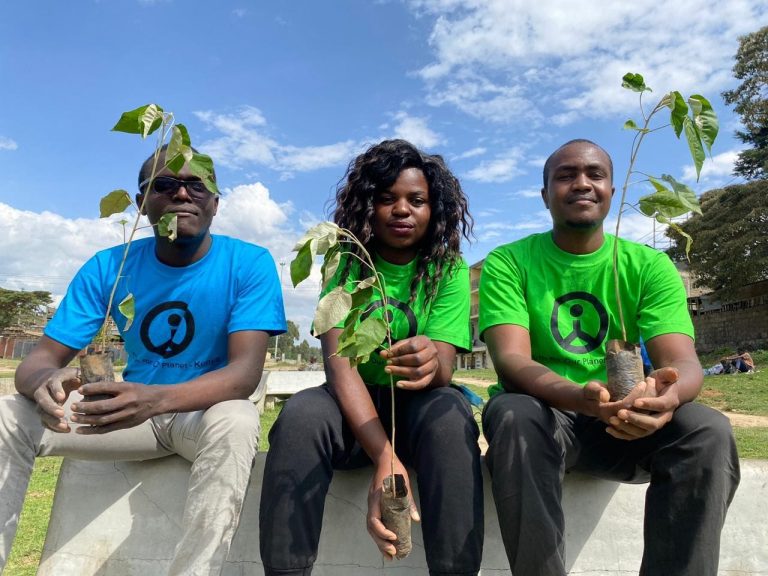
Linda Mazingira is an initiative that was started by the Ewang`an Foundation with an objective to restore landscapes in arid and semi-arid areas in Kenya and promote nature-based solutions like planting and growing trees as part of youth empowerment and combating climate change

On 19th December 2020, the Linda Mazingira Initiative together with Miss Tourism Narok County, Ewang`an Foundation, Youth for Our Planet Kenya, Narok County Government, Elong`o Bubble Cleaning Services Limited, and Maasai Mara University organized a massive town tree planting and clean up exercise with the aim of creating a recreational park. Themed with #For Our Planet, the event saw the participants plant over 100 trees and also cleaned the town.  

For a while now, Kenya has been experiencing adverse effects of climate change such as unusual weather patterns like prolonged heavy rainfall patterns, intense heat waves in most parts of the country, and recently the rising and outflowing of waters from the river and lake basins mostly in the Rift Valley regions parts of the country. 

 This has been a major concern to farmers, communities living near natural resources, and the urban poor who heavily are dependent on direct resources from the environment which sparks the need for us to combat climate change globally, young people should be an integral part of the decision making processes and lead by example through planting and growing trees, doing clean-ups at the communities and educating the community members on the importance of conserving the environment.

World AIDS Day and the COVID – 19 Pandemic

1

By Brian Onuonga. Each year, on 1st December, the world commemorates World AIDS Day. People around the world unite on this day to show their support for people living with HIV and to remember those who succumbed to AIDS-related illnesses. World AIDS Day 2020 theme is “Global Solidarity, Shared Responsibility.

The world’s attention has been focussed on COVID-19 (Coronavirus Disease of 2019) and its effects on our lives. COVID-19 is a true manifestation that no one is safe until everyone is safe during a pandemic. In a new report by UNAIDS, it calls on countries to make greater investments in responding to the global pandemic and to adopt bold but achievable HIV targets. By doing so, the world will be back on track to ending AIDS as a public health threat by 2030.

According to WHO (World Health Organisation), the global HIV epidemic is not over and maybe accelerating during the COVID-19 pandemic, with adverse impact on communities and countries. In 2019, there were still 38 million people living with HIV infection worldwide. 1 in 5 people living with HIV was not aware of their infection while 1 in 3 people receiving HIV treatment-experienced disruption to the supply of HIV treatments, testing and prevention services.

HIV/AIDS in Kenya

In Kenya in 2018, 1.6 million were living with HIV. HIV incidence per 1000 uninfected among all people of all ages was 1.02. while HIV prevalence among adults was 4.7%. furthermore, 46,000 people were newly infected with HIV. 25,000 people died from an AIDS-related illness. There has been progressing in the number of AIDS-related deaths since 2010, with a 55% decrease, from 56000 deaths to 25000 deaths.

The 90-90-90 targets envisioned that, by 2020, 90% of people living with HIV will know their HIV status, 90% of people who know their HIV-positive status will be accessing treatment and 90% of people on treatment will have suppressed viral loads. In terms of all people living with HIV, reaching the 90-90-90 targets means that 81% of all people living with HIV are on treatment and 73% of all people living with HIV are virally suppressed. In 2018 in Kenya, 89% of people living with HIV knew their status while only 68% of people living with HIV were on treatment.

HIV and Coronavirus

Current evidence suggests that HIV is less of a risk factor for severe COVID-19 than other health conditions such as high blood pressure, heart disease, lung disease, cancer or diabetes.  People living with HIV who have a compromised immune system should be extra cautious to prevent coronavirus infection. This is because your immune system may not be prepared to deal with the virus. Like in people not living with HIV, older people living with HIV and those with underlying health conditions should also be vigilant.

The advice for people living with HIV is mostly the same as everyone else;

  1. Wash your hands frequently with soap and water for at least 40 seconds
  2. Use an alcohol-based hand sanitizer for situations where you do not have access to soap and water.
  3. Avoid touching your face because this is one of the ways the virus enters your body.
  4. Avoid people who are feeling unwell.
  5. Cover your nose and mouth with a clean tissue when sneezing or coughing.
  6. Maintain social distancing.

Tips on COVID-19 for People living with HIV

Additional tips for people living with HIV include;

  1. Try to stock-up your antiretroviral treatment, so that you have enough for at least 30 days, ideally 3 months.
  2. Ensure your vaccinations are up to date e.g. influenza and pneumonia vaccines.
  3. Make sure you know how to get in touch with your healthcare facility and that you have a plan in place if you feel unwell and need to stay at home.
  4. Make sure you are eating well, exercising as best as you can and looking after your mental health.
  5. Abstain from sex or stick to one sex partner to ensure that you maintain a low viral load.

In conclusion, World AIDS Day remains as relevant today as it’s always been, reminding people and governments that HIV has not gone away. Let us strive to remain to save from both COVID-19 and HIV/AIDS during these difficult moments.

Image 

The Social Cost of the Pandemic

0

By Jacob Kinyua.  It is no surprise that Merriam-Webster has named Pandemic as the word of the year. The term seems too familiar when used today and we all know what it means. But that was a different case earlier in the year when the pandemic was a technical term used by scientists and public health specialists.

Just to remind you that you likely did not know the meaning of that word, can you tell the difference between pandemic, endemic and epidemic? Most likely not.

This word reminds us of the problems and challenges that we have faced in the year 2020. We have gotten used to the words such as social distance, isolation, stay home, cessation of movement, shelter in place and quarantine. These are the words that previously would have been best used to define the lifestyle of prisoners (and maybe extreme introverts), but now define almost every society on earth. I think this one has been the biggest tragedy because that lifestyle is contrary to a central pillar that defines people; social beings.

The Pandemic has forced us to avoid doing many things that we love to do. People cannot gather freely in churches, pubs, weddings, funerals, watching football matches, political rallies or even random gatherings for people outside the National Archives. Family meetings have been scaled down and people have avoided visiting their elderly parents. Children have been banned from gathering to play at the community football pitch and some people have spent a considerable amount of time away from their families due to Covid-19. Of course, the biggest loss is for the people who have been infected by the virus and many who have lost loved ones.

What are the implications of all this?

As I had mentioned, human beings are social beings and we derive a lot of our wellbeing from having family, friends, and community around us. Being in social groups is known to promote mental and physical wellbeing. Having people close to a person helps us to stay healthy and live longer, and the pandemic is taking away that benefit from us. By forcing us into isolation, it is taking away part of our capacity to fight it. It is a double enemy.

There may be no easy solution to this problem, but we can optimize what we have.

While we have not been meeting our friends and family as much as we would want, some of us have also failed to take advantage of the opportunities provided by some technologies that we have. The time and money saved should be used to improve the quality of our online communications. Instead of a four-minute call to your parent who is far away, why not do a one-hour video call on WhatsApp? It may not be a substitute for a physical meeting, but it is better than ghosting them. 

While vaccines are coming, we do not know when that will be, and how effective they will be. 2021 might be an extension of 2020. Let us use the available channels to be more social.

Image


BBI: A LEPROSY FOR THE YOUTH

By Kennedy Odweyo

The Building Bridges Initiative report  (BBI) needs not an ADS Rifle lense to see that it has sweetly offered a calabash of baits to the common youth(wo)man in Kenya. Its proposals to solving the problems of the youth are not only horrific but also intellectually dishonest and economically negating. It wholesomely and disrespectfully throws the youthful spirit into ramshackle. It extremely baffles the mind how casually the document has addressed the youthful agenda while strengthening the already existing political establishments that have always been larger thorns in the very flesh of youthful existence.

The Kenyan post-colonial establishments had represented youths as ‘slaves’ to the negatively exploitative political elites. This took strong grounds until when genuine conversations on the place of youths in matters governance began. The inception of the Kenyan constitution 2010, which is the most legitimate and progressive national charter, brought an almost full glimpse of hope into the youthful world. It empowered youths in the broader aspects of matters governance and leadership, something that has seen the then politically impoverished youths getting incorporated in matters of national development and decision making.

“The Building bridges to a United Kenya Initiative”, as it is being fraudulently sold to the gullibly tribalistic and “poli-intellectually shy” Kenyans, has wholesomely aggrandized power to the bourgeois by expanding the already overexpanded executive and legislature. This has greatly chauffeured the youth agenda under the tables of leadership. That today’s minority youth group, The Graduates, will be given a grace period of 4 years before they commence the repayment of their near inconsequential expensive government educational loans and a tax holiday for those (very few) who are venturing into meaningful business enterprises and investments greatly baffles any sound mind. Indeed, these proposals have portrayed the Kenyan youths as a ‘mere collection of desperate people’ who best survive on enticing and enslaving political freebies. The initiative has failed to mitigate on proposals to solve the lifelong youth problem of poverty and socioeconomic desperation occasioned by their en masse unemployment and financial incapacitation to venture into meaningful businesses.

The negatively opportunistic elites have instead proposed for themselves a conduit to strengthen their preferred political establishments while leaving out youths convulsing in abject poverty and as mere organic members of their nationality. The BBI has sufficiently addressed the challenges facing the few elite youths while fully dodging out the plight and challenges faced by millions of common youths whose major inheritances are in their peasantry.

Consequent to that, I substantively opine that the tremendous efforts made by the 2010 constitution in empowering the youthful generation in Kenya are under immense threat by the BBI bandwagoners whose main aim is to marginalize the youths further so that they continue to manipulate the desperate youths and continually use them as political weapons to enable them to achieve their personal and “tribal” political goals, as has been the case. The Kenyan Constitution 2010 has up to date been pro-youth and every Kenyan at large.

My thoughts on BBI

  • Let the BBI give proposals on how to rebrand, revive and empower the National Youth Council (NYC) that will be independent of political influence and manipulation; instead of creating a toothless to be Youth Commission.
  • Let the BBI address the massive youth unemployment by constituting an employment portal with a full database of all graduates easily accessible by the government and other employers.
  • Let the BBI give proposals on educational grants to university and college students from poor backgrounds, sufficiently fund research in institutions of higher learning and pass laws and policies to guarantee paid internships for all fresh graduates; instead of conditional loans with hefty interest rates in the name of HELB.
  • Let the BBI propose the issuance of meaningful, affordable and accessible business loans to young entrepreneurs to start meaningful businesses and further their innovations, as opposed to the informal peanuts being offered for “mama mboga like ventures”.

Most Importantly, if the Deputy Governor is of the opposite sex, why not have a 2nd Deputy Governor slot in all the 47 counties for youths? It’s possible, isn’t it? Super possible.

Image


Fact Check: Photos of mass graves in Mombasa is fake

2020 has been quite different from all the other years and so has everything else been. Fake news also thrived through the period; misleading statements have been all over the internet about Coronavirus that got almost everyone confused.

Last week, there were several photos circulating on Facebook about Mombasa running out of burial space within cemeteries due to COVID-19 deaths is fake.

The fake news conveyer, Tycoonnews Kenya further adds that statistics show that Kenyans are dying every hour from COVID-19 which is also baseless.
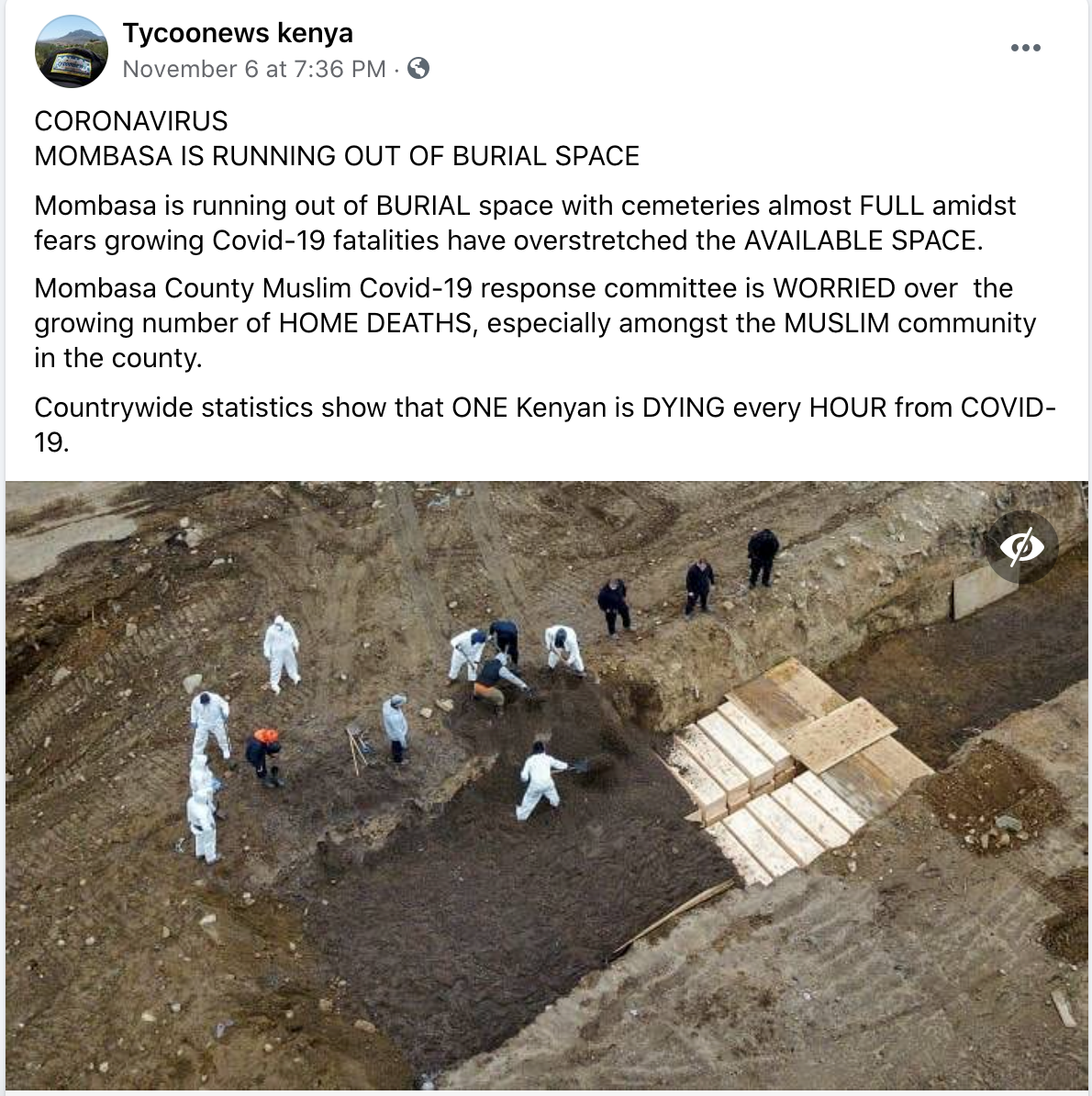
Image for post

However, this photo can be traced back and its Origin is the Hart Island in the New York City in the US that has been used over 10 decades and not in the COVID-19 pandemic times.

From the source, the photo was taken by Photographer Lucas Jackson and published in April 2020 with the headline ” Workers bury the dead in a mass grave on New York City’s Hart Island amid coronavirus outbreak and, not November as the fake posts claim.

This and other similar photos have caused fear among citizens and can adversely impact the effectiveness of containment strategies put in place.

Besides this, there have been many conspiracy theories that covid-19 isn’t a new disease and more that continue to bring about conceptual confusions

A recent study about the COVDI-19 infodemic as published by DW Says, the spread of rumours and conspiracy theories says, misinformation about the coronavirus has let to at least 800 deaths.

A group of international scientists from various countries also looked into data that was compiled since the onset of COVID-19 pandemic between December 2019 and April 2020 noted that roughly 800 people died from drinking highly-concentrated alcohol in the hope of disinfecting their bodies, while 5,900 citizens were hospitalized after consuming methanol, with 60 people going blind as a result of fake news.

As a result, health care workers and the COVID-19 Victims and survivors have repeatedly been stigmatized and rejected by other people of the community. Fakeness continues to be highly spread online especially on Facebook and Twitter.

All-together, misleading information around COVID-19 has also affected people’s response to the virus. Most people have been fed wrong beliefs for instance it only affects old people or those with existing conditions.

How can we combat fake news through the COVID-19 pandemic?

There are also organizations that are committed to combating fake news. The UN has been on the forefront to dispel rumours, fake news and misleading messages on false claims that the use of disinfectants combats coronavirus.

– There are a number of platforms in Kenya that you can use to verify fake news that you can adopt for your daily blogging. They include Africa Check, PesaCheck and more.

– Avoid websites with suspicious URLs or designs that look hastily put together. Check to make sure the site has a secure connection before clicking on the link

– Also, consider using a comprehensive security suite to ensure your devices and online accounts are protected at all costs.

– Verify your images before sharing them anywhere. TinEye is an example of an image search and recognition company that you can use to search the originality of your images. Google also has an option for Reverse Image search that can help you verify your images.

While sharing information online, be cautious about its effects on others, how will they interpret it or how will it affect their daily lives.

Image


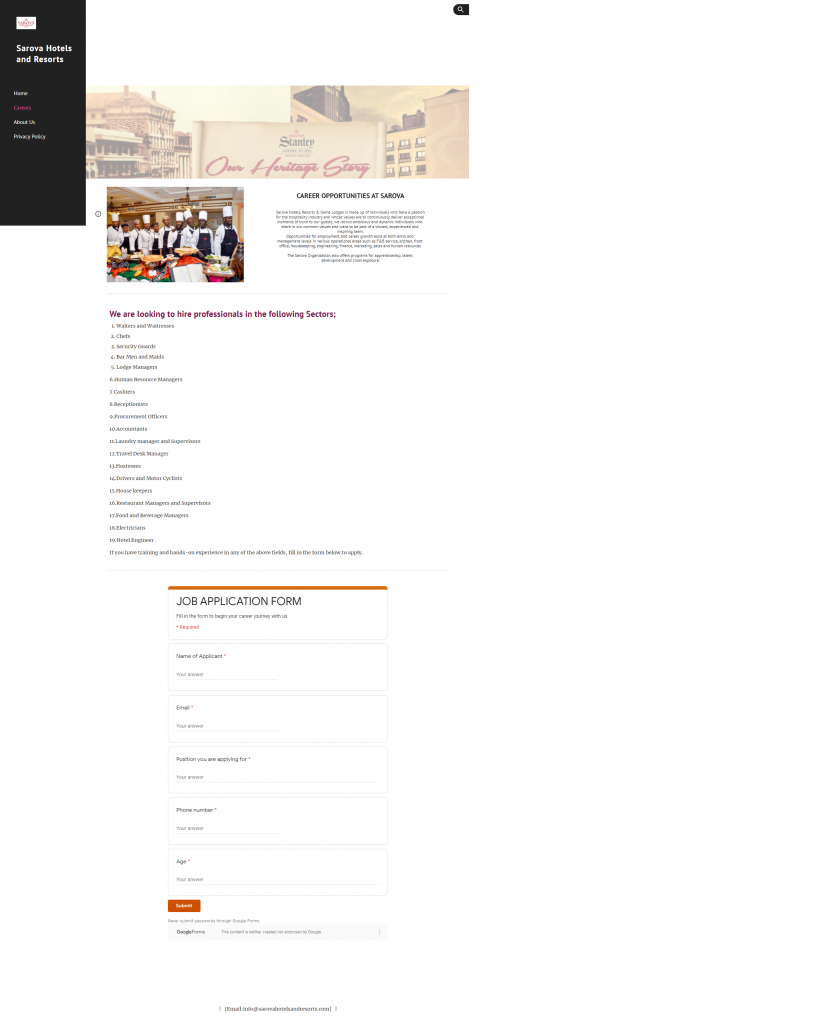
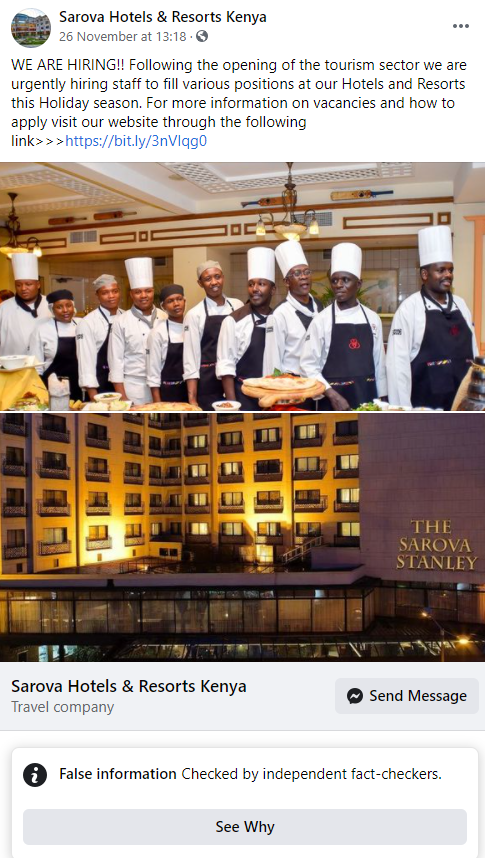
Fact-Check: Facebook advert on Jobs at Sarova Hotels Fake

On 26th November 2020, a Facebook Page, Sarova Hotels and Resorts Kenya advertised several job openings, which were fake.

The page claimed that the hotel is hiring new employees following the reopening of the tourism sector. It says, “WE ARE HIRING!! Following the opening of the tourism sector, we are urgently hiring staff to fill various positions at our Hotels and Resorts this Holiday season.”

Applicants were also provided for a link to get more information on the vacancies, and a google form to fill in their details. “For more information on vacancies and how to apply to visit our website through the following link,>>>Open positions include accountants, procurement officers, watchmen, waiters, cashiers and receptionists among others.

Looking into the Page transparency, the fake Sarova Hotels and Resorts Kenya page was created on 26th November 2020. The real Sarova Hotels Kenya Page was created on July 2 2009.

Sarova Hotels has distanced itself from the fake advertisement, saying it only advertises jobs through mainstream media and its official website. The fake advertisement was also marked as false by other independent fact-checkers.

Political narratives are to blame for the election of unqualified leaders

By Cavin Odhiambo

A few weeks ago I started a Youtube channel called Be The Leader (BTL) to talk about leadership and entrepreneurship. The decision to include leadership as a contemporary was informed by the political temperatures that we experience every year in the run-up to general elections.

It has almost become a norm that we will experience a heated political temperature every five years when a general election is called; a situation which causes unrest not only to the political class but as well as to the business community and entire economy. Unlike in mature democracies, an election period in Kenya has always been a period of unrest and calamities. I was privileged to be a participant in the previous election as a voter, but I have to admit that if asked if I can redo it, I will definitely say NO. I was deceived. 

Every five years, Kenyans are called upon to go and exercise their democratic rights of electing their political representatives through the ballot. This is supposed to be a very sacred and ordained process of bestowing trust to the politicians with a social contract to lead in the best interest of the electorate, something that probably only one out of ten politicians in Kenya would understand.

However, there has always been deception through political narratives which leads Kenyan electorate into making wrongful choices when they get to the ballot. If you are keen enough, you will notice that every election year there is a political narrative which politicians use to win the electorates’ sympathy. Most notably, I remember the famous “Young Vs Old” of 2017 and the current “Hustlers Vs Dynasties”. These are political phrases that trigger poor decision making by the myopic electorate. Such political tactics have ensured that the electorate lives regretful and wishful life year in year out.

Well, I choose to go with the current Hustlers vs Dynasties narrative. There is always a very common word which comes up whenever you google-search or peruse through the dictionary for the word ‘hustler’; Fraudulent. Who is a hustler? A hustler is someone who employs fraudulent and unscrupulous ways to obtain money or wealth; a swindler. Kenyans are being made to assume the meaning of a hustler and believe that a swindler is the best person to lead them in the top seat by people who have spent a better part of their lifetimes in governments serving under various departments and capacities. The narrative is trying to deceive the ordinary electorate that people who can afford to fuel choppers every day and crisscross the country at least every weekend are of their equal and that they have their interests at heart only a few months to the general election.

It is such narratives that have for the longest time divided the electorate along the lines of us vs. them. Kenyan youths who a majority doesn’t have even an NHIF cover are being used every election season to orchestrate chaotic and dramatic scenes by politicians who are under hefty medical insurances. Politicians have always taken advantage of the ignorance of the electorate and exploited them to gain political mileage and sneak into elective seats.

The day we shall have achieved political freedom and solace is the day Kenyans will elect leaders based on scorecards and not promises. Leaders who want to be trusted by the social contract to represent the interest of the ordinary electorate in a public office should be able to first showcase what they have been able to do. Unfortunately, Kenyans have been falling for political promises which neither makes economic nor ethical sense.

I am yearning for a Kenya that the electorate will be screening their leaders before nominations and not after the election. It’s laughable that while other countries and continents are embracing and investing in industrial revolutions, here in Kenya we are still accepting and fighting for meagre handouts which will never bring about any long-lasting solutions to unemployment, hunger, social injustice, security and poverty. Where are legislations and acts that would provide lifetime solutions to some of these contemporary problems faced by ordinary Kenyans?

Politicians have made Kenyans believe that their rights are favours. Do Kenyans really know that they are entitled to affordable and quality healthcare, quality infrastructure, a stable economy, quality education, a secured country, quality food products and more? I wish they did, they wouldn’t be going about dancing around people who have failed to diligently and honestly dispense these services and only use them for political sympathy.

Kenya needs a total social revolution and ethical renovation in the political class and among the electorate, if we have to come to an end of political turbulence that comes every election season. Youths do not have to be coached to parade in groups and masquerade each other every election year.

image

Keeping fit in the lockdown with Youtube

0

By Ann Mbeke

Indeed, the lockdown was not a favourable idea or a best practice for anyone whose life revolved outside the house or home. I remember when everyone including my parents had to be home by 7 pm because of the dusk to dawn curfew which was declared by the president.

To many people, the biggest worries were job losses and managing meagre incomes and more. However, being a student, my worry wasn’t losing a job because after all, I didn’t even have a job to lose. My biggest distress was managing my weight which was getting out of hand. By the time lockdown and curfew were being introduced, I was already doing some little exercises which I believed would help me cut the weight and maintain my body mass index (BMI).

With the majority of the members of my family being home almost 24/7, some working some studying including myself, our four-bedroom house appeared like a bedsitter, and at some point, I started to feel uncomfortably squeezed and lacking freedom. My dad had moved to work from home after they were asked to do so, my little brother was already home since the schools were closed due to COVID19 outbreak, my elder sister and cousin who works for the same company were all at home and hardly saw the veranda. Everyone was glued to their machines and books and no one was interested in knowing what was going on beyond the fence.

Since we did not have a home gym and the one I used to visit had been shut down as per the government’s directive, I had to strategize and rethink about my weight. Reinvention hit me for the first time in my life. I had to maximize the minimal space available just to watch my weight.

I would wake up very early ahead of everyone but my mom who had to catch up with the first matatu to town, and in fact in some instances, her movements while preparing for work got me up. I would do a few exercises around my bed without interfering with my sister who slept on the upper decker.

I had no fitness coach and who would take me through the process, so I would take the initiative of training myself to endure the discomfort and pains that came with keeping fit. Since our house was connected to the internet, I thought of YouTube. I looked for various videos about keeping fit. 

I would then follow the steps as demonstrated on the videos and after a few days, I was adapting. Within a few days, perhaps two weeks, my body had started gaining some shape. Most notable were my legs. I was so much impressed by my individual effort and discipline.  

I hardly noticed that my sister had been watching my ways through from the first days of the workouts. I only realized she started on her own and was borrowing from my efforts and the YouTube videos. When she realized how hard it was becoming to keep the discipline alive, she asked me to be her fitness partner. I did and all of a sudden we were progressing well.

Before we could evaluate the progress, my dad had already joined and enjoying the dance moves with us as we did aerobics, cool-downs and warm-ups.

This has become a norm in our family and no one is willing to pay for a gym or a fitness coach anymore; just us, the internet, our discipline, and our consistency. In terms of weight loss, I thought mine would be the most significant. I didn’t see my dad lose weight from 102Kgs to 84Kgs within two months. Though not so much, I also made significant progress of cutting my weight from 68Kgs to 57Kgs and I am currently working hard to maintain it there.

Look, you don’t have to have too much money to keep fit. It only requires a little bandwidth and commitment. Coaches are on YouTube for free. Don’t lose your shape in the name of unavailability of gym or coach; be like me and embrace fitness by YouTube. You can do it!

Image