Saturday, December 20, 2025
Home Blog Page 20

Egerton University launches leadership centre

0

By Njoki Maina

The Institute of Women, Gender and Development Studies (IWGD) at Egerton University has launched two programmes aimed at building the capacity of women and youth in leadership.

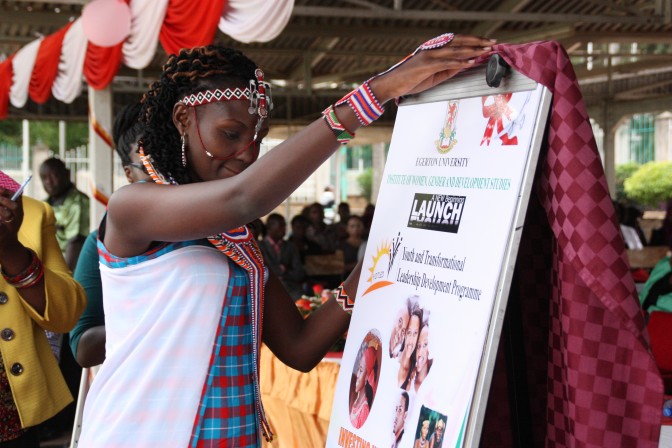
The Youth & Women Transformational Leadership Development programmes were launched last Saturday during the gender awareness day held at the university’s Njoro campus.

The mission of the programme is to identify, nurture and empower women, youth and persons living with disability with transformative leadership skills by preparing them to participate actively as agents of change in order to strive for equitable, just and inclusive sustainable development in Africa and beyond.

During the launch Dr. Damaris Parsitau who is the Director at the Institute stressed on the need to invest in women and girls.

“As a woman I know that girls and women are at the heart of sustainable development and its time we helped them to do more.”

“Yet many times women and girls are treated as second class citizens (and are) still held back by harmful cultural traditions,” she lamented.

She also observed that the future of Kenya depends on a strong youth arguing that they are the change makers in our every progressive society.

“Young people must be included from birth. A society that cuts itself from its youth severs its lifeline: it is condemned to bleed to death,”

she said while quoting the former UN Secretary Kofi Annan.

Despite there being a progressive Constitution women and youth are underrepresented in leadership in Kenya. For instance very few youth were elected into elective positions in the last general election. In the case of women representation, only 19 percent of them make up the national parliament, yet this is the best that Kenya has ever had since independence. And although the constitution created the post of female parliamentarians, which is exclusive to women, their influence through this post is yet to be felt at the grass root.

The two programmes aim to address the above issues by raising the capacity of women and youth in business and entrepreneurship, peace building, agribusiness and food security as well.

Its objectives are: to develop the capacities of aspiring and existing leaders, in areas of public life, especially at the grass root and devolved system of governance.

Dr. Parsitau also pushed for the education of the girl child.

“Any nation that fails to educate its girls or employ its women and allowing them to maximize their potential, their potential is doomed to fall behind in a global economy,” she said.

Among the guests who graced the occasion was Dr. Josephine Kulea a Samburu community leader who has been feted for rescuing young girls who get married off by their parents at their parents. Kulea was among those who were recognized by the President of the United States Barrack Obama during his last visit in July.

While talking about the need to include women in leadership Obama had said it was important to treat women as equals.

“Evidence shows that communities that give their daughters the same opportunities as their sons are peaceful, prosperous, develop faster and are more likely to succeed,” said Dr. Parsitau.

“Young people are part of the solution to the difficulties they face. The training is well thought out with the inputs of young people,” she added.
COFEK criticizes Hilton hotel and Sarova Stanley for closing public sidewalks

By Cyrus Kioko

Consumer Federation of Kenya (COFEK) has launched a 14-day campaign against Hilton and Sarova Stanley hotels for blocking public sidewalks for private use.

The federation, which is seeking 10,000 signatures from the public, has threatened to move to court after 14 days if the two hotels would not have complied with their plea to open them.


  In their petition which they have published online, they have expresses how the private firms are earning billions against untold disdain for the poor pedestrians.

“The chains, barriers and blockages endanger the lives of ordinary Kenyans as they walk near the said hotels. Unlike Fairmont Norfolk, which readily complied, Nairobi Hilton, The Sarova Stanley, IPS Building and Trattoria Restaurant are keen for a fight. And we are ready, too,” States part of the petition.

COFEK Secretary General Stephen Mutoro alleged that Hilton hotel falsely acquired a permit from City Hall to close Utalii lane for its exclusive use contrary to the Constitution. Mutoro said it is Kenya Highways Authority that is mandated with management of roads and no institution is allowed to allocate roads for private use hence accused the hotel for using wrong authority to disadvantage the people. He further urged the Ethics and Anti-Corruption Commission (EACC) to investigate and establish how the permit was issued.

“Hilton hotel has closed the approximately 15 meter road connecting Mama Ngina street and City Hall way for its parking while  Stanley hotel has mounted bollards to keep away pedestrians from walking closer to the hotel’s entry,” he said.

Residents have shown support to the move through the comments they have made on the petition and also through twitter via #BoycottHilton #BoycottStanley  


On Friday October 16, he led officials in the two hotels and compelled them to open walkways they have barricaded to lock out pedestrians and vehicles.

Kenyans reacted differently to the call by Cofek


Reacting on the allegations, Nairobi City County Business Association chairman David Gachuru said the hotels closed the sidewalks to “protect the tourism industry”.

“The culture of this country especially Nairobi is that wherever a public service vehicle driver sees an open space he can turn it to a bust stop. Permits were issued from authorities to protect the hotels,”, said Gachuru,

Sell viable agenda, former Egerton University student leader advises student politicians

By Nathan Kiplang’at and Simon Jillo

A former Egerton University student leader has urged students aspiring to vie in the forthcoming student elections to sell viable agenda during their campaigns.

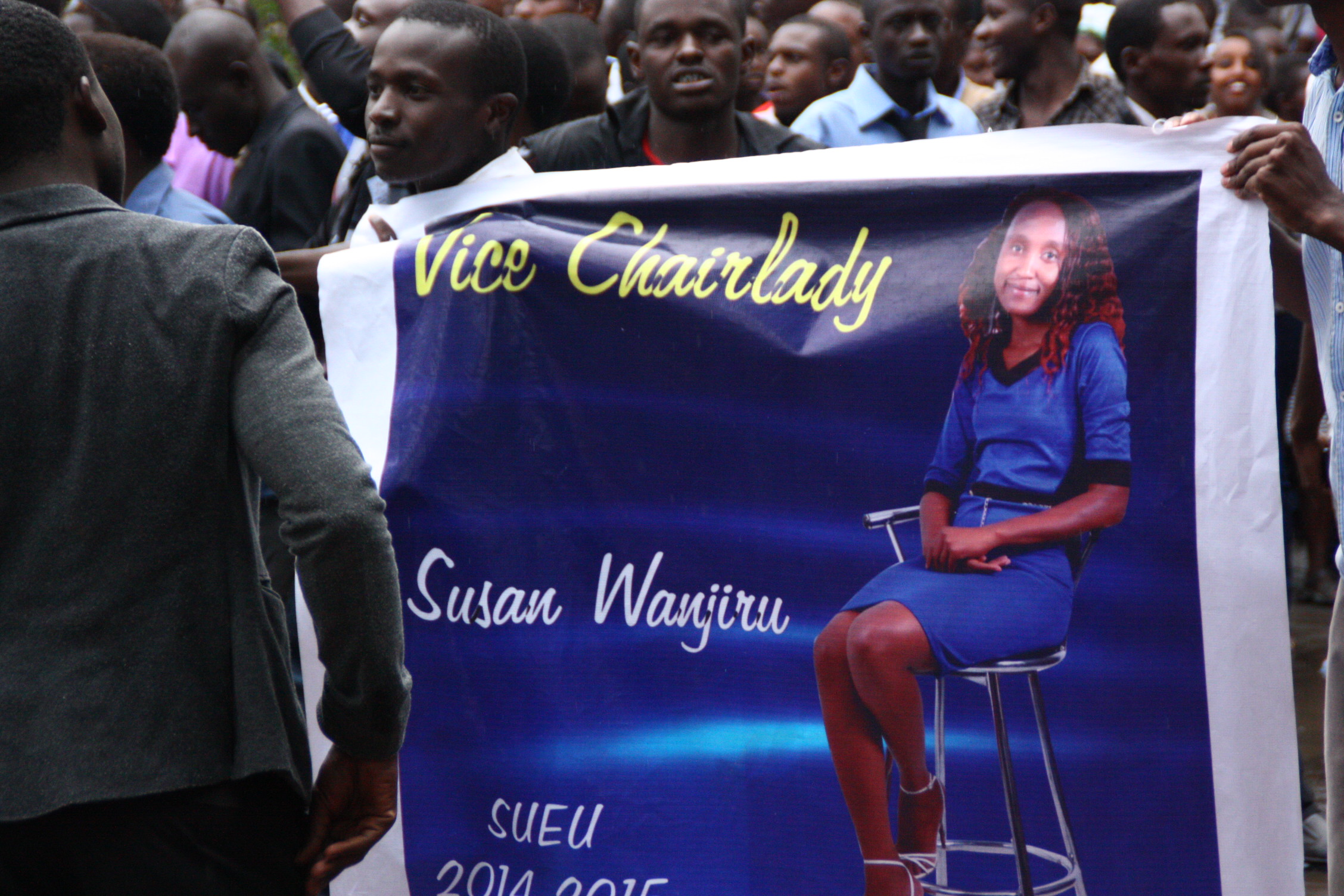
Joseph Githinji who served twice in the Student Union of Egerton University (SUEU) at the university’s Nakuru Town Campus College (NTCC) observed that there has been a trend in which aspirants present unrealistic manifestos during their campaigns and which become difficult to achieve once elected.

“You need to tell them (students) what can be done and what can’t be done,” he advised the aspirants.

Githinji’s advice comes barely two weeks before students elect new leaders at the university and at a time when the aspirants are busy wooing voters. He urges that they should conduct themselves well as they sell their agenda.

“Beat your competitors with ideas, do not smear them with propaganda,”

he said while cautioning against voting along tribal lines.

“Play with your tribal thing (sic) but ensure you have something for everyone,”

the 30 year old who works as a volunteer at Egerton Radio said.

Githinji became a student leader in 2011 when he was elected as the Director Students Welfare. In 2012 he was elected as the Secretary General, a position he served for one year. For years now he has been serving as a leader in his church – Seventh Day Adventist – at the University’s branch where he has been a church elder.

He advises that student leaders should balance between leadership roles and their academics.

“Be responsible and do it well because someone depends on the decisions you make,”

he said while adding that when he became a leader he was able to balance the two thereby improving his academic performance.

The students’ elections will be held on October 30 with a total number of 9 seats being contested. For the first time 3 seats – the Director Finance, Organizing Secretary and Director Health and Wellness – have been exclusively set aside for female students. It will be noted that the seat of the Chairman and that of the Secretary General are the ones that are highly contested.

Githinji has cautioned leaders not to think that the student leadership is a bed of roses.

“Once you decide to a be a leader expect challenges. Students want your service all the time forgetting that you also need your own time to study.”

“Students think that you are paid a lot of money and they expect you to buy them lunch whenever you meet them.”

University politics have been a breeding ground for persons wishing to join national politics. Among those who have been student leaders and have ended up being leaders at the national arena include, Siaya Senator James Orengo and Gatundu South M.P Moses Kuria who were leaders at the University of Nairobi. Others include Nandi Hills M.P. Alfred Keter and Cecile Mbarire who were leaders at Egerton University.

Githinji however says he has never admired joining national politics. He said a while back he was requested by youth from his village in Eldama Ravine to vie for the seat of Member of County Assembly but he declined fearing it would deny him privacy.

Generally he advises Kenyans to always be voting wisely every time there is an election arguing Kenyans are to blame for the election of poor leaders.

“During elections many Kenyans leave their brains at home,” he said urging for a change.

Majority of sexual and domestic violence cases in Makueni go unreported


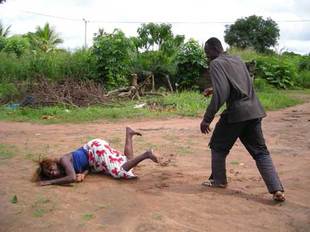
A victim of gender violence Photo : Nayakenya. Com
A victim of gender violence. Photo: Nayakenya. com


Makueni County Commissioner Ms. Pauline Dola speaking at Wote during the Mashujaa Day celebrations said despite the increasing number of gender violence and rape cases especially among young girls in the county, many of the victims shy away from reporting the abuse for fear of victimization.

For these reasons, the county commissioner called on the Makueni residents to be proactive and report domestic violence and sexual abuse to the concerned authorities for the necessary cause of action.

She noted that to let perpetrators of such heinous acts to go scot free would amount to subjugating justice and called for concerted efforts to curb the crimes.

“Please report these cases to the administration and shun from settling them out of court,” said Ms. Dola.

She asked married couples to respect one another and leave in harmony and look for amicable ways of resolving their differences without resorting to physical fights.

“Gone are the days when men would beat their wives and get away with it. Wife beating is outdated and has no place in the current society,” she added.

The county commissioner’s sentiments comes barely months after the District Children Officer Mr. Rasto Omollo expressed his concern over the increasing number of defilement cases among young girls and the apparent lack of concern by the victims’ families to seek justice.

While speaking during the celebrations of the African Day of the Child held in Kathonzweni, Mr. Omollo also noted that families of victims seek alternative ways to resolve the cases instead of pursuing the laid legal procedures.

“Most parents due to poverty accept monetary compensation leaving the young victims tormented by the same perpetrators who roam freely undeterred,” he said.

The children officer added that while many cases in Makueni are not reported those that make it to the corridors of justice are thrown out as crucial witnesses withdraw while others including the victims recant their evidence and underscored the need for creating awareness on sexual abuse.

“Sometimes the courts go to a great length to pursue sexual violence cases to a conclusive end but witnesses are interfered with making it difficult to sustain the cases,” said Mr. Omollo.

The rise of domestic and sexual violence in the county is worrying and proper interventions should be put in place to avert the crisis.

Although no comprehensive research has been done on domestic and sexual violence in Kenya, latest statistics show that the crimes are rampant and on the rise with many going unreported.

According to a 2014 Gender Based Violence report 83 percent of women and girls report to have suffered one or more episodes of physical abuse while 75 percent of women have suffered physical abuse in their homestead.
Consequently 43 percent report at least a sexual abuse incident in their childhood.

Demand for basic education in Kenya on the rise, says report

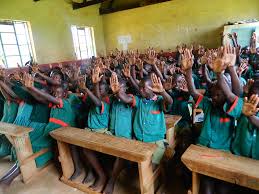
Pupils in class photo:Google
Pupils in class. photo: Google

The demand for basic education in Kenya has increased in the last five years with secondary level of education recording the highest demand according to the 2014 Basic Education Statistical report.

Of the three levels of basic education, secondary schools recorded the highest annual growth of 8.2 percent between 2009 and 2014, an increase that the report released by the Ministry of Education, Science and Technology attributes to the ripple effects of free primary and secondary education.

The general enrollment in secondary education increased from 33.1 percent to 47.4 percent under the period of review with an additional 837,300 students. The number of secondary schools also increased by 8.2 percent with public secondary schools registering a growth of 8.9 percent annually while private schools grew at 3.9 percent down from 15 percent in 2009 a decline which the report says is due to the quick growth of public secondary schools.

Similarly, primary schools recorded a growth of 5.1 percent while Early Childhood Development and Education (ECDE) increased by one percent.

Enrollment in primary education increased by an additional 767,200 pupils due to free primary education but despite the growth the sector recorded a very high growth in the number of private primary schools of 76.9 percent during the period.

“The increased investment in private primary school was in response to the pressure created in public primary schools by free primary education,” reads the report.

ECDE enrollment increased by 772,600 pupils over the period with the ECDE centers rising from 38,247 in 2009 to 40,211 in 2014. Public centers increased at a slightly lower rate of 0.8 percent compared to private centers that grew at 1.4 percent.

Similarly, the report also states that there was notable increase in the number of private primary teacher training colleges from 89 to 101 to address the increased demand for trained teachers by the growing private schools.

On gender parity, the sector recorded an improvement across the three levels with the parity index between girls and boys at ECDE level, increasing over the period from 0.95 percent in 2009 to 1.05 percent in 2014. Notably, there were more girls than boys at the ECDE centers in 2014 an opposite scenario in 2009 where the centers recorded more boys than girls.

In Primary Education, the parity index improved over the period but did not get to parity by 2014 while despite a real improvement in the gender parity at Secondary Education over the period, the index still remains low at 0.92 percent.

“There are fewer girls than boys at secondary level,” states the report.

However, the report indicates that cross county disparities remain evident with arid and semi-arid counties like Garissa, Turkana, Tana River, Marsabit, Mandera, Samburu and Wajir recording the highest levels.

The report further indicates that there are 251, 542 learners with special needs while the number of Orphaned and Vulnerable Children (OVCs) stands at about 1.08M with majority of these learners being in both public primary and secondary schools.

“In public primary schools, about 3 percent of the learners are pupils with special needs while about 12 percent are OVCs. In public secondary the proportions are lower 0.2 percent and about 3 percent respectively,” says the report.

On teacher pupil ratio, the report states that there is no teacher shortage in the three levels with the ratio of government employed teachers to enrolled pupil or students within an acceptable range.

“The Pupil Teacher Ratio (PTR) for public schools based on Teachers Service Commission (TSC) stands at 41.5 which compares well with the international norm of 40 and considering there are teachers employed by the Board of Management (BOM), the ratio drops to 34.5,” reads the report.

However, the report points out that there are serious cross county disparities ranging from very high PTR of 101.3 in Turkana to a low of 25.4 in Baringo at the primary level while at secondary school level, the highest PTR is 41.9 in Migori while the lowest is 17.5 in Samburu.

Although the report details out a significant growth over the years, the sector faces several challenges ranging from lack of infrastructure, lack of gender parity in enrollment, high number of OVCs and high and low teacher pupil ratio in densely and sparsely populated areas respectively. Notably, the Ministry of Education should come up with strategies to address these challenges in order to achieve its mission of providing quality education.

The Role of Women Representatives in Kenya

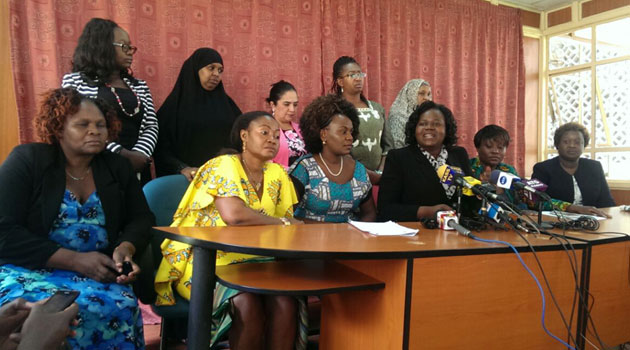
Some of the women legislators in Kenya. Photo courtesy; www.capitalfm.co.ke

By George Githinji

Each of the 47 counties has an elected women representative. The 47 women representatives are situated in the National Assembly.

While the public perceives them as a different group of legislators, the women representatives are in fact Members of Parliament (MPs) just like the members representing the Constituencies and those in the Senate. It appears that they were elected to balance the gender equation (affirmative action) but their role goes beyond this trajectory.

The position of Women Representatives creates room for more women representatives in the legislature to ensure that not more than two thirds of the members ore of the same gender.

Women Representatives are supposed to primarily promote the interests of women and the girl child within their counties (and by large, nationwide) by coming up with legislation that favors and suits the women and girls within their dominions.

Through legislation, the Women Representatives should lobby and advocate for the rights, freedoms and interests of the women and girls, who are perceived by the society to be the ‘weaker sex’ in order to uplift them to the standard where they are considered at par with their male counterparts.

Women representatives in their legislative capacity are supposed to formulate legislative policies that uplift the social, economic and political status of women and girls in the country. Nevertheless, this advocacy does not necessarily involve advocating for immediate needs for the women and girls, such as sanitary towels and boreholes.

The intention of the position and mandate of the women representatives was for their roles to be long term in addressing the challenges that face the women and girls in this country due to persistent marginalization and neglect by the patriarchal society. This includes ensuring, through legislation and policy formulation, that majority of the female population has a certain level of affordable access to basic needs and wants, rights and freedoms, privileges and protections.

The other roles played by women representatives in Kenya are contained in Article 95 of the Constitution and they include budgeting (allocation, appropriation and oversight of national revenue), determining the conduct of State officers, overseeing state organs and approving declarations of war and states of emergency.

The women representatives have also been allocated a fund known as the Affirmative Action Social Development Fund. This fund is similar to the Constituency Development Fund (CDF). The fund is supposed to assist the women to implement projects in their counties that are in line with their mandate of female gender empowerment.

Nevertheless, the Women Representatives do not deserve the fund. A recent High Court ruling declared CDF unconstitutional and the Constitution prohibits legislative members from performing executive functions, which includes management of funds.

Legislators are supposed to represent the people, oversee the national government and its organs and to legislate (make and amend laws). In essence, the ruling that invalidated CDF also invalidated other funds like the Social Affirmative Action Fund for Women Representatives.

The Writer comments on political issues in Kenya – blogs at Politics Kenya

Kenyans stand with Janet Kanini, Anjlee Gadhvi in solidarity against cancer

Ikua
Janet Kanini-Ikua. She revealed she had stage four lung cancer on October 7. [Photo: Twitter]
On October 7, Janet Kanini Ikua broke news to the world that she had been diagnosed as having stage four lung cancer.

Despite the revelation being a tear-jerker, many people have commended the suave TV presenter and storyteller for her strength in trying times.

Ikua said she was diagnosed in September and it came as a surprise that the outcome was not expected. This was in India.

To quote her on the medical facilities, Ikua said that,

“Coming to an Indian hospital was an excellent decision… I was promptly admitted and prepared for this machine that brings many Kenyans to India – the PET MRI scanner.”

Her being able to access quality care at the ‘one-stop’ hospital shows that we are way behind in achieving good quality healthcare in Kenya where such is only available for the rich, unfortunately.

And before the news from Ikua sinks in, another TV presenter, K24’s Anjlee Gadhvi Noorani is another Kenyan who has unfortunately shared that she has liver cancer.

Anjlee
Anjlee Gadhvi Noorani. She is battling liver cancer. [Photo: Twitter]
In a move to raise funds to help her get a transplant, Kameme FM, one of Mediamax’s flagship vernacular stations managed to raise Sh8 million for the cause as one of the listeners shared:

In the first hour, Citizen TV’s Waihiga Mwaura posted a screenshot showing that the station had surpassed Sh4 million.

Despite both Ikua and Anjlee being well known personalities in Kenya, it shows the burden that cancer places on not just individuals but families and economies.

In a country where priorities seem to have been missed by miles, Ikua’s praise for the Indian hospital shows that Kenya has a lot of ground to cover.

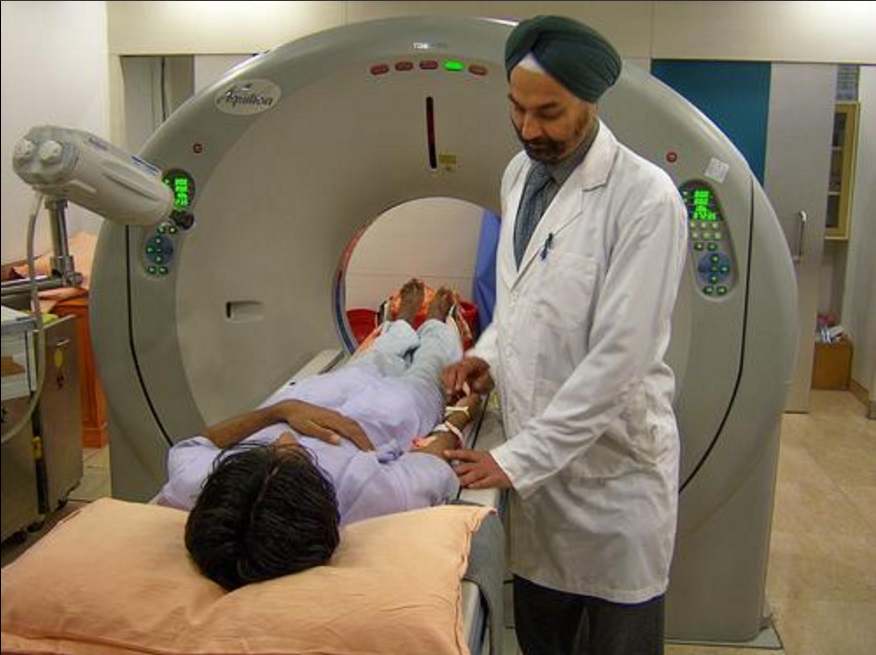
From her post, Ikua said that the PET MRI scanner gives an “amazingly accurate picture” of the internal workings of the body, so that you scan the entire body at a go.

Scanner_Twitter
A patient getting an MRI scan. Ikua has praised services and equipment in the Indian hospital she is being treated in. [Photo: Twitter]
Sadly commenting on services back home,

“If I had stayed in Nairobi I was going to go in and out of CT scans, MRIs and ultrasounds around my body to discover what’s up, which would have meant a lot of money, time and uncertainty.”

This is an indictment of healthcare and a government that has so terribly failed its people. This is despite the fact that Kenyans are among the highest taxed globally but with the taxes going into a few pockets.

Kenya was at par with Malaysia 30 years ago but today, the Asian country is ahead in many aspects meaning its citizens can afford some of the best lifestyles in the world.

And on Twitter on Friday, #InvestInYourHealth was the topic of the day where Kenyans offered their support to the two media personalities.

Some gave advice on what they thought was the best way to take care of one’s health:

Among men, the 5 most common cancers are lung, prostate, colorectum, stomach, and liver cancer.#InvestInYourHealth @TulipHealthcare — Willis Raburu (@WillisRaburu) October 16, 2015

And the support messages continue both for Ikua and Anjlee:

But the big question remains as to who and when will corruption be addressed conclusively for such cases to be taken care of at home with loved ones around?

For those who may be travelling to India, Ikua says,

“If you’re planning to travel here don’t stress about accommodation. Hospitals negotiate special rates with hotels. In a 5 star hotel on bed and a huge breakfast with free Wi-Fi you can pay Sh4,000 per person per night including taxes. Yes. In a 5 star. Special rates are also negotiated for 1 to 4 star hotels and self-catering guesthouses, especially if you’re here for long.”

Will our politics be development–oriented for once so that people suffering can get the basic treatments at home without having to travel?

Ikua and Anjlee join a long list of Kenyans who have been forced to travel abroad seeking treatment. Just recently, it was Jadudi who had a successful operation and came back.

Read more on Jadudi here

Is the government listening to Kenyans’ cries or is it time to eat for those in power?

Kenya Union of Journalists, NCCK condemn ‘anti-media law’ threatening to sue

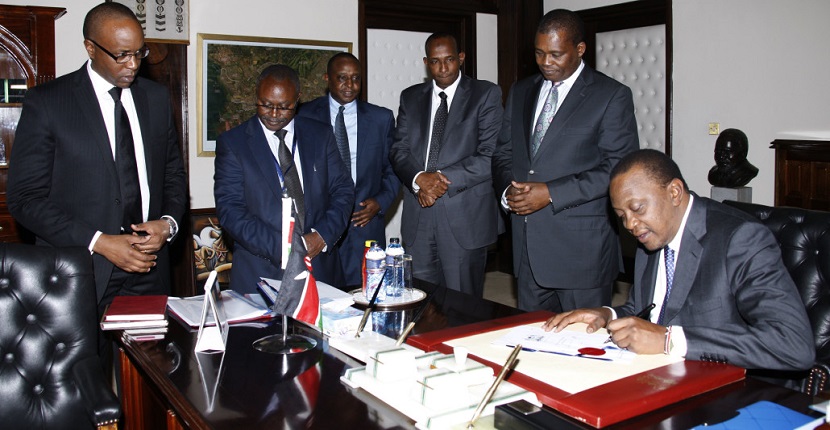
President Uhuru Kenyatta signs the 2014 Value Added Tax (VAT) and Pubilc Finance Management amendment Acts into law at State House, Nairobi. Looking on from left is Solicitor General Njee Muturi, Clerk of the National Assembly Justin Bundi, Cabinet Secretary National Treasury Henry Rotich, Majority Leader Aden Duale and Speaker of National Assembly Justin Muturi.
President Uhuru Kenyatta signs the 2014 Value Added Tax (VAT) and Pubilc Finance Management amendment Acts into law at State House, Nairobi. KUJ says it will sue if the ‘anti-media law’ is assented to. [Photo: PPS]
The National Council of Churches of Kenya (NCCK) and the Kenya Union of Journalists (KUJ) have condemned Parliament’s passing of the Powers and Privileges of Parliament Bill 2014.

In a statement on Thursday, NCCK General Secretary Rev. Canon Peter Karanja said that by passing the Bill, parliamentarians had clearly stated their position on where they stand on matters of accountability.

He said,

“With clauses that propose hefty penalties to those who would be seen to have “Scandalised Parliament”, it is our considered opinion that MPs’ refusal to subject themselves to public scrutiny is an abuse of the public office and indeed an affirmation that Parliament, has failed the test on leadership and integrity.”

The statement added that parliamentarians have acted in unflattering ways sometimes inside parliament and that reporting of the same, when it happens, only informs Kenyans what their representatives do.

In what was a warning to what is seemingly becoming a rogue August House, Rev Karanja added

“It is foolhardy to keep battering the messenger instead of improving the message he carries. We wish to remind them (parliamentarians) that as stipulated in the Third Schedule, they took an oath of office to bear allegiance to the people of Kenya. Kenyans therefore, will not allow them to run amok, but shall consistently continue holding them to account directly or through various institutions.”

He dismissed claims by some MPs that they could be helpless should the media or anyone publish false reports against them as utterly baseless, since there is already adequate legislation on defamation.

“MPs are not sacrosanct or indeed immune to the rule of law, hence they cannot legislate and be the judge at the same time,” the statement added.

Elsewhere, KUJ said the passage of the draconian laws was an affront to press freedom with the Secretary General, Erick Oduor, saying that ‘it is a sad day for the Kenyan media industry’.

In a statement Oduor said,

“The Parliamentary Powers and Privileges Bill is an affront to the Constitution, which guarantees members of the Fourth Estate freedom to carry out their functions of informing the public without intimidation.”

The passage came despite Eldas MP Adan Keynan agreeing to delete offensive clauses in the Bill. Keynan had backtracked on his previous tough stance promising journalists in Nairobi that he would delete the sections.

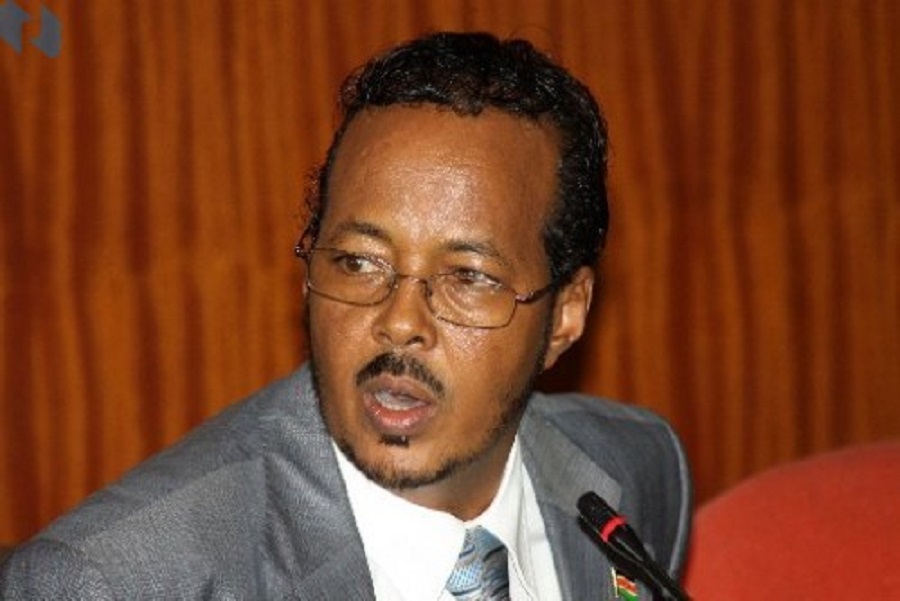
Adan Keynan_Mavulture
Eldas MP Adan Keynan. He had agreed to delete offensive clauses in the Bill having had backtracked on his previous tough stance promising journalists in Nairobi that he would delete the sections. [Photo: Nation.co.ke]
Some of the sections of the Bill proposed hefty penalties, as much as Sh500,000 fines, for journalists found guilty of defamation.

However, the requirement for journalists covering parliamentary committee proceedings to seek the authority of the Speaker of the National Assembly or Senate, or parliamentary committee chairmen has been scrapped.

The Kenya Parliamentary Journalists Association Chairperson, Roselyne Obala, had suggested that the two offending clauses be removed, together with the one that spelt out the harsh penalties.

KUJ said,

“The proposed fines by the Bill are meant to intimidate journalists to turn a blind eye to corruption, mediocrity and sideshows that are synonymous with the activities of the 11th parliament,” the statement added.

“In addition, the Commission for the Implementation of the Constitution (CIC) in its advisory opinion on this Bill had warned Parliament against reintroducing criminal libel law in the country through the backdoor,” it stated.

The statement added,

“KUJ therefore, urges President Uhuru Kenyatta to reject this Bill. Otherwise, we will have no choice but to challenge it in court,” the statement concluded.

NCCK asked President Uhuru Kenyatta not to assent to the Bill with the offending clauses, but instead send it back to Parliament, to allow a wider stakeholder approach and consensus on them.

“The President is duty bound to ensure that Kenya continues to uphold the rule of law and remains a model of democracy and respect for the rights of the citizens in the region,” the statement added.

In an indictment of the MPs over their conduct, the statement said

“Judging from the history of most of our legislators, we consider as suspect the MPs’ introduction of the purported new offence called “Scandalising Parliament,” in the Powers and Privileges Bill 2014. We have no doubt that this is not only another machination by the MPs to hoodwink Kenyans but also an attempt to claw back on media freedoms in the country and limit access to information. The media plays a critical role in any democratic society and helps to expose ills in society.”

NCCK urged Kenyans to remain steadfast and vigilant on national issues and also commended MPs who have remained the voice of reason on such issues and urged them to continue standing with the people of Kenya.

Safaricom introduces ‘Hakikisha’ feature to secure M-Pesa transactions

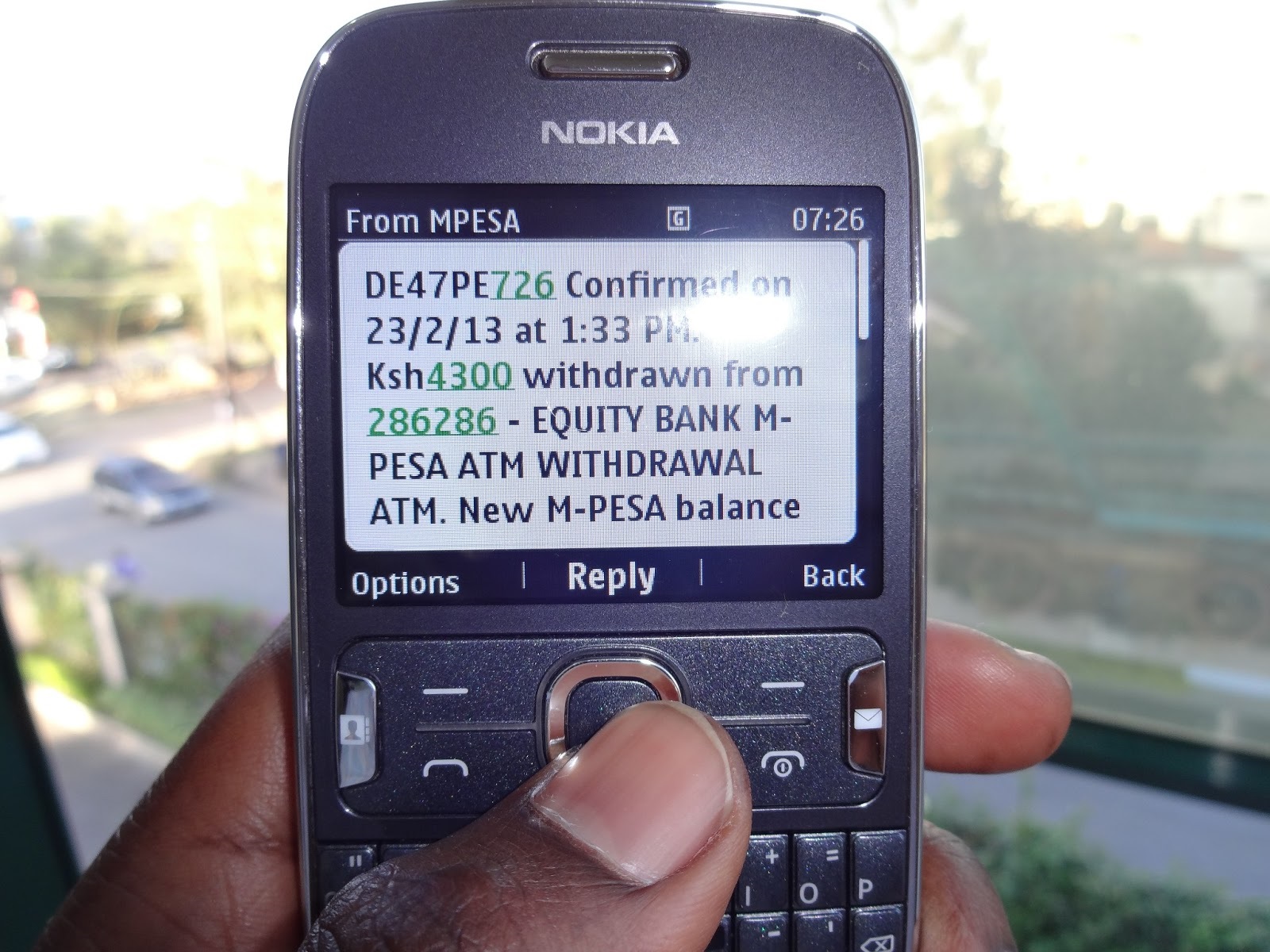
M-Pesa_thinkm-pesa
An M-Pesa transaction. The telco has introduced a safety enhancement to ensure transactions are only with the right people. [Photo: thinkm-pesa.com]
Have you been in a situation where you have ‘conveniently’ sent money to the wrong person because there is no way to easily authenticate the recipient?

Well, such a scenario has been repeated over and over and many mobile money customers have lost money in cases where a reversal of the transaction was not effected soon enough.

To curb such occurrences, Safaricom has introduced a new enhancement to M-Pesa that will enable customers confirm the name of the intended recipient of funds, before completing a transaction.

This comes a week after the GSMA, the global body that represents mobile operators said in a report that,

“Entrepreneurs, enterprises and entire countries can benefit greatly from advanced mobile technologies, but only if mobile operators continue to upgrade their existing networks and deploy new networks. Mobile operators need to build a robust business case for new investment that will convince investors to provide the necessary finance.”

Hakikisha’ which has been under pilot for the last one month will be rolled out in phases with a view to covering the entire 21.7 million M-Pesa customers by October 30, 2015. It will ensure that customers no longer lose money to unintended recipients as a result of making a mistake while entering a number.

“On any given day we receive an average of 12,000 calls from our M-Pesa customers seeking to have reversals done for transactions made to the wrong recipients. While a majority of these are resolved successfully, we appreciate that this is a major inconvenience for our customers,”

said Safaricom’s Director of Financial Services, Betty Mwangi.

The pop-up feature will also apply when customers are making payments to Lipa Na M-Pesa (PayBill option), agent withdrawals, and will complement ongoing plans to boost the number of cashless transactions in the country. M-Pesa Agents will also benefit from the service when depositing funds to customer numbers.

Mwangi said,

“This is yet another testament to our commitment to ensure that we know our customers intimately and deliver to them the most relevant products, which is one of the objectives that we set out to achieve during this financial year. More initiatives are underway.”

This new enhancement is as a result of improved system capability after migration of M-Pesa servers to Kenya earlier this year.

The intended recipients’ names will be queried against the official records registered by the customers and PayBill partners, ensuring that customers no longer send funds to the wrong numbers or organisations.

However, ‘Hakikisha’ will be suspended if no transaction is completed after five consecutive trials by typing 1 to STOP the transaction.

Launched eight years ago, M-Pesa has become a key mobile money solution in Kenya with over 13.9 million Kenyans using the service at least once a month.

It is supported by a network of over 85,000 agents and has more than 50,000 Lipa Na M-Pesa tills.

Extreme poverty remains the biggest challenge to Sub-Saharan Africa, Kenya included

Devinit
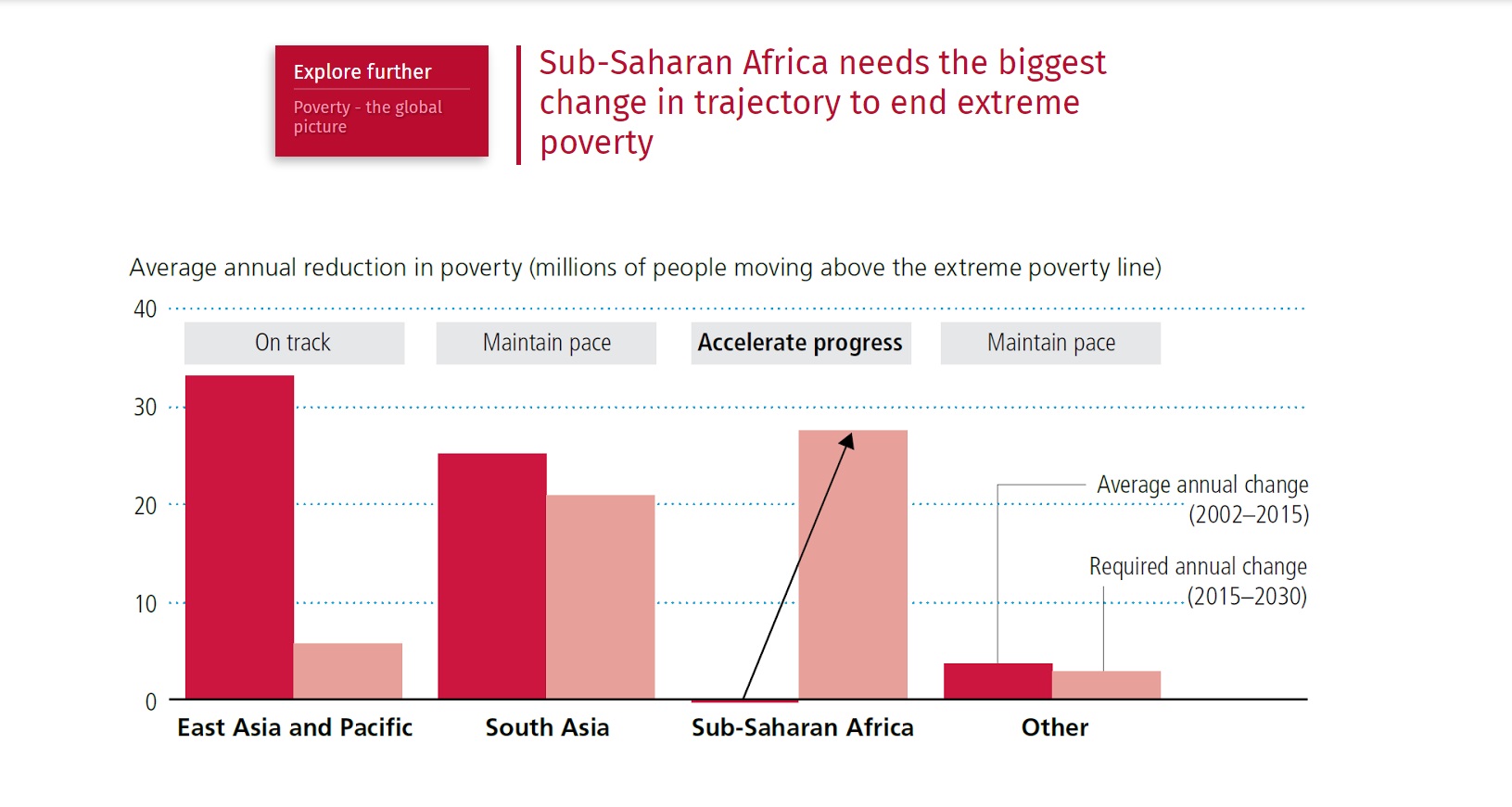
A graphical expression of the milestones achieved in reducing poverty globally. Sub-Saharan Africa has a lot of ground to cover to halve poverty in the next 15 years. [Photo: Njenga Nelson]
Following the adoption of the 2030 Sustainable Development Agenda (SDG) and 17 Global Goals by 193 UN Member States, this heralds a new approach to a sustainable world.

UNEP Executive Director Achim Steiner said

“Every so often the world takes a historic step forward as a global community. Today, nations of the world moved forward together on a pathway to a sustainable future. The 2030 Agenda agreed to today by 193 nations is an important and unique moment in our shared history. For the first time, we have a development agenda that is focused on sustainability in both the developing and the developed world.”

Steiner added that the 17 Global Goals are at the centre of the 2030, crucially incorporate environmental sustainability and social equity with economic progress.

“That integration will be critical to a sustainable pathway forward for the planet and its peoples,” he said.

And against this backdrop, a report by Development Initiatives (DI) indicates that ending extreme poverty over the next 15 years will be a much more difficult task than halving it.

Titled ‘Investments to End Poverty 2015, Meeting the challenge of getting poverty to zero’, the report shows that when data is disaggregated, people are left behind in extreme poverty.

The Institute of Taxation and Economic Policy (ITEP) adds,

“Many of the world’s poorest countries need a significant change in trajectory if they are to see an end to poverty by 2030. Ending extreme poverty is a critical step toward ending poverty in all its forms everywhere. The countries where poverty is deepest will require the most substantial shifts in current rates of poverty reduction.”

The report gives a grim picture of Sub-Saharan Africa, where Kenya falls, saying the region faces the greatest challenge in ending poverty by 2030.

“Progress in the region must be accelerated to reduce poverty faster,” it adds.

Sub-Saharan Africa must rapidly accelerate progress if it is to end extreme poverty by 2030 – from experiencing a small rise in the number of people in extreme poverty during the MDG period, to realizing a faster pace of poverty reduction over the preceding 15 years.

Despite placing high priority on key sectors such as education and health, low revenues mean very low spending in many countries.

In sub-Saharan Africa, health accounts for an estimated 10 percent of total spending – the second highest of any region – yet this equates to just Sh3,399 (US$33) per person, just over half of the World Health Organisation (WHO’s) recommended US$60 (Sh6,180) per person benchmark.

The report notes that Sub-Saharan Africa is the second highest regional spender on health, but the second lowest per person.

All regions, except sub- Saharan Africa, have met the MDG 1a target to halve extreme poverty rates. Here, the proportion of people living in poverty has fallen 28 percent whilst absolute numbers have remained roughly unchanged.

The report adds that national institutions are the main drivers of poverty eradication but their resources are fewer where the challenge of ending poverty is greatest.

ITEP reveals that the ways in which domestic resources are both mobilized and spent have a significant impact on the poorest people. It is clear that developing countries can’t end poverty alone and international assistance is a critical resource where poverty is deepest.

The world’s poorest region faces the greatest challenge in ending poverty by 2030. It is home to 32 of the 33 countries with the greatest depth of poverty and has seen the slowest progress in reducing poverty. In addition, regionally government revenues are lowest in sub-Saharan.

Sub-Saharan Africa, which committed to the Abuja Declaration target to spend 15 percent of government resources on healthcare, has moved towards this target: health spending increased from 7.4 percent of total spending in 2000 to 8.3 percent in 2013. This pattern is also reflected in education spending, which increased from 14.1 percent to 17.3 percent in sub-Saharan African within a similar time period.

And as has been noted in ITEP, Steiner said of the SDGs that,

“UNEP is committed to working toward the 17 Global Goals and supporting countries in integrating the environmental dimension in their development ambitions. We have a unique opportunity to now work on a global agenda that unites us as a planet and a community of nations. Embracing this task with commitment and ambition can make the 2030 Agenda a pivotal moment in the history of our world.”

Where do County Governments get their Money?

Meru County Governor Peter Munya who is also the chair of the Council of Governors.

By George Githinji

For counties to run, they need resources and knowing the source of these resources is crucial to know how to run a county. Political analyst George Githinji shares the sources of these revenues. They are;

  • Local Revenue

Article 209 (3) of the Constitution empowers the counties to impose two types of taxes and charges, that is, property rates and entertainment taxes. The counties may also impose charges for any services they provide in accordance with the stipulated laws. All these monies constitute the local revenue.

  • Equitable Share

Article 202 (1) of the Constitution stipulates that the revenue raised nationally shall be shared equitably between the national and the county governments. This revenue raised nationally is referred to as the equitable share. In essence, this fund is given to the counties by the national government, since it is part of the revenue raised nationally by the national government.

The equitable share of revenue that goes to the counties should not be less than fifteen percent of all the revenue raised by the national government based on the most recent audited revenues approved by parliament.

The equitable share allocated to the counties is unconditional, meaning that the counties can spend the money without any restrictions from the national government.

  • Conditional Grants

Article 202 (2) provides for additional allocations to the county governments from the national government’s equitable share of revenue, either conditionally or unconditionally. These additional allocations are known as grants. They are conditional when restrictions on their use are stipulated by the national government and unconditional when the restrictions are renounced.

The conditional grants include the Equalization Fund (Article 204) that is currently granted to 14 counties categorized as marginalized and the money for Level Five hospitals that are under the county governments.

  • Loans

The county governments can, in accordance with Article 212, borrow or access loans from external sources or private lenders. This money should be repaid with interest. However, the counties must meet two conditions in order to access the loans. First, they can only access a loan if the national government guarantees the loan, that is, the national government should be willing to repay the loan in the instance where the county government is unable to repay. Second, the county assembly must approve any loan that the county executive intends to borrow.

Parliament is mandated to come up with legislation that shall prescribe how the national government should guarantee loans. However, parliament is yet to make the law. That essentially means counties cannot borrow money and do so illegally now.

  • Donor Funding

Counties receive this money from international donors in form of aid. Such international donors include USAID and DFID. This money, however, is currently being sent to the counties through the national government in various forms of conditional grants. This is because the donors are unwilling to break the pre-devolution agreements made with the national government regarding the expenditure of the funds. They are also demanding for the counties to “match” their donations (i.e. raise a certain percentage of the money to receive the rest), increase accountability mechanisms or improve the capacity of county staff in monitoring and expenditure of donor aid.

The Writer comments on political issues in Kenya – blogs at Politics Kenya

Will South Africa’s resolve to pull out of the ICC help Kenya’s case?

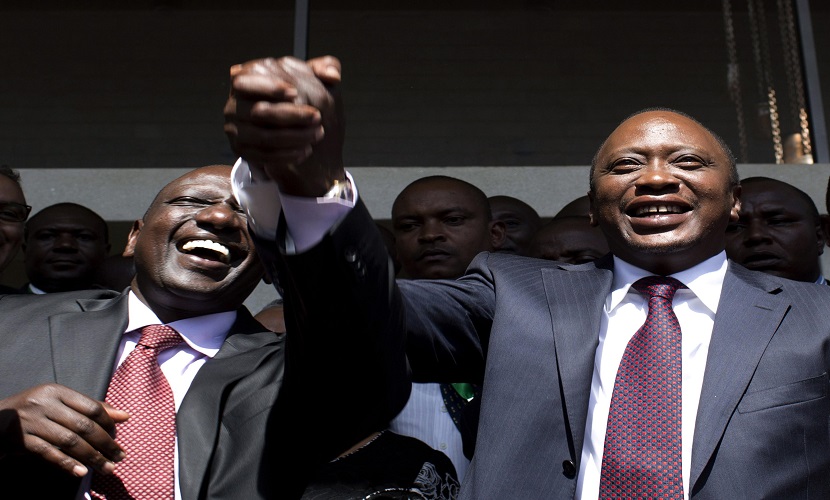
President-elect Uhuru Kenyatta (R) greets his supporters with his running mate, former cabinet minister William Ruto after attending a news conference in Nairobi March 9, 2013. Kenyatta, indicted for crimes against humanity, was declared winner of Kenya's presidential election on Saturday with a tiny margin, just enough to avoid a run-off after a race that has divided the nation along tribal lines. REUTERS/Siegfried Modola (KENYA - Tags: ELECTIONS POLITICS)

That the ICC has lost its direction, is the latest indictment from Africa in regard to the court that has been viewed by many as skewed in offering justice for war crimes.

Coming from one of the continent’s power houses South Africa, the statement carries a lot of weight as the country has been seen as one inclined towards the west in matters human rights.

The African National Congress (ANC) party’s head of international relations commission Obed Bapela’s statement shows that the court is fast losing support in a continent which was meant to benefit most from the court’s establishment to tame dictatorial tyranny.

Bapela said,

“The National General Council has just resolved that South Africa should withdraw from the international court. However, only after we have followed certain processes.”

The withdrawal calls come after a tiff with The International Criminal Court (ICC) at The Hague over South Africa’s failure to arrest Sudanese leader Omar al-Bashir when he arrived in the country in June to attend an African Union summit.

The resolution to withdraw from the court came out of an ANC policy meeting which was reviewing the party’s policies ahead of the country’s municipal elections in 2016.

However, the ANC says it still believed in the founding principles of the ICC, such as prevention of genocide and stopping the violations of human rights.

This move seems to be fomenting the push for the continent’s withdrawal from the court which has been seen as targeting Africa unfairly.

Kenya has been, since the electioneering period before 2013 so far, pushing for changes to some laws which have been seen to be targeting those indicted unfairly.

One of the biggest single attacks on the court came from the African Union (AU) in September 2013 at a summit in Ethiopia. This is when the African countries met and threatened to pull out from the ICC en masse.

Then, President Uhuru Kenyatta, was set to appear before the ICC in November regarding charges of crimes against humanity for his role in the violence that erupted in the country after the 2007-08 election. Deputy President William Ruto and Joshua Arap Sang’ are the only ones facing charges at the court out of six people accused of bearing the biggest responsibility for the post poll chaos.

Fast forward today and ANC’s announcement could just be the break that those accused at the ICC could be waiting for.

The ICC exists in 34 African countries but this number may reduce depending on how the proposal to review some statutes at the ICC turns out.

In September 2015, the AU was pushing for a halt to processes at the ICC in the cases facing DP Ruto and Sudanese President Omar al Bashir.

At an inaugural meeting of the Open-Ended Committee of Ministers of Foreign Affairs on the ICC, members from Burundi, Chad, Cote D’Ivoire, Eritrea, Ethiopia, Kenya, Libya, Sudan, South Sudan and Senegal drafted eight recommendations they will pursue.

Among these is a petition to the AU Chairperson requesting the United Nations Security Council (UNSC) to have on its agenda the request for deferral of proceedings against President Bashir and DP Ruto.

Under the chairmanship of Ethiopia’s Foreign Affairs Minister Tedros Adhanom Ghebreyesus, the committee emphasized that African State Parties to the Rome Statute of the ICC should periodically assess and evaluate their continued membership.

Soon after the meeting, the Kenyan delegation in New York said that there was a general understanding that Rule 68 – which is now being applied in the case against Ruto to allow use of recanted evidence – would not be applied retroactively.

If not,

“The court should be beyond reproach and it won’t be business as usual at The Hague,”

the chairman of the National Assembly Defence and Foreign Relations Committee Ndung’u Gethenji said.

What remains to be seen now is if the pressure on the court will break and make its resolve to offer justice stronger.

And this month, the AU was allowed to join DP Ruto and Sang’s defence teams in an appeal to overturn a decision which permitted the prosecution to use recanted their evidence. The outcome will determine which way the court goes.

South Africa President Jacob Zuma has defended the country’s decision to pull out of what he said was a “biased” court in the hope that the rest of the continent will follow suit.

Zuma accused the court of deliberately ignoring American leaders’ actions in Iraq and Israel’s

“continuing killing of Palestinians”.

Maseno University politics turns tragic as a student is killed

Maseno University chaos. Photo courtesy of www.standardmedia.co.ke

By Cyrus Kioko

Maseno University has been closed indefinitely following a night incident where a student was killed and 17 others injured where seven are admitted at a referral hospital in Kisumu.

A circular pinned in notice board , which is signed by acting Vice Chancellor, indicated that the institution has closed due to unfavorable conditions caused by the incidence.

“The University senate therefore decided that the University be closed with immediate effect. Students have 30 minutes to vacate the university premises,” reads a part of the circular.


Students had earlier in the morning taken into streets to demonstrate over General Service Unit (GSU) police officers in the institution, whom they allege had killed one of the students. This is after first year student is alleged to have been killed by the officers maintaining peace in the institution ahead of Student Organization Of Maseno University (SOMU) election on Thursday and Friday this week.

Joshua Mungai, the deceased is said to have been from Millennium complex lecture hall on Monday, October 12 when he met the officers in his way to his hostel in college campus where they acted on him till he lost his life. The riots disrupted morning classes as students demanded justice for their fellow comrade where they claim that he was killed while they had maintained peace.

Controversy in the institution began when a fourth year media student, Collins Kitiato mysteriously lost his life after he claimed his life was in danger due to support of a lady candidate for the finance post ahead of elections. The family of the deceased complained of how the institution treated the death claiming that they showed minimal concern about their kin.

“I am the next of kin to the student and the university has my records including my contacts. I wonder why I had to get the information from other quarters and three days after the death. Even the authorities have not called us,”

said Kotiato’s brother Felix Otiato.

Later last week, fire broke into the institution burning the administration block and the office of Student Welfare Service where the cause was linked to the student elections by some students from the institution. Students have taken to the social media their complains about the police officers whom they accuse of causing more violence instead of peace. On Twitter under the #tag, #justiceforjoshua, the students consoled the family of the deceased and Maseno family at large.  


Jaramogi Oginga Odinga University of Science and Technology (JOOUST) from the same region was closed indefinitely last week due to student’s election wriggles.

The Vice Chancellor Academic Affairs Prof. Joseph Bosire confirmed the closure and said re opening dates would be confirmed later.

“The disputed election results were that of the Secretary General, a post which had two contestants. One of them refused to concede defeat which led to his supporters becoming unruly,” said Bosire.

He added that The Senate had formed a committee that was to look into the matter and give out a report on Wednesday on what would have caused the chaos as well as the value of damages incurred

Maendeleo chap chap in Machokos County under threat as the county struggles to pay contractors

Machakos County Governor Dr. Alred Mutua. Photo courtesy of citizentv.co.ke

What many contractors have been lamenting in silence for fear of further being denied opportunities in Machakos County has come out after a struggle to keep a float. Machakos contractors have not been paid for a while but they did not also come out sooner thinking that the story will not be published in the media.

It seems to the surprise of even the Governor, who is media savvy and hardly any negative news on his country makes it to the airwaves, the contractors demanded that they be paid.

In a story published in the Daily Nation, the contractors and suppliers in Machakos gave the county government seven days to pay up debts amounting to close to Sh2 billion. Members of the Machakos County Contractors and Suppliers Association led by their chairman Barclay Mutinda said

The delay in payment has led to the financial ruin of some our members, resulting in loss of property through auctioning, listing in [the] Credit Reference Bureau, illness and in some cases even  stress and death.

Although he was not clear what action they will take, he added that if the government fails to pay up within seven days, the members would convene to decide the next course of action.

In a swift rejoinder, Governor Alfred Mutua came out to defend his county. A statement from the county called the allegations

“misleading statements on pending bills and or unpaid works and supplies in Machakos.”

While admitting that indeed the county has some pending bills, the difference of the amount is what the county is contesting. The county says that the correct amount of pending Bills is sh200m and not the sh2 billion that had been reported.

It further explained that this was a result of the National Treasury deducting the over sh900 million that it had used in paying Health workers and othedevolved staff in Machakos.

“These monies had been initially budgeted for other projects which had by the time been awarded and committed in our books and projects already startedThe deduction of the cash meant that the budget and earliecommitments were not supported by actual cash remittance hence the pending bills,”

read the statement in part.

As politicians will largely do, the statement further stated that this is more of a political issue, meant to distract the ‘popular maendeleo chap chap’ programs being undertaken in the county.

“Machakos pays for work done and respects value for money. As such no works and or supplies will be paid for without Auditing for Value for Money and for physical presence of the project/supplies. No amount of political bickering will intimidate the Government to bend the rules. We are protecting tax payers’ money.”

Many other suppliers and contractors are still suffering but hoping that one day they will be paid. One contractor who refurbished a health center has not being paid sh800, 000 two years since he finished and handed over the project. He says he gave up following up the money.

When working with government, a contractor is expected to finance the project and the government pays them after delivery. Sometimes commercial institutions come in handy in giving credit but when the timelines for repayment to the banks are not meant, the business is at risk. In addition, failure to pay contractors and suppliers negatively affects liquidity of the business, making it difficult to transact.

It is hoped that this becomes a wake up call to Machakos County to pay contractors and suppliers and not intimidate and victimize those who came out to agitate for what is rightfully theirs.

Nakuru activist launches campaign to ban plastics

Wakibia Snip 7
James Wakibia who is running a campaign on social media on banning plastic bags below 100 microns.

By Njoki Maina

James Waikibia, a social media activist based in Nakuru is leading a campaign seeking to ban plastic bags nationwide.

The campaign which is running on twitter and facebook aims at sensitizing Kenyans against use of plastic bags that are below 100 microns.

“I am targeting policy makers because they are the ones who bring change,” he told Kenya Monitor.

“I want them to introduce policies that will discourage the production of these tiny plastic bags,” he added.

IMG_0996
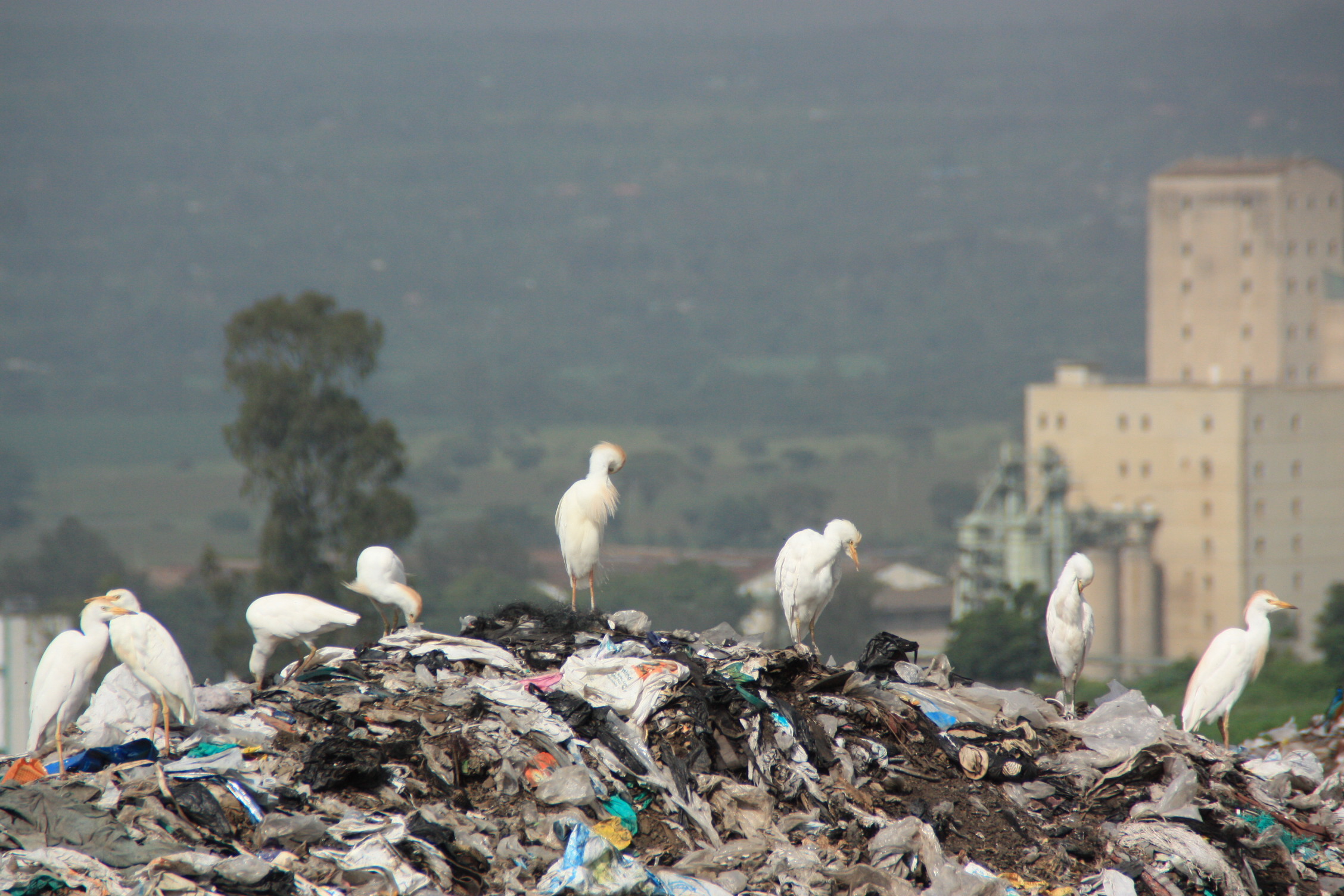
A heap of litter at the Gioto dump site most of which is plastic bags. The activist wants laws to ban use of the bags (Photo: Kioko Kivandi).

Although Wakibia began the campaign in 2013 he was not as active with it as he is at the moment. Apart from posting messages on his Twitter and Facebook accounts the activist has been posting photos of persons who support his campaign.

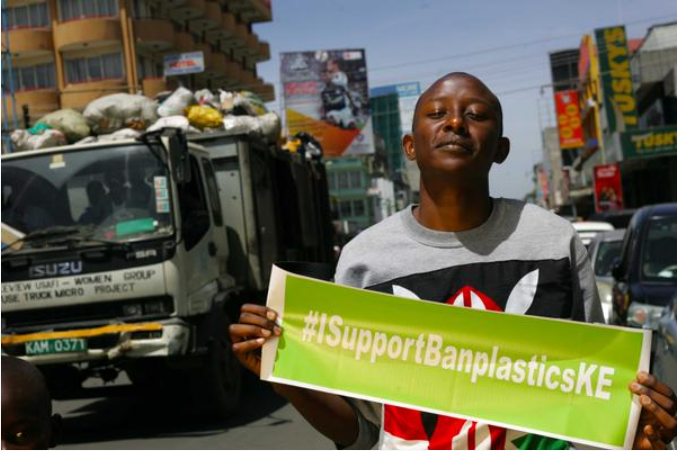
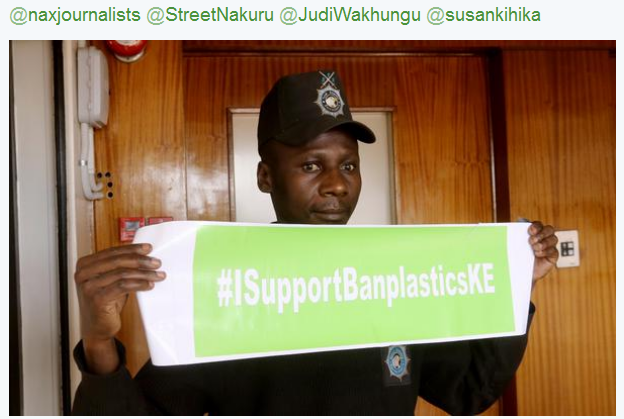
On twitter the campaign has the hashtag #ISupportBanPlasticsKe through which he has tagged persons he believes to be influential on environmental matters in the country including Prof. Judy Wakhungu, the Cabinet Secretary in charge of the environment and the National Environmental Management Authority (NEMA).

Wakibia also wants Kenya to follow the example of the United Kingdom that has introduced an extra charge to shoppers for using plastic bags.

Wakibia Snip 10

Wakibia Snip 3

In trying to seek support for his campaign Wakibia has been taking photos of persons willing to support him with the message #ISupportBanPlasticKE.

Wakibia Snip5

Wakibia Snip 2

Environmentalists observe that plastic bags are very harmful to the environment as they can take even 1,000 years to biodegrade. Wakibia says he is angered by the sight of plastic litter in the environment.

Wakibia Snip 9 Wakibia Snip 8

This is not the first time that the journalism graduate who is a photographer has been involved in an online media campaign. Earlier this year he led a campaign on the release of a new born baby who had been detained at a hospital in Nakuru. A video about his activism won Jonathan Masongo an award with Deutsche Welle.