
Tuesday, December 16, 2025
Home Blog Page 4

Challenges faced by journalists during the covid-19 pandemic

0

Did you as a journalist face any major challenges during the covid-19 pandemic?

We clearly had little time to review and research about the pandemic before it finally hit us. Covid-19 reporting was nothing less of an uphill task.

Challenges faced by journalists in Kenya during the covid-19  period.

Besides having a health crisis,  journalists were also faced with a much bigger crisis than the rest of us, I imagine covering news on a topic I less understand but still have to pursue it for the sake of the masses?  that must be challenging.

There was basically an information crisis in the wake of the pandemic.  The journalists and media practitioners were tasked with providing crucial information on the status of the virus in their communities, how health services are responding, the changes in policy and community norms, government restrictions and still holding the government accountable with just a little or no experience on health reporting.

Through the pandemic period, consumers shifted to watching covid-19 news, which was a great shift in primetime shows and news items that forced journalists to focus more on health reporting which wasn’t as big as before.

there was also a lack of expertise on covering the virus in different languages including vernacular languages.

Alongside challenges in news reporting, journalists in Kenya were also brutally attacked while on duty in Mombasa. A case in point for NTV cameraman Peter Wainaina who was brutally attacked after he filmed police brutality to commuters who had violated curfew hours.

Narrating the accounts of the incident he says, “I was doing my work and it caught me by surprise the brutality this policeman netted on me. I did not provoke him and it was uncalled for.”

Another similar incident happened in the Kiambu county government where security officers assaulted and Arrested journalist  and activist Mokoya Aywah and confiscated his camera while going about his duty

There are many more such incidences that happened to journalists reporting on covid-19.

Another major major challenge that was faced by the journalist in the wake of covid-19 were the numerous pay cuts introduced by their media houses as they gauged the economic impact of the pandemic.

Some media houses sliced salaries for even up to 40 per cent yet still expected the same journalists to report to work and cover for the massive layoffs as a result of the pandemic disruptions.

Additionally, reporting on COVID-19 was a heavily gendered impact on media especially on how the stories weres covered. Three-quarters of the global healthcare workforce are women, yet for every mention of a well-known
female scientist, 19 male counterparts were mentioned in return. Women were treated as a lesser gender on matters of health.

A report by Media Support on covid-19 and the media notes that ” there was an alarming rate of hate speech against women journalists.

Similarly in Kenya, covid-19 reporting was faced by a myriad of myths and misconceptions and politics around the virus that hindered its reporting and has further slowed down the vaccine intake. Earlier in the days, there were myths about covid-19 claiming it doesn’t affect Africans which aided a carefree mentality on self-protection.

Elsewhere,  In a massive sampling of nearly 200 million social media posts in 64 languages related to COVID-19, Italy’s Bruno Kessler Foundation found an average of 40 per cent were unreliable and reported the wrong information to the public.

This indicates, covid-19 reporting was challenging globally and not only in Kenya.

Image

What you need to know about the new Omicron covid-19 variant

0

In the past week, there’s been growing concerns about the new Covid-19 variant dubbed the “Omicron variant” that has originated from South Africa although other reports say it could have been in existence much earlier than it was detected.

The new Omicron variant Christened B.1.1.529  has 32 mutations that make it more transmittable and capable of evading vaccines than the previous variants meaning that it could hamper the body’s immune response and spread more easily. The variant basically has 50 mutations overall and 32 in the spike protein structure that makes it more powerful.

Prof Tulio de Oliveira, the director of the Centre for Epidemic Response and Innovation in South Africa, said there was an “unusual constellation of mutations” and that it was “very different” to other variants that have circulated.

Owing to the fact that the variant is highly infectious and has the ability to bypass vaccines, should we be worried?

Whilst the cases have been reported in the southern African countries, some countries like the UK have already taken a step to ban all the flights from South Africa, Botswana and Hong kong where the cases were first reported.

What steps are our governments doing and what do we need to do to be a step ahead of the strain?

Read on for more.

What to note about the new covid-19 strain

Omicron Variant Infographic - SA Corona Virus Online Portal

The strain is affecting the youth more compared to the precedent strains.

The UK for instance has already identified 22 persons with the new strain which most are youths, similar to South Africa.

Noting from the delta virus that had around 10 mutations and has swept the world foot flat, we should be more vigilant. The new variant is very different from the initial covid which the current vaccines are designed to fight against.

The Delta variant which has much lower mutations is responsible for over 40,000 new cases in the UK every day which means if we don’t take many precautions to this, the situation will worsen.

We might also experience a  drop in the vaccine effectiveness as a result of the  new and stronger mutations of the new strain

Commenting on the  new strain, WHO says,  “Preliminary evidence suggests there may be an increased risk of reinfection with Omicron (ie, people who have previously had COVID-19 could become reinfected more easily with Omicron), as compared to other variants of concern, but the information is limited.”

What steps should we take next?

News sources reporting on the new strain have confirmed that people admitted with serious symptoms are either unvaccinated or have taken a single dose. This means pushing for vaccination will be part of the solution to minimize the effects of the virus on our bodies.

Our governments need to introduce stern measures that will curb the spread of the virus. The Ministry of Health in Kenya recently introduced travelling directives for travellers from the new variant prone countries.

While the country has no immediate plans to ban direct flights from the affected countries. There’s been a step in surveillance among other efforts to mitigate the new strain.

the acting Director-General for Health, Patrick Amoth during the briefing said, ” travellers travelling to Kenya from South Africa, Hong Kong and Botswana shall undergo repeated testing on entry following the emergence of a new Covid-19 variant in the three countries.”

“From now, All travellers coming into Kenya will be required to be in possession of a negative COVID-19 negative certificate taken at least 96 hours before arrival into the country,” he added.

Although there’s still a need for more strong measures, this is the first step towards limiting infections in the country.

The government has further urged Kenyans whether vaccinated or not to continue adhering to the public health social measures and take vaccinations.

Image

Kenya issues new directive for travellers from Botswana, South Africa and Hong Kong

0

The Ministry of Health has issued a  new directive for travellers following the new Covid-19 variant from South African countries.

In a statement during a press conference at the ministry headquarters, the acting Director-General for Health, Patrick Amoth, stated that the travellers travelling to Kenya from South Africa, Hong Kong and Botswana will undergo repeated testing on entry following the emergence of a new Covid-19 variant in the three countries.

The new Covid-19 variant Christened B.1.1.529  has 32 mutations that make it more transmittable and capable of evading vaccines.

According to South African Scientists, B.1.1.529 has more mutations to the “spike protein” than past variants, meaning that it could hamper the body’s immune response and spread more easily.

The variant has 50 mutations overall and 32 in the spike protein

The current virus penetrates the body’s cells and is the key target of the majority of vaccines. The highly contagious Delta strain, by contrast, had several mutations in its spike protein structure that make Delta particularly adept at allowing latching onto its host, more so than previous strains.

Dr Amoth  further pointed out that  the  cases of the new variant are restricted to the three countries stating that “given its ease of transmission and a global return to mass movements, there is need for increased vigilance at all our points of entry.”

From now, All travellers coming into Kenya will be required to be in possession of a negative COVID-19 negative certificate taken at least 96 hours before arrival into the country.

The government further urges Kenyans whether vaccinated or not to continue adhering to the public health social measures and take vaccinations. National and county health facilities have also been asked to be prepared to handle a potential increase.

Dr Amoth further says, “Emphasis should be placed on the availability of critical care facilities, piped oxygen and additional HR surge capacity,”

“The Ministry of Health is keenly monitoring the situation and will provide further advisory as more information emerges.”


How covid-19 influenced consumer spending habits

0

In some ways, the covid-19 pandemic has shifted our shopping and spending patterns positively.

Fear of Covid-19 infections, the strict social distancing measures, and inter-county closures and partial lockdowns enforced at various counties resulted in a shift in the nature of our spending and even purchasing patterns.

So, what consumer habits changed after the pandemic?

At the initial stages of the pandemic,  sales of household items such as soaps, disinfectants and sanitisers saw a spike in growth compared to the previous months before the pandemic.

There was also a high uptake of online commodities compared to the previous months. Ecommerce service providers like Jumia, Kilimall, Avechi, Skygarden had been in existence for quite some time, the pandemic somehow pushed more consumers online. Food delivery sector that wasn’t much explored also experienced sharp growth.

While the hotel industry almost crippled down, customers shifted to online food delivery which was a better option to stay safe than walking into stores to get food or interact with other people.

Research by Businesswire indicated the global online food delivery services market is expected to grow from $115.07 billion in 2020 to $126.91 billion in 2021 as a result of the reopening of the economy.

Online delivery services on the other hand were also at an all-time high. Prior to the pandemic, very few people trusted online delivery services and errands but after the pandemic, there was a quick adoption of online services.

Thanks to the Covid-19 pandemic, consumers now depend fully on digital channels to make purchasing decisions, learn about new products and buy products online rather than traditional methods.

Another to note, while the economy has fully opened up, consumer confidence to shop physically still remains low.

After the pandemic, it looks like working from home is here to stay. Although this has been common among creatives and freelancers, companies are now open to remote working and thanks to real-time connectivity and automation services, they are able to monitor work from anywhere.

As a result of remote working, we now have a set of consumers who are after work from home spaces. For instance, when it comes to house hunting, they are inclined towards the provision of a home office, access to the internet and office furniture.

There also has been a shift in consumer spending options and intentions especially due to the prolonged financial implications of the pandemic, consumers are more mindful of what to buy.

A UK study on consumers patterns during the panic also stresses out consumers being more conscious about what they buy. The study adds, 75 per cent of consumers are limiting food waste, whilst 67 per cent are said to be shopping more health-consciously, a similar pattern experienced everywhere.

Economic implications of the Covid-19 pandemic

0

While the covid-19 is a public health crisis, it has as well crippled the global economy and the financial markets.

The shutdowns and lockdowns across the globe caused economic meltdowns that have resulted in the low income generated by countries, unemployment especially from major disruptions in the hotel and travel industry.

Although the number of COVID-19 cases and fatalities appear comparatively low in Africa slightly over 150,000compared to the western regions like Europe, the pandemic implications on the economy of the African continent are more adverse than the latter.

Firstly, the health system in Kenya for instance was already stretched pre-pandemic and the pandemic as an addition meant stretching it further into an economic emergency. We have over 43 per cent of the population living in poverty, health challenges that include high maternal and child mortality and a high burden of infectious diseases such as HIV, tuberculosis, and malaria which are already a burden to the economy.

The March 2020 lockdown further slowed down the budding economy. the short working hours from a 24-hour economy resulted to slow growth across all sectors.

Let’s look at some of the implications of the pandemic to the economy.

Job losses

The  COVID-19 pandemic heralded so many job losses across the globe. After the lockdowns, many companies could not afford to pay all the employees and especially informal workers were more at risk. and most were laid off. According to a report by WHO, nearly half of the world’s 3.3 billion global workforces are at risk of losing their livelihoods.

Lack of proper healthcare

Informal economy workers in particular are the most vulnerable when it comes to proper healthcare. Most of them with little income, they can only afford to fend for their families. The majority lack social protection and access to quality health care.

In countries where healthcare is expensive like in Kenya where its per capita expenditure on healthcare stands at $169 higher than the Netherlands which has the best healthcare means, only a few people can afford better health care.

Food insecurity

As a result of job losses, a number of countries are reporting cases of food insecurity. There’s a rise in hunger in most regions due to the harsh economic climate.

The march 2020 lockdown in Kenya for example affected international trade globally which has led to a global food shortage and as countries embark on the recovery journey, food security is still a nightmare.

According to a world bank survey, numerous countries are experiencing high food price inflation even at the retail level, which reflects the supply disruptions due to COVID-19  social distancing measures, currency devaluations, and other factors.

The rising food prices continue to have a greater impact on people especially in and low- and middle-income countries which most African countries fall here.

The survey further says, covid-19 dramatically increased the number of people facing acute food insecurity compared to the pre-pandemic period.

Labour issues

The covid-19 crisis also opened for employment and labour issues especially for workers in the health care sector and all frontline workers during the pandemic period. Most of them would work for long hours without pay and with less adherence to workplace safety and health practices like the provision of protective PPEs and protective policies such as sick leave and proper working hours.

Nevertheless, The Covid-19 pandemic has laid bare existing inequalities in workplace exposure to health risks and economic insecurities.

Effects of the covid-19 pandemic to the education system in Kenya

The period between December 2019 throughout 2020 was the most difficult for almost all the countries across the world due to the covid-19 pandemic. The covid-19 pandemic caused an unprecedented crisis across all sectors of the economy as nations struggled to find better ways to curb the spread of the virus.

The education system in Kenya is among the sectors that were faced with a major setback. All schools and institutions in the country were closed. The schools’ closures interrupted learning for over 17 million children in Kenya and especially for marginalized areas where children were safer at school than home, heralded violence and discrimination against children, early marriages, child labour and even violence to children.

The re-opening of schools somehow has been a big step by the government. While it has not fully transitioned to normalcy, the return is a source of reassurance to some of the vulnerable children. With schools back, they will not be remarried off or sent to the farms to work as guards or be subjected to child labour.

2020 research by world Vision shows more than twice the amount of child marriage reports during the coronavirus outbreak from March 2020. The aid agency suggests this surge in child marriage is likely due to loss of livelihoods during the pandemic, rising poverty and lack of access to education and support services.  The COVID-19 pandemic has adversely increased the pressure on families, threatening girls’ rights to live a safe childhood and realize their potential.

The aid agency further said that four million girls could be married off because of this pandemic, and we are already seeing this in several communities.

What has changed after the pandemic?

After the pandemic, not so much has changed in the sector. We still have thousands of children who didn’t go back to school because they were married off or sent off to work for their families.

A case in point for Nandi County where 289 girls between the ages of 10 and 14 got pregnant between January and September last year while another 5,717 aged between 15 and 19 got pregnant during the same period, this means over 6,000 girls in the county had to drop out of school just in one county.

While it has been a norm for children to drop out of school for poverty or such reasons as early pregnancies, the school’s closure phase during the pandemic doubled the numbers across all counties in the country.

The issue of online learning during the pandemic was a major invention in Kenya and it really played a big role in helping children focus on schoolwork while at home and we saw huge achievements in the past final exams results but it’s still, children in the rural areas and marginalized communities could not access to digital learning because of the digital divide. Students in the non-urban areas could not afford to use them as most apps require an internet connection or a smartphone which most still don’t have access to.

The growth of technology and online learning tools means we now have the power to deliver education anywhere, at any time and will be more effective if the government provides avenues to accommodate children on the other end of the digital divide. Covid-19 has created a foundation for opportunities such as remote learning which if adopted in the future will cover for such calamities if they occur.

Over 30 per cent of students in Kenya benefitted from remote learning through the pandemic period. A step UNICEF also believe should be a basic package of essential services for every child to revolutionize learning.

The Government has also committed itself to connect all schools to the Internet by 2030, ensuring that every student has access to digital learning.

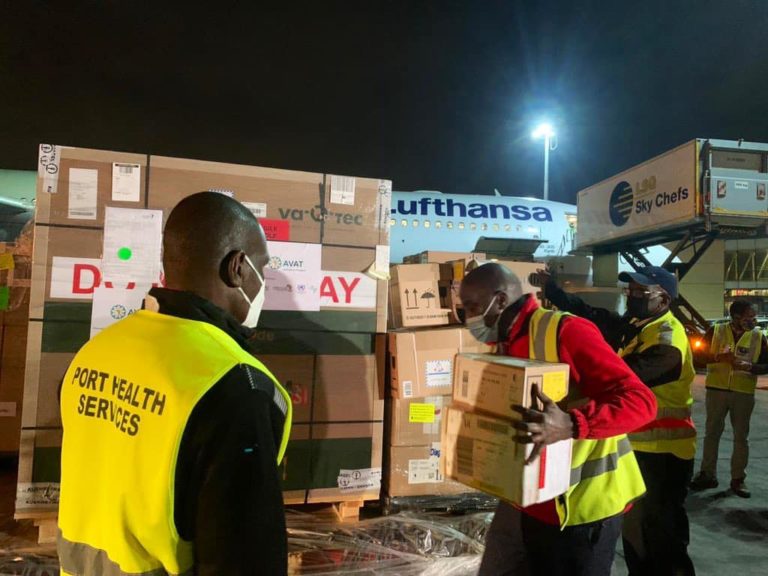
Kenya receives a further 990,990 doses of the Pfizer-BioNTech vaccine

0

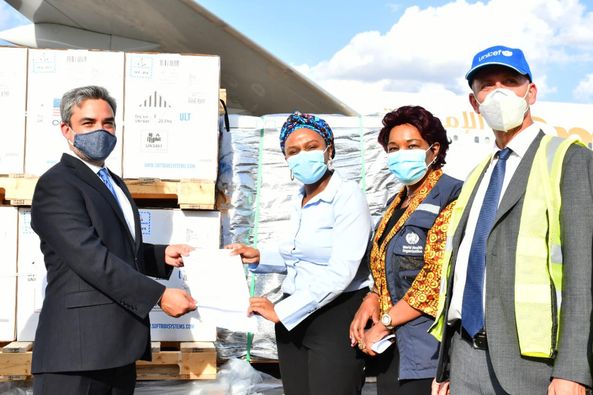
Kenya on Friday received a further 990,990 doses of the Pfizer-BioNTech vaccine from the US government in yet another boost to the ongoing accelerated Covid-19 vaccination drive in the country.

Present to receive the consignment were US Embassy Representative Ricardo Echalar, USAID Country Director Mark Meassick, Dr. Joyce Onsongo of the Disease Prevention and Control at WHO office in Kenya as well as other senior officials from the Ministry of Health.

This comes just days after the country received another consignment of 504,000 doses of the Johnson and Johnson vaccine to boost the vaccination process in the country.  As of October 28 2021, a total of 5,226, 128 vaccines had been administered across the country with the number of those partially vaccinated standing at 3,642,163 while those fully vaccinated were 1,583,965.

The first phase of vaccination began on 5th March 2021 with county vaccinations kicking off on 8th of March 2021. The second dose vaccination began on 28th May 2021 in a rollout spearheaded by the Ministry of Health, with support from WHO, UNICEF, Gavi and other partners.

The government targets to have vaccinated 10 million people by end of December out of a targeted population of 27,246,033.

Speaking while receiving the vaccine doses, Health Chief Administrative Secretary Dr. Mercy Mwangangi said the consignment was the first of over 5 million doses of various types of vaccines comprising of Moderna, Pfizer and Johnson and Johnson expected from the US between now and December.

She said the donated doses will be transported immediately to 5 of the country’s 9 regional stores which are already equipped with Ultracold chain storage freezers. The stores are the Kitengela Central Vaccine Stores, Kakamega Regional Stores, Kisumu Regional stores, Meru Regional stores and the Mombasa Regional stores.

The Government has committed substantial funds for procurement of vaccines through the AVAT mechanism even as it continues to receive donations from international partners.

Is social media a major hindrance to covid-19 vaccination?

0

At the onset of the covid-19 pandemic, social media emerged as a tool for socializing during the lockdowns. Many people who were working from home or were disconnected across cities and towns due to the lockdowns retracted to the social apps for reconnection and catching with the covid-19 news and information.

Over time, social media outlets emerged as sources of fake news and misinformation that have hindered some of the government activities on containing the covid-19 pandemic. Earlier on, thousands of fake news pieces took the internet by storm with falsified articles that suggested otherwise against the covid-19 treatment.

For instance, in India, there was a viral hashtag on #VaccinationisnotCompulsory to protest against the mandatory requirement of the covid-19 certification while travelling.

This year when the government of Kenya, rolled out COVID-19 vaccination, there emerged so many conspiracy theories which most were pushed on social media platforms to hinder the vaccination process. Although the vaccination process has been a global challenge, most of the hindrances are a result of negative conspiracy theories that have been brewed on social media. There have been so many instances of people refusing to take up the vaccine because of misinformation on social media. In May this year, Malawi destroyed nearly 20,000 doses of Astra Zeneca Vaccine that expired in mid-April due to propaganda as told by Quartz Africa.

Similarly, Kenya also announced that it intends to redistribute close to 200,000 vaccines to regions with higher demand due to slow uptake in others which was also a result of anti-vaccine propaganda in social media.

Another hindrance is the rural regions which perceive difficulty in adhering to government regulations on COVID-19 prevention, no perceived COVID-19 infection risk, concerns regarding vaccine safety and effectiveness while some are based on religious and cultural reasons.

A 2020 study on vaccine rumours and conspiracy theories found that people who were exposed to vaccine-related information on social media were more likely to be misinformed and become vaccine-hesitant. Another study backed by a separate study of 2000 adults in the United Kingdom (UK) conducted by the Royal Society for Public Health, who also found that two-fifths of the participants encountered negative messages about vaccination on social media platforms.

During the early days of vaccination, People often shared concerns, mistrust and rumours about vaccines on social media mostly on the side effects and the preferences of the vaccine which has since created a social media bias on vaccine preference. Several Kenyans have previously taken to social media for advice on which vaccine to take as a result of the vaccine biases that have been spewed around.

While the government has been at the forefront of sensitizing its citizens to take up vaccination, there is a need for the prioritization of interventions to address vaccine hesitancy and improve vaccine confidence as part of the vaccine roll-out plan. These messaging should be holistic to include the value of other public health measures, be focused and targeted to specific groups, raise awareness on the risks of COVID-19 and effectively communicate the benefits and risks of vaccines to the citizens

The future of work after the covid-19 pandemic

0

What is the future of work after the pandemic?

The covid-19 pandemic caused a huge shift on to full-time remote working after many offices were closed down to meet some of the then covid-19 regulations such as the night curfew and social distancing to curb the spread of the virus which has accelerated the adoption of remote working globally. 

In Kenya for instance, after the pandemic, there was the ease of access to internet services even to most remote areas. The Government approved the rollout of the Google loon project to enable the universal 4G data coverage in the country after the coronavirus work disruptions. 

Beyond these, so many activities and projects were eased to enhance remote working in Kenya.  

Is remote working the future of work? 

After the pandemic, a large segment of the workforce now operates in the future While not so seamless, the transition to telework has been relatively easy for many people especially in Kenya where it was not much approved. Before the pandemic, Very few startups and tech companies had adopted the remote working mechanism contributing to about 20 per cent of the working population. 2020 Pew research indicates that nearly 71 per cent of Americans now work from home after the pandemic while 54 per cent wish to work from home.  

These changes have also been evident in Africa. Just after the pandemic hit, that is when most companies quickly shifted to remote working without implementing the relevant e technologies to support the transition. In South Africa for instance, only 26 per cent of the population had the freedom to work from home. After the lockdown, over 70 per cent of the working population. 

A lot has also changed including the purchasing patterns of consumers. The new patterns include online services such as food delivery which are not part of their patterns pre-pandemic. In the new normal consumers have added an average of 3 to 5 online services to their daily online activities, while also increasing the time they spend online by up to 10 hours per week in comparison to their pre-pandemic habits.

Apart from remote working, salaries and the work culture and career growth patterns are likely to be affected after the pandemic. In 2025, the future of work looks more different or a bit sophisticated from what we see now. The new set of employees will come in pivotal considerations such as flexible work arrangements that companies do offer and how their jobs will affect their family time, something that we didn’t consider pre-pandemic. 

Kenya receives additional doses of Johnson & Johnson COVID-19 vaccine

0

Kenya has yet again received a consignment of 504,000 additional doses of the Johnson and Johnson COVID-19 vaccine just two weeks after receiving another consignment of over 252,000 doses to boost the ongoing National accelerated COVID-19 vaccination campaign.

The latest consignment was acquired through the African Vaccine Acquisition Trust (AVAT) mechanism and was received in Kenya by officials from the Ministry of Health at the Jomo Kenyatta International Airport on Thursday, October 21st.

The Ministry of Health says the consignment will go a long way in supplementing what the Country has so far said the vaccination exercise is going on smoothly. It has urged Kenyans to get vaccinated saying there are enough doses for the adult population.

So far, a total of 4,733,770 vaccines had so far been administered across the country as of October 20th, 2021, Out of these, 3,416,746 were partially vaccinated while those fully vaccinated were 1,317,024.

In a prior briefing, Dr Akhwale said the Government had projected to be receiving one million doses of Johnson and Johnson between August and December and about two million from January. However, he said whereas there are challenges in the global supply chain, the Government was hopeful that Kenya will receive more doses of Johnson and Johnson in the coming weeks.

“We are happy with the increased doses of Johnson and Johnson vaccines as they will be used in our primary health care facilities, as well as our mobile outreach units,” he added.

The vaccines are set to increase the number of those fully vaccinated significantly as they were a single shot dose. The ministry hopes to vaccinate another 1.8 million people by October 20th. He urged Kenyans to turn out to get the jab since there were enough vaccines in the country now.

The Government is working towards vaccinating a targeted adult population of 27,246,033.


Farm subsidies must favour Small Scale Farmers, not Profit-seeking Corporations

0

In response to a report by FAO, UNDP and UNEP that more than half a trillion of government subsidies are causing more harm than good to the farmers and the environment, Greenpeace Food campaigner Claire Nasike has said;

‘’Greenpeace Africa emphasizes the need for abolition of policies that support price incentives that hurt smallholder producers. Policy formulation should be geared towards enabling smallholder farmers to produce more as 80% of food consumed in Kenya is from subsistence agriculture.

‘’The Kenyan government should move towards agricultural subsidies that support organic plant extracts and biopesticides as opposed to chemical pesticides. Chemically coated seeds and fertilizers are harmful to human health and the environment.

‘’The government should urgently direct subsidies towards access to indigenous seeds that enable farmers to save and share with the other farmers’’.Kenya’s agricultural policies should be directed towards ensuring that smallholder farmers grow more food that is locally relevant and that they partake in agricultural practices that have minimum impact on the environment’’.

Smallholder farmers in rural Kenya have felt the brunt of agrochemicals as their health and farms have been impacted negatively due to the pollution of water and the soil by pesticides. Supporting organic ways of pest control like the push and pull farming system means protection to the environment while encouraging the use of indigenous knowledge which African local farmers are rich in.

The International Fund for Agricultural Development in a report states that smallholder farmers produce 80 per cent of food consumed in Asia and Sub-Saharan Africa. It is clear that smallholder farmers feed the bulk of the population and must be supported and given subsidies by governments to enable them to produce and feed more people.

4 million children across 14 counties are set to benefit from the National School-Based Deworming Program

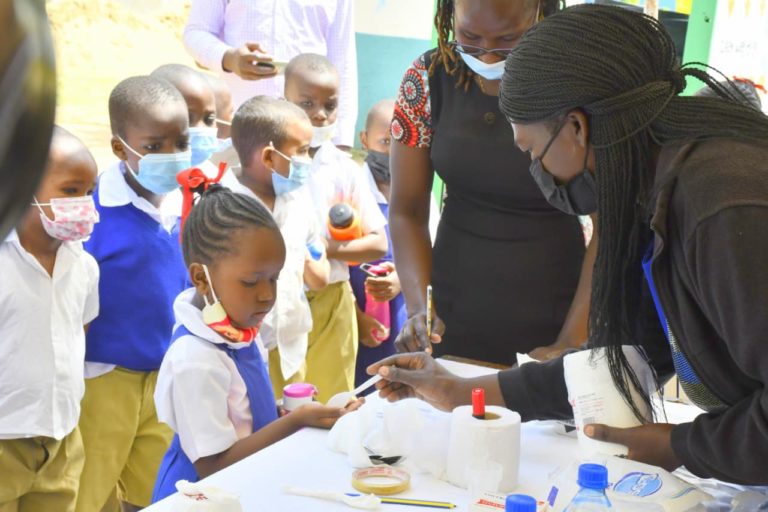
At least 4 million children across 14 counties are set to benefit from the National School-Based Deworming Program jointly implemented by the Ministry of Education and the Ministry of Health with technical assistance from Evidence Action.
This week’s exercise, that kicked off on September 14 and closes on September 16, targets children in 14 regions including Narok, Nyamira, Kisii, Migori, Busia, Siaya, Kisumu, Homa Bay, Lamu, Tana River, Kilifi, Mombasa, Kwale, and Taita Taveta Counties.
Speaking during a deworming exercise at the star of the sea primary school in Mombasa County, acting Director of Medical Services and Head Directorate of Preventive and Promotive Health at the Ministry of Health Dr. Andrew Mulwa, said deworming treatment not only improves the health and concentration in school for children but can also set them up for a brighter future.
“Rigorous research – mainly conducted in Kenya in the early 2000s – has shown that receiving deworming treatment can improve children’s school attendance, physical development, and cognition. A study showed that deworming can lead to a 25% reduction in school absenteeism” observed Dr. Mulwa.
Speaking at the same event, Director of Primary Education Nerea Olick, said intestinal worms are a major public health problem in Kenya with at least 6 million children at risk of infection across the country.
According to Dr. Bashir Isaak, Head of the department of family health at the ministry of health, if left untreated, worm infection interfere with nutrient intake, and can lead to anaemia, malnourishment, and impaired mental and physical development.
This year, the National School-Based Deworming Program, saw 2.6 million children dewormed in March 2021 across seven counties in Western Kenya.
The regions included TransZoia, Bungoma, Nandi, Kakamega, Vihiga, Bomet and Kericho Counties.
Six additional counties including Garissa, Kirinyaga, Kitui, Machakos, Makueni and Wajir are set to be targeted for schistosomiasis next year when drugs become available.
This will be in addition to Migori, Busia, Siaya, Kisumu, Homabay, Tanariver, Kilifi, Kwale and Taita Taveta Counties that will already have benefitted from the schistosomiasis deworming program.
Since its launch in 2009, the program has targeted to treat at least six million children aged 2-14 years in areas at risk of worm infection each year.
The deworming treatment is administered in over 19,000 primary schools and ECD centres by trained schoolteachers, reaching both enrolled and unenrolled children.
The program has become globally recognized, high-impact model for successful inter-ministerial partnership, and has resulted in millions of Kenyan children growing up without having experienced worm infection.
A study conducted by the Kenya Medical Research Institute (KEMRI) revealed that the program has been highly effective in reducing worm infections. According to the study, the prevalence of soil-transmitted helminths (STH) decreased by 62% amongst children sampled in the survey.
Health Cabinet Secretary Mutahi Kagwe had last month held a meeting with officials from the Kenya National Union of Teachers (KNUT). During the meeting, the CS and the KNUT representatives deliberated on a wide array of issues including school health program that integrates nutrition and hygiene as captured in the Kenya School Health Policy.

CIC Group launches Seniors Mediplan Insurance Cover

0

CIC Group has launched a medical cover dubbed Seniors Mediplan targeting senior citizens from the age of 60 years. While the joining age is capped at 80 years, the insured will remain on cover for life guaranteeing medical protection to senior citizens after retirement.

Speaking during the launch, Managing Director CIC General Insurance Mr. Fred Ruoro said, “As you age, medical care becomes more expensive. Senior citizens without a medical cover end up spending most of their hard-earned life savings to cater for medical expenses which drives people into abject poverty.”

He added, “This innovation by CIC General, a subsidiary of CIC Group, will ensure that senior citizens receive the medical attention they need and their life savings can be channelled to other income generating activities after retirement, leading them to more productive lives.”

The product will be offering in-patient, outpatient, dental, optical, and within East Africa the benefit of ambulance and air evacuation. The product will also be offering a last expense cover if the insured person passes on while the cover is in force.

Children who form part of the dependants of the insured are not be eligible and customers are urged to opt for an alternative cover provided under CIC Family Medisure. The cover also allows one legal spouse as a dependant of the principal member.

To enrol for the cover you will be required to submit medical records. Other documents required include a copy of ID/passport of the principal member and spouse and a copy of PIN certificate for the principal member.

According to National Census conducted in 2019 the number of older persons in the country had reached about 2.7 million, representing about 6% percent of the total population. This number represents a population that needs to be medically taken care off.

141,600 doses of single-shot Johnson & Johnson vaccine now in Kenya

0
Kenya on Friday received the first consignment of the Johnson & Johnson vaccine, comprising of 141,600 doses, as it ramps up the ongoing Covid-19 vaccination programme.
The Johnson & Johnson vaccine is the third vaccine in Kenya’s programme with AstraZeneca and Moderna vaccines already being administered in the country.
Speaking at the Jomo Kenyatta International Airport while receiving the consignment, Health Chief Administrative Secretary Dr. Mercy Mwangangi , who was representing Health CS Mutahi Kagwe, said the arrival of the vaccine doses will boost the ongoing vaccination drive that targets 10 million adult Kenyans by the end of the year.
“The Johnson & Johnson vaccine is easily stored between 2 and 8 degrees centigrade during administration and can also be frozen at -20 degrees to ensure there is lengthening of shelf-life. This vaccine, therefore, requires less logistics and operational cost” said Mwangangi.
The health CAS said the single-shot vaccine is expected to be of great utility particularly when reaching the primary healthcare level of the country’s health system where the uptake of the vaccine continues to be low.
“The single-dose administration will ensure that this population will be fully vaccinated quickly. The ministry of health will therefore prioritize the distribution of the Johnson and Johnson vaccine towards the primary healthcare level.” Observed Mwangangi.
She said the country will continue to carry out targeted approaches as well as employ a hybrid approach when it comes to outreach programmes as it seeks to reach as many people as possible.
The arrival of the Johnson and Johnson vaccine means that the country has now received a total of 4,211,500 Covid-19 vaccine doses.
2,809,389 vaccinations had been administered in the country by the close of the day Friday with 2,020,009 being first doses while 809,380 people had been fully vaccinated representing 2.97% of the entire adult population.

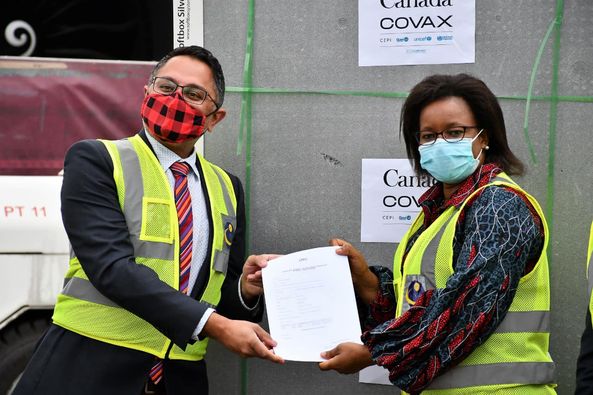
Kenya receives 358,000 Oxford-AstraZeneca vaccine doses amid Kagwe’s warnings on theft and illegal vaccinations

0

Kenya has received a total of  358,000 doses of the Oxford-AstraZeneca vaccine from Canada which is another shot in the arm needed for its vaccination efforts.

The vaccines came just a few days after receiving another 880,460 doses of Moderna COVID-19 vaccines donation from the US.

By Wednesday, Kenya had given 2,773,239 doses across the country.

While receiving the vaccines at the Jomo Kenyatta International Airport, Health Permanent Secretary Susan Mochache said that the additional vaccines will help in accelerating the campaign to fully vaccinate most of the Kenyan population.

Meanwhile, Cabinet Secretary Mutahi Kagwe issued a recent warning against theft of the vaccines that are used for illegal vaccinations between friends and relatives.

“No vaccinations should take place outside the Ministry of Health designated vaccination approved sites. These sites are available at the Ministry of Health website,” he said

“The MOH_Kenya working in collaboration with county health teams are solely responsible for the distribution of Covid-19 vaccines. This is because they have to ensure the maintenance of the cold chain system and the potency of the vaccines,” he added

Kagwe was emphatic that the administration of any vaccine should only be done by a qualified and duly registered clinician or nursing staff. These staff must also have received recent training in the administration of the vaccine.

“Any other person doing so will be in contravention of the law. Vaccinations that are not properly administered will lead to unnecessary side effects that could potentially result in deaths,’ he said

Kagwe has since directed that counties should account for all vaccines issued to them. This should be in the form of a weekly county logistics report outlining doses received, doses used, dose balances, and the number of people vaccinated.