
Sunday, December 21, 2025
Home Blog Page 33

Machakos county sets aside sh2.5 billion for water supply in 2015/16 budget

IMG_2911
Water at last. A water drilling machine in Machakos at work. The county wants to supply water to all homesteads by 2017 (Photo: Kioko).

Machakos county is set to spend sh2.5 billion in providing water to its residents in the 2015/16 fiscal year. This is part of the government’s plan of providing water to every homestead by the year 2017.

“By 2017 we want every homestead in Machakos to have water. This was part of our manifesto,”

County Executive Committee Member (CEC) Eng. Francis Maliti said over the weekend.

The county which is in a water scarce region is set to drill at least 1,000 boreholes by the target year. It also intends to construct as many dams as possible as it redoes the old ones that have been flattened by years of siltation.

“We have done 135 dams so far. For every ward we have done at least 3 dams,”

the CEC said adding that they had the machinery to do drill the boreholes and the technical know-how.

“We did a water needs assessment. We know which areas have water, the ones that don’t have and even the quality.”

He said once the water is harvested it would be distributed in schools, dispensaries, markets and dispensaries.

“It will be distributed in every direction within 3 kilometers,” he added.

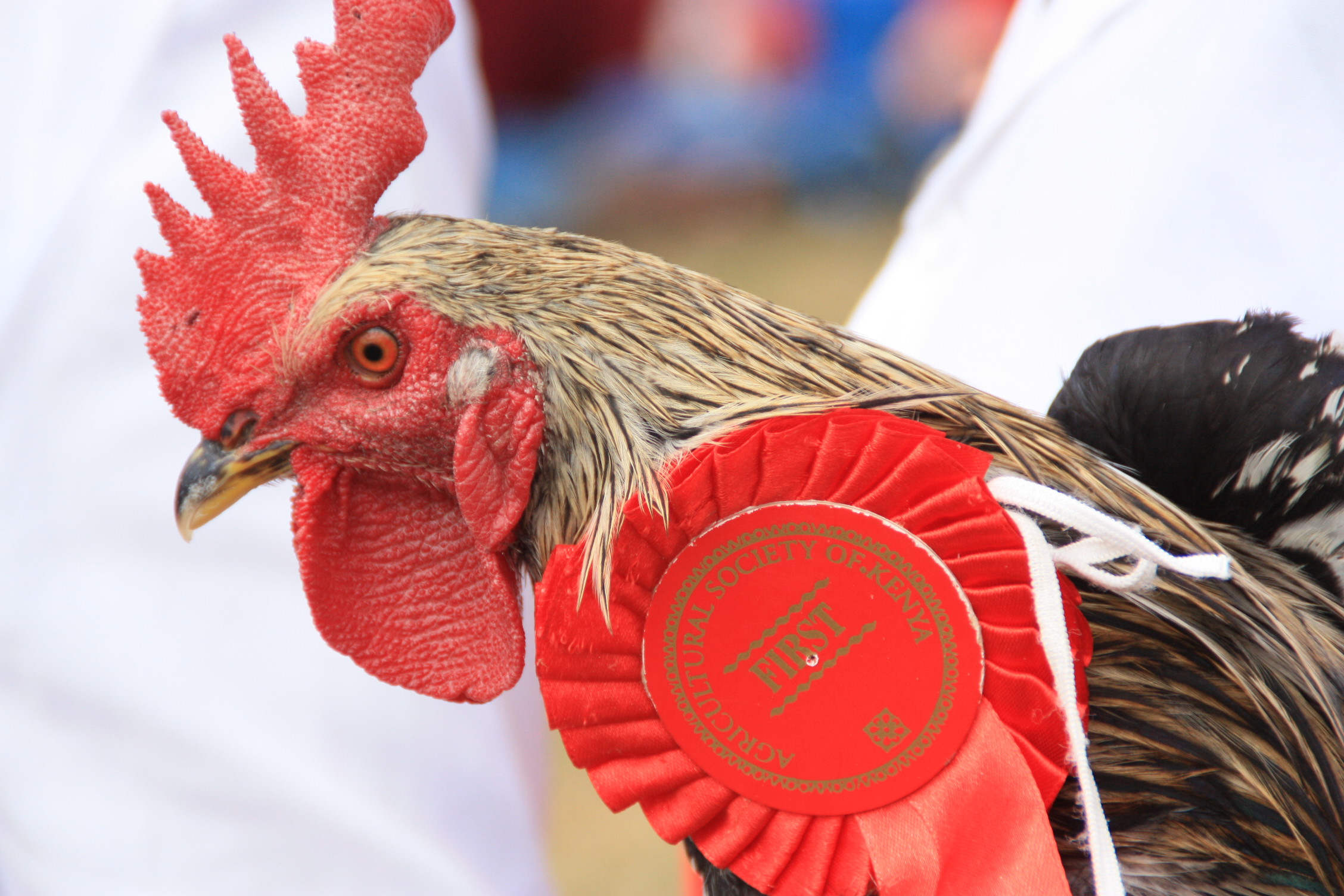
Apart from the water-for-all dream the county also intends to turn itself into a ‘chicken county’. In his speech during the Machakos agricultural exhibition, Governor Alfred Mutua urged residents to embrace poultry keeping.

“We want every homestead to keep poultry,” he said.
IMG_3090
A chicken that worn the best prize in the last ASK show in Machakos is exhibited before the Governor. Dr. Mutua wants residents to keep poultry (Photo: Kioko).

He made the crowd burst into laughter when he sensationally reported that he even knew the number of chicken in the county.

“We have done a chicken census in the county and we will be announcing soon how many chickens we have,”

he added before urging the residents to also diversify into farming of green grams.

“We have identified a market for green grams in India. We will bring you seeds and once you harvest the county government will come and buy.”

Looking at what the Machakos county government has done so far in setting up development projects that directly touch on the welfare of its residents, one feels that anything they set on to will succeed. One can only wait to see the region which is among those that have initially been hit by drought transformed into a dream county.
Machakos development record is not magic says Governor Mutua

IMG_3220
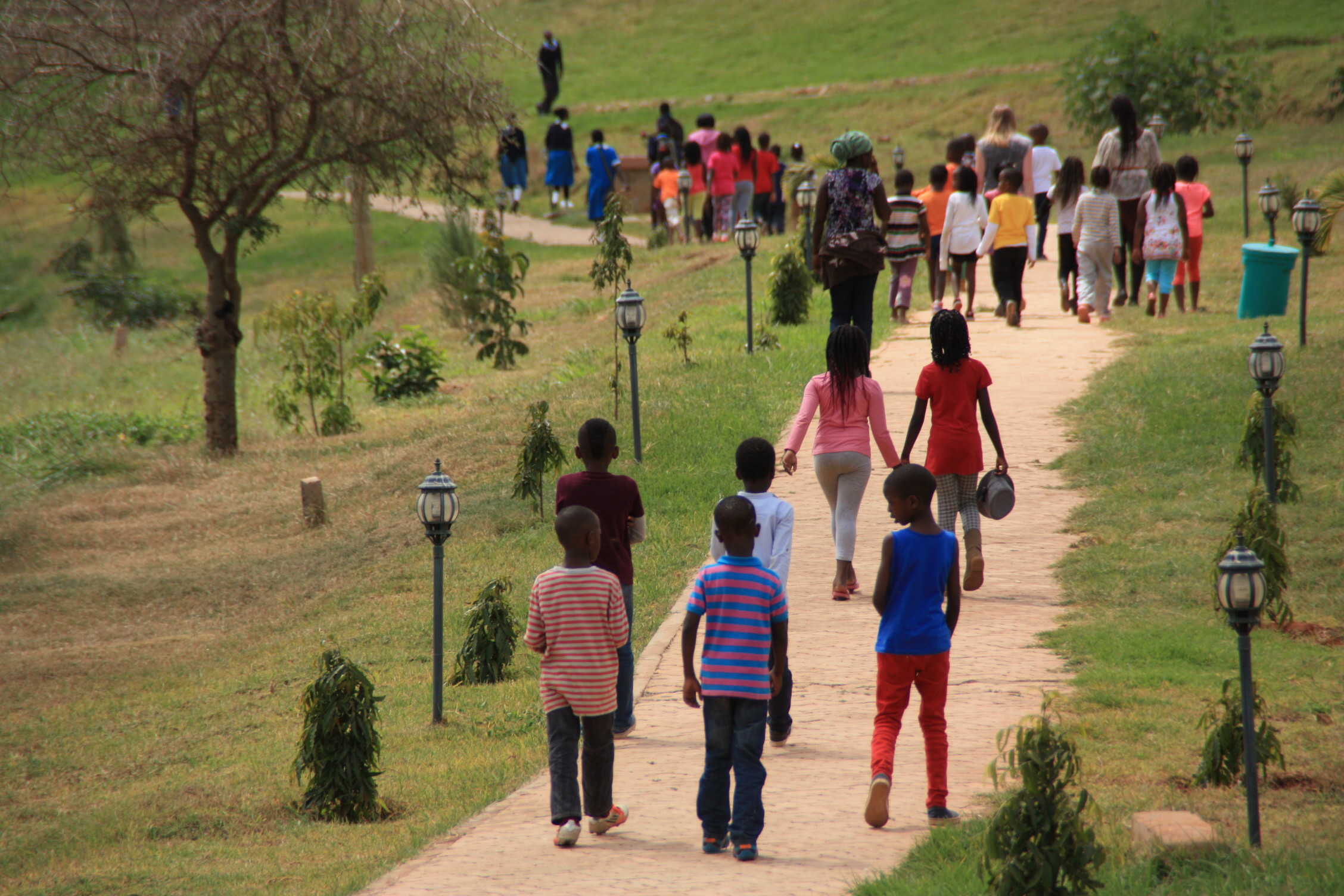
The Machakos people’s park is one of the tourist attraction sites to visit in Machakos County (Photo: Kioko).

After being rated as the best Governor in Kenya, Machakos Governor Dr. Alfred Mutua is now encouraging other governors to work hard, if not follow his footsteps, to spur development in their respective counties.

Mutua, a professional journalist who worked as a government spokesperson in the previous government believes with dedication and change of political ideology Kenya can transform into a first class economy.

“If we pull together as a country, we can become the first world country we want to be,”

Mutua told a battery of journalists from several media houses across the country who had visited him last weekend to assess the state of devolution in his county.

Mutua is best known for initiating several development projects in his county within the shortest time. To start with he was the first Governor in the country to constitute his cabinet after Governors were sworn into office in April 2013. A few months ago he made history for constructing a 33 kilometer road in 3 months. He is also known for being a pace setter in several other projects including the upgrading of medical services since the county governments took over the running of the sector from the national government.

IMG_3262
Visitors at the Machakos people’s park (Photo: Kioko).

“We want to show the world that what we have done is not magic and that it can happen anywhere in Kenya,” he added.

While comparing Kenya to Singapore, Thailand and Malaysia, Mutua said though Kenya was at the same development status with these countries at the crack of independence these countries, it has lagged behind out of what he sees as destructive politics.

“We need to ask ourselves where we want to go. There is no reason why we should be poor. I am convinced that with the resources we have in this country, we can transform it to be the best.”

To get to where we want to he said we have to change our attitude and political ideology giving example of his ‘maendeleo chap chap’ slogan.

“Maendeleo cahap chap is an ideology for politics of development,” he said.

Mutua believes there is also need to act fast on delivering the election pledges that politicians make during campaigns.

“Speed is not inimical to efficiency. It is in contradiction to efficiency. Saying that by doing things slowly you do them better is a bad mentality. Here (Machakos) we say do things fast.”

In saying so Mutua was referring to the 33 kilometer which he managed to construct in 3 months after giving the contract to 11 contractors all of whom worked on 3 kilometers. He is also said to have renovated the Machakos level 5 hospital using the same philosophy of getting as many contractors as possible who in this case worked day and night.

Overall he feels there is need to counter what he sees as a practice among Kenyans of being content with average performance.

“We need to deal with the minimalistic mentality,” he said.

Refund our NHIF money before negotiations, Egerton staff tell government

NHIF snip
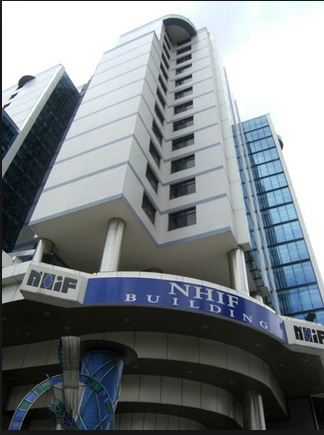
A photo of the NHIF building in Nairobi. Most workers are opposing new NHIF rates that were announced in April this year (Photo: diasporadical/Google).

Egerton University staff want the government to refund all the money that was deducted from their salaries since April this year and directed to the National Hospital Insurance Fund (NHIF).

Through their Kenya University Staff Union (KUSU) leaders the staff said unless that condition is met then they will not have any negotiations with the government on the implementation of the new NHIF deductions.

The staff said this on Friday as they officially launched a strike meant to push the government to have a second thought on the issue.

“We feel this is corruption. What have they done with the money they deducted from April,”

said Wayaya Ombunya the branch secretary at the Njoro based university.

“Nobody asked us how the money will be sent,”

added Ombunya who is also the National Organizing Secretary of the of the staff at the national level.

On Wednesday a number of workers unions under the umbrella of the Trade Unions Consortium of Kenya (TUC-Ke) announced the strike after talks involving government and the workers’ representatives failed to avert the strike.

According to the April directive workers are to pay rates ranging from sh150 to sh1,700 from a flat rate of sh320, which they actually want the government to revert to before negotiations can start. Specifically though workers are unhappy with the directive by the government to charge the rates depending on one’s gross salary, a move they say is against the principles of equity.

“We are asking them to deduct on a percentage based on the basic salary,”

said Kennedy Mangale who is the KUSU Egerton branch secretary.

The workers also want the government to contribute towards the fund as well as have those with superior health insurance schemes exempted from NHIF.

“If this is a digital government then we want them to act,”

said the branch Chairman Frederick Isaboke who asked for full participation on the final decision.

“The constitution says that citizens need to be fully involved in any decision that affects their welfare.”

Isaboke also urged for the reinstatement of Labor Cabinet Secretary Kazungu Kambi saying he is more accommodating during negotiations. Kambi has not been in office since March 29 this year after he stepped aside to pave way for investigations on allegations of being involved in corruption.

“We want Kazungu Kambi back,” Isaboke said.

Since the government increased the rates there have been questions on its ability to manage the kitty and whether citizens will get value for its money by having quality health services in hospitals.

It will be noted that access to quality universal health services was one of the election pledges of President Uhuru Kenyatta and his Deputy William Ruto. Workers are partly asking whether the increase in the NHIF rates is an indirect plan by the Jubilee administration to fund this vision.

Makueni County to spend Sh12M on community health care


community Health Worker in Kivaa Machakos County.Makueni county plans to spend Sh12M on community health care
Community Health Volunteers in Kivaa Machakos County.Makueni County plans to spend Sh12M on community health care system

The County Government of Makueni has set aside Sh12M for the Community Health Care Support Program.

Executive Committee Member (ECM) for Health Dr. Andrew Mulwa said the money will be used to remunerate the community health workers and procure necessary equipment to help improve access to health care especially in far-flung areas.

Speaking on Thursday during the launch of 12 motorcycles donated to the program by Christian Aid, a non-governmental organization Dr. Mulwa said most of the health workers were working on a volunteer basis and the stipend would make the community health care units sustainable.

Dr. Mulwa also added that the Department of Health besides giving the stipend will also initiate income-generating activities for the community health units to supplement their income.

He underscored the role that the program has played in improving health care in the county for the last two years particularly maternal services and intimated that the county government was willing to commit reasonable resources to the community health units to achieve quality health care.

“The concept of community health strategy is very effective if well utilized. We shall procure 20 more motorcycles for the program and am sure Makueni County will lead the country in the adoption of community health care system,” said the ECM.

Dr. Mulwa noted that the program had worked effectively in countries like Ethiopia and said the department plans to replicate the Ethiopian model and connect each family with a community health unit.

“Ethiopia through the community health units has been able to achieve 100 percent skilled birth and child immunization and the fact the program has succeeded is an indication that it can work elsewhere,” he said.

He noted that Makueni had not achieved the desired skilled birth rate and immunization but exuded confidence that the program will help champion for improved maternal health care and family planning.

“93 percent of children in Makueni are taken for immunization but the rates keep fluctuating to as low as 75 percent and we hope that the community health units will avert the trend,” said Dr. Mulwa.

Christian Aid Health and Governance Officer Christopher Waithanji lauded the efforts that the county government has made in integrating community health units but noted that more needs to be done to achieve the desired results.

“My appeal to the county government is to full support the program and provide more motorcycles to help residents access health care,” said Waithanji.

Makueni County currently has 109 community health units and according to Dr. Mulwa, the program has significantly improved access to maternal health service.

Empower men in Nyeri and central Kenya to be responsible

also_a_crime1-300x151

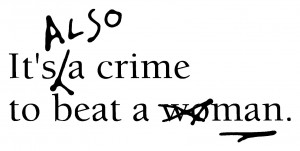
Around the world, Gender-Based Violence (GBV) impacts the lives of thousands of families; the main focus of this resource package is on violence against women and girls. This is not to say that gender-based violence against men does not exist. For instance, men can become targets of physical or verbal attacks like we have witnessed too often in Central Kenya. Everyone has the human right to live free from violence. Gender Based Violence is one of the world’s most pervasive human rights violations.

What makes battering of men so prevalent in Nyeri County? How do we solve this unusual phenomenon? Throughout the years we have applied various methods to help minimize if not eliminate the acts of GVB, how then did the tables turn. Have we been doing zero work? Some may argue that so much effort has been put towards female empowerment thereby neglecting the male species. Others may claim that female empowerment has degenerated into feminism such that women no longer complement men but instead compete with them on an equal level. This may be a positive gain in the work context but a family structure is different. GBV is especially prevalent to cases of poverty. In these settings, family, community protection and support systems have broken down, and abuse of power occurs frequently.

In my opinion this is a unique problem that boils down to very many factors. My mother told me that for a woman to go to the lengths of assaulting a man she has already reached her breaking point. Taking all previous cases of husband battery, you will notice a common denominator. Most of the male victims of GBV reported have been alcoholics. I don’t understand how any sober man would stand to be assaulted to the degree of injuries that we’ve witnessed. If a woman came up to attack me, sure she would maybe manage a slap or two before I got her under control but she certainly wouldn’t have enough time/strength to ‘uninstall’ a transformer.

I’m not going to let a few deadbeats to ruin both the reputation of the men and women in Nyeri County. A lot of these men in the village live a life of drinking, and contributing nothing or very little to the family. Such a man will go home every day and expect food on the table and make a noise and sometimes become violent if he finds none. Alcohol is funny, why would someone think they can fight when they are most unstable? For a woman to raise a hand to a man, she must have been completely fed up. We heard of a man who was beaten because of selling their home radio to buy alcohol. Not even a loaf of bread or something that would benefit the whole family.

In my neighborhood there is a den that trades alcohol in that you place an item on the table and you’re served as much illicit alcohol as that item is worth. Probably that’s where the president and his team should raid first. So, is it okay to beat up deadbeat husbands? NO. It is said that good people solve problems but smart people eliminate them.

We should come up with simple solutions to this issue as compared to simplistic ones where we usually condemn the acts and initiate court proceedings and a week later nobody talks about it, just waiting till the next attack. I applaud the Presidents move to urge Central Kenya MPs to spearhead the war against alcoholism in the region; however there’s still a lot to be done.

Is alcohol a bad thing? I judge not because there are people who consume it and still manage their lives well. What we need to do after eliminating some of these illicit brews is find a way to empower these men and youth in Nyeri to engage in income generating activities to be able to take care of their families. The women have been ‘forcefully’ empowered by the current situations. Forcefully, because these women have had to take up the roles of being family providers in the absence of the men. This has led to a crumbling patriarchal social fabric and men feeling inferior. If not that, we can economically empower them to be able to afford some decent alcohol. I kid. By empowering them we will have killed a whole aviary with one stone.


Egerton’s engineering student designs farming robot


Robot Snip
The Egerton Engineering finalist has come up with a robot (not in the picture) that can sort out products based on their color and size (Photo: Google).

By Lorna Abuga

An engineering finalist at Egerton University has designed a farming robot which helps farmers in sorting their produce based on weight, color and size.

Anthony Maina who cleared his five year studies at the Njoro based institution in May this year is now advocating for the use of machine such as robots in farms saying they improve on efficiency by reducing on the cost of labor.

The robot that Maina has developed is fitted with a camera that is able to sense the colour of a product and place it in the right space. Through computer programmes the robot is also able to detect the weight of the same products and sort them.

Maina says he was inspired to develop the robot after he saw the struggle that workers at a firm he was attached in were going through.

“The workers were required to sort out chicken based on weight. After working for a few hours, most of them would get tired,”

he says of the workers at the firm based in Nyeri.

This scenario he feels reduced their efficiency and consequently led to losses at the firm.

“This is what motivated me, as I wanted a machine that would increase on productivity of the firm.”

“I began conducting a lot of research because I had realized there was need for a ‘farm produce sorting robot to ease farm work which in most cases is tedious,” he adds.

It took him 17 weeks to assemble the materials needed to come up with the model according to the design. He is currently in search for funds for his project so as to improve on his innovation.

“Robots are vital in ensuring increase of productivity and they also assist in the attainment of national and international visions including Kenya Vision 2030,” says Maina.

The theme for the agricultural show this year is ‘Enhancing Technology in Agriculture and Industry for Food Security and National Growth’ and Maina’s innovation was among the products that were showcased by the university at the show winning it at least 8 awards.

The awards are Best Public University stand, Best Engineering Based Institution of Higher Learning, and Best Agro-Processing stand. Others included the Best Institution of Higher Learning in Developing and Advancing Technology and Development Research Institute.

In the resent past youth in Kenya have been coming with very creative innovations. Elijah Kupata a former student of Mount Kenya University in Thika designed a security gadget while Evans Wadongo designed a portable solar lamp while studying Engineering at the Jomo Kenyatta University of Agriculture and Technology in Juja.

Safaricom’s money transfer service, MPesa was also invented by a Kenyan youth who was then a student at the University of Nairobi.

At the international level, innovations that have been developed by youth within university corridors include Facebook that was developed by Mark Zuckerberg.

And recently three teens in the United Kingdom invented a condom that can detect sexually transmitted diseases.

Dr. Alfred Mutua’s ministers have flags

IMG_2887
A flag on an official car used by a CEC in Machakos county. The flags bear the message “one finger cannot kill a lice” (Photo/Kioko).

All County Executive Committee (CEC) members in Machakos county (the equivalent of Cabinet Secretaries in the national government) fly flags on their official cars. The flags which bear their county’s logo have a harambee message on them that says one finger cannot kill a lice. The message is written in kikamba perhaps to reach the residents directly. So it reads

“kyaa kimwe kiyuwaa ndaa.”

Besides this, none of the CEC’s offices are housed under the same roof with Dr. Mutua. Each of them has offices where they are needed most. For instance the CEC in charge of Health is housed at the Machakos Level Five hospital. In fact even the Deputy Governor Bernard Kiala does not have an office space at Dr. Mutua’s office which is situated in the outskirts of the town on Kitui-Machakos road.

A senior officer at the Governor’s office was overheard by this writer while on tour to assess devolution at the county last weekend that none of CEC’s comes to the Governor’s office without appointment.

“This is our State House,”

the officer said adding that instead of coming to ‘idle’ at the Governor’s office they have found it wise to concentrate on their mandates. This as it is, is the Machakos way of ensuring efficiency and service delivery to the residents.

At the Governor’s office there a stark reminder of what the county dreams of; presented in a plan of a modern city whose construction the Governor will start soon. Again most of the people who work at the office are young, good looking, and they waste no time with that which does not concern them. Looking at them while on duty one notices they have been trained on delivering on that brand called “The Machakos County.”

IMG_2513
Machakos Governor, Dr. Alfred Mutua. He is working towards changing the image of his county (Photo/Kioko).

But that’s not all. It takes long for residents to give you a ‘negative’ comment about the Governor. Once you introduce yourself as a visitor and ask residents to comment on the state of development at the county they quickly rebound it to you and say,

“si wewe mwenyewe unajionea” (can’t you see for yourself).

I tried this with two different bodaboda riders who took me to and fro the now famous Machakos People Park, and when I got the same response, I gave up. This was after an attempt to get another side of the story of the, again, famous Kithimani-Makutano road failed. Residents I spoke to were all praise about the 33 kilometer road that was constructed in a record 3 months. They said they don’t care much about what their Governor’s “detractors” might say. What they care much is that something was done to ease transport in their region.

Well, these are some of the many outstanding features of Machakos that you get to notice when you visit the county. You get this feeling of team work between the Governor and his people. You feel like there is a common dream and a commitment to fulfill it. And this I think, is what Kenyans were yearning for when they voted for the devolved system – a share in the common dream.

Time will tell whether Dr. Mutua will finally deliver his ambitious plan for his people. But the same time will also tell some day to come, that it costs nothing to dream. Like Eleanor Roosevelt said

“the future belongs to those who believe in the beauty of their dreams.”

Student Allan Wadi freed from a 2 year jail term after successful appeal

Allan Wadi at the Athi River G.K Prison where he served 6 months of his 2 year Jail sentence
Allan Wadi at the Athi River G.K Prison where he served 6 months of his 2 year Jail sentence (image courtesy trendingnewskenya.com)

University student Allan Wadi Okengo who was sentenced to jail in January this year to serve a 2 year jail sentence for hate speech remarks on his Facebook page and undermining the authority of a public officer has been freed. Wadi’s appeal case was heard yesterday 2nd July 2015 with the  appeal presented by his lawyer Edward Oonge. Wadi has been  at the Athi River G.K prison in Kitengela for the last 6 months serving his 2 year jail term.

News of his release were made known on Twitter through his friends with many celebrating the news as others cautioned him to ensure that he focuses on his studies.

Wadi’s release was not a bail pending a new hearing but a plea that was lodged by his lawyer who successfully argued that the Magistrate who presided over his case made fundamental errors. It also emerged that Wadi’s sentence was  NOT an unequivocal plea of guilt as he was led to believe that if he plead guilty, he would be charged on a lighter sentence.

Although he is not not yet out of Jail, Allan Wadi is a free man and should be out of prison once the court’s administration matters are finalized.

Allan Wadi was a fourth year student at the Moi University when he posted the face book updates that got him arrested, charged without legal representation and sentenced to a two year jail term. He was convicted on two counts of hate speech, after saying members of the president’s Kikuyu ethnic group should be confined to certain parts of the country and the charge of undermining the authority of a public officer when he also posted in Facebook that the President should be killed.

Wanjeri Nderu assaulted for tweeting on corruption

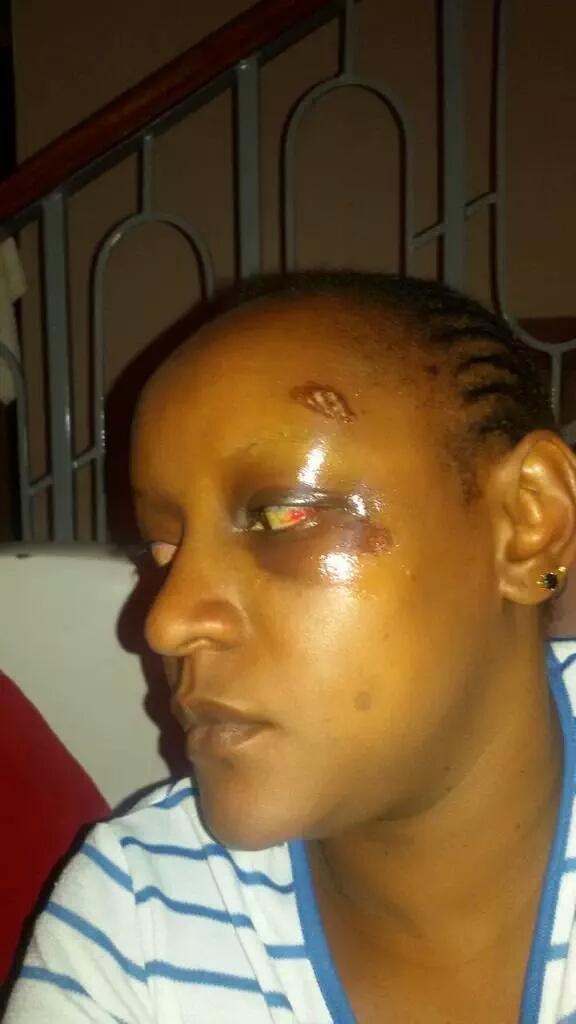
Wanjeri Nderu, a  Social justice crusader and mother of 3 was attacked for her tweets speaking out on corruption
Wanjeri Nderu, a Social justice crusader and mother of 3 was attacked for her tweets speaking out on corruption

Wanjeri Nderu, a social justice crusader, was attacked by a stranger for talking about corruption at Langata mall on Monday, 29th June 2015. Wanjeri uses her online presence to talk about various injustices in Kenya including corruption. On her timeline, she largely talk about insecurity and corruption.


Wanjeri says she took up the role of talking about these issues because she feels she has a duty not to let injustices continue yet she can speak. She is not affiliated with any individual or organization. She recounts

“I had just entered my car then rolled down the window. That was at Langata mall, outside a supermarket called Cleanshelf at 8pm. Some well built, tall and dark man just approached me. I had seen him standing near my car but he was not a suspicious person. He then mumbled something like Wacha kelele, ama tutakumaliza (stop making noise otherwise we will kill you). He hit me on my left eye and walked away. He was not in a hurry to run or hide.”

At the time of the attack, there were people in the area but none either saw or was concerned as is usual people going in with their business. He did not take anything away from her. In fact, she had her phone in her hand but the man was not concerned about it. Terrified on what had happened to her, she drove home. On reaching her house, she was unable to move. Her house help came to assist her walk to the house and also carry the things she had bought. Blood was oozing from her face and her entire side she was hit swollen.

Wanjeri who is a mother of three was unable to move much from her bed for the next two days. Her husband works outside Nairobi hence she lives alone with the children. In those two days her head was heavy and she was also traumatized by the assault. She therefore found it difficult to move out of the house to go to the hospital and also report to the police station.

“I was trying to make sense at what had happened. I couldn’t make head or tail on what could have caused the attack. I was also still panicking.”

She was only able to do this on Thursday, 2nd July. She went for a check up at Nairobi hospital on the same day when some checks were done. Luckily, she was okay as nothing had broken. She was then given some drugs and left for the police station in Lang’ata to report the incidence.

When I got to the station, the police could not make much progress. They said since I could not identify the person by name and where he can be reached, they cannot record the statement. They only promised to go scan the area.

Unfortunately, Wanjeri says the man was well dressed “like he was just from an office and had a good cologne, common among men.” Tracing him at that spot will be difficult. However she says if she sees the person, she can ably identify him.

Kenyans took to social media to show support for her and call to account for the person behind the attack.    

Wanjeri is however not cowed by the incident.  


Over the past two weeks, Wanjeri has been tweeting about the Parliamentary report on Mumias Sugar Company which was investigating the circumstances leading to the current financial woos in the company. The report had relied o the KPMG report which had undertaken a forensic audit and unearthed the extent of the financial improprieties and individuals responsible. She adds

Because I talk about these issues often, people just send me documents and information to highlight them online as I do. Moreover, I cannot know exactly who was responsible for my attack. It could be anyone.


Some of the tweets are below


Incidences of attacks on social media users and bloggers may not end soon as more Kenyans talk about vices in the country. Perhaps part of the security should be to avail these documents to many Kenyans so that those accused or suspected of doing wrong find it difficult to attack one person. This is especially critical as 2017 approaches when the country is expected to hold the next General Elections.

I use road lights to light my home, says Machakos resident

IMG_2704
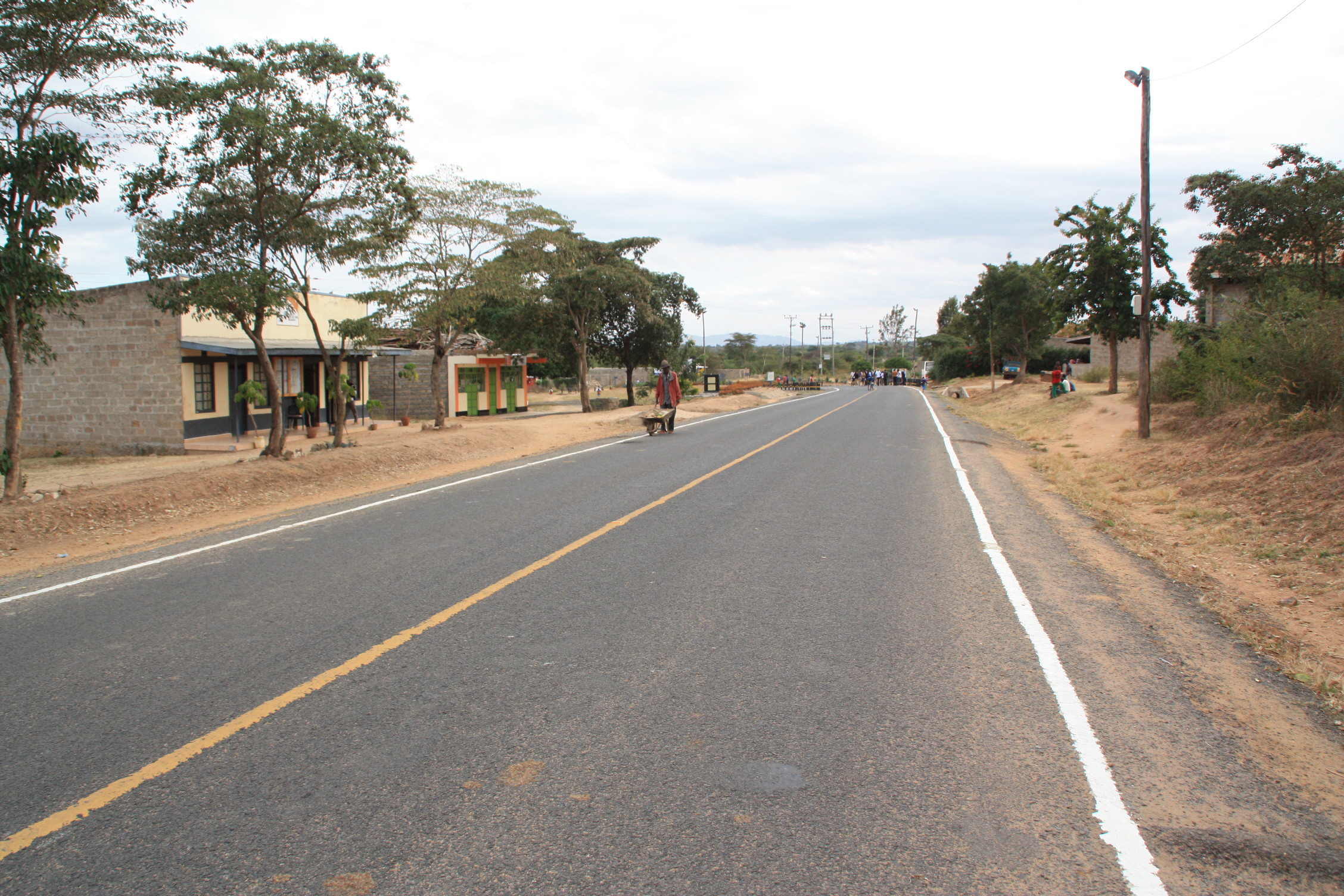
The Makutano-Kithimani road in Machakos County that was constructed in 3 months. A resident said he uses the light mounted along the road to light his home (Photo/Kioko).

Most residents of Machakos County who ply the Makutano-Kithimani road are happy with the County Government of Machakos for the renovation of the road.

Although there has been talk in the country that the 33 kilometer road that was constructed in a record 3 months may be substandard, the residents are happy that the road is at least tarmacked. This they say is a promise they had heard for long from previous regimes without having it fulfilled.

Among those who are grateful for the construction of the road is a 26 year man who works as a tout along the road. While Abdala Riziki Munyao appreciates that the new and ‘modern’ road has made transportation easy he says that it has added modernity in his life.

“I stay close to the road and I usually use the road’s lights at my home,”

says the father of two who spoke to Kenya Monitor several meters from the Makutano junction.

“I don’t even buy paraffin sometimes,”

said the young man who resides at Kilaani.

Besides Munyao who finds use in the road’s light at his home free of charge, other residents said since the renovation of the road early this year, transports costs have gone down.

“Initially we would spend at least sh50 to transport goods from Kithimani, now we use sh20,”

said Lazarus Njagi a business man at the Makutano junction business center.

IMG_2720
A section of Makutano-Kithimani road. Residents say since it was constructed transport has been efficient (Photo/Kioko).

The residents also say the time they spend less time to travel on the road.

“These days we use 20 minutes instead of 40 to 60 minutes as it was before,”

said Abednego Mwanzia a bodaboda operator along the road.

“My bodaboda does not also break all the time as before. Its more secure to ride with customers.”

Residents also say due to the renovation, matatu operators have found it has introduced new vehicles along the road. It is partly because of this they will hear nothing about the talk of the road being substandard.

“Those are fake propaganda. People have been in government and did nothing,”

said David Njatha a business man who feels the road is good enough.

“Better is the one who gives you githeri than the one who promises you ugali that is nowhere to be seen,” he added.

In addition to the road construction project, the county government of Machakos under the leadership of Dr. Alfred Mutua has launched several impressive and notable projects that have been well received by residents. Among these is the establishment of the Machakos People Park which is a one stop recreational facility.

The residents want the county government to do even more.

“We want the Governor to build more roads,”

said Lazarus Njagi while Fr. Peter Wambua, a Catholic Priest at Thatha parish wants the government to tighten security by increasing the number of police cars doing surveillance in the county.

Makueni health docket receives lion’s share in the 2015/2016 budget estimates


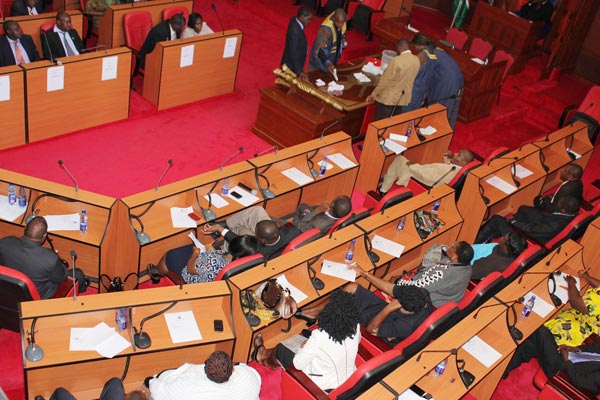
Makueni County Assembly.The assembly passed the 2015/2016 budget. Photo:Communication Unit
Makueni County Assembly.The assembly passed the 2015/2016 budget.
Photo:Communication Unit

The Department of Health Services in Makueni County received the biggest allocation in the 2015/2016 budget passed by the County Assembly yesterday.

The department received a whooping Sh1.92B of the total budgetary allocation of sh6.4B. Out of the total department allocation sh1.6B that accounts for 83 percent will cater for recurrent expenditure while the remaining Sh321M will go to development including construction and upgrading of health facilities.

The allocation is a 2.7 percent increase from last financial year allocation of sh1.8B. Despite the increase the department is yet to meet the recommended development threshold of 30 percent of the total allocation.

The Department of Water received the second largest allocation of sh791M. The budgetary allocation is a 15 percent increment from last year’s sh685M. The county experiences perennial droughts occasioned by erratic and unpredictable weather patterns hence making water a key priority area. Sh630M will go development expenditure while sh161M was allocated for recurrent expenditure.

To cushion residents against water scarcity the county government will embark on a 18-month program focusing on water harvesting in the whole county, hence the allocation. The program is expected to expand agriculture output leading to creation of employment through agricultural based enterprises and overall economic transformation.

The department will further develop an integrated water harvesting system, which will entail afforestation, smart agriculture and construction of mega dams and water pans as well as rehabilitation of existing water sources.

The department plans to construct a minimum of 3000 water pans of 5000 cubic meters to store water for multipurpose consumption.

The County Assembly was also one of the biggest winners in the budget with an allocation of sh664M. The allocation entails a recurrent expenditure ceiling of sh523M as proposed by the Commission of Revenue Allocation and an additional sh71M approved by the Senate for the county assembly to cater for a deficit incurred in last year’s unpaid bills.

Transport and Infrastructure received an total allocation of sh531M up from last year’s sh327. Out of the total allocation sh377 will be used for development while the remaining sh121M will cater for recurrent expenditure.

The money is expected to be used in improving parking space, tarmacking and installation of cabros in major towns in the county. The allocation is also expected to fund road maintenance, construction of drifts, bridges and street lighting.

Other lion shareholders in the budget include Department of Education and ICT with an allocation of sh435M. The money is expected to fund a development budget of sh175M and sh259M for recurrent, out of which sh150M will go to bursaries.

Youth, Gender, Sports and Social Services recorded budgetary increment of 14 percent from last year sh188M to sh215M. Out of the total sh143M will go to development while sh72M will cater for recurrent budget.

Some of the losers in the budget include Lands and Urban planning whose allocation decreased by 21 percent to sh105 down from sh134M. The expenditure decreased because most of the infrastructural structures were transferred to the department of roads, transport and infrastructure.

Agriculture despite being a backbone of the economy in the county received sh425M with a meager increase of sh18M. This was a result of low fund absorption rates by the department whose balances from the last year stand at sh34M. Out of the total allocation sh205M is earmarked for development while the remaining 220 will go to recurrent budget.

The budget will be funded through revenues projected at sh400M and the National Government equitable share of sh5.8B and conditional grants totaling to sh168M.

Nakuru journalist interrogated for social media post

Elijah Kinyanjui
Elijah Kinyanjui a Nakuru journalist who was quizzed by detectives last week for allegedly posting a defamatory post on social media (Photo/Kinyanjui, facebook).

By Lorna Abuga.

A Nakuru journalist has been interrogated by detectives following a post he published on social media challenging land grabbing in the country.

Elijah Kinyanjui a veteran journalist who has worked with almost all leading newspapers in the country was quizzed on Tuesday last week for an ‘open letter’ he wrote to President Uhuru Kenyatta and which he published on a Whatsup group page he runs dubbed ‘Nakuru Analysts’.

In the letter dated June 2 Kinyanjui lamented that

“Nakuru had been fraudulently taken over by strangers”.

He went to complain that there was a rising trend on the takeover of public land by people who we have come to refer as ‘private developers’.

Kinyanjui was responding to an incident in which land said to be belonging to a public school in Naka area was allegedly grabbed by unknown persons.

Together with other members of the Whatsapp group Kinyanjui had visited the school where they met the head teacher. No sooner had they visited than pupils of the school brought down a wall that had been erected around a piece of land whose ownership is believed to be in dispute. But even so, the private developer went ahead and started building the wall afresh.

“We don’t have a problem with developers investing in the county however they should not take advantage of unused public land by bribing government officials in order to obtain title deeds,”

Kinyanjui told Kenya Monitor after his day with detectives.

He said that he had been told some of the issues he highlighted in the open letter to President Kenyatta were defamatory.

“The CID officers told me that some of the statements in the letter were out to defame former Nakuru Mayor (Mohammed Suraw),” he said.

“They forced me to make a confession that I was the one who posted the story on social media after they failed to retrieve the message from my phone,”

he said adding that the police had taken away his phone for “forensic investigation”.

He however refused to record a statement on the same.

“My human rights were violated owing to the fact that the officers in charge had already came up with a charge sheet before interrogating me and thereby they had already predetermined that I was guilty,” he said.

Kinyanjui is not new to controversy and court cases. A while back the Nakuru Assembly Speaker Susan Kihika and Clerk Joseph Malinda took him to court claiming he had defamed them on social media.

Apart from the Whatsapp group, Kinyanjui runs a Facebook page on which he publishes updates on topical issues in the county. It is on this page that he is said to have published the statements that got him in bad books with Speaker Kihika and Clerk Malinda.

Through the Nakuru Analysts Whatsapp page he has managed to lobby other residents to push for public participation in the county aimed at keeping devolution on track. The group even visited Machakos County a while back to bench mark.

“Some counties like Machakos have benefited from devolution because the projects meant to benefit the common mwananchi are evident and that is why as a lobby group we are saddened by the fact that few individuals are out to make wealth from public land which was set aside for schools, bus terminals and hospitals.”

“There is need for the common mwananchi to be sensitized on their watchdog role so as make the leaders accountable when handling public property because of the rise of land grabbing cases country wide,” he added.

See also Safaricom sues blogger Cyprian Nyakundi for for defamation.

Egerton University student shortlisted for DW heroes awards

Masongo snip
Jonathan Masongo, a fourth year Media and Communication student who has been shortlisted for the heroes awards by DW (Photo: Masongo/Facebook).

By Lorna Abuga.

Egerton University’s Jonathan Masongo is among three journalists who have been shortlisted in the video category of the local heroes’ Journalism Competition awards organized by German broadcaster Deutsche Welle.

The competition that attracted journalists from various parts of the country required participants to come up with a three minutes video project of a local unsung hero whose efforts or activities have had a positive impact on the society.

Masongo chose James Wakibia, a Nakuru based freelance photo journalist and blogger as his local hero. Wakibia, an Egerton Media and Communication graduate has had a notable online presence for he uses the online platform to awareness campaigns including human right and environmental conservation campaigns.

On this particular entry, Masonga says that he was motivated to pick Wakibia following his efforts to rescue Baby Jeremy Osidiana who rocked news headlines early this year after he was detained for four months at the War Memorial Hospital in Nakuru after his mother was unable to clear his medical bill. The baby had been delivered through Caesarian Section at the hospital, but the newborn developed complications, which required medical attention before discharge.

“Wakibia is my colleague and he has always been passionate in advocating for the rights of the poor and the vulnerable thereby I thought it was prudent to recognize him as my unsung hero,” Masongo says.

Wakibia’s posts about the agony of the baby on twitter prompted Nakuru County government led by County Secretary Joseph Motari and County Assembly Speaker Susan Kihika to clear baby Jeremy’s bill, who had been detained at the facility since December last year.

Following this video that highlighted the efforts of Wakibia, Masongo will now battle out with the other two finalists, Mungai Kinyanjui and Kennedy Munene for the top prize in his category which includes traveling to the DW journalism academy for a two weeks mentorship.

Apart from the video category finalists there are six other finalists in two other categories, namely, audio and photography. The winner will be the one who gets the highest votes in each category.

To vote for Masongo one needs to visit the website, watch the video, and vote online or send a text ‘Video 3’ to the number 22847.

“I am passionate about media and am very happy about this nomination,” says the media and communication finalist.

“Coming up with the three minute documentary was very technical as we had to tell a complete story about the hero within that duration.”

Besides being a student Masongo is a radio show host at Egerton Radio, a students’ training radio at the university, he is also striving to do production which he says provides room for exploiting creativity. In mid February this year he was among students who presented impressive radio programmes at a convention to mark World Radio Day organised by the United Nations in Gigiri, Nairobi. The radio programme which he did with one of his classmates focused on the hidden fears of youth in same sex relationships.

The official awards ceremony will take place on July 14th at the Hotel Villa Rosa Kempinski in Nairobi.

Machakos County to hire 283 medical staff in coming months

IMG_2548
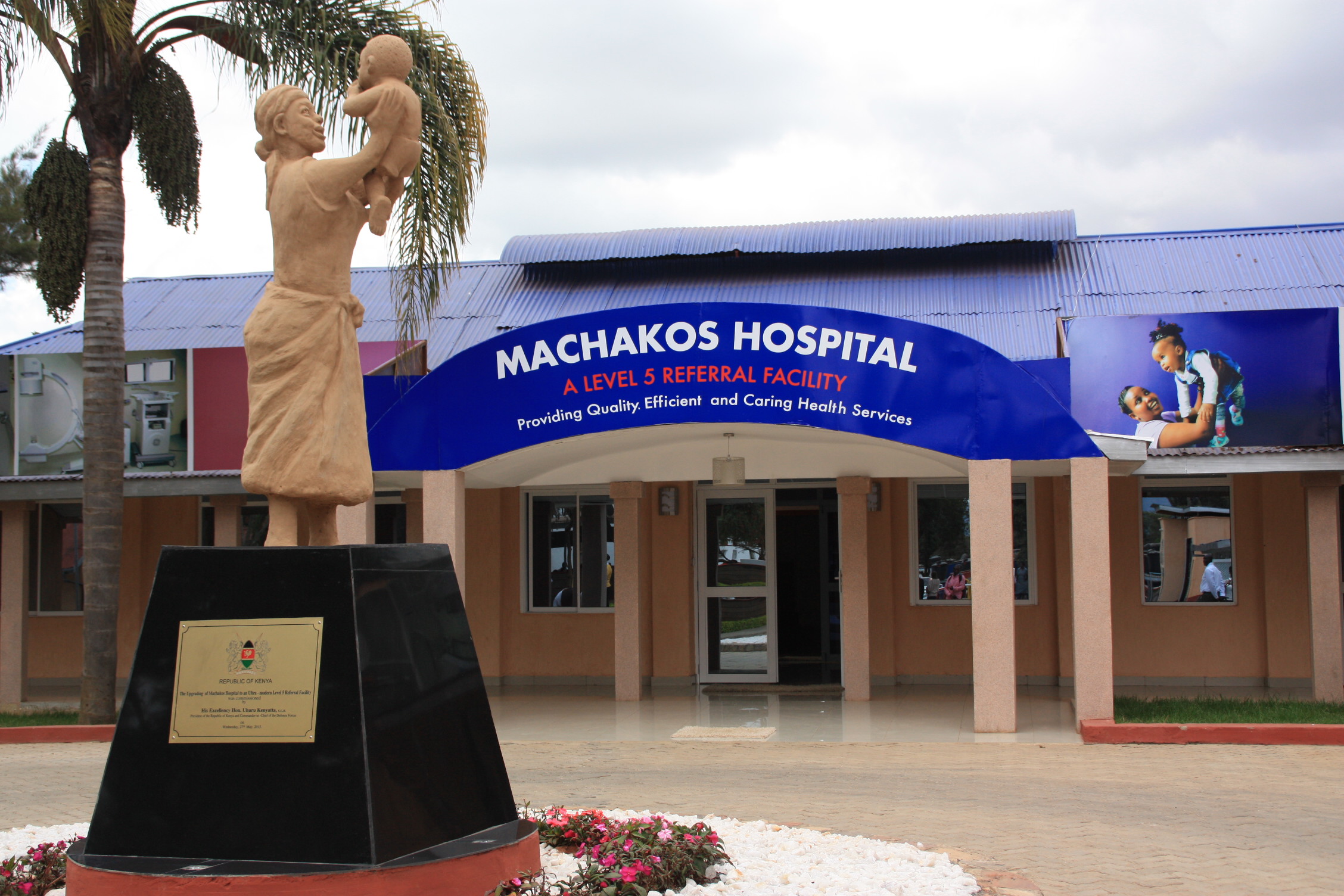
The front view of the Machakos Level 5 hospital. The county government will be increasing its medical staff in the coming months (Photo/Kioko).

The County government of Machakos plans to hire at least 283 medical staff on the coming few months so as to boost its delivery of health services.

Among these 100 will be nurses, 55 will be medical officers and 50 will be clinical officers. The others will be 40 radiographers, 20 lab technologists, 10 anesthetists, 6 consultants and 2 radiographers.

While speaking to journalists over the weekend at the Machakos Level 5 hospital the Chief County Officer (CCO) in charge of health Sila Collins said since the hospital was renovated the number of patients visiting the hospital has increased.

“We receive patients from Embu, Kiambu and even Kajiado counties and once a patient walks in you cannot discriminate against their residence,” he said.

The hospital boasts of modern and well equipped maternity and labor ward, digital X-Ray machines, breast cancer screening machines among other features. Security at the hospital is also enhanced through a 24-hour CCTV camera surveillance.

“Some of the equipment you see here are not available anywhere else in the lover Eastern region,”

he said adding that since the renovation more expectant mothers are delivering at the hospital.

“We are happy that mothers are choosing to deliver at the hospital.”

Maternity services are free at the hospital which has a capacity of 90 beds in its maternity section. But apart from patients, Collins hinted that the number of medical practitioners who want to work at the hospital is has also risen.

“We are receiving more requests from doctors who want to join our facility. We have never had any doctor resigning since the county government took over.”

IMG_2572
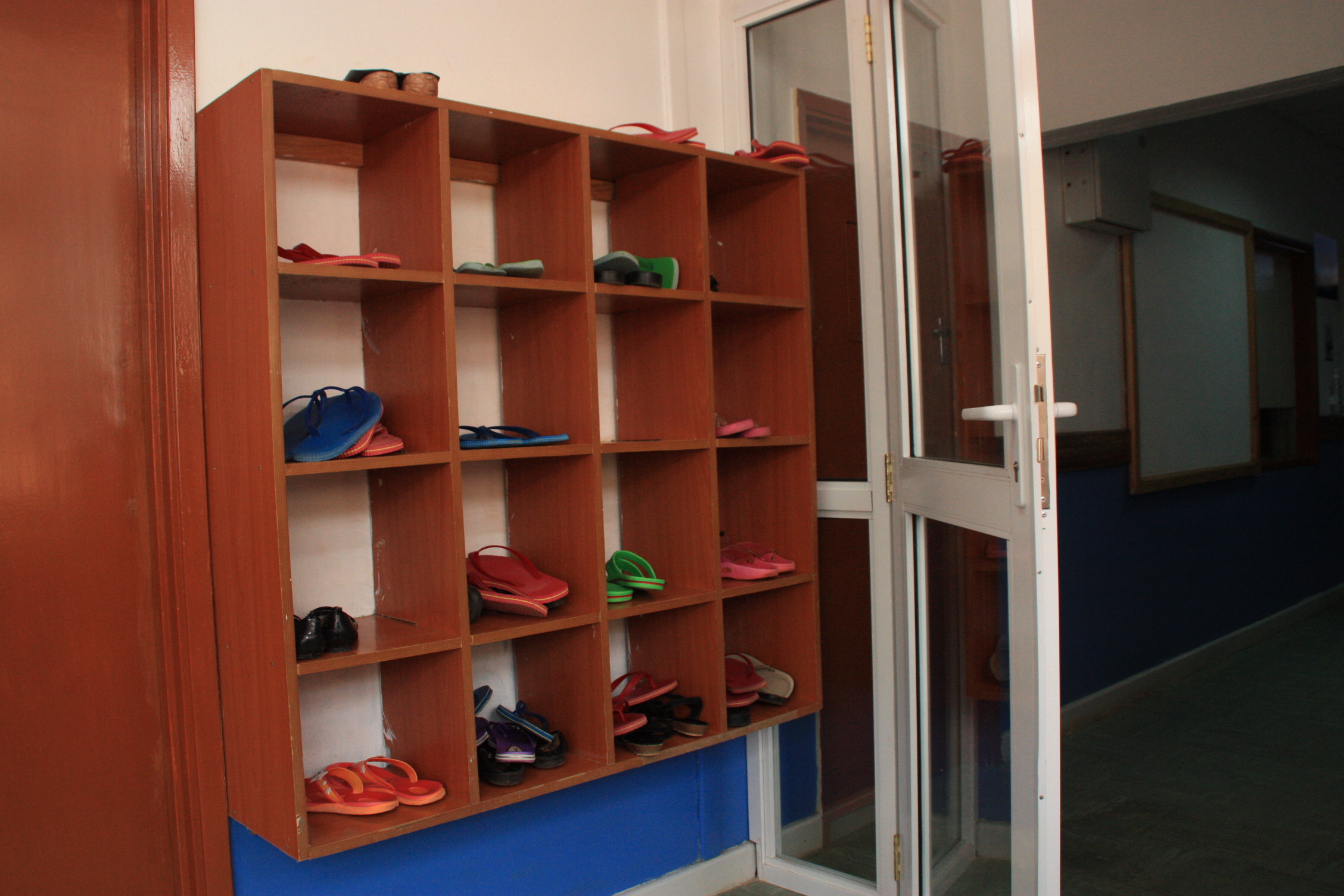
A shoe shelf at the Machakos Maternity ward. Since the hospital was renovated the number of patients seeking its services has increased (Photo/Kioko).

“Most of the doctors who used to go (and practice) at Kenyatta (National Hospital) are now coming here,”

he said adding that they are doing their best to see that the hospital is well supplied with power.

“We have not had a blackout in the last 7 months. We have a standby generator, a backup generator, and a backup to the backup.”

Fr. Peter Wambua a Catholic Priest stationed at Thatha Parish in Masinga sub-county praised the work of the government so far saying he is pleased.

“I am happy about everything and the services,”

he told Kenya Monitor on Saturday while walking out of the hospital last Saturday after visiting some patients.

“I talked to some patients and they said the doctors are very hard working and that even when you call them at night they don’t delay,” he said with a smile written on his face.

“I went there some other day to anoint a patient and even though it was past time, the doctors were very understanding and they allowed me in.”

The priest said he would want to see the health services improved even the more so that none of the cases reported at the hospital is referred to other hospitals.

Another resident, Amos Mbithi, who works at a chemist juts next to the hospital said the high number of patients visiting the hospital has increased their sales.

“Because of the long queue of patients at the pharmacy some patients prefer to come out and buy drugs from outside,” he told Kenya Monitor.

Makueni County leaders put aside differences and pass 2015/2016 budget

star

Members of the Makueni County Assembly and the executive led by Governor Kivutha Kibwana put aside their differences and passed the 2015/2016 budget without any wrangles.

The assembly unanimously passed the Sh6.4B budget on Tuesday with a majority of MCAs rooting for reconciliation between the two arms of government, a complete opposite of the scenarios witnessed in previous financial years where chest thumping, threats and arguments on budget related issues were the norm.

The County Assembly allocation which has been the center of the wrangling  for the last two years in row received Sh593M a budget ceiling set by the Commission of Revenue Allocation (CRA) and an additional Sh70M approved by the Senate to settle unpaid bills incurred in the last financial year.

The allocation, mostly for recurrent expenditure is a significant decrease from last year’s allocation of Sh673M, which was later, reduced to Sh373M as, directed by the CRA.

While contributing to the motion to adopt the report of the Budget and Appropriations Committee, Mavindini MCA Martin Mutuku said the onus of implementing the budget lay squarely on the executive but urged the county assembly to forge a good working relationship with the executive for development.

He however said that the County Assembly would not abandon its role of oversight as envisaged in the constitution.

“We shall work together with the executive but we shall also play our role of oversight effectively,” said MCA Mutuku.

The MCA’s sentiments were echoed by his Muvau counterpart Josiah Kavita who called on the executive to expedite the implementation of development projects in the county.

He said low absorption of development funds would lead to a budget crisis occasioned by the large amounts of underutilized funds.

Kavita also called for shared public participation between the two arms of government for unity.

“No arm can work in isolation, we need to work as a team,” he said.

Francis Mutuku, Chair of the Budget Committee lauded the passing of the budget without infighting saying that the two arms were now ready to work together for the sake of development.

He said the budget was a culmination of hard work and consultation between the assembly, the executive and other relevant stakeholders.

Governor Kivutha has already assented the budget.

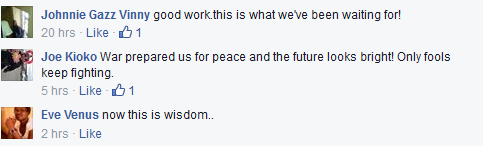
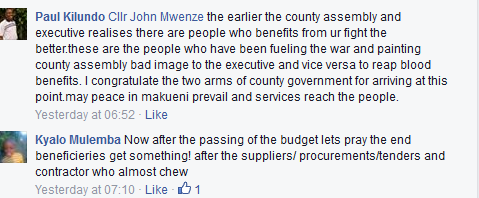
Residents of Makueni have also taken to Facebook to express the opinions with many arguing that despite the wrangling in the past two years, there is light at the end of the tunnel.

D1

D2

D3

With the passing of the budget without delays, the residents can only hope that the county government will deliver the much needed services.