It is projected that by 2017, Kenya will have 24 million people aged between 18 and 35. These are the people who are most active in sports, in nation building and sadly also in societal vices. Why aren’t we trapping the energies of these youth either as players or passionate supporters of community based teams by providing facilities?
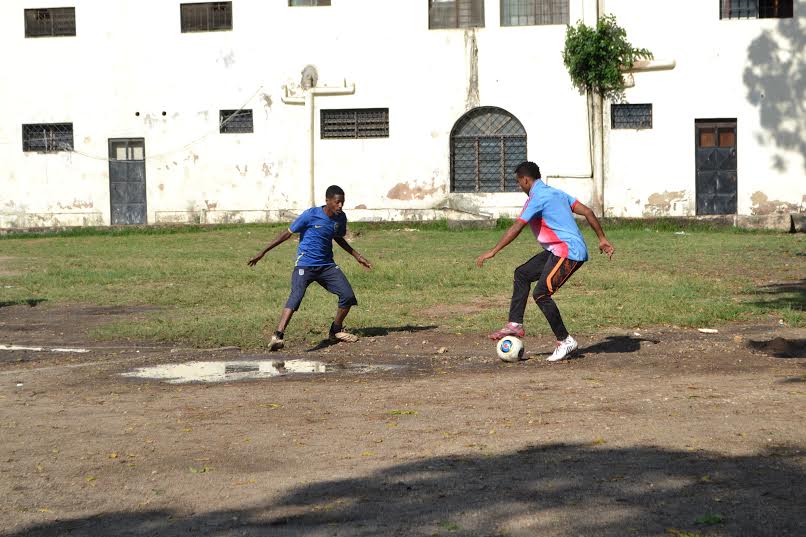
At the Makadara grounds in Mombasa, the youth at this ground risk injury, Modi tells us. In the wet season, slippery conditions cause a lot of players to twist their ankles and suffer other forms of injuries. Some have ended their careers because they cannot afford specialized sports injury treatment at times.
Like many of the youth in Kenya, Modi is vaguely aware that the Jubilee promised 5 new stadia in Kenya and Mombasa was one of the places that was to get a new stadium. Speaking to the press, Hassan Wario the Cabinet Secretary for youth confirmed that 1.8 billion is going to be available in 2015 to kickstart the stadia project. It is expected that Mombasa will finally see new stadium in Shanzu developed. In addition, all counties will receive 100 million to raise standards of the stadia.
According to the jubileee manifesto, the Jubilee Government should be in the process of
“Establishing youth development centres in all counties that will house a fully equipped library, an ICT hub, five sports pitches (football, swimming, basketball, netball volleyball)”.
Jubilee Manifesto had a lot in store for the youth
‘ As usual, all leaders have big plans for the youth before elections, yet nothing is ever done for the youth’,
laments a young football player. Another adds,
“For some of us, football is our only hope as we don’t have enough qualifications to get a white collar job or capital to start a business. We look up to people like Wanyama in the English Premier League and hope for a lucky break from this life like they did.”
There’s little hope that the government will achieve the promises for the youth in line with its election manifesto. Notably, Jubilee in their manifesto promised 1 million jobs per year, which would greatly benefit the youth. One avenue for developing talent and achieving part of this target would have been to invest heavily in grassroots sports.
Former Minister of Youth, Gender and Sports Mombasa Hazel Koitaba acknowledged the challenges facing development of youth in sport especially in tapping talent early.
“At the moment, we are incapacitated because majority of our schools lack basic equipment to promote sporting activities.”
Just recently, Ministry of Youth, Gender and Sports in Mombasa announced that Uwanja Wa Mbuzi Grounds will be getting major face-lift & renovation works. A move that will boost sports immensely in the Kongowea area.
Bloggers in Kenya have had, in several instances, to ‘save’ their credibility and explain a few things including the doubts and the notion that they are just but social media trouble makers who will write about anything sensational and vulgar.
But today, bloggers and other online content creators are being appreciated not only by the fellow internet users but also by corporates.
The report was done by the Bloggers Association of Kenya, and supported by Hivos Foundation. The report highlights that blogging is slowly becoming a viable business for many young people who cannot easily access jobs elsewhere.
Today, more Kenyans can embrace citizen journalism and write articles or publish content that would otherwise not be accepted in the mainstream and traditional media. The report notes:
“Blogs are becoming a tool for whistle blowers to employ on exposing corruption and misappropriation of public funds. Kenyan blogger Abraham Mutai was in January 2015 detained in police custody for questioning and later released for exposing corruption in the Isiolo County through his blog and then tweeting about it.”
Since 2003 when the first blog was established in Kenya, the country’s blogosphere has grown tremendously to accommodate the fast growing internet users. According the Bloggers Association of Kenya Chairman Kennedy Kachwanya, there is an estimated 15,000 registered blogs in Kenya with 3,000 being active blogs registered blogs by Kenyans on the WordPress, Blogger and Tumblr platforms.
This report seeks to vindicate our concerns as BAKE on the increasing cases of prosecution, intimidation and concerted efforts to discourage dissident Kenyan voices on social media.
Besides showing the role that Kenyan bloggers have played and continue to play in the promotion of free speech in Kenya, the report also seeks to highlight the contribution of the bloggers in the creation of diverse content on the internet.
Fred Matiang’i, Cabinet Secretary for ICT at the launch
Speaking during the launch of the report, the Cabinet Secretary in the Ministry of Information, Communication and Technlogy Fred Matiang’i admitted that the time is now for all stakeholders, including the government to embrace digital media.
“We are in the era of citizen journalism and as the government; we must put most of our advertisements online. Today, the reach of the digital content is four times more than that of print media,” said the CS.
Matiang’i said that it was not the intention of the government to harass anyone online, adding:
“We are not that autocratic regime that will wake up one morning and shut down the internet. Let us bring a sense of culture that will create a value system and shape morals in the social media space.”
ICT Authority Chief Executive Officer Victor Kyalo echoed his words, saying that the government had no choice but to go the digital way.
“As a government, we do not have a choice but to go digital. Service delivery in Kenya is no longer analogue,” said Kyalo.
Michael Greenwald the Public Affairs Officer at the US Embassy in Nairobi recognized the role that bloggers play in promoting democracy. He said:
“Bloggers play a huge and important role in democracy, the US Embassy is happy with our continued partnership with BAKE.”
The launch was attended by, among others, officials from the Ministry of ICT, Kenya ICT Authority, Media Council of Kenya, dignitaries from the Norwegian, US and Dutch Embassies in Kenya, civil society, activists, bloggers and social media influencers.
According to Njeri Wangari, director, training & outreach at BAKE, the report was the first annual report and that BAKE would be releasing a similar report in the month of June every year.
There was also a panel discussion at the launch that gave the attendees a chance to deliberate on the issues affecting blogging and bloggers in Kenya. Among the panelists were: Kenyan Award winning Photo Journalist Boniface Mwangi, Advocate Mugambi Laibuta, ICT Authority CEO Victor Kyallo, Ushahidi Director Daudi Were and Njeri Wangari.
Internally displaced persons at the Pipeline camp in Nakuru celebrate after the withdrawal of Uhuru Kenyatta’s case at the ICC in December last year. According to CIPEV the 2007/08 PEV is the most unique electoral violence in Kenya’s history (Photo/Kioko).
According to the Commission on the Investigation of the Post Election Violence (CIPEV), the chaos that rocked the country soon after the 2007 general election is the most unique in Kenya’s history.
In the report that was released by the Commission several years back the 2007/08 post election violence (PEV) cannot be compared to any of the violence that had happened in Kenya since multiparty politics was restored in 1991.
“The violence that shook Kenya after the 2007 general elections was unprecedented. It was by far the
most deadly and the most destructive violence ever experienced in Kenya,” the report reads in its introduction.
The CIPEV commission is mainly referred to as the Wako Commission after the name of Judge Philip Waki who chaired it. It will be noted that the cases of six Kenyans believed to have been the main suspects of the violence and that were later to be pursued by the International Criminal Court (ICC) were partly a referral of the Commission.
This is after it handed a sealed envelope of the list of suspects to the then ICC prosecutor Loius Moreno Ocampo and after attempts to form a local tribunal to pursue the cases in Kenya bore no fruits.
In a big way the Commission’s findings read like the findings of a Working Group that was formed recently and which did a Socio-Political audit of the Constitution of Kenya 2010 as both appreciate the recurrence of election related violence since the days of KANU (Kenya Africa National Union).
“Unlike previous cycles of election related violence, much of it followed, rather than preceded elections,” it says.
“The 2007-2008 post-election violence was also more widespread than in the past. It affected all but two provinces and was felt in both urban and rural parts of the country. Previously violence around election periods concentrated in a smaller number of districts mainly in Rift Valley, Western, and Coast Provinces,” it says.
Out of the six PEV cases that the ICC was pursuing only two are ongoing, that of Deputy President William Ruto and journalist Joshua Sang, and even so, their case is also nearing conclusion.
And while the CIPEV information may not be new as the report was released several years back, re-reading the report afresh at this time might be important to all those who want to reflect on the journey that Kenya has traveled in seeking for reforms in our electoral and governance process. That is, as the ICC cases are being concluded.
It will also be noted that during the making of the new constitution the clause on leeway of seeking international tribunals on matters that are as grave as the 2007 violence was partly informed by what Kenyans had gone through. That is, the commission of grave crimes under regimes that were unwilling or unable to prosecute those highly responsible.
Subsection 6 of Article 2 of the Constitution states that
“any treaty or convention ratified by Kenya shall form part of the law of Kenya under this Constitution.”
It is partly because of this section that the ICC had an entry point to the PEV cases.
Police have arrested a man suspected to have terror links in Wote town, Makueni County.
20 -year- old Ngandi Mwikali alias Sheikh Hassan was arrested over the weekend after he threatened to blow up certain buildings in Wote.
According to Makueni CID boss Elena Wairimu, the suspect a class five dropout disappeared six years and only resurfaced last Tuesday with vague details of his whereabouts.
Wairimu told the press that Boniface Kilonzo, a brother to the suspect reported him to the police after he disclosed his plans to blow up buildings in the town that housed their relatives.
The suspect has since been moved to the Anti-Terror Police Unit in Nairobi for interrogations.
Kilonzo described the suspect as a lazy and a disobedient person who exhibited truant behaviors at a tender age.
“My brother always wanted good life though he loathed hard work. He vanished in 2009 and he claims to have been working in a hotel in Voi,”said Kilonzo.
Meanwhile tension remains high in the town as residents live in fear of a terrorist attack. However, area OCPD Philip Opiyo has assured residents of tight security and urged them to carry on with their normal activities.
The arrest of the suspect in Wote town comes at a time when security agents have intensified the war on terror in the country. Police have released a list of 44 terror suspects believed to have been part on a botched terror attack in Lamu in which 11 terrorists were killed alongside two Kenya Defence Forces soldiers.
Although the investigations into the claims are ongoing, the arrest in a county that is relatively peaceful with few criminal activities brings to the fore to the fact that radicalization is real and many jobless young people are falling to the trap of being recruited to terrorist groups.
Perhaps the time is ripe when the government should move with speed and put in place proper measures to stop the practice.
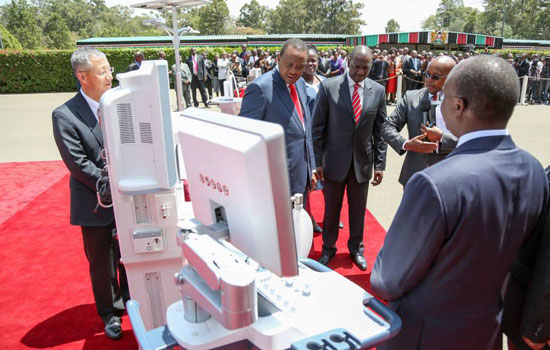
Every county in Kenya is expected to have two fully equipped hospitals with state of the art equipment in the 2015/2016 Financial Year. This is to be realized in a program aimed at improving healthcare infrastructure in the country.
According to the Finance Cabinet Secretary Henry Rotich, this is to be realized following partnership with all the 47 county governments under the recently launched Managed Equipment Services project.
In his budget speech in parliament last week, Rotich noted that the program will see each of the selected hospitals fitted with surgical and sterilization equipment, modern theatre equipment, laboratory, equipment, kidney dialysis equipment, ICU facilities, digital X-ray machines, ultrasound and imaging equipment with a Sh4.5 billion allocation.
The overall health sector funding in the 2015/2016 budget increased by Sh11.8billion from Sh47.4 billion in 2014/2015 budget to Sh59.2 billion.
Sh4.3 billion out of the curative health budget has been set aside for free maternity health while Sh4.5 billion has been set aside for leasing of medical equipment. Last year, the government allocated Sh4.0 billion for free access to maternal health and Sh0.7 billion for free access to all health centers and dispensaries across the country.
The government, in addition, set aside Sh39.1 in the 2015/2016 financial year for modern health equipment in hospitals and health centres in the various counties countrywide. Sh1.0 billion has been set aside for slum healthcare program, which is Sh0.7 billion more than what was allocated in the program in the previous budget.
Unlike the previous financial year where the government allocated only Sh0.67 billion to the National Aids Control Council, this year, the National Treasury has set aside Sh19.7 billion for HIV/AIDS, malaria and tuberculosis programs.
Sh0.3 billion was added to the last year’s budgetary allocation towards medical research which was awarded Sh1.7 billion in the 2014/2015 Financial Year. The Kenya Medical Training College, which was allocated Sh3.0 billion in 2014/2015 financial year, has been allocated Sh3.5 billion in this year’s budget.
But despite the huge allocations towards hospital equipment, Dr. Dr. George Ooko Abong’ a lecturer at the University of Nairobi says it is unnecessary if there is no focus on the medical staff.
Abong’, who is also the industrial training coordinator, Department of Food Science, Nutrition and Technology University of Nairobi says:
“This shows the low level of commitment we have towards improving the health sector. Even if you have well equipped hospitals but with low number of fatigued human resource, then you are sure to fail by simply having white elephants.”
He emphasizes on the need to have training and remuneration of our personnel at all sectors of the economy.
Increased allocations to the health sector including better equipping of health facilities, albeit the majority are devolved functions, they are in tandem with the jubilee manifesto which seeks to improve health care in the country. Its flagship project in the health sector was free maternity for mothers in all public facilities, which led to increase child births and safety of mothers across the country.
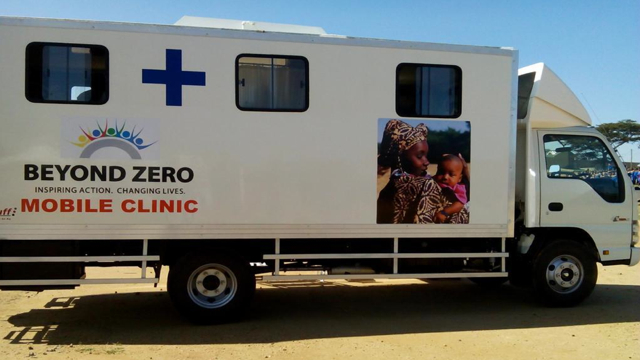
First Lady Margaret Kenyatta receives a cheque of Sh100,000 from Wote KCB Branch Manager Lawrence Musyoka during the launch of Beyond Zero Campaign mobile clinic in Makueni as Governor Kivutha Kibwana looks on. Photo:Mary Lole
First lady Margaret Kenyatta has challenged residents of Makueni County to harness water during rainy seasons in an effort to enhance food production.
The first lady said unpredictable weather patterns occasioned by desertification was impacting negatively on food production and underscored the need for the county to cushion itself from perennial famines through proper utilization of water resources.
Speaking when she launched the 3oth Beyond Zero Campaign mobile clinic in Wote town Ms. Kenyatta noted that the county government should leverage the available water resources in the county for sustainable agriculture.
“The county needs to utilize the little water resources to secure the future of agricultural production and make Makueni water independent,” said the first lady.
Concerning health, the first lady extolled the achievements made by the county government in an effort to provide quality health care especially maternal services.
She said that the increasing number of women giving birth at health facilities in Makueni was a step in the right direction in the fight against maternal and child deaths adding that the mobile clinic would help boost the county government efforts to ensure that women get access to maternal care.
“The Beyond Zero Campaign aims at ensuring that no woman dies while giving life and enable the children to celebrate many birthdays besides eliminating HIV mother to child transmission,” Ms. Kenyatta said.
Governor Kivutha Kibwana said that his government was committed to providing accessible and quality health care but noted that illiteracy, poverty and weak health care structures were main challenges.
He said that the government has so far invested Sh400, ooo this year for equipping all health facilities with drugs and disclosed the government will set up theatre units in major health facilities across the county.
Senator Mutula Kilonzo Junior called on the national government to allocate more resources for the health function for quality health care.
The senator also prevailed on the national government to upgrade Makueni County Referral Hospital from a level four to a level five hospital.
According to the Makueni Health Executive Dr. Andrew Mulwa the rate of women giving birth in hospitals in the county has increased from 19 percent to 53 percent since inception of devolution and the mobile clinic could not come at a better time as it will help to increase this further.
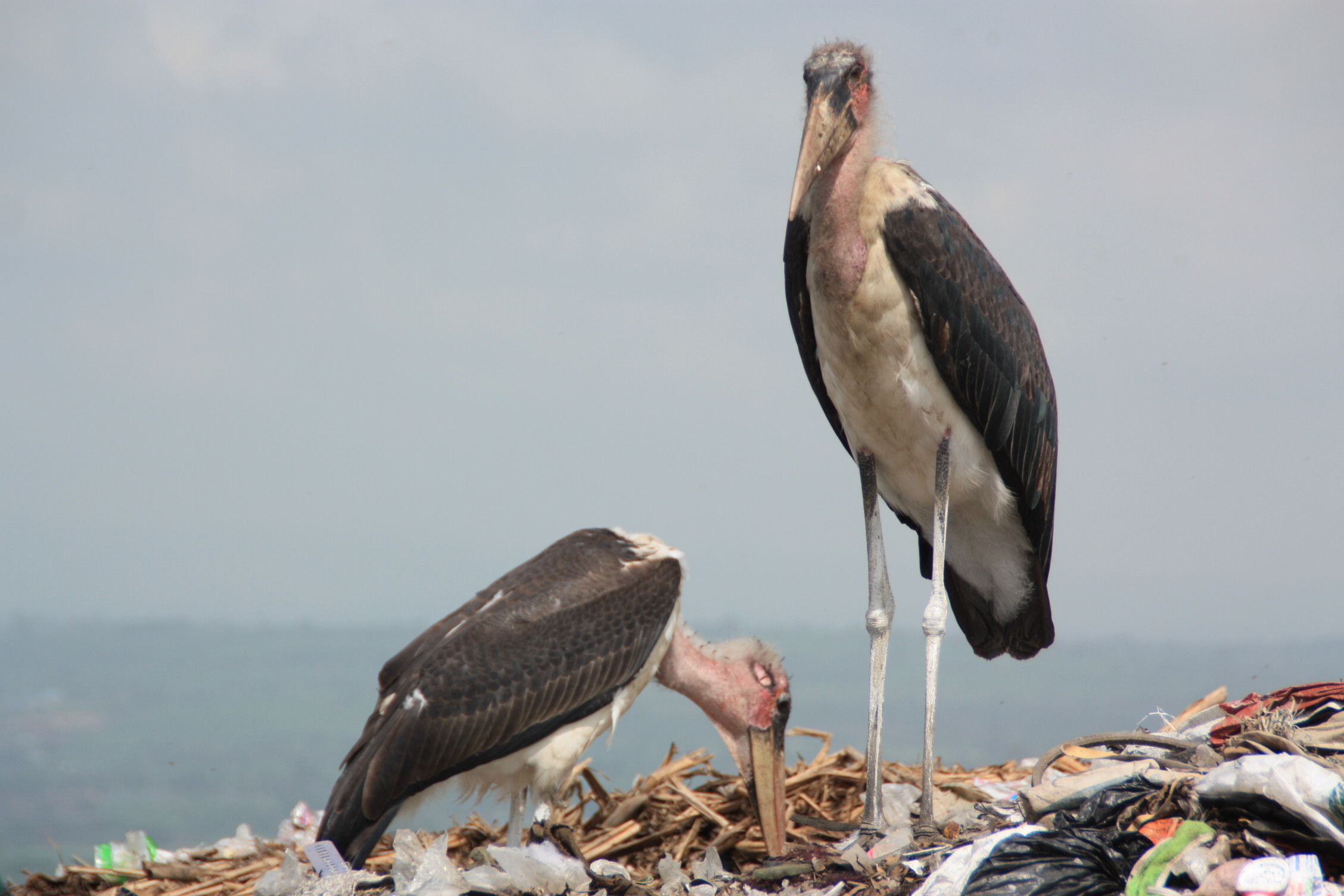
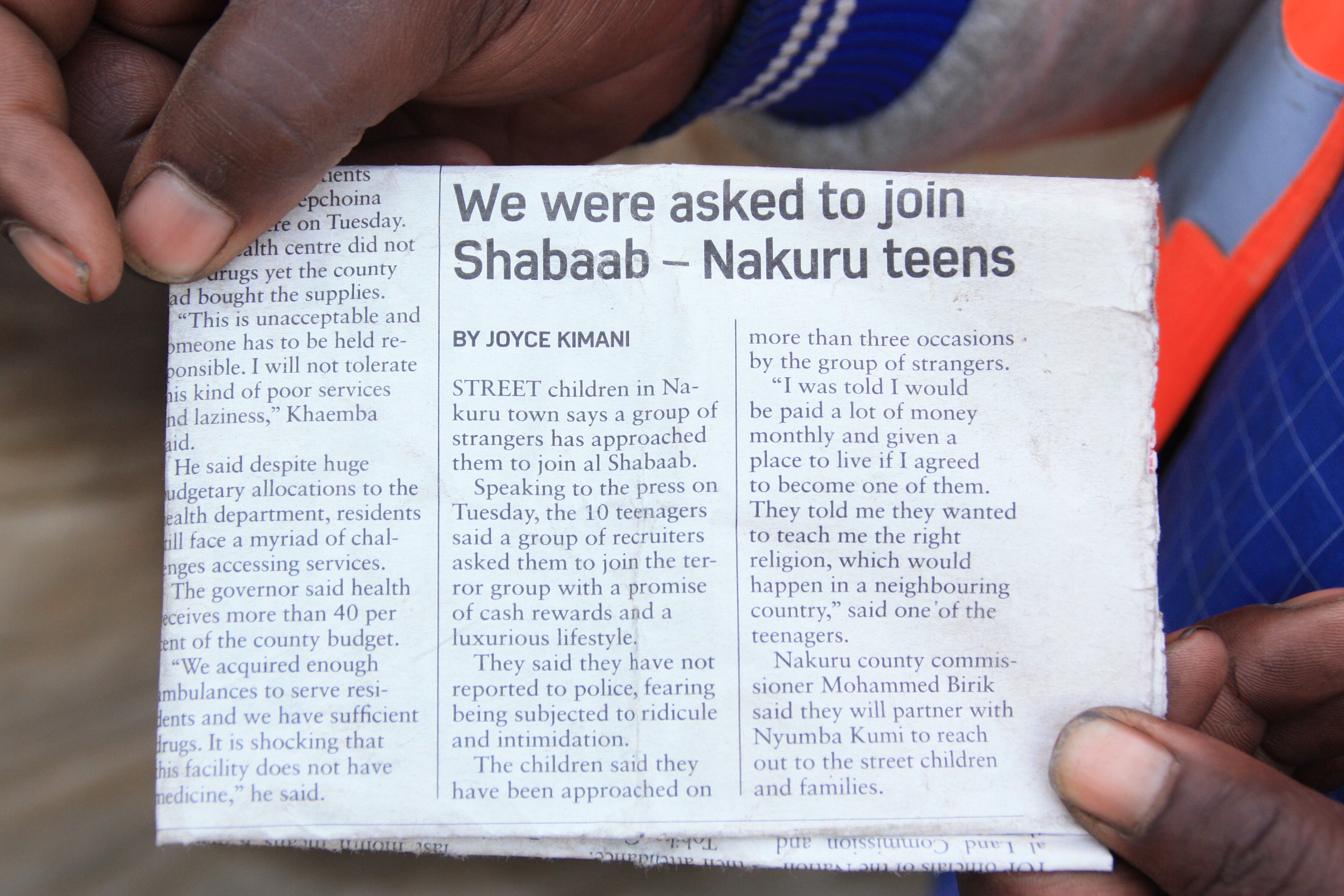
Marabou stork at the Gioto dump site. Residents at the site want The Star newspaper to apologize to them for an article that has allegedly linked their members to the Al-Shabaab terror group (Photo/Kioko).
Residents of the Gioto dump site in Nakuru are unhappy with The Star newspaper following a story the paper published that they claim has linked some of their members to the Al-Shabaab terror group.
The story in question was published by the newspaper on Thursday June 11 and alleged that a section of teens residing in the streets of Nakuru had been approached by unknown persons who asked them to join the terror group.
What irks the residents in the story is not so much its content but the photo that the paper used to go along with the story. The photo which was picked from a 2010 file shows a group of ‘street children’ and among them at least two happen to currently be “working” at the dump site.
These two now say their presence in that photo has brought them untold anguish as they claim they are being referred to as “Al-Shabaab.” Due to this they say they fear for their lives, both from the public and from the authorities.
“I am afraid that I may be marked as a wanted person. I request fellow residents to stop calling me Al-Shabaab,”
said Paul Ng’ang’a one of the then street children captured in the photo.
Ng’ang’a says he does not even remember ever posing for a photo with a photographer attached to The Star newspaper.
A Gioto resident with a cutting of the article the residents are unhappy with. They claim it identifies some of their members negatively (Photo/Kioko).
“We want to meet the writer of the article so we can ask where we met to give the story,” he says partly because he may not have been interviewed in the Al-Shabaab story.
“When my wife heard about this story she cried asking whether it was true,” says Kennedy Kinyua another Gioto resident who also appears in the photo.
“I wouldn’t want to join the Al-Shabaab, it is akin to betraying your country” he adds.
The Gioto residents add that among those in the photo is a man who recently died in a fire inferno at the site and another who relocated to Kisumu. They insist, basing on the content of the article the paper was insensitive to them and even demand an apology.
“The writer has defamed us, they only wanted propaganda so as to sell their paper,” says Lucy Wambui the chief leader at the site.
There have been reports about youth in different parts of the country being approached by the Al-Shabaab terror group with promises of good rewards. And during the last Madaraka Day celebrations the Nakuru County Commissioner Mohammed Birik gave a stern warning to youth in the county who he said the authorities were aware had been approached to join the group. While Birik sounded like he had enough information about the issue it is not clear whether he was referring to the youth quoted in the story.
Contacted by Kenya Monitor, an editor with The Star asked the residents to write to the newspaper and lodge a formal complain.
An image on blood donation. Kennedy Sanya, a Prosecutor in Nakuru has been donating blood for 30 years now (Photo/Google).
By Lonah Abuga.
He was first attracted to donate blood so as to get the free snacks that are usually given to people just after donating blood. That was 30 years ago and he was a student at Pumwani High School in Nairobi. But that desire to eat the free bites soon turned into a lifestyle for one Kennedy Sanya and now he has even became an ambassador for blood donation in the country.
“Many students value food and therefore I did not find it hard to so because I wanted the goodies. However with time I realized the importance of the practice and it has turned out to be my lifestyle,” he said.
To date the man who works with the Kenya Police Service as a Prosecutor in Nakuru County and who has donated blood more than 78 times says he wants to see more people adopting the culture of blood donation so as to help those in need and save lives.
Speaking to the Kenya Monitor at an event to mark the World Blood Donation Day in Nakuru last week, Sanya said he usually gets a lot of satisfaction every time he donates blood as he believes it brings change in the recipients’ lives whom in most cases he may never have a chance of meeting them in life.
“Every ten minutes, there is someone receiving blood either in surgery or to replace lost blood,” he said from an informed point of view.
Sanya encouraged residents to put a side fear and start donating blood as medical facilities and hospitals across the country are experiencing blood shortage, a situation the Ministry has blamed on poor public perception against donating blood.
Apart from receiving an award from The First Lady Margaret Kenyatta last year for being the highest blood donor in the country, Sanya also received a Head of State Commendation (HSC) last year.
Lauding him the Kenya National Blood Transfusion Services (KNBTS) Director Margaret Odour said there is a need to develop the tradition of donating blood among citizens.
“There is need to regularly give blood to prevent shortages in hospitals and clinics, particularly in remote areas where quantities are very limited,” she said.
Oduor who was also at the Nakuru event last week added that they usually take all necessary steps to avoid getting contaminated blood so there was no need to fear about the quality of what they have in the blood banks.
The World Blood Donor Day is usually held across the world every June 14. The theme for this year was
“Thank you for saving my life.”
According to the World Health Organization at about 108 million units of blood are collected every year.
Leah Kilenga who lives with the Sickle Cell condition at an event in Nakuru. She founded the organization so as to create awareness about it (Photo/ Lorna Abuga).
The 10,003 Warrior Project founder Leah Kilenga has urged Nakuru residents to embrace people living with sickle cell disease (SCD).
“There are a lot of misconceptions and poor care given to this vulnerable group, mainly because the ministry of health does not have data on the number of people affected by the sickle-cell disease,”
said the young founder who became an ambassador for sickle cell patients after she lost her cousin to the disease while aged 12.
“Even many insurance companies fail to provide medical cover to such patients.”
The 10,003 warrior project aims at creating awareness about the disease through the use of photography. It is
“set to to capture 10,003 Sickle Cell warrior faces and stories in Kenya,”
reads a statement on the projects website.
Kilenga said through the project they hope to see Ministry of Health taking a wise approach towards the surveillance and monitoring of sickle-cell disease in the country and its risk factors so as to collect data on its effects, prevention, treatment and care that are essential for setting the right agenda about it.
She says part of what the Ministry should change is what she sees as a misconception that children born with the disease cannot live beyond five years.
“This usually inflicts pain and misery in them and their parents,” she says.
‘’We are asking the ministry of health to come up with better policies which can enable the patients to manage the disease because many of us have managed to beat the deadline set by our trusted caregivers.’’
Ruth Wekesa, the 10,003 Warrior Project Communication Officer says they have plans of traveling to all the 47 counties in the country in order to create awareness about the disease and to reduce the mortality deaths it causes.
So far they have only managed to tour four counties that including Mombasa, Kakamega, Busia and Nairobi and lastly Nakuru where they use the photographs of patients to create awareness.
‘‘By using photographs we hope to give a voice to the voiceless who are only heard in closed circles and in hospitals because we discover many people suffer silently and as result we end up losing people who could be of great impact to the society,’’ she said.
Wekesa added that they offer group therapy to the victims of the disease by sharing out their experiences and providing guidance and counseling.
“We realized that communities associate the disease with witchcraft and as a result the victims are segregated and treated with a lot of contempt and this results to stigma. Therefore we thought it necessary to share our stories so as to give hope of rising above challenges,” she said.
She said that there was need for the government to set up dedicated centers in the 47 counties to provide adequate services for prevention and treatment of the disease.
‘‘Such centers will provide services such as counseling patients including offering education about preventive health and nutrition, prompt treatment of illness, free provision of vitamin supplements that can significantly reduce incidences of illness and number of premature deaths from sickle-cell disease,’’ she said.
The two spoke to the Kenya Monitor in Nakuru last week during an event to mark the World Blood Donor Day.
Sickle cell disease or sickle cell anemia is a non contagious condition which is characterized by a poor blood flow of oxygen in the blood. This can happen when one is born with abnormal red blood cells.
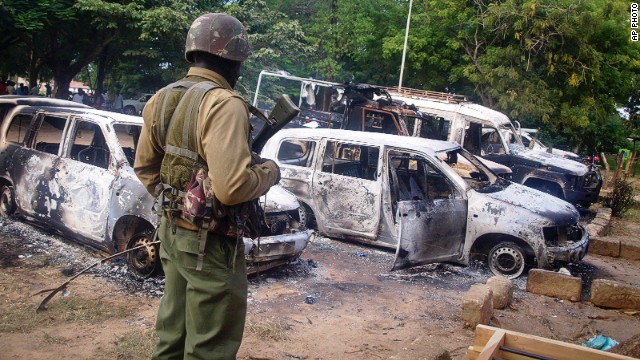
Kenyan security forces were ill-prepared in responding to the terror attacks in Mpeketoni Lamu county and Tana River county, and failed to protect innocent residents as the attacks continued.
This is according to a new report by the Human Rights Watch and the Kenya Human Rights Commission.
The report released yesterday cites cruelty in the manner that the police officers deployed to the region treated the residents. It reads in part:
“A year later, there have been no successful prosecutions for the 2014 attacks at the coast, with the state dropping most of the cases for lack of evidence. Instead, starting in July 2014, security forces arbitrarily detained residents of the two counties and subjected them to cruel, inhuman or degrading treatment, including rounding up men and boys, searching and ransacking homes and businesses, and beating male residents. Members of the security forces also stole money and valuables from residents.”
Between mid June and end of July, 83 civilians and four police officers lost their lives. Residents also witnessed destruction of 30 buildings and 50 vehicles.
The report further says that the Kenya security forces failed to respond to the attacks in good time, hence endangering the lives of innocent resident. According to the report, the attackers were in groups of 15 to 300 men armed with guns, knives and machetes, as well as heavy weapons such as bazookas and grenade launchers and targeted non-muslims as opposed to the claims by president Uhuru Kenyatta that the attack was tribal.
The human rights bodies are therefore asking the government to acknowledge the scope and gravity of the problem of abusive operations, publicly condemn abuses by security forces, and commit to taking all necessary steps to end the abuses.
They also want the President to ensure that all Kenyan security officers are retrained to ensure that they effectively deliver on their services and in line with international standards.
Besides, there is urgent need to increase funding to the Independent Policing Oversight Authority and at the same time ensure that the Kenya Defence Forces investigates its officers who have been implicated in carrying our abusive operations on innocent residents of Lamu and Tana River regions.
“We also want the Chief of General Staff, Kenya Defense Forces to investigate reports of KDF involvement in abusive operations in Ngumu village in Tana River; Maziwa “B” village in Tana River, Witu town in Lamu County, Mpeketoni in Lamu County, Hindi in Lamu County and Mokowe in Lamu County,” says the report.
The human rights groups also want the Inspector General of Police, the Independent Policing Oversight Authority (IPOA) and National Police Service Commission to ensure that police end abuses in Lamu and Tana River counties and work with affected communities to improve avenues for communication and protection.
Residents of Makueni County joined the rest of the African continent to mark the Day of the African Child (DAC) with renewed calls for the need to safeguard the rights of children and protect them against retrogressive community practices that violate their rights.
The event held at AIC Kathonzweni Primary School grounds brought together parents, children, government officials and several non -governmental organizations all with the common goal of highlighting the injustices African children face, and measures that can be put in place to realize their rights.
Children drawn from different schools within the county wowed the audience with artistic pieces comprising of songs, play skits, narratives and poems whose message resonated with this year’s theme of ending early marriages among children in Africa.
Makueni County Children Officer (DCO) Rasto Omollo speaking during the celebrations decried the rising number of incest and defilement cases among children in Makueni and Kathonzweni Sub Counties.
Omollo singled out Kiangini, Kithuki and Kitise as some of the areas where sexual child abuse cases were rampant and called on the residents to collaborate with the children department and other relevant stakeholders to stop the abuses and bring the perpetrators to book.
The DCO noted that despite such sexual violence being meted out of innocent children many of the cases go unreported while others are solved in Kangaroo courts leading to further violation of the victims and subsequent stigmatization.
“When these cases happen the parents of the children abused are lured into solving the problem at household level and some are given money not to report the cases which is very unfair to the victims,” he said.
Area Member of the County Assembly Francis Mutungi reiterated the DCO’s sentiments and called on the residents to shun from harmful cultural practices that discriminate against children.
“Early marriages and female genital mutilation are detrimental to the physical and psychological well being of children and should stop,” he said.
The MCA noted that children form an integral part in the society adding that gone are the days when children were looked down upon.
“We live in an enlightened world where children should be given a chance to be heard and listened,” said Mutungi.
Joseph Muindi Mwololo, a child living with albinism moved the crowd when he narrated the stigma that people living with disabilities undergo.
He beseeched the residents to embrace the disabled in the society and especially children and educate them to become financially stable.
“Most of us are denied even basic needs like food and water, we are all human and nobody wishes to be born disabled,” said Muindi.
According to Wikipedia, the Day of the African Child (DAC) is commemorated every year on 16 June by Member States of the African Union. This occasion is firstly a commemoration to recall the 1976 uprisings in Soweto, when a protest by school children in South Africa against apartheid-inspired education resulted in the public killing of these unarmed young protesters by police officials.
This year’s theme ending child marriage in Africa is a clarion call to stop the harmful practice that shatters the lives of millions of innocent young girls in the continent.
First Lady Margaret Kenyatta will today, Thursday 18th June, unveil the Beyond Zero Mobile Clinic for Makueni County.
According to Governor’s Press Unit, Governor Kivutha Kibwana, his wife Nazi Kibwana and Deputy Governor Adelina Mwau will host the First Lady.
The unveiling of the clinic will be done at the County Referral Hospital in Wote town. Makueni Deputy County Commissioner Micheal Kibet told Kenya Monitor that the first lady will arrive at 10.00 am and head straight to the hospital grounds where the launch is expected to happen. Health Cabinet Secretary James Macharia is among other senior government officials who will accompany the first lady.
“Its all systems go and everything is ready for the launch,”he said.
In this light,the County Government, through the Department of Health has initiated a three- day free medical camp at A.I.C Wote and Makueni Boys High School expected to end tomorrow.
Medical officers will carry out cancer screening, Blood Sugar Tests, HIV screening and family planning counseling.
Margaret, launched the ‘Beyond Zero Campaign’ on 24 January 2014 in order to improve maternal and child health outcomes in the country. The initiative also aims to accelerate the implementation of the national plan towards the elimination of new HIV infections among children.
The beyond zero campaign clinics also launched last year in July has so far benefited 29 counties and Makueni will be the 30th county to receive the mobile clinic.
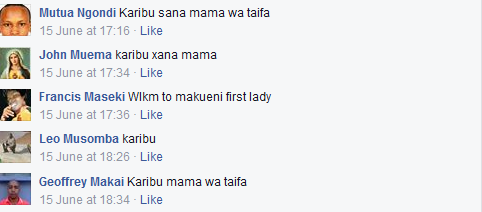
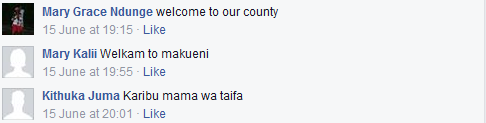
Residents of Makueni have already taken to Facebook to welcome the first lady.
Cabinet Secretary of ICT Fred Matiang’i with Kenya Monitor Project Lead Njeri Wangari & BAKE Chairman Kennedy Kachwanya at the launch of the State of blogging and social media in Kenya report 2015.
In his remarks, he noted that media trends are changing and that the internet is becoming the new media of choice even for the government.
Fred Matiangi emphasized that the Kenyan Government respects the blogging space, fundamental rights and the freedom of expression guaranteed in the new Kenyan Constitution.
“It is not the intention of this government to harass anyone online” He said.
He called on Kenyan Bloggers to apply ethical conduct in their engagements on social media in order to strengthen the democratic space.
“We are not that autocratic regime that will wake up one morning and shut down the internet. Let us bring a sense of culture that will create a value system and shape morals in the social media space” He added.
Matiangi confirmed that Social media have become a security challenge for countries all over the world. He called on BAKE to organize a framework where his office can meet with bloggers on a regular basis to interact on various issues facing the online content creator community of bloggers and Social media users.
Fred Matiang’i, Cabinet Secretary for ICT at the launch
He was joined by the BAKE Chairman Kennedy Kachwanya and the report’s project lead Njeri Wangari in launching the report which is part of BAKE’s iFreedoms Project.
The report seeks to highlight the significant gains made by bloggers in the promotion of free speech as well as in the creation of quality and diverse content about Kenya on the internet.
The event was attended by Government officials from the Ministry of ICT, the Kenya ICT Authority, Kenya Media Council, dignitaries from the Norwegian, US and Dutch Embassies in Kenya, civil society, Activists, bloggers and Social media influencers.
Michael Greenwald the Public Affairs Officer at the US Embassy in Nairobi shared this in his remarks, “Bloggers play a huge and important role in democracy, the US Embassy is happy with our continued partnership with BAKE”.
Kenyan Award winning Photo Journalist Boniface Mwangi joined Kenyan Advocate Mugambi Laibuta, ICT Authority CEO Victor Kyalo, Ushahidi Director Daudi Were and Njeri Wangari for a panel discussion on the report during the launch ceremony. The panel discussion was moderated by the event MC, Robert Mwirigi Kunga.
Njeri confirmed the report was the first annual report and that BAKE would be releasing a similar report in the month of June every year.
Some of the key highlights from the report are:-
There are estimated 15,000 registered blogs in Kenya with 3,000 being active blogs on the WordPress, Blogger, Tumblr platforms and Self Hosted
Kenya has 2.1 million Twitter users. Of the above number, 700,000+ are monthly active users (MAUs).
There are 4.3 million Kenyan users on the Facebook platform, this is according to Facebook’s monetization platform.
The total number of data/internet subscriptions stand at 16.4 million and the internet users are 26.1 million.
The value of online Kenyan advertising industry by the end of 2013 stood at Ksh.165 billion and this is forecast to rise to over Ksh. 301 Billion by 2018.
Citizen Journalism in Kenya has not emerged from the kind of formal organisation with institutional support such as has been the case in South Africa. Instead it has been spontaneous, perhaps even ‘undisciplined’.
Key moments in Kenya’s political history provide opportunities for studying some of its most notable characteristics
There has been increasing pressure from government through the Communications Authority (CA) and the Media Council to regulate bloggers and subject them to the same manner of strict regulation as journalists.
Bloggers and Social media users getting into trouble with law enforcement agencies: Of concern noted in the report is Section 132 of the Penal code that talks about the undermining authority of public office and misuse of licensed telecommunications equipment.
Many Kenyan bloggers and influencers are unaware of the existing Kenyan laws that touch on internet use, the freedoms provisioned for from the Kenyan Constitution 2010 as well as the limitation that are in the existing laws.
The need to expedite the enactment of the Access to Information law and the Data Protection law.
There should be clear definitions of what constitutes hate speech and ‘causing annoyance’ as grounds for taking legal action against individuals.
Create awareness among the media and human rights defenders on internet freedoms and encourage development of a network of advocates and educators on online freedoms.
The Cabinet Secretary for ICT Fred Matiang’i attended and launched the State of Blogging and Social Media 2015 report
The Bloggers Association of Kenya (BAKE) today launched ‘The State of Blogging & Social Media in Kenya 2015 report’ at the Nailab in an event that was graced by the Cabinet Secretary for ICT Fred Matiang’i who launched the report.
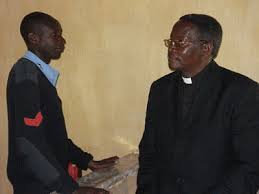
Fr.John Makewa and his Lawyer Fred Nemisi celebrate outside a Makueni court after the priest was acquitted of attempted murder charges Photo:Nation
In the wee hours on the 21st day of March 2010, Fr. Fidhelis Nzuki was startled from his sleep by Makueni Parish Father -in -Charge and fellow priest Fr. John Makewa. Apparently, robbers had invaded the parish house located at the outskirts of Wote town and the priest, a mentor to Fr. Nzuki and a close confidante of close to ten years sought his help to repulse the thugs who had struck the parish residence at around 5.00 am.
Sensing the imminent threat, Fr. Nzuki hurriedly woke up and when Fr. Makewa gave him a pistol and three bullets to confront the robbers, he readily accepted unknown to him that the real danger lurked from within.
While testifying in a case, in which Fr. Makewa was acquitted last week by a Makueni court for attempting to murder him, Fr. Nzuki currently a teacher at St. Paul Seminary Secondary School in Katoloni, Machakos County, said Fr. Makewa after handing him the pistol, requested him to open the door of the corridor leading to the exit door. When he reached for the lock, Fr. Makewa shot him, not once but thrice, injuring him in the abdomen, upper arm and both thighs.
Fr. Makewa would later be charged for attempted murder in a Makueni court in 2010, leading to a grueling five – year legal battle that would see Fr. Nzuki lose the case on flimsy grounds of lack of sufficient evidence. Last Wednesday, Senior Resident Magistrate Richard Koech set Fr. Makewa free saying that the court could not establish whether he shot Fr. Nzuki.
Fr.Makewa in a Makueni court
In his judgment, Koech accused the police of bungling the investigations saying that although Fr. Makewa’s gun had been fired it was not possible to ascertain whether he indeed attempted to kill Fr. Nzuki.
“The police did not produce any spend cartridges and the court cannot therefore establish who shot the priest without cartridges,” said the magistrate.
Koech further argued that the accused facilitated for the complainant to be rushed to Makueni Level Four Hospital and later organized for him to be transferred to Mater Hospital for specialized treatment where the accused visited the complainant him six times.
“I find the accused actions consistent with innocence rather than quilt,” he stated.
But was the evidence insufficient to let Fr. Makewa off the hook? Perhaps not. The ballistic report by the doctor, who examined the complainant, stated that the exhibits that had been dislodged in Fr. Nzuki’s thighs matched the double- barreled shotgun that Fr. Makewa reportedly used to repulse the thugs.
Moreover the 15 witnesses who testified before the court admitted to not seeing any thugs, only Fr. Makewa spotted them, despite a black out on the fateful day.
But the reason as to why a priest would want to kill not only a fellow priest but also a friend is a question that will continue to linger in the minds of many people especially the catholic flock in Makueni that keenly followed the case to its conclusion. Interestingly, even the court could not establish the motive behind the attempted killing.
Although a theory of a love triangle involving both priests surfaced in court as the reason behind the shooting, the picture painted by the two and all the 15 witnesses about their relationship suggested otherwise. From the description, the two were bosom friends and both priests even vehemently denied of any existence of a misunderstand, leave alone a passion wrangle.
“We had never differed on anything for those ten years I knew Fr. Nzuki,”said Fr. Makewa.
A fact reaffirmed by Fr. Boniface Kioko who was sleeping in an adjacent room when whole incident unfolded.
“Their relationship was cordial and there were no tell – tale signs that anything could have been wrong,” said Fr. Boniface.
Fr. Nzuki also admitted being close Fr. Makewa. He was a regular visitor to the parish and on the material day, had traveled from the University of Nairobi where he was pursuing a Bachelor of Education degree to see his friend.
“I would come over the weekends countless times to Makueni to see Fr. Makewa who would assign me some duties in the church and then go back to college,” he said.
On 20th March, he had traveled as usual and arrived in the evening. Together with Fr. Makewa and two other priests, Fr Michael Mutuku, and Fr Boniface and seminarian Boniface Mutua ate supper at the living room and exchanged pleasantries until past midnight when a blackout forced the other priests to retire to bed, leaving the two friends in the sitting room.
“After the blackout we went to sleep and left the two chatting and taking some beer,” said Fr. Boniface.
He told the court he could overhear the jocular conversation between the two but later drifted to sleep only to be woken up by gunshots, some hours later.
“I could hear Fr. Nzuki telling Fr. Makewa how he would soon finish his studies at the university, they sounded happy. I slept and was stirred from sleep by gunshots,” said Fr.Boniface.
He said he heard Fr. Nzuki screaming and responded quickly only to find him lying on the corridor bleeding profusely, from gun wounds.
“We all rushed to the corridor and found father writhing in pain. He requested Fr. Michael to give him an anointing of the sick before he was rushed to the hospital,” said the priest and denied seeing any thugs.
Fr. Boniface narration of events of the fateful day is similar with Fr. Nzuki’s version who feels robbed of justice by the judgment.
“After I went to open the door Fr. Makewa shot me. I told him that he had shot me and even ripped off my manhood but he wished me dead,” he stated in his testimony and accused Fr. Makewa of lying to the court that robbers shot him.
“There were no robbers Fr. Makewa shot me,” he maintained.
However, the script for Fr. Makewa reads different. The priest told the court that armed robbers who had broken into their residence shot Fr. Nzuki. He reiterated his close relationship with Fr. Nzuki saying that he had never in his lifetime harbored any reason to kill his best friend.
“Fr. Nzuki was my best friend, I was even known to his parents in Kangundo. I helped him educate his siblings and took one of them to the army force through my influence,” he said.
He recounted how on the fateful day he was woken up by gunshots.
“At around 5am I saw a flash light and heard a gun shot. When I peeped from my bedroom window I saw five thugs and immediately went to wake up my colleagues including the complainant,” said Fr. Makewa.
He said that he took his shotgun and fired four times through the window and went back to his bedroom to answer his phone that was ringing only for him to return and find Fr. Nzuki lying on the corridor leading to exit door having been shot.
“The robbers shot Fr. Nzuki.I did not shoot him.I did not run out of bullets and if I wanted to kill him I would have used other means,” he said.
Fr. Makewa’s version was however refuted by Makueni Director of Prosecutions Pithon Mwangi who wondered why the priest was the only one who spotted the thugs.
“It’s rather peculiar that none of the 15 prosecution witnesses confessed to have seen the robbers apart from Fr. Makewa,”he argued.
This was not the first time the priest had after all misused his gun, he had while serving at Katangi parish, according to the state counsel exchanged fire twice, allegedly with gangsters and one instance shot and injured a burglar who reportedly tried to gain access to the parish residence.
Why the magistrate choose to overlook the evidence by the prosecution and let the accused off the hook while an earlier judgment had convicted the priest to seven years in prison for the crime is baffling. In 2012, Tawa Senior Resident Magistrate Mr. Gichimu Waititu found the priest guilty and handed him the seven-year sentence. The case had been referred to him despite a full trial by Makueni Principal Magistrate Joseph Karanja who declined to give a verdict amid bribery allegations.
Waititu said in his 2012 June ruling:
“The evidence that has been tendered before the court is sufficient to prove that the accused person attempted to unlawfully cause the death of the complainant. The prosecution has proved its case against the accused beyond reasonable doubt. The accused person is found guilty of attempting to murder the complainant as charged. He is convicted accordingly under section 215 of the criminal procedure code.”
Fr.Makewa led out of the Tawa court room after he was convicted to seven years in jail
However, Fr. Makewa successfully appealed the case and a Machakos high court ordered a retrial that has now set the once influential and powerful priest free.
Fr. Makewa’s counsel Fred Nemisi while celebrating the victory faulted the Tawa court for sentencing his client to seven years.
“The court erred in convicting my client with no concrete evidence, finally he has been vindicated,” he said amid cheers from Fr. Makewa’s supporters.
He expressed confidence that his client would be given back his guns which police confiscated after the incident and that he would also be reinstated back to serve his faithfuls in the Catholic Church.
“Now that my client has been set free he should be given his weapons and granted a chance to serve in the church,”he said.
Nemisi in his submission had put a strong defense and that could probably explain why they won the case. The lawyer had argued that his client was an upright man and a development conscious person who dined with who is who in the country.
He paraded to the court framed photos of Fr. Makewa with former presidents Daniel Moi and Mwai Kibaki and the former vice presidents Moody Awori and Wiper Party Leader Kalonzo Musyoka.
“My client is very influential and a man of his stature cannot surely commit such an offense. I plead with the court to make a fair judgment,” he said.
After Fr. Makewa was set free, the lawyer could not hide his joy and extolled the magistrate for what he termed as ‘solomonic ruling’.
“My client has suffered for long, justice has finally been served,” said the elated Nemisi.
While Fr.Makewa and his supporters continue to celebrate the triumph, the judgment has also continued to draw mixed reactions.
Notably, Fr. Nzuki has expressed his disappointment on the outcome of the case.
Fr.Nzuki and his mother in Tawa court
“There is no justice,” he said.
Asked why he never forgave Fr. Makewa as a man of God, the priest said that the accused had never been remorseful.
“Fr. Makewa has never admitted that he shot me, neither has he ever asked for my forgiveness,” he said.
Rita Mutuku, a resident and a faithful at Makueni parish concurs with Fr. Nzuki.
“It is no secret that Fr. Makewa was responsible for the crime, am saddened that the court decided to let him free but we hope and pray that God will deliver justice,” she said.
“If Fr. Makewa shot Fr. Nzuki what other evidence did the court want?” posed Ms. Mutuku.
Thaddeus Masila also a resident said from the judgment it is evident that the court overlooked critical evidence.
“There is no justice in this judgment, quite discouraging,” he said.
Masila has no kind words for Fr. Makewa.
“I hope he will not come back to Makueni, his actions were a disgrace,” he said.
Kenya Monitor last Friday caught up with Fr. Makewa at the Wote police station on a mission that he declined to divulge. He was upbeat and looked forward to a bright future.
“Am happy that am now free. I have been a priest for the last 30 years and I have diligently served my duties. I have initiated a lot of projects in Makueni and Katangi and others areas that I have worked,” he said.
He disclosed that the five years that he had been ex-communicated by the church was the worst in his life and at one point castigated the media for ‘disparaging’ him.
His parting shot,
“The media should report objectively,”
With the conclusion of the case Fr. Makewa can enjoy his new found freedom while one can only hope that Fr. Nzuki who says that he escaped death by a whisker will find somewhere in his heart to forgive the perpetrator of the heinous act.