The world as we know it, exists in its current form due to a number of intervening factors and key among them is this; media freedom and the freedom of expression. Africa is indeed rising and it we have to borrow any precedents from our more advanced brothers then we must cheris, among other things, the rights and freedoms enshrined ‘ m our constitutions. We must allow the population to talk among themselves, to the governing class, and even beyond our countries’ borders.
Kenya is no exemption. A few years ago, one Bitange Ndemo (in his capacity as the minister in charge of all things IT) introduced us to his dream of a Silicon Savanah. A dream that other techpreneurs like Erik Hersman had been nursing in silence for quite some time. We, embraced that dream and as a country refuse to be dissuaded, despite all the false starts, that that dream is impossible to achieve! A testament to our resilience; perhaps, or ignorance; most likely.
Ignorance because we cannot even get close to achieving such an ambitious goal unless, as a country we learn a few fundamentals:
We will never develop a thriving IT industry unless we allow the players within the industry sufficient rights to experiment, talk and innovate
The solution to many of our problems will be sowed by the private sector and not our cash-strained government. As such, the government must accept to take the back seat and allow the private sector to develop by providing an enabling environment free from intimidation .
Ultimately, we must learn that we are the government!We owe it to ourselves and our children to ensure that this country works. ln the event that the above-mentioned conditions are not met or the ruling elite is unwilling or unlikely to provide sufficient freedoms to ensure we, someday, live that dream we have so dearly held then we as the the people, the constitutional bearers of absolute power must do what we must, demand that our basic rights and freedoms be duly respected.
Today is Internet Freedom day. In the recent past, several online content creators have been arrested over allegations of defaming public officias even as a politician was been pardoned over hate speech allegations in the name of national cohesion! This is a worrying precedent and should the trend continue, then l must surmise that our dreams of a Silicon Savannah are but a mirage, and a fast-fading one at that!
Either we shall either be forced to give up such lofty Ndemo-ish ideas and dreams or as a government, GIVE UNTO OURSELVES the kind of leadership that will enable us achieve them. Either way, something’s or someone’s gotta give!
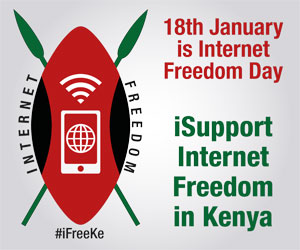
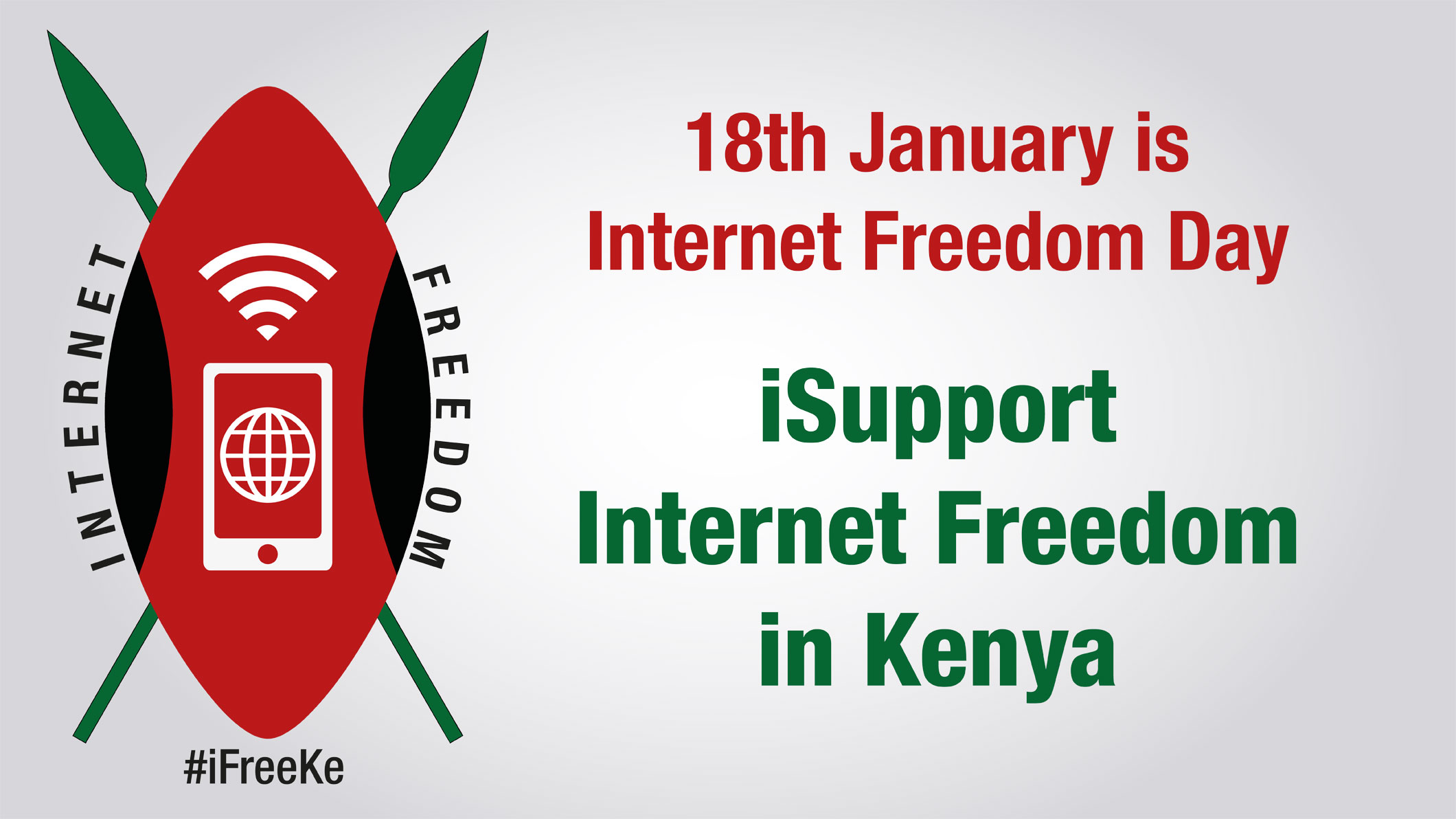
January 18th is Internet Freedom Day, an opportunity to reflect on and celebrate our freedom of expression.
As a part of the campaign to mark the day, Bloggers Association of Kenya (BAKE) is calling on all Kenyans Online to write about something they love on the Internet that they never want to see censored. Your contribution can be in the form of blog posts, tweets, Facebook updates and/or YouTube videos.
Join BAKE and other organizations around the world and take part in defending our free expression rights online.
Actions to take on 18th January Internet Freedom Day
Write on what free expression online means to you (Either in form of a Blog post, Tweet or Facebook update)
What’s something you love on the net that you’d never want to see censored? (Either in form of a Blog post, Tweet or Facebook update)
Share on your Social Media profiles what free expression online means to you and why it needs to be protected
Participate in a Social Media Blast on 18th January from 11am – 4pm using the Hashtag #iFreeKe
Sign the Declaration of Social Media Freedom in Kenya
Visit Kenya Monitor for more actions and information
Social media only features on our daily plate of bad places to hate on each other because it is sexy.
It is sexy for the government to be seen as working to inculcate (not restore, we have never been united) true national cohesion and the warm fuzzy feeling of hating each other beyond tribe and gender. Social media offers the older bureaucrats a chance to show the younger online generation whose boss. The sad thing is that in our peace lobotomy, we have validated it. We feel that the limits of the Bill of Rights apply to situations where we have a responsibility to be responsible. Incitement does not shift the locus of responsibility from the actor unless he or she is a young child or has a mental disability. The end decision of whether to hate your fellow man lies with you and your environment (and if you are religious, your respective deity).
African governments are scared of social media. Social media brought down Hosni Mubarak in less than three weeks despite his desperate attempts to block its use. So now African governments, beginning in Malawi, Zambia, and now Kenya, are now seeking to follow the China model, with less glamour and innovation (The Chinese have the decency to provide Baidu and other alternatives to control ‘subversion’).
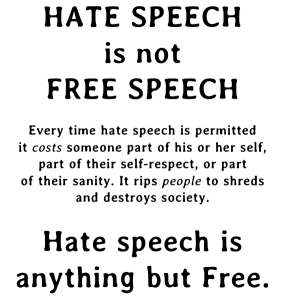
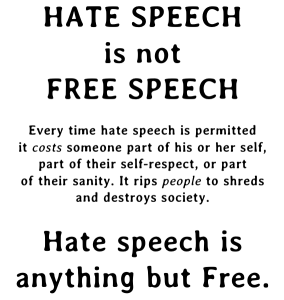
Hate speech assumes that the reader does not have a responsibility to decide whether to pick up a machete and slaughter his neighbor and burn a church full of people. It assumes that you, as the reader, do not have a choice to decide to stop reading this and close the tab. I owe you a responsibility to be politically correct and to be sensitive to what might read like revolutionary material. You owe me as much responsibility for understanding this, for example, as I owe you for choosing these words. They would be ineffective if you could not understand them, contextually.
In the ‘Mau Mau’ War, hate speech took the form of propaganda pamphlets that were distributed by both sides, and included many forms of expression, including the content of oaths and war songs, this evolved into the implied hate speeches that drove the intrigues of the first government under Kenyatta the Elder, and was perfected under Moi. We lost the script when society kept quiet as Ngugi wa Thiong’o, Koigi wa Wamwere, Wahome Mutahi and others were detained for ‘sedition’ and other such ridiculous crimes. To the people, the state was not to be questioned, peace and sustainability (read self-preservation) were king, the same thing we are going through right now. Until the Second Liberation took place and we all temporarily realized that the ones who say ‘bad things’ need protection. Our view is largely libertarian and communitarian. Libertarians believe that the right to free speech may be limited only for compelling reasons such as fighting words. Communitarians believe in the community’s ‘well-being.’
We all know what happens when we let the government, or anyone in a position of power, infringe on the rights of a few people. At first, it is all bliss and calls of ‘JAIL THE TRAITORS OF OUR COSMETIC PEACE AND NATIONAL COHESION!’ ‘JAIL THOSE MYOPIC BACKWARD PEOPLE WHO ARE ONLY TELLING US WHAT WE THINK OF IN THE COMFORT OF OUR OWN HOMES AND MINDS.’ Before long, all is lost, and now a typographic error that accidentally connects someone’s name with the word ‘stupid or incompetent’ qualifies as a capital offence. Is this it? This cannot happen? It already is at an advanced stage. The press is now too tainted by corporate influence to matter, the civil societies are no longer civil or focused on society, the government is just being well, the government (the garb has changed, the body is still the same despite going on mandatory ‘cabinet lift and devolution’ cosmetics). We have so much coffee we should be waking up to but we are busy uprooting it to build gated communities. Voltaire said that if you want to know who controls you, just check whom you are not allowed to criticize.
This article first appeared on Owaahh’s Blog. Read the Full Article Here Morris Kiruga is a writer and researcher. He blogs at www.owaahh.com every so often, but spends most of his time eating bananas.
As an organisation that represents the interest of bloggers and content creators in Kenya, we the Bloggers Association of Kenya (BAKE) are concerned with the process followed in the jailing and prosecution of Kenyan Bloggers and Online Content Creators. The Kenyan Government is seemingly becoming quite intolerant of voices of dissent and dissident Kenyans who have taken to Social media platforms to exercise their freedom of speech.
In December 2014, Allan Wadi was sentenced to serve 2 years in jail for a hate speech offense against President Uhuru Kenyatta due to updates on his Facebook page. Kenyan Blogger Robert Alai is currently out on bail for a case brought against him for undermining the President due to his tweets published from his twitter handle. Nancy Mbindalah. A 24 year old student at the Mt. Kenya University is in police custody for allegedly insulting the Embu County Governor on her Facebook page.
This comes at a time when utterances that were evidently hate speech were made by the Member of Parliament for Gatundu South, Moses Kuria on the same Social Media platform. However, the Member of Parliament was pardoned by the National Cohesion and Integration Commission for the similar charges of Hate Speech on Social Media. No jail term has been given to the Member of Parliament.
While we do not, in any way condone the behaviour of some online content creators, be they our members or not, we find the rulings punitive and a means to discourage free speech online.These three cases of Allan Wadi, Robert Alai and Nancy Mbindalah have brought to light the government’s curtailing of free speech by the Kenyan online community and the limitations to their rights as Kenyan Citizens.
We do not regulate bloggers and we do not plan to. Blogs and social media are tools for self-expression and interaction. They allow Kenyan Citizens and to exercise their right to free speech and expression on the internet. We thus cannot curtail these freedoms. We however do require that our members adhere to a code of conduct especially in regards to plagiarism, defamation and adhere to our country’s laws.
There is increasing pressure to, not only regulate bloggers, but also, to intimidate them into silence for revealing information that the public have the right to know.
We have launched the iFreedoms project through the Kenya Monitor platform. This project will promote internet freedom in the East African region through digital security and safety skills development, creating awareness on the status of online freedoms and how to protect them. The project will amplify the voices of citizen journalists on freedom of expression and engagement, utilise art and culture to promote internet rights (artivism) and continue to document threats to access, privacy and security online in East Africa. We are also working towards provision of an in-house legal counsel that can advise as well as offer legal representation to our Blogger members who find themselves wrongly accused.
Freedom of expression is enshrined in Article 33 of the Constitution of Kenya and includes the right to seek, receive or impart information and ideas, while Article 31 provides for the right to privacy.
It is our hope that the existing laws will work towards the protection of all Kenyan Citizen online as well as protection of free speech rather than its misuse to selectively punish and discourage online discourse.
Bloggers Association of Kenya (BAKE) has launched the iFreedoms project through the Kenya Monitor platform (www.monitor.co.ke). This project will promote internet freedom in the East African region through digital security and safety skills development, creating awareness on the status of online freedoms and how to protect them. The project will amplify the voices of citizen journalists on freedom of expression and engagement, utilise art and culture to promote internet rights (artivism) and continue to document threats to access, privacy and security online in East Africa. We are also working towards provision of an in-house legal counsel that can advise as well as offer legal representation to our Blogger members who find themselves wrongly accused.
As documented by www.freedomhouse.org, While surveillance of the internet and mobile phones was not previously a serious concern in Kenya, worries over increasing cyber crime and potential unrest surrounding the March elections led the government to implement precautionary surveillance measures to curb the spread of hate speech. In March 2012, the Communications Commission of Kenya ( CCK) now Communications Authority of Kenya (CAK ) announced that telecom service providers needed to install the internet traffic monitoring equipment NEWS, which would help establish early responses to detected cyber threats.
Freedom of expression is enshrined in Article 33 of the Constitution of Kenya and includes the right to seek, receive or impart information and ideas, while Article 31 provides for the right to privacy.
As of May 2013, no further information is known about the extent to which service providers have complied with the installation requirement or how the system has been put into practice. Nevertheless, the interception of messages or the disclosure of their content remains a criminal offence.
The Kenyan Government is seemingly becoming quite intolerant of voices of dissent and dissident Kenyans who have continued to become more vocal on Social Media and Blogs.
The recently assented Amendment to the Security Law not only targets the media or traditional media as we now refer to it and professional Journalists, but it is also seeking to curtail the freedoms of ordinary citizens’ speech through platforms online such as social media including blogs, twitter and Facebook.
As the number and bloggers and readers of online content in Kenya continue to increase, we are seeing an increase in the variety of topics and issues covered. Indeed, there are a lot more Kenyan bloggers focusing on other topics of interest such as the governance, use of funds and developments in the counties they live in, governance, politics and other social issues.
There has also been increasing pressure on the Kenyan Government by politicians to have Kenyan bloggers regulated and to intimidate them into silence for revealing information that the public have the right to know.
The monitoring of bloggers and Social media users for negative sentiments about the government, which do not necessarily amount to hate speech have been rife with some bloggers being charged in court for posting ‘annoying tweets’ about a certain personality.
It is our hope that the existing laws will work towards the protection of all Kenyan Citizen online as well as protection of free speech rather than its misuse to selectively punish and discourage online discourse.
iFreedoms will highlight news and updates, violation incidents and legislative developments, and maintain an Information and resource repository on internet freedoms in Africa. It will also report contraventions to artists’ and artivists’ free expression.
The page is accepting and highlight stories, images, audio and video footage from the public which will then be verified and edited by a team of editors and then published. It will also track and aggregate any media (Text, Audio, visual) on Social media sites regarding threats to online speech.
The newly launched Sheng translation of the Constitution of Kenya 2010
Last week on Saturday 10th January, was the launch of the much anticipated Jukumu Letu country wide campaign to sensitize Kenyans on the need for every citizen to understand and participate in the implementation of the Kenyan Constitution.
This is a project derived from the broader Jukumu Letu programme that was developed and is being operationalised by Hivos and its partners.
.@JukumuNiLetu, an initiative by diff orgs to create convos about the Kenyan constitution being launched now at Mathare Primary #JukumuLetu
Jukumu Letu program is premised on the need for citizens to establish the link between democracy, governance and basic needs and motivation for them to take actions desirous for bettering their lives. The by-line of the initiative is what citizens can do and the attendant inspiration to take the action. The derivative of the Jukumu Letu programme is the realisation that breathing life to the Constitution of Kenya and also initiating eternal vigilance to its implementation should be the responsibility of every citizen.
Mobilising people to take up this role (at their level and in their communities) was the primary goal of the programme.
The impact of the constitution of Kenya will be lost if the Kenyan people cede their responsibilities to politicians, the academia and other institutional leaders. The transformation necessary must be one that creates a social revolution.
The revolution conceived is one where people take up the responsibility of knowing the constitution and taking such civic actions as are necessary to ensure that the letter and spirit of the constitution is implemented, protected and promoted. It is this revolution that shall save the country from the grip of corruption and political plunder.
This is exactly what made up the Nairobi launch which took place at the Drive Inn Primary School Mathare. Hosted and broadcast live by Ghetto radio, the event was a roaring success attended by hundreds of local residents and a team from the Netherlands Embassy to Kenya.
The launch which started at 11.30am brought together all the implementing partners, local artists and experts in Kenyan Constitution in a day filled with entertainment, education and interaction on what our responsibilities are Kenyans towards the implementation of the Constitution is.
Artists such as Juliani and Sarabi kept the crowd on their feet with their lyrically conscious music as the Creco Kenya team distributed copies of the Katiba Mtaani – A simplified and translated copy of the Kenyan Constitution in Sheng and ‘Wanjiku’s Power‘ – A booklet aimed at helping Kenyans to understand the Constitution of Kenya 2010.
The event offered a rare opportunity to the Nairobi residents to watch dramatized works in form of puppetry as well as skits and dances as well as interact with experts to answer their questions on what the current Kenyan Constitution says on aspects such as security as well as personal rights
The event came to a close at 6.30pm with a performance from Juliani.
Jukumu Letu will launched in all the 47 Kenyan counties with a similar program of Education, awareness, entertainment and engagement. The next county where the program will be launch will be Makueni in February.
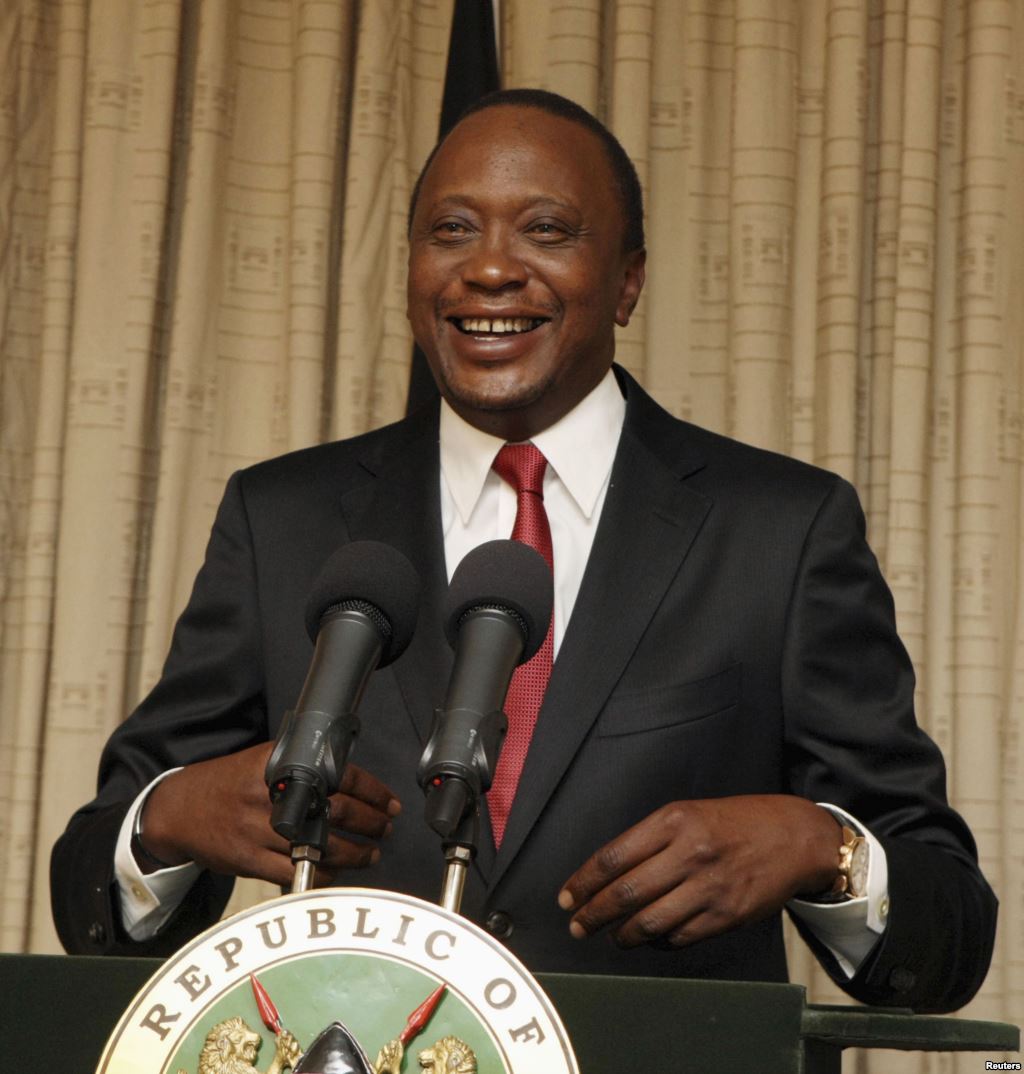
Kenya’s 4th President and the 1st under Kenya’s new Constitution- Uhuru Kenyatta
Kenya’s first constitution was more a replica of British system of governance and ultimately centralized government power to serve the needs of a small political elite. One of chief aims of the Kenya’s 2010 constitution was to reduce the power of Kenya’s “imperial presidency” through formal constraints on the executive. Including allowing him to be impeached. Past presidents used loopholes in the old constitution as buy-outs. For example, the president had land distribution powers. This, they used to buy supporters and enrich themselves.
One of the reason of reducing the president’s authority was to temper violence surrounding elections, because the power that was involved in the presidency was massive. This was the primary goal of the new constitution among others to drastically reduce the powers of the executive arm of the government.
To do this, the new constitution reduces the power of the president.
After the promulgation, all the major presidential appointments in state offices, must be approved by Parliament.
In addition, the president’s cabinet was reduced from 48 to 24 members. The president can now only appoint non-parliament members to cabinet positions, a move that was meant to curb corrupt political patronage.
The president can no longer suspend or dissolve the National Assembly; its members will be elected to fixed 5-year terms. The president will no longer exercise any control over the Election Commission, which will now be completely independent.
The new constitution goal was to place more power directly into the hands of Kenyan citizens unlike the previous constitution which all powers laid directly with the president and all major state offices were occupied on the mercies of the president.
Bill of rights also gave the Kenyan Citizens more power and protection of their political, economic and social rights, freedom of expression, and protection of property and consumer rights.
Although the bill grants the government limited authority to curb certain rights under special circumstances, it is extremely explicit in outlining the requirements and/or justification for any legislation restricting such rights. The new constitution also prohibits the government from limiting or removing some rights at any time or under any circumstance.
– STOCK PHOTO
The respect for human rights is one of the basic postulates for an ideal society that acknowledges the right of all to search for happiness and advance the greatest happiness for the greatest number of people.
The principles of human rights are founded on the idea that in an individual’s search for happiness, one should not diminish that of others. The Kenyan constitution is the best expression in the citizens’ search for happiness.
The Bill of Rights is anchored of the principles of international human rights law and at the heart of it are international human rights instruments such as the Universal Declaration of Human Rights (UDHR) and the International Covenant on Civil and Political Rights.
The constitution reaffirms faith in fundamental human rights, in the dignity and worth of the human person and in the equal rights of men and women to promote social progress and better standards of life in larger freedom.
Guided by the rule of law, the bill of rights seeks to protect individuals from tyranny and oppression and subjects all individuals to equal treatment, including right to equal opportunities in political, economic and social spheres.
It protects all citizens from all forms of discrimination on any grounds and like the UDHR it recognizes that all human beings are born free and equal in dignity and rights. They are endowed by their creator with reason and conscience and should act towards one another in a spirit of brotherhood.
Kenya’s old constitution acknowledges some of the rights and freedoms inherent to the person but could be altered by political actors at a time of their choosing. The constitution establishes the Kenya National Human Rights and Equality Commission to promote respect for human rights and develop a culture of human rights in the country.
On past human rights violations, the constitution establish rules for redress and initiates reforms that seek forestall the recurrence of such violations.
In its defense for basic human rights that are unalienable, the Kenya constitution stands tall in the assembly of the world’s most progressive constitutions and appreciates that all men and women are created equal and that they are endowed by their creator with certain unalienable Rights.
It presents limitations to these especially where in enjoying these rights, individuals may limit the rights of others. In upholding the freedom of expression in article 33, also expressed in article 19 of the International Covenant on Civil and Political Rights, the constitution provides that the right to express oneself does not extend to propaganda to war, incitement to violence, hate speech and advocacy of hatred.
Kenya has in the past faced ethnic violence and killings that have been attributed to incitement to violence and hate speech against member of particular communities.
The constitution seek redress to such errors of the past and becomes the vanguard of the individual to exist and take pride in being a Kenyan.
It is now 51 years since Kenya was redeemed from the yoke of the British Empire. The entire colonial venture was an unjust cause that violated the right of the African to exist in the land of his forefathers. At independence the first dance of freedom was soon over and people realized they had new masters to serve and violation of human rights marked the first 4 decades of independence.
The Bill of Rights stands guard against any institution now and in the future that may limit the right of individuals to enjoy those rights.
In the past of order of things, the president was paramount chief of the land, a patriarch (baba wa taifa) who could neither be challenged substantively by the courts or parliament. His word was law and policy and those who shared his delegated authority acted like small chiefs of various fiefdoms in the country, some of them chiefs and District Officers could appropriate the properties of others for personal gain without suffering legal sanction. The president was an all knowing being who had a monopoly of knowledge and was assumed to act in public interest, this assumption was pretty on the country. This was the old bad order of things, it needed remedy and that is exactly what we got in our new constitution.
The new constitution of Kenya promulgated in August of 2010 was passed to ensure that there were sufficient checks and balances between state organs and particularly to check the excesses of the executive arm of government in the exercise of power, the president was no longer patriarch, he was just but an important cog in the country’s engine of governance which had many other important levers and cogs. For this reason the doctrine of separation of powers was heavily intertwined in the structure of the constitution. Different arms of government and constitutional commissions and offices were set up in order to achieve this goal. In order to meet structural goals the constitutional commissions were given full autonomy, had definite funding and were structured in such a way that they did not have to depend on parliament or the executive for funding. However as the constitution has been in force for around four years now, there is need to examine whether these constitutional commissions and the principle of separation is working.
Is the principle of separation and limitation of powers working as envisaged in the constitution? We could look at the mandates of key institutions to answer this question.
The Kenya National Human Rights and Equality Commission is a constitutional commission with a mandate to further the application and protection of human rights in the country. In other words the Commission is supposed to watchdog other arms of government, particularly the ones that deal with the administration of justice, law and order. However the commission’s efficacy at highlighting key issues of rights abuses has been into question. At the moment issues of human rights have been brought to the fore by the non-state civil society. The commission has been conspicuous in its inaction, it has largely remained mum in the face of growing human rights abuses in various parts in Kenya by the police, in Lamu, the unconstitutional raids on mosques in Mombasa and even crackdowns by sub-national units like the counties. A study conducted by the Independent Medico Legal Unit (IMLU) has documented wide spread torture by city council askaris on small traders in Nairobi, yet some the Kenya Human Rights and Constitutional Commission has failed to become a moralizing force calling for broader application of human rights in the country.
Another commission that has failed and failed spectacularly at protecting public interest is the Salaries and Remuneration Commission. The SRC has a mandate to review the salaries and remunerations of key state officers. By so doing the commission meets the goals of ensuring that net spend on public wages is sustainable and within the frameworks of good fiscal governance. Yet the SRC has basically failed at meeting this goal, institutional failure on its part has seen Members of Parliament, Members of County Assembly and other trade unions clamor for higher wages and getting them, this in essence going against the principles of sound public finance management. In light of these institutional failures, one wonders what the justification of these constitutional commission is.
Yet constitutional commissions are not the only blameless institutions in this country, both at the national and county level legislative, executive and judicial institutions have failed, leaving the maxim of separation of powers jeopardized. The paralysis that has been witnessed in some several counties is testament to the withering doctrine of separation of powers. In Makueni for example the, the County has made the county ungovernable by making in a manner that overtly usurps the executive powers of the governor and his team. Indeed legislative oversight has its own limits, the respect and equality of arms of government is an important feature in our constitution.
Although the constitution is as elaborate as a document could be, the lack of institutionalization of the rule of law has been the detriment of separation of powers, power hungry institutions want to have more power for institutional self-benefit and individual benefits to. The failure of separation of powers of powers is no more a failure of law than it is a function of moral corruption of the officers who know too well what the constitutional limits of their mandates are but choose to act otherwise.
Kenya’s new 47 Counties were as a direct result of devolution of power
The New Constitution was promulgated on August 27th 2010 and was the culmination of 41 years of protests and lobbying. Kenyans celebrated and the world celebrated with us. We finally had achieved what so much had been sacrificed for. Amid all this celebration and the subsequent jaded four years since then, it’s easy to forget why a new constitution was important in the first place.
Let’s start from the beginning. There are quite a number of definitions of a constitution. I will hone in on two. A constitution refers to that assemblage of laws, institutions and customs, derived from certain fixed principles of reason directed to certain fixed objects of public good that compose the general system, according to which the community has agreed to be governed and a constitution is the instrument or law that organizes and manages governance. There are two major types of constitutions: written and unwritten/abstract, which are also further divided down into Rigid and Flexible Constitutions depending on how difficult it is to make changes and Unitary and Federal Constitutions depending on whether power is centralized or decentralized.
A constitution is important for several reasons: it empowers the state, establishes the values and ideals of a nation, gives rights and therefore responsibilities to citizens, lends legitimacy to the state/government, ensures accountability, transparency and responsiveness, ensures wealth distribution for common services that promote individual well being and guarantees checks on authorities by separating their functions and roles. It is therefore quite apparent that a constitution is the engine that makes it possible for a country, especially a democracy, to move forward.
The basic principles of the constitution are:
Popular sovereignty: Article 1 of the Constitution of Kenya, 2010 provides that all sovereign power belongs to the people of Kenya and shall be exercised in accordance with the constitution either directly or through their democratically elected representatives.
Limited Government/Constitutionalism: This involves the limitation of the state by the law, with institutions performing their roles according to predetermined and acceptable norms and where individual rights are respected. It implies a balance between the power of the government and the right of the citizens.
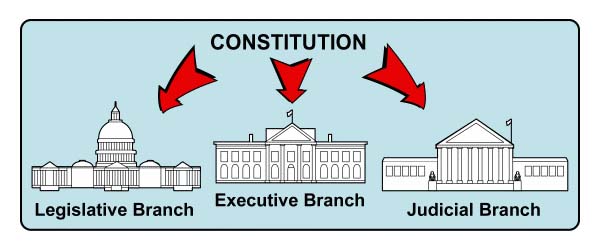
Separation of powers: This allows for the government to be separated into three distinct arms. The Executive, Legislature and Judiciary.
Judicial review: Article 47 of the constitution provides for the right to fair administrative action that is expeditious, lawful, efficient and reasonable.
Devolution of power: A process through which powers, functions, responsibilities and resources are transferred from central to local government or other decentralized entities. Article 1(4) of the Constitution of Kenya, 2010 provides that the sovereign power of the people of Kenya is exercised at two levels: national level and the county level.
There have been attempts to water down the constitution and it is therefore important for citizens to understand why the constitution is an important document. Citizens must take advantage of the responsibilities given to them by the constitution and fully participate by taking an interest in the country’s state affairs and processes. We must be proactive and remain vigilant by raising our voices to ask questions and using other lawful ways to keep the state accountable.
I walk into a room and my friends are in the middle of a very heated discussion on abortions and how the Kenya Constitution has a laudable stand as regards procuring abortions and while at it has not legalized the ‘evilised’ practice in the society. There’s this specific friend of mine that was being bashed quite literally by everyone so i sought to find out what exactly the question in issue was and this is what she had to say “Here’s the thing,abortion in our constitution has been legalized in the event the life of the mother is in danger,or if permitted by any other written law, which in my opinion is rather unacceptable.I mean we live in a society that people take anything for an answer without keenly looking at the moral consequences of a situation however grave.” to justify this he went on to say how by simply saying the mother’s life was in danger one could get away with an abortion.Off course i just comment on the face of it and life goes on,we did not however have a common stand as to whether the provision in the Constitution of Kenya 2010 was one to be lauded or not.
This prompted the question on whether the abortion right (limited) is right.Is it acceptable in society?
The very controversial discourse on law and morality interacting societal issues and the law is a discussion we come across way too often yet not a subject ultimately decided on.Who decides what is wrong and what is not? whose morality is the concept of wrong and right based on? The supreme law of the land that saw its promulgation in August 2010 gives this stand on abortion;
Article 26 provides;
(1) every person has the right to life
(2) the life of a person begins at conception
(3) a person shall not be deprived of life intentionally except to the extent authorized by this Constitution or other written law
(4) abortion is not permitted unless in the opinion of a trained health professional, there is need for emergency treatment, or the life or health of the mother is in danger or if permitted by any other written law
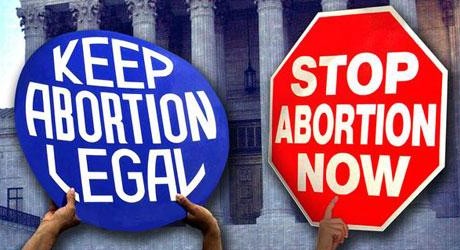
Before the promulgation of the Constitution of Kenya 2010 and even through its drafting the issue of abortion had been a bone of contention between the pro-life and pro-choice groups. The pro-life group advocating for the sanctity of life arguing how every life was important and began at conception.Begs the question,doesn’t the mother have a right to life too as a universal right enjoyed by every individual? The religious institutions gave an opinion on this issue arguing that the abortion clause should be gotten rid of altogether since it advocated for termination of a life which contradicts their beliefs which are protected under Article 32(1). This move by the religious institutions was in a way asserting that religious beliefs should be the base of our morality and in turn,the law.
The pro-choice group on the other hand argues that legalization of abortion is key in preventing maternal deaths.And the question of right to life all over again finds its way into the discussion,prevention of maternal death in itself is aimed at preserving a mothers life in the case of complications during a pregnancy that cannot be carried to term.According to a survey, approximately 35% of Kenya’s maternal deaths are caused by unsafe abortions.An estimated 800 abortions, induced or unprompted, occur on a daily basis and over 2600 women in Kenya die due to unsafe abortions.As per the survey, pro-choice group’s sentiments would only be viable if legalisation of the procedure would guarantee safety. How then, will the meaning of legal abortion be implemented in the current medical system.
The announcement of a new constitution saw a new dawn as regards abortion and as well many other fundamental points of interests as such devolution,separation of powers just to name a few.In the same way the Wanjiku had expectations on how the new law would safeguard their interests more efficiently as opposed to the old law which as regards abortions for instance,simply prohibited it,no more no less , they expected the introduction of the abortion clause,a bid to save the life of the mother and still uphold the right to life.
Four birthdays later and Wanjiku does not have much to write home about as concerns the effects that article 26 has on their reproductive health and in extension its role in the stigma associated with this subject.Imagine a world,where there is no victimization associated with legal abortion within the meaning of Article 26.
Demystifying the so called taboo starts with addressing the very specifics that the new document highlights for instance what is the meaning of a trained health professional within the constitutional framework. The worry being, can a nurse or a clinical officer authorise this high risk procedure and how would the pro choice group ensure this is adhered to without bringing up the question of morality as pertains the integrity of the health professionals.In a society of loose morals,the word ‘legal abortion’ would be a relative term.
After all is said and done,a procedure has been set up to ensure abortions are safely administered,and even when the rate of unsafe abortion becomes negligible,does it make it right?I do not think so!
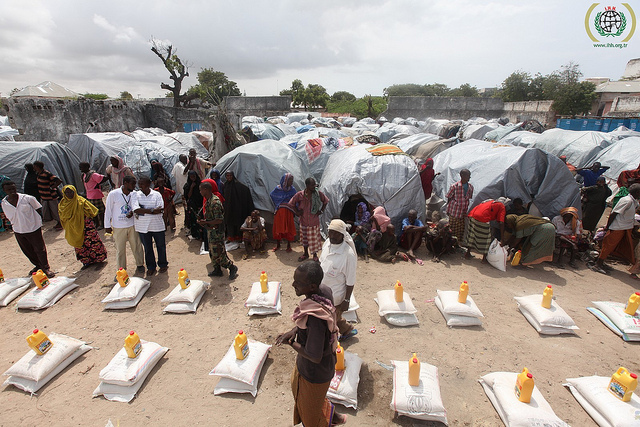
Abuse of Somali refugees in Kenya (image courtesy)
We cannot violate another person’s humanity without violating our own. This realization led to the adoption of the Universal Declaration of Human Rights by the General Assembly on December 10, 1948. We marked 68 years this week since then, and it cannot be denied that there have been huge gains in human rights world over. However, we must also acknowledge that there is room for improvement and that we as citizens have a role to play.
It is not possible to participate in what you do not know. It’s therefore important to understand what human rights are so as to better participate in upholding and defending them. Human rights are legal guarantees that protect individuals and groups against actions which interfere with fundamental freedoms and human dignity.
Human Rights are classified into three: Civil and Political Rights that ensure one’s ability to participate in the civil and political life of the State without discrimination or repression such as Freedom from slavery, servitude and forced labour (Article 30), Right to privacy (Article 31), Freedom of conscience, religion, belief and opinion (Article 32) and Freedom of the media (Article 34); Economic, Social and Cultural Rights and Collective that seek to provide minimum protection of social safety of the person dependent on a on a State’s economic abilities such as education, security and fair remuneration and working conditions; Group and Community Rights that define obligations of the government in relation to groups of people such as minority and special interest groups.
Two important characteristics of human rights are that they are universal which means they apply to every human being regardless of their race, gender, nationality or creed and they are indivisible meaning that people are entitled to all the rights stipulated. This is important to note as it clears the doubts that one’s human rights can be suspended. Another important note to make is that human rights are not new. Long before colonization, our forefathers had a system of fairness that was used to protect members of the society. The traditional laws may not have been to the level of the current stipulations on human rights, but there was an effort to treat people justly and it was a community effort.
The New Constitution has seen Kenya adopt an advanced Bill of Rights that has conferred certain rights to citizens. The Bill of Rights is covered in Chapter 4 of the constitution and is the constitution’s longest chapter. Clause 3 of article 19 makes it clear that the freedoms of the Bill of Rights “belong to each individual and are not granted by the state” making these rights inalienable and therefore cannot be taken away by anyone including the State. The State therefore is obliged to uphold and guarantee human rights.
Human Rights should not be just an intellectual reality where there is awareness of them but a lived reality where this knowledge is acted upon by the society in a bid to implement these rights for every human being’s enjoyment of them. This calls for participation from every citizen. We all must recognize the equality of all human beings and that their (and our) humanity confers inalienable rights on them and we must be aware of what these rights are. Information is power. We must also recognize that every right has a corresponding duty and therefore we have a responsibility to ensure that these rights are respected and upheld.
Some of the ways that citizens can play a role with respect to human rights by taking an interest in the country’s state affairs and processes and they must be proactive and remain vigilant, checking on government use of power and its implications on all their rights through exercising their right to vote, recalling errant political representatives, making complaints through the Ombudsman and the various human rights institutions, use of the courts system, lawful protests, petitions and picketing and active and informed participation in decision making at all levels.
Citizens also have the duty and responsibility to respect the rights of others. Even more important, we as citizens have the moral responsibility to stand for the upholding of these rights for others. We cannot enjoy these rights while at the same time witness them being denied to other people. The goal must be to create a country, and indeed a world, that has a strong human rights culture. It is the only way we can hope to ensure that every human being lives a dignified life.
The New Constitution was promulgated on 27 August 2010. The image that is probably etched on most Kenyans’ minds from this period is the former president, Mwai Kibaki, holding the constitution up with a grin on his face with ecstatic Kenyans wildly cheering. Oh and we all (or at least some of us anyway) learned that the word promulgate exists and what it means. Just in case you’ve forgotten, here’s a reminder. Promulgate: Formally proclaim or declaring a new statutory or administrative law in effect.
Here’s a quick history lesson. The 2010 constitution replaced the 1969 constitution which had replaced the 1963 constitution. The 1969 constitution differed from the 1963 constitution in the following major ways: Changed the governing structure from a federal to a unitary system, went from a bicameral legislature to a unicameral one and entrenched a powerful presidency. This powerful presidency was again reinvigorated by the 1982 amendment that saw Kenya become a single party state. The call for a democratic state put pressure on the then government to repeal the amendment in 1991 and Kenya was once again a multi-party state.
It was a long time coming and the road to its realization was paved with many false starts, including the botched Bomas Draft. Finally, after renewed efforts that put together a harmonized draft, the constitution was approved by 67% of Kenyans at a referendum on 4 August and subsequently promulgated 23 days later.
The New Constitution has been hailed as one of the best in the world. Suffice to say, it is a forward looking document that sets Kenya on the path to a thriving democracy. There is the issue of the bloated government, but that is something that can be fixed and in no way takes away from the spirit of the document. Some of the notable changes that came with the New Constitution include: A devolved system of government, an advanced bill of rights, the gender two-third rule, independence of the judiciary, creation of the National Land Commission as well as The Salaries and Remuneration Commission. Article 1(4) of the New Constitution recognizes that the sovereign power of the people is exercised at both the National and the County levels.
The Kenyan Constitution is currently a document that puts the citizens’ welfare first and looks to include Kenyans in the building of the nation and create an environment that fosters unity in this nation building. The advanced bill of rights and devolution that has led to services being closer to the people, are two gains that in my opinion cannot be taken for granted. These and other gains must be protected. It’s easy as citizens to be apathetic when it comes to the politics of the country. However, it must be stressed that rights and responsibilities go hand in hand. It took 41 years for us to get this constitution. In those 41 years, blood was shed, opportunities were lost and a country was brought to its knees. We who are fortunate to be living in current times, must recognize that we have a part to play in the growth of our country. The constitution makes room for citizen participation and the power of citizens’ to hold leaders accountable. We must take these responsibilities seriously, our history and those who changed it demand of us, not only for ourselves but also for future generations.
Speaking after the passing of the new constitution in 2010, then president Mwai Kibaki said the new constitution would be Kenya’s shield and defender in the strive to conquer poverty, disease and ignorance.
The three had been declared as the greatest enemies of the new nation soon after independence by founding father Jomo Kenyatta and it became the responsibility of the government and the citizenry to conquer them but half a century later the battle had not been won.
The new constitution established devolution where the old constitution had been silent on the answers to ignorance, poverty and disease in far outposts from the heart of government and enshrined the rights of the marginalised. It marked a new dawn for the marginalised to enjoy their rights as Kenyans.
In the epoch before its promulgation, development and delivery of government services in the marginalised areas and among marginalised communities was considered a political favour and a political cow that gave high yields whenever elections were called.
Marginalisation was a by-product of a repressive colonial system that was inherited by the independent government in 1963. The District Ordinance Act of 1926 was the first major decree of the colonial government that paved the way to decades of marginalisation.
Devolution is founded on the idea that local knowledge must be made part of the planning process of development programmes and allows for the inclusivity of the beneficiaries, provide different options to development needs and adopt dialogue in implementing development.
It recognised all citizens as being equal before the law and as one of the objects of devolution under article 174 accepted the rights of communities to manage their own affairs and to further their development. Through devolution, the marginalised would now take charge of their own economic destiny.
Where access to resources had been a political favour by those in authority, where the marginalised would look up to the state for hand-outs in much the same way that the descendants of Abraham would wait on a deity for manna, it became their right.
Devolution is meant to ensure the equitable sharing of the national and local resources throughout Kenya. This means that with the implementation of article 174(g), Kenya’s national resources would be shared equitably among the administrative regions called counties established under article 6, equity recognized as one of the national values and principles of governance.
In a centralized system, State organs, their functions and services were centered in the capital. This meant that citizens in the periphery could not get access to government services and for them government was more of a mythical institution to be found in skyscrapers in Nairobi.
The fourth schedule of the new constitution provided the answers to these problem of marginalization from government services. Functions such as agriculture, county health services, cultural activities, county transport and county planning and development would now be carried out by a county government.
At the heart of the delivery of these services is a county government composed of an executive and a county assembly that would now take the place of national assembly and an executive arm of the government in Nairobi. The governor as the head of the county executive committee would now exercise executive power at the grassroots.
Where all powers to formulate laws that concern the marginalized had previously been vested in a government in Nairobi, the new constitution established county assemblies. The constitution gives powers to the assemblies to make any laws that are necessary for effective performance of the functions of county government.
Devolution can play major roles in establishing the development priorities of the marginalised, enhance their participation and enhance the sustainability of development programs.
The writer is a lecturer at NIBS College and an MA Communication studies student at the University of Nairobi
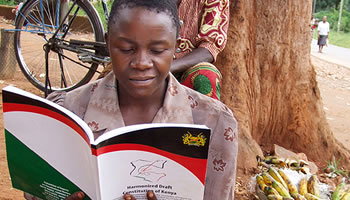
A Kenyan lady reading the Constitution ( image courtesy)
Wherever a civilization has developed, members of that civilization desire to govern themselves, to create order and more conspicuous the allocation of resources- proverbially referred to as the national cake in this part of the world.
When the Romans had had enough of the Kings, supreme monarchs who had elevated themselves to near god, they overthrew the monarch and declared Rome a republic, governed by laws and a Senate that maintained order in the eternal city for close to a thousand years before Julius Caesar crossed the Rubicon.
This is not an exposition on the history of the Roman republic, like the Romans, in the early 1990s Kenyans had had enough of a system that was exploitative, a near god totalitarian and the mockery they were being subjected to like lining up behind the photograph of their favorite candidate in an election only for them to lose even though they had the longest queue.
The agitation that followed this period of awareness and second birth led to a cold day in August 2010 when Kenyans gave a new constitution to themselves and to future generations and set the nation on a different path from her peers.
Challenges abound as to the implementation of the new constitution and its weakness but in reality the Kenyan constitution is a reflection of the true genius of the Kenyan nation.
At a time when other sub-Saharan nations struggled with the longevity of the term of a president and whether they are too old to be in office, Kenyans cast in ‘stone’ that the sovereign power in the country is not vested in a despot who has ruled since independence in the 20th century but in the people-Wanjiku.
The constitution captured the Kenyan revolution, its liberte, fraternite and egalite cast in the bill of rights. It was a mark of revolt against a state that had once been described by Mwalimu Julius Nyerere as a man eat man society.
The constitution was an uprising against bad governance,’siasambaya’, endemic corruption and a culture where the King and his myrmidons fill their pot bellies while the millions of the Plebs in the streets fight for survival. It was the panacea to all of life’s problems in the republic.
The constitution like the Declaration of the Rights of Man and of the Citizen of 1789 provides for a just society where all citizens are equal in its eyes, are equally eligible to all high offices, public positions and employment, according to their ability and without other distinction than that of their virtues and talents.
It places all citizens on the same pedestal as opposed to a nation of few millionaires and a multitude of beggars as JM Kariuki had witnessed in the 1970s. In the Kenya imagined by the new constitution anybody’s dream is valid and article 38 guarantees that one does not have to look over their shoulder these days when imagining they can be president of Kenya.
In the past gaining the presidency in Kenya meant that the president and his closest allies (not his tribe) secure access to rewarding government indentures, land, bribes and led to extremely tense political competition that sometimes led to bloodshed.
Through devolution the constitution solved (or tried to) the obsession with the presidency, giving the power of self-governance to the people and enhancing the participation of the people in the exercise of the powers of the state and making decisions that affect them.
Devolution was the answer to a top-down model of governance and development, where development trickled down from the central and people in the periphery received their share of the national cake depending on how close they were to those who wield political power- this always meant it was directly proportional to one’s ethnicity vis a vis that of the president.
The new constitution created a participatory approach to development. Participatory development advances the coming together of local participants together in joint inquiry and can offer a promising tool for promoting people-centred development in political and economic systems that encourage local empowerment.
The implementation of the new Katiba will serve as window for change that Kenyans have clamoured for, long since some of us were born.
Accountability in public office will give Kenya its missing link towards its prosperity but all the above will just be some writing on a piece of paper if full implementation is not realized.
The writer is a lecturer at NIBS College and an MA Communication studies student at the University of Nairobi