
Sunday, December 21, 2025
Home Blog Page 31

Kenya’s huge task after the 6th GES Summit

The 6th Global Entrepreneurship Summit happening in Nairobi Kenya on 25th & 26th July 2015

With exactly a week to the Sixth Annual Global Entrepreneurship Summit (GES) 2015 next weekend, Kenyans have all reasons to celebrate as the event will place the country on the global map.

The summit which will be officially opened by the United States President Barrack Obama will put Kenya in the limelight as a preferred investment destination.

In his message, President Uhuru Kenyatta said that it was a great opportunity that Kenya was hosting the event.

“It is only fitting that this year’s summit is hosted by Kenya; a country that epitomizes the transformational power of possibility. A land once known for its Savannah, now earning international repute as the Silicon Savannah. Where the vibrancy of the economy is matched only by the verve of our youth,”

said Uhuru as he welcomed the world to the country.

But is the country prepared to maintain the standards and demands that the attendees of the conference and the world at large will place on it? Are there ready structures to implement the discussions and recommendations that come out of the summit?

Geoffrey Injeni, a financial consultant and lecturer at the Strathmore Business School says that there is work to be done beyond the summit. He says,

“This is a good summit that creates an important forum to promote entrepreneurs. But it all goes down to the creation of structures that support investment.”

To him, what will make Kenya the best place for entrepreneurs and investors is good secured environment, good monetary policies especially on inflation and exchange rates and a good and efficient fiscal policy that has have tax incentives that promote businesses.

Investment in infrastructure, education and technology, ethical and responsible leadership to reduce corruption, provision of an efficient system that promotes Foreign Direct Investment, like processing licences for foreigners to startup businesses and actively engaging the private sector in promoting economic growth are some of the elements that will make Kenya uphold the expectations created after the summit.

“Generally such forums are good to share ideas, but at the end there has to be commitment to some of the ideas and suggestions,” he says.

Injeni adds that the summit will offer Kenya huge visibility, opportunities for investment and definitely a milestone for entrepreneurship because it is the one major event where small and medium sized businesses are given attention globally.

The fact that Kenya is hosting the Summit is a recognition that as a country we have a good ground for entrepreneurship. Injeni says

“The United States President visiting is very good as it raises investors’ confidence and removes the doubt in others about insecurity and other issues that face African countries.”

The summit, according to him, provides opportunities for Kenyan entrepreneurs, students and investors should be prepared to reap from it including employment opportunities for students, opportunities for funding for starters where by foreign direct investors as well as offer an opportunity to do business globally by engaging clients from other countries. This will also be a chance for local entrepreneurs to learn new ideas on how countries and entrepreneurs can grow businesses and overcome challenges.

Some renowned businessmen and high profile entrepreneurs are expected in the summit, a situation that offers local entrepreneurs a better chance to network with a variety of investors. They include Mark Cuban, Investor & Owner of the Dallas Mavericks, Barbara Corcoran, Investor & Founder of Barbara Corcoran Venture Partners, Daymond John, Investor & CEO and Founder of FUBU, Tony Elumelu,Founder of The Tony Elumelu Foundation, Antonio Gracias, Founder of Valor Equity Partners and Julie Hanna, Founder of Kiva, among others.

Says Injeni,

“Of course networking is normally the start of long term business relationships.”

Commenting on the quality of entrepreneurship training in the Kenyan universities today, Injeni concurs with the findings of the 2015 Kenya Economic Survey which shows an upward trend in the number of entrepreneur​s​ and a declining number of people opting for formal employment.

“This is a good thing because universities like Strathmore and University of Nairobi among others are investing in good business schools. It is better to train employers than employees because employers create more jobs.”

According to Optiven CEO George Wachiuri, Kenyans are naturally born entrepreneurs and they are brought up feeding themselves.

“This culture is on the rise due to lack of jobs and the next alternative is to create a job for oneself and others,”

says Wachiuri, adding that with very fast growing economy, many opportunities, good governance, vibrant Kenya Private sector and responsive government  create a great environment for budding entrepreneurs. He adds,

“Our country is today extremely ripe for risk takers, fearless,   innovative and creative individuals.”

The 6th GES, Wachiuri adds,  is also a  sign that our political, economic  environment is on the positive rise.   This will boost investment on trade investments and Kenyans can expect more exports to America.

“In 2010  our exports was  USD  277.2 Million and  in 2014 USD 420.8Million.  We can only expect more in the near future  and more so after this visit by Obama,” he concludes.

BAKE to hold training on ‘Law and Internet’ in Nakuru

Internet and Law poster
The training to be held on Friday July 25 is free and open to all (Photo: BAKE).

The Bloggers Association of Kenya (BAKE) will hold a training on the law and internet in Nakuru next week on Saturday July 25. The training will be held at the American Corner at the Kenya National Library and is free and open to all.

The workshop will cover topics such as the legal system, defamation, criminal law process, communication laws and privacy. Other topics include confidentiality, intellectual property, consumer law and social media policies.

Mugambi Laibuta who is an advocate of the high court and Riva Jalipa of Article 19 will be the trainers.

The workshop comes at a time when there has been an increase in cases against persons who have allegedly used the internet as a platform for defamation and or hate speech.

The most recent case is that against journalist and lawyer Wahome Thuku who is said to have allegedly defamed Mukurweini Member of Parliament Kabando wa Kabando on Facebook. Last month mobile service provider Safaricom sued Cyprian Nyakundi, a blogger, for allegedly defaming it on his blog.

And in early this year, there were reported two cases in the two social media users were arrested for allegedly questioning two separate county governments. Abraham Kimutai was arrested for questioning alleged corruption in Isiolo County while Nancy Mbindalah was arrested for “undermining Embu governor, Martin Wambora”.

But the case the most memorable case is that of Moi University student Allan Wadi who was sentenced with two years imprisonment for spreading hate speech against President Uhuru Kenyatta, also on his Facebook. Wadi has since been released after a successful appeal.

All these cases show that there is a growing use of social media, not just for personal or private use but also for social justice courses, thus brushing some people in the wrong way. It is therefore critical that residents get training on responsible use of social media.

What makes users of social media (and that is, those who use it for social justice) vulnerable to making mistakes is that the platforms have no formal gatekeepers as is the case in mainstream media. Thus apart from checking on privacy, one of the other skills that such social media users need to trained on is the need to check and verify facts.

It will be noted that, in the past, while rushing to break an event, several persons including big media houses in the country have committed very grave mistakes on the internet. One such case was the case of the ‘killing’ of the late Njenga Karume before his real death. Recently former vice president Moody Awori was also ‘killed’ on the internet.

It will be important for social media enthusiasts in the county to come and learn about these many more issues about the latest trends on the use of the internet.

Hacking Team expose reveals Kenyan actors

Galilleo
One of the systems that is sold to governments

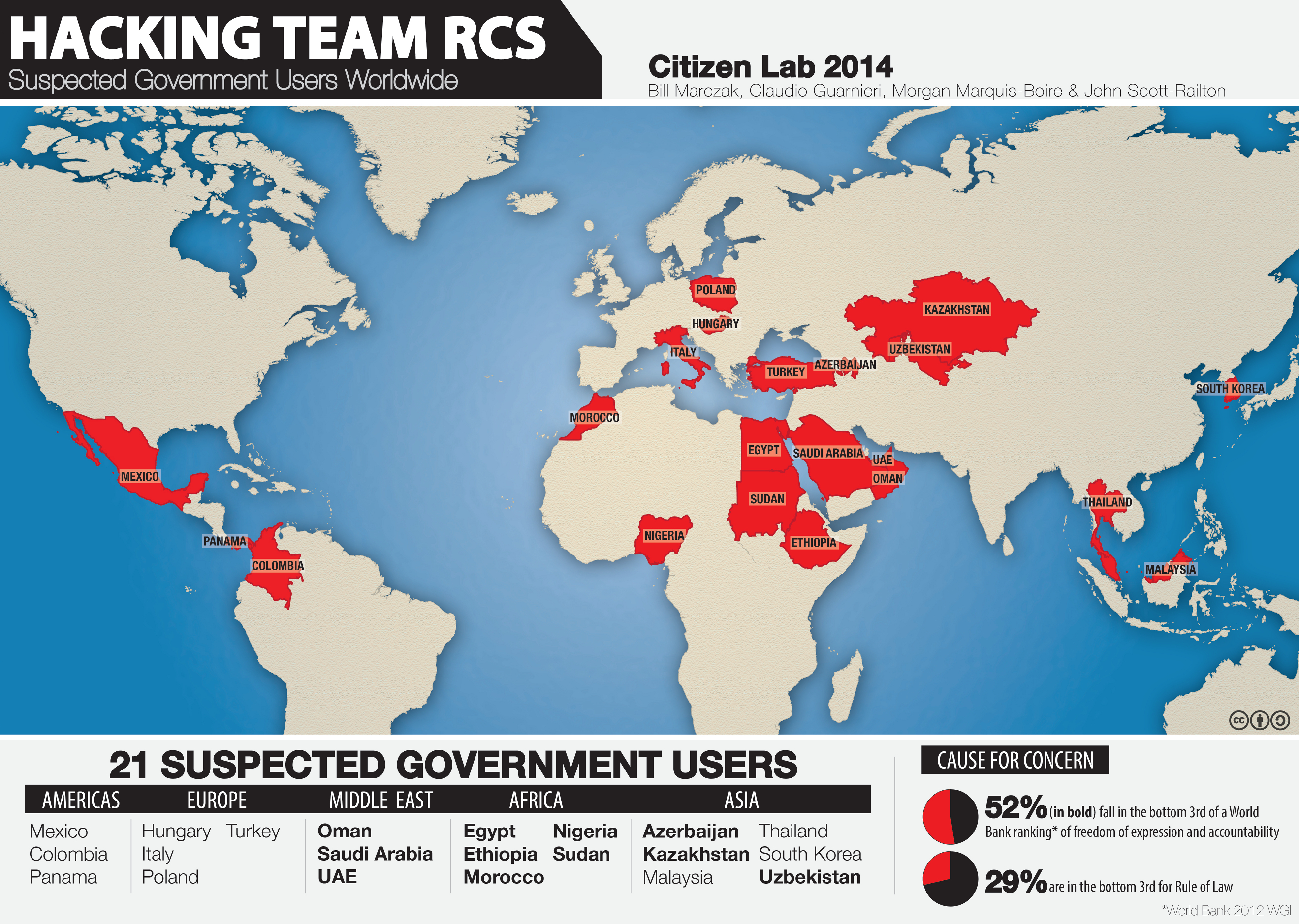
Wikileaks once again has come to the limelight after exposing the Hacking Team secret files. The Italian surveillance technology company got hacked and 400 gigabytes of documents published. These documents show communications, invoices and other private documents between the company and buyers of the technology.

Its clients include governments and agencies in countries such as Ethiopia, Malaysia, Mexico and Kenya. For a long time, human right activists have accused the hacking team of selling surveillance technology to governments with a poor human rights record. These governments have been accused of using the software to track down dissidents, activists and bloggers.

The Hacking Team was at point the target of a censure motion by the Italian government after suspicions that it was exporting to governments that were blacklisted for human rights abuses.

The documents have exposed the Hacking Team badly showing evidence of the company’s $480,000 business with Sudan despite the company writing to the United Nations to deny the allegation.

A search on WikiLeaks reveals that Kenya was one of Hacking Team clients through various agents. In one of the emails, Offer Hameiri the President of Oyamo group, was asked by an account manager

“please provide me with the full name (agency or department) of the customer we are going to meet.”

His response was short,

“The client is the Kenya Police.”

Prior to that, the trail of emails reveals how the Hacking Team monitors the security challenges in Kenya by following local news and international news. They also keenly follow the tenders published by security and military governments. In one of the emails, the hacking group staff share an article about

“The Kenyan government plans to spend US$1 billion acquiring 10 new military helicopters, the refurbishment of three grounded Russian-made Mi-17 helicopters and the installation of closed circuit (CCTV) surveillance cameras.”

Hacking Team clients around the world (citizenlab.org)

Further on, more actors get into the conversation. One of them signs off as an officer at the cyber security department in the Office of the President. He is privy to the dealings as an National Intelligence Service officer. Interestingly, the dealings were driven majorly by Chris Kinyanjui who is the Executive Director of Com 21 Ltd, a local telecommunications company.

In his email, he clarified to the Hacking Team that he clarified that,

“We are working both with the private sector as well as with different Government agencies like the Police, Military, National Intelligence.”

Another player Joseph Mbai of Jaws Group is involved as well, discussing plans to visit the Hacking Team at an expo in Dubai. Jaws Group which is identified as a Kenyan company that serves the African market with world leading products, services and solutions ranging from military defense to civil security.

The emails do not reveal if Kenya acquired the surveillance software and more information will come to light as more emails are analysed. The question for now remains, are the police employing Hacking Team ‘s surveillance tools to snoop on phones, tablets and personal computers?

Activists, journalists and bloggers in Kenya will become targets of online spying. The tools that Hacking Team sells can access a devices camera, microphone and location. In addition, all messages from skype, whatsapp, sms and email can be accessed remotely.

Human lapses worsen Kenya’s security threats

Mandera Town
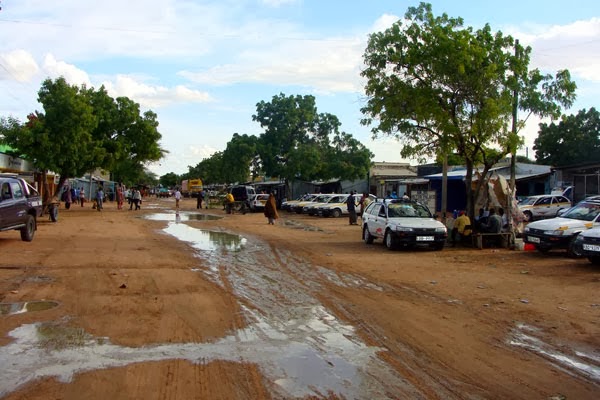
Mandera Town (ww.maash-shaikh.blogspot.com)

On the 6th of July 2015, Kenya woke up to breaking news of yet another terror attack in the town of Garissa. At least 14 people were killed and 10 others injured after suspected Al-Shabaab militants attacked a village near Mandera Town. Mandera County Commissioner Alex Ole Nkoyo confirmed the attack, which happened at 1.00am in Soko Mbuzi Village. The attack comes after gunmen walked into Yumbis and killed quarry workers. Hence, the terror attack yet again exposes the government soft underbelly.

According to the county commissioner, the attackers struck when the villagers were sleeping. The attackers are said to have planted grenades on the doors, but most of the people were sleeping in tents outside their houses due to the hot weather. The attackers then hurled a petrol bomb at the tents before shooting.

Its been over a year after the Lamu – Mpeketoni attacks that saw people butchered by terrorists and scores of families displaced. The scars are still fresh and they underline the government’s slow response in dealing with matters of terror threats.

The Independent Police Oversight Authority (IPOA) report following the Mpeketoni attacks lay the blame on confusion, improper planning and breakdown of the command structure among the security forces. According to the report pursuit of attackers was stopped in order to receive a high power delegation from Nairobi. Had the pursuit of the attackers continued on 16th June 2014, subsequent attacks in Hindi, Pangani, Pando Nguo areas would have been prevented  and possibly some of the attackers apprehended.

After the attacks on the Garissa university, it came to light that the Recce Squad did not make it to Garissa until after many hours with unconfirmed reports that the delay was caused by shortage of aircraft. Later it emerged that crafts under the police air wing are sometimes used for personal errands such as picking up relatives from the Coast. Kenya Police Airwing commandant Col (Rtd) Rogers Mbithi was however later exonerated of any wrong-doing.

Leaders in areas badly affected by the insecurity such as Sen. Billow Kerow have been on the front-line in asking for more responsive security in the vulnerable North Eastern but his frustration is now showing. In his latest  comments, the Mandera Senator blamed the president for failing to improve security in Kenya.

“We have met the President several times and even gave him a plan on how to handle the situation but he has failed to implement it.”

In the aftermath of the Garissa attack, the government interdicted most of the top police officers after finding that some lapses could have contributed to the attacks.  Joseph Nkaiserry the interior Cabinet S ecretary said,

“I am convinced of the need for thorough investigations into the terrorist attack on the Garissa University College to establish possible criminal culpability of individual officers or relevant security committees.”

In the most recent Mandera attack, it seems again that the deaths could have been avoided as residents reported their suspicions to the Mandera police yet no action was taken. Hajji Barre a Mandera resident was quoted saying

“We reported the matter more than once, but the police took our information casually. Had the security officials taken the information seriously, maybe this incident could not have happened.”

The border wall between Kenya and Somalia is a premature plan because we haven’t overcome personnel lapses that result in deaths even with all the lessons from our recent past. Without eliminating the human error factor in the security system, a wall or newest equipment cannot keep us safe.

Kenyan Media gets a tongue lashing for lack of adequate coverage ahead of GES Summit

The 6th Global Entrepreneurship Summit happening in Nairobi Kenya on 25th & 26th July 2015

Kenya is on the international spotlight due to the upcoming Global Entrepreneurship Summit taking place next week  from 25-26th July in Nairobi. Kenya is the only country in Sub-Saharan Africa and the 2nd in Africa to host   the Global Entrepreneurship Summit which shall be graced the United States president, Barack Obama.

Why Kenya was the best choice to host GES 2015
During the last GES in Morocco, the decision was made to hold the next summit in Sub-Saharan Africa.  As the US Abassador disclosed following the announcement, Kenya was picked unanimously due to the many exciting innovations and the palpable spirit of entrepreneurship among the youth.

The Media Coverage of the upcoming Summit

There has been growing concerns by a cross sections of Kenyans online with many not sure exactly why Obama was coming into Kenya. Many Kenyans especially those who only rely on radio, TV and newspapers for information have assumed that he is just coming for a home visit as his father hails from the western side of Kenya.

The Kenyans who know about GES have expressed their concern and frustration at the failure of Kenyan media houses to provide releavant information regarding the Summit and instead, focusing on ‘side shows’ such as whether the US president will spend the night, whether he will go the Mara, arrival of his motorcade and other not so important details that are removing the spotlight from what Kenyans need to be informed.

Kenya’s innovation and entrepreneurship spirit has been hailed mostly in international media with lots of articles appearing in publications such as the Forbes magazine, Times and Fast Company and Successful Kenyan Startups  getting featured on CNN and BBC  among others. Many of these startups and tech companies, some of which will be showcasing at the two day summit have not received any coverage on any of the Kenyan media. Instead, talk shows discussing the planned protests by anti-gay groups have become the order of the day and the Entrepreneurship agenda of the Summit is no longer clear.


The Kenyan Government team in charge of the summit recently launched the Choose Kenya a website for  the GES summit that has instead decided to focus on tourism.

It is still not clear how the entrepreneurs or the country will benefit from this summit as pre- summit forums and preparations were not done adequately.


Residents in Makueni and Kitui to benefit from Thwake Multipurpose Dam

index

Thousands of residents from Makueni and Kitui counties are set to reap massive benefits from the establishment of the Thwake Multipurpose Dam, an African Development Bank funded project to be constructed at the confluence of Athi river and Thwake river.

The dam is one of the flagship projects for vision 2030  and besides provision of  clean and accessible water to the residents, the project will have a raft of economic benefits to the locals.

The two counties receive an average of 500mm of rainfall per year. Most of the residents rely on rain fed water for both subsistence farming and domestic use. However, the erratic weather patterns have led to successive crop failures and acute water shortages occasioned by prolonged dry spells.

Residents cover long distances looking for water for both domestic and livestock use with a majority walking an average radius of 10km especially during the drought seasons when most sources of water dry up.

Although significant water projects have been initiated by both government and non-governmental organizations in a bid to alleviate the problem, water scarcity still continues to be one of the major challenges in the two counties.

With the advent of devolution, Makueni and Kitui County Governments have no option but to address the problem as the success of the devolved system in two counties will largely be based on the strides made by the respective governments to cushion residents against water scarcity.

Already Makueni County Government has embarked on an ambitious water program dubbed ‘Kitwiikany’a Kiwu’ aimed at constructing 3,000 water pans, each with a capacity of 5,000 cubic metres for multipurpose consumption.

But it is the Thwake Multipurpose Dam that is expected to completely transform Ukambani and in particularly the two counties where the dam will be constructed.

The dam to be established at a whooping cost of Sh42B under the Tanathi Water Services will not only sustainably address the problem of water but also open up the region for development and spur growth leading to improved social-economic status of the residents.

According to Chair Tanathi Board Peter Ndwiga the project will create both direct and indirect employment opportunities to more than 7,500 people. The jobs will include technical, semi-skilled and unskilled labor that will be required for the entire construction of the dam while other opportunities will be created through irrigation, fishing and tourism activities.

“The living standards of the residents will improve due to the income generation and productivity from the various sectors,” he said.

Ndwiga, speaking during a stakeholders meeting at the proposed site in Mavindini said the dam will provide water for domestic, hydro and irrigation purposes and more than 61,ooo hectares will be put under irrigation enhancing food productivity in the region.

“With the irrigation component relief food will be a thing of the past in Makueni and Kitui counties and just like Dubai the region will be turned into a business hub,” he said.

He noted that the dam will also provide accessible water for domestic use and the valuable time and energy spend by residents walking for long distances in search of water can be used to initiate other activities that can be of economic value.

The chairperson also added that project will change the environmental surroundings of the region as it will moderate the micro- climatic conditions due to the high humidity.

“These two counties are characteristically hot but with the dam the environment is bound to change to a cooler one,” he said.

Upgrading of the road infrastructure for the construction and maintenance of the dam according to Ndwiga will also contribute to better transport and communication networks leading to a positive social- economic impact.

Makueni Governor Kivutha Kibwana said the project will completely transform the lives of residents but called for a collaborative approach for the success of the dam.

“Let the people know the benefits of the dam for project to succeed,” said the governor.

If the residents fully utilize the opportunities provided by the dam, extreme poverty and food insecurity will be things of the past in the two counties.

Nyakundi raises legal fees on Safaricom’s platform

Photo credit: www.magazinereel.com

By Davis Mwandawiro

Blogger Cyprian Nyakundi is in a legal tussle with Safaricom and has also been center of social media attention after his attempts to mobilize funds for his legal fees using Safaricom’s Mpesa platform.

In Nyakundi’s blog, he has published multiple articles where he makes many allegations against Safaricom including maltreatment of staff, corporate fraud among others. Attempts to get Nyakundi’s retraction and apology did not work and  consequently, Safaricom filed a case in court against him for defamation.

In what would be a brilliant piece of irony, Nyakundi is mobilizing fees for his lawyer using Safaricom. He launched the drive yesterday via a hashtag on twitter #lawyerfornyakundi. In what could be a ground breaking move if he succeeds, it will be an incredible feat against the biggest corporate in Kenya and an example of how effective Safaricom’s Mpesa has become.

Some people are finding it ironic that Nyakundi asking people to raise funds for his legal defense fee using the same company that is sueing him.

Kenyans on twitter are split on opinions. Some supported his course while others bashed him for his “irresponsible” actions. Here are some of the sampled tweets.

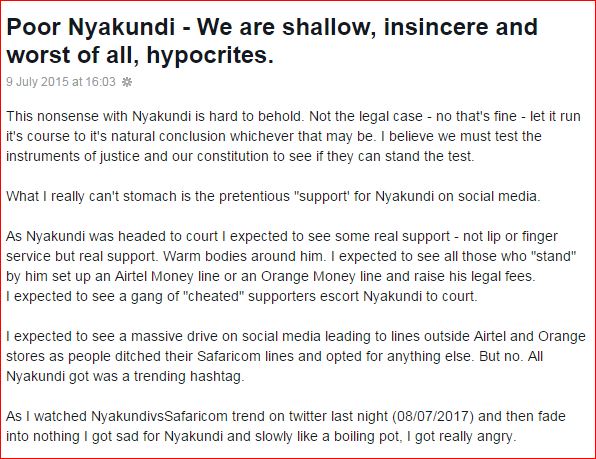
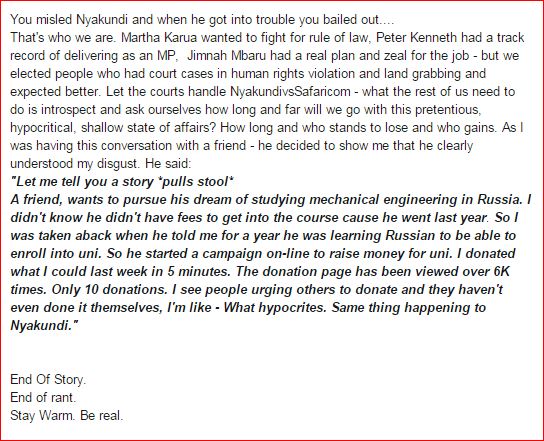
Meanwhile on Facebook, radio host Caroline Mutoko went on a rant condemning Kenyans on social media for being hypocrites; that they incited Nyakundi and when he needed their support as his arraigned in court, none of his many followers showed up. In her words, Nyakundi’s fiasco reminded her of the fickle social media support Jimnah Mbaru and Peter Kenneth got in the last elections.

 Caro
caro 1
caro 2


Nyakundi’s case among others highlights the need for bloggers and other online content writers to be careful with what is published online. The Bloggers Association of Kenya (BAKE) holds regular workshops and training sessions for Bloggers to sensitize them on the legal rights and responsibilities. While the Constitution guarantees us freedom of expression, there are limits and bloggers have to be aware the rights of others as far as libel and defamation are concerned.

The next training sessions by BAKE on Blogging & Social Media will be held in Mombasa on 31st of July and 1st of August and a workshop on the Internet and law set to take place on 29th August respectively.

Journalist Wahome Thuku arrested for allegedly defaming Kabando wa Kabando

Photo courtesy of www.twitter.com

Journalist and lawyer Wahome Thuku was yesterday arrested and booked at the Parliament police station for allegedly defaming Hon. Kabando wa Kabando, the Member of Parliament for Mukurweini constituency. On 1st of July 2015, Wahome is alleged to have posted on his Facebook account that Hon. Kabando went into a funeral drunk. The comment could have been made at the time when President Kenyatta had ordered MPs to lead efforts to weed out second generation brews in their constituencies.


Two police officers from the CID have come to my office, interrogated me, taken my mobile phone hand set and asked me to accompany them to Parliament Police station. Bye.

Posted by Wahome Thuku on Tuesday, 14 July 2015


Mr. Wahome Thuku was picked up by two officers from the Directorate of Criminal Investigations from the Standard Group’s offices at I&M Building.

Over the past two weeks, Kenyans have seen MPs lead youths in destroying legitimate and perhaps illegal businesses that sell alcohol. The implicit interpretation of the alleged assertion/Facebook post is that the MP lacks the integrity to lead such efforts since he has in the past shown wanting leadership.

Wahome’s lawyer Soyinka Lempaa also said that he was booked for misuse of licensed telecommunications equipment. It is this charge, which is under Section 29 of the Kenya Information and Communication (KICA) Act, which has also seen other online users like Robert Alai and Geoffrey Andare among others arrested and charged under the same charge.

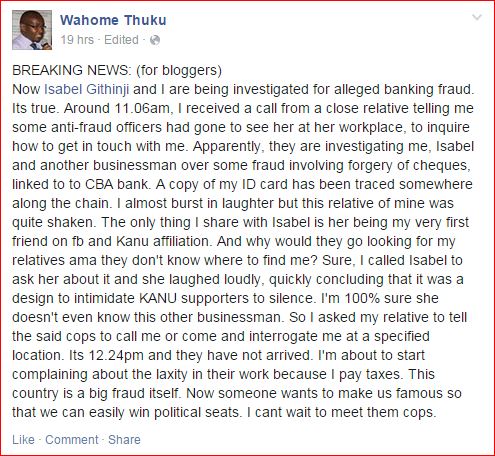
Moreover, the police were not open as they undertook preliminary investigations on the issue before his arrest. Wahome was made aware that he is being investigated for alleged banking fraud.


BREAKING NEWS: (for bloggers)Now Isabel Githinji and I are being investigated for alleged banking fraud. Its true….

Posted by Wahome Thuku on Tuesday, 14 July 2015


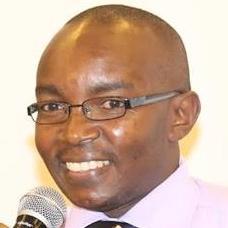
Wahome

Hon. Kabando declined to comment on the matter. He replied to a text message

“Sorry, regrets unavailable for such. Kind regards. God’s grace be with you.”

Looking through Wahome Thuku’s Facebook account, the alleged post is not there. He however comments regularly and openly on current affairs matters in the country.

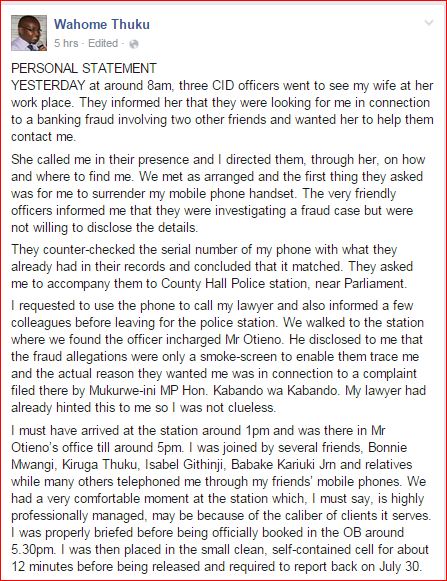
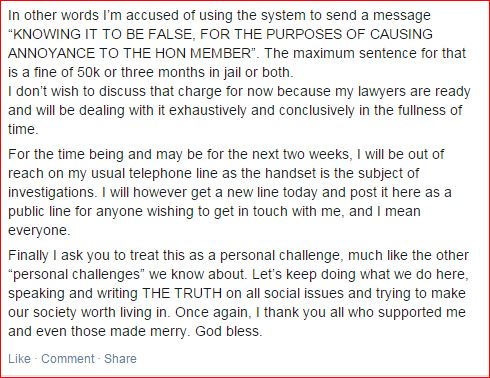
Wahome is currently free and back to his work at the Standard Group and he is expected to report back to the police station on 30th of July for further direction on the matter. The police however retained his phone as exhibit and use it to further conduct investigations.

thuku

thuku 3

thuku 4

New committee to be formed to re-evaluate land compensation rates on Thwake Multipurpose Dam project

Makueni Governor Kivutha Kibwana and CEO TanaAthi Engineer Muthwii and Chair Tanaathi board Peter Ndiga at the proposed site of the Thwake Multipurpose dam Photo:Facebook
Makueni Governor Kivutha Kibwana and CEO TanaAthi Engineer  Nicholas Muthui and Chair Tanaathi Board Peter Ndwiga at the proposed site of the Thwake Multipurpose dam
Photo:Facebook

By Daniel Kituku

A new committee will be formed to re-evaluate compensation rates offered to more than 2,600 residents of Makueni and Kitui counties to be displaced to pave way for the construction of Thwake Multipurpose dam.

Chair Tanathi Water Services Board Peter Ndwiga said the committee that will bring together professionals from both counties, officials from the Tanaathi , valuers, local leaders from the affected regions and the Ministry of Water will be tasked to revisit land and property valuation for the Persons Affected by the Project (PAPs).

The formation of the new committee has been prompted by complaints from the PAPs over the previous valuation process in which they accuse the valuer, Mwaka Musau Consultants of shortchanging them.

Ndwiga speaking at the proposed site in Mavindini said the new committee findings will be harmonized with the previous valuation report to help arrive at agreeable rates.

“If there will be enough resources we will definitely heed to the cry of the people and we shall seek professional opinion on this matter,” he said.

He added that compensation was the main obstacle to the implementation of the project and disclosed that the new committee will have only two weeks to complete it works and present the findings.

Ndwiga assured residents that proper compensation will be done before the start of the project and urged leaders not to politicize the projects.

Makueni Governor Kivutha Kibwana underscored the need for the project but noted that the resettlement and compensation plan should be given the first priority.

Kivutha said the residents and the national government must agree before the project kicks off.

“The sponsor of the project, African Development Bank (AfDB) does not want people to be displaced forcibly and things must be done in the right manner,” said the governor.

He added proper procedures should be followed during compensation to avoid family wrangles and urged the national government to collaborate with the two county governments to seek an alternative land for compensation if possible.

“It would have been better to give alternative land to avoid scenarios where families squander the compensation money and later become squatters,” said the governor.

Also present was area MP Daniel Maanzo who accused certain forces of wanting to poorly compensate the affected families.

“The parliamentary committee on environment has no problems with proper compensation and I wonder who is blocking payments to our people,” said Maanzo.

He vowed that the dam will not kick off before everyone is well compensated and asked the beneficiaries not to sign the land acquisition agreement before all the money is paid.

More than 200 residents from the affected regions led Kalawa MCA Patrick Kithale recently held demonstrations to protest against what they termed as poor land compensation rates by Tanaathi and vowed not to move until the rates are reviewed upwards.

The residents argued that the earlier compensation rates of Sh100,000 per acre were unacceptable.

“We will not accept the offer,” said Paul Makuu a resident and PAP chair.

The dam to be constructed at the confluence of Athi and Thwake river and sponsored by ADB will cost Sh42B.

Babu Owino’s letter to Obama sparks debate on social media

Babu letter

By Davis Mwandawiro

The Students Organization of Nairobi University (SONU) chairman Babu Owino is not known to shy away from the limelight or any sort of controversy. A bold and tenacious young man with the enthusiasm of a veteran political leader. Earlier on the wake of 13th of July, he drafted a letter to the office of the US embassy asking the institution to ensure President Obama visits the University of Nairobi and talk to the 80,000+ students. The US president is scheduled to visit Kenya later this month for an entrepreneurship conference.

Kenya’s  largest university was once graced by President Obama in 2006 whilst he was the Senator of Illinois when he came to Kenya. Babu Owino stated in the letter that a couple of students had already threatened to take their lives if he (Obama) doesn’t visit UoN. The worlds most powerful man will have a very tight routine and schedule its unthinkable if he could actually make time for the students but the confidence at which Owino has written the letter with could move a mountain.

Upon hearing the news, Kenyans on social media engaged in a heated debate on whether that bold action taken by Owino is actually worthy or just a ploy. Here are some of the sample tweets raging on Twitter.

Babu Owino has gained quite a lot of praise from not only his fellow peers but also political leaders

On Twitter the opinions are streaming in fast and divided. Some are pro Owino while others have completely bashed his efforts.

Whether the SONU chairman is right or not,  he has once again catalyzed debate on social media. Only time will tell if the University of Nairobi (UoN) students will be granted their wish or have to sit on the sidelines.

Kenyans unite to support Keroche Breweries in illicit brew crackdown

Keroche brabds 2
One of the brands by Keroche. Online commentators expressed support to the Naivasha based beer manufacturer.

After the failed attempt to raid Keroche industries last week, Kenyans have been united in supporting the Naivasha based brewery in the wake of the government crackdown of what has come to be referred to as “second generation” alcoholic drinks.

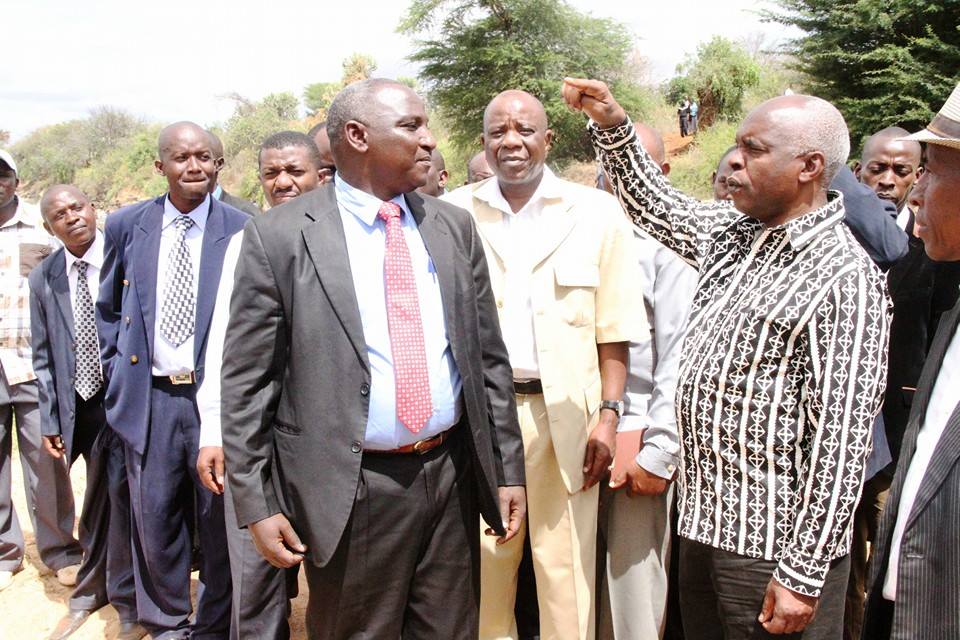
Area Member of Parliament John Kihagi and Rift Valley Regional Coordinator Osman Warfa had gone to the factory following the directive by President Uhuru Kenyatta that legislators and government administrators lead exercises in their regions to crack down illicit brews.

But the company’s officials led by Chief Executive Tabitha Karanja thwarted the attempt to raid it. And since then both Kenyan’s on social media and residents are questioning what they see as the government’s inability to protect legitimate beer manufacturers during the crackdown.

Even though the Keroche raid never took place, Karanja has since claimed it was motivated by political witch hunt, a statement that quite a number of people support.

“If all government agencies had given Keroche a clean bill of health, why raid it now?”

asked Dennis Okomol, the Nakuru Town Orange Democratic Movement (ODM) Chairperson.

Analysts feel that the industry is being targeted unfairly for having associated with CORD leader Raila Odinga in the past.

“The family has had a long history with Raila. She (Tabitha Karanja) also calls some shorts when it comes to political decisions in Naivasha,” added Okomol.

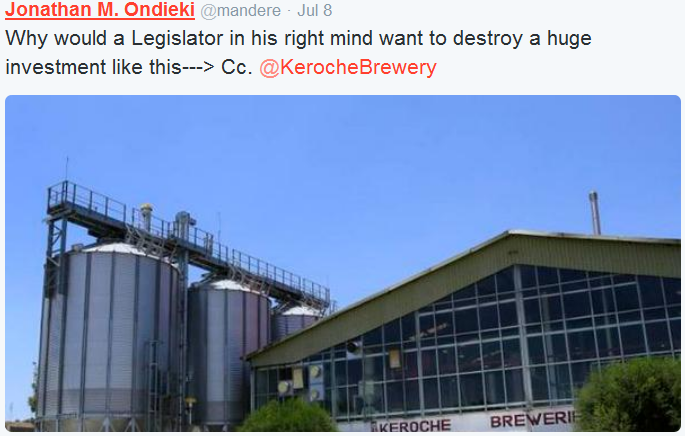
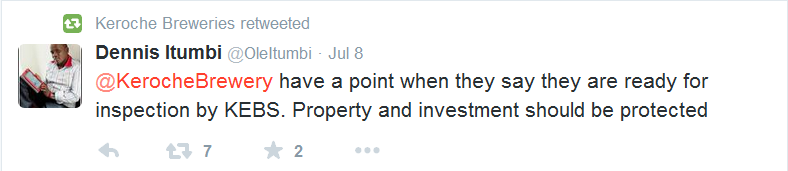
The Keroche industry is estimated to be worth billions of investment. While crying foul of the crackdown the CEO requested for proper mechanisms to be followed, a stand that was supported on twitter.

 Keroche Twitter Snip 2

Keroche Twitter Snip 1
Keroche is famous for its beer, Summit, which it manufactures alongside other brands, some of which were listed by the government as illicit. And according to one opinion leader in Nakuru the troubles of Keroche are in these ‘other brands’.

Victor Ngatia, an Engineer who in 2013 lost the Nakuru Town West parliamentary seat at the primaries level the authenticity of the alcoholic brands manufactured by Keroche needs to be tested.

“The problem with Keroche is their genesis. She (Tabitha) didn’t start with beer. She started with low quality beer. How good has it come?” he posed.

“The beer is fine but the spirits. That’s where the catch is,”

he added saying the company created suspicion when it denied residents access to its plant.

“It was only prudent that she allows people to get in and check,” he said.

Although the company has since resumed operations after closing for a day during the attempted raid, there are still questions on whether the directive from the President which cost some investors millions of money was wise. Questions also linger on whether it was right to involve politicians who, instead of provincial administrators. The million dollar question however, is about the measures the government will take to ensure that the real illegal manufacturers who were tamed during the raid don’t go back to their back street business.

The team at Keroche Breweries handling the company’s social media accounts went online and provided live updates of the incidents to its customers and Kenyans at large thereby creating a lot of awareness on the matter and drumming up support from Kenyans to question the motives behind the crackdown.

Tanathi CEO praises Thwake Multipurpose Dam project in Makueni County


African Development Bank has funded the conoruction of Thwake Multipurpose Dan in Makueni and Kitui counties Photo:Google
African Development Bank has funded the construction of Thwake Multipurpose Dam in Makueni and Kitui counties at a cost of Sh42B
Photo:Google

Thwake Multipurpose Dam, a project under the Tanathi Water Services Board to be constructed at the confluence of Athi river and Thwake river at Mavindini and Kanyangi locations in Makueni and Kitui Counties respectively will be a masterpiece, the greatest in the country.

The dam, funded by the African Development Bank to the tune of Sh42B will provide water for domestic, irrigation and hydro-power purposes and is expected to be the main supply of water for the Konza Techno city.

According to Chief Executive Officer Tanaathi, Engineer Nicholas Muthui, the proposed dam will cover an approximately 2,900 hectares in the two counties with a total catchment area of around 10,200Km2 and the water will extent upstream to a distance of between 8.6 Km to 9 Km.

Speaking at the proposed site in Mavindini the engineer, disclosed that the dam will have a capacity of 825M cubic meters and will come complete with a concrete wall to be constructed across Kathulumbi, Nduya and Kilisa hills at a height of 84 meters.

The proposed dam design also includes a concrete spillway at Makueni and an emergency spillway at Kilisa and Nduya hills.

The dam will produce 17.6 megawatts of hydro-power per day, which will be exported to the national grid for countrywide distribution according to the engineer.

On irrigation, more than 61,800 hectares in the two counties will be covered under the project with Makueni having the lion’s share of close to 58,600 hectares.

Muthui noted that the dam will be constructed in two phases with phase one entailing the construction of the dam and harnessing of the water at the cost of Sh21B while the second phase will establish the hydro and irrigation component to the tune of Sh22B.

Thwake Dam was initially proposed for construction in 1953 during the colonial times but was never implemented. The project was approved in 2013 and will serve several locations in both Makueni and Kitui counties, which include Kalawa, Wote, Kibwezi, Kathonzweni, Makindu, Mtito Andei and Kanyangi among others.

The project when complete will definitely be a game changer in the two counties classified as Arid and Semi- Arid areas. The low rainfall and the erratic weather patterns make the regions susceptible to water scarcity forcing residents to walk for long distances in search of the precious commodity. But with the project, residents will have water in abundance not only for domestic use but also for irrigation.

The Program Coordinator Musembi Munyao speaking at the same venue said the funds for the project have been disbursed and it’s only a matter of time before the work begins.

Munyao however said the land acquisition and resettlement action plan must be implemented to the letter for the success of the project.

“We would want to have a win-win situation where everyone affected by the project is satisfied,”he said.

Iftar in Mombasa in pictures

0

1-DSC_0201

In the Islamic calendar,  Ramadhan is the ninth month which Muslims observe by fasting from dusk to dawn.  Fasting is one of the five pillars of Islam. During the month of Ramadhan, muslims wake up early for Suhoor,  a meal they have before the dawn prayers which mark the start of the daylong fast which is broken at dusk with a meal known as Iftar.

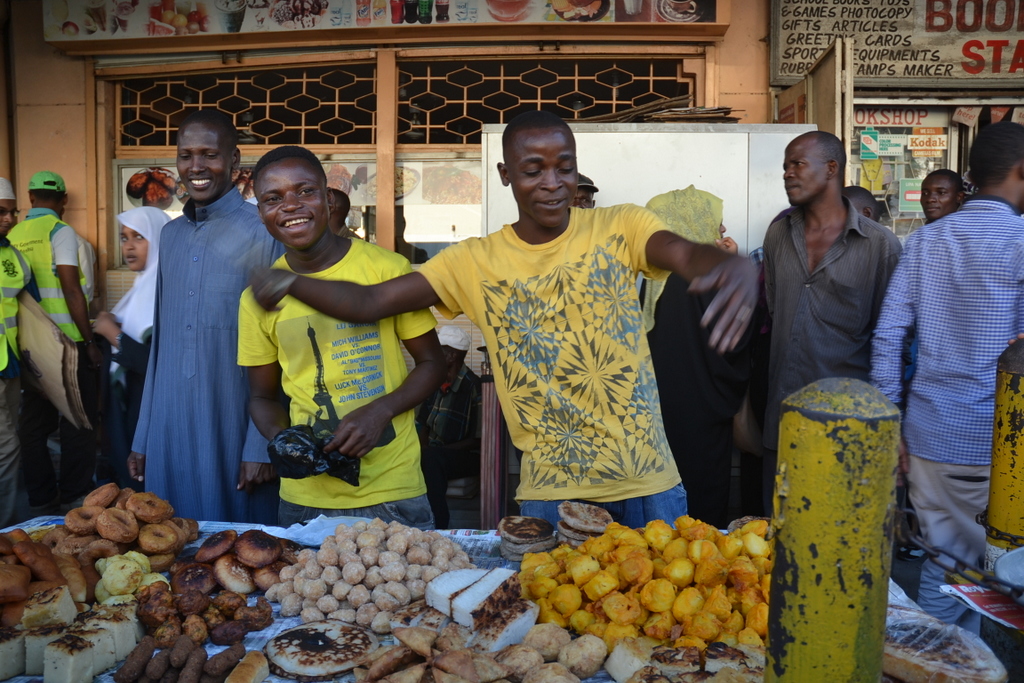
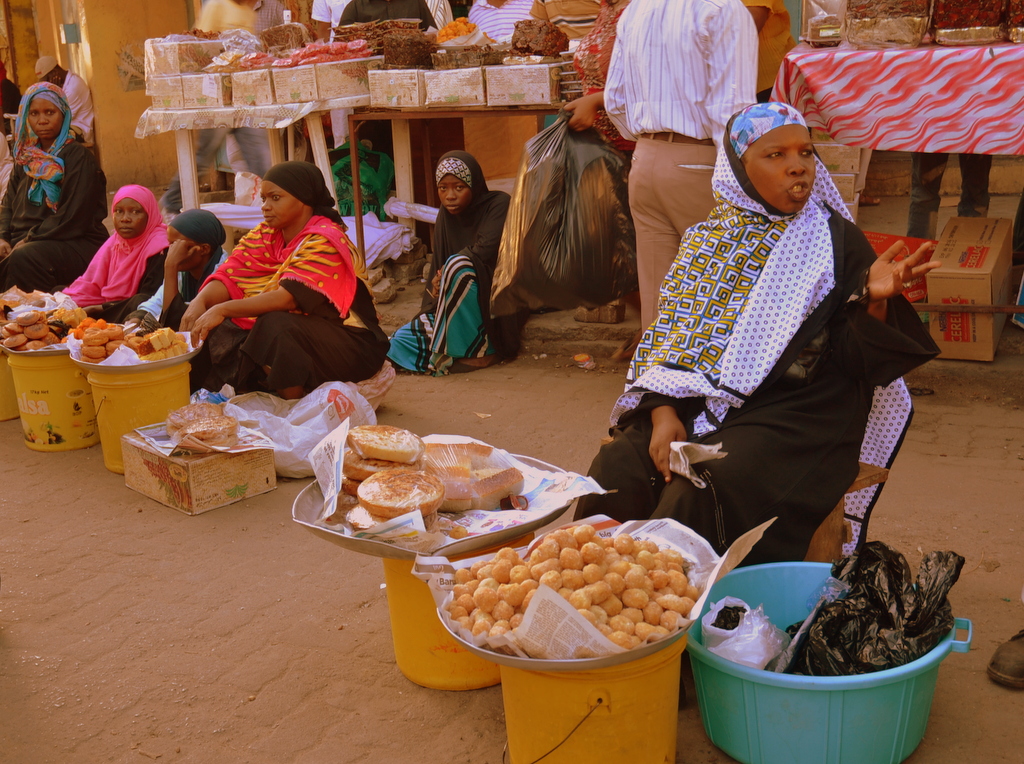
Iftar time turns the streets of Mombasa into an amazing street food fair with vendors displaying delicious trays of tasty foods for residents to buy. These include kaimati, katlesi, mahamri, viazi vya karai, bhajia, vitumbua, mkate wa sinia. The streets between the Old Town, Mwembe Tayari and Marikiti areas are lined with traders displaying various coastal foods.

The prices start at sh5 for small Kaimati and rises to sh30 for vitumbua. With a few shillings, one can break the fast in town before heading home for a proper meal.

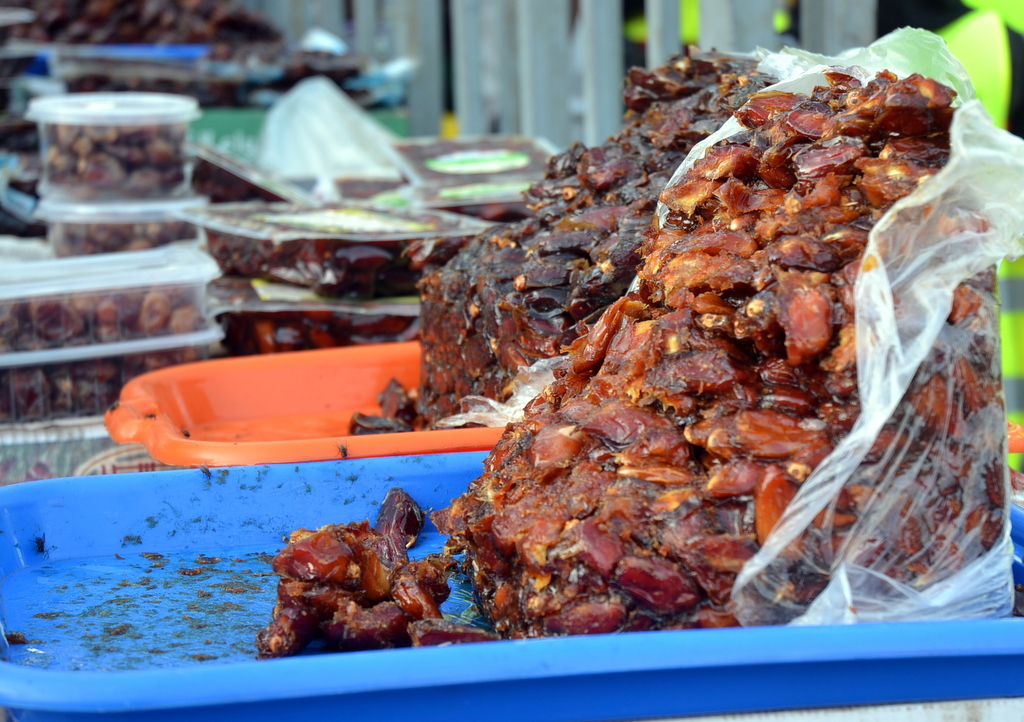
Dates for Iftar
Dates are popular to break the fast. This is done in emulation of Prophet Mohammed, who broke his fast in this manner.
1-DSC_0197
Viazi vya karai and Bhajia on display.
1-DSC_0186
Food vendors call passers by to their stand.
Mombasa Iftar
Traders display their wares on the streets. The home made delicacies are more popular and cheaper than what is served in restaurants.
1-DSC_0170
Delicious sugar coated kaimatis on display.

Ramadhan will come to an end either on Friday or  Saturday 18th July depending on the sighting of the moon which will give way to Eid festivities.

Photos by www.lifeinMombasa.com

Taita Taveta County land management board sworn in

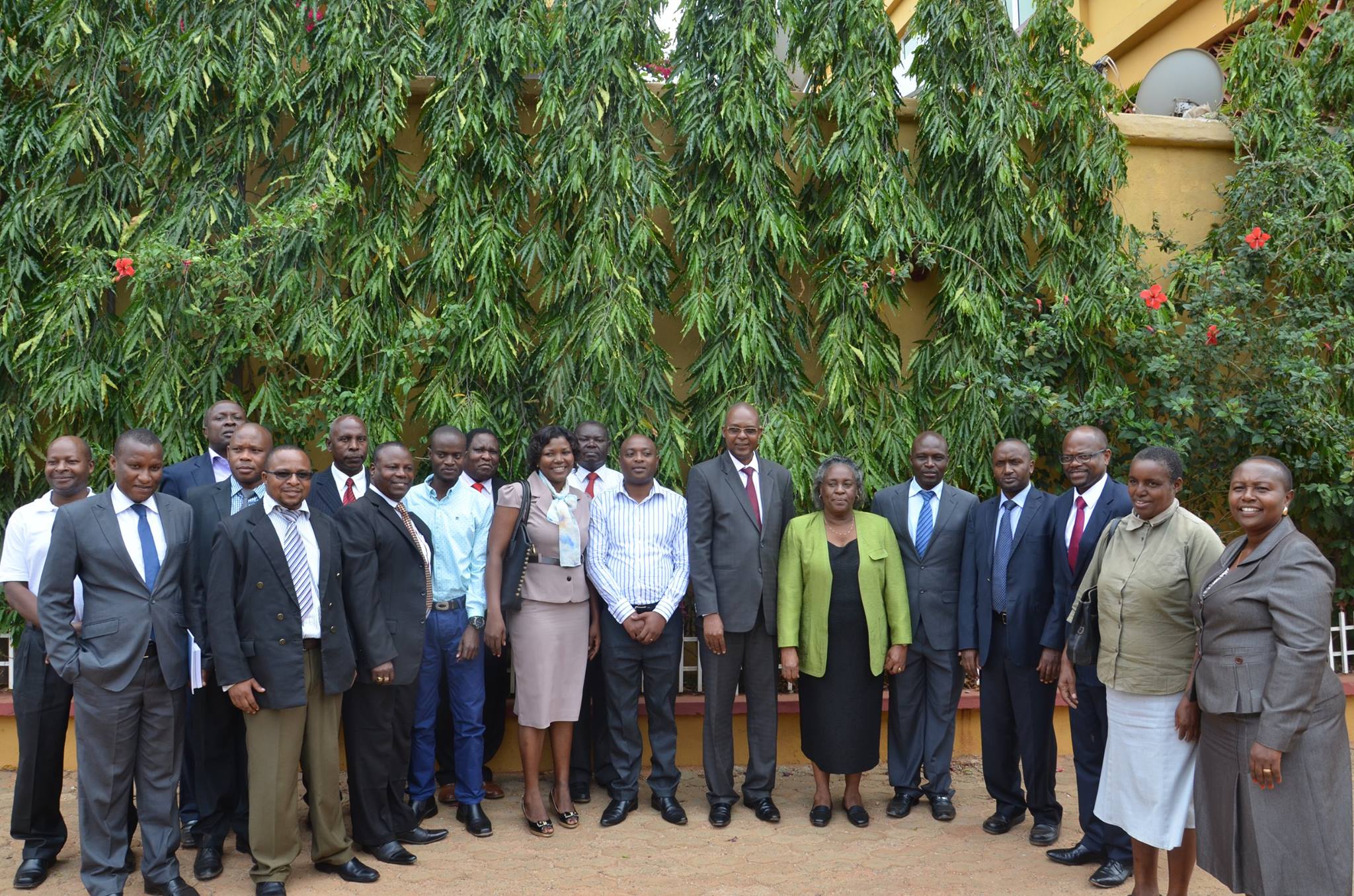
Governor John Mruttu, Deputy Governor Mary Kibuka and the newly sworn in County Land Management Board Members.

Taita Taveta’s County Land Management Board (CLMB) was sworn-in in an event presided by Justice Edward Mureithi and in the presence of H.E the Governor, Eng. John Mruttu and H.E the Deputy Governor, Mary Ndiga Kibuka.

The nine member board will be tasked with processing all matters related to public or community land in the County including allocation of public land, development control (extension of lease, change of user, subdivision of public land), inspection of public land allotments for adherence to planning requirements, encouraging use of alternative and transparent dispute resolution mechanisms in resolving land disputes, preparing a database of all the public land in the County and having it geo-referenced.

Speaking shortly after the swearing in ceremony, Governor Mruttu expressed confidence in the board noting that its composition encompasses the right mixture to handle the full in-tray before it.

“The composition of this board-encompassing youth, women and seniors is the correct recipe that will add impetus in solving land issues in the County. I therefore have all the confidence based on the passion, energy, experience and credentials exhibited in this board that it will meet the expectations” stated Eng. Mruttu.

He also lauded the swiftness of the board in making decisions an ingredient he termed very necessary in discharging their mandate.

“I am impressed with how steadfast you were in deciding who’s going to be the Chairman. In no time you were able to deliberate and present your Chairman something that is not easy in many parts of the Country. I want to challenge you to keep up that steadfastness acknowledging the fact that you have a legal mandate to dispense and to the expectation of the public that we serve”.

Speaking in the same event, the Deputy Governor acknowledged the seriousness of the tasks that lie ahead of the board and promised to support it as her-led docket continues to make strides in matters land. She said:

“We know the daunting task that lies ahead of you and as the County Executive Committee Member in charge of Lands and Mining I can assure you of support to execute your mandate expeditiously”.

On his part, the National Land Commission’s Deputy Director of Human Resource, Mr. Andrew Okwach thanked the County Government for operationalizing the board terming the move as satisfying the constitution and the national land policy.

He also expressed his optimism that cases of grabbing public or community land will be put to rest with the board now in place.

“With you (CLMB) on the ground we don’t expect to hear any cases of public/community land being grabbed and if it happens under your eyes then we’ll simply say you’ve sold it” he said.

CLMB Chairman, Mr. Nesphory Nyange assured the public that the Board will discharge its mandate fully and impartially as expected of them.

The board was later briefed on current situation of land issues in the County by the Deputy Governor and who’s also the C.E.C.M of Lands and Mining.

Also present in the event were; C.E.C.M, Tourism, Environment and Natural Resources, Hon. Alexander Mwangeka, County Secretary, Mr. Patrick Meso, County Chief Officer in charge of Lands and Mining, Mr. Kenneth Mwaita and the Director of Legal Services, Mr. Fredrick Mwabili.

Flicker of hope for micro traders as tourism begins recovery

0
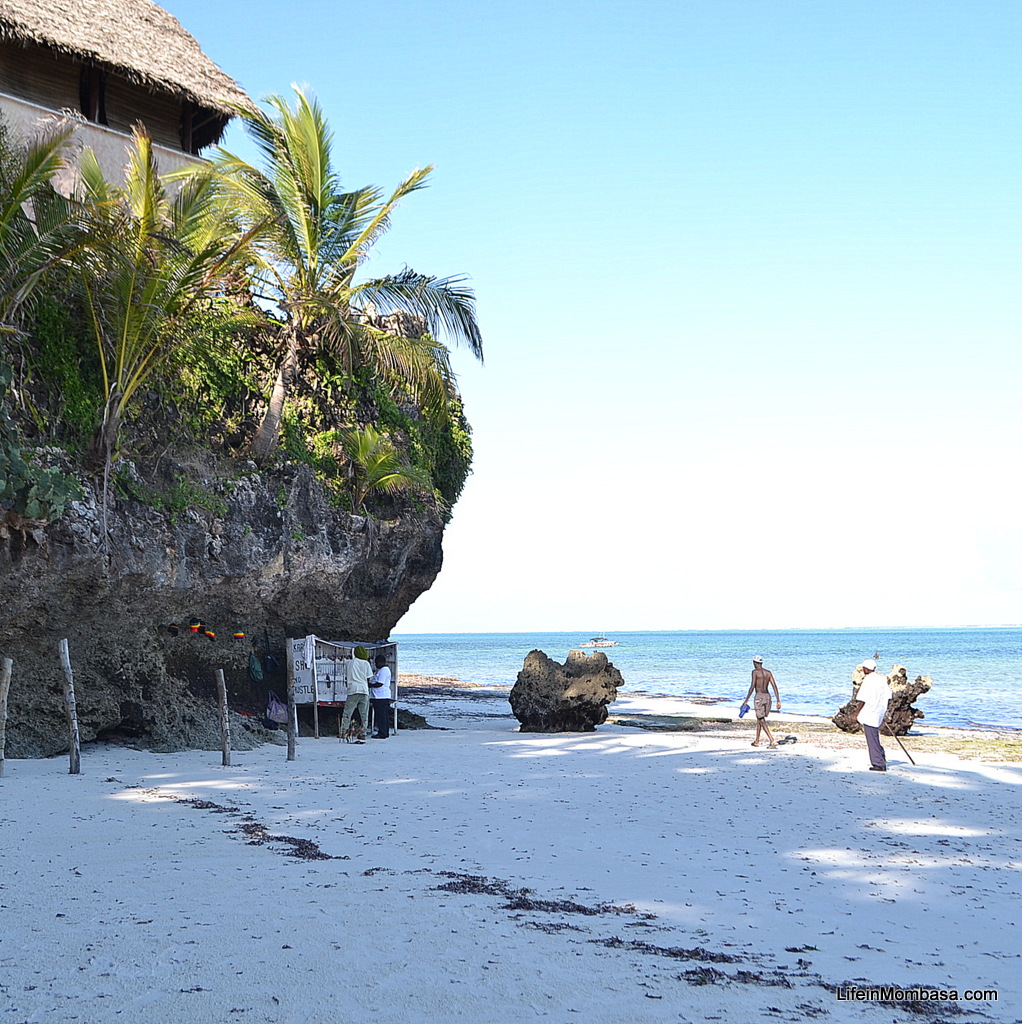
Empty Beach Mombasa
Empty Beach Mombasa

By Davis Mwandawiro

Tourism in the Coast is literally on its knees following the many terror threats the country has faced in the past three years but recent news on the lifting of travel advisories by Britain could help jump-start the industry. The travel advisories issued by the international front added more salt to an already deep wound. However, following a streak of recent talks and campaigns by the Tourism board, the British High Commissioner, Dr. Christopher Turner, announced that the travel advisories in Mombasa, Lamu and Kilifi had been lifted and tourists and investors had nothing to fear about coming to Kenya. Many of the small traders in the tourism sector were happy with the move.

“We are delighted with the Foreign and Commonwealth Office’s decision to lift their travel advice for Kenya’s coast from Watamu to Diani as announced today. While our operators have continued to send their guests to the South Coast including Diani, Wasini and Msambweni we look forward to welcoming guests back to Mombasa and the beautiful coastline of Watamu and Kilifi,” KTB managing director Mr Muriithi Ndegwa said.

Kenya received 117, 201 visitors from the UK at the close of 2014 which has been the leading source market for Kenya.

The drop in arrivals compared to 149, 699 in 2013 can be attributed largely to the 14 month ban on non-essential travel. With the re-opening of the area of the Kenya coast north of Mombasa, British consumers will once again be offered a wider beach offering, either combined with a safari in one of Kenya’s 59 national parks or as a stand-alone holiday.

For most of the small scale traders, the lifting of the advisory is a massive sigh of relief. These are the people trading cowrie shells and African attire, carvings, postcards and other mementos.

Cosmas, who runs a shop and a safari company at the  Shanzu – Serena area is optimistic that business will pick up for most of the traders. He has braved the decline in tourism though some of his colleagues have not been as lucky as he points out to many closed stalls in the area. There were over 30 taxis in the area but that number is now reduced to a handful due to low business.

Even at the City Mall which hosts a popular Masai market on Wednesdays, the number of traders has fallen massively. Nkatha, blames it on the advisory saying the locals do not spend much on things like carvings, miniature flags and African jewelry. She has seen fellow traders quit the business due to the hardships and start other businesses. Her sales in the last 2 masai markets at the mall do not even reach sh2,000, she tell us.

The government has its work cut out to repair the global reputation that was once the Kenyan tourism. The big players in the industry have quite indeed lost a lot but it is these small scale business owners who suffer the brunt.

They are staying hopeful as tourists have started returning to Mombasa and are hoping that August will be a  busy month as they look forward to the December to January peak season.