
Thursday, December 18, 2025
Home Blog Page 52

Prof. Kibwana joins his constituents for the Jukumu Letu launch in Makueni County

Makueni County Artists performing the 3 songs they composed on governance at the Launch ceremony
Makueni County Artists performing the 3 songs they composed on governance at the Jukumu Letu Launch ceremony in Wote town

Jukumu Letu, an initiative geared towards creating a proactive populace through awareness on the Constitution and issues centered on governance using artistic works was over the weekend launched in Makueni County.

The event that took place at Unoa grounds and graced by Governor Kivutha Kibwana, was a culmination of a one week training of various artists on their role in nation building and brought together thespians, puppeteers, musicians, bloggers and Disk Jockeys (DJs) from across the county, all with an ultimate goal of educating the residents on the constitution through their performances.

The artists wowed hundreds of residents who turned out for the event with arty masterpieces whose themes ranged from good governance, the role of the citizens in implementation of the constitution to issues that have bedeviled the county like perennial water shortage, sand harvesting to the current leadership wrangles between the governor and the Members of the County assembly (MCAs).

The Jukumu Letu Creative Director, Gregory Mwendwa speaking during the launch said that initiative is meant to help the locals internalize the Constitution through simple acts of arts like music and theatre. Mwendwa said ”

While the promulgation of the Constitution in 2010 was a right step towards proper governance there was a dire need for the citizens to understand their role in implementing the constitution noting that art as multimedia platform can be used to put the spirit of constitution in the practice. “Through art, characters that reflect what happens in the society are created and used to communicate to the people to highlight what needs to be done besides addressing social ills,” he said.

Head of DJs with a Cause, Richard Mwendwa popularly known as DJ Ritchie said besides playing music that touch on issues of governance in events, the group aims at forming a movement that will promote constitutionalism through playing positive music. DJ Ritchie noted that while most electronic media like radios and TVs shun such songs due to low demand, socially conscious music need not be boring adding that the group will create interesting mixes and post them online and distribute them to clubs and matatus.

 “If such music is played regularly people will eventually appreciate it and put into practice the songs advocate for,” he asserted.

 

Puppeteers  from the Kenya Institue of Puppet Theatre entertaining Makueni residents at the launch
Puppeteers from the Kenya Institue of Puppet Theatre entertaining Makueni residents at the launch

Susan Kikanga, a thespian and head of the MAPACA theatre team, stated that plays can be used to do civil education because they are interesting and attract a large audience that cuts across all ages. Kikanga argued that issues like economic exploitation, sand harvesting, corruption and joblessness among the youth that are rampant in Makueni can be addressed through fictional characters giving the population a chance to examine themselves, laugh at their follies and reflect on what needs to be done.

“Residents should know that it is their responsibility to implement the Constitution, and address social evils. In Makueni mango farmers are exploited by middle men who buy mangoes at sh5 and sell them at sh20 while sand loaders are paid a paltry sh200 while the harvesters rake in millions of shillings,” she asserted, adding that the people should be enlightened on such rights.

Director Tsunami Puppeteer Group, Paul Mbuku also speaking at the launch added that puppetry is another form of art that can be used to enlighten residents. Mbuku whose group performed during the launch lauded the initiative emphasizing that his group will soon roll out similar performances on civic education.

“Puppets are very interesting and through manipulation you can create whatever character you want,” he said.

The director however disclosed that funds were a challenge and called on willing donors to sponsor the noble cause.
The music group led by Stephen Mulinge from Ngomeni Jazz created new renditions titled Kiwu, Isasi and Ni Kyau Kithuku whose messages resonate with the myriads of challenges faced by the residents. Kiwu addressed the issue of water problem while Isasi touched on the shoot out at the county assembly that left six people injured. Ni Kyau Kithuku sought to examine the underlying causes of the leadership wrangles in the county that have brought the county to the verge of dissolution due to what the governor has termed as irreconcilable differences between him and the MCAs.

Mulinge noted that music was a popular way of communication and such songs will of course have a positive impact on the people.
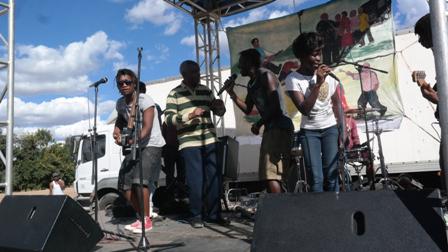
Makueni Governor Prof. Kivutha Kibwana joining Sarabi Band on stage as they sang 'Sheria', one of their hit songs on governance
Makueni Governor Prof. Kivutha Kibwana joining Sarabi Band on stage as they sang ‘Sheria’, one of their hit songs on governance

Governor Kibwana urged the residents to be proactive and put the county leadership to task on issues that affect them. He noted that the power of the people was vested in the Constitution and asked them to take advantage of their constitutional rights and demand for good leadership. He termed the initiative as a success and underscored for the same to be replicated across the country.

“Devolution is the way to go, and these artistic performances have a very strong message that should be put into practice,” said the Governor.

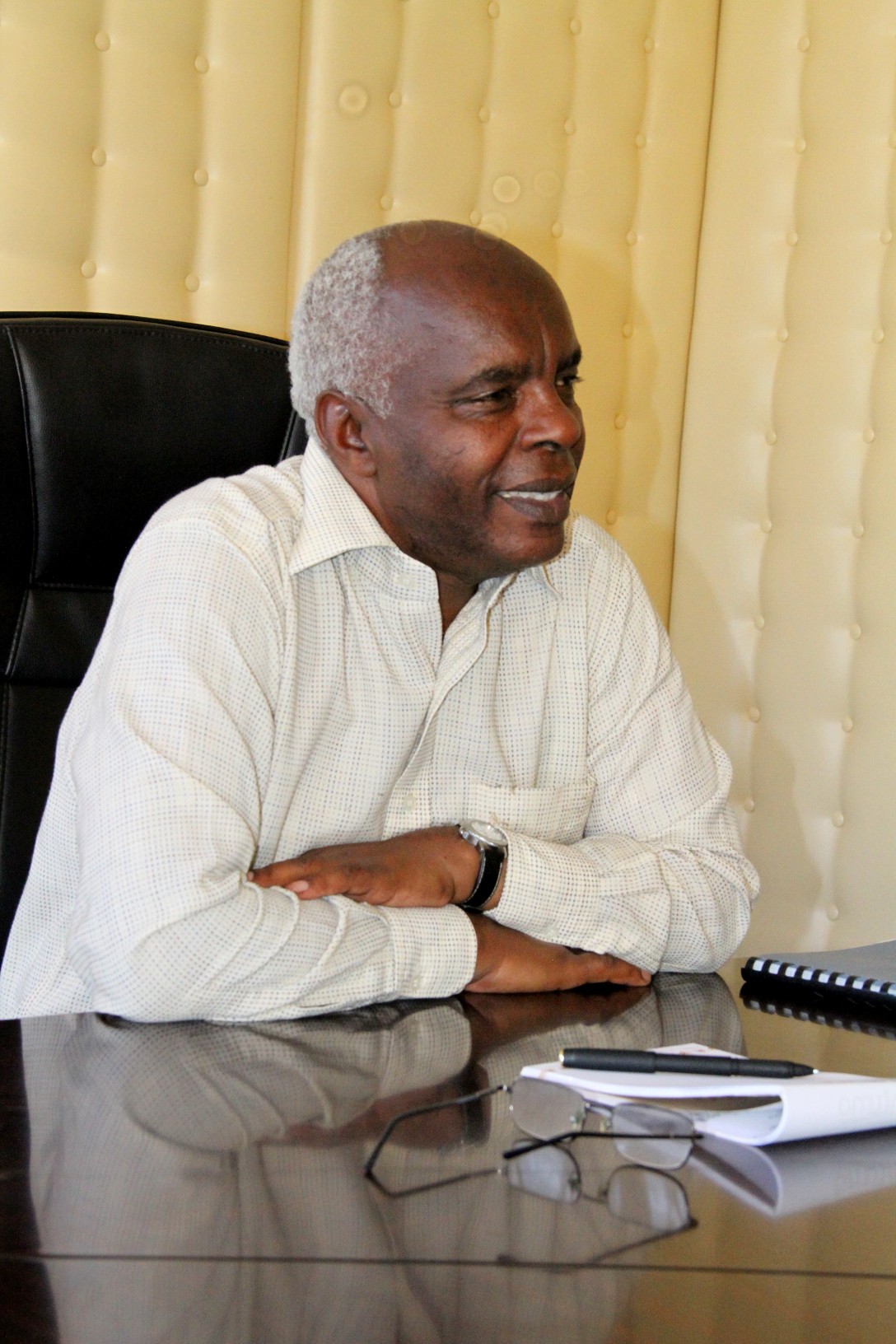
The initiative is sponsored by Constitution and Reform Education Consortium (CRECO) in conjunction with Hivos among other implementing partners

The Cost of a Parliamentary Seat; Money or Sex?

Money and sex keep the wheels of Kenyan politics turning (Photo/ http://www.coign.org/)

If you have paid any attention to the news lately, you know that several MPs are currently fighting allegations of bribery and sexual impropriety. The bribery claims involve allegations that some MPs were allegedly paid hush money to cover up the theft of billions of shillings from the public till by senior government officials.

The sexual impropriety allegations are more disturbing. They range from a male MP, Elisha Busienei of Turbo, making inappropriate sexual advances at Taita Taveta Women representative Joyce Lay, to the more disgusting allegations facing Imenti Central MP Gideon Mwiti who allegedly raped a female business associate after plying her with alcohol and subjecting her to a forced HIV test.

As shocking as these allegations are, a new piece in a continuing series by lawyer Capt (Rtd) Collins Wanderi reveals, with potentially explosive examples, why “money” and “sex” have always been the defining factors of how MPs get into power and how they stay there.

PART 5: Money and sex in Parliament.

Just recently, Mbita MP Millie Odhiambo sensationally claimed that she is in the National Assembly courtesy of a fake Party Nomination Certificate. She is not alone.

DMM was first elected to the 10th Parliament through a by-election. Three days to the primaries of the dominant party in his region, he was summoned to a meeting at **** Hotel along +++++ Avenue, Nairobi by his party’s National Officials through an emissary. He was informed that the party had conducted a “scientific poll” in his Constituency and the results indicated that either he or TRM, one of his main challengers could win the party nominations. He was bluntly told that he was required to give the sum of sh8 million to one of the mandatory signatories if he wanted the Nomination Certificate and if not, his opponent would get it.

He first sought an assurance that he would get the certificate if he paid the money and the mandatory signatory responded this way; “this is our party, we print the ballot papers, deliver them to polling stations manned by our people; presiding officers, the returning officer and counting agents, we know what to do….”. He negotiated the amount to sh5 million since it was a by-election and almost 50 percent of the term was over. He delivered the money in cash and sure enough, he got his certificate and won the seat. In March 2013 he was easily re-elected because he was in the right party and knew what to do and who to talk to.

In December 2012, ‘hOn’ DMM introduced BCN (a person I have known since 1992) to a National Official of his party. BCN had unsuccessfully vied for a Parliamentary seat twice; 2002 & 2007. In 2007/08 elections he had told me and another friend that he spent 22 Million in the campaign but he still lost. In January 2013, the party officials told him that if gave sh10 million he would get the certificate and that the Party Leader would be persuaded to personally campaign for him before and after the nominations. He negotiated this amount to sh9 million and he subsequently “won” both the Party Primaries and the General Election.

According to Hansard reports; “hOns” DMM & BCN have never uttered a single word during debates in the 11th Parliament (National Assembly); risen on a point of order or even asked a question. These two fellows spend most of their time in a Private Member’s Club whiling away time with nubile college girls. And they still earn their almost sh1.1 million salaries. Now you know why some people opt to avoid the primaries of the dominant regional/tribal party and opt to run as independents or via nondescript parties.

The next (POSSIBLE) and juicier expose is a bit tricky; a married woman who is a Women Representative currently exchanging letters (through Lawyers) with her estranged husband over care, custody & maintenance of their children. Since the matter may soon spill into the Courts of Law, and Professional Ethics dictate; I exercise restraint and say no more. The details that led to their estrangement are rather gory & mind boggling – a Governor is part of the mix!

 The author is an Advocate of the High Court of Kenya and the Chairman Kenya Institute of Forensic Auditors. You can follow him on Twitter @DecaptainCFE.

Two Makueni MPs say no to dissolution of County

Makueni Governor Prof. Kivutha Kibwana. Photo by Charity Nzomo - CRECO

Makueni Governor Prof. Kivutha Kibwana. Photo by Charity Nzomo – CRECO

Late last year more than 50,000 residents from Makueni County presented a petition to President Uhuru Kenyatta to dissolve the county due to the persistent wrangling between Governor Professor Kivutha Kibwana and the Members of the County Assembly (MCAs).

The residents in their petition had argued that the infighting among the county leaders had adversely affected service delivery and believed dissolution was the only way to end the leadership stalemate. The two arms of government had been embroiled in a budget stalemate for two years in a row after the governor declined to approve the budget citing unrealistic budgetary demands from the MCAs.

The climax of the infighting was a shoot-out at the county assembly chambers in which six people were left nursing gunshot wounds after the governor stormed a leaders’ meeting allegedly convened to discuss a looming leadership crisis in the county. The shoot-out prompted the Governor to call for the dissolution of the county citing irreconcilable differences between him and the MCAs after which the residents filed a petition to dissolve the county.

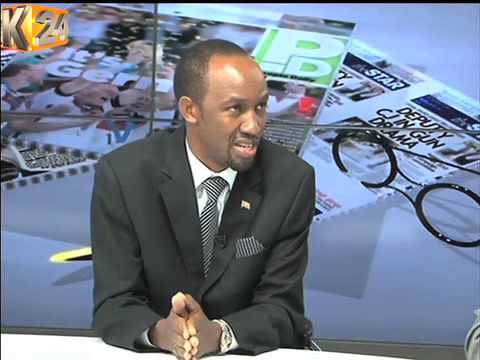
Mbooni MP Michael Kisoi  photo courtesy of K24
Mbooni MP Michael Kisoi
photo courtesy of K24

A six-member committee appointed by the president to probe in to the petition is expected to start its work soon after the senate approved its membership.

Lawyer Mohammed Nyaoga is heading the commission while Johnston Kavuludi, Emily Gatuguta, Prof Harrison Maithya, Alice Wairimu Nderitu and lawyer Taib Ali Taib are the other members.

But even before the commission could embark on its task, opposition is imminent from some Members of Parliament from the county.

Mbooni MP Michael Kisoi has termed the move as unfortunate and a real setback to devolution. The youthful MP urged the Governor and the MCAs to find a lasting solution to their political differences instead of holding a snap election.

Kisoi while speaking at a burial in his constituency on Saturday said dissolution of the county would not only affect development but also set a bad precedent for other counties.

 “Let the Governor and the MCAs sit down and amicably resolve their differences,” he said.

His sentiments, were echoed by Kibwezi west MP Dr. Patrick Musimba who claimed that those pushing for the dissolution were only interested in serving selfish interests.

Kibwezi West MP Patrick Musimba photo courtsey of Capital.co.ke
Kibwezi West MP Patrick Musimba
photo courtsey of Capital.co.ke

Musimba said devolution was the best solution to the problems facing Makueni and retaliated that the county will not be dissolved.

The Kibwezi MP who recently came to the limelight after he tabled a censure motion to discuss National Assembly Speaker Justin Muturi’s conduct said Kenyans had struggled for the devolved system of governance and told off those clamoring for the dissolution.

“The county will not be dissolved,” he said at the Makindu grounds on Friday last week.

The commission of inquiry has six months to look into the wrangles between the county assembly and county executive and present the report to the Senate for approval or rejection. From these two leaders’ sentiments, Makueni residents will need to ensure they present their views to the Nyaoga led Commission in order to have their say heard and the commission to reach an amicable decision, which would hopefully be the best decision for the County.

Debate rages on an unorthodox solution to corruption in Kenya

A stop corruption sign. Some Kenyans are calling for a change of tact in the war against corruption given that the current strategy hasn't borne fruits. (photo: https://www.colourbox)
A stop corruption sign. Some Kenyans are calling for a change of tact in the war against corruption given that the current strategy hasn’t borne fruits. (photo: https://www.colourbox)

The only predictable thing about the Kenyan news cycle lately is that every week brings a new corruption scandal to deal with. From #Occopyplayground to #Chickengate to #PACgate, the hashtags can barely keep up with the torrent of sleaze. Amid the outcry and finger pointing, though, there are some that are proposing an unorthodox solution to Kenya’s corruption problem: a blanket amnesty.

The idea to give a blanket amnesty to Kenya’s corrupt dates back to 2007 but it has a new and eloquent proponent in Njeri Thorne, a political communications consultant

Thorne has won some converts among them noted columnist and activist Betty Waitherero. Like Thorne, Waitherero believes a blanket amnesty will allow Kenya to break out of the tired pattern of uncovering mega corruption scandals only to allow alleged culprits to get away scot-free after spending millions in half-hearted investigations and feeble prosecutions.

How would the blanket amnesty work? Thorne and Waitherero see the blanket amnesty as giving Kenya an opportunity to start on a clean slate on the war in graft after which the country can deal more ruthlessly with those that dip their fingers in the public till.

Predictably, the idea doesn’t enjoy universal appeal. Some Kenyans see a blanket amnesty as giving a pass to impunity, a move that could easily backfire.

Particularly outspoken in his opposition to the idea is blogger and pundit Patrick Gathara. Gathara feels Kenya’s successive administrations have given lip service to the war on graft and a blanket amnesty would be surrendering to the perpetrators of graft before the fight has even began.

There’s no question that Kenya is failing in the war against graft. We’re now at the point where the government is not so much fighting graft but presiding over an all you can eat corruption buffet. A point that unites all Kenyans of good will on all sides of the amnesty debate is that we need to put an end to corruption before the country implodes.

Indeed, to build a fair and stable country, we all must be invested in ensuring that the country breaks free from the clutches of corruption. To do that Kenya has to constantly experiment with different approaches of fighting graft. If the current strategy isn’t working then lets have a discussion about what else we can try. A blanket amnesty is not a perfect solution but the conversation it has sparked brings us closer to solving Kenya’s corruption problem. That’s better than giving in to hopelessness and despair.

iFreedoms Kenya Timely Launch During World Internet Freedom Day a Success

The logo for iFreedoms program promoting internet Freedoms Kenya
The logo for the iFreedoms program promoting internet Freedoms Kenya

iFreedoms  was launched on Sunday 18th January to coincide with the World Internet Freedom Day marked on 18th January every year, worldwide.

iFreedoms  is a programme under the Kenya Monitor – a Citizen Journalism website project by the Bloggers Association of Kenya (BAKE) whose aim is ; promoting internet freedoms in Kenya.

Why iFreedoms?

As at the end of the year 2014, Kenya status on Internet Freedoms was ‘Free’. According to Freedom House, an independent watchdog organization dedicated to the expansion of freedom around the world, Kenya was ranked at position 28 globally on Freedom of Net total and at position 12 on violation of user rights.

That was 2014 and it seems like Kenya’s ranking on internet Freedoms will have undergone a significant change by the end of 2015.

Kenya has seen a steady rise in the number of bloggers and Social Media opinion makers who are free to speak their mind on not just Politics but also on social issues affecting Kenyans. The void created by Media houses failing to provide unbiased coverage and lately, lack of in-depth coverage of news and stories happening, has presented an opportunity for bloggers to become Citizen Journalists.

The Kenyan Government is seemingly becoming quite intolerant of voices of dissent and dissident Kenyans who have continued to become more vocal on Social Media and on Blogs.

The recent arrest of Robert Alai, Allan Wadi, Mercy Mbindalah(she has since been pardoned), and blogger Abraham Mutai  is a clear indication of a growing trend to silence or heavily regulate Kenyan Bloggers and ordinary citizens on Social Media.

Kenya needs better laws to protect internet freedoms.

It is with these recurring and increasing incidents of arrests, intimidation and mysterious disappearance of  Kenya Social Media users and bloggers that the Bloggers Association of Kenya launched iFreedoms Kenya.

The Launch of #iFreeKe

To mark the launch of this programme,  there was a call to action for all Kenyans Online to share on what internet freedom meant to them as well as what freedoms they would not want censored. A logo, banners and a hashtag were created in advance and shared with the Kenyan Blogging and online community through the email newsletter, blog posts on the BAKE and Kenya monitor blogs and the information shared widely via social media. The Hashtag #iFreeKe was created an Kenyans Online were encouraged to share their thoughts on internet freedoms using this Hashtag.

A Kenyan Blogger is arrested & Freed on the iFreedoms Launch date

From left,Activist  Boniface Mwangi, Blogger Abraham Mutai,His lawyer Mugambi Laibuta and BAKE Officials Kennedy Kachwanya the morning after Mutai's release
From left, Activist Boniface Mwangi, Blogger Abraham Mutai, His lawyer Mugambi Laibuta and BAKE Official Kennedy Kachwanya in the morning after Mutai’s release

On Sunday 18th January, the BAKE team received word that Kenyan Blogger Abraham Mutai had been put in police custody over his blog posts and tweets regarding corruption in Isiolo County. The arrest and calls for the release of Mutai enabled us create as much awareness on the need for better internet freedoms in Kenya as well as rally Kenyans online to question the infringement on his rights to  free speech online.

BAKE officials Kennedy Kachwanya and James Wamathai went to the CID headquarters in Kiambu,  where Mutai was being held for interrogation into his online activities. They provided crucial live updates via social media on the on goings at the CID Headquarters. They also continued rallying Kenyans online to demand for his release, get more details on his arrest as well as create awareness on the for Kenyans to know their rights when using social media platforms.

It was BAKE that settled the lawyer’s fee that enabled Abraham Mutai receive legal representation from lawyer Ole Laibuta. Mutai was released on a personal bond.

Impact of success in creating awareness

The Social media awareness campaign planned and launched on 18th January was two-fold. Calling for the release of blogger Abraham Mutai and create awareness on the state and need for more internet Freedoms in Kenya.

There were two hashtags that were used on this day and were used interchangeably not only to highlight the plight of Mutai but to also speak out on the reducing freedoms for Kenyans to express themselves freely online.

#FreeMutai

The hashtag #freemutai reached 7.2Million users on twitter and facebook, with over 15 million people viewing that hashtag

#iFreeKe

The hashtag #iFreeKe reached 6.1Million users on twitter and facebook, with over 11 Million people viewing that hashtag.

The @ifreedomsKe twitter handle was created a few weeks to the launch and now highlights news and stories on internet freedoms not just in Kenya but around the world.

Trainings on internet Freedoms
It is for this reason that BAKE in collaboration with Mugambi Liabuta – an Advocate of the High Court of Kenya have started workshops on the Law and Internet in Kenya. The seminars target bloggers and social media content generators to sensitize them on how their interaction online are regulated by the law and steps to undertake when challenged on the content they have generated. This hopefully, will equip online content generators with enough legal knowledge to objectively navigate the blogosphere.

The first training was carried out in Nairobi on 7th March with 4 more to be carried out in Nakuru, Mombasa, Nyeri and Kisumu in the course of this year.

MPs: the New Lords of Impunity

Kenyan MPs at a past session of parliament. Corruption scandals involving MPs have shocked Kenyans given that they are some of the best remunerated elected representatives in the world. (Photo/http://uchaguzi.co.ke)

As an inquiry continues into allegations that members of the Public Accounts Committee (PAC) took bribes to influence their findings into an investigation into how billions of public funds disappeared in the lead up to the 2013 election, we bring you the latest in a series of articles by an insider in the corridors of power that lay bare how corruption cartels are bringing Kenya to its knees.

In this piece Capt (Rtd) Collins Wanderi, the Chairman Kenya Institute of Forensic Auditors, exposes the extent to which our current MPs have become the “new lords of impunity” and why experience has taught him not to share what he knows with the concerned authorities.

PART 4: Corruption inside Parliament.

  1. The highest amount of bribe ever reported to have been given to a Public/State Officer in Kenya is Sh. 800 Million (USD $ 10,000,000). This amount is said to have been paid to an MP in the 10th Parliament. At the time, the recipient was the Chairman of one of the most powerful, prestigious and highly sought after Departmental Committees of the “August” House. This bribe is reported to have been paid by a multinational company which had won a very lucrative international tender awarded by a State Agency. This MP had to be flown out of the country to receive the bribe since transferring and transacting such an amount in Kenya would have raised eyebrows and/or prompted the intervention of industry regulators. After this MP’s trip abroad, this deal was subsequently “approved” by all Government watchdogs including the Public Procurement Administrative Review Board (PPARB). This man has subsequently been mentioned in other corrupt and shady deals, which include and are not limited to transnational crime in foreign countries.
  1. The Public Accounts Committee (PAC) of the National Assembly is currently under probe for corruption. A member of the PAC used to pester people I know very well with requests for as little as sh20, 000 or sh10, 000 every weekend before he joined the PAC. Now, our common friends tell me he takes helicopter ride to his rural home every other weekend. For those who may not know, its costs between Sh250,000/= to sh350,000/= to hire a helicopter for one hour depending on the craft’s Life Cycle Cost (LCC).
  1. You are free to speculate on the names of the persons I am speaking about here but do it in your own mind. Do not even bother to tell me to report to any agency of Government. I have been in this game longer than most of you. I know how these things are done and the risks involved. Do not ask me which side of the political divide (Parties/Coalitions) these two characters belong to. In my books all politicians are the same; irredeemable bloodsuckers; brothers and sisters whose common genetic thread is appetite for public resources and free things.

Coming up in PART 5: How MPs are abusing Parliamentary Privilege to mint millions of shillings from State Corporations & Other Government/State Agencies.

The author is an Advocate of the High Court of Kenya and the Chairman Kenya Institute of Forensic Auditors. You can follow him on Twitter @DecaptainCFE.

PAC to shame under performing accountants

 Parliamentary Accounts Committee Chair(PAC) Ababu Namwamba
Parliamentary Accounts Committee Chair(PAC) Ababu Namwamba

The Public Accounts Committee (PAC) will name and shame all public accounting officers who do not perform well.

In its 2012/2013 financial year report, which is yet to be debated in Parliament, the committee says it arrived at the decision following a challenge it experienced from accounting officers who exhibited poor working habits and who hindered the committee’s work.

Such officers the committee laments made its “work difficult by their numerous requests to postpone appearance; coming before the committee unprepared; submitting poorly prepared, casual and unconvincing responses; late submission of responses; and failure to furnish the office of the Auditor General with advance copies of responses.”

“As a measure of the significance the committee attaches to this matter, the Committee has resolved that starting with the accounts of 2013/2014 financial year, reports to this August House will be accompanied with a list of honour naming and commending top performing accounting officers in an order of merit; and another list of shame naming and rebuking those who do not take their accounting duties seriously.”

Apart from poor working habits among accounting officers the committee says that unfinished assignments carried down from the 10th Parliament hindered its work. The committee pointed out that that the backlog which went as back as 3 years hampered its operations by “delaying the approval of up-to-date accounts.”

“To correct this aberration, the Committee took the unprecedented measure of considering audited accounts for three consecutive years simultaneously (2010/2011, 2011/2012, and 2012/2013),” the report says.

The PAC is mandated with an oversight role on the expenditure of public funds by ministries and departments as well as adherence to government financial regulations and procedures.

In the same report the committee has also pointed out lack of professional editing skills among its members and clerks as one of its setbacks. “Limited access to transcribed hard copy Hansard records makes referencing and cross-checking of information and evidence a challenge,” says the report.

The committee also noted a financial and human resource constrain in the office of the Auditor General which it wants urgently addressed if public funds are to be secured under the devolved system. To avert these constraints the committee recommends a continuous training and capacity building for clerks in all house committees.

While this committee is one of the most important and most powerful house committees this report may go unnoticed as the committee is currently embroiled in a tussle over claims that a section of its members have received bribes so as to doctor the report.

There are also calls to disband the committee chaired by Budalang’i Member of Parliament (MP) and Secretary General of the Orange Democratic Movement (ODM) Ababu Namwamba.

Thus even as the committee moves to name and shame accounting officers with poor working habits it will also be prudent for the committee to start with naming and shaming its members who exhibit bad conduct such as taking bribes among other habits that go against the spirit of the Constitution.

County Government slammed as rains pound Mombasa

Mombasa flooded streets
Mombasa CBD streets flooded


The long awaited rains are finally here and as has been the case in the past, Mombasa county especially the Island, is one flooded mess. After just a day of rains, the drainage situation leaves much to be desired and life in some places has been brought to a halt.

Some of the badly hit areas include Ganjoni, Bondeni, Kibokoni, Old Town, Kongowea, CBD, Kisumu Ndogo, Likoni, Bombolulu among others. Mombasa residents took to social media to express their frustration and anger at the County Government’s failure to improve the drainage situation.

As seen from the pictures shared, residents in some parts are forced to wade in filthy floodwater to move within their neighborhoods. This situation is putting thousands of residents at risk of waterborne diseases especially in informal settlements where sanitation and drainage facilities are already strained.

There were unconfirmed reports of the death of a schoolboy who was electrocuted in Mariakani while wading through floodwater on his way to school.

Kisauni, Mombasa flooded
Sections of Kisauni flooded

The Mombasa County Government Watch (MCGW) a pressure group that highlights some of the issues and challenges that citizens are facing took time to highlight the problem. The MCGW through its Twitter and Facebook pages shared and captioned all the floods pictures “They promise, we deliver.” A mimicry of Governor Ali Joho’s election motto.

The MCGW is well know for its opposition to Joho and support for Suleiman Shahbal, who bitterly contested the gubernatorial election in 2013 and is getting ready to have another go in 2017.

The lack of planning and poor preparedness of the county government has once again been brought to focus with questions on the relevance of the County projects such as the city beautification and paved sidewalks as this tweet by Jessica shows.

The disappointment among residents is intense coming soon after a report that put Mombasa at the bottom of development expenditure among the 47 counties.

Perhaps it is in this light that one resident gave the county government grade E. One senses that the county government will come under more pressure as residents grow impatient and demand for better services.

Photo Credits: Facebook


Kenyans are the real racists in Chinese restaurant row

Will the real racists please stand up? Reaction to racist Chinese restaurant reveals Kenyans aren't perfect either. (Photo: http://shop.english-online.at)
Will the real racists please stand up? Reaction to racist Chinese restaurant reveals Kenyans aren’t perfect either. (Photo: http://shop.english-online.at)

On Monday the Daily Nation published a story about a Chinese restaurant in Nairobi’s Kilimani area that unapologetically refuses entry to African customers after 5 pm. Trying to gain entry after the appointed hour Nation journalist Njoki Chege was reportedly told “Masaa ya Waafrika yameisha” by a guard at the gate.

It took five seconds for twitter to go kaboom! The hashtags #ShutDownTheChinese , #RacistRestaurant and #NoBlacksHere trended as Kenyans expressed their disgust at the news. How was such a thing possible in Kenya in 2015? But, it wasn’t long before things took a dark turn. Soon fury over the apparent racism at the restaurant turned into a wholesale attack on Chinese people.

The vicious pile on against Chinese people – as a whole – instead of the bigoted management of the restaurant was all too much for some Kenyans. Ronald Mackio, a local activist and filmmaker, counseled Kenyans against poisoning their own message by turning into the monster they were condemning.

Some observers theorised that Kenyans, scandal-ridden and bigoted against each other, were overcompensating for their own guilt.

While some suggested it was a good opportunity for Kenyans to learn about how their own prejudices hurt others, particularly members of the Somali community who have been treated as second-class citizens in the recent past.

The management of the Chinese restaurant was wrong to refuse entry to African patrons but the Kenyans who, in a fit of self-righteousness, were involved in the racist pile on, showed themselves to be no better. This is perhaps not so surprising. Racism and tribalism, after all, are first cousins.

The impulse that made those Kenyans tweet those offensive things against the Chinese nation is the same one that makes them post/say/text (delete as appropriate) tribal vitriol. Given our own obvious faults, instead of running the owners of Chinese restaurant out of town – as some are suggesting online – we should respond with a little more empathy and give them another chance. We’re more like them than we think.

Selling water is a profitable business in Makueni

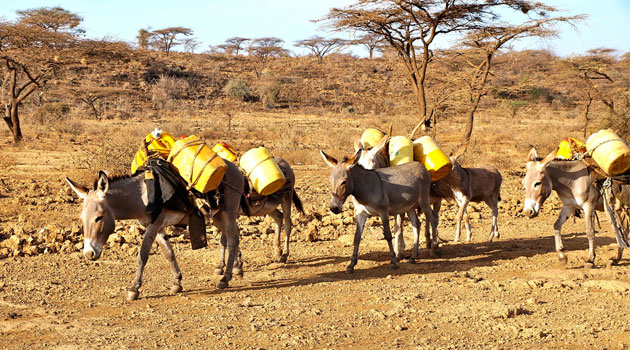
Photo courtesy of Capital FM

Makueni  County classified as an Arid and Semi Arid Land (ASALs)  is  characterized by perennial droughts  occasioned by erratic rainfall received in the region. Most residents entirely depend on rain fed water for both subsistence agriculture and domestic use and the unpredictable weather patterns have not only led to successive crop failures but also acute water scarcity.

These  acute water  shortages force  the residents to  walk for long distances, some times up to 20 kilometers, especially during dry spells when most sources of water like earth dams and boreholes dry up, in search of the precious commodity.

But, the severity of the water problem is well displayed in Wote town which is the county headquarters and perhaps the situation is  a replica of the crisis across the county. With a population of approximately 10,000 the town does not have an elaborate piped water system and the residents rely on vendors who scoop the water from shallow wells at the nearby seasonal Kaiti river.

Donkeys with jerricans on their backs don the streets of the small sleepy and dusty county headquarters that is slowing coming to live,thanks to devolution.

A 20 liter jerrican goes for between  sh20 to sh25 and the town dwellers  who do not have any other access to water, use it for all the domestic purposes its quality, not withstanding.

It is no doubt, that water vending is a booming business in the town and has attracted mostly young men, some coming as far as the neighboring  Kitui county to eke a living from business venture.

When 28 -year-  old Joseph Musyimi left his village in Nzambia, Kitui County three years ago and relocated to Wote town in search of a job little, little did he know that he would eventually go into the water business. A friend from his home county had hinted to him the high returns in the business but he was not interested, his aspirations were to get better job, water vending was never in his wildest dreams.

However  after several months of job hunting bore no fruits, Musyimi had to look for a source of income to sustain himself as the little savings he had when he left his village in Kitui were dwindling very fast.

After much persuasion from the friend who had already established himself in the business with four donkeys, Musyimi agreed albeit reluctantly to join his friend for sh500 a day.

After realizing the profitable returns in the venture, Musyimi saved sh16,000 and bought two small donkeys which he now uses to ferry water to his customers. On good day he makes sh1, 500 and takes home sh1, 000 when business is low. He makes an average of ten trips a day and his customers are mainly bar owners and hotels who require water in large quantities.

“I have no regrets its a good business that enables me to pay my bills and send some cash to my parents in Kitui,”

says the bachelor.


Egerton University celebrates cultural diversity

IMG_6547
Students from the Maasai community perform a cultural wedding at the Njoro campus last week. The cultural week celebrations are aimed at promoting cohesion and integration among students and staff.

The Nakuru Town Campus College (NTCC) of Egerton University is celebrating cultural diversity among different Kenyan communities this week in an event aimed at promoting cohesion and integration among students and staff.

The event which is usually held annually will be marked under the theme ‘cultural diversity for intellectual and talent development.’ Its climax will be on Friday and it will see two students crowned with the title of Mr. and Miss Egerton University Nakuru Town Campus.

Matata Muthoka a Counselor in the Dean of Students Office who is the Chairman for this year’s organizing committee is optimistic that the event will go a long way in instilling tolerance in cultural diversity among students and staff. “Through the event you come to appreciate the different cultures and ultimately it creates cohesion and unity,” he said.

Last week NTCC’s mother campus, Njoro, also held a similar event in which students and staff showcased cultural artifacts, traditional foods and dresses among other items exhibiting cultural identities among the different communities in Kenya.

During the event students from the Maasai community performed a cultural wedding to the excitement of many of their fellow students as they showed how marriage vows are usually tied in their community which is usually hailed for remaining true to its culture.

Public institutions among them universities have a responsibility to ensure that they create working environments that promote cohesion and integration. For that reason some universities in Kenya been on the spot on allegations of employing only specific tribes and thus going against the spirit of cohesion.

In addition there is always a tendency among university students to form tribal and regional groups in order to push for their political interests at the university. This pattern which seems difficult to stem out has been pulling down efforts to create cohesion.

While agreeing to this fact Matata Muthoka says that students usually follow the national political terrain.
“Students want a clout and they are copying from the national landscape,” he says.

Fredrick Juma the Acting Students Chairman at the Njoro Campus also agrees that this pattern has been countering cohesion and integration. “Even down here our politics is divided along Jubilee and CORD (Coalition for Reforms and Democracy) factions,” says the Engineering student.

He adds that changing the trend will be difficult and will take time. “May be if we do awareness just before elections.”

One can only hope that with more of these activities students will learn to appreciate each others culture which will go along way in ensuring cohesion and tranquility among the students. This could then be translated in them being champions of national cohesion when they graduate and join the larger community, when working.

Makueni Artists Challenge residents to embrace the Constitution

Artists drawn from different genres; musicians, puppeteers, Disk Jockeys (DJs) and threatre challenged Makueni County residents to read, understand and uphold the Constitution in order to ensure a better life. The artists meeting under the Jukumu Letu initiative performed their arts at Unoa Grounds, Wote town, Makueni County in the presence of hundreds of residents including the Governor, Prof. Kivutha Kubwana.


The Jukumu Letu initiative is meant to create a conscience population of what the Constitution says and the obligations on citizens to not only read it but use it to embrace a responsive and accountable government. It underlines that through knowledge of what the Constitution says, citizens can better use that information to hold their leaders to account and ensure better service delivery at this nascent stage of devolution.


The use of artists from the area was to ensure sustainability so that once the project is launched, they can spread the messages through their various mediums to other residents of the County.


Governor Kibwana acknowledged that the message being passed across by the artists was powerful, apparent and useful for them to reflect, as leaders, as to how they have and should be governing.

  Makueni residents petitioned the President to suspend their county due to unresponsiveness of their leaders. The President formed a Commission of Inquiry into the petition which was sworn in two weeks ago and as it prepares to visit the residents to collect their views, citizens are determined to not only fulfill their public participation obligation, but also see to it that the county leadership is replaced. For the residents, their leaders including the Members of County Assemblies (MCAs) and Governor ought to work for them to ensure their livelihoods have changed. Makueni suffers perennial problems of water scarcity, poverty and roads among others. For them, their leaders have not been prioritizing these issues but preoccupying themselves with foreign trips, increasing allowances and against their participation in budget making processes and projects.  

The use of artists is a laudable move, Governor Kibwana once remarked, “it is speaking to people in a way that people can listen.” For instance, Disk Jockeys (DJs) who were trainined by DJs with a Course, were equipped on the music and reasons for them to play socially conscience music. It will then be expected that as they entertain crowds in entertainment areas, they remind them of their constitutional obligations and rights through songs that highlight these issues.The focus should now be to spread this initiative across the County. The launch was in Wote, but Makueni County is more than their seat of power, hence other sub-counties, wards and even villages should feel this rallying call through their artists. A glance at the elated crowds at Unoa Grounds revealed that many will embrace this initiative. The onus is therefore in taking it to the people, in their comforts.

Catholic priest charged with attempting to kill a colleague to know fate in May

0

A catholic priest charged at a Makueni Court for attempting to murder his colleague in 2010 at the Makueni parish house will know his fate on 7th May 2014. Senior Resident Magistrate Richard Koech while setting the judgment date for the case in which Fr.Wambua Makewa who is accused of shooting and injuring Fr.Fidhelis Nzuki on the 21st day of March said that he needed ample time to study the voluminous evidence to arrive at a verdict.

This is the second time the case is being heard after the accused appealed after a Tawa court in Mbooni sentenced  Fr.Makewa to seven years in jail for attempting kill Fr Nzuki.

In his June 18, 2012, Tawa Senior Resident Magistrate Waititu Gachimu said that the prosecution had established beyond reasonable doubt that the Fr.Makewa was guilty of the charge. Gachimu had said that although the motive of the shooting was clouded in mystery the testimony by Fr Nzuki was believable.

The former Makueni father -in -charge who has since been ex- communicated from the church has however denied attempting to kill his fellow priest and insists that he is innocent.

While giving his testimony the accused said that Fr.Nzuki was a close confidante of seven years and had no intentions of killing him. The accused told the court that Fr,Nzuki was shot by thugs who had invaded the parish house at 5 am on the fateful day.

He said on that day Fr. Nzuki had visited them at the parish as usual and had exchanged pleasantries before they went to bed following a power blackout.

The accused said he later heard gunshots, rushed to wake up his visitors and noticed Nzuki had been shot. While giving his final submissions ,the accused lawyer Fred Nemisi the said the prosecution bungled the investigations.

Nakuru man wants court permission to stay with no identification documents

IMG_3321
The Ugandan Martyrs shrine in Namugongo where Christians were killed for their faith. The Nakuru man says his faith does not allow him to possess an identity card and wants the court to grant him an affidavit to do live without one.

The spirit of God is ‘commanding’ men to do very unrealistic things these days. Just early this month the social media was awash with reports that a Nigerian Pastor had impregnated 20 members of his church because the holy spirit had commanded him to do so.

And in June last year, a Nairobi Pastor was reported to have defiled and impregnated his daughter aged 15 after a similar command.

Now a Nakuru man has received another ‘weird’ command from the holy spirit. It has told him not to accept an identity card (ID) as well as a personal identification number (PIN).

Joseph Muiyuro Njoroge who even without being told his age is mature by all means is asking a Nakuru court to grant him an affidavit so as to live without the trouble of bearing and caring these documents.

Through Ochweri, Ngamati & Company Advocates, Muiyuro who lives in Wanyororo Nakuru but who insists he is from Murang’a, has drafted an affidavit that only awaits the court’s decision before it becomes valid.

“That I am a member of the Akorino Nguo Nyeupe (Akorino church whose members dress in white) and our faith does nor allow me to possess an identity card and PIN Number,” his affidavit partly reads.

“That I swear this affidavit to support any transaction that I may do without the identity card or PIN Number,” it continues.

When he came to court today he was dressed in a white robe, a white pair our trousers underneath and a white scarf on his head, perhaps to emphasize the color aspect of his religion. He did not accept to shake hands with strangers as his religion does not allow such. “We usually go with our village head men every time we want to be identified,” he responded after being asked of how he conducts business. “We even have land and we have been able to get title deeds without ID’s,” he said shortly after leaving the court.

Although the affidavit indicates that he is the only one seeking the permission to conduct business without the identification documents, he indicated that he is doing it on behalf of his church. “We are about 100 members,” he said.

Asked how and when they received the communication from above he alludes to the bible saying “there are so many orders that were given but which are not written in the book.”

The request has been filed in chamber six of Nakuru Law Courts. Without being committal a court official attached to the chamber has hinted that it has been dismissed. “The man should be in jail by now,” the court official said.

An ID is the most basic identification documents. Without it a citizen is unable to participate in democratic processes such as voting as they can not be issued with a voters card among other documents. Not having an identity card can also be risky as it is difficult to identify any person who has never been registered.

Sonko, Kidero differences against public interest

Recently Senator Mike Sonko has shown his intention to exploit his popularity to take on Nairobi Governor Evans Kidero. Only he isn’t waiting for the next election. Sonko is ‘exposing’ alleged rot and providing some services through Sonko Rescue team that the County government provides, in what is seen as directly attacking the perceived inefficiency of Kidero. To do so Sonko has tried to take advantage of Kidero’s biggest weakness: his stint at Mumias Sugar. The Senator recently took out a two-page advert in The Standard to expose how the cartels that brought Mumias to its knees are now allegedly doing business with Nairobi County with Kidero’s connivance.

Sonko’s other weapon? The Sonko Rescue Team! Last week KTN aired an infomercial of the exploits of the Sonko Rescue Team in Nairobi. It showed Sonko’s team of privately funded do-gooders helping to lessen the burdens of daily life for some of the city’s dwellers. Whether it’s helping out fire victims, cleaning up neighborhoods, providing top-of-the-range transportation for a wedding or an ambulance ride to the nearest hospital, the point of the eighteen-minute-long clip was the Sonko rescue team has you covered. It’s no secret that Sonko prefers charity to governing. The Nairobi Senator’s philosophy seems to be: cash rules everything around me! His generosity has won him many fans and supplicants who line up outside his office for handouts. Sonko’s actions haven’t escaped the notice of Kidero. The governor recently all but called Sonko a drug dealer and of trying to set up a parallel county government.

The political tension between the two Nairobi leaders is doing no good to Nairobi citizens. The Governor could be right to be worried about the Sonko rescue team programs which his government should otherwise provide. However this should be a wake up call to his service delivery efficiency and quality.

Some questions have been raised about the source of Senator Sonko’s money and his motives. He has stated before that they are from his businesses including real estate. It is certainly his constitutional right to serve the citizens of Nairobi in whatever way possible, so long as they are legal. He is also within his constitutional right to highlight the alleged rot in the city. He should further this by providing the documents to the relevant institutions including Senate and the Ethics and Anti-Corruption Commission (EACC).

Nairobians will be watching these developments hoping that the two leaders will put aside their differences and work for them. They will also be waiting to see how institutions charged with accountability like Parliament and EACC investigate and get to the bottom of accountability issues raises against the Governor not just in Nairobi but also in Mumias Sugar Company.